s01 (Ch 1) Introduction (studied 29-Sep-2025)
The Book of Mark with Dr. Chuck Missler (Recorded live in KH, Post Falls, Idaho — 2010)
{View → Video Frame → Aspect Ratio → Default (DAR)}

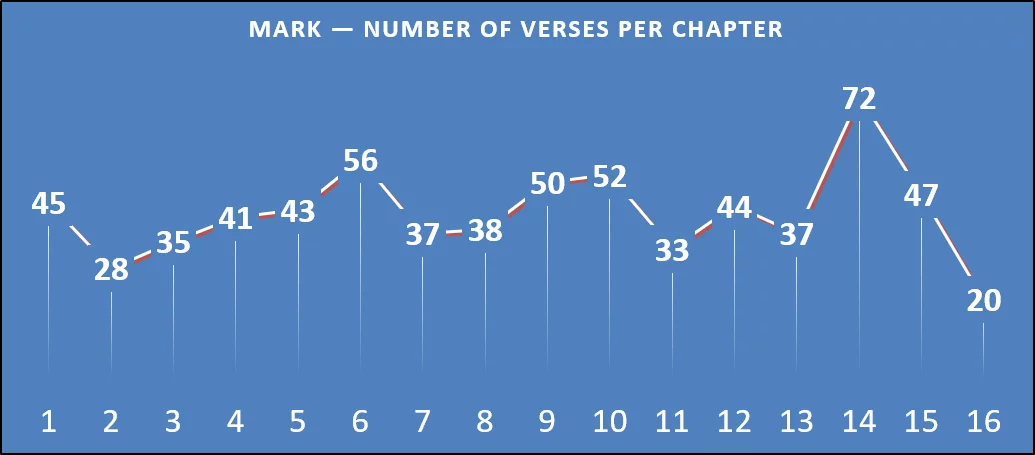

The subsections of Chapter 1 (per LSB/NASB) are:
{View → Video Frame → Aspect Ratio → Assume square pixels (SAR)}


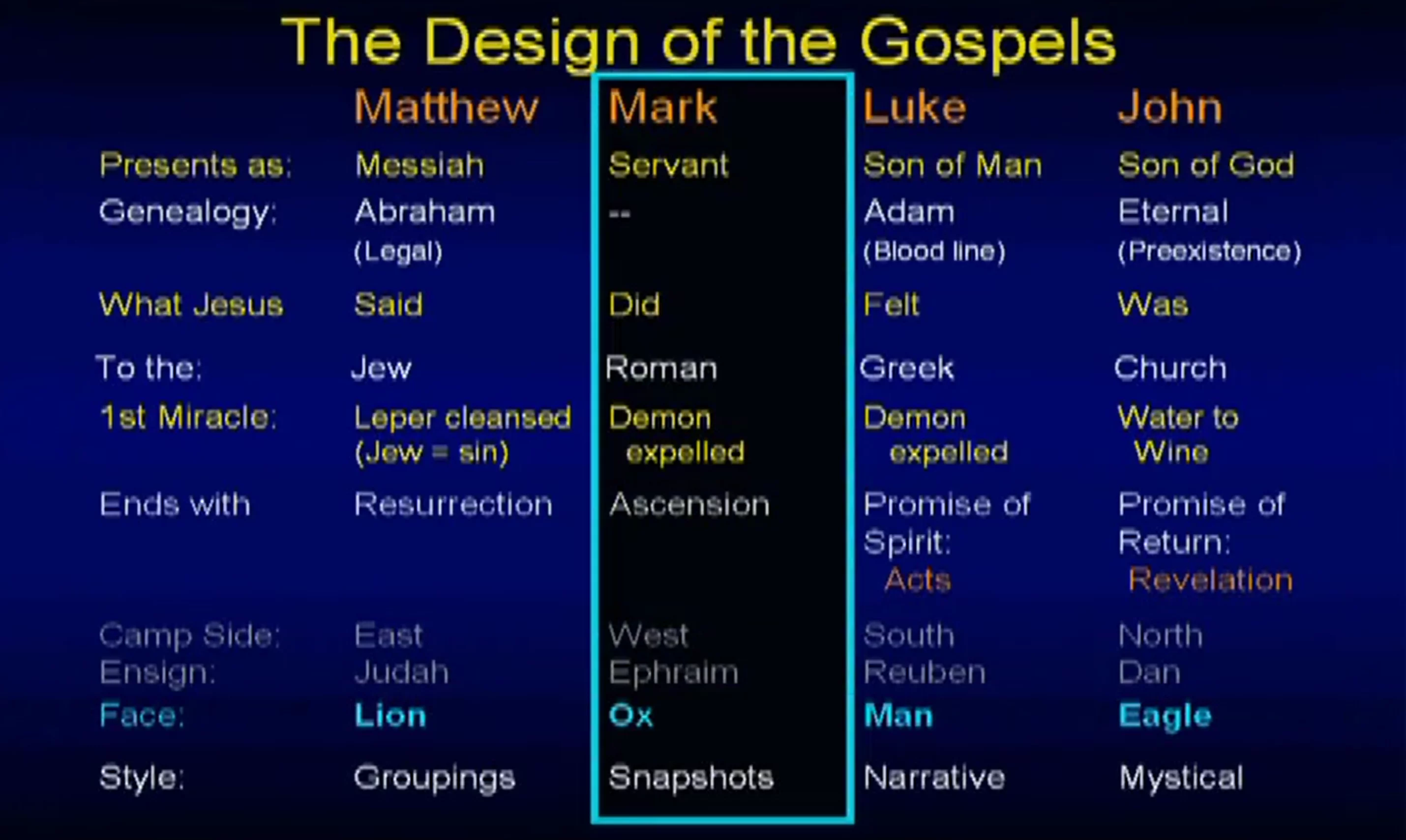
- This is not incidental: The Holy Spirit determined before the foundation of the world that there would be these four portraits of the Lord Jesus Christ. Each portrait has a slightly different perspective
- He took these four men and prepared each of them to tell the story of Jesus’ life, each in his own way:
► Matthew — The Promised One is here → see His Credentials (quotes from the OT, presents the Lion of the tribe of Judah)
► Mark — This is how He worked → see His Power
► Luke — This is what He was like → see His Nature
► John — This is who He really was → see His Godship
The design of 4 Gospels (quadraphonic):

First 7 chapters of the Book of Leviticus (Lev 1-7) present a parallelism:
- John: the death of our Lord as the burnt offering, glorifying the Father in the scene where He had been so dishonored by sin
- Luke: as the peace offering, that man may have fellowship with the Father
- Matthew: whose theme is the government of God, identifies the work of the Cross with the trespass offering, where the Lord could say, as in Psalm 69:4, “Then I restored that which I took not away”
- Mark: the sin offering is before us, Christ dying not only for trespasses committed, but because we are sinners by nature, which our practice makes evident
[Source: Ironside, Mark, p.10-11.]

- “And Barnabas and Saul returned from Jerusalem, when they had fulfilled their ministry, and took with them John, whose surname was Mark.” (Acts 12:25)
- “…and they had also John [with them] to minister.” (Acts 13:5) NASB: “helper”
- “To Minister” — The word “minister” in the Bible has many forms — the lowest level is used for Mark
— ἄγγελος (aggelos): a messenger, envoy; angel; ministering spirit
— ἀπόστολος (apostolos): one sent forth; a delegate; apostle
— διάκονος (diakonos): one who executes the commands of another; one who serves; deacon
— λειτουργός (leitourgos): a public minister, a servant of the state, or of the temple (from which we get the term, liturgy)
— ὑπηρέτης (huperetes): under-rower; the lowest of all ranks. The lowest rank of the slave positioned in the most difficult spot with the most unwieldy oar; the common workhand; the subordinate; the menial laborer… This is the one used to refer to Mark

- John Mark was the son of a wealthy woman named Mary, probably a widow, whose home was large enough to serve as a meeting place for many of the early disciples after the Pentecostal outpouring (Acts 12:12-17)
- The rich young ruler questioning Christ about what he needed to do to inherit eternal life (Mark 10:17-22) — some suspect that “the rich young ruler” was Mark himself. Mark includes a detail that Matthew and Luke failed to mention: “And Jesus looking upon him loved him…” (Mark 10:21). This hints at the possibility that young John Mark himself may have been that rich young man
- An early church tradition suggests that it was Mark who was the certain “young man” who followed Christ right up to His entry into the house of the high priest and then, when the guards tried to lay hold of him, left the linen cloth that he was clothed with in their hands and fled naked (Mark 14:51-52). Mark was the only one who included this incident
- Mark accompanied Paul and Barnabas to Cyprus, but later returned to Jerusalem, which deeply disappointed Paul (Acts 12:25, Acts 13:13, Acts 15:37-39). They were headed to Galatia that was a pretty rough country. Having felt abandoned, Paul refused to take him on the second journey, and thus began a bitter quarrel between Paul and Barnabas, to whom Mark was related: probably a cousin—not “nephew” (KJV); the word ἀνεψιός (anepsios) (Col 4:10) being used in Num 36:11, for “father’s brothers’ sons”
- Silas accompanied Paul in retracing his steps, but Mark accompanied Barnabas to Cyprus. Two became four
[Source: Indebted particularly to Warren Wiersbe, Be Diligent]
- Paul and Mark later reconciled when Paul was in prison in Rome. Mark served as his aide and then as a delegate on an important mission to Asia Minor (cf. Philemon 24 and Col 4:10). Later Paul would ask Timothy to bring Mark back with him to Rome because he was useful in service (2 Tim 4:11)
- When Peter was writing 1st Peter, he affectionately called Mark “his son” (1 Pet 5:13). It may have been Peter that originally led him to Christ. It was Mark’s intimacy with Peter that resulted in this intimate portrait of Christ. Many people regard the Gospel of Mark as essentially Peter’s Gospel with Mark acting as a secretary (amanuensis — a person who takes dictation or copies manuscripts, essentially a stenographer, shorthand typist or secretary)

- Mark’s Gospel is that of a shooting script, as for a movie or a teleplay. It moves rapidly through a series of visual images (scenes), emphasizing action
- Mark continually uses a word εὐθέως (eutheos), which is translated “immediately”, “straightway”, “forthwith”, “anon” etc. (It appears over 40 times—about equal to the rest of the NT. Only 7x in Matthew; only once in Luke)
- Mark uses the “historical present tense” 150 times: Jesus comes, Jesus says, Jesus heals—all in the present tense
- There are more miracles recorded in Mark than in the other Gospels, despite its being the shortest one. [Matthew’s gospel seems longer because he includes the discourses—probably verbatim, having the skill to take them down in shorthand (as a customs official). Removing the discourses, it is shorter than Mark’s]
- It takes only 20 short verses in Chapter 1 to describe the ministry of John the Baptist, Jesus’ baptism, His temptation in the wilderness and the call of the disciples


- Mark’s purpose was to write down the Gospel as Peter had presented it to the Romans (so say the Fathers, at least, and internal evidence supports them)
- That the Gospel was for Gentiles can be seen:
a) From the translation of the Aramaic expressions (not Hebrew, but Aramaic words)
– Boanerges (“Sons of Thunder”) → Mark 3:17
– Talitha cumi (“Damsel, I say unto thee, arise”) → Mark 5:41
– Corban (a gift, an offering to God) → Mark 7:11
– Bartimaeus → Mark 10:46
– Abba (“Father”) → Mark 14:36
– Golgotha (“The place of a skull”) → Mark 15:22
b) In the explanation of Jewish customs (because the audience is not Jewish)
– “Unleavened Bread, when the Passover lamb was being sacrificed” → Mark 14:12
– “the preparation day, that is, the day before the Sabbath” → Mark 15:42
c) From the fact that the Law is not mentioned and the Old Testament is only quoted once in Mark’s own narrative
d) The Gentile sections, especially in Mark 6-8
- That it was for Romans is also seen in:
a) The explanation of a Greek term by a Latin
– NASB: “two small copper coins, which amount to a cent” → Mark 12:42
– KJV: “two mites, which make a farthing” → Mark 12:42
b) The preponderance (the quality or fact of being greater in number, quantity or importance; prevalence, dominance) of works of power, the emphasis on authority (Mark 2:10), patience and heroic endurance (Mark 10:17)
c) Forbids a practice that was not Jewish but Roman (Mark 10:12)
- Those who believe it was written at Rome find further hints in:
— the mention of Rufus (Mark 15:21; cf. Rom 16:13) and
— the resemblance between Mark 7:1-23 and Romans 14
- The Roman centurion’s remark (Mark 15:39) is the style of the author and bears the same relation to Mark’s purpose as to John’s (John 20:31) (John explains the reason he wrote the gospel — “so that you may believe that Jesus is the Christ, the Son of God; and that believing you may have life in His name”)
Mark 1:1 The Preaching of John the Baptist

- “…the gospel of Jesus Christ”: The Gospel is not a philosophy; it is not a system of morality
- Gospel of Jesus Christ is a history of a person :
— A person who is the focus and fulcrum of all history of the entire universe
— It is defined in 1 Cor 15:1-4 (resurrection chapter)
— [And it is tragically absent from many pulpits… It is simply not preached]
- Facts without purpose behind them are meaningless
- Love that goes upward ↑ is adoration
- Love that goes outward → is affection
- Love that goes downward ↓ is grace
- The Gospel of the grace of God is what Mark presents to us (Acts 20:24)

In Mark we clearly see that the glory of God is not only to be found in His power, His majesty, His might and His dominion. The true glory of God is in His grace.
- Not the awesome attributes that separate His inconceivable nature from us
- Not the eternity of His existence
- Not the infinitude of His being
- Not the omnipotence of His unwearied arm
- Nor His omniscience that sees to the heart of us
- …but rather the lowliness and death of Christ are the glory of God

Servanthood is the main theme within Mark’s Gospel
- But one cannot escape the feeling that we have in this Gospel the antitype of the Servant of YHWH
- It is not strange that this Servant-emphasis — this remarkable blend of strength and submission, achieving victory through apparent defeat — should appeal to Peter:
- He was himself an ardent, whole-souled man who knew both defeat and victory
- Moreover, he himself had hired servants (Mark 1:20) and now for years had been a servant of Christ (cf. Acts 4:29). That it did appeal to him and became familiar to the early Christians can be seen from Acts 3:13 and Acts 4:30
- Temperamentally Mark seems to have been like Peter:
- His experience in a wealthy home where servants were kept (Acts 12:13) and
- Himself huperetes of apostles in Christian service
- Mark was fitted both to appreciate and record the character and doings of the perfect servant
- Mark’s focus is Servanthood
- The key verse is: “For even the Son of man came not to be ministered unto, but to minister, and to give his life a ransom for many.” (Mark 10:45)
- We are introduced to the God who, in the words of Paul to the Philippians (the kenosis of Christ in Phil 2:5-11, the Greek term kenōsei (emptied) is used — Jesus “emptied himself” by taking on the form of a servant and becoming human, obedient even to death on a cross): “Who, being in the form of God, thought it not something to be grasped to be equal with God: But made himself of no reputation, and took upon him the form of a servant, and was made in the likeness of men…” (Phil 2:6-7)
Mark 1:2 (→ Mal 3:1)
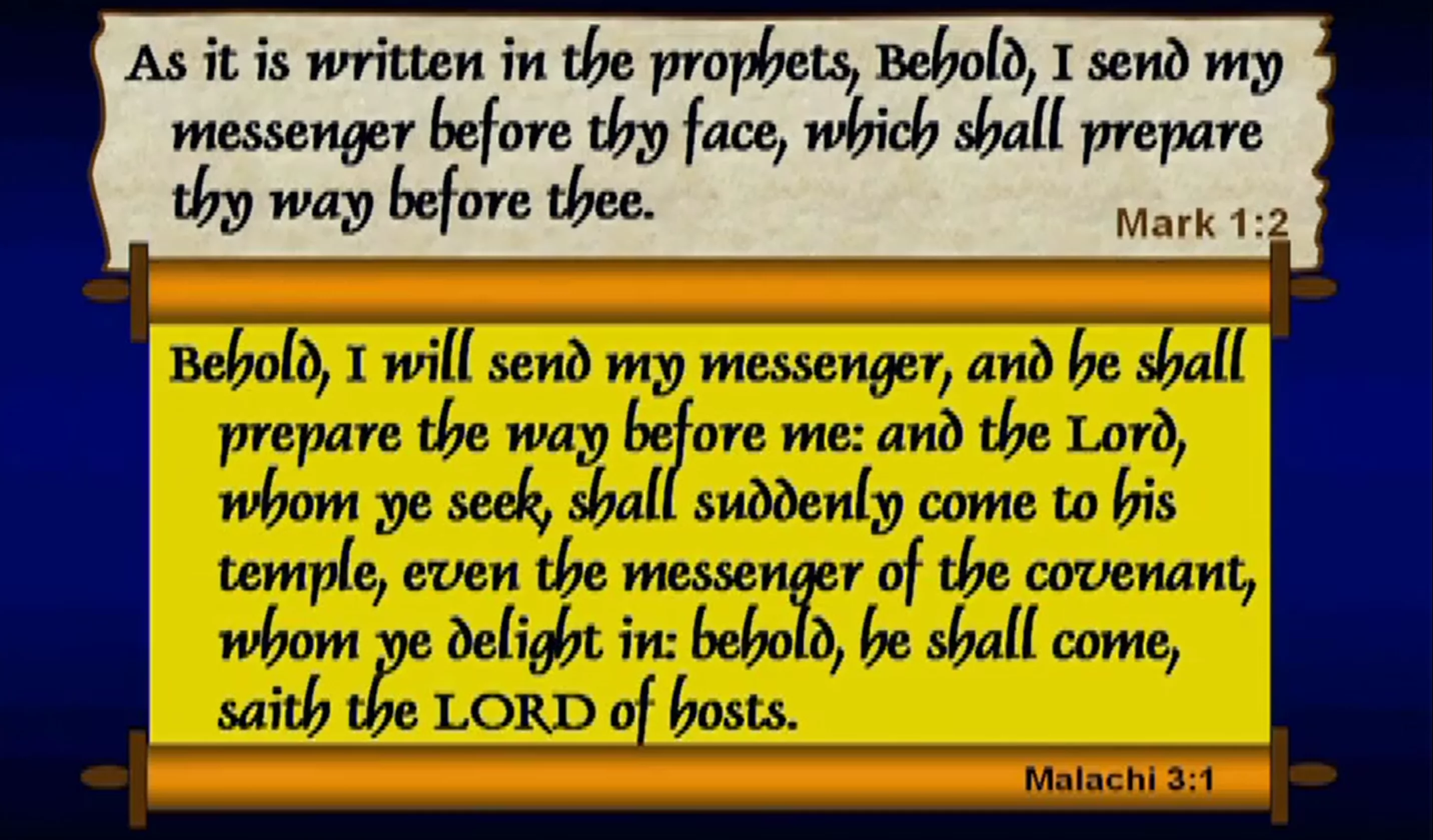
- That is a prediction of John the Baptist — the one who comes before Christ
Mark 1:3 (→ Isa 40:3)
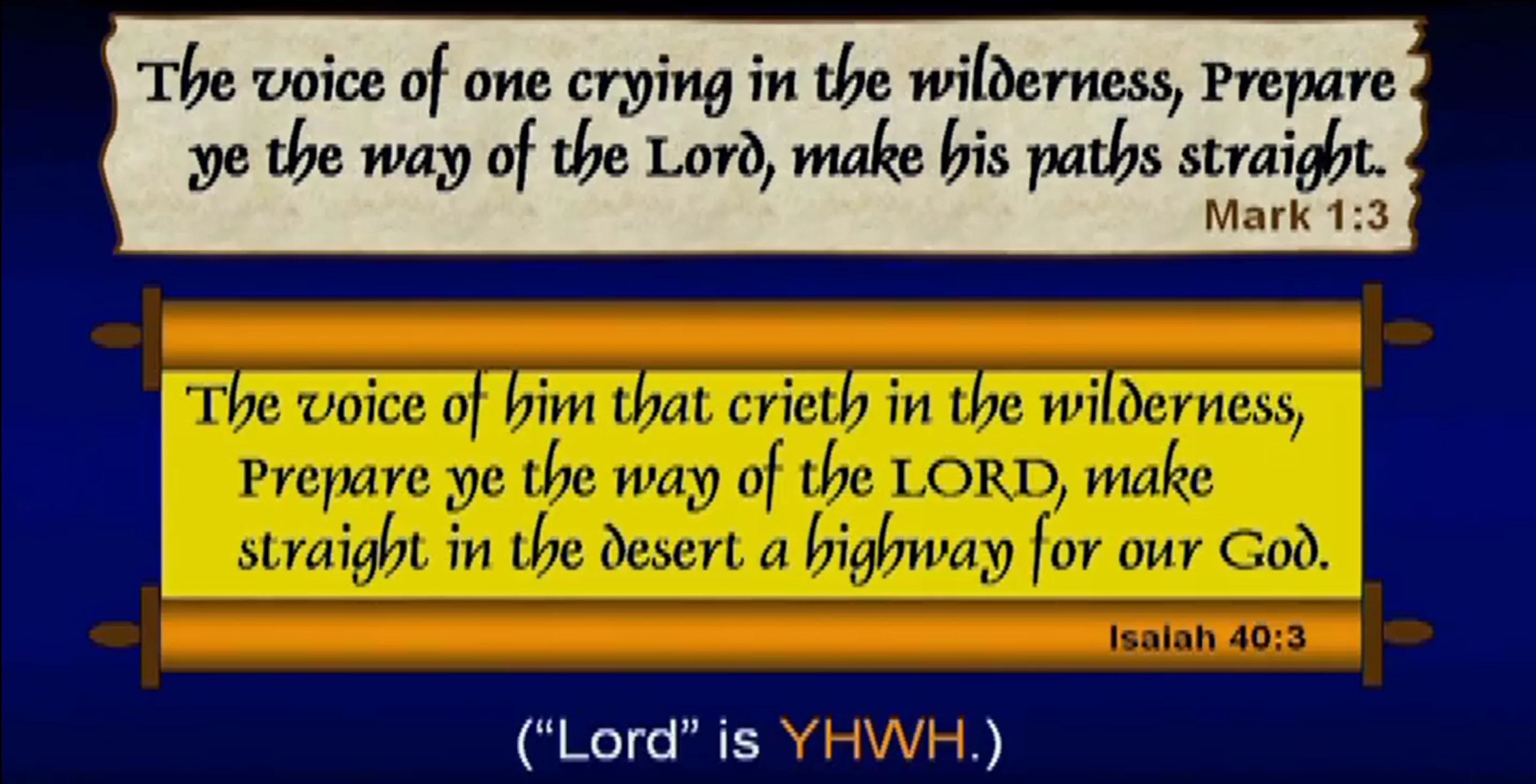
- The word translated LORD is the Tetragrammaton (from Greek for "four letters") refers to the four Hebrew letters יהוה(YHWH) Yod-Heh-Vav-Heh, the unpronounceable name of God
Mark 1:4

- “…baptism of repentance”: Baptism of John is different than the baptism mentioned later. He was preaching the baptism of repentance
- John came and began to baptize in the desert, proclaiming baptism as a mark of a complete change of heart and recognition of the need for forgiveness of sins. That was John’s focus
— So why was Christ baptized at all?
— He didn’t have to change His heart
— He didn’t have to get a forgiveness of sins
— Why is He getting baptized?

- The origins of the word baptism precede any concept of immersion in water
- 500 years before Christ, the word immerse was used to describe the process of turning a piece of pink cloth into blue cloth, or yellow cloth into black cloth—the process of cleaning and dyeing
- The dyer was called a “baptist”. You took your cloth to Sam the Baptist to change its appearance and, hence, its identity [—International Standard Bible Encyclopedia]
Mark 1:5
- People from Jerusalem had to walk over 20 miles to hear John preach!
- There were so many attending these gatherings that the Temple authorities sent an inquiry team! (John 1:19)
- Why would so many people walk so far to hear a preacher?
Mark 1:6
- The legend of Elijah’s mantle (not Biblical):
— Devolved (a responsibility, power or duty transferred to a successor) upon Elisha → 2 Kgs 2:13-14
— Legend: upon Elisha’s death, mantle was taken and stored in the Altar of Incense
— Zechariah retrieved it at John’s annunciation and
— John the Baptist was wearing it at the Jordan…
- So people who heard the legend, walked over to Jordan to see John wearing Elijah’s mantle
Mark 1:7-9 The Baptism of Jesus (starting with verse 9)
- Remez study of “shoes” (the allegorical meaning - a hint or allusion of something deeper. It explores potential symbolic or allegorical meanings within the text and suggests that the text hints at a deeper, more profound understanding):
— Passages: → Deut 29:5 → Neh 9:21 → Luke 15:22 → Eph 6:15 → Exo 3 → Ruth 4 → John 1
— Shoes speak of your walk

- It even seemed to John that there was a contradiction in Jesus’ baptism:
— Matthew (Matt 3:14) records John’s protest. It would seem to contradict the truth of the announcement: “Behold the Lamb of God who takes away the sin of the world!”
— Every year, Jewish families would choose a Passover lamb and examine it with care to assure that it was free of any spot or blemish. (They would take it into their home for 3 days and then kill it)
- Jesus was baptized to be identified with His sinful people under the law of God
- “But when the fullness of the time was come, God sent forth his Son, made of a woman, made under the law, To redeem them that were under the law, that we might receive the adoption of sons.” (Gal 4:4-5)
- Jesus was voluntarily identifying Himself as a man, undertaking the obligation to fulfill the requirements of the Law, to accomplish His purpose to save His people from their sin
Mark 1:10

- “…like a dove” — The Poet’s Dove — the dove that abandoned Noah:
— …did not rest on Abraham: he lied (about his wife Sarah Gen 12:10–20 and Gen 20:1–18)
— …did not rest on Moses: he failed (disobedience at the waters of Meribah Num 20:11-12, cf. Deut 3:26)
— …did not rest on David: he sinned… (affair with Bathsheba and murder of Uriah 2 Sam 11:2-27)
- Who did it rest on? Jesus Christ
Mark 1:11

- “…beloved” — ἀγαπητός (agapetos):
— Declares affection
— Carries the meaning of “the only one” (the one and only)
- Three years later, at the mount of the Transfiguration, as Moses and Elijah stood beside Him, once more a voice out of heaven used the same words (Mark 9:7, Matt 17:5)
Mark 1:12-13
- “…forty days”: The details are in Matt 4:1-11 & Luke 4:1-13
- Forty days is viewed by some as suggestive of the 40 years in the wilderness of Israel. Having triumphed over the enemy, Jesus (“Joshua”) could now go forth and call a new people who would enter into their spiritual inheritance

- The other parallel is that of the “last Adam” (1 Cor 15:45) succeeding where the first Adam failed
- Adam lost his dominion over Creation because of his sin (Gen 1:28, Ps 8)
- But in Christ that dominion has been restored for all who trust Him (Heb 2:6-8)
Mark 1:14 Jesus Preaches in Galilee

- Here Mark passes over a full year of Jesus’s ministry
— Herod had imprisoned John the Baptist in Machaerus Prison
— It was then that Jesus began His Galilean ministry. He announced His mandate from Isa 61:1-2 at the synagogue in Nazareth (Luke 4:14-21)
Mark 1:15-17
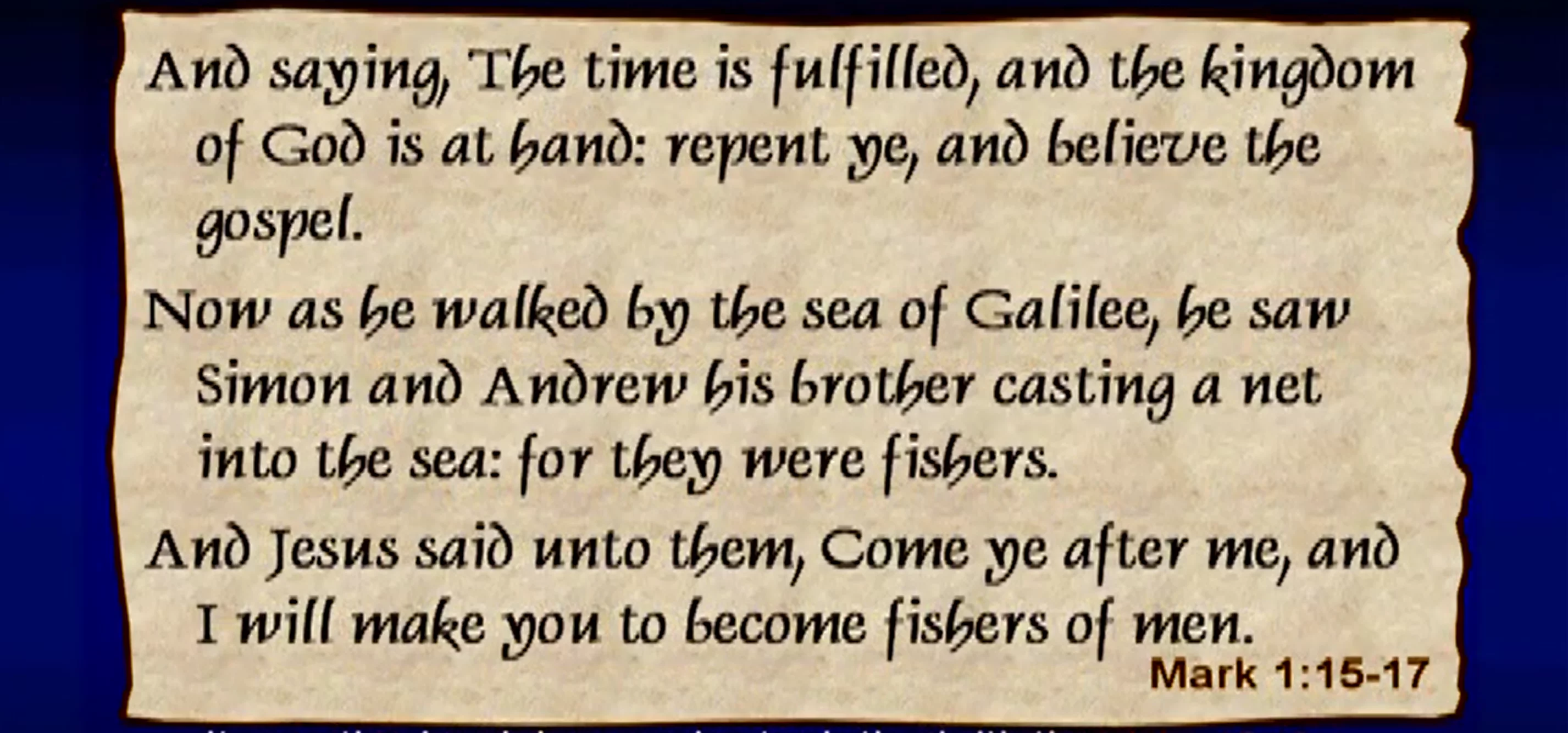
- It was the Lord Jesus who took the initiative (John 15:16)
- This was not their initial call to faith and salvation — it was a call to discipleship
- There are some subtleties there when you start looking at gospels and try to fit it all together
Mark 1:18-20
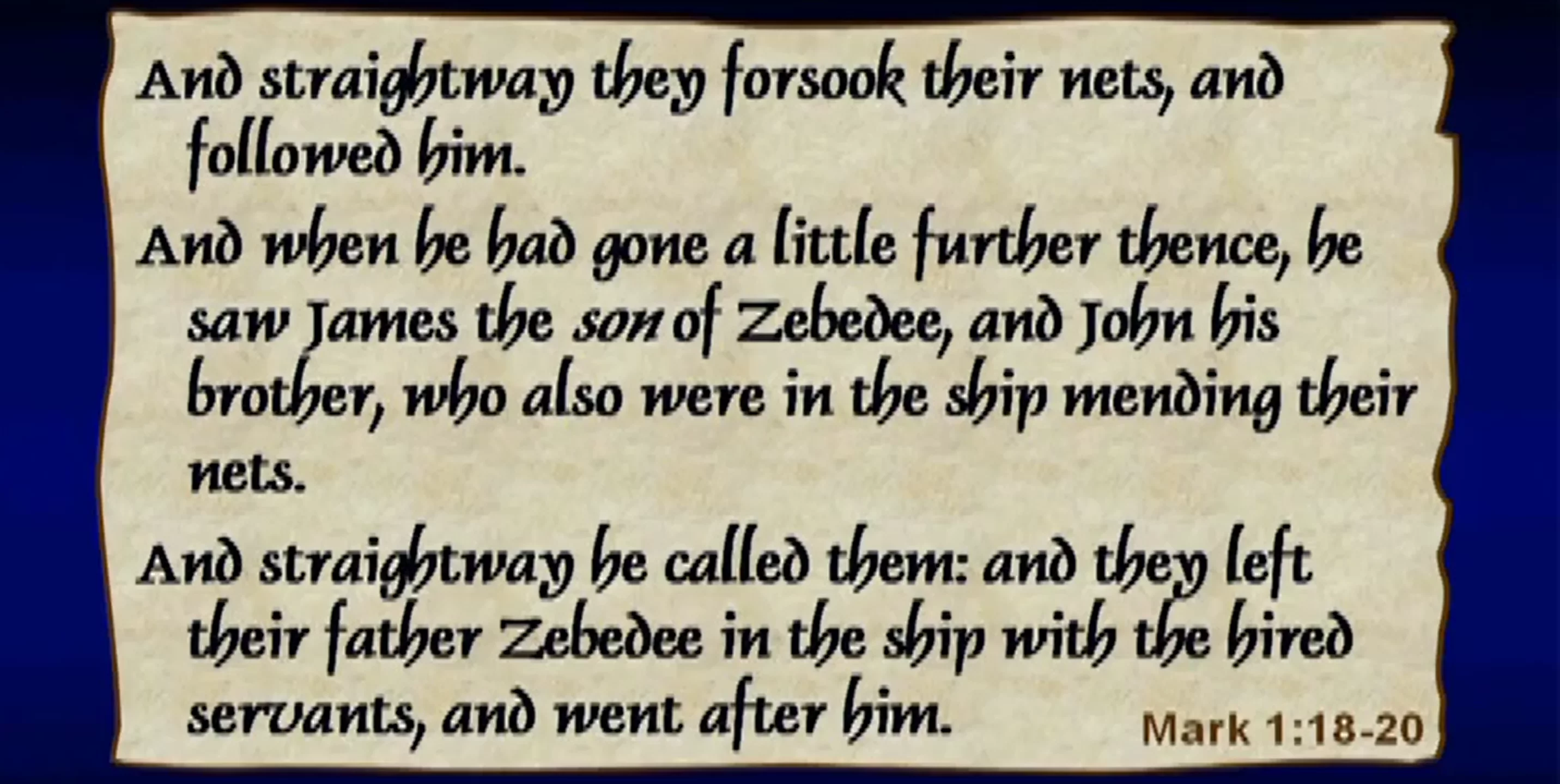
- They were not poor: they had servants who remained with their father
- Apparently as many as seven of our Lord’s disciples were fishermen (John 21:1-3)
Mark 1:21

- Caper - village, naum - Nahum = Village of Nahum
— Capernaum is where our Lord and His mother and brethren had moved to from Nazareth (Matt 4:13, John 2:12)
- But Mark focuses on His deeds, not words
- Synagogues could be formed whenever there were at least 10 Jewish men above the age of 12
— They welcomed visiting teachers to read and teach
— Paul always took advantage of these opportunities (Acts 13:14-16, Acts 14:1, Acts 17:1-4)
Mark 1:22

- Not “Thus saith the Lord”, but rather: “Verily, verily, I say unto you…”
- There is no other person in history who has the right to speak that way
Mark 1:23-24
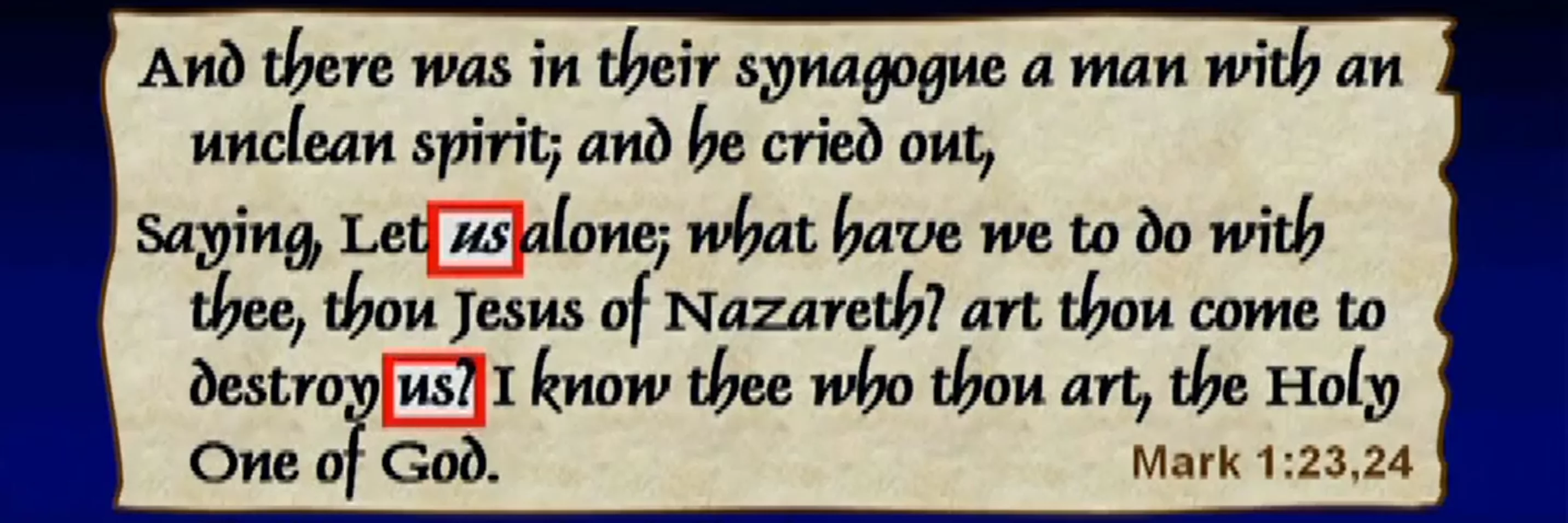
- That actually is a very startling verse — Jesus has not declared to the public that He is the Son of God. Yet, the demons recognize who He is
- Evil is not to be left alone
- Note the plural pronouns…
Mark 1:25-26

- “Hold thy peace”: φιμόω (phimoo) = “Be muzzled!”
- Jesus rebuked him: Our Lord did not desire testimony from demons
- Jesus would use the same terms when stilling the storm (Mark 4:39)
Mark 1:27-28
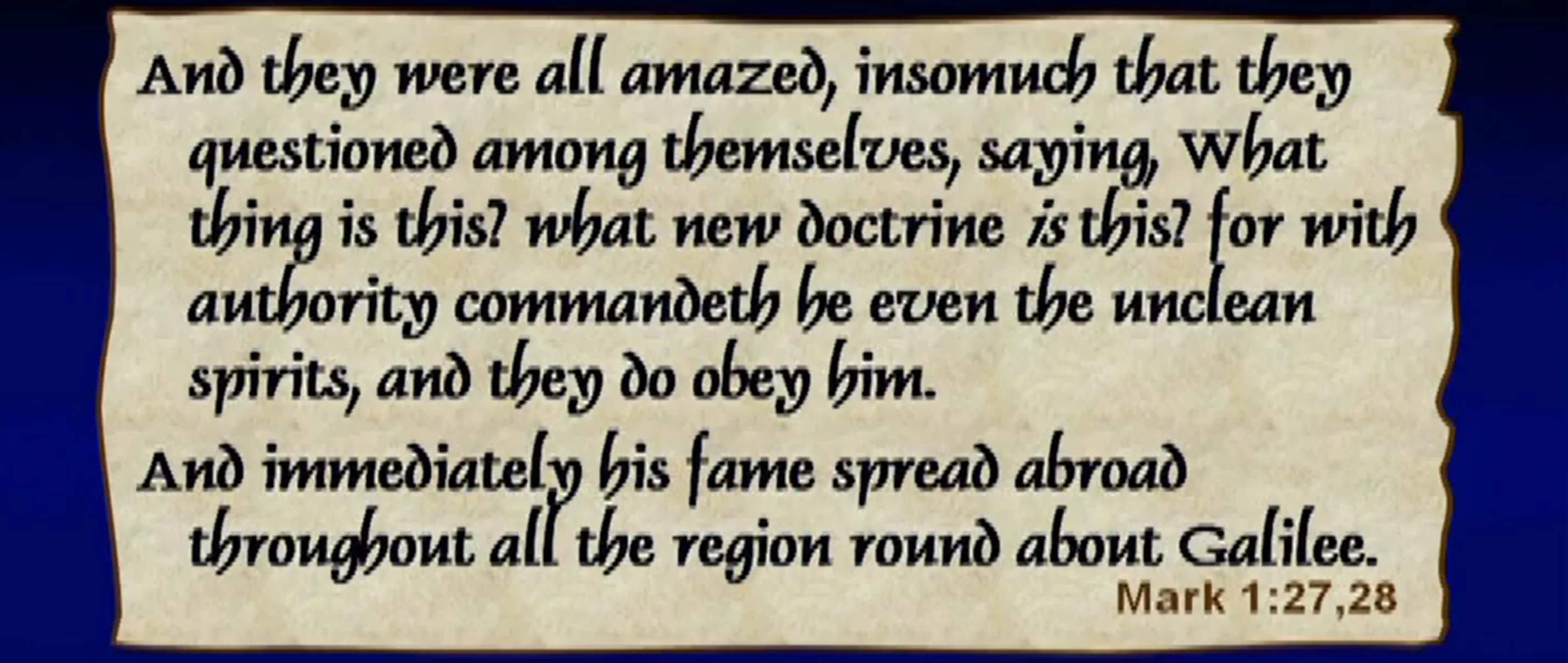
- Jesus did not welcome this type of superficial public excitement lest it creates problems with both the Jews and the Romans…
Mark 1:29 Simon’s Mother-In-Law and Many Others Healed
- Originally these brethren dwelt in Bethsaida. It may have been after Simon’s marriage that he moved to Capernaum, possibly to share the home of his wife’s mother
Mark 1:30

- “…anon”: εὐθέως (eutheos): immediately, at once, straightway
Mark 1:31

- “…took her by the hand” — Mark also notes:
— Jairus’ daughter (“And he took the damsel by the hand”) → Mark 5:41
— The Blind man (“And he took the blind man by the hand”) → Mark 8:23
— Demon possessed child (“But Jesus took him by the hand”) → Mark 9:27
— Picking up the child (“And he took a child… and when he had taken him in his arms”) → Mark 9:36-37
- [We need to take people by the hand…]
Mark 1:32

- The Scripture differentiates the diseased from the possessed
Mark 1:33-34
- “…because they knew him”: It wasn’t just that one case - apparently, that was the general rule
- These demons knew who He was. He told them to “Shut up!”
- He would not receive testimony from the hosts of the Evil One
Mark 1:35

- Jesus is always praying: stays up late at night praying, gets up early while it’s still dark praying. The incarnation of God Himself feels the need to be continually in prayer. A sobering lesson for each of us
— The late hours the night before did not defer His appointed meeting with His Father in the early morning hours
— Jesus was always praying
— Sometimes, all night. And certainly at the beginning of the day…
— It was His discipline in His prayer life that was key to His power
- [Not praying is like planning a long trip but not taking the time to put oil in the engine…]
Mark 1:36-38
- Jesus did not alter His priorities from any popular acclaim…
Mark 1:39-40
- Leprosy was a dreaded disease and back then it was incurable. One of the two idioms for sin in the Scripture (the other one being leaven). Leprosy is a “type” of sin:
— It is deeper than the skin (Lev 13:3)
— It spreads (Lev 13:5-8)
— It defiles and isolates (Lev 13:44-46) and
— It renders things only fit for the fire (Lev 13:47-49)

Leprosy is an infectious disease that is characterized by disfiguring skin sores, nerve damage and progressive debilitation.
Symptoms include:
- Skin lesions that are lighter than the normal skin color
- Lesions have decreased sensation to touch, heat or pain
- Lesions that do not heal after several weeks to months
- Numbness or absent sensation in the hands, arms, feet and legs
- Muscle weakness
Leprosy (from the Greek λέπι (lépi), meaning scales on a fish), or Hansen’s disease. It is caused by the organism Mycobacterium leprae:
- It is not very contagious and has a long incubation period, which makes it difficult to determine where or when the disease was contracted
- All forms of the disease eventually cause peripheral neurological damage which causes sensory loss in the skin and muscle weakness
- People with long-term leprosy may lose the use of their hands or feet due to repeated injury resulting from lack of sensation
- In 1995, the World Health Organization (WHO) estimated that between 2 and 3 million people were permanently disabled because of leprosy
- In the past 20 years, 15 million people worldwide have been cured of leprosy
- Today, the diagnosis and treatment of leprosy is easy (antibiotics)
- Although the forced quarantine or segregation of patients is unnecessary in places where adequate treatments are available, many leper colonies still remain around the world
Mark 1:41
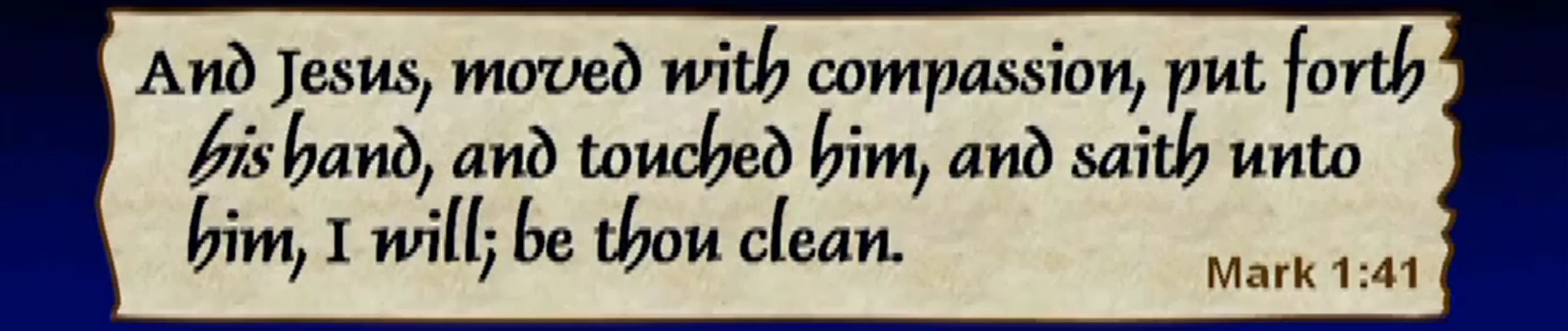
- Lepers were supposed to keep their distance (Lev 13:45-46)
- God has made it abundantly clear that He is not willing that sinners perish:
— “The Lord is not slow about His promise, as some count slowness, but is patient toward you, not wishing for any to perish but for all to come to repentance.” (2 Pet 3:9 NASB) and that
- He is willing (desires) that all men be saved:
— “For this is good and acceptable in the sight of God our Saviour; 4 Who will have (desires) all men to be saved, and to come unto the knowledge of the truth.” (1 Tim 2:3-4)
Mark 1:42

- That certainly must have shocked the audience who was familiar with these symptoms and incurability
- The leper was cleansed and so are we. We are in the same boat
Mark 1:43-44
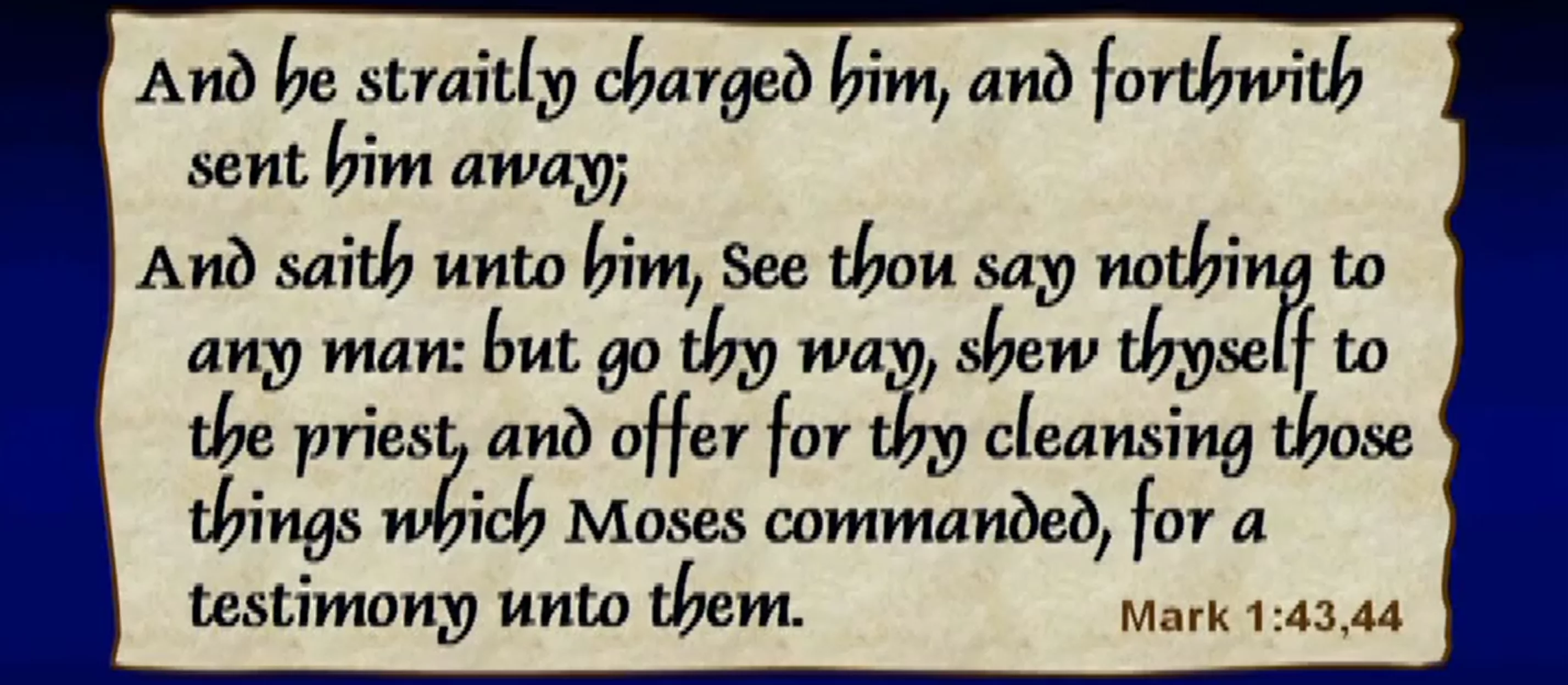
- All He wants him to do is what was required by the Law — for those healed, Torah required to go to the priest and give thanksgiving offering: Two birds (as required in Lev 14)
— The two birds represent:
a) Jesus’ incarnation and death: the bird in the jar and killed
b) Jesus’ resurrection and ascension: the bird stained with the blood and set free
- The blood was applied to the man’s
— Right ear (God’s Word)
— Right thumb (God’s work) and
— Right big toe (God’s walk)
- The oil was put on the blood, symbolizing the Holy Spirit, who cannot come on human flesh until after the blood has been applied
- These details of the Book of Leviticus, a lot of them seem obscured until we understand they are teaching devices to understand the redemptive work of the Messiah Himself. Every one of them reflects in some way the work of Jesus Christ
Mark 1:45

Lessons:
- The Son of God came as a servant
— … with authority
— … with compassion

