s03 (Ch 3) Healing on Sabbath, 12 Appointed (studied 4-Oct-2025)
The Book of Mark with Dr. Chuck Missler
The subsections of Chapter 3 (per LSB) are:


- Mark records about half of Christ’s miracles
— Two are found only in Mark:
• The healing of a deaf and dumb man Mark 7:31–37 (after The Syrophoenician Woman passage)
• The healing of a blind man Mark 8:22–26 (after the Four Thousand Fed passage)
- Mark records eighteen parables
— Two are peculiar (unique) to Mark’s Gospel:
• The Parable of the Seed (Mark 4:26–29) (after Parable of the Sower and Soils)
• Master Commanding His Slaves to Stay Awake (Mark 13:34–37) (at the EoCh in regards to The Return of Christ)

14 Physical Healings recorded throughout Gospels:
- A leper Matt 8:2-4, Mark 1:40-45, Luke 5:12-15
- A paralytic Matt 9:2-8, Mark 2:3-12, Luke 5:18-26
- Fever (Peter’s mother-in-law) Matt 8:14-17, Mark 1:29-31
- Nobleman’s son healed John 4:46-53
- Physical infirmity John 5:1-9
- A withered hand Matt 12:9-13, Mark 3:1-6, Luke 6:6-11
- Deafness and dumbness Mark 7:31-37 (Mark only)
- Blindness at Bethsaida Mark 8:22-25 (Mark only)
- Blindness in Jerusalem John 9:1-12
- Blindness of Bartimaeus Mark 10:46-52
- Ten lepers Luke 17:11-19
- Malchus’ severed ear Luke 22:47-51
- Hemorrhage Matt 9:20-22, Mark 5:25-34, Luke 8:43-8
- Dropsy Luke 14:2-4

- Jesus’ miracles were outward proofs of His deity and messiahship
— “If I had not done among them the works which no one else did, they would not have sin; but now they have both seen and hated Me and My Father as well.” (cf. John 15:24 NASB)
- Miracles were also the expression of His love for and identification with the human race, performed for its redemption from suffering, sin and death
- Most of Jesus’ miracles are unrecorded —
cf. Matt 4:24, Luke 4:40, Mark 6:53-56, Luke 6:17-19, Matt 15:30-31, John 21:25
- Those that are recorded, as in John’s gospel (cf. John 20:30-31), are highly selected for a specific purpose—to arouse faith in Jesus as “the Christ, the Son of God, and that by believing you may have life in His name”. John is unabashedly (in a way that shows no embarrassment, shame or hesitation) forthright declaring (stating in a very direct, honest and straightforward way, without evasion or subtlety; the act of making a declaration or statement in a frank, plainspoken and unapologetic manner) his purpose in selecting those


- Water changed to wine John 2:1-11
- Stilling of a storm Matt 8:23-27, Mark 4:35-41, Luke 8:22-25
- Supernatural catch of fish Luke 5:1-11, John 21:6
- Multiplying food Matt 14:15-21, Mark 6:34-44
- 5,000 fed Luke 9:11-17, John 6:1-14
- 4,000 fed Matt 15:32-39, Mark 8:1-9
- Walking on water Matt 14:22-33, Mark 6:45-52, John 6:19
- Money from a fish Matt 17:24-27
- Fig tree dried up Matt 21:18-22, Mark 11:12-14


- This busy fishing port, which became Jesus’ headquarters, was located on the NW shore of the Sea of Galilee, 2.5mi SW of the spot where the Jordan enters the lake, and is identified with modern Tell Hum, where extensive ruins exist (cf. Matt 11:23)
- It was also a toll-collecting station (Matt 9:9, Matt 17:24-27), gathering tax revenue from caravans en route from Damascus to the Mediterranean coast and Egypt, as well as from the fishing trade
- Excavations at Tell Hum have yielded one of the finest white limestone synagogues in Palestine, restored by the Franciscans
— Ornamented with motifs of centaurs, lions, eagles, palm trees and vines, it is dated 2nd or 3rd century AD
— It was probably built on the site of this synagogue in which Jesus ministered

Chuck’s favorites (resources where Five Decisions commentary comes from):
— J. Vernon McGee is known for the "Thru the Bible" commentary, a systematic, verse-by-verse study of the entire Bible
(the most colorful), pig joke, Thru the Bible Christian talk radio with J. Vernon McGee
— Dr. Warren W. Wiersbe - The Wiersbe Bible Commentary (2 volume OT & NT in pdf readily available on the web)
(the most pithy) "Pithy" describes something short, expressed well and full of meaning or substance. It is brief, forceful and to the point, often with cleverness or wit. For example, a pithy observation is a concise remark that conveys a lot of information or insight without unnecessary words

Mark 3:1 Jesus Heals a Man on the Sabbath

- “…entered again into the synagogue”:

- The synagogue was a form of assembly developed upon the return from the Babylonian captivity
- The congregation sat in an appointed order, the most distinguished in the front seats, the younger behind; men and women probably apart (cf. Matt 23:6, Mark 12:39, Luke 11:43, Luke 20:46)
- (In the great synagogue in Alexandria the men are said to have been set apart according to their respective trades (a guild they were involved in). A special division was prepared for lepers)
- The chief parts included a prayer, the lesson from the prophets, the blessing of the priest, followed by the translation of the Scripture that had been read, and the discourse (teaching or sermon)
- The prayer was offered by someone named by the ruler of the synagogue, the congregation making only certain responses, especially the amen
- He who uttered the prayer stood in front of the chest in which lay the rolls (scrolls) of the law (the Torah)
- Every adult member of the congregation was competent to do this and might also recite the Sh’ma, read the lesson from the prophets, and, if a priest, pronounce the blessing
- The Sh’ma, so called from its commencing words, shema, “Hear, O Israel!” (Deut 6:4- 9, Deut 11:13-21, Num 15:37-41), was recited, together with benedictions before and after. It is a confession of faith rather than a prayer
- The Scripture lessons, from both the law and the prophets, could be read by any member of the congregation, even by minors (the latter being only excluded from reading the book of Esther at the feast of Purim). If priests and Levites were present, they took precedence in reading the lesson
- The reader usually stood (Luke 4:16)
- The lesson from the Torah was so arranged that the whole Pentateuch was completed in a cycle of three years, for which purpose it was divided into 154 sections
- On Sabbaths, several members of the congregation, who were summoned for the purpose by some official (originally, indeed, by the ruler of the synagogue), took part in the reading; each (at the reading of the Torah) to read at least three verses, but not to repeat them by heart
- The reading of the law was followed in NT times by a paragraph from the prophets (see Luke 4:17, Acts 13:15)
- The prophets not being read in order, a choice of them was open, and they were always read by one person, and that during the chief services of the Sabbath
- (The Hebrew of the Scripture text was no longer the first language of the people, for they spoke Aramaic in daily life. Consequently the reading of Scripture was followed by translation into the Aramaic dialect)
- The reading of the Scripture was followed by a lecture (teaching) or sermon, explaining and applying the portion read (Matt 4:23, Mark 1:21, Luke 4:15, Luke 6:6, Luke 13:10, John 6:59, John18:20). The preacher sat on an elevated place (Luke 4:20)
- The position of preacher was open to any competent member of the congregation
- The service closed with the blessing pronounced by a priestly member of the congregation, to which the whole congregation responded, “Amen”
Mark 3:2

- The question arises here: was this cripple planted there purposely? Was he a deliberate plant?
- Many commentators take for granted that this was a setup. That he was brought in specifically on the Sabbath so Jesus would be put on the spot to make a decision: heal or respect the Sabbath
- They knew that, if they planted this crippled man right in the way of our Lord, Jesus would heal him when He came into the synagogue
Mark 3:3

- The Wycliffe translation is better here: “Rise, come into the midst and stand there.”
- NASB: “Get up and come forward!”, lit Arise into the midst
Mark 3:4

- They had learned (the hard way) not to answer Him because they always got into trouble when they did
- The prime example being Matt 22:46: “And no one was able to answer Him a word, nor did anyone dare from that day on to ask Him another question.”
Mark 3:5
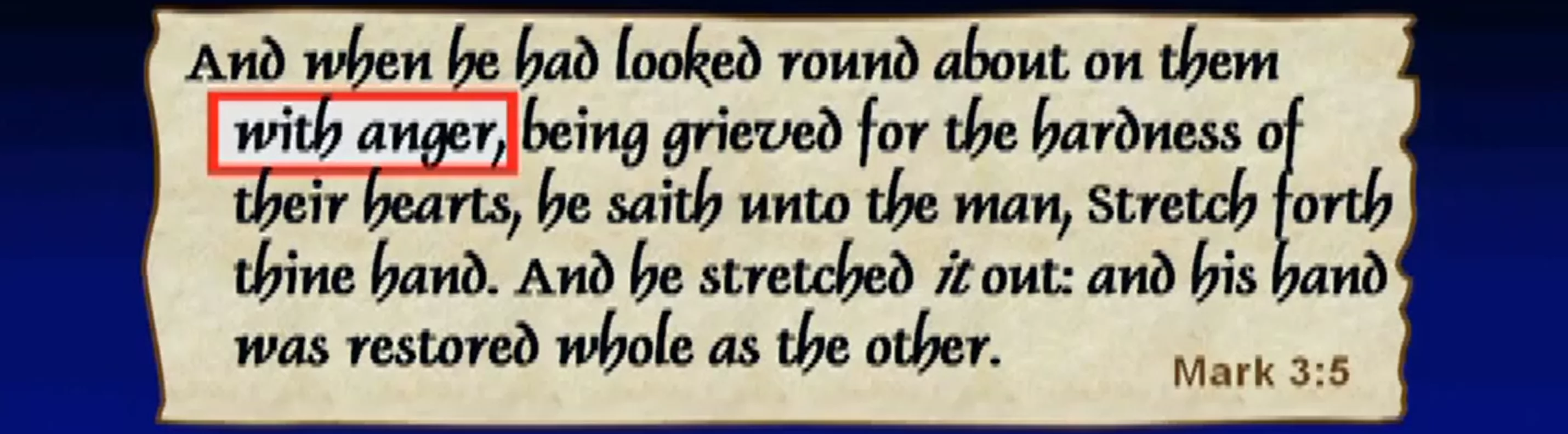
- “…with anger”: The empty legalism and utter hypocrisy of the Jews evoked His righteous anger (vv. 1-4)
- I can imagine - Lightnings coming out of His eyes!
- Jesus never gets angry at usual sinners (woman caught in adultery). He always evokes compassion for them, and conditions for forgiveness
- Anger and vituperative language is reserved for one group — especially in John 8:31-59 (where they call him “illegitimate” John 8:41, followed by “I’ll tell you about your parentage”) — the group of professional religionists of the day (hardness of their hearts, hypocrites, vipers)
- Mark has a good (great) deal to say about the looks of Jesus with this word (Mark 3:5, Mark 3:34, Mark 5:37, Mark 9:8, Mark 10:23, Mark 11:11)
Mark 3:6

- Unusual partnership:
— The Pharisees (ultra legalists of the day) joined with
— Herodians (Hellenizing conformists, attracted to the Greek way of doing things; also neither religious, nor Jewish, but Edomites (original name) or Idumeans (later name after the Babylonian destruction of Jerusalem) — Idumea being a Hellenized form of the Hebrew Edom)
- They were usually at odds with each other, but they had common rejection and hatred of the Servant of God
- They began their plot to kill Him (but not on a feast day; cf. Matt 26:5)
- This is the first mention of the Herodians, or adherents of Herod Antipas and the Herod family, rather than the Romans. The Pharisees would welcome the help of their rivals to destroy Jesus. In the presence of Jesus they unite their forces:
— “…“Watch out! Beware of the leaven of the Pharisees and the leaven of Herod.”” (Mark 8:15 NASB)
— “Then they sent some of the Pharisees and Herodians to Him in order to trap Him in a statement.” (Mark 12:13 NASB)
— “Then the Pharisees went and plotted together how they might trap Him in what He said. 16 And they sent their disciples to Him, along with the Herodians…” (Matt 22:15-16 NASB)
- For the 3rd time, Jesus deliberately violated the Jewish Sabbath traditions:
— The man with the paralyzed hand had no idea that Jesus would come to the synagogue to heal him, so waiting one more day would not have upset him
— But Jesus wanted to do more than merely heal a man; He wanted to teach the Pharisees (Luke 6:7) that God wanted His people to enjoy freedom and not suffer in religious bondage (“Now therefore why do you put God to the test by placing upon the neck of the disciples a yoke which neither our fathers nor we have been able to bear?” Acts 15:10 NASB)
— It is always right to do good; and if we do not do good, we do evil (“Therefore, to one who knows the right thing to do and does not do it, to him it is sin.” James 4:17 NASB)
- Jesus knew what His critics were thinking and was angry at the hardening of their hearts. He saw the evil process taking place within them, and He knew where it would end
- These religious men would actually become murderers of their own Messiah!

Mark 3:7

- Judaea is further to the south, Galilee is north — that’s quite a segment of the map
- Great crowds followed Jesus from all over the region so that He was unable to have any privacy. Thousands of people came from all over either to be healed or to watch Jesus heal others
- When He was near the Sea of Galilee, the disciples kept a boat handy so He could preach from it:
— “And He got into one of the boats, which was Simon’s, and asked him to put out a little way from the land. And He sat down and began teaching the people from the boat.” (Luke 5:3 NASB)
Mark 3:8

- The crowds came from a very wide area (huge part of the map). Even larger area than stated in the previous verse
- That created a potential problem for Jesus, for the Romans were getting uncomfortable. They might think He was leading a popular uprising and their apprehension could interfere with His ministry
Mark 3:9

Mark 3:10

Mark 3:11

- Jesus hasn’t announced yet that He is the Son of God, so people didn’t know. However, demons knew it (their knowledge went beyond the knowledge of the people)
- When we read the Bible, we know who Jesus is and we are not surprised that He is the Son of God. People around demons declaring Jesus is the Son of God must have been really confused

- Demons are evil or unclean spirits (cf. Mark 1:23 and Mark 1:32-34, Rev 16:13-16)
- Demons are servants of Satan (Matt 12:26-27, Matt 25:41, et al.)
- It is a matter of divine revelation that demonism is the dynamic of idolatry (1 Cor 10:20). Worshiping an idol is worshiping a demon spirit (Hinduism comes to mind). Idolatry involves the worship of demons. We often think that these idols are foolish, superstitious, a misdirection — it’s worse than that — it’s actually being caught up in the powers of darkness
- There is only one devil, but myriads of demons who serve the devil and make his power practically universal (the word in plural “devils” in KJV should really be translated as demons)
- Satan has locality. He is not omnipresent but he has lots of “lieutenants” (demons)
- A demoniac is a term used of a person (Mark 5:1-20) whose personality has been invaded (inhabited) by one or more demons, who at will can speak and act through their human victim, deranging both his mind and body. A number of such victims of Satan were delivered by Jesus
- The demons actually cannot invade a person without invitation. The problem is, the invitation can be very subtle
- The ones with unclean spirits in the Bible is not just a rhetoric to what we would consider ones with some psychiatric problems. It goes far deeper than that because demons have knowledge that goes beyond human knowledge. The field of Psychiatry deals with all kinds of clinically abnormal behavior, but more often than not, it may be actually demonic, except they don’t have the tools or sophistication to understand that
- The unhindered power of God working through the sinless humanity of the Servant challenged the supernatural world of evil and explains the outburst of demonism during His earthly ministry. As we get into the end times increasingly, we can expect an upsurge of the same kind of thing
- The reality and personality of demons are attested in all eras of history since the Fall:
— as in the case of Saul and the medium of En-dor (1 Sam 28:7-20)
— in the case of ancient idolatry of which demonism was the dynamic (Ps 106:36-37; 1 Cor 10:20)
— in ancient divination and magic and
— in ancient necromancy and modern spiritism
- Demons can derange mind and body (Matt 12:22, Matt 17:15-18, Luke 13:16)
— They know the deity and lordship of Christ in the spirit world (Matt 8:31-32, Mark 1:24, Act 19:15, Jas 2:19)
— They also realize their predestined fate (Matt 8:31-32, Luke 8:31)
- They have a conspicuous role
— in the government of the Satanic world system (Dan 10:13, Eph 6:12)
— in promoting cultism and false doctrine (1 Tim 4:1-3) and
— in opposing God’s program and God’s people (Eph 6:12; 1 John 4:1- 6). One way to do that is to deviate them from the Truth. Even a small degree of deviation, after a little while, makes one completely off course
[Source: Unger, Merrill, Biblical Demonology, pp. 58-61] (not in slide, not sure what this relates to)
- Prayer is the believer’s resource against Satan and demons (Eph 6:10-20). Prayer is powerful - heavy artillery; primary warfare against the dark world. It is so casually available that we tend to underestimate it and neglect its use. Sometimes, when the Spirit leads you, accompany prayer with fasting
- Specific instances:
— Demoniac in the synagogue at Capernaum (Mark 1:21-27, Luke 4:31-37)
— Dumb demoniac (Matt 9:32-34)
— Daughter of Syrophoenician woman (Matt 15:21-28, Mark 7:24-30)
— Gadarene demoniacs (Matt 8:28-34, Mark 5:1-20, Luke 8:26-39)
— Blind and mute demoniac (Matt 12:22, Luke 11:14)
— Disciples couldn’t cast out (not in the slide) (Matt 17:14-21, Mark 9:14- 29, Luke 9:37-43)

- There is a distinction between fallen angels and demons
- Angels can:
— materialize
— take people by the hand (Gen 19:16 Lot and his wife at Sodom)
— eat meals with them (Gen 18:8 with Abraham)
— engage in physical combat (2 Kgs 19:35, Isa 37:36 angel of the Lord struck 185,000), etc
- Demons cannot materialize so they always seek embodiment: they appear powerless except to the extent that they can take possession of a person
- Some suspect that demons may be the disembodied spirits of the hybrid Nephilim of Genesis 6 (Gen 6:4). Fallen angles produced offspring with human women — Nephilim (Rephaim in Hebrew). Nephilim eventually died (or got drowned in the flood) and their spirits potentially became demons. (cf. Alien Encounters book, Chapter 10)
- They apparently are ineligible for resurrection — Christ didn’t die for them
— “They are dead, they shall not live;
They are deceased, they shall not rise:
Therefore hast thou visited and destroyed them,
And made all their memory to perish.” (Isa 26:14)
Mark 3:12

- Great commission hasn’t been given yet. Christ doesn’t want to be announced prematurely
- He has ministry to do before Romans start clamping down

Mark 3:13 Jesus Appoints the Twelve

- Our Lord’s response was to go to a mountain alone and spend the whole night in prayer to God (Luke 6:12)
Mark 3:14-15
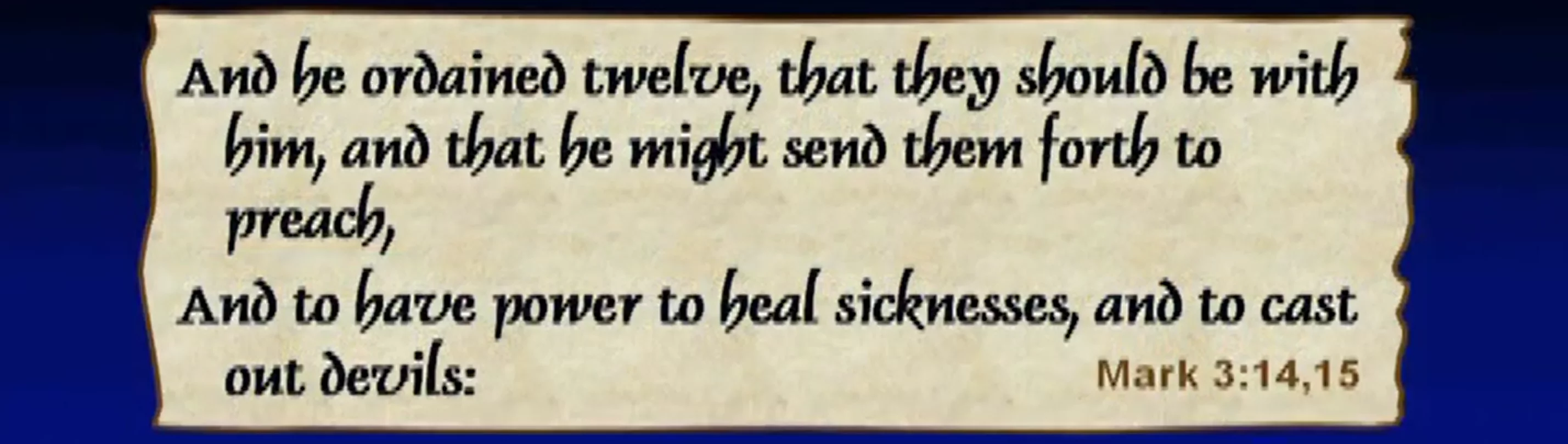
- When He came down from the mountain the next morning, He selected twelve men and named them:
Apostles — “one who is sent with a commission”
- Number “7” deals with the total creation of God (Kingdom of God)
- Number “12” deals with the Kingdom from Heaven on the earth that Jesus is destined to establish here
- Ten times in his Gospel, Mark refers to “the Twelve” (Mark 3:14, Mark4:10, Mark 6:7, Mark 9:35, Mark 10:32, Mark 11:11, Mark 14:10, Mark 14:17, Mark 14:20 & Mark 14:43)
- These men would live with Jesus, learn from Him, and go out and serve under His authority. The qualifications given in Acts 1:21–22 indicate that there can be no apostles today in the strictest meaning of the word
- Jesus delegated the apostles with power (healing & exorcism). He is designating His apostles to also do the miracles
Mark 3:16

- Peter: His name Peter means “stone” (Greek: Petras; Cephas is Aramaic)
- Peter is always listed first (in many lists of the Twelve all through the Gospels)
- He was married (Matt 8:14, Mark 1:30, Luke 4:38)
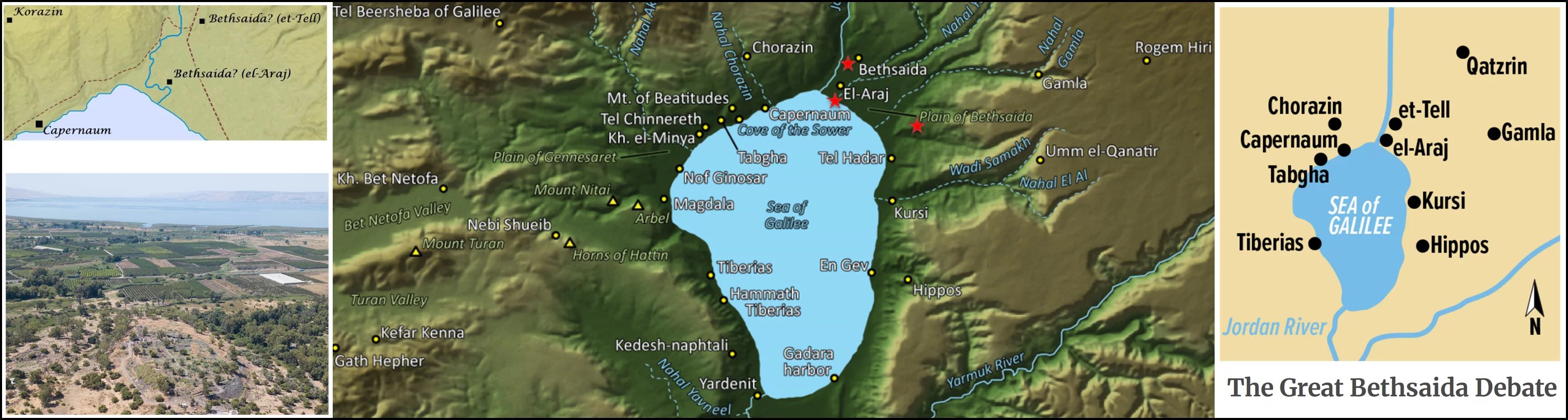
- Although he came from Bethsaida (John 1:44), he lived in Capernaum, and was a fisherman in partnership with James and John. (Bethsaida was recently discovered and it is quite a few miles from The sea of Galilee, which used to be a larger lake back then)
- Peter was a paradoxical combination of cowardice and courage, impulsiveness and fearlessness. That’s why we find him so engaging. We always say: “ready, fire, aim Peter”
- His association with Jesus, and his being filled with the Spirit (Acts 2), transformed him into an articulate spokesman. Originally, he was always saying the wrong thing at the wrong time (putting “foot in his mouth”). Later on in Acts 2-3, his 1st and 2nd sermons are masterpieces of organization and crispness. The difference is obvious when he became a Spirit-led speaker as opposed to Peter in the Gospels
Mark 3:17

- James & his brother John, both nicknamed Boanerges (“sons of thunder”)
- They and their father Zebedee conducted a fishing business partnership with the brothers Simon Peter and Andrew
- James suffered martyrdom under Herod
— “And he had James the brother of John put to death with a sword.” (Acts 12:2 NASB)
- These were fishermen — and from their nickname it doesn’t seem to support the namby-pamby passives you usually see portrayed in the typical Sunday School videos (cf. Luke 9:54)
Mark 3:18
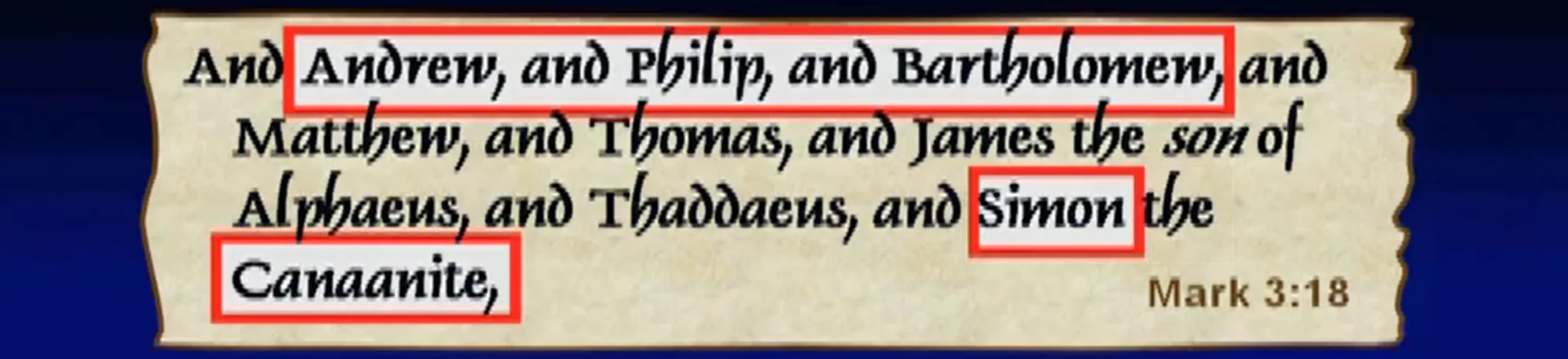
- Andrew: One of the earliest of the Servant’s converts, who led his brother Peter to Christ (John 1:40-42)
- Philip: With Peter and Andrew, he hailed from Bethsaida, a lake town NE of Capernaum (John 1:43-44)
- Philip brought Nathanael (aka Bartholomew?) to Christ (John 1:45-49). Philip is always witnessing to somebody
- Bartholomew: Little is known of him. Some identify him with Nathanael - they think it’s the same guy
- The word “Canaanite” comes from the Hebrew and means “a zealous one”. Before his conversion, Simon the Canaanite belonged to a Jewish “underground” group, the Zealots, who tried to overthrow Rome (Luke 6:15)
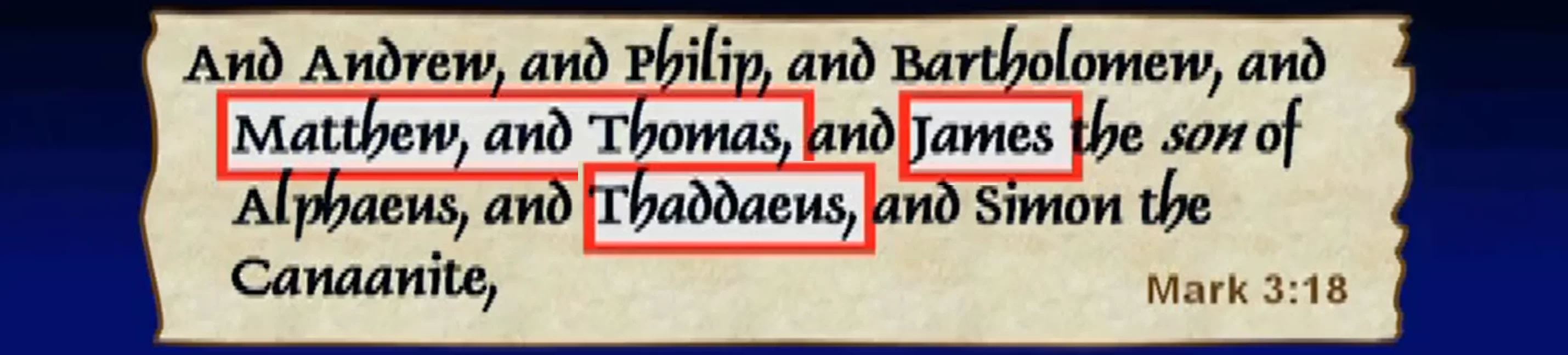
- Matthew: We discussed him before—as a tax collector and customs official he would have been skilled in shorthand; thus, the detailed discourses which characterize his Gospel
- Thomas: (means “twin”; aka Didymus) displayed zeal (John 11:16 ), but also a spirit of skepticism regarding Christ’s resurrection (John 20:24-25). This, however, was completely dissipated by proof furnished by his contact with the living Christ
- James the son of Alphaeus: He was called “James the Less” (Mark 15:40), possibly because he was either shorter in stature than James, the son of Zebedee or younger — “little” in age
- [Some connect James (Hebrew: “Jacob”) with the James of the first church council (Act 15) and writer of the book of James (cf. Act 21:18); though it is more commonly believed that Jesus’ brother James was the Jerusalem church leader and writer referred to in Acts]
- Thaddaeus (aka Judas): This is a Greek form of Theudas, his surname being Lebbaeus (Aramaic: “heart” KJV). The name is likely a nickname for the Judas mentioned in Luke and Acts, selected to avoid confusion with Judas Iscariot
- It is interesting that Jesus chose men of such diverse background:
— Simon the Canaanite: A Zealot, Simon had been a member of an extremely nationalistic sect of Judaism
— Matthew the publican represented the opposite extreme
- The Twelve were quite a diverse bunch—a selection we would call “every man”, the blue-collar types of the day
- Paul will surface as a totally different bread of cat: highly educated, highly articulate, one of the most brilliant minds that has ever walked on the face of the earth
Mark 3:19

- Judas Iscariot: the Greek form of Judah. The one who betrayed Jesus. He was the black sheep of the 12: Avaricious, greedy and ambitious. He chose to deny the Lord when his hope failed that Jesus would setup the Kingdom and he would be offered a kingly position and reward (Matt 26:14, Matt 26:47, Matt 27:5, Act 1:18)

Mark 3:20-21


- Our Lord’s own friends and family (kinsmen) did not understand Him. His friends came to “take charge of Him” because they thought He was a fanatic
— “While Paul was saying this in his defense, Festus said in a loud voice, “Paul, you are out of your mind! Your great learning is driving you mad.” 25 But Paul said, “I am not out of my mind, most excellent Festus, but I utter words of sober truth.” (cf. Acts 26:24–25 NASB)
— “For if we are beside ourselves, it is for God; if we are of sound mind, it is for you.” (2 Cor. 5:13 NASB)
- His family was greatly worried about Him. The huge crowds, the miracles and the widespread reports about Jesus convinced them that something had to be done

This is a pivotal event in the ministry of Jesus Christ. In the Book of Matthew, this occurs in chapter 12. After that Jesus does not speak publicly, except in parables and He speaks in parables to confine the truth to His own people, so the average person won’t understand.
Mark 3:22

- The Scribes are ascribing these supernatural events to Satan, not God
- “…Beelzebub”: Unwilling to submit to our Lord’s authority, the religious leaders had to explain His miracles in some other way. So they said He was empowered by the devil

- Term pagans used to focus on this whole area
- Cf. Ba´al-ze´bub — The form of the name of Baal as worshiped at the Philistine city of Ekron
- Baal, under this aspect of worship, was viewed as the producer of flies and hence able to control this pest so common in the East. Flies were so prevalent that that was just an idiom of power: Baal was the lord of the flies! Sounds weird to us, but that was the conception of the time
- Beelzebub was consulted by Ahaziah of Israel (that fell through the lattice and hurt himself), c. 849 BC
— “And Ahaziah fell through the lattice in his upper chamber which was in Samaria, and became ill. So he sent messengers and said to them, “Go, inquire of Baal-zebub, the god of Ekron, whether I will recover from this sickness.”” (2 Kgs 1:2 NASB) (see the whole subsection: Ahaziah’s Messengers Meet Elijah → 2 Kgs 1:2-16)
— “Then he said to him, “Thus says the LORD, ‘Because you have sent messengers to inquire of Baal-zebub, the god of Ekron—is it because there is no God in Israel to inquire of His word?—therefore you shall not come down from the bed where you have gone up, but shall surely die.’ ”” (2 Kgs 1:16 NASB)
- If we study the Egyptian gods, and there are many of them, at the top of the “heap” (deliberate pun) was the dung beetle. A scarab was considered the most sacred. They always showed up to get camel feces on the road and they were looked upon as a symbol of creation (strangely enough), and they were worshipped
- Scripture warns us: “You will become like the gods you worship” (Ps 115:8, Ps 135:18)
— AI: Those who make and trust in idols become just like them. This concept highlights that worship is a transformative process: by worshipping false, inanimate gods, people become like these creations—blind, deaf and incapable
— AI: Conversely, by worshipping the true living God, individuals are transformed and conformed to His image
- Egypt used to rule the world at one time. It wasn’t an undeveloped country. But today, you see them in poverty. When you go outside of Cairo, you see that people have become like the gods they worshipped. They worshipped death: Mummies and all that stuff
- Beelzebub is the “Lord of the Dung” or filth, from the rabbinic בַּעַל(baʿal) lord, and זְבֻל(zəḇul) dung
— (the spelling “Beelzebub” came from the Latin Vulgate which derives the word form the Hebrew lord and flies)
— [It could have been a play on words: baal zebuhl was “Lord of the Temple”. But they called him the “Lord of the Dung heaps”] [Source: Zondervan’s Pictorial Encyclopedia of the Bible, 1:505]
- Their assertion was also tantamount to accusing Jesus of casting out demons by the power of Beelzebub as a prince (or the prince) of demons
- Jesus rebuts this rather directly
Mark 3:23

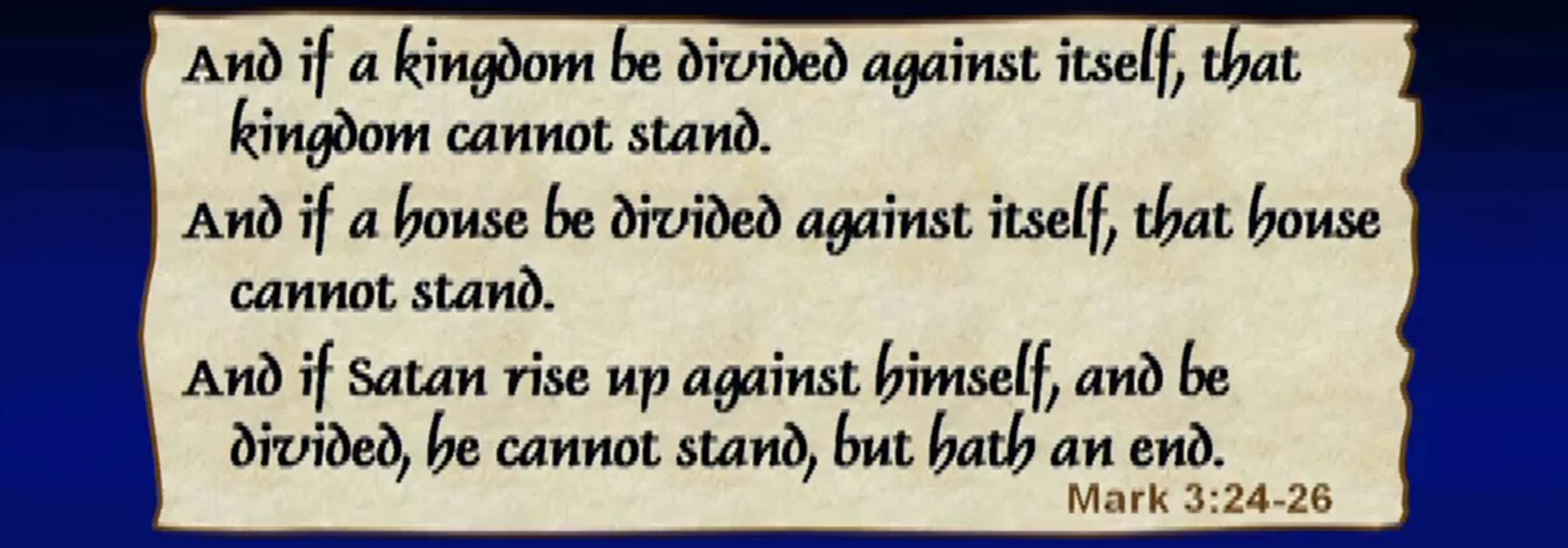
- Jesus pointed out the folly of that argument — for if He were casting out demons by Satan’s power, then Satan would be fighting against himself! Satan’s kingdom and house would be divided!
- Note that Satan does have a kingdom, for he is the “prince of this world” (Cf. John 12:31, Eph 6:10–20, Col 1:13)
Mark 3:24-26
Mark 3:27

- Parallel passage in Matthew (Matt 12:29) also uses the term “strong man”. In an alternative passage in Matthew (Matt 24:43) the term “goodman” is used, which actually means “the head of the household”
- The fact that Jesus cast out demons is proof that He is stronger than “the strong man” (namely Satan) and able to deliver those people who have been bound by the devil (possessed by the demons)
Mark 3:28-30

- Very widely misunderstood passage — the “unpardonable” sin
- Note that this verse is identified with these particular people attributing His actions specifically to Satan

- It is much more than a sin of words because words come from the heart, and that is where the sin lies (Matt 12:34–37)
— If it is only a sin of words, then why can blasphemy against Jesus be forgiven (Matt 12:32),
— but not blasphemy against the Holy Spirit? (Matt 12:32) How are the Two different?
— Is the Holy Spirit greater than the Son of God? No, they are missing the point
- Jesus made it clear that God can and will forgive all sins (v 28; and there’s all kinds of passages throughout Gospels and the epistles that make that very clear)
- The only “unpardonable sin” is refusal to trust in Jesus Christ
— ““For God so loved the world, that He gave His only begotten Son, that whoever believes in Him shall not perish, but have eternal life. 17 “For God did not send the Son into the world to judge the world, but that the world might be saved through Him. 18 “He who believes in Him is not judged; he who does not believe has been judged already, because he has not believed in the name of the only begotten Son of God.” (John 3:16–18 NASB)
— ““He who believes in the Son has eternal life; but he who does not obey the Son will not see life, but the wrath of God abides on him.”” (John 3:36 NASB) sent to TS
- When Jesus warned the Jewish leaders, He was actually warning the Jewish nation
— They could reject the Son of God while He was on earth, and God would not judge them immediately: “…Father, forgive them; for they know not what they do.” (Luke 23:34)
— But when the Spirit came at Pentecost and the believers did many marvelous works, the leaders still refused to believe. This was their last opportunity: they rejected the evidence and died in unbelief. They sinned against the witness of the Holy Spirit and could not be forgiven
- In the strictest sense, there can be no “unpardonable sin” today
— (because no one has been confronted by the physical presence of Jesus Christ as they were back then)
— But the sinner who resists the witness of the Spirit and rejects Christ commits the one sin God cannot forgive
- Satan uses passages like Heb 6:1–8 (The Peril of Falling Away) and Heb 10:26–31 (Christ or Judgment) to accuse and attack God’s people, trying to convince them they are lost
— “For in the case of those who have once been enlightened and have tasted of the heavenly gift and have been made partakers of the Holy Spirit, 5 and have tasted the good word of God and the powers of the age to come, 6 and then have fallen away, it is impossible to renew them again to repentance, since they again crucify to themselves the Son of God and put Him to open shame.” (Heb 6:4-6 NASB)
— “For if we go on sinning willfully after receiving the knowledge of the truth, there no longer remains a sacrifice for sins,” (Heb 10:26 NASB)
— “How much severer punishment do you think he will deserve who has trampled under foot the Son of God, and has regarded as unclean the blood of the covenant by which he was sanctified, and has insulted the Spirit of grace?” (Heb 10:29 NASB)
- However, it is impossible for a true Christian to commit an “unpardonable sin”
- All of our sins have been forgiven
— “In Him we have redemption through His blood, the forgiveness of our trespasses, according to the riches of His grace” (Eph 1:7 NASB)
— “When you were dead in your transgressions and the uncircumcision of your flesh, He made you alive together with Him, having forgiven us all our transgressions,” (Col 2:13 NASB) (and many other)
- And if we sin against God, we can confess that sin and He will forgive us
— “If we confess our sins, He is faithful and righteous to forgive us our sins and to cleanse us from all unrighteousness.” (1 John 1:9 NASB) (cf. more than just one verse 1 John 1:5–2:2)
- If you are concerned about “unpardonable sin”, you haven’t committed it!

Mark 3:31-33
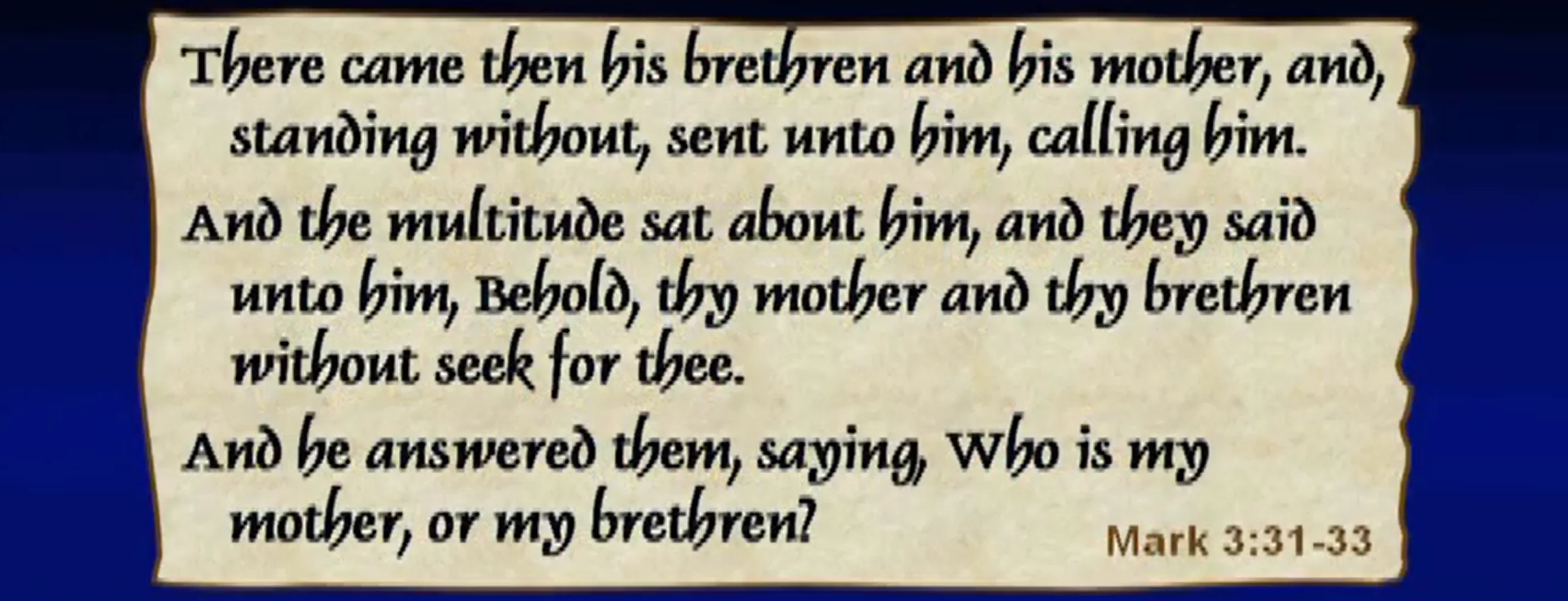
- Jesus had four brothers and at least two sisters (Matt 13:55, Mark 6:3)
- [btw, verse 31 is the only mention of Mary in the Gospel of Mark]
Mark 3:34-35
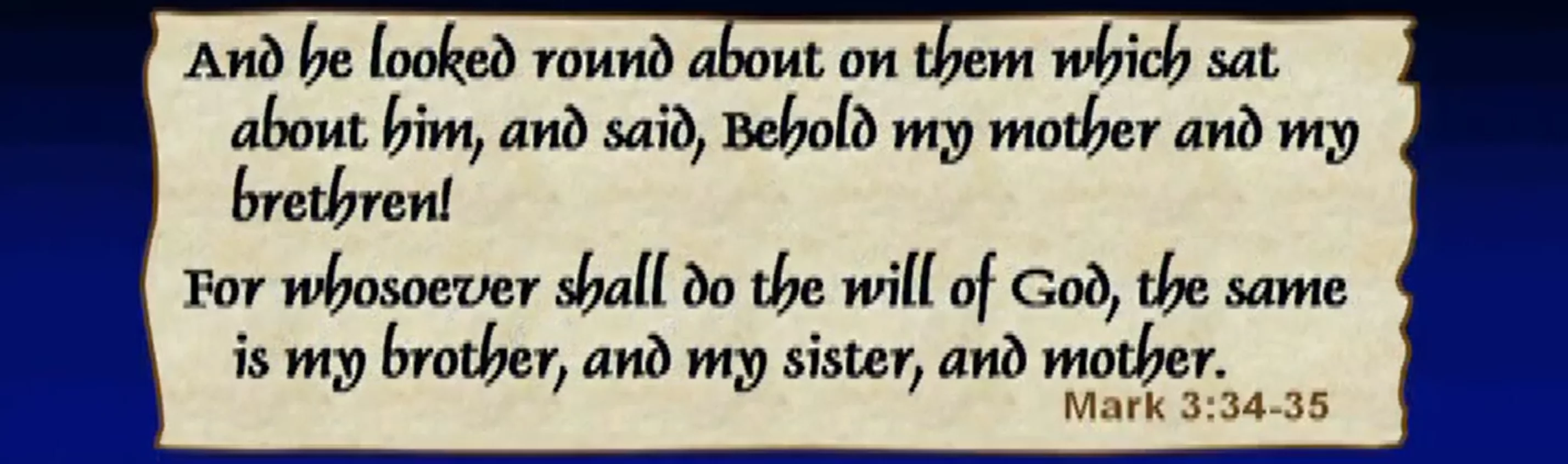
- Anyone who is in Jesus Christ is closer to Him than His physical (biological) mother and His physical (biological) brothers were in that day. It sounds like a preposterous statement, but that’s in effect what He is saying
- The ones He is concerned with, the ones who are in His immediate family are those that are in Him, that have accepted Him. That’s His family, not the bloodlines necessarily. That’s the point He is making here
- Our Lord was not rude to His family. He simply used their concern as an opportunity to explain what it means to belong to the family of God
- If you are born again, you are born into a family with more intimacy with Him than His own blood relatives
- God’s children are closer to Jesus than even His own earthly family, for we are “bone of His bone and flesh of His flesh” (“because we are members of His body.” — Eph 5:30)

→ 2 John 1:1-2
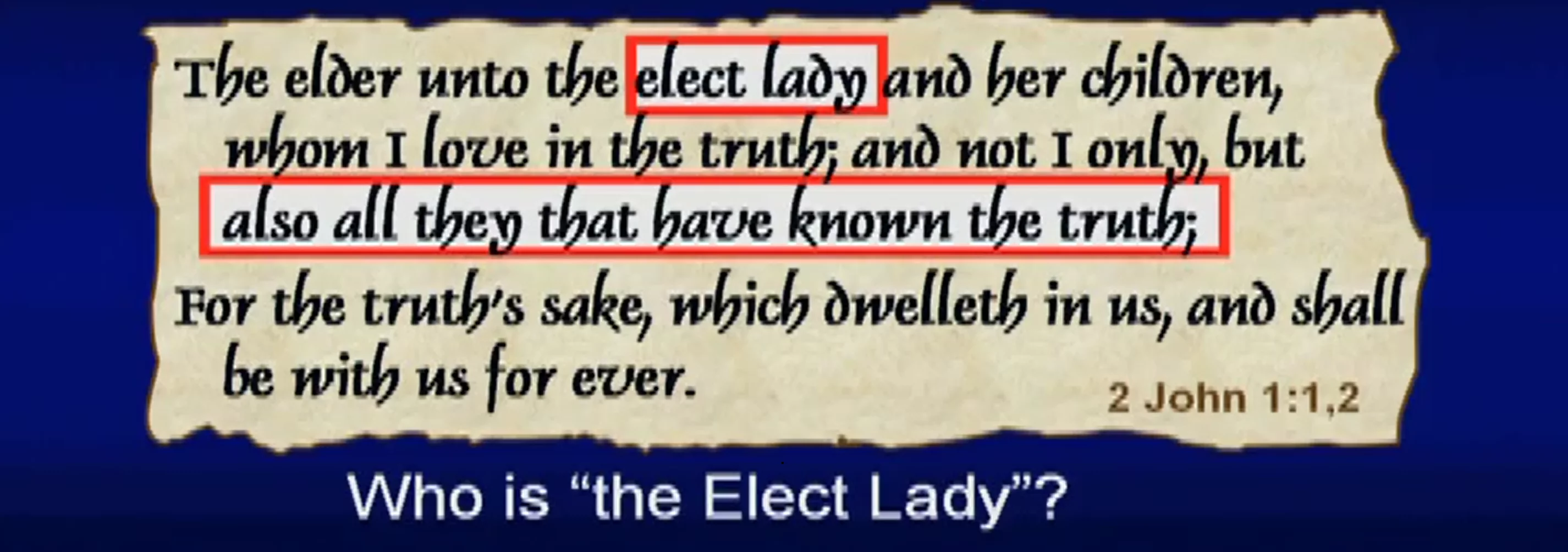
- (We hold a view that) 2nd epistle of John is a letter by John to Mary, the mother of Jesus
- Big debate among scholars—who is “the Elect Lady”? Who is the most “elect” of all women?
— One view is that’s an idiom for the church. But we are not the children of the church, we are children of God
— Some prominent person in the Ephesian church. No, everybody that loves Truth (Jesus Christ), loves her
- To whom did Jesus consign the care of His mother? (John 19:26-27) — to the apostle John
(Why not her own other sons?)
- “…whom I love in the truth, but also all they that have known the truth” (2 John 1:1) That’s a tipoff
- “…that which we had from the beginning…” (2 John 1:6) Not sure why is this a clue
- She had a sister (John 19:25 - Mary’s sister was with her at the foot of the cross)
- Her sister had children and John acknowledges that in this letter
→ Luke 1:28

- Who is the most blessed among women of all time? — Mary
- Is there any woman more singularly chosen or “elected” than Mary?
- And here is one specifically assigned to John’s personal care

- Jesus did not speak in parables because “they were means to communicate better what He was trying to get across”, as most people teach
- It was actually a means of hiding it from the people and illuminating it to the disciples
