s09 (Ch 9) Transfiguration (studied 25-Oct-2025)
The Book of Mark with Dr. Chuck Missler

The subsections of Chapter 9 (per LSB/NASB) are:


Sometimes a lesson needs a dramatic emphasis. It takes faith to receive and put into practice the various lessons on discipleship, so a week later the Lord provided a dazzling proof that God does, indeed, transform suffering into glory
Mark 9:1 The Transfiguration
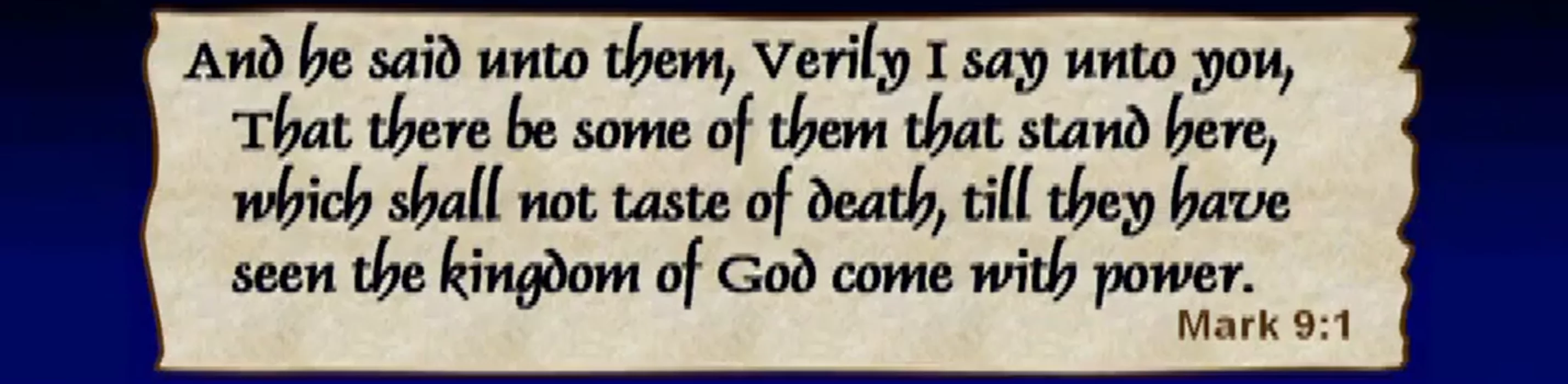
- A remarkable statement
- Yet, a week later there was an unforgettable surprise…
Mark 9:2
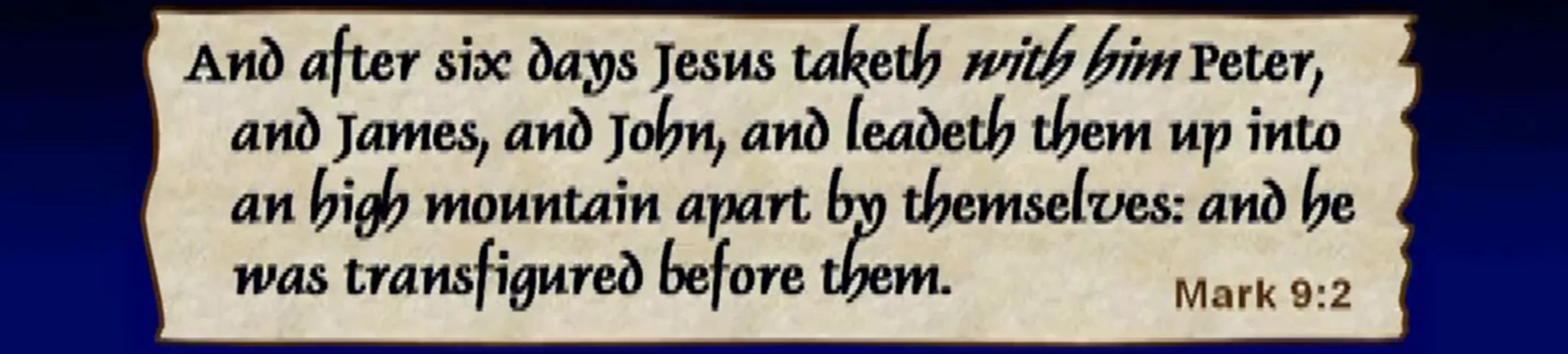
- “…an high mountain”: Probably Mt. Hermon — 9,000 ft above sea level (almost 11,000 ft above the Jordan valley)
- [Luke’s “8 days” were inclusive — cf. Luke 9:28]
- This was also a demonstration of the glory of the future kingdom. It’s not just an incident in the Gospels, it is actually a glimpse of what’s coming
— John, who was among those present, makes reference to it in John 1:14
— So does Peter in 2 Pet 1:12-21
- “…transfigured”: μεταμορφόω (metamorphoó) — to change into another form, to transform
— from which we get the term metamorphosis, a comprehensive change from within; an example is the caterpillar: emerging from a cocoon as a beautiful butterfly
— (the opposite of masquerade, a superficial outward change that does not come from within)
— It is the same word that appears in Romans Chapter 12, first couple of verses:
®️ Rom 12:1
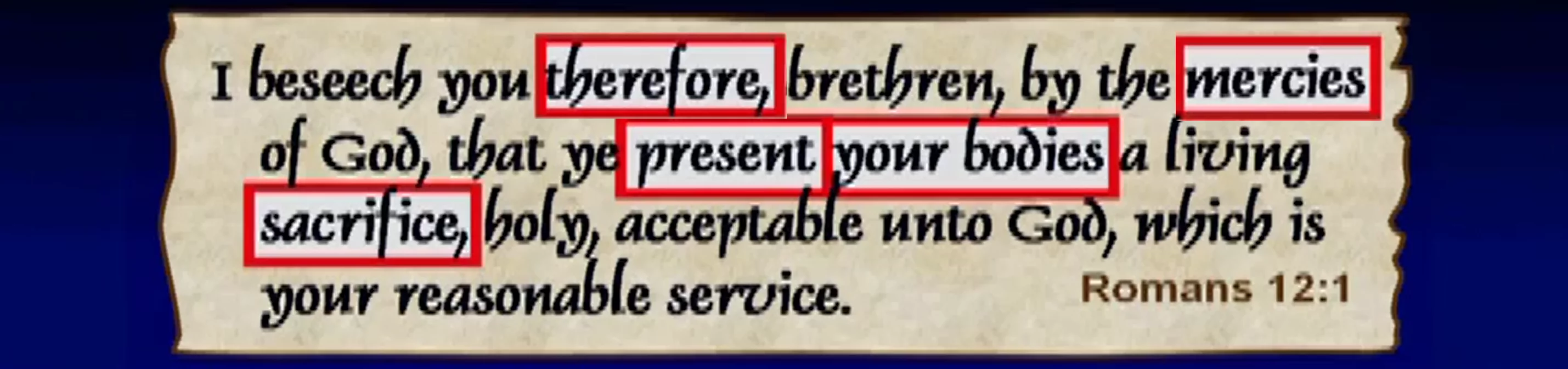
- “…therefore” : A response to everything Paul said in previous 11 chapters (all the foregoing in Romans)
— God’s compassion had been described in detail in the first 11 chapters of Romans
- “…mercies” = οἰκτιρμός (oiktirmos) rendered “compassion” (2 Cor 1:3, Phil 2:1, Col 3:12) and “mercy” (Heb 10:28)
- “…present” = “yield” (Heb 6:13, 16, 19)
- “…your bodies”: A Christian’s body is temple of Holy Spirit (1 Cor 6:19-20)
- “…living sacrifice” (in contrast to the OT sacrifices)
— Christians are believer-priests, identified with the great High Priest, the Lord Jesus Christ
(Heb 7:23-28, 1 Pet 2:5, 1 Pet 2:9, Rev 1:6)
— A believer’s offering of his total life as a sacrifice to God represents a complete change in lifestyle (Gen 2:24)
®️ Rom 12:2
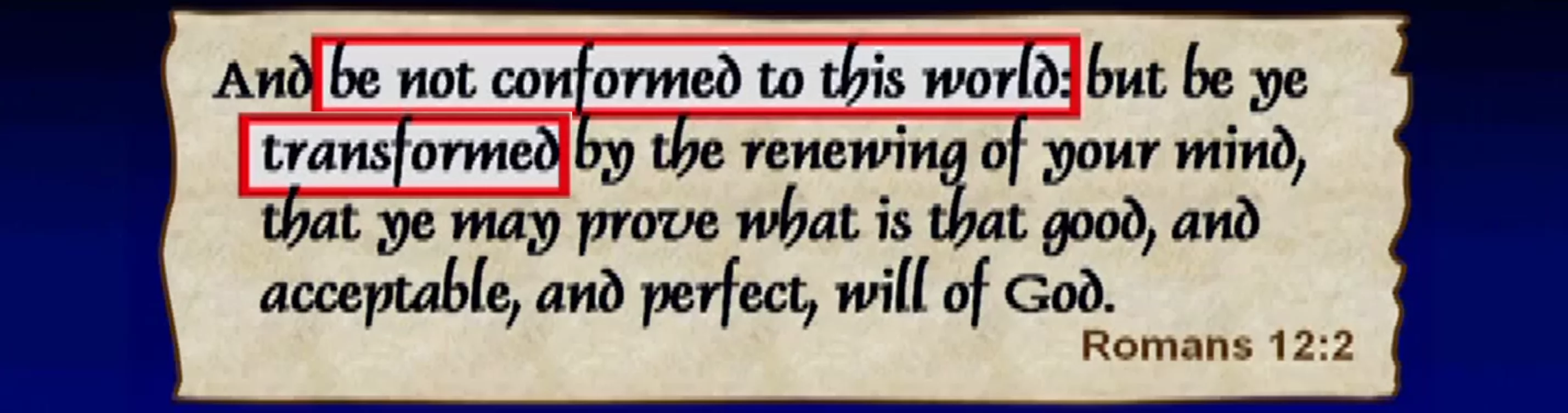
- “…be not conformed to this world” — “Stop being conformed to this [age]” (that’s a challenge)
- “Conformed” = pressed into a mold
— Modern media has placed incredible technology in Satan’s hands. The export of depravity is unprecedented
— The underlying presuppositions of the entertainment industry is anti-godly
— Advertising is an exploitation of our basest desires
- Nan’s book: Be Ye Transformed is a practical guide to implementing this passage…
- “…be ye transformed” — “Keep on being transformed”: Present tense, Passive voice, Imperative mood (command)
- “…transformed” = μετεμορφώθη (metamorphousthe) is seen in the English word “metamorphosis”
— A total change from inside out:
“But we all, with open face beholding as in a glass the glory of the Lord, are changed into the same image from glory to glory, even as by the Spirit of the Lord.” (2 Cor 3:18)
— Key to change is the “mind”, the control center of one’s attitudes, thoughts, feelings, actions
“that, in reference to your former manner of life, you lay aside the old self, which is being corrupted in accordance with the lusts of deceit, 23 and that you be renewed in the spirit of your mind,” (Eph 4:22-23 NASB)
- Jesus has promised us that we would share in His glory in His home forever:
🔘 John 17:22-23
🔘 John 17:24
- The transfiguration is a glimpse of His Glory that we get in advance
Mark 9:3

- “…fuller”: originally a dresser of skins or hides; later, applied in a wider sense as above
- These garments appeared to be etherealized, glowing with a brilliancy such as no worker in linen or other material for apparel could produce
Mark 9:4

- Jesus was joined by two characters from the OT
- Moses would seem to represent the Law (the Torah, books of Moses)
- Elijah would seem to suggest the prophets (he was such a dramatic prophet)
- Jesus had previously explained:
— “Think not that I am come to destroy the law, or the prophets: I am not come to destroy, but to fulfil. For verily I say unto you, Till heaven and earth pass, one jot or one tittle shall in no wise pass from the law, till all be fulfilled.” (Matt 5:17-18)
— In Jesus mind, He divides the OT in two groups: the law and the prophets
- Another way to look at Elijah and Moses is that they might represent those:
— who have died (Moses) Deut 34:6 and
— those who will have been raptured (Elijah) 2 Kgs 2:11, Cf. John 11:25-26, 1 Thes 4:13-18
- “…talking with Jesus”: What were they talking about?
— The verb tense indicates that this was an extended conversation (in Greek it’s clear)
— Luke tells us that they “spoke of His departure [ἔξοδος exodos], which He would accomplish in Jerusalem” (Luke 9:31) It’s an eschatological discussion somehow
- Let’s remember: the cross was not a tragedy, not an accident, not a disaster
— It was what Jesus came into this world for!
— It was not an afterthought
— It was the fulfillment of Psalm 22, Isaiah 53 and virtually all of the rest of Scripture!
— It’s a big deal, so it is not surprising that Jesus was talking to them about these issues
- [I believe that there is not a passage in the Bible that you can disconnect from the Messiah Himself: His mission, His destiny, His glory!] That’s not a surprise
- The three disciples had fallen asleep during Jesus’ prayer and almost missed seeing Moses and Elijah and Jesus in His glory! (Luke 9:29, Luke 9:32)
- Matthew indicates that the three heard the voice from heaven and “fell facedown to the ground, terrified. But Jesus came and touched them. ‘Get up’, He said, ‘Don’t be afraid.’” (Matt 17:6-7)
Mark 9:5-6
- Peter, like many of us, cannot yield in silence—he always has to fill the vacuum so he’s got to shoot his mouth off here a little bit. They are all frightened and that is Peter’s response to tension to throw out some suggestions here
- Some infer that this may have been about the time of the Feast of Succoth, of Feast of Booths
- [Many, since Peter’s day, have thought to honor Christ by giving special prominence to His servants, never realizing that in thus recognizing them as worthy of such homage they have actually dishonored the Master Himself]
Mark 9:7

- The Father interrupted Peter’s suggestion, and focused their attention, not on the vision that they are seeing, but on the Word of God: “Hear Him”. That’s what we should be focusing on too
- Jesus is the ultimate expression of truth (Heb 1:1-2)
- The vision was not an end in itself, but a means of confirming the Word of God:
— Peter made a reference to this in his 2nd letter: “A more sure word of prophecy” (2 Pet 1:12-21), meaning the Word of God is more sure than the experience of witnessing transfiguration event and seeing His Majesty
— More sure than being an eyewitness to this event? Indeed
- This is the subject included in our:
— Briefing pack, Beyond Coincidence, and is also included in
— “Hour 13” of Learn the Bible in 24 Hours
Mark 9:8

Mark 9:9
- This was confidential exposure
- The three men were not to tell the other nine (apostles)
- We don’t know if they did, but if they did, it may have contributed to the tensions in vv. 33-34
Mark 9:10

- Again and again, Jesus tells them and they don’t get it. They think He is using an allegory or something
- Their confusion is understandable. That’s a tough concept, even today
Mark 9:11-12
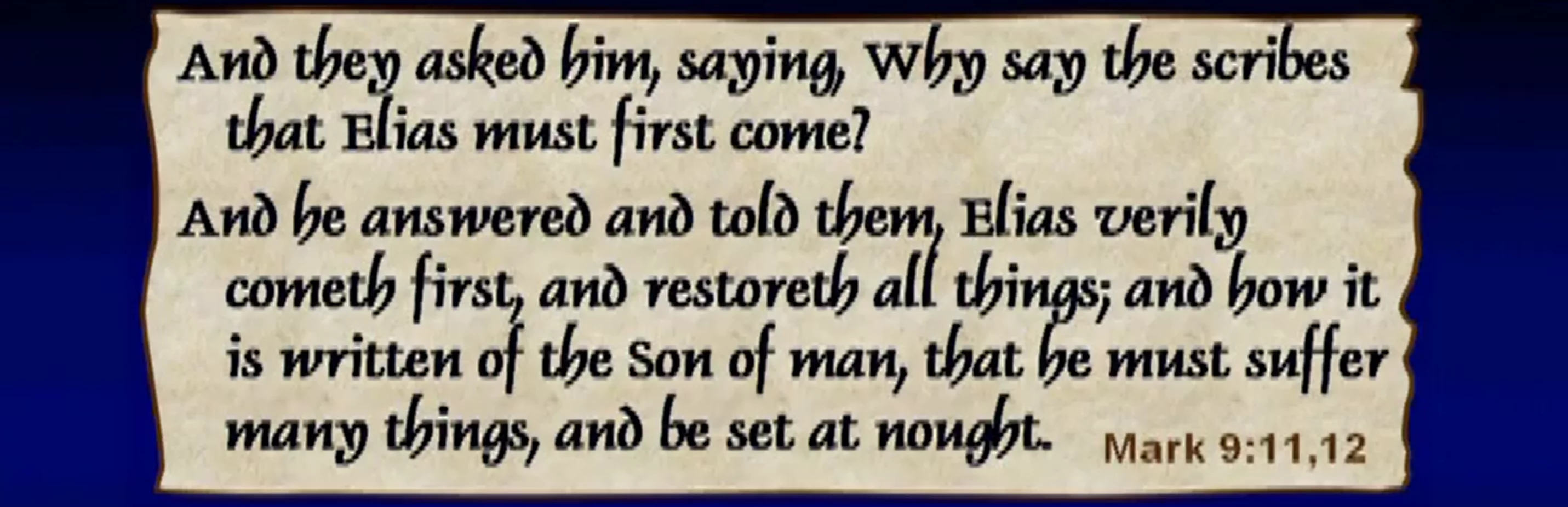
- The confusion concerning Elijah continues even today
- They knew the prophecies (Mal 3:1, Mal 4:5-6) and it was widely recognized that these would be fulfilled before the Messiah appeared (John 1:21)
- It is interesting though that Elijah did appear here at the transfiguration. Thus, after all, if this very appearance qualifies, it can be considered that the prophecy has been fulfilled
Mark 9:13

- He is alluding to John the Baptist in the role of the forerunner
- For those who trusted in Him, this “Elijah” was John the Baptist, for John had indeed “prepared the way before Him” (Cf. Luke 1:16-17)
- John denied that he was Elijah (John 1:21) — he could have fulfilled that role had they trusted him, but they didn’t
- There will be a future coming of Elijah just as Malachi predicted (v.12 and Matt 17:11), as seems evident in Rev 11:2-12 (The Two Witnesses)

- “And if any man will hurt them, fire proceedeth out of their mouth, and devoureth their enemies: and if any man will hurt them, he must in this manner be killed. These have power to shut heaven, that it rain not in the days of their prophecy: and have power over waters to turn them to blood, and to smite the earth with all plagues, as often as they will.” (Rev 11:5-6)
- This list of powers that the two witnesses have is unique to two people — two of the powers are unique to Elijah and two of the powers are unique to Moses
- [James and John would have duplicated Elijah’s acts, but Jesus rebuked them (Luke 9:54-56)]

- Three were expected (John 1:20-21) [Talmudic Messiah expectations, etc.] (Cf. Mal 3:1-3, Mal 3:5-6)
— Elijah (Last words in OT) Mal 4:5-6
— Prophet of Moses Deut 18:15-19
— John the Baptist: “I am not the Christ” John 1:19-20, Matt 11:14, Matt 17:10-11
→ This is absolute mess: Prophet of Moses should be Jesus Christ, John the Baptist was Elijah or maybe not
→ John the Baptist did not “turn the hearts of the children” as Malachi predicted in Mal 4:6, nor usher in the “great and dreadful day” as Malachi predicted in Mal 4:5, at least that hasn’t happened yet
- Two ministries in the OT were not allowed to finish:
— Moses was interrupted and was not allowed to go to the promised land: Num 20:12, Deut 3:26-28
— Elijah also was incomplete: 1 Kgs 17:1, 1 Kgs 19:13-16, 2 Kgs 2:11
- Unique Miraculous Powers
— Elijah (most agree on this one):
► Fire from heaven (1 Kgs 18:37, 2 Kgs 1:10,12, Jer 5:14)
► Shut heaven (1 Kgs 17:1); 3 1/2 years! (Luke 4:25, Jas 5:17) He stopped the rain to begin with
— Moses:
► Water into blood (Exo 7:19)
► Plagues (Exo 8-12)
— In contrast, it is not the Church. Ministers of Church are to be harmless
“so that you will prove yourselves to be blameless and innocent, children of God above reproach in the midst of a crooked and perverse generation, among whom you appear as lights in the world,” (Phil 2:15 NASB)
“…I want you to be wise in what is good and innocent in what is evil.” (Rom 16:19 NASB)
— James and John would have duplicated Elijah’s acts, but Jesus rebuked them (Luke 9:54-56)
- It wasn’t necessarily Enoch: Heb 9:27 = general rule (as it is appointed unto men once to die)
— Exceptions (people who didn’t die once): Lazarus, Jairus’ daughter, Nain’s son, etc
— He was a Gentile: The Witnesses are Jewish
— Enoch was a model of Rapture? Enoch was born, and translated, on 6th of Sivan, the Feast of Shavuot?
- “Staff Meeting” in Mark 9. Connected with 2nd coming (Luke 9:31, 1 Pet 1:10-12, 2 Pet 1:6-18)
- Mystery: Why did Michael contend with Satan for the body of Moses? (Jude 9, Deut 34:5-6)

Some other suggestions as far as who are the two witnesses:
- John, the Apostle (and writer of the Gospel of John)?
— Previous chapter: “Thou must prophecy again” (Rev 10:11) They build a case on that
— “…tarry till I come…” (John 21:20-24)
— [However, we would include the Apostle John in the Church which is in heaven. John was expressly rebuked from desiring Elijah’s acts]
- John the Baptist? Even J. Vernon McGee suggested that as a possibility (which surprised Chuck)
— Had the nation accepted John the Baptist’s ministry, he would have served as the “Elijah” God sent; and they would also have received Jesus. Instead, they rejected both and allowed them to be slain

- When they returned to the other nine, they found them involved with a double problem:
1) they were unable to deliver a boy from demonic control and
2) the scribes were taunting them because of their failure
Mark 9:14-15 I Believe, Help My Unbelief
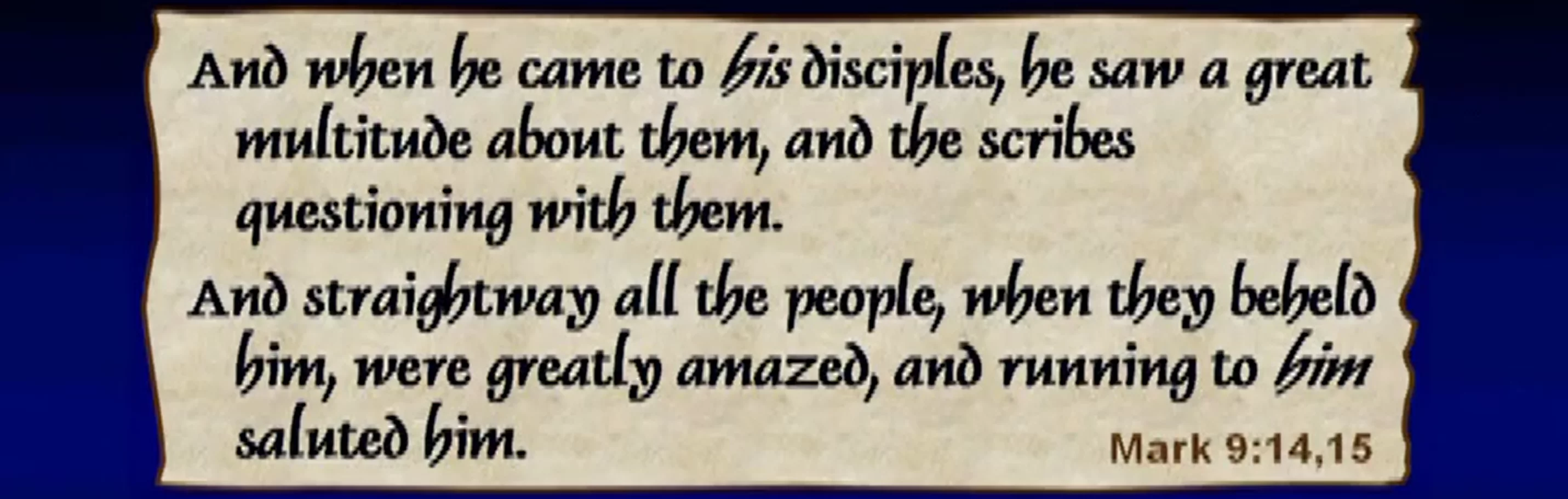
- A crowd had gathered, and the scribes were stirring things up…
Mark 9:16

- “…with them?”: among yourselves
- Basically, scribes were arguing with them
Mark 9:17-18
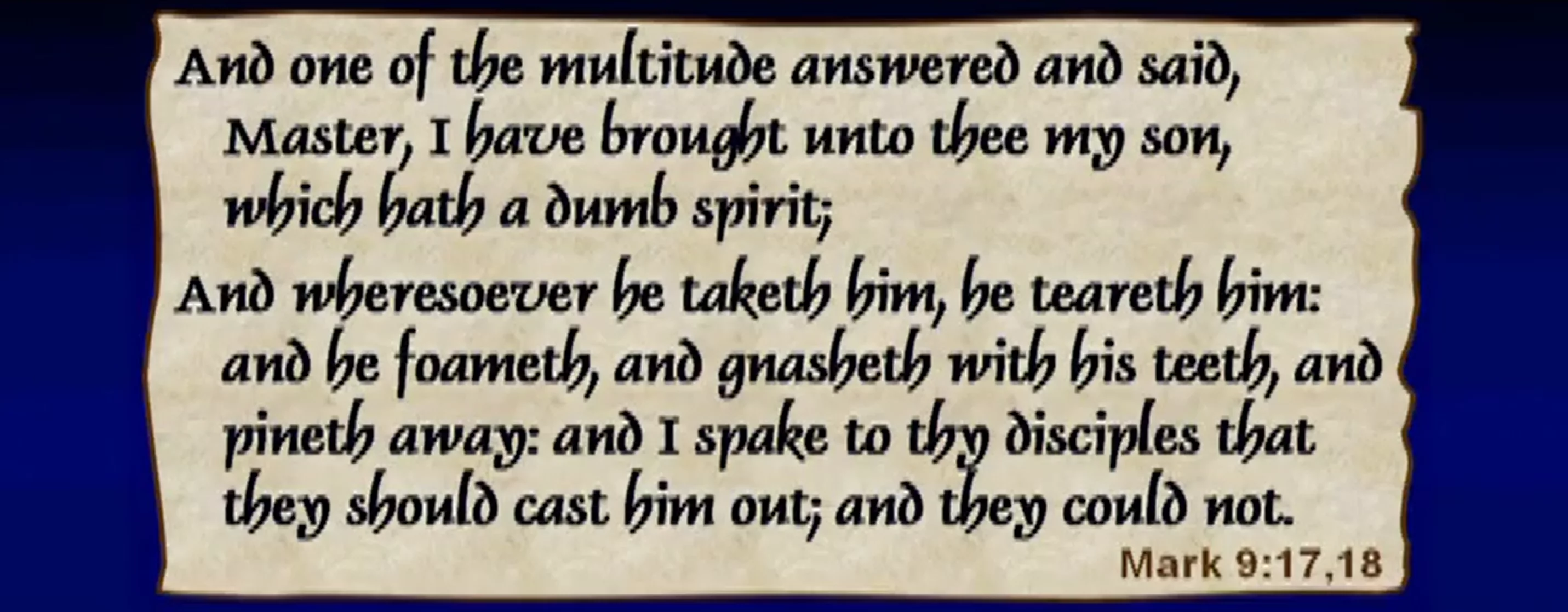
- He was both deaf and dumb (vv. 17, 25) The boy was possessed and the demon was keeping him from talking
— That was kind of demon Jews were unable to deal with
— Evil spirit first needed to identify himself, which was not possible if the possessed one was mute
- The demon was attempting to destroy him
— [Can you imagine that father trying to care for the boy and unable to protect him?]
- Jesus had given His disciples authority to cast out demons, yet in this case, their ministry had been ineffective (Mark 6:7, Mark 6:13)
Mark 9:19

- “O…”: an emotional cry from the heart!
- How often Jesus must be grieved with us when we fail to use the spiritual resources He has so graciously given to His people!
Mark 9:20

Mark 9:21-22
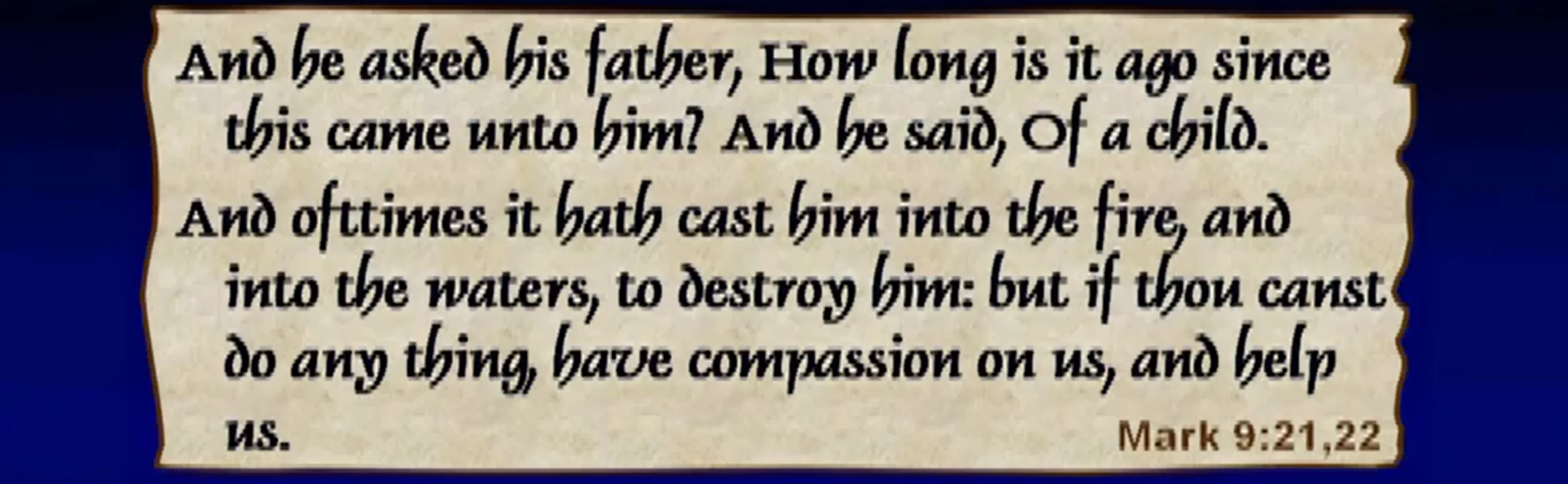
- “…if…” The father was candid about his doubts
Mark 9:23

- Here is one of the most abused verses in the Bible. People have ripped it out of context and made it a rationale for false confidence in personal wishes
- Some have taught that with enough faith you can control God!
- This is man-made, man-centered religion
- No, we do go before His throne boldly on one hand because of Christ, but we are still trembling. He is still God. He is an awesome God, but everything we ask is subject to His will first
Mark 9:24

- How candidly honest (love his candor)
- Matthew adds that the father got on his knees (Matt 17:14)
- Luke adds that his son was an only child (Luke 9:38)
Mark 9:25
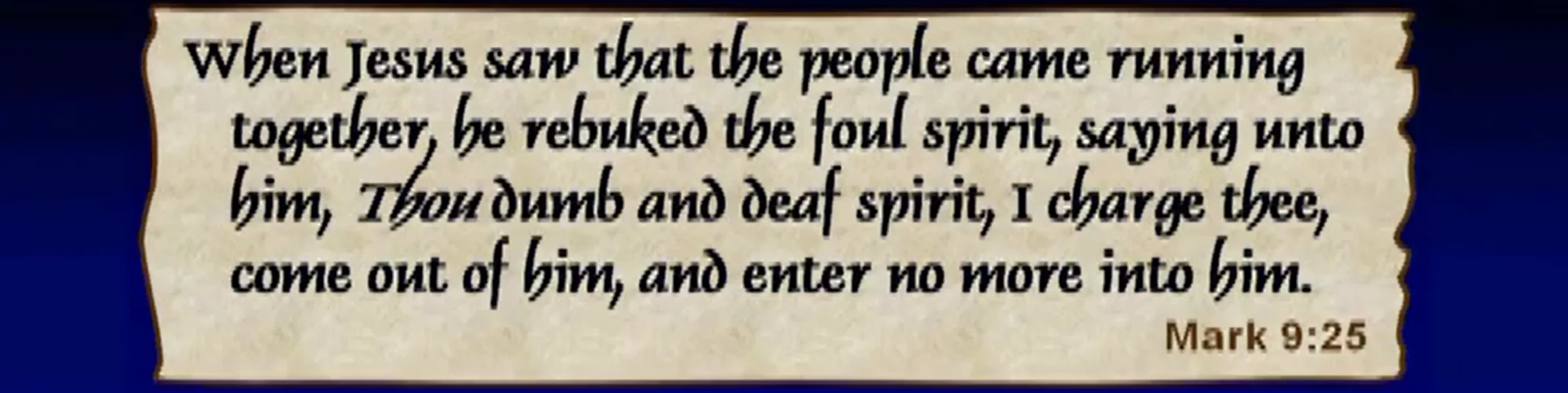
- Wow, that’s the Creator of the universe talking! God incarnate
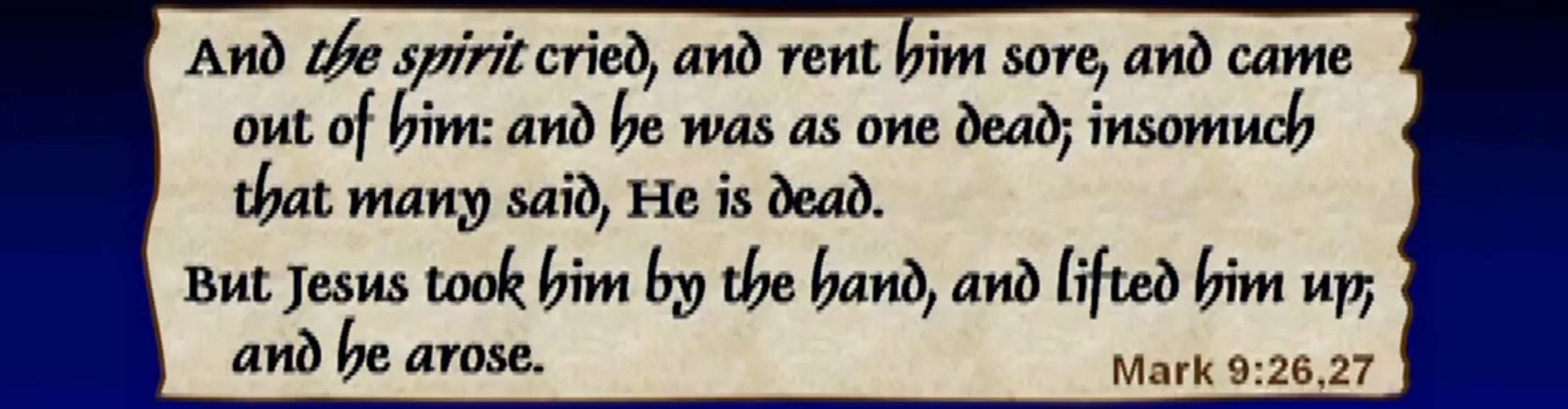
Mark 9:26-27
Mark 9:28-29
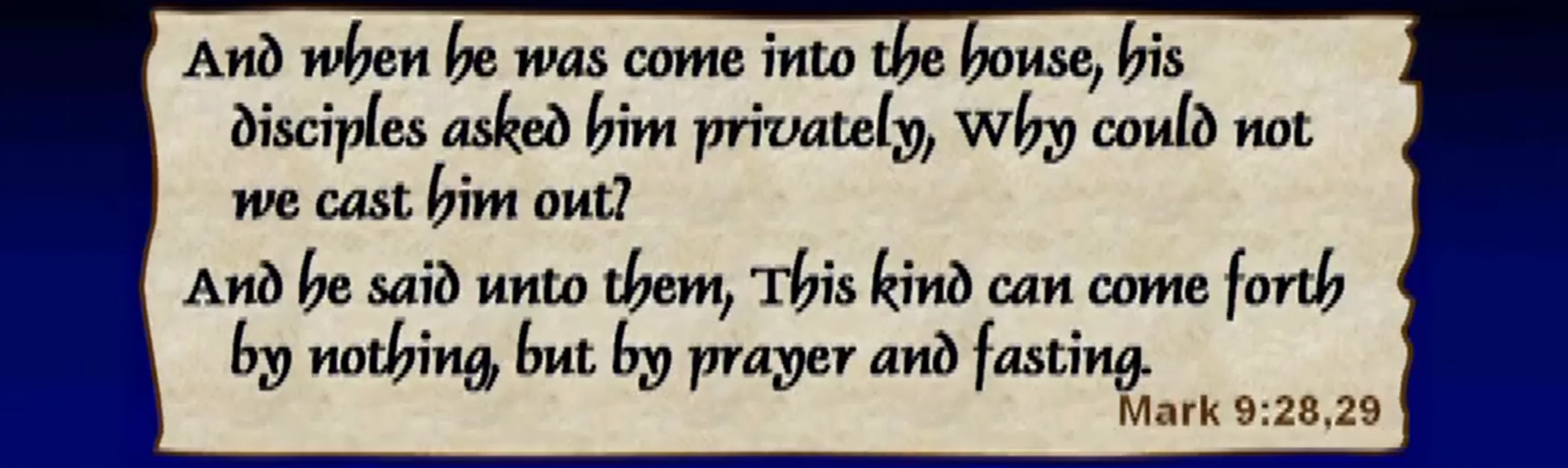
- “…by prayer and fasting”: “fasting” is in KJV, but not in NASB
- Fasting is not “an Old Testament” concept to be abandoned in our times. It is a practical, spiritual toolbox. With a little background it is an effective part of the serious spiritual person
- Our carelessness: The neglect of prayer and fasting
- The main lesson of this miracle is the power of faith to overcome the enemy (Cf. vv. 19, 23-24; Matt 17:20)
— Faith must be cultivated through spiritual discipline and devotion
- Not only did their failure embarrass them, but it also robbed the Lord of glory and gave the enemy opportunity to criticize and blaspheme. It is our faith that glorifies God
— “yet, with respect to the promise of God, he [Abraham] did not waver in unbelief but grew strong in faith, giving glory to God,” (Rom 4:20)
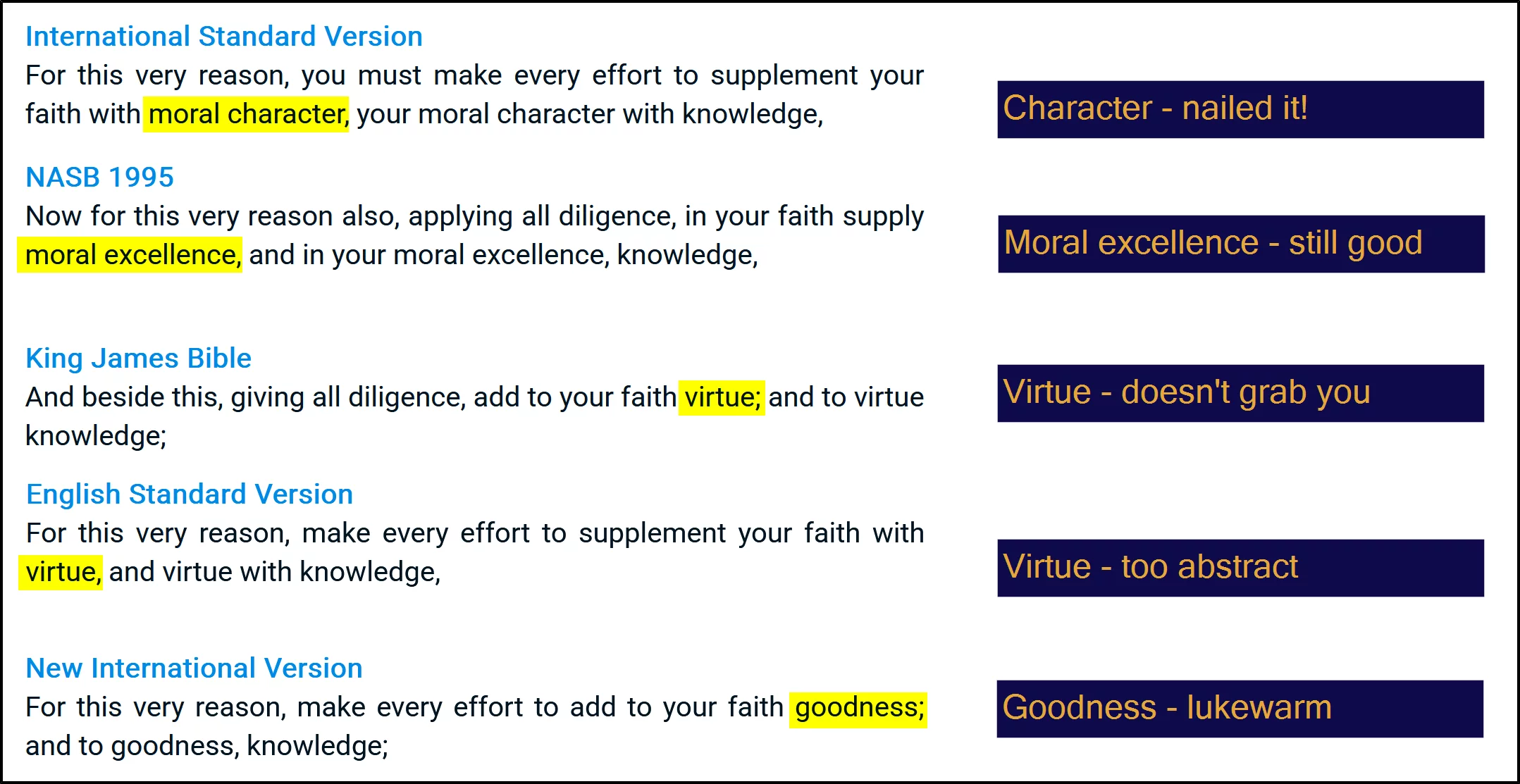
Chuck’s comment on translation: Notable translation differences in different versions of verse 2 Pet 1:5
Experience in moving from corporate boardrooms to professional Christianity.
Secular people in corporate world had character. They may not have been saved, but they had character — you could rely upon them, you could trust them. They understood the sanctity of commitment.
Service Leads to Honor — Jesus is still leading them to Jerusalem
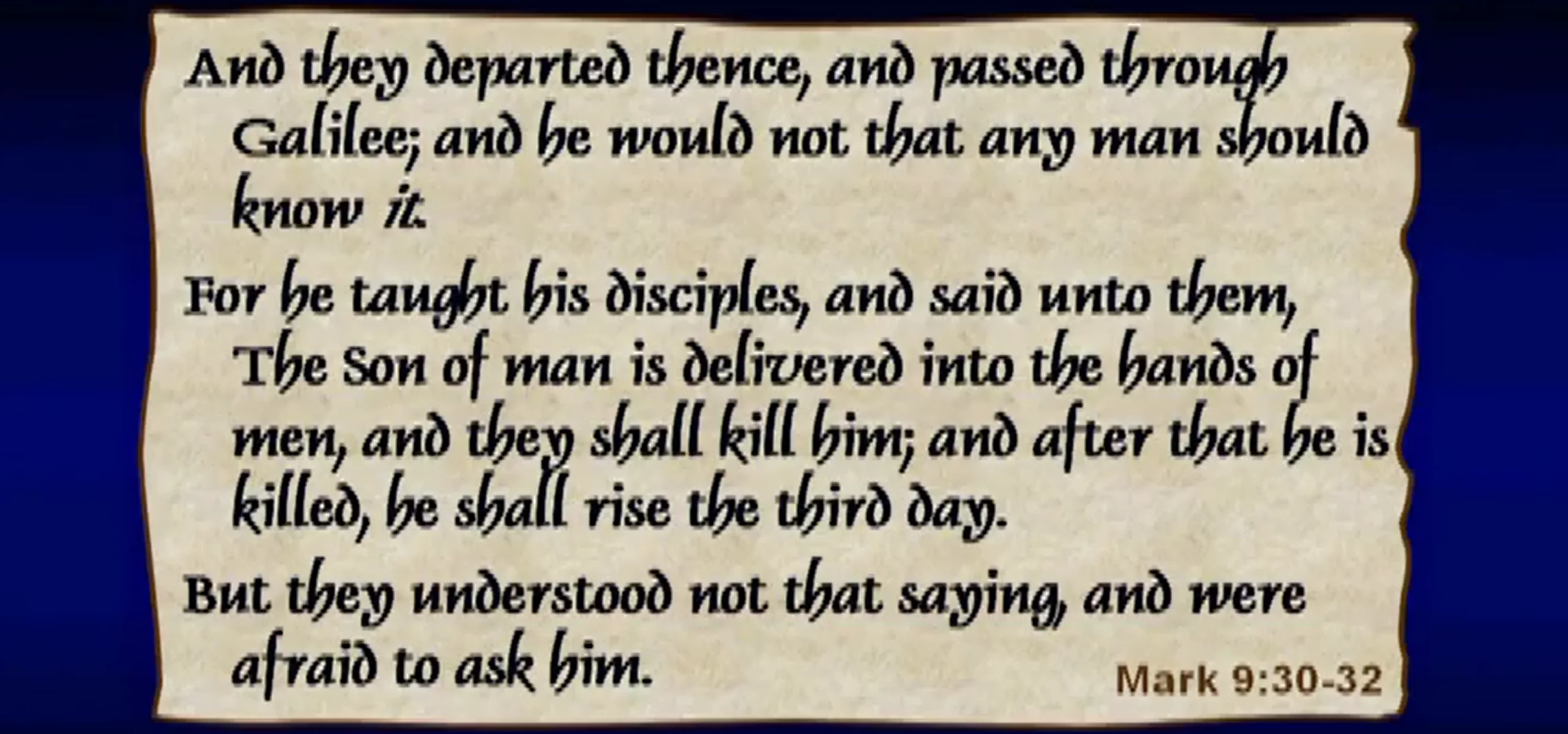
Mark 9:30-32 Jesus Foretells His Death and Resurrection
- That’s one reason why small Bible study groups are so valuable. You want to be in a small group — 6 people maximum. Then questions can be asked without embarrassment (accountability also emerges in smaller groups)
- He is still reminding them of His mission: death and resurrection
- They did not understand, yet were deeply grieved
— (But not so grieved as to prevent their personal ambitions to lead to disputes…)
— [They were no so embarrassed to haggle: “What’s in it for me, Boss?” (haggle—bargain persistently, especially over the cost of something)]

- Jesus’ death is predicted in the OT many times:
— Gen 22 The Offering of Isaac (Akedah) is a pre-enactment of the cross
— Ps 22 It reads as if it was dictated by the Christ as He hung on the cross
— Isa 53 Describes the relevance of His death probably more succinctly than all Paul’s epistles put together
— Dan 9:26 Makes it very, very clear (you can set the calendar by it)
— Hos 5:15 “I will go and return to my place, Till they acknowledge their offence…”
— Zech 12:10 “…And they shall look upon me whom they have pierced,…”
Mark 9:33-34 Who Is the Greatest? (MEV)
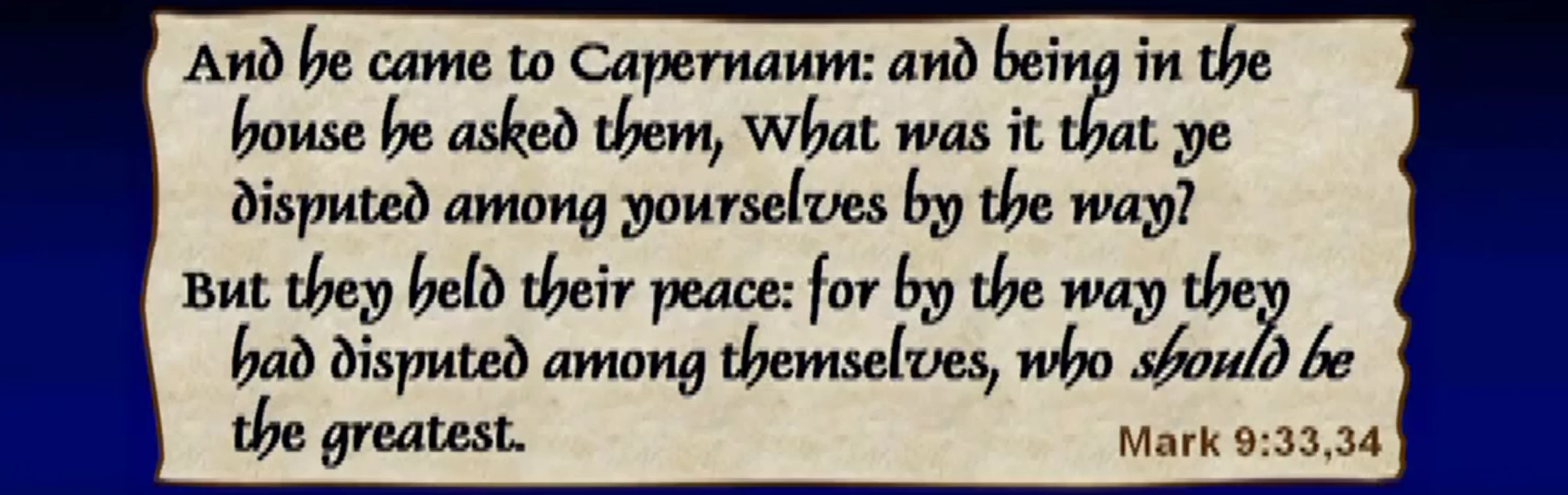
- Human nature showing up
- Perhaps the singling out of Peter, James and John was also a contributing factor
Mark 9:35

- Here is Mark’s special emphasis that he has throughout his whole Gospel: The focus on Messiah as the Servant
- The night before Jesus died, they were arguing again about who was to be the greatest
- No one had condescended to be a servant and wash the other’s feet
- Jesus Himself gave them an object lesson by taking a towel and a basin and washed their feet (John 13:14-16)
- Here in this verse, Jesus gives them a similar object lesson
Mark 9:36-37
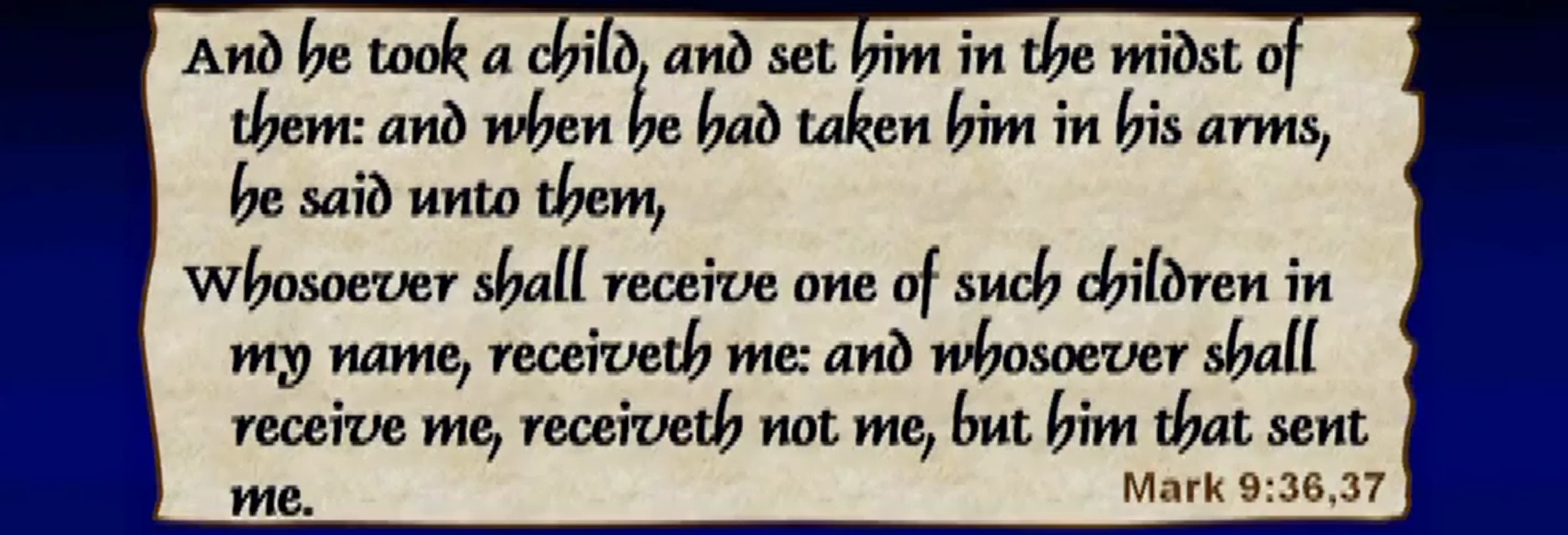
- (The house they were in was in Capernaum and may well have been Simon Peter’s; the child may even have been one of Peter’s)
— An unspoiled child is the example of submission and humility
— The words “child” and “servant” are the same in the Aramaic language
Mark 9:38 Warnings About Discipleship (He Who Is Not Against Us Is for Us, MEV)
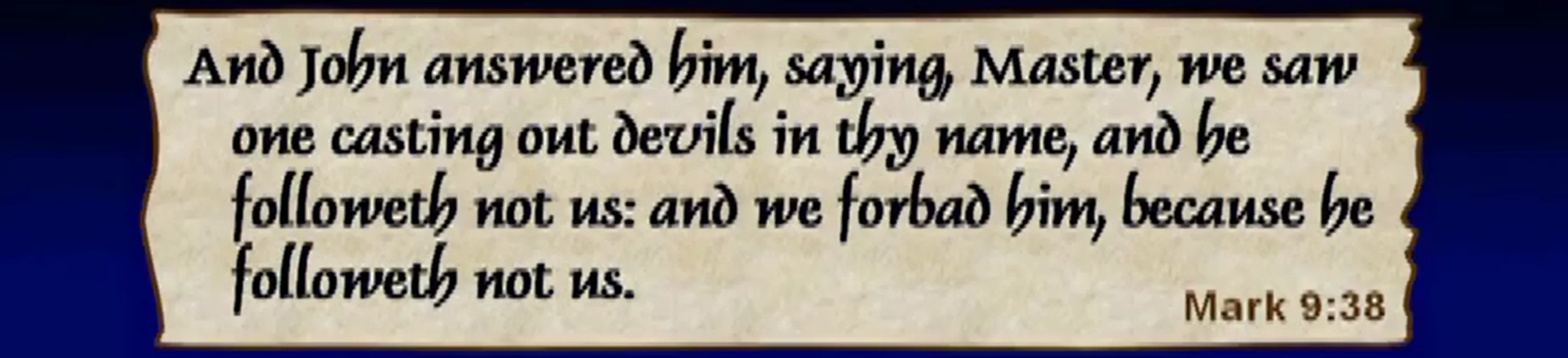
- Their exclusiveness is a strange companion to their own ineffectiveness earlier! The anonymous exorcist was giving glory to His name, in contrast to the scene in vv. 14-29
- John certainly was a “Son of Thunder”! (Mark 3:17)
- He also was ready to call down fire from heaven! (Luke 9:54)
Mark 9:39-40
- Can you think of some challenging examples? Cf. Num 11:26-30 (examples that may challenge that)
- [That includes some interesting deviations!]
Mark 9:41

- Key ingredient is, not just giving you cup of water, but because you belong to Christ
Mark 9:42
- That’s graphic, tough language
Mark 9:43
- “…hell”: γέεννα (gehenna), from the Hebrew phrase, “the valley [ge] of Hinnom,” referring to an actual valley outside Jerusalem where wicked King Ahaz worshiped Molech, the fire god, and even sacrificed his children in the fire (2 Chr 28:1-3, Jer 7:31, Jer 32:35) Also was a city dump, always smoldering

► Gehenna is the eternal (ultimate) Hell
► Hades (ᾅδης) in Greek is a temporary place, the grave or the abode of the dead. Same as Sheol in Hebrew
- “Hell” is often an area of confusion: The grave, or the abode of the dead, is Sheol in Hebrew, and Hades in Greek. It apparently had two compartments as is described in Luke 16:19ff (ff means: “to the end”)
- It is always expressed in geocentric terms (Matt 12:40, et al.) ἄβυσσος (abyssos)
- [A “bottomless pit” could, topologically, only be at the center of a sphere, from where all directions are up]
- Gehenna, the lake that burneth with fire and brimstone, is the ultimate destiny, even of Hades (Rev 20:10, 13, 14)
- Hades is temporary
- Gehenna is forever
Mark 9:44

- Jesus treated hell with extreme seriousness
- Quoted (3X) from:
— “And they shall go forth, and look upon the carcasses of the men that have transgressed against me: for their worm shall not die, neither shall their fire be quenched; and they shall be an abhorring unto all flesh.” Isa 66:24
- His solemn (characterized by deep sincerity) message carries a warning to all of us to deal drastically with sin. Halfway measures won’t do. Any encumbrance should be removed from our lives as if by surgery
- Literal surgery? No. He had made it clear that sin comes from the heart (Mark 7:20-23)
- But certainly made it clear that sin is to be dealt with drastically! (Cf. Rom 12:1-2)
Mark 9:45-46
Mark 9:47-48
Mark 9:49-50
- “…and every sacrifice shall be salted with salt.” (omitted in NASB) Jews were not allowed to put leaven or honey on their sacrifices, but they were required to use salt on their sacrifices (Lev 2:11, Lev 2:13, Ezek 43:24, cf. Exo 30:35)
- Salt speaks of purity, savoriness and preservation
— The disciples were God’s salt (Matt 5:13), but were in danger of losing their flavor and becoming worthless
- [Our salt today is purified and does not lose its taste; but the salt of that day contained impurities and could lose its flavor]
- Let’s hear from the one for whom Mark was the amanuensis—Peter:
— “Wherein ye greatly rejoice, though now for a season, if need be, ye are in heaviness through manifold temptations: That the trial of your faith, being much more precious than of gold that perisheth, though it be tried with fire, might be found unto praise and honour and glory at the appearing of Jesus Christ:” (1 Pet 1:6-7)
— “Beloved, think it not strange concerning the fiery trial which is to try you, as though some strange thing happened unto you: But rejoice, inasmuch as ye are partakers of Christ’s sufferings; that, when his glory shall be revealed, ye may be glad also with exceeding joy.” (1 Pet 4:12-13)
— “But the God of all grace, who hath called us unto his eternal glory by Christ Jesus, after that ye have suffered a while, make you perfect, stablish, strengthen, settle you. To him be glory and dominion for ever and ever. Amen.” (1 Pet 5:10)
- Peter is trying to get across here that we need to stand together
— [Remember the Golden Plover…]
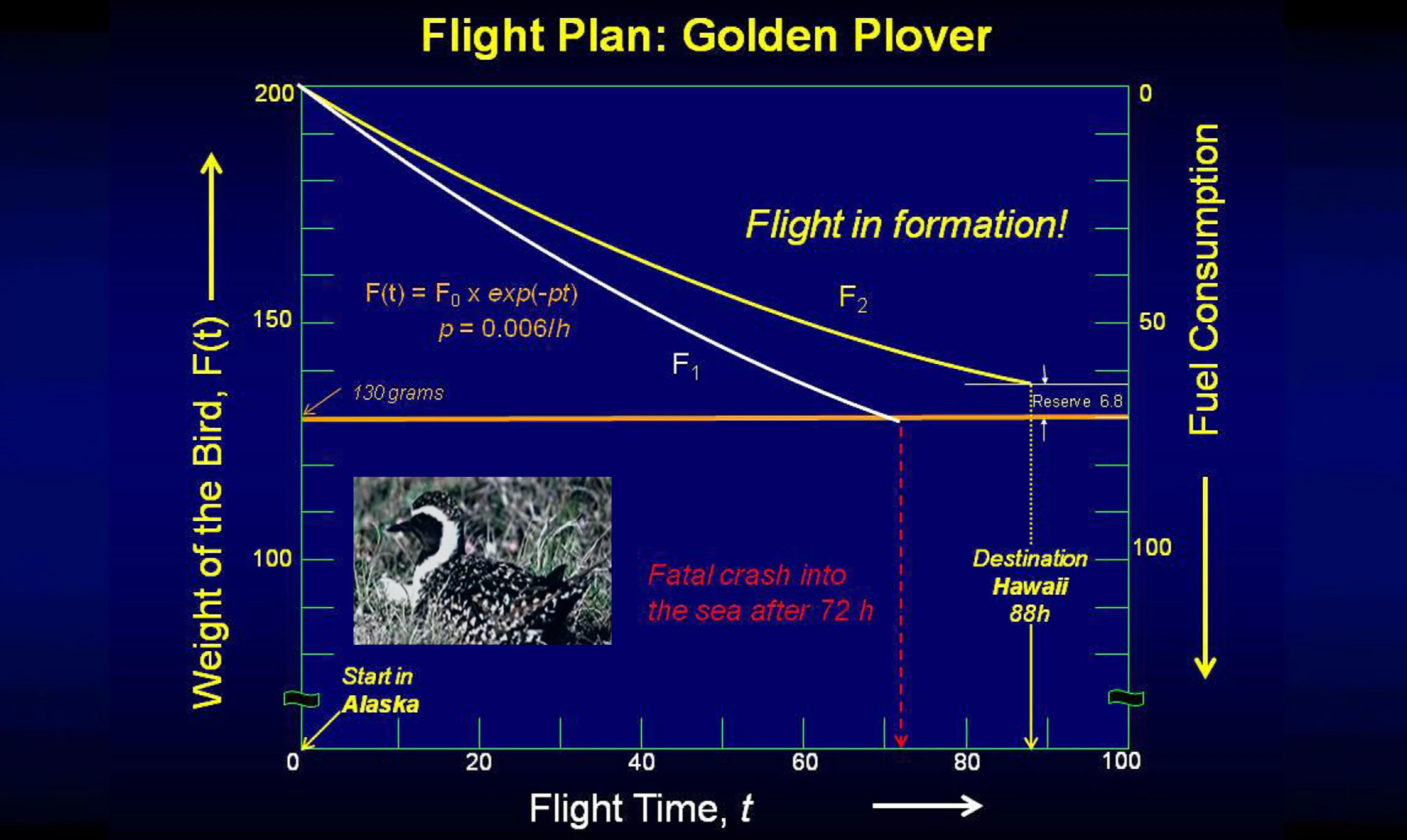
- Golden Plover is a little tiny bird
- It flies from Alaska to Hawaii every year (no islands in between), which is 88h flight
- Normal weight of the bird is ~130g, but in anticipation of migration it builds up some weight (say 200g)
- At the rate of burning that extra mass (fuel), it can fly only about 72h (short of destination)
- The only way to extend the reach with the same amount of “fuel” is to fly in formation due to better efficiency
- Formation flight not only allows for 88h flight, but they also have 6.8g of reserve for head winds
- We (the Church) cannot make it alone either!
- We need to exercise the gift of the body of Christ. We need to stick together

