s12 (Ch 12) Cont’d Busy Tuesday (studied 3-Nov-2025)
The Book of Mark with Dr. Chuck Missler
The subsections of Chapter 12 (per LSB) are:


- In Chapter 11, the cursing of the fig tree (a symbol of Israel and its unfruitfulness) and the cleansing of the Temple (an indication of its corruption) led to a challenge by the official guardians of the Law, the members of the Sanhedrin
- Jesus had them off balance from His responses to their challenges; He now takes the initiative with a parable drawn from familiar images in the OT (Ps 80:8-16, Isa 5:1-7)
Mark 12:1 Parable of the Vine-Growers (The Parable of the Vineyard and the Vinedressers, MEV)
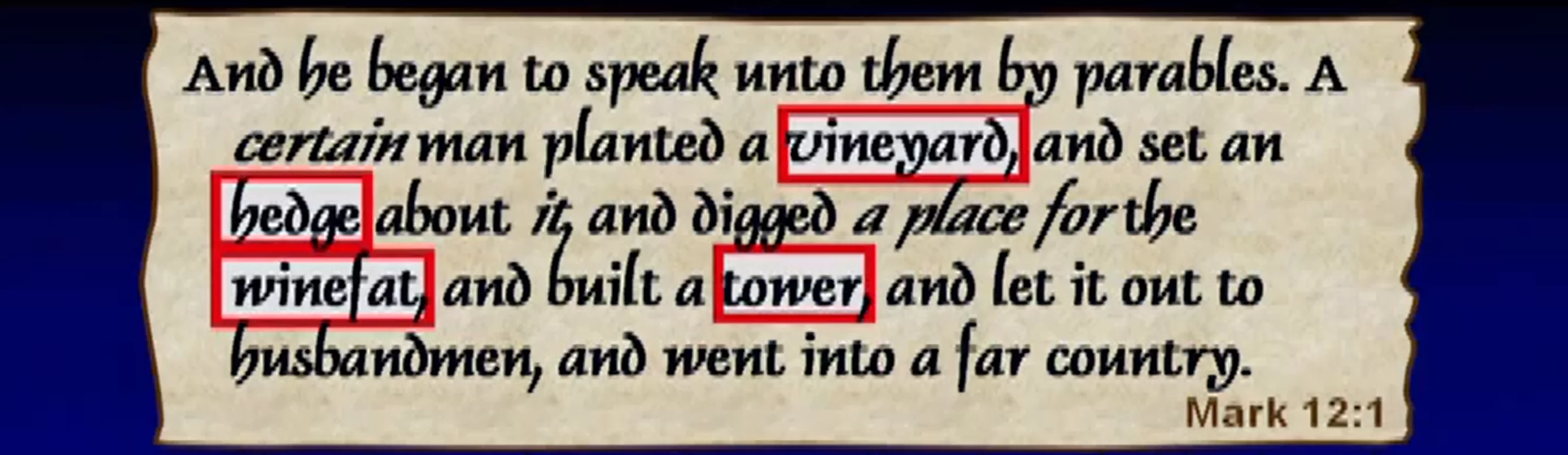
- “…vineyard”: The vineyard was also a national symbol for Israel (Cf. Jotham’s Parable: Judg 9:7-15)
- “…hedge”: The word used by Mark means fence; it may have been a stone fence or wall
- “…place for the winefat” was a pit or trough beneath the winepress for the purpose of catching the juice
- “…tower” was a combination watchtower and storage place

- The very Temple in which Jesus was standing featured a richly carved grapevine 70 cubits high (>100 ft) sculpted around the door which led from the porch to the Holy Place. The branches, tendrils and leaves, were of gold; the bunches hanging upon them were costly jewels
- (Herod had first placed it here, and rich and patriotic Jews had continued to add to its embellishment)
- The Maccabean coins also bore the same symbols
- Jesus is using phrases directly from the Song of the Vineyard (Isa 5:1-7)
- Just as with Israel: “How thou didst drive out the heathen with thy hand, and plantedst them; how thou didst afflict the people, and cast them out.” (Ps 44:2, Exo 15:17)
- We farm a far richer vineyard than that of ancient Israel
— More than the prophets, we have the Word of God and the indwelling Spirit
— And we also have the testimony of the saints over the past 2,000 years (Cf. Luke 12:48)
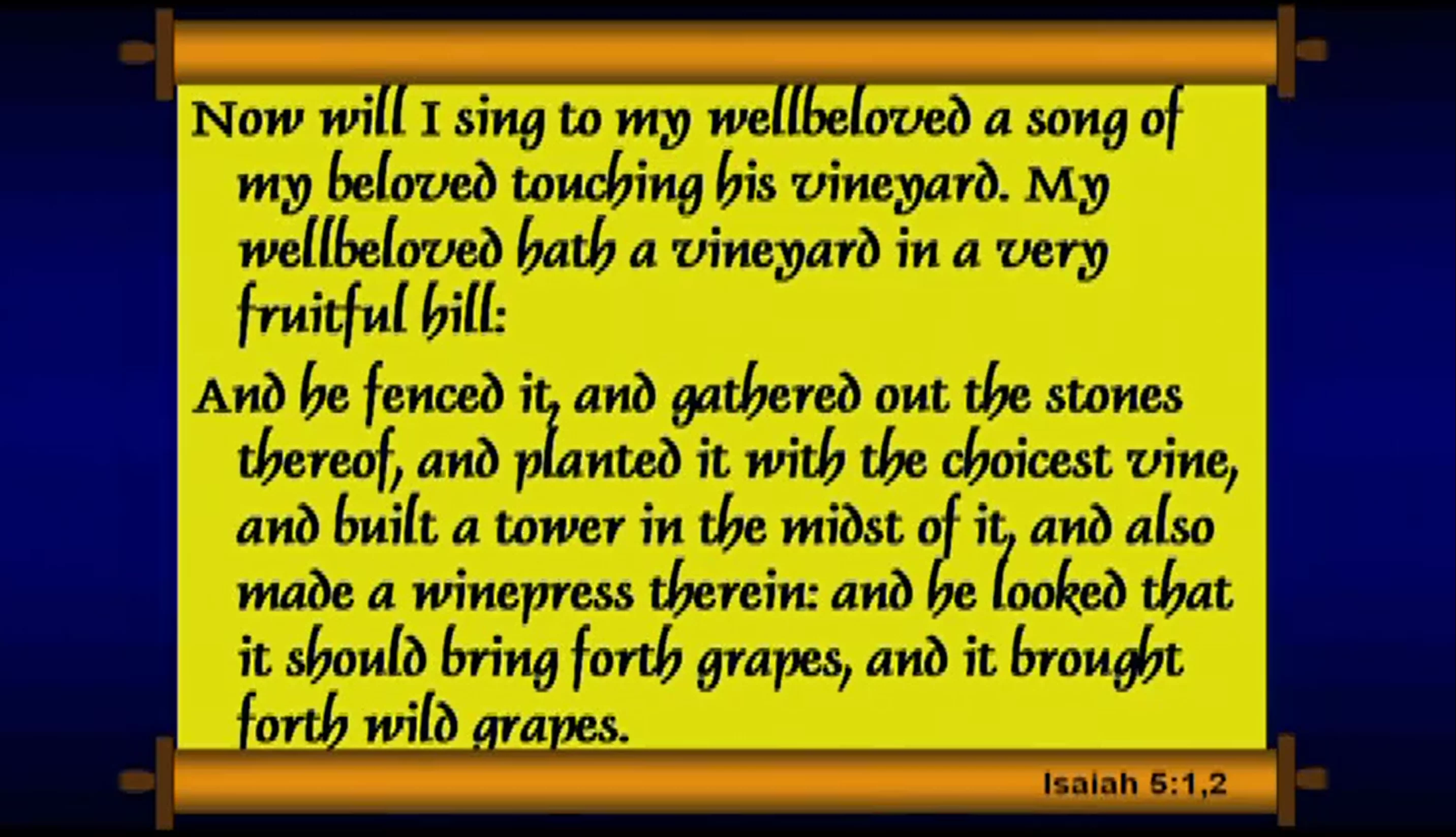
🍇 Isa 5:1-2
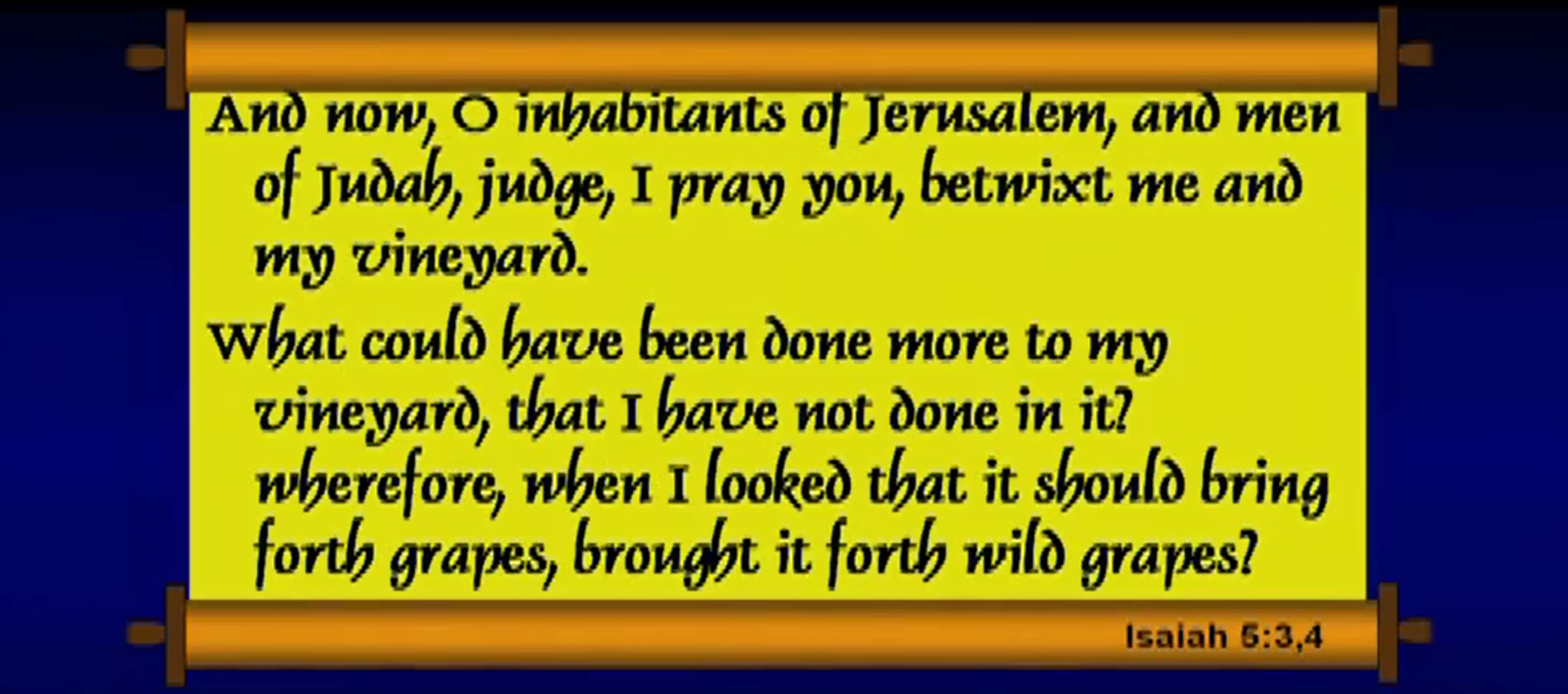
🍇 Isa 5:3-4
🍇 Isa 5:5-6
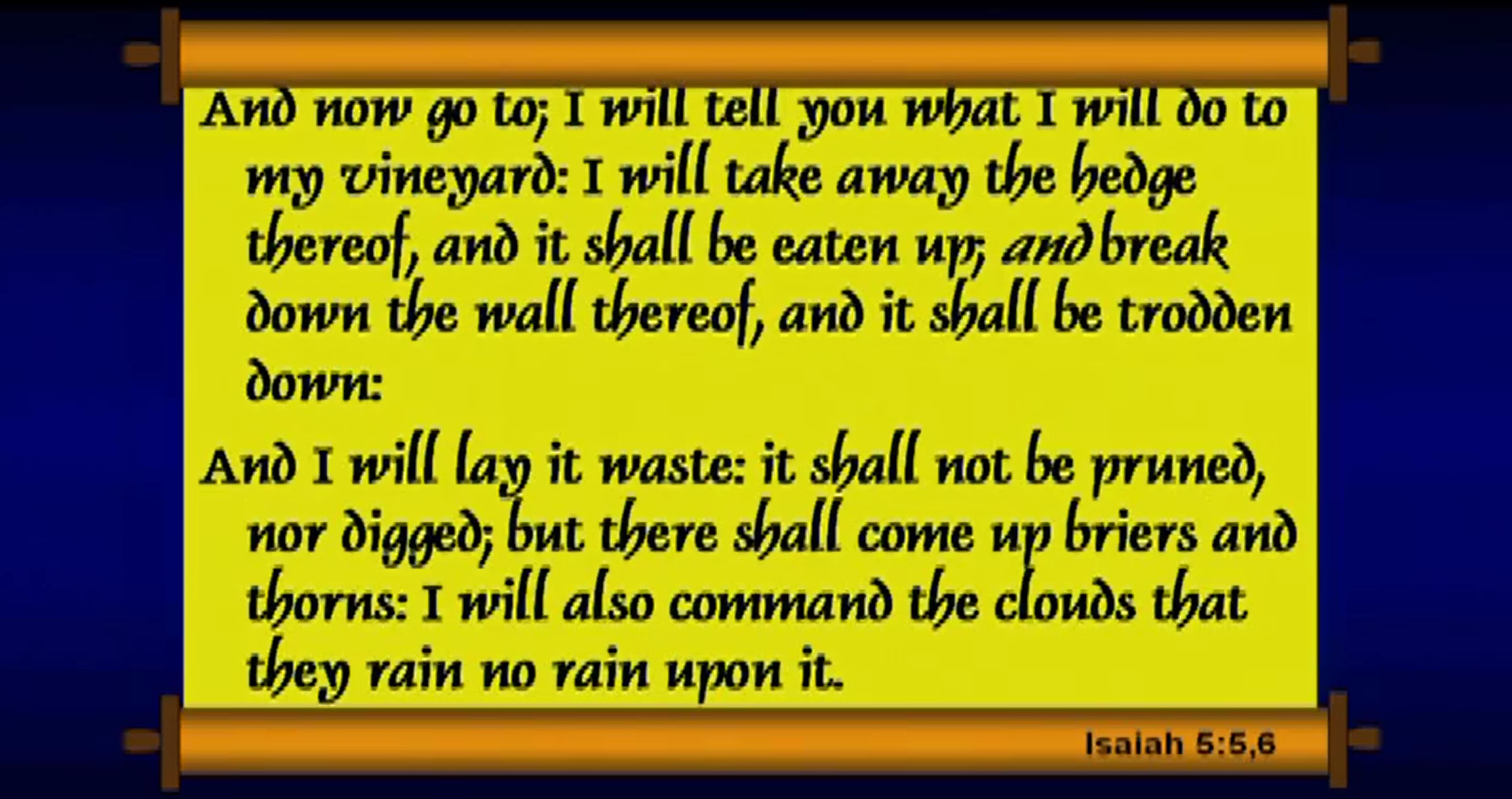
🍇 Isa 5:7
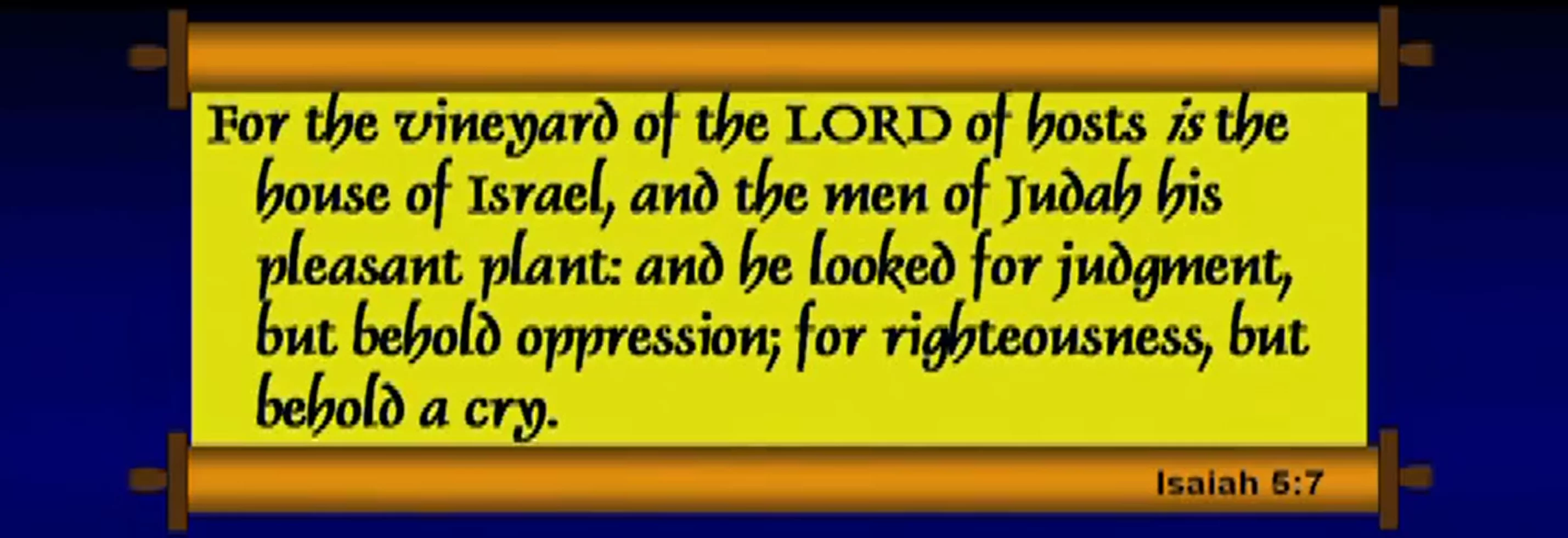
- So Jesus is speaking to them in parables and He uses the same idioms as in Isaiah
Mark 12:2

Mark 12:3-4
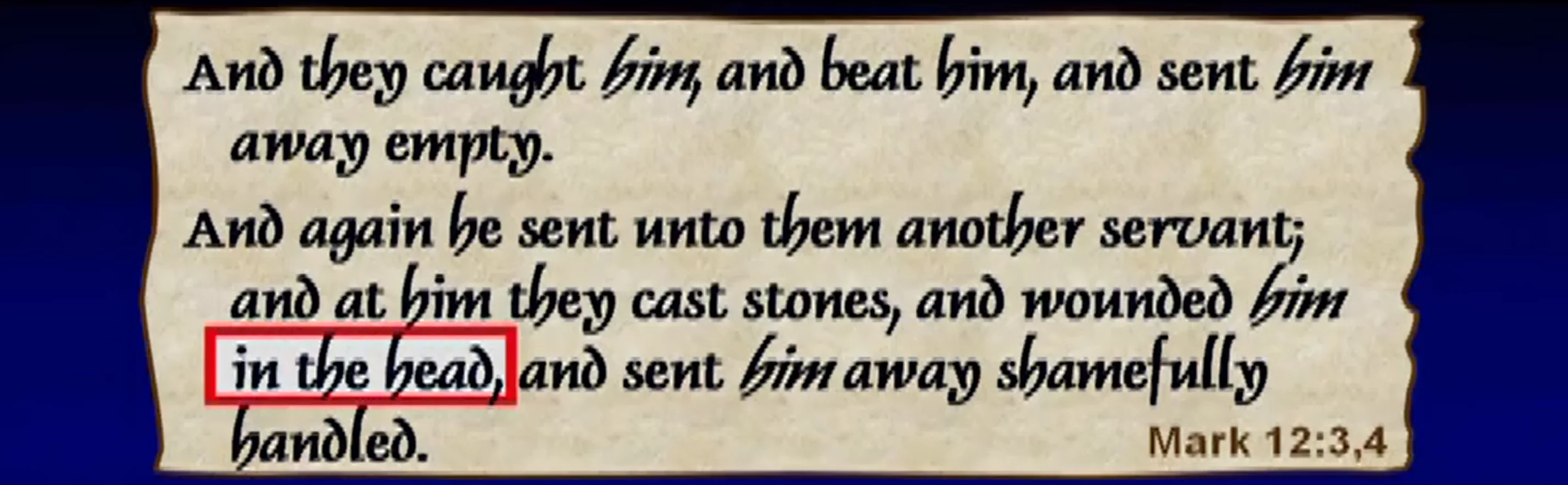
- “…wounded him in the head”: “Brake his head” (Wycliffe version)
Mark 12:5

- A farmer would not use the fruit until the 5th year (Lev 19:23-25)
- In order to retain his legal rights to the property, the owner had to receive produce from the tenants, even if it was only some of the vegetables that grew between the rows of the trees or vines
- This explains why the tenants refused to give him anything: they wanted to claim the vineyard for themselves. It also explains why the owner continued to send agents to them; it was a question of authority and ownership
- The analogy to Israel is no exaggeration:
— Elijah was driven into the wilderness by the monarchy (1 Kgs 19:1-5)
— Isaiah was sawn in half (according to tradition, and hinted at in Heb 11:37)
— Zechariah was stoned to death near the altar (2 Chr 24:21)
— John the Baptist was beheaded
- Summary: Heb 11:37-38. All of them could be viewed as servants of the Owner
Mark 12:6-7
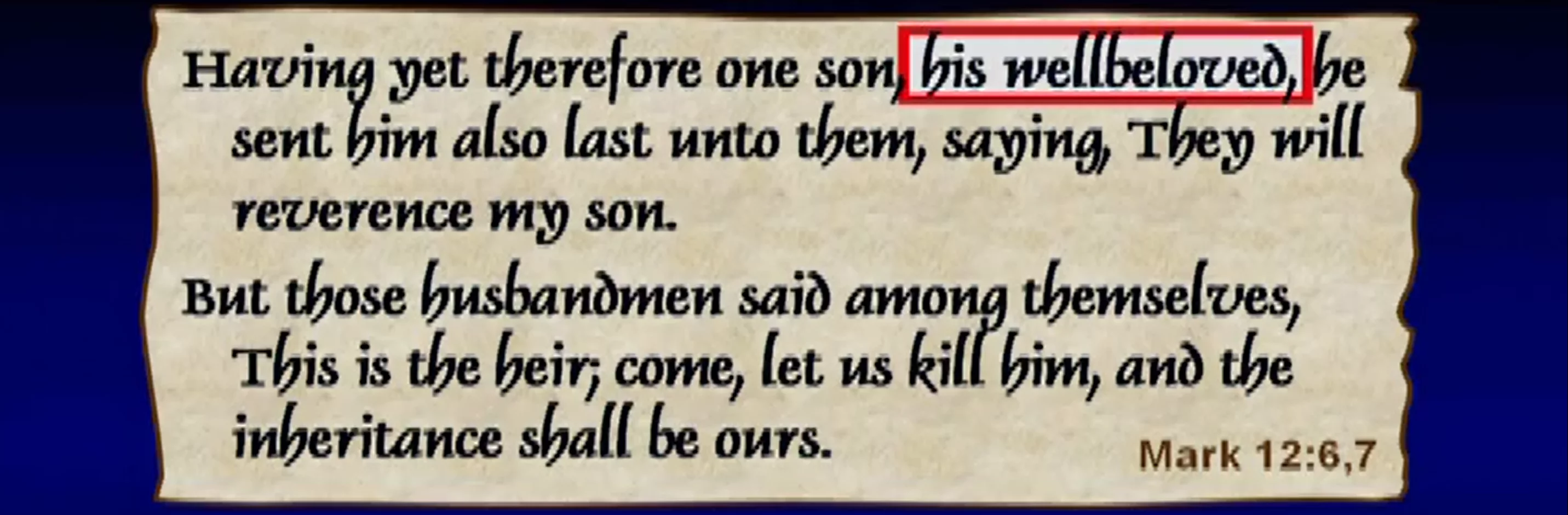
- “…his welbeloved”: These words are an obvious description of Christ Himself (the parallel is obvious)
— “He came unto his own, and his own received him not.” (John 1:11)
- The plot to kill him was a description of the scheming at that very time to put Jesus to death
Mark 12:8

- If verses 2-5 cover the three years when the fruit was not used, then it was in the fourth year that the beloved Son was sent. This is the year when the fruit was devoted to the Lord (Lev 19:24)
- If the tenants could do away with the heir, they would have a clear claim to the property; so they cast him out and killed him (Cf. Heb 13:12-13)
- They were willing to kill to accomplish their evil purpose (John 11:47-57)
Mark 12:9

- In answering they condemned themselves (not mentioned in Mark, but recorded in Matthew)
— “They *said to Him, “He will bring those wretches to a wretched end, and will rent out the vineyard to other vine-growers who will pay him the proceeds at the proper seasons.”” (Matt 21:41 NASB)
- The prediction that the owner would destroy the husbandmen was fulfilled in 70 AD, when the Romans under Titus destroyed Jerusalem and put and end to any semblance of self-rule which the Jew had previously enjoyed
- “…give the vineyard unto others”: The others unto whom the vineyard was to be given are further described in Matthew’s Gospel where Jesus is quoted as saying:
— “…The kingdom of God shall be taken from you, and given to a nation bringing forth the fruits thereof.” (Matt 21:43)
— This is an obvious reference to the Gentiles and the Church
Mark 12:10

- Again, a quote from Psalm 118:22-23 (LXX)
— The “Stone” was a well-known idiom for the Messiah
(Exo 17:6, esp. Dan 2:34, Zech 4:7, Rom 9:32-33, 1 Cor 10:4, 1 Pet 2:6-8)
— 1 Cor 10:4 underscores the gravity of Moses’ misfeasance at Meribah (Cf. Exo 17:6 vs. Num 20:11-13)
- The Hebrew Midrashic view is that prophecy is not simply prediction and fulfillment (the Western model)
— it is pattern, not just prediction
- If Moses had specifically followed the Lord’s instructions, the two events could have prefigured the two comings of the Messiah: smitten on only the first occasion!
Mark 12:11

- Jesus was God’s Ultimatum!
Mark 12:12
- The leadership were really frustrated. They realized that the parallel He was drawing had to do with them, it wasn’t some obscure contrivance, that was clearly the intent of using that parable as an illumination
- But they didn’t want an uprising and they certainly didn’t want to take Him on Passover (feast day)
Mark 12:13 Taxes to Caesar

- The common threat had forced two traditional enemies (two opposites) to unite:
— The Pharisees: the nationalistic legalists, keep-it-to-the-law, very Jewish, unalterably opposed to any foreign overlord-ship. The Pharisees considered the Herod clan to be evil usurpers of the throne of David. The Pharisees opposed the poll tax that the Romans had inflicted on Judea and they resented the very presence of Rome in their land and
— The Herodians: the sold-out liberals, sympathizing with (accommodating) the conquerors, supporters of the foreign government, Idumeans (Edomites - traditional Jewish enemies). The Herodians supported the family of Herod as well as the Romans who gave them the power to rule
- Lessons from Maccabean times:
— After the Maccabean revolt, when Maccabees finely threw the yoke of Greece off their back and they were self-ruling, they indulged in forced conversions to Judaism. Thus Edomites who lived in their land had to become Jewish (it was just as forceful and inappropriate as Inquisition did the other way around under Medieval church)
— Even today, there are rabbis that regard the Globalists (these powerful people who try to move towards global government) → Edomites. They see people who we would regard as Jewish, as non-Jews. Examples are Roosevelt, house of Rothschilds (red is the symbol of Edomites). So they only masquerade as Jewish
— In Revelation, it is mentioned twice (those that say they are Jewish, but are not):
► To the Church in Smyrna: “…the blasphemy of them which say they are Jews, and are not, but are the synagogue of Satan” (Rev 2:9) (Greek: συναγωγή τοῦ Σατανᾶ, synagoge tou Satana)
► To the Church in Philadelphia: “…which say they are Jews, and are not, but do lie;…“ (Rev 3:9)
Mark 12:14
- Their words dripped with insincere flattery, but were aimed at setting a subtle trap: He was ostensibly snared to offend either: the Jewish population or the Roman leadership!
- They were counting, no matter which way He answers, He is going to lose:
— Tribute to Caesar will alienate the nationalists (Jewish population)
— Shouldn’t give tribute will make Him guilty of a crime (in front of the Roman leadership)
Mark 12:15
- “…penny”: a denarius, a small silver coin of 3.8 grams
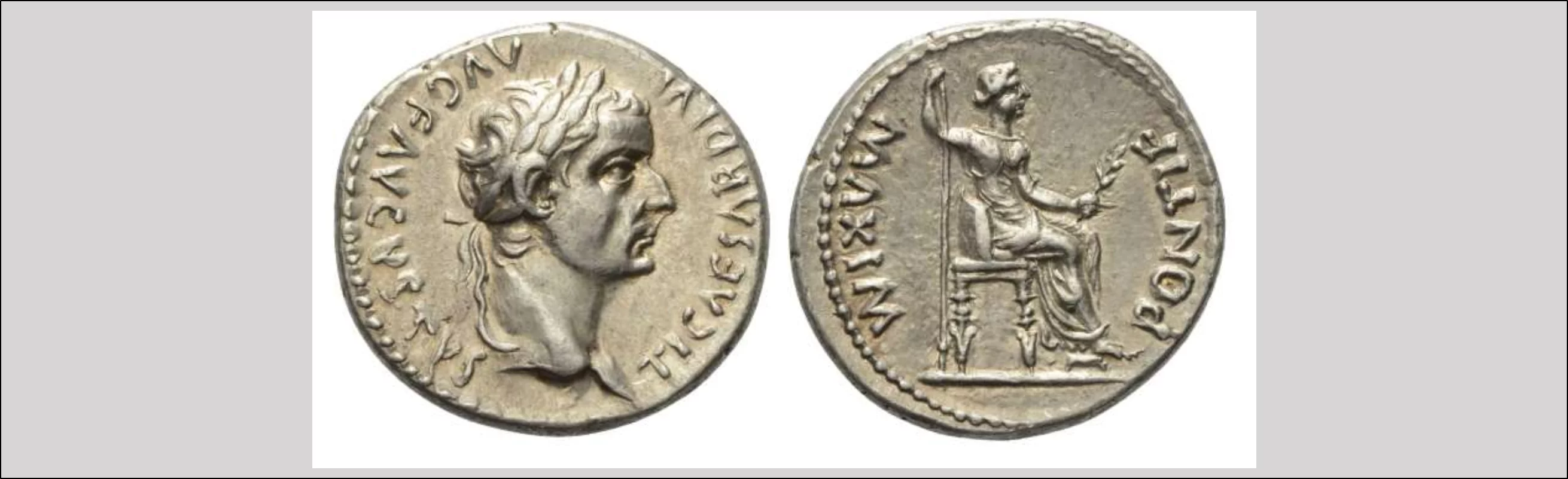
- One side bore the head of Caesar and the abbreviated inscription:
TI. CAESAR DIVI AVG. F. AVGVSTVS
“Tiberius Caesar, son of the divine Augustus, Augustus”
- The reverse was inscribed:
PONTIFEX MAXIMUS
“Chief Priest” (holding long scepter & olive branch, seated right on throne with ornate legs)
- [“Chief Priest” still remains a title of the Pope, in contrast to 1 Tim 2:5, Heb 4:14-15, et al.]
Mark 12:16-17
- “…Render to Caesar the things that are Caesars…”: Astonishing reply!
- This is often quoted, but only half-quoted:
— Everybody remembers the Caesar part
— The question is: In whose image are you? God’s image! Then render to God the things that are God’s
- Some have regarded it as the single most influential political statement ever made in the history of the world
- “…Render” = ἀποδίδωμι (apodídōmi): pay a debt; to pay back (Cf. Rom 13, 1 Tim 2:1-6, 1 Pet 2:13-17)
- Coinage was regarded the property of the government that minted it. They were already accepting Caesar’s authority or they would not be using his money
- The state is a valid institution (even when it is controlled by a man who thinks he is god!)
- Being created in the image of God, we are under God’s authority as well!
— He has total ownership of us all!
- The Federal Reserve background is particularly interesting in this regard: it is neither Federal, nor Reserve, but a private bank that got itself in a position of printing the money and renting it to everyone for an interest, which is unconstitutional btw

- A representative republic places the responsibility on our own shoulders:
Chuck personally believes we will be held accountable before the Throne of God for our stewardship of our present mandate which has come to us at such a high price…
Mark 12:18 The Sadducees and the Resurrection

- “…Sadducees”: This is the only place in Mark where the Sadducees are mentioned
— Nowhere is it recorded (that Chuck is aware of) did any of these “liberals” come to faith
— Many of the Pharisees and priests did (as recorded in the Book of Acts)

- The Sadducees did not believe in the existence of the soul, life after death, resurrection, final judgment, angels or demons (Cf. Acts 23:8)
- They did, however (strangely enough), accept the Torah, the books of Moses
- Most of them were wealthy; the religious aristocrats
- “The Sadducees… are, even among themselves, rather boorish in their behavior, and in their intercourse with their peers are as rude as aliens.” Josephus, Jewish War, II, 8.14 (boorish—rough and bad-mannered; coarse)
- (They did not believe in the resurrection: “That’s why they were sad, you see”. A corny pun, but it is a helpful mnemonic)
Mark 12:19
- This hypothetical question was based on the law of levirate marriage (Deut 25:5-10)
- From Latin levir → “husband’s brother” (Serbian: dever)
- The practice or requirement of marriage of a widow to the brother of her deceased husband. This custom was practiced in ancient Jewish society and is common in parts of Africa today
Mark 12:20-23
- Not even Hollywood would come up with something like this!
- Chuck believes in spiritual gifts - his is flippancy (and being facetious)
Mark 12:24

- Jesus pointed out their ignorance of two things:
1) the truth of Scriptures (they claimed the Torah, but they did not understand it)
2) the Power of God
Mark 12:25

- “…the angels which are in heaven” — Much confusion has arisen from this verse: He doesn’t indicate that fallen angels could not meddle with women (Cf. Genesis 6, confirmed by 2 Pet 2:4 & Jude 5-6)
- Angels in heaven do not marry: there is no procreation necessary among immortal beings. That doesn’t limit the technologies available to fallen angels bent on mischief!
- οἰκητήριον (oiketerion) appears only twice in the Scripture:
— in 2 Cor 5:2, referring to the heavenly resurrection body the believers aspire to, and
— in Jude 6, the “habitation” the fallen angels disrobed from
- For a discussion of the role of fallen angels in Genesis 6, and commonly taught fallacies of “the line of Seth” etc., see Return of the Nephilim briefing pack, or our book, Alien Encounters, Chapter 10
- The same God who created the angels is able to give us the new bodies we will need for the new life in heaven (1 Cor 15:38ff)
Mark 12:26
- “…have ye not read”: The question expects an affirmative answer (known as rhetorical question), for Christ knew well that these Sadducees were thoroughly familiar with the Pentateuch
— He referred specifically to Exo 3:6, quoting the LXX
- The Sadducees accepted only the Torah; so Jesus nails this one from Exodus 3:6!
— God didn’t use past tense, but present tense: “I am the God of Abraham, et al.”
— [Origen pointed out in the 2nd century that “it is ridiculous for God to say that He is the God of men who have no existence!”, Origen, Commentary on Matthew, Tom. XVII, 36]
- The patriarchs were alive when those words were spoken. The Torah does, thus, teach that there is life after death! The covenant promises were eternal is the point (Heb 11:10-13)
Mark 12:27

- The Sadducees—the liberals of that day—did not know Scripture or the power of God
- What about us? Do we really understand the Scripture? Do we really understand the power of God?
- Resurrection is the signature of my soul. The resurrection of Christ, that empty tomb, is what validated the sacrifice that was made 3 days earlier
- Even the Torah is replete with other examples likewise:
— Adam, created ex nihilo ("out of nothing" or "from nothing”) is a proto-resurrection (Gen 2:7)
— Enoch was raptured; not subject to death
— Abraham’s offering of Isaac is also imbued with the resurrection of Isaac (Gen 22:5, Heb 11:19) Abraham was saved because he believed in resurrection of Isaac. God has promised he’ll have children, so if Isaac is sacrificed, God has to raise him from the dead in order for him to have children as God has promised. That is not contrivance. Hebrews 11:19 points our that Abraham believed God can resurrect people
— Israel’s deliverances: Red Sea, manna, quail, water, etc: all lifegiving power…
Mark 12:28 The Foremost Commandment (The Great Commandment)
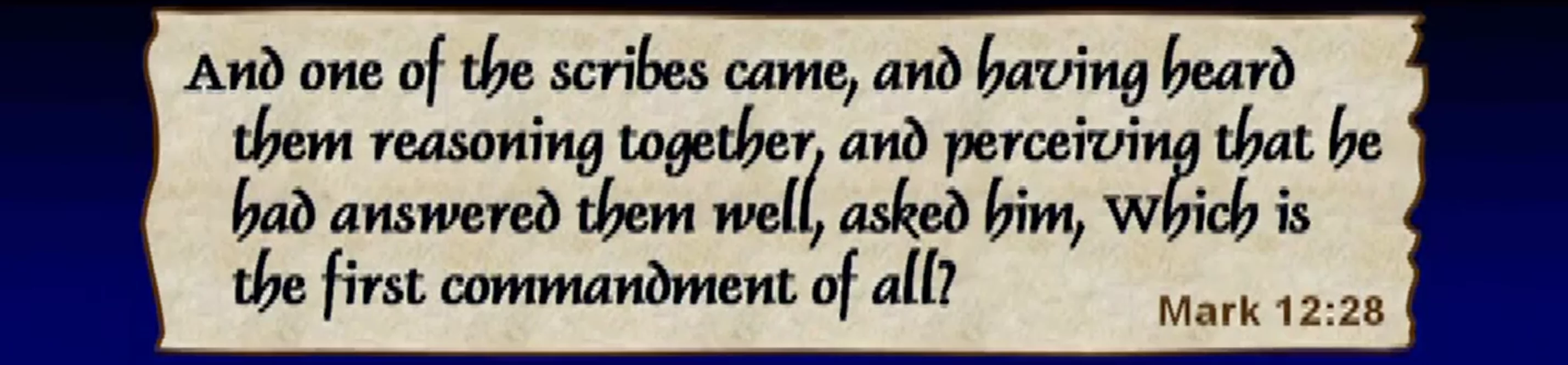
- This, apparently is a sincere question (it wasn’t one of his buddies who tried to trap Him in their games)
- This next challenge was a scribe who was also a Pharisee (Matt 22:34-35)
- The scribes had determined that there were
— 365 negative precepts and
— 248 positive, for a total of
— 613 precepts in the Law (they regarded them as 613 commandments)
- One of their common exercises was discussing which were the greatest
Mark 12:29

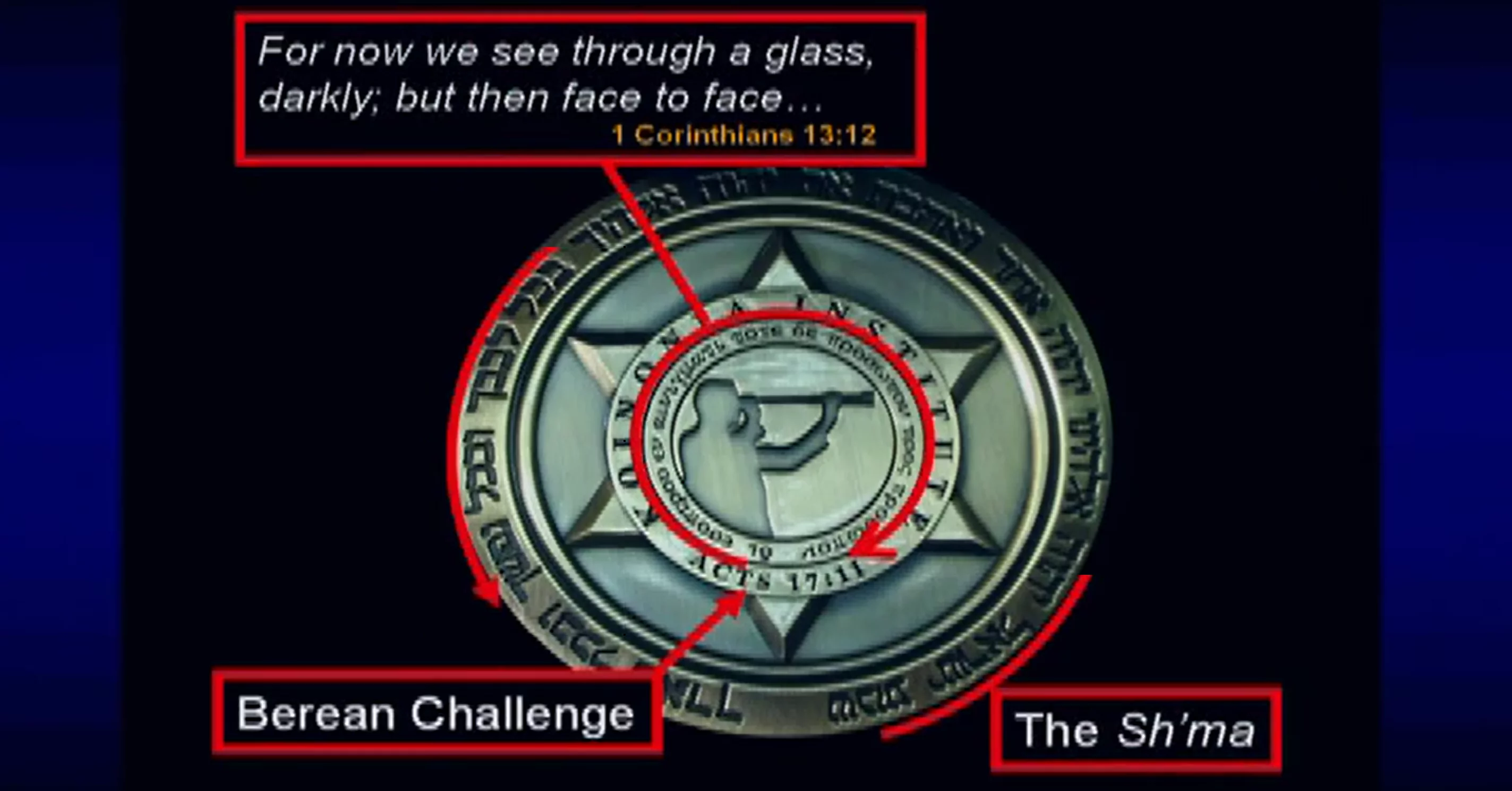
- “Hear, O Israel…”: the familiar words of the Sh’ma (“hear”) (Deut 6:4-5)
- This great confession of faith is quoted by the pious, morning and evening, and is inserted in the little mezuzahs (containers with Scripture inside them) that adorn virtually all Jewish doorposts (they touch it or kiss it as they pass). It is never quite vertical, but always off a little bit
- (It is also the capstone engraving in the logo of the Koinonia Institute)
Mark 12:30
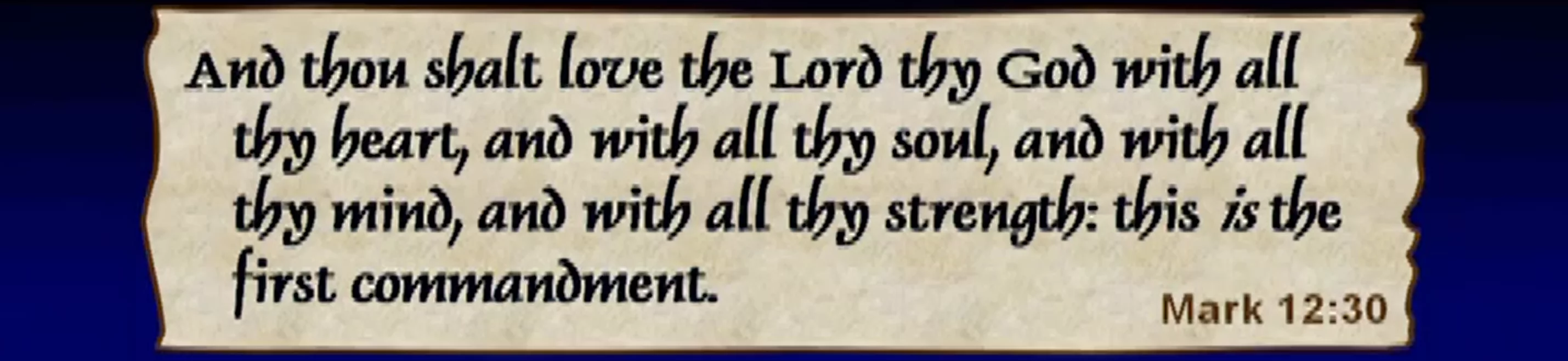
- What is the “heart”? …the “soul”? …the “mind”?
- We use these terms without precision (eg mind is not the brain, it’s far more than that)
— [For the practical results of 20 years research on these very questions, see The Way of Agape, the first of a trilogy on our personal relationship with God]
Mark 12:31

- Quoting Lev 19:18: “You shall not take vengeance, nor bear any grudge against the sons of your people, but you shall love your neighbor as yourself; I am the LORD.”
- Thus, Paul says “love is the fulfilling of the Law” (Rom 13:8-10)
- We do not live by rules, but by relationships (rules were nailed to the cross)
Mark 12:32

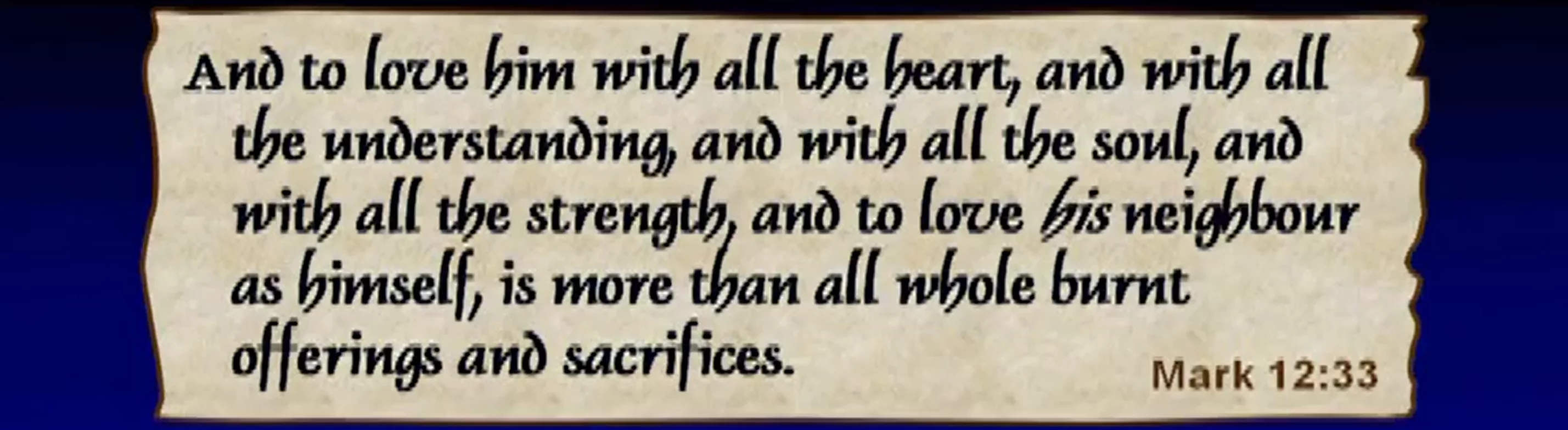
- The scribe dared to commend the reply. The Word had spoken to his heart
Mark 12:33
Mark 12:34
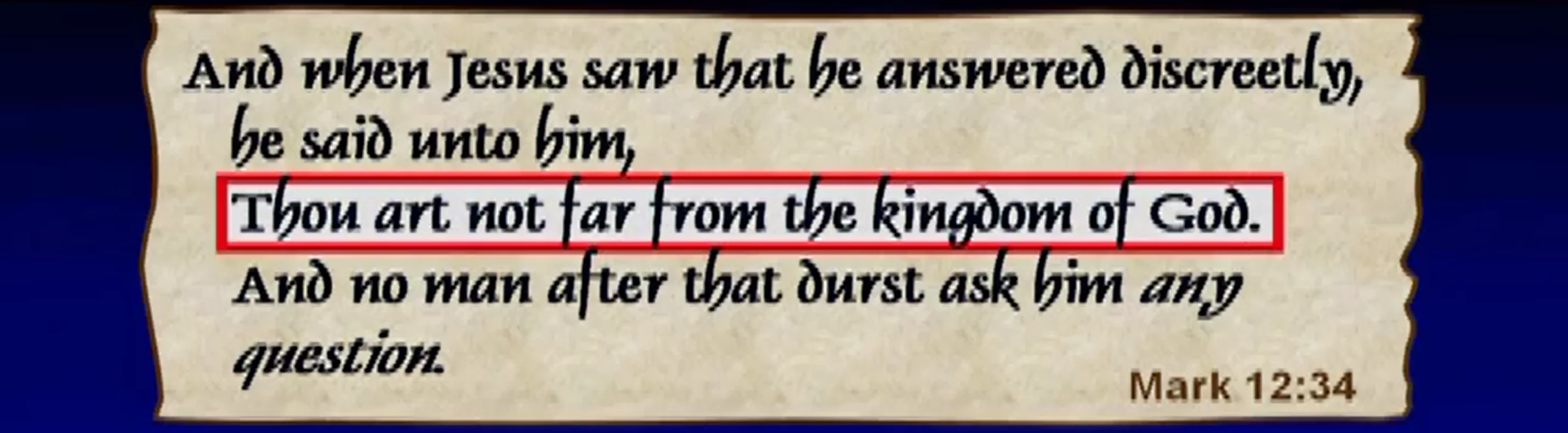
- “…Thou art not far from the kingdom of God”: What a tantalizing statement!
(tantalizing → very attractive, tempting or exciting, but is also frustratingly out of reach or unattainable)
- Still wasn’t there, but he was close. That verse changed some lives (see John Wesley below)
- You can be close, but that only counts with hand grenades and in the game of horseshoes!
— And this is eternity we’re talking about!
— …within an inch of heaven, yet on the way to hell (yes, that is possible — since the outcome is digital)
- He was informed; honest; he was not a coward; but still not in the kingdom, apparently

- John Wesley’s coming to faith was one of the most important events in the Western world
— Born in 1703, the 15th child of Samuel and Susanna Wesley (died 1791, at age 88)
— John had a sound upbringing under an unusually talented mother
— He went on to a brilliant career at Charterhouse and Oxford
— Was elected fellow of Lincoln College in 1726
— Served as a double professor of Greek and logic (and not saved yet)
— Ordained as a priest in the Church of England in 1728 (quite a Resume so far)
- He met regularly for prayer, study of Greek New Testament and devotional exercises…
— fasted twice a week
— visited prisons
— assisted the poor and sick…
- In 1735 he accepted an invitation to become a missionary to the American Indians in Georgia (coming from UK)
— It was a fiasco btw; all kinds of conflicts…
— Almost died from disease
— (He still was unsaved)
- Aboard the ship on his return he met some German Moravian Christians, which had a profound effect on him and upon his return to London, he sought out one of their leaders
- Through a series of conversations, Wesley (in his own words) was “clearly convinced of unbelief, of the want of that faith whereby alone we are saved”
- On the morning of May 24, 1738 (10 years after he had been ordained), he opened his Bible haphazardly and his eyes fell on Mark 12:34:
— “Thou art not far from the kingdom of God.”
- That verse would became his life verse. That shook him to the core
- “In the evening I went very unwillingly to a society in Aldersgate Street where one was reading Luther’s preface to the Epistle to the Romans. About a quarter before nine, while he was describing the change which God works in the heart through faith in Christ, I felt my heart strangely warmed. I felt I did trust in Christ, Christ alone, for salvation, and an assurance was given me, that He had taken away my sins, even mine, and saved me from the law of sin and death.” q.v., James McGraw, Great Evangelical Preachers of Yesterday, Abington, NY, 1961, p.57
- From then on, Wesley became a dynamo:
— He preached in churches, in mines, in fields, on horseback
— He preached 42,000 sermons
— Averaged 4,500 miles a year
— 60-70 miles/day, 3 sermons a day…
— The Church has never been the same
- The Lord conversing with a lost clergyman of the house of Israel bore parallels to Wesley’s own lostness!
— Both were clergymen
— Both were highly educated (Jesus talked to a scribe)
— Both were scholars who knew their Scriptures inside and out
— Both were “not far from the kingdom” when confronted with Christ
- It is possible to have studied theology and have never become a true Christian?
- You can hear of the grace of Christ preached all your life and still be resting on you own goodness…
Mark 12:35 The Question About David’s Son, MEV

Mark 12:36
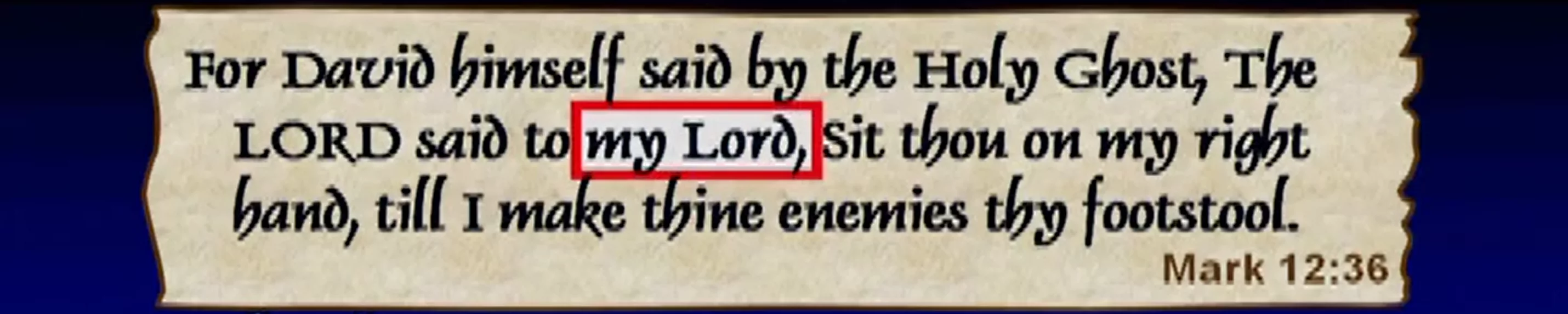
- “…my LORD”: Quoting Ps 110:1. In Hebrew, it says: “YHWH said unto Adonai…”
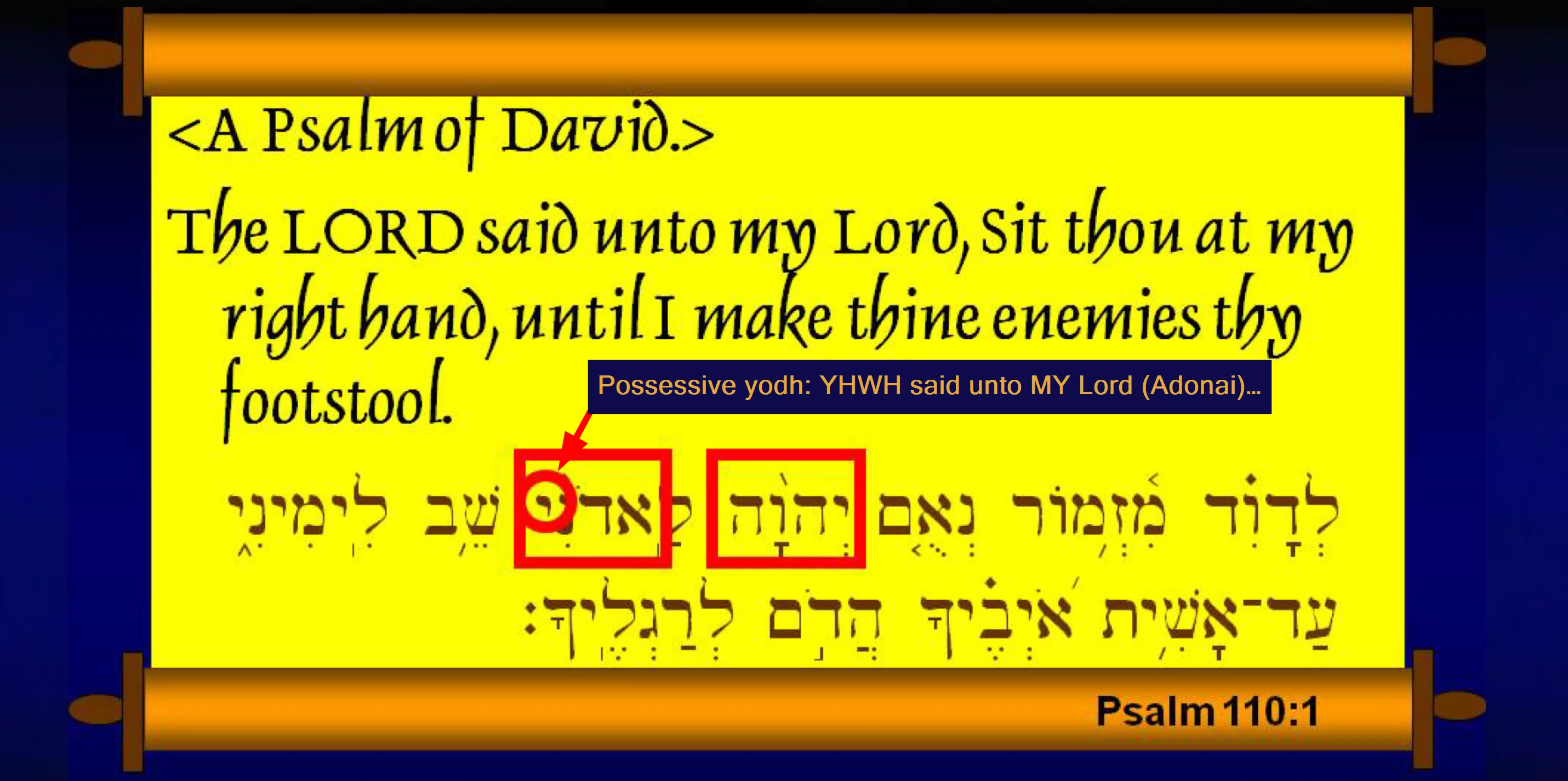
- That yodh put them all to confusion. They could not figure out how that could be possible
- They know Messiah is to be the son of David, yet David calls Him “my” Lord. How can he? They couldn’t deal with that
🛑 Matt 5:17-18
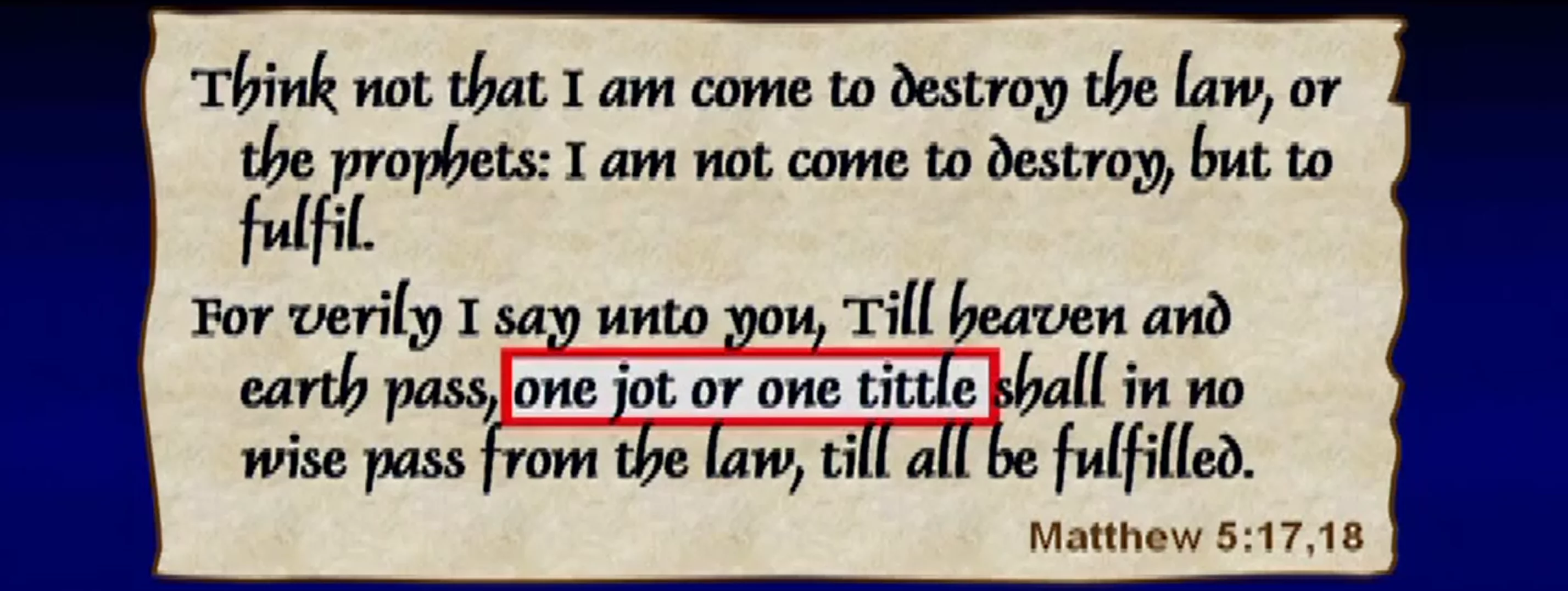
- Jot (yodh) is the smallest of the Hebrew 22-letter alphabet
- Also — one projection of a letter (serif) — lit one iota (Heb yodh)
- Tittle is a little hook on some of the letters (NASB: stroke)
Mark 12:37

- “…when is He then his son”: His whole argument hangs on a yot! (Cf. Matt 22:42-45, Matt 5:18)
- Here it says “…And the common people heard him gladly.” — Matthew records:
— “And no man was able to answer him a word, neither durst any man from that day forth ask him any more questions.” (Matt 22:46) 😂
- A call to taking the text very seriously — Jesus took the Psalms so literally that He hung an entire argument on one yodh (no paraphrases here)
- The Jews believed that the Messiah would be David’s son (John 7:41-42), but the only way David’s son could also be David’s Lord would be if the Messiah were God come in human flesh!
- The answer, of course, is the miraculous virgin birth, etc. (Isa 7:14, Matt 1:18-25, Luke 1:26-38)
- And before the week was over, the Son of David would die (in fulfillment of the OT Scriptures: Ps 22, Isa 53, et al.)
…and would be resurrected! (the resurrection is the validation of the whole package)
- “Concerning his Son Jesus Christ our Lord, which was made of the seed of David according to the flesh; And declared to be the Son of God with power, according to the spirit of holiness, by the resurrection from the dead.” (Rom 1:3-4) (also Cf. 2 Tim 3:8, reference probably not correct)
- The Church easily falls captive to the culture. This section (chapter 12) closes with two warnings:
1) against the pride of the scribes (vv.38-40)
2) against the pride of the rich (vv.41-44)
Mark 12:38-40 The Denouncing of the Scribes, MEV
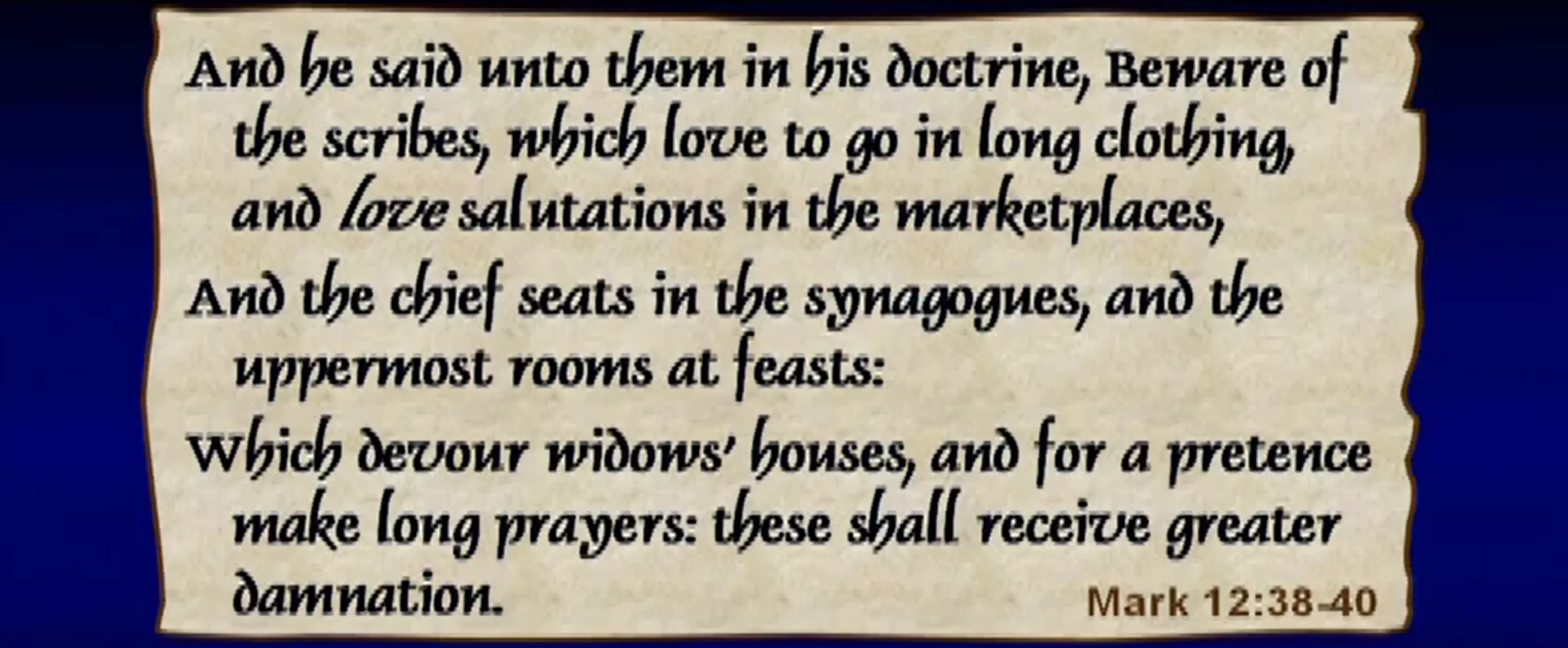
- It is character that counts, not credentials or other appurtenances (accessories or other items associated with a particular activity or style of living; accoutrements; extras; incidentals; paraphernalia)

- “Where your treasure is, there your heart will be also.” (Matt 6:21)
- Money reveals the state of the heart as few other things can
- There’s nothing wrong with being rich. The danger is, you may worship the riches (needs to be guarded against)
- Entrepreneurs regard money as just a means to get something done
Mark 12:41 The Widow’s Offering
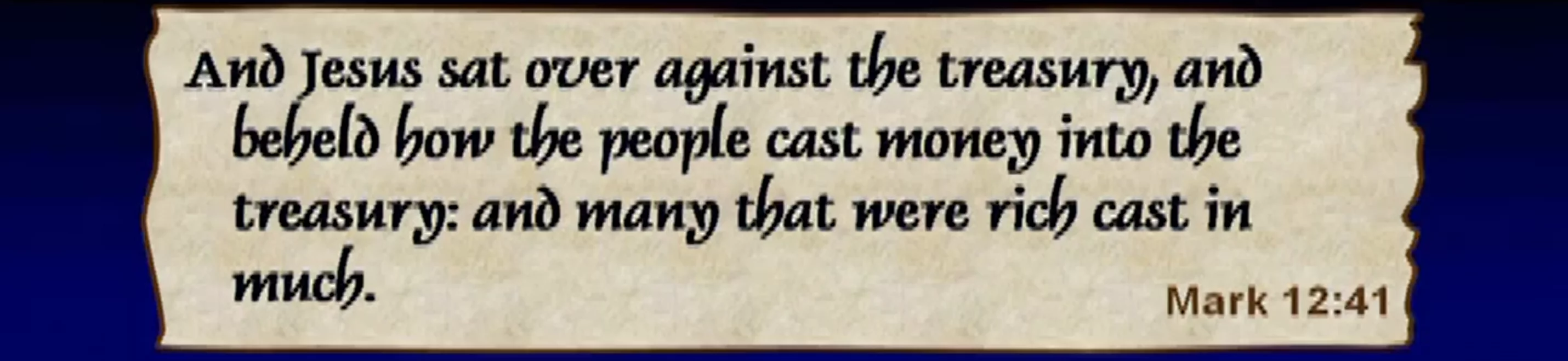
- He is beholding us right now: “He loves us so much that He can’t take His eyes off of us!”
Anecdote what grandad answered to his little boy when he asked: “Does God see me all the time? Is He always watching?” — “He loves you so much, He can’t take His eyes off of you!”
- All of us are before an audience, all the time — an audience of 1
- Some people say — Character is what you do (or what you are) when nobody is looking
— Well, there’s always Somebody looking
- There were 13 trumpet-shaped chests around the Court of Women where people deposited their offerings
Mark 12:42

- “…mites”: so small they were called a λεπτόν (leptón, or lepta) literally: “peeled” or “fine”, a really tiny thin coin, 1/400th of a shekel (roughly about 1/8 of a cent in today’s terms)
- Two lepta were her day’s earnings, a considerable sum to her (note that she could have put in only one)
- “…farthing”: the smallest Roman coin or the smallest Greek imperial coin
Farthing (this coin discussion is omitted from the video)
🔘 Representing two Greek words:
— kodrantes (Latin: quadrans, cf. Matt 5:26, Mark 12:42) and
— assarion (Latin: as, cf. Matt 10:29, Luke 12:6). “…two assaria” constituted probably one coin
🔘 NASB: assarion - a Roman copper coin, approx. 1/16 of a laborer’s daily wage
🔘 NASB: quadrans - a Roman copper coin, approx. 1/64 of a laborer’s daily wage (thus a quarter of assarion)
🔘 NASB: lepta - smallest Greek copper coin, approx. 1/128 of a laborer’s daily wage (thus a half of quadrans)
🔘 The quadrans was originally the fourth of an as, i.e. three ounces
🔘 In Christ’s time the quadrans equaled two Greek lepta, “mites”
🔘 Among the Roman copper coins, current then in Palestine, there was none smaller than the assarich
🔘 Among the Greek imperial coins, there was the quadrans (quarter of the assarich) and lepton, “mite”, one-eighth of an as and half of a quadrans
🔘 The assarich was one and three-fourths of a farthing → the quadrans thus less than half a farthing
🔘 But either the lowest Roman coin, or the quadrans, the lowest Greek imperial coin, is sufficiently expressed by the term “farthing”, as being the lowest coin
Mark 12:43
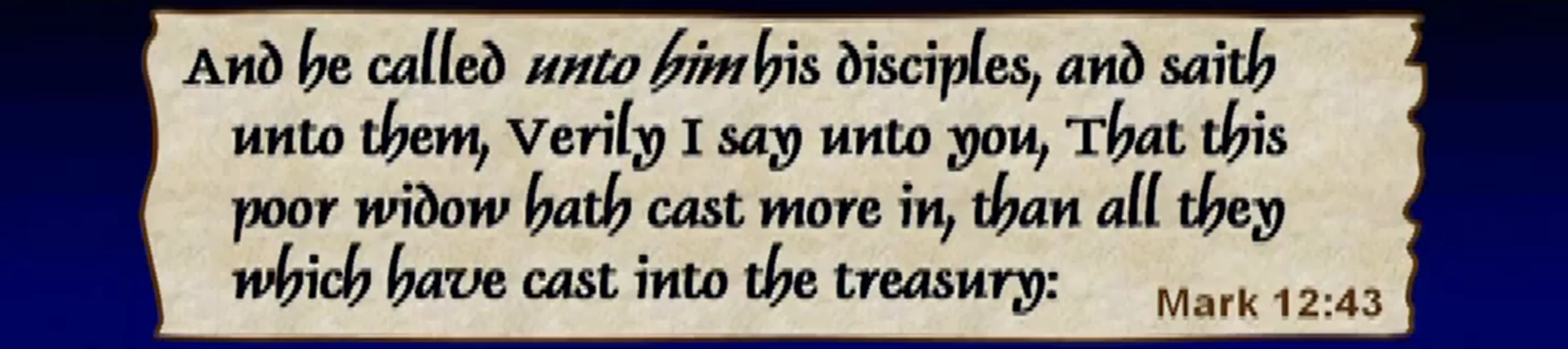
- It was proportion (relative to one’s wealth) that mattered, not an absolute size of portions (contributed)
Mark 12:44

- There were two coins! She could have retained one of them. Instead, she gave everything
- Yet: “And though I bestow all my goods to feed the poor, and though I give my body to be burned, and have not charity, it profiteth me nothing.” (1 Cor 13:3)

[*Cirrhosis: a progressive disease of the liver characterized by an excessive formation of connective tissue followed by hardening and contraction that results from unknown toxemia, deficiencies or parasites. From Greek κιρρός (kirrhós), orange-colored, the yellowish appearance a diseased liver presents when cut]
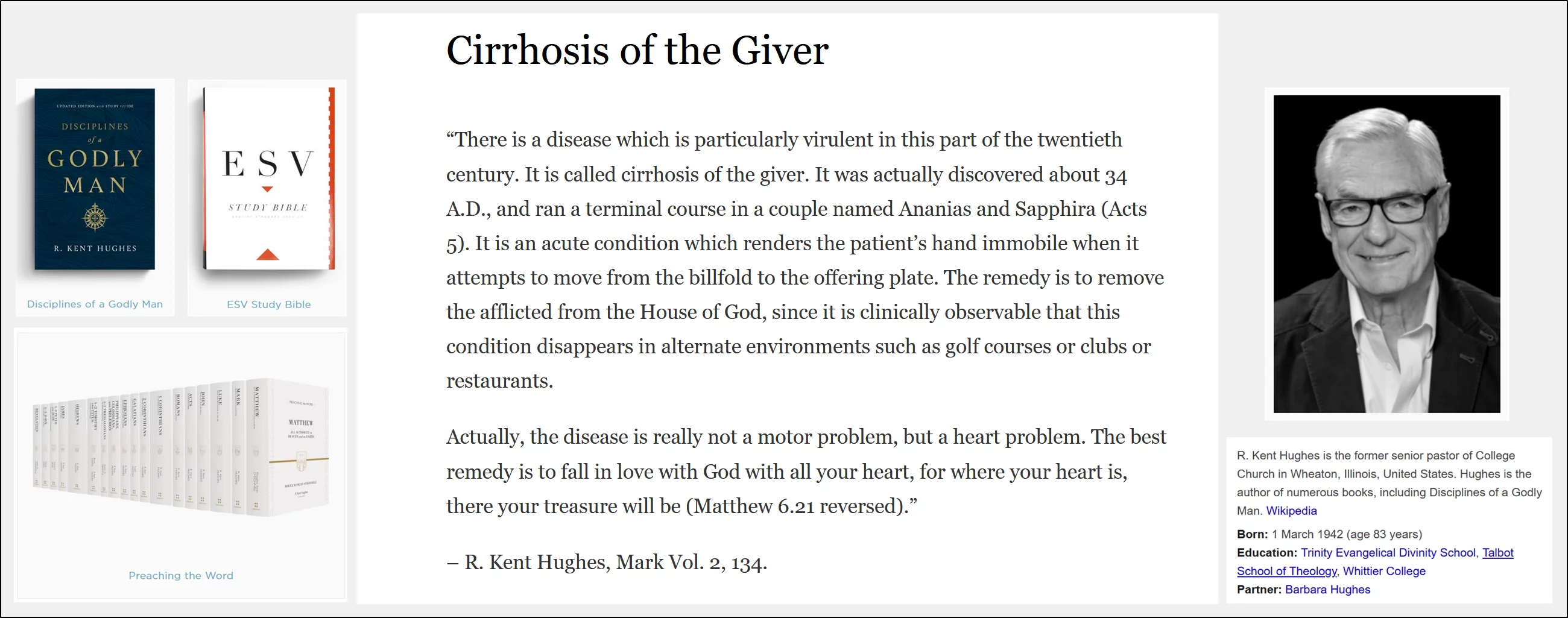
“It was actually discovered about 34 AD, and ran a terminal course in a couple named Ananias and Sapphira (Acts 5). It is an acute condition which renders the patient’s hand immobile when it attempts to move from the billfold to the offering plate. The remedy is to remove the afflicted from the House of God, since it is clinically observable that this condition disappears in alternate environments such as golf courses or clubs or restaurants.
Actually, the disease is really not a motor problem, but a heart problem. The best remedy is to fall in love with God with all your heart, for where your heart is, there your treasure will be (Matt 6:21, reversed).” —R. Kent Hughes, Mark Vol. 2, 134

- “Woe unto them that join house to house, that lay field to field, till there be no place, that they [ye] may be placed alone in the midst of the earth!” (Isa 5:8) Materialism
- “Woe unto them that rise up early in the morning, that they may follow strong drink; that continue until night, till wine inflame them!” (Isa 5:11) Alcohol abuse
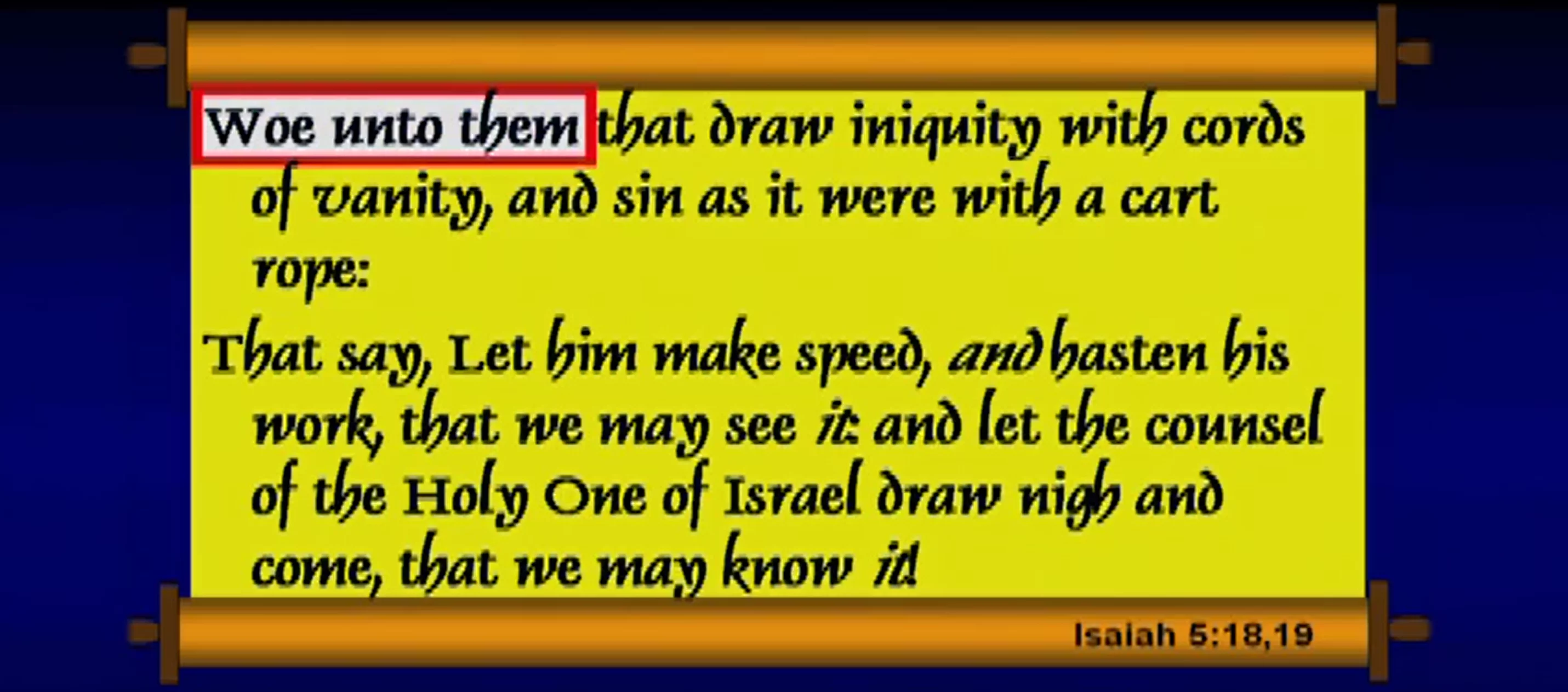
- “Woe unto them that draw iniquity with cords of vanity, and sin as it were with a cart rope:” (Isa 5:18) Deprived and wicked parade and celebrate their sin
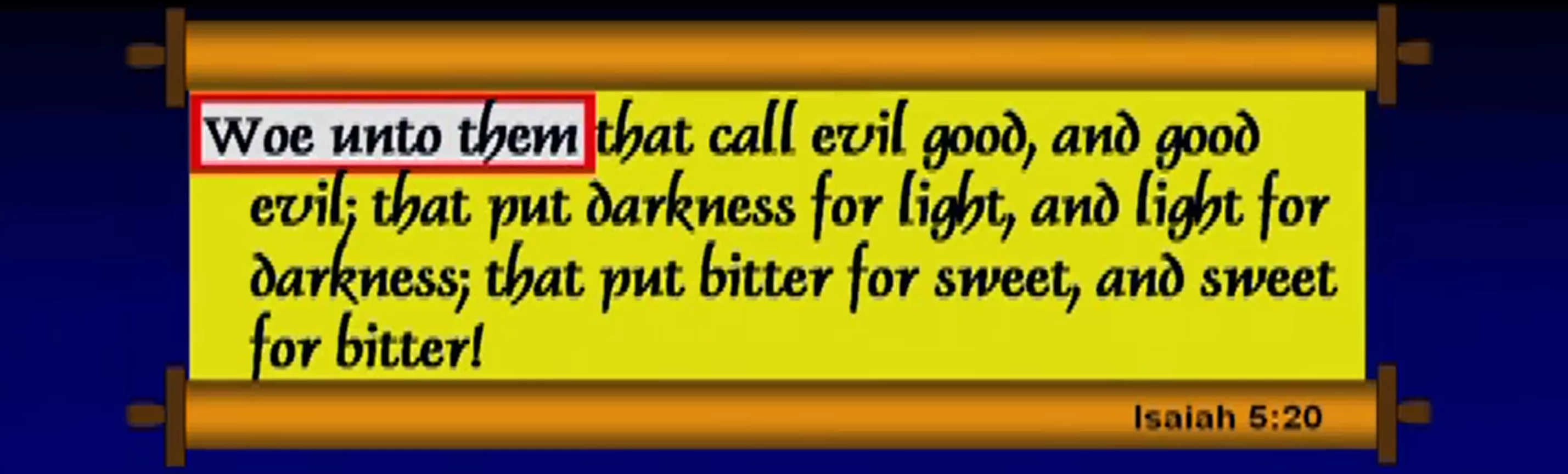
- “Woe unto them that call evil good, and good evil; that put darkness for light, and light for darkness; that put bitter for sweet, and sweet for bitter!” (Isa 5:20) Satanic inversion
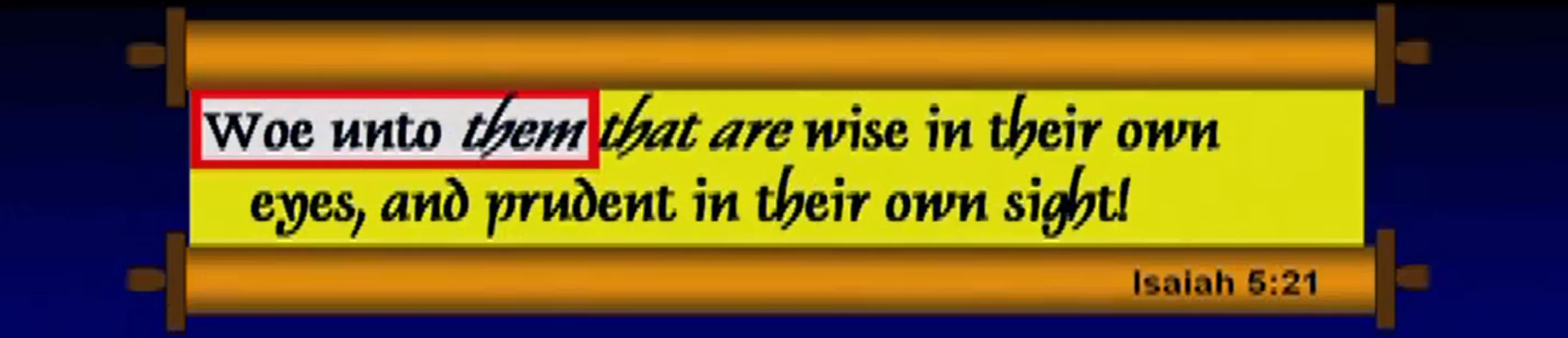
- “Woe unto them that are wise in their own eyes, and prudent in their own sight!” (Isa 5:21) Pride
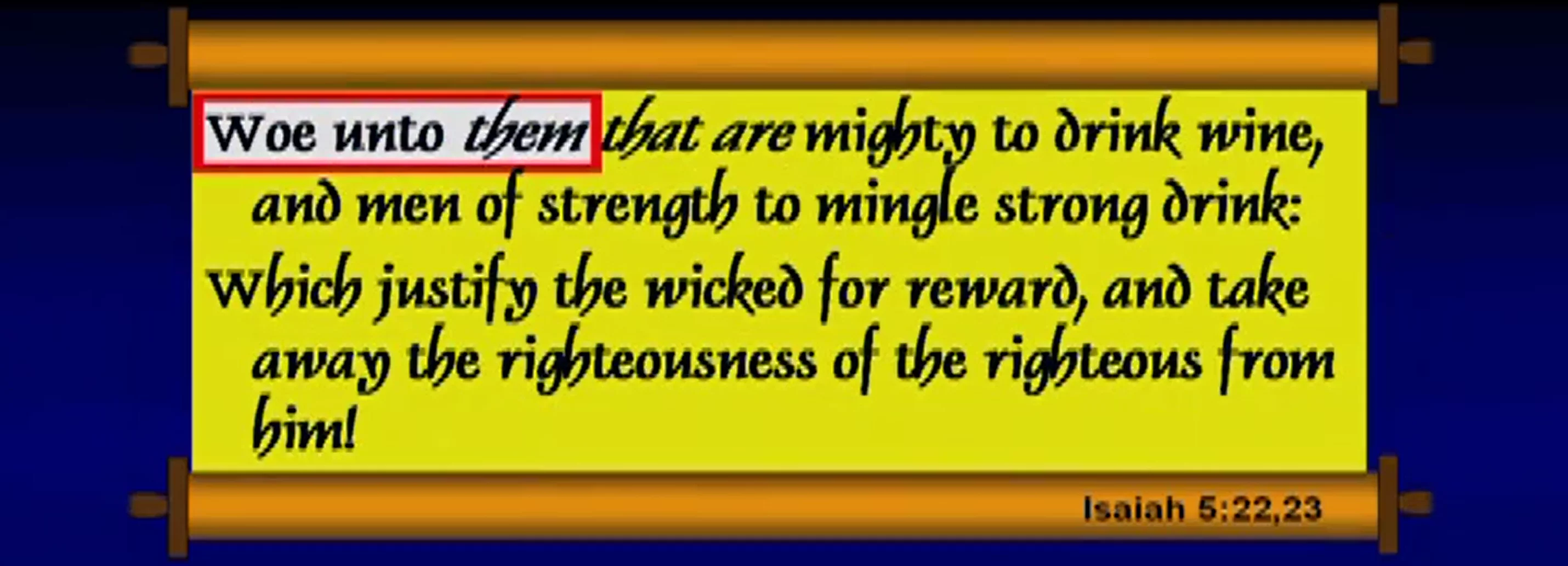
- “Woe unto them that are mighty to drink wine, and men of strength to mingle strong drink: Which justify the wicked for reward, and take away the righteousness of the righteous from him!” (Isa 5:22-23) Fools
Chuck’s answer to the question: “Where is the United States in the prophecy?”
⚠️ Isa 5:8-10
⚠️ Isa 5:11-12
⚠️ Isa 5:13-14
⚠️ Isa 5:15-17
⚠️ Isa 5:18-19
⚠️ Isa 5:20
⚠️ Isa 5:21
⚠️ Isa 5:22-23

- These woes describe the predicament the United States is in (more likely the entire world)
- God’s abandonment judgment has begun
- Obviously this was written in direction of Israel. But it is an allusion to the predicament of the modern world
🔥 Isa 5:24
🔥 Isa 5:25
🔥 Isa 5:26-27
🔥 Isa 5:28-29
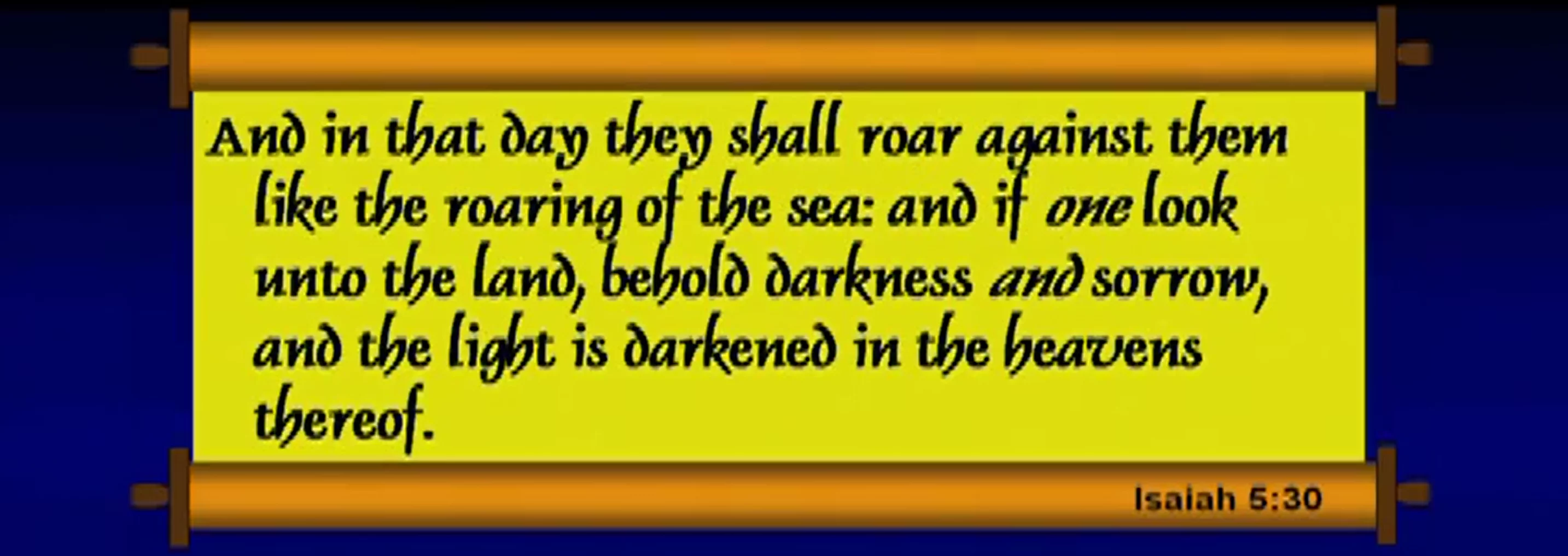
🔥 Isa 5:30
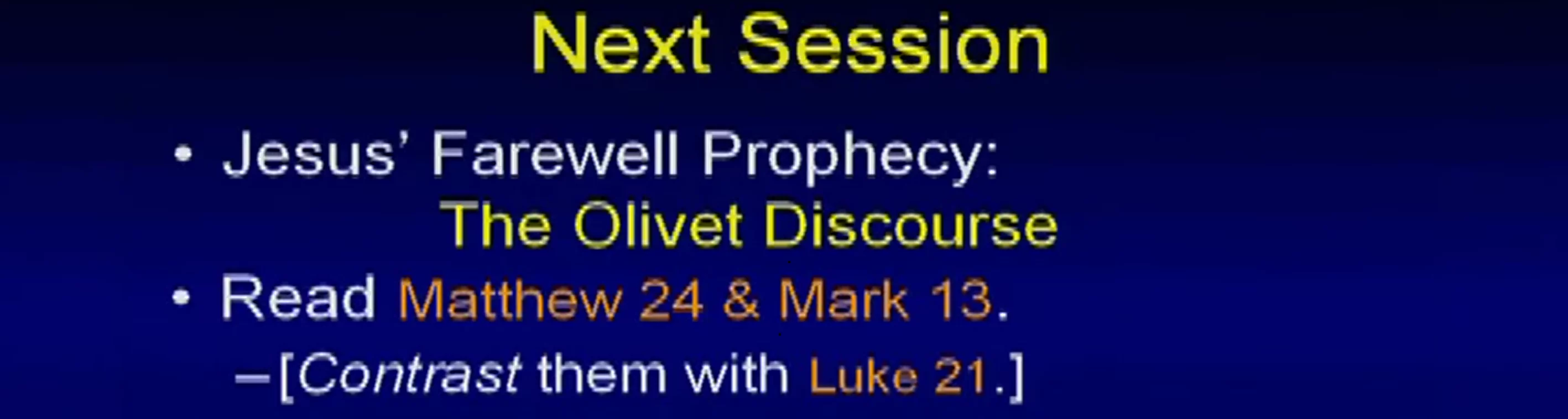
Matthew 24 & Mark 13 track pretty well, except for one subtle difference. On the other hand, if we study carefully Luke 21, it turns out it is not The Olivet Discourse!
