s14 (Ch 14) Gethsemane (studied 14-Nov-2025)
The Book of Mark with Dr. Chuck Missler
The subsections of Chapter 14 (per LSB) are:

- Here we explore the greatest victory ever won (that’s where we are headed—these final chapters here). Let’s pray that the lessons not be wasted
— “…He humbled himself, and became obedient unto death, even the death of the cross.” (Phil 2:8)
- As we explore His footsteps in the final hours of this last week, let’s be prepared to be astonished at the spectrum of responses of various people to the Lord Jesus Christ… (we find that in life too—the spectrum of reactions to Him will be all over the map, from intense hatred and rejection to intense passion, adoring and thankfulness)
— In Bethany: Adored vv. 1-11
— In the Upper Room: Betrayed vv. 12-26
— In the Garden: Forsaken vv. 27-52
— In the Palace: Rejected vv. 53-72

Mark 14:1 The Plot to Kill Jesus
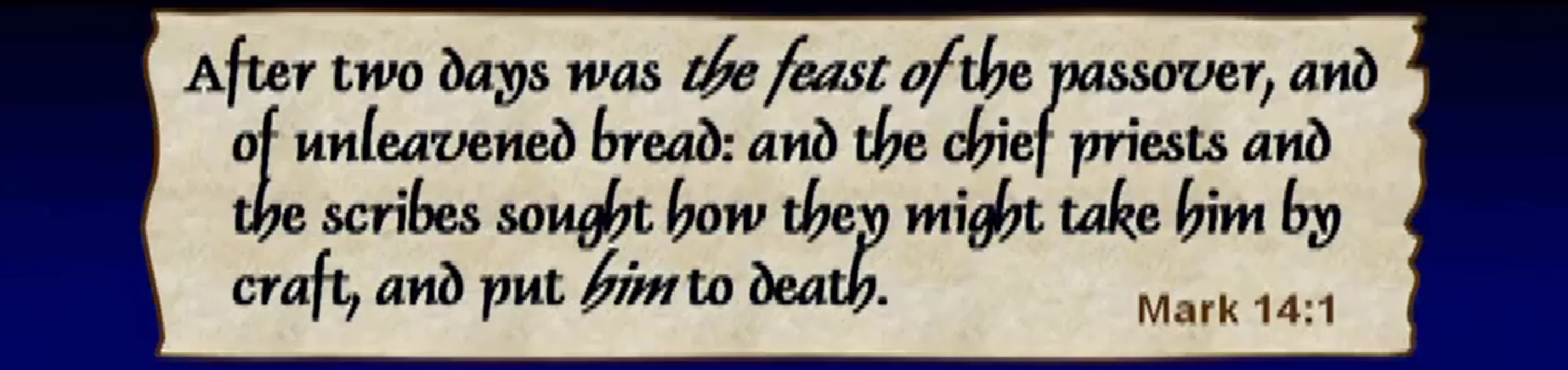
- The plot is afoot (AI: in preparation or progress; happening or beginning to happen)
- Their resolve was probably unified after the healing of the withered man’s hand (Mark 3:6) and when He cleansed the Temple
- They were prompted in Chapter 12, but were fearful of the crowd (they didn’t want it to happen on a feast day)
- Some analysts figure it could be as few as 13 people within the leadership that caused this rejection of the Messiah by the nation
- The feast of Passover and Unleavened Bread are two separate holidays adjacent to each other. It is commonly spoken of collectively as Passover, embracing three feasts:
1) Passover itself
2) the feast of Unleavened Bread and
3) the feast of Firstfruits (the morning after Shabbat after Passover)
Mark 14:2

- Despite what we know actually happened, that was not the plan. The plan was not to take Him on the one day that Jerusalem was overrun with tourists and visitors
- “…Not on the feast day”: Yet they did: why? Who determined the timing? Jesus did. He was in full control of timing
Mark 14:3 The Costly Perfume
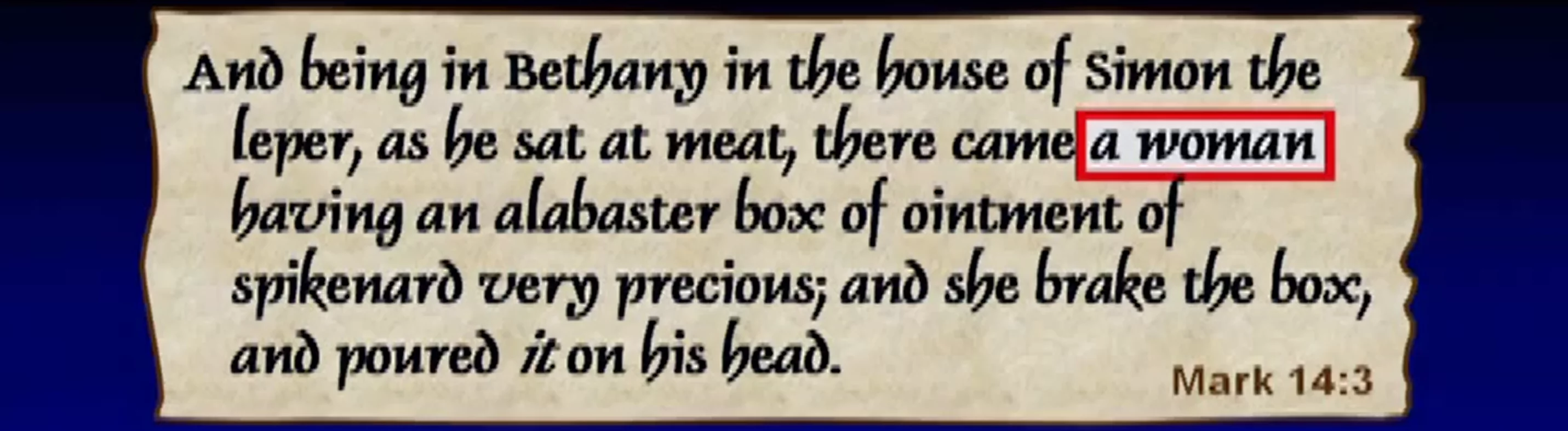
- “…a woman”: John tells us that this was Mary, the sister of Martha and Lazarus (John 11:1-2)
- She is found three times in the Gospel narratives, each time at the feet of Jesus (Luke 10:38-42, John 11:31-32, John 12:1-8)
- Lazarus, too, was the subject of an assassination plot (John 12:10)
- This incident is not to be confused with a similar encounter in the home of Simon the Pharisee, where the unnamed woman expressed her love for the forgiveness of her many sins (Luke 7:36-50) (commonly believed to be Mary Magdalene)
- This incident, in the house of Simon the (healed) leper, is preparation for a funeral
Mark 14:4

- “…waste”: ἀπώλεια (apoleia) [translated “perdition” in John 17:12 when applied to Judas]
The word means: destroying, utter destruction, of vessels; a perishing, ruin, destruction of money; the destruction which consists of eternal misery in hell
Mark 14:5

- This was about a year’s earnings for a common worker (a pence a day was a nominal wage) pence=denarius
- This was a nontrivial gesture (financially) what she is doing here
Mark 14:6-7
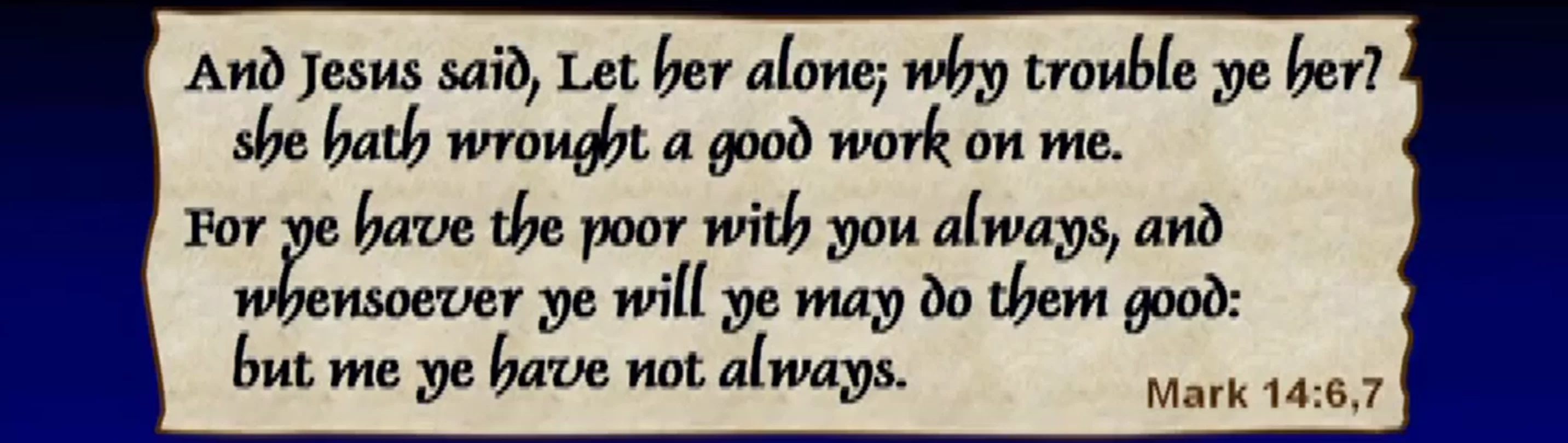
- It is impossible to be true disciples without serving others (Rom 12:1)
Mark 14:8-9
- Verse 8: Put it in another way—she get’s it! The guys didn’t
- Indeed: it is recorded in three of the four eternal Gospels!
Mark 14:10-11 Judas’ Agreement to Betray Jesus, MEV
- We get the impression that Judas Iscariot was the only one of the 12 that was not from Galilee
- Judas Iscariot was ambitious in the secular kingdom sense. When he realized that’s not going to happen, he decided to cash in what he could
- The price he gets is pretty small: 30 pieces of silver — the price of a common slave (Exo 21:32)
- That was predicted in astonishingly precise terms:
— “I said to them, “If it is good in your sight, give me my wages; but if not, never mind!” So they weighed out thirty shekels of silver as my wages. 13 Then the LORD said to me, “Throw it to the potter, that magnificent price at which I was valued by them.” So I took the thirty shekels of silver and threw them to the potter in the house of the LORD.” (Zech 11:12-13 NASB)

Mark 14:12 The Passover Meal
- “…first day of unleavened bread”: The Passover Lamb was selected on the 10th of Nisan — the day of the triumphal entry. It was slain four days later — the 14th — the first day of Passover
Mark 14:13
- Peter and John followed up on confidential arrangements already made (Luke 22:8)
Mark 14:14
- Some scholars suspect that this was the home of John Mark himself — a center for fellowship in Jerusalem (Acts 12:12)
- The man, distinctive for bearing a pitcher, may have been Mark’s father (just a conjecture)
Mark 14:15-17
- The lamb was slain after sundown—“between the two evenings”—of the 14th, which began at sunset on the Hebrew calendar
— (Cf. The Feasts of Israel briefing package)
- Mark doesn’t record it, but here we insert the washing of the disciples feet (John 13:1-20) (which includes Judas)
🦶 John 13:1-2 The Lord’s Supper
{the notes, below these screenshots, are copied from the PDF notes on Mark, not mentioned in the video clip; may need to revise}
- “…supper being ended”: Passover Supper included four “cups” (see Matthew note s20)
— First, “Bringing Out”
— Second, “Delivering”
— Third, “Redemption” or “Blessing” (1 Cor 10:16) [which ended this one] and
— the Fourth “Taking Out”
🦶 John 13:3-5 Jesus Washes the Disciples’ Feet (starting with verse 5)
- Jesus removed his outer garment (himatia), but was still wearing a tunic (chiton) — the normal costume for a servant (Luke 22:27)
- A slave of Jewish birth could not be forced to wash feet
- Doulos: bondslave (Exo 21:2-6; cf. kenosis Phil 2:5-11, especially Phil 2:7-8)
- “Wash”:
— λελουμένος (leloumenos) bathing the entire body (Acts 9:37, 2 Pet 2:22)
— νίψασθαι (nipsasthai) cleaning a particular soiled area; hands, etc. (Matt 6:17)
- The Bible speaks of being “washed” two different ways: Washed “once and for all” (Heb 10) and washed “daily”
- Washing with the Blood: Godward (Lev 16: atonement); sacrificial cleansing
- Washing with the Water (of the Word of God): saintward (Num 19: water of purification)
- At the Cross: both came out (John 19:34)
- First bath of regeneration (Tit 3:5). Relationship; position; guilt. Once and for all (Heb 10:1-12). Daily washing: defilement (1 John 1:9). Water = Word (Ps 119:9, Eph 5:25-26)
- Feet speak of our walk (Phil 2:5-11). Book of remembrance (Mal 3:16)
🦶 John 13:6-9
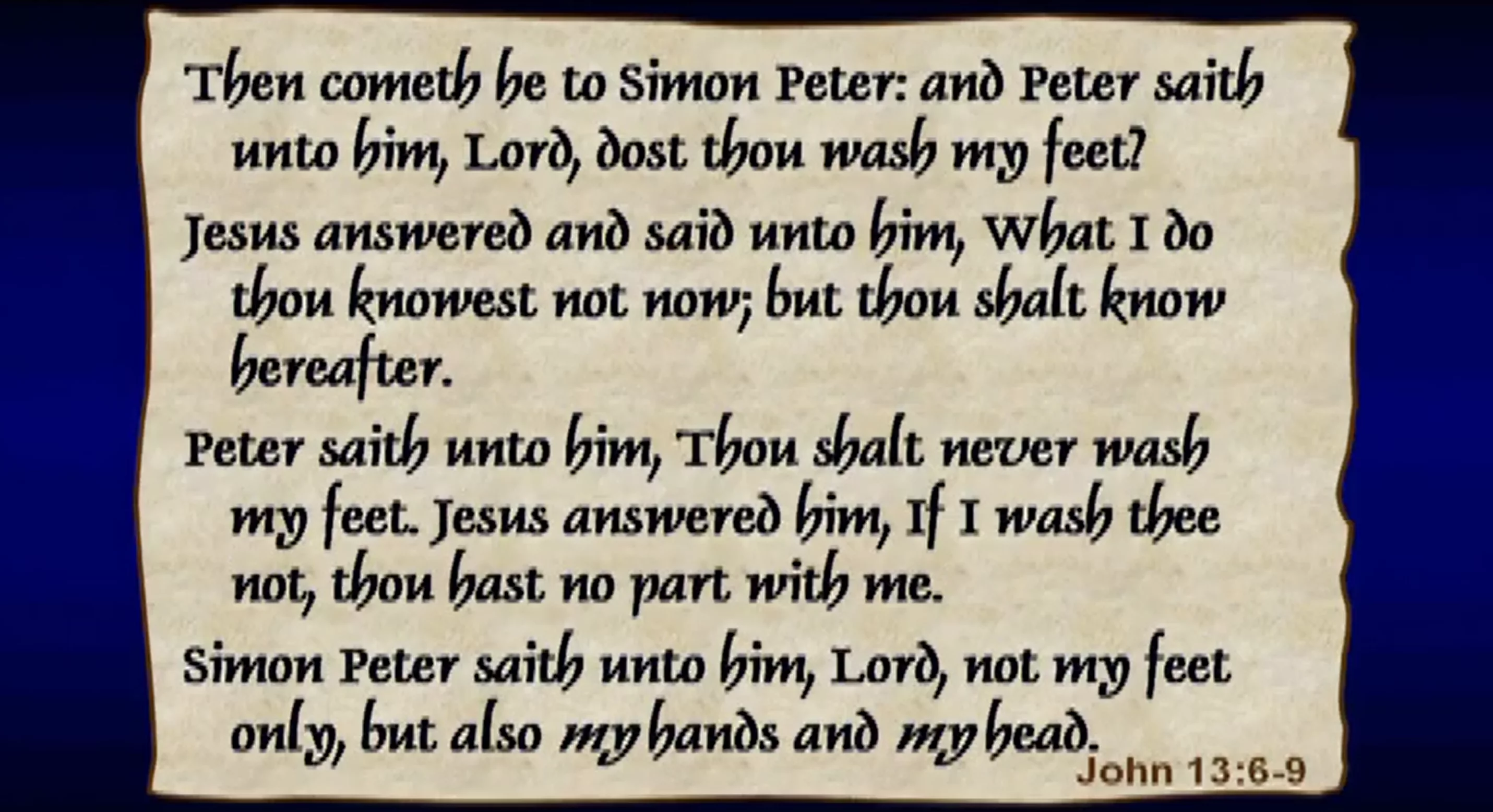
- Peter’s moto: if a little bit is good, a whole lot is a lot better
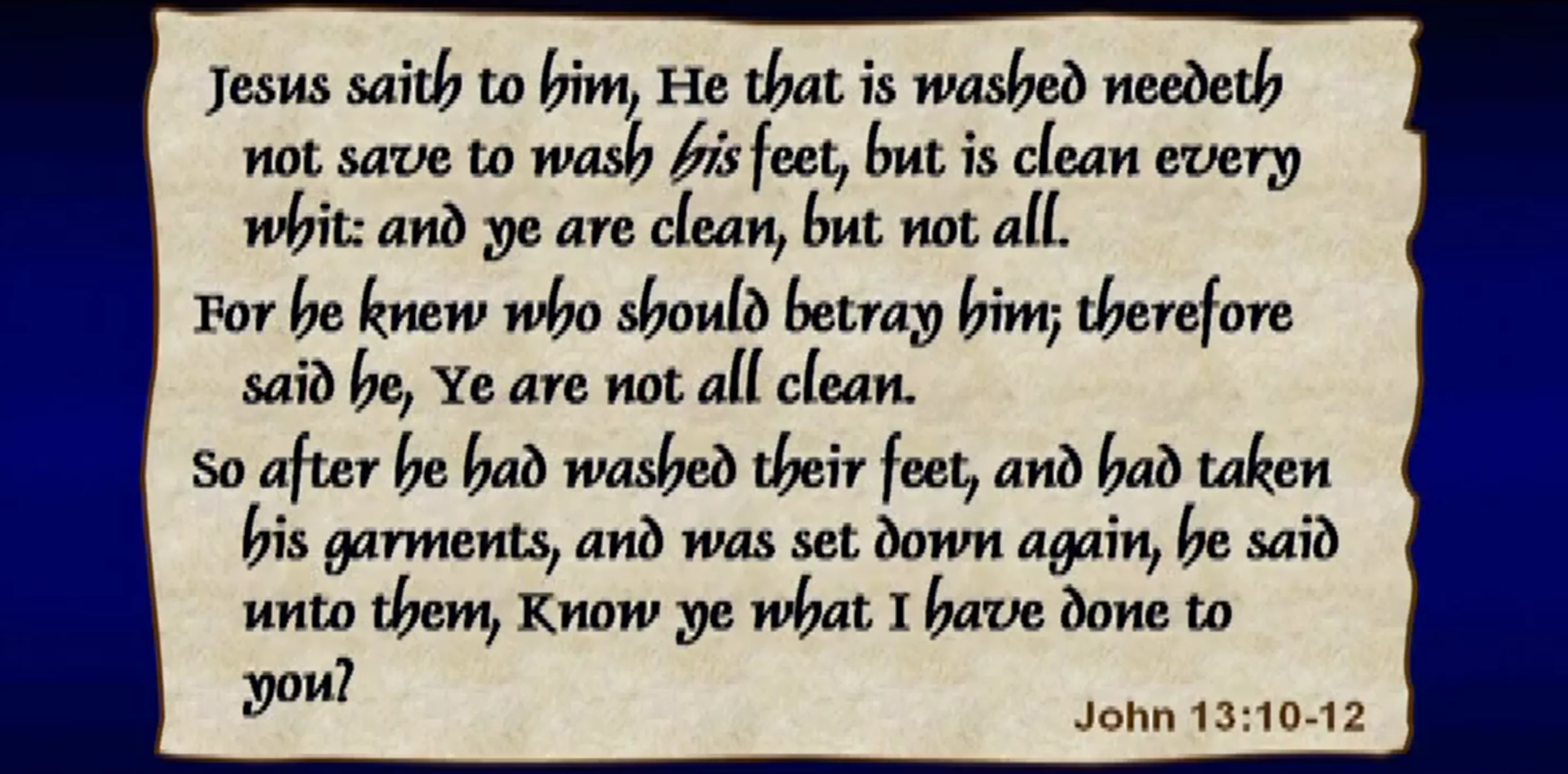
🦶 John 13:10-12
🦶 John 13:13-16
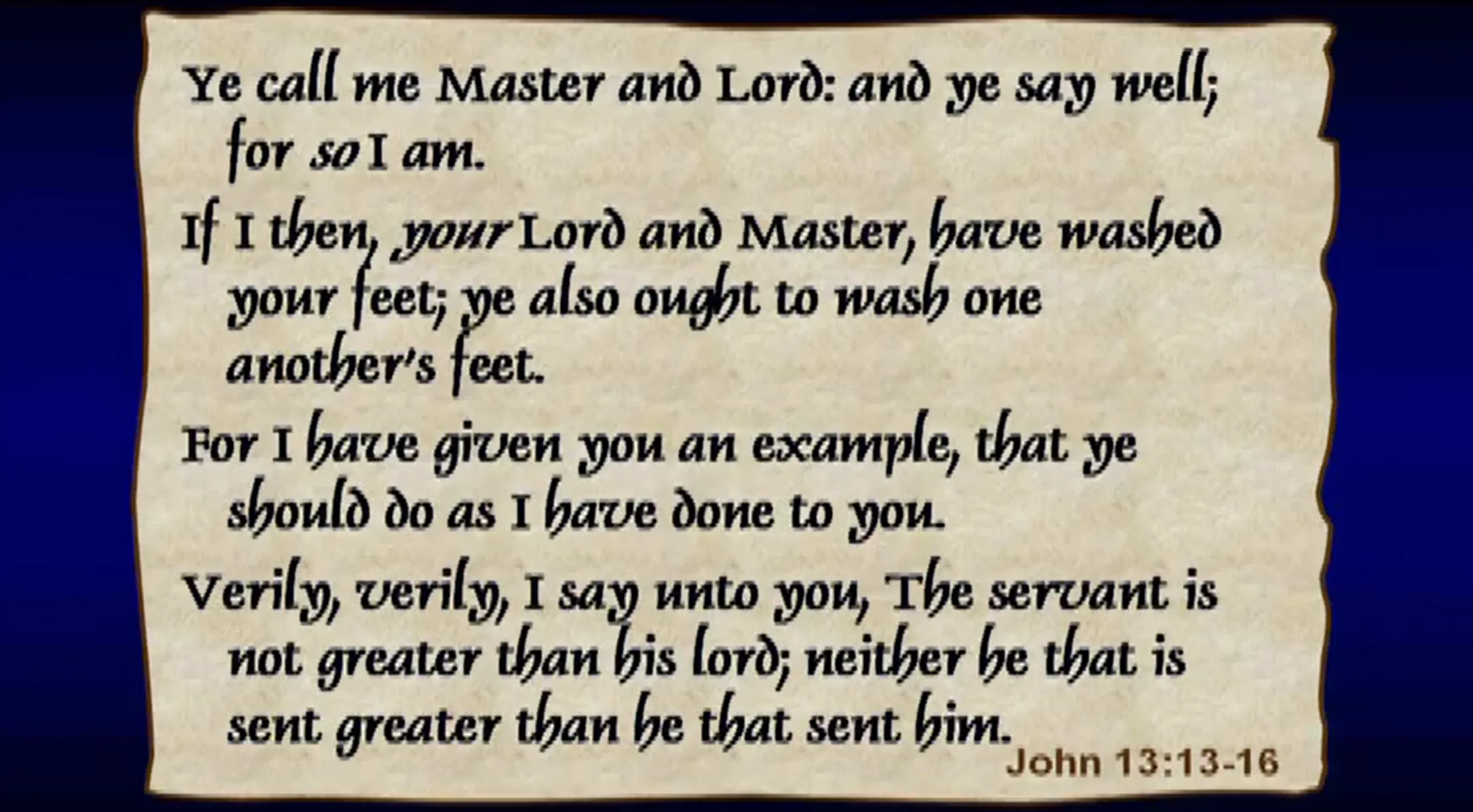

- Example of humility John 13:14
- Rebuke to pride Luke 22:24-27
- Picture of our daily cleansing John 13:10
- Warning to Judas Iscariot John 13:18
- Picture of His humiliation Phil 2:5-11
- Reminder of His union and communion with the believer John 13:8
🦶 John 13:17-19
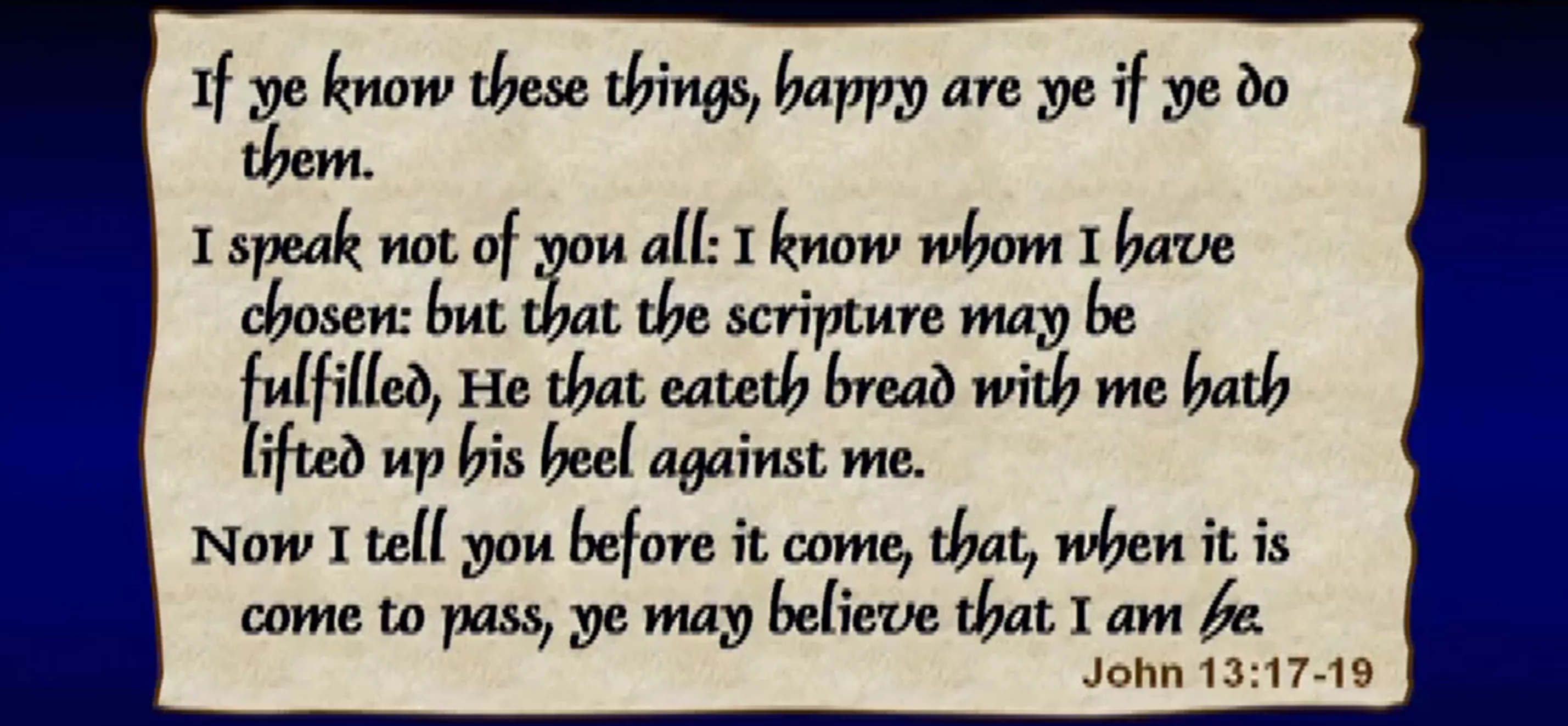
- David was betrayed by Ahithophel (Ps 41:9) (see Matthew note s20)
- “…in whom I trusted” omitted; Jesus had warned them a year earlier (John 6:70-71)
- “Now I tell you before it come, that, when it is come to pass, ye may believe that I am he.” (John 13:19)
— The purpose of prophesy is not to predict
— The purpose of prophecy is to glorify God when it happens
— Divination (fortune telling) is prohibited
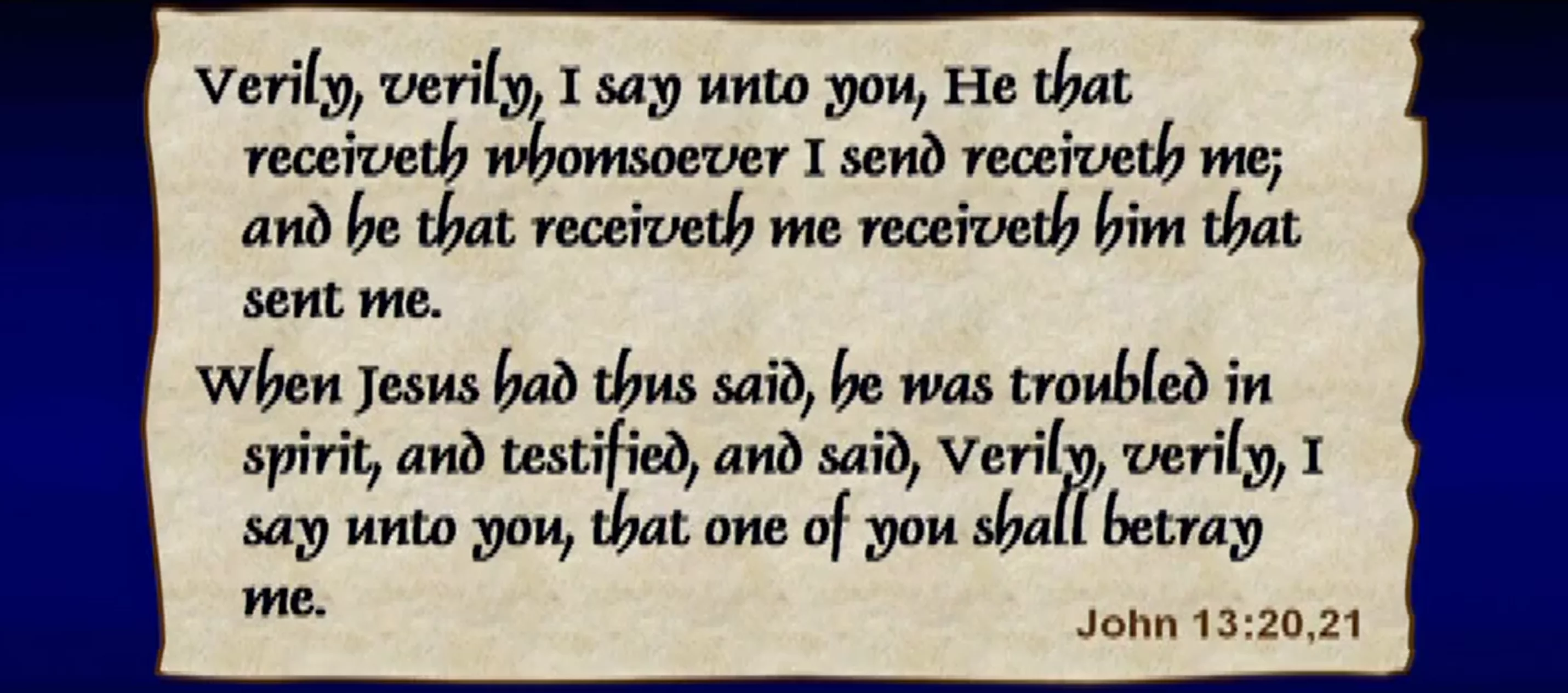
🦶 John 13:20-21 Jesus Predicts His Betrayal (starts with verse 21)
Back to Mark Chapter 14
Mark 14:18
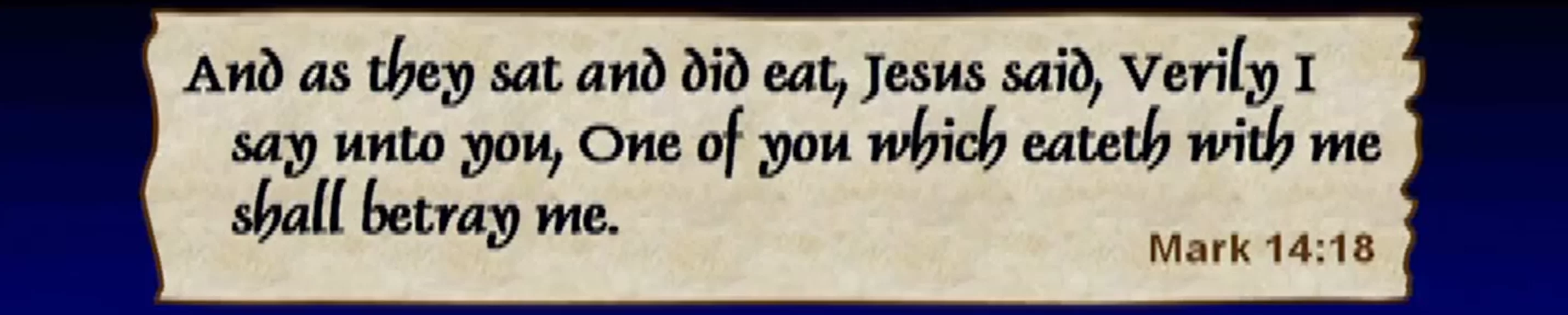
- To emphasize again: They had not planned to take Jesus during the holiday season
- However, the “cat’s out of the bag”!
- By announcing to the group that someone is going to betray Him, the secret cannot be kept any longer
- Jesus is in effect saying to Judas: “Fish or cut bait, Judas!”
- Who’s controlling the timing?
Mark 14:19-21
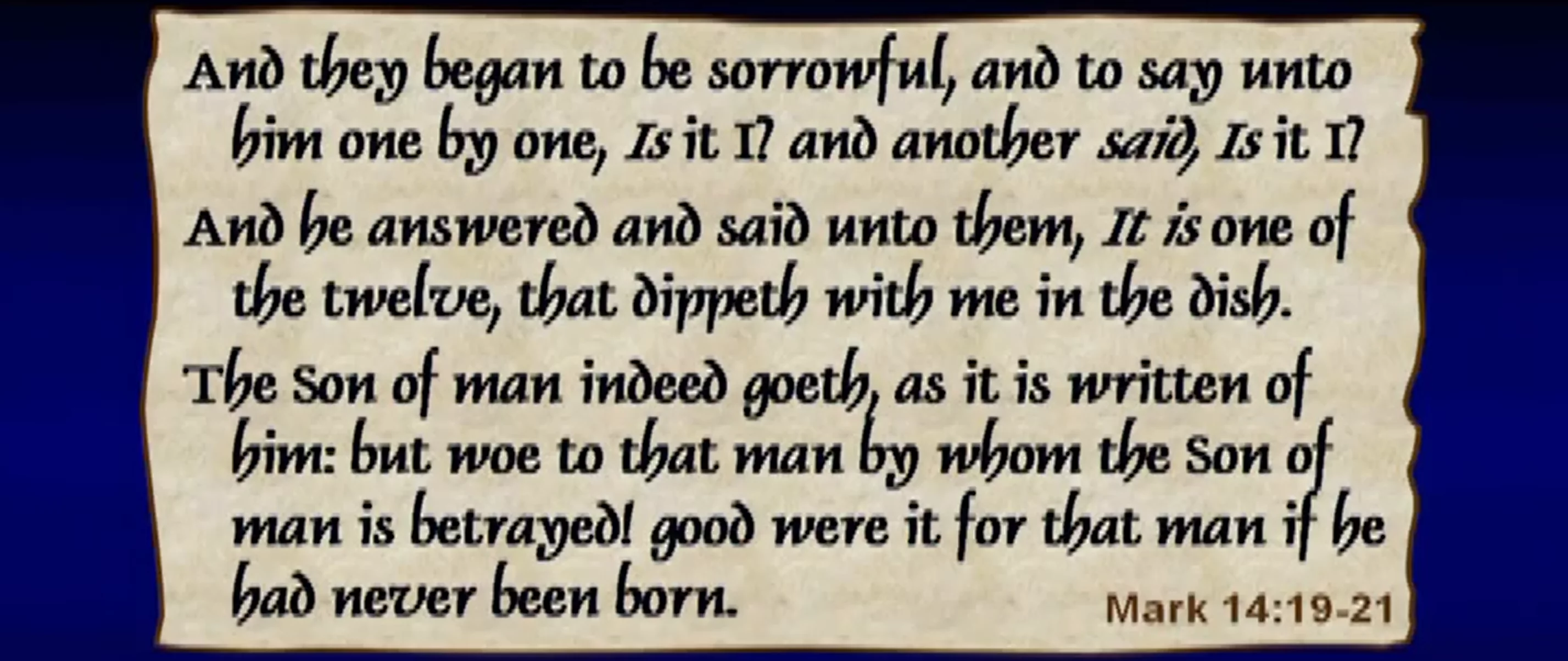
- Confusion reigns. Especially in Judas’ heart…
- Judas was neither a martyr nor a robot. Judas was totally responsible for his actions, despite the fact a message from outside the dimensional restrictions of the time dimension had predicted it (Ps 41:9)
- Just because it was predicted, does not relief Judas of the volition of doing it
- Just because God knows what’s going to happen, doesn’t mean you don’t have a choice
- Psalm 41:9 refers to the infamous treachery of Ahithophel (see Matthew note s20)
- Ahithophel was the type of Judas. In Hebrew hermeneutics, pattern is prophecy

- Confronted, he quickly left to improvise any available arrangements
- Judas was lost for the same reason that millions are today:
— he did not repent of his sins and believe on Jesus Christ (John 6:64-71, John 13:10-11)
- [If you are not born again, one day you, too, will wish you had not been born at all]

- The elements are first introduced (Biblically) by Melchizedek to Abraham (Gen 14:18)
- Bread and wine were significant in Joseph’s experience (Gen 40)
- Even at the incarnation, bread speaks of the life of Christ
— at Beth-Lehem (“House of Bread”)
- The wine speaks of His blood, poured out for many (Isa 53:12)
- The old covenant was solemnized (duly performed) by shedding of sacrificial blood (Exo 24:6-8 )
- Jesus sealed the new covenant with His own blood (that is also underscored by the destruction of the Temple in 70 AD, which created a crisis for Judaism — they were thought in Torah that without shedding of blood, there is no remission of sins and with the Temple gone, they have no altar, there is no way to shed blood — thus they redefined Judaism at council of Jamnia in 90 AD into Talmudic (Rabbinic) Judaism, which is basically a works pursuit for salvation)
- This whole idea of the blood covenant is first suggested when God teaches Adam and Eve that they would be covered with the shedding of innocent blood (Gen 3:21)
- [Cf. Learn the Bible in 24 Hours highlights the integrity of design throughout the entire Scriptures]
Mark 14:22-24 The Lord’s Supper
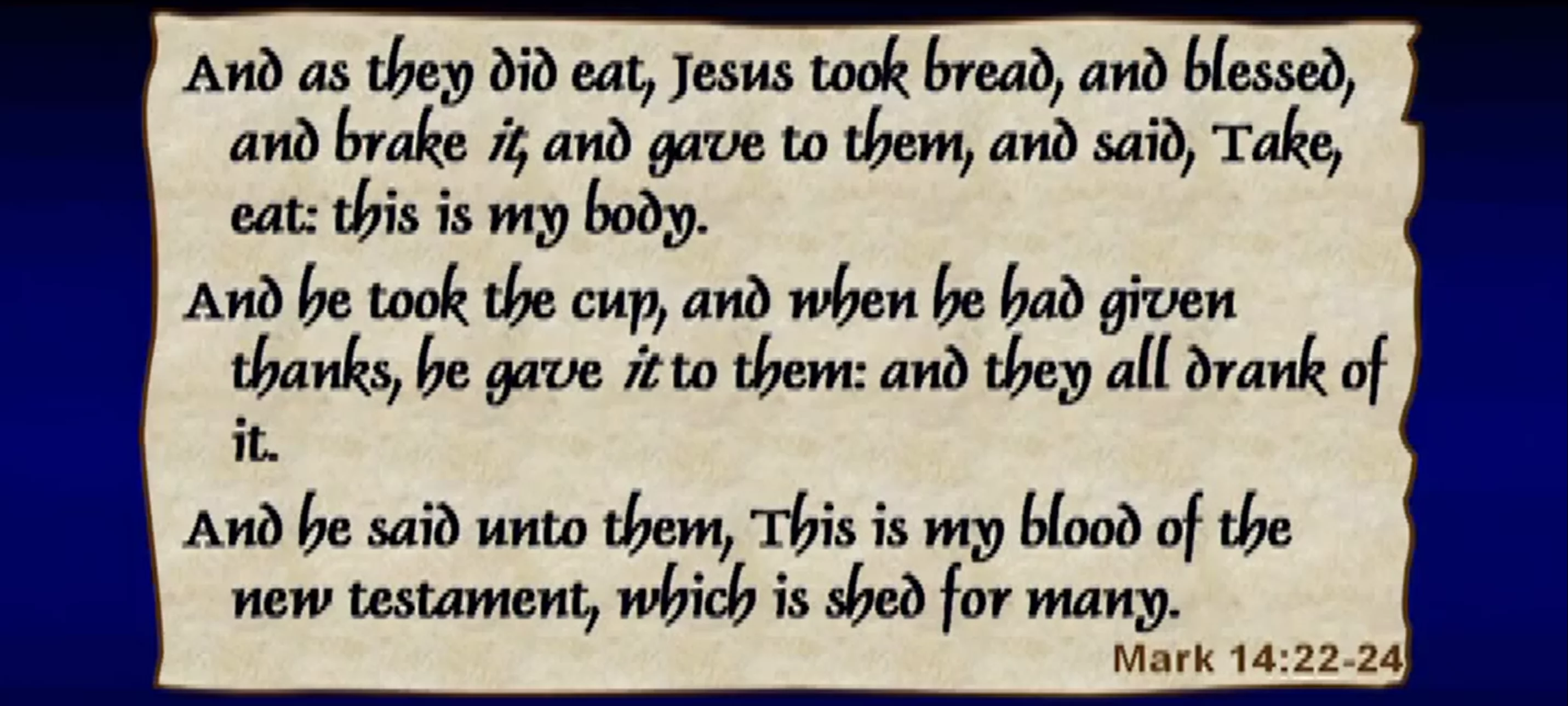
- “…this do in remembrance (in memory) of me” (Luke 22:19)
— Present participation in a past event (1 Cor 11:24-25, Heb 9-10)
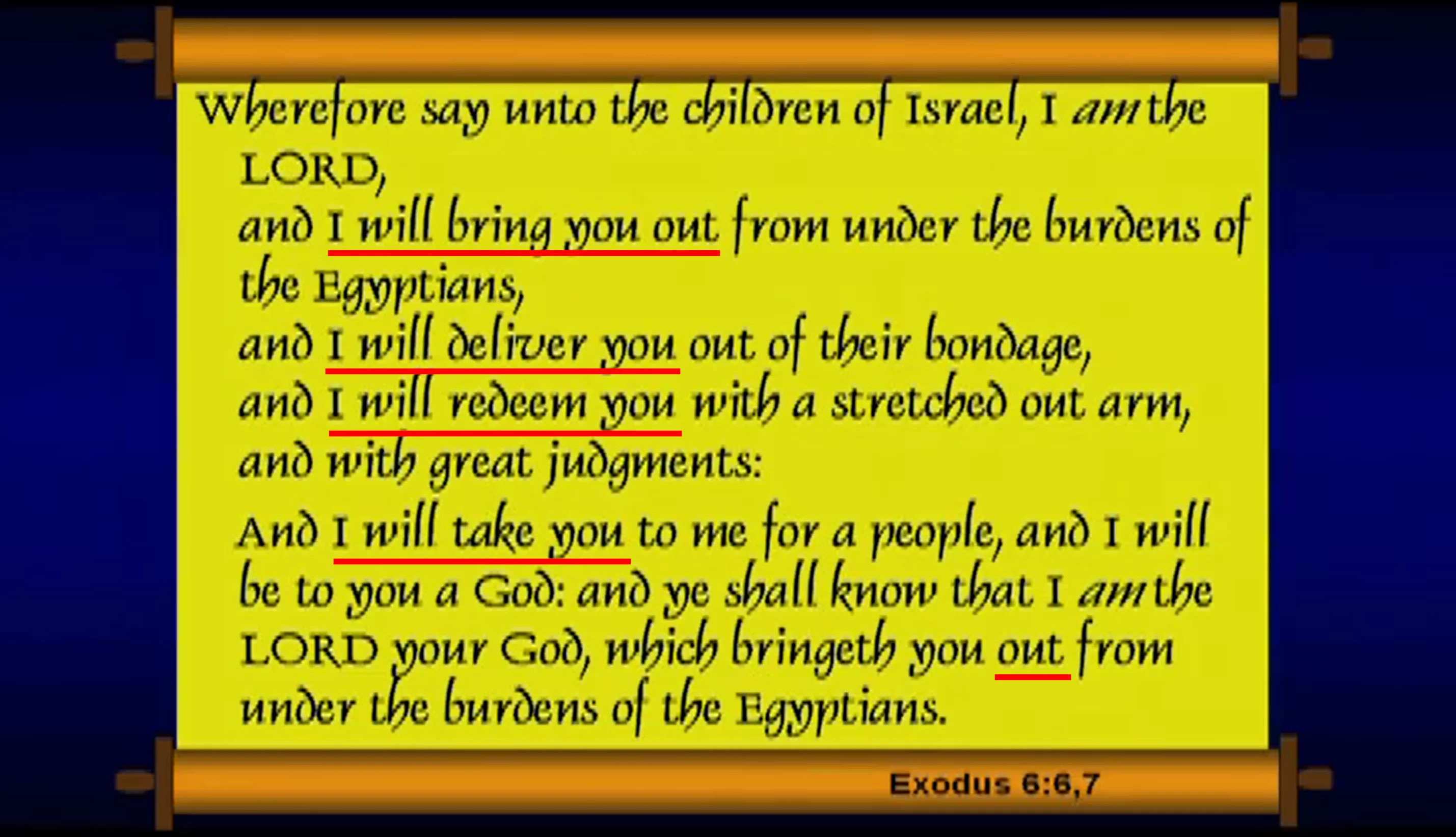
- Four Cups of Passover (Exo 6:6-7) (also see Matthew note s20)
— 1) The cup of the Bringing Out
— 2) The cup of the Delivery
— 3) The cup of Redemption or Blessing
— 4) The cup of the Taking Out → Rapture
🟨 Exo 6:6-7
Mark 14:25

- Jesus stops at the 3rd cup of Redemption (Paul identifies that cup as cup of Blessing → 1 Cor 10:16)
- “…until”: The 4th cup follows after we are Taken Out at the Marriage Supper of the Lamb (Rev 19:9)

Mark 14:26-28
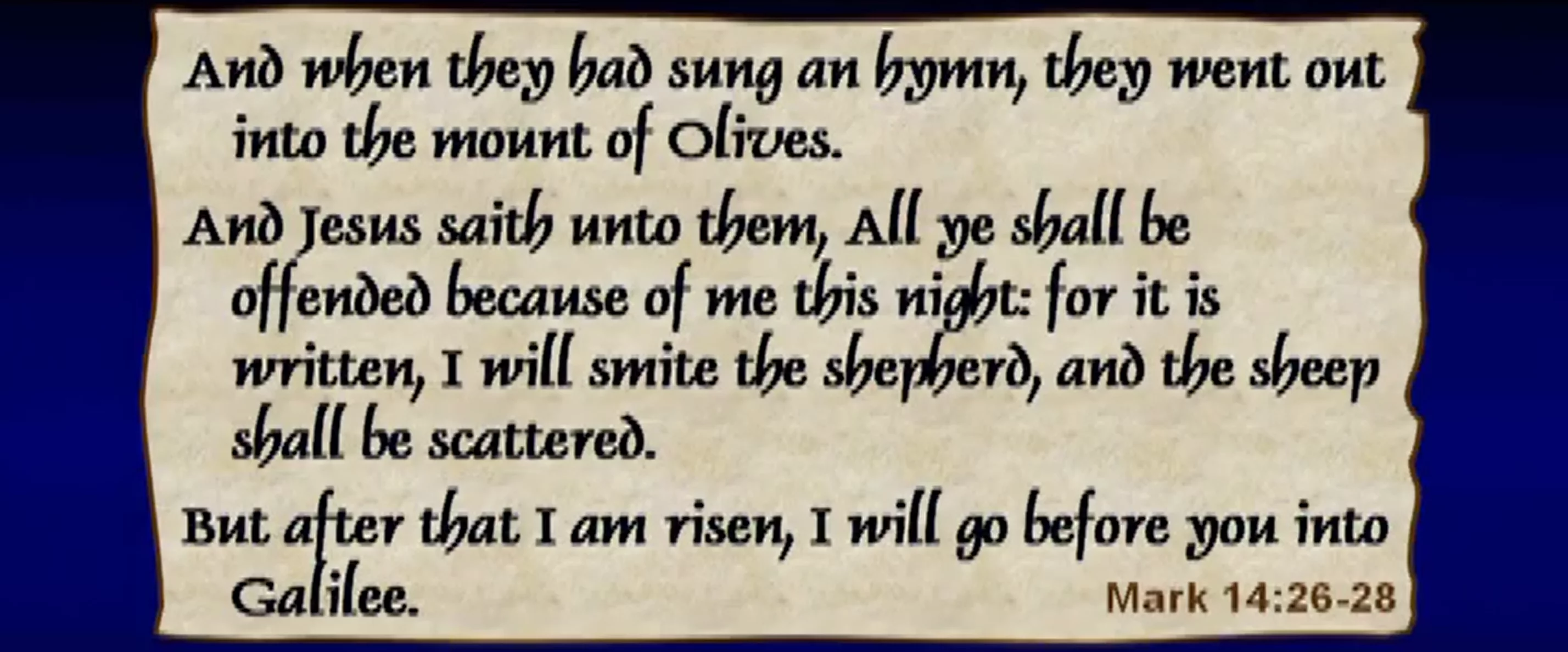
- “…shall be offended” — stumble, fall away
- He calls this upfront. They don’t realize it, but they remember it later: Wow, He told us that!
- Quoting Zech 13:7: “…Smite the shepherd, and the sheep shall be scattered…” — And they soon will be
Mark 14:29-31 Peter’s Denial Foretold, MEV
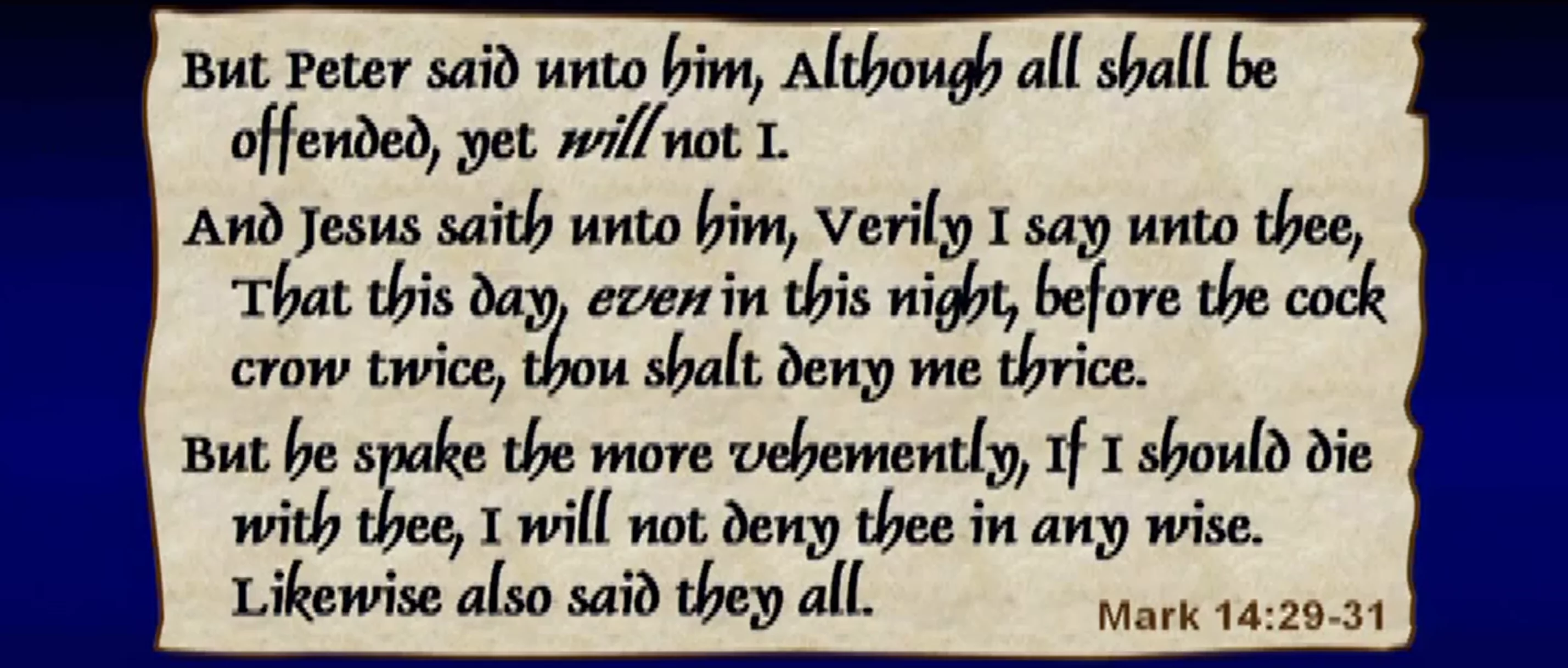
- A little pride there, maybe with Peter?
- Peter wasn’t paying attention to the lesson
Mark 14:32-34 Jesus Prays in Gethsemane
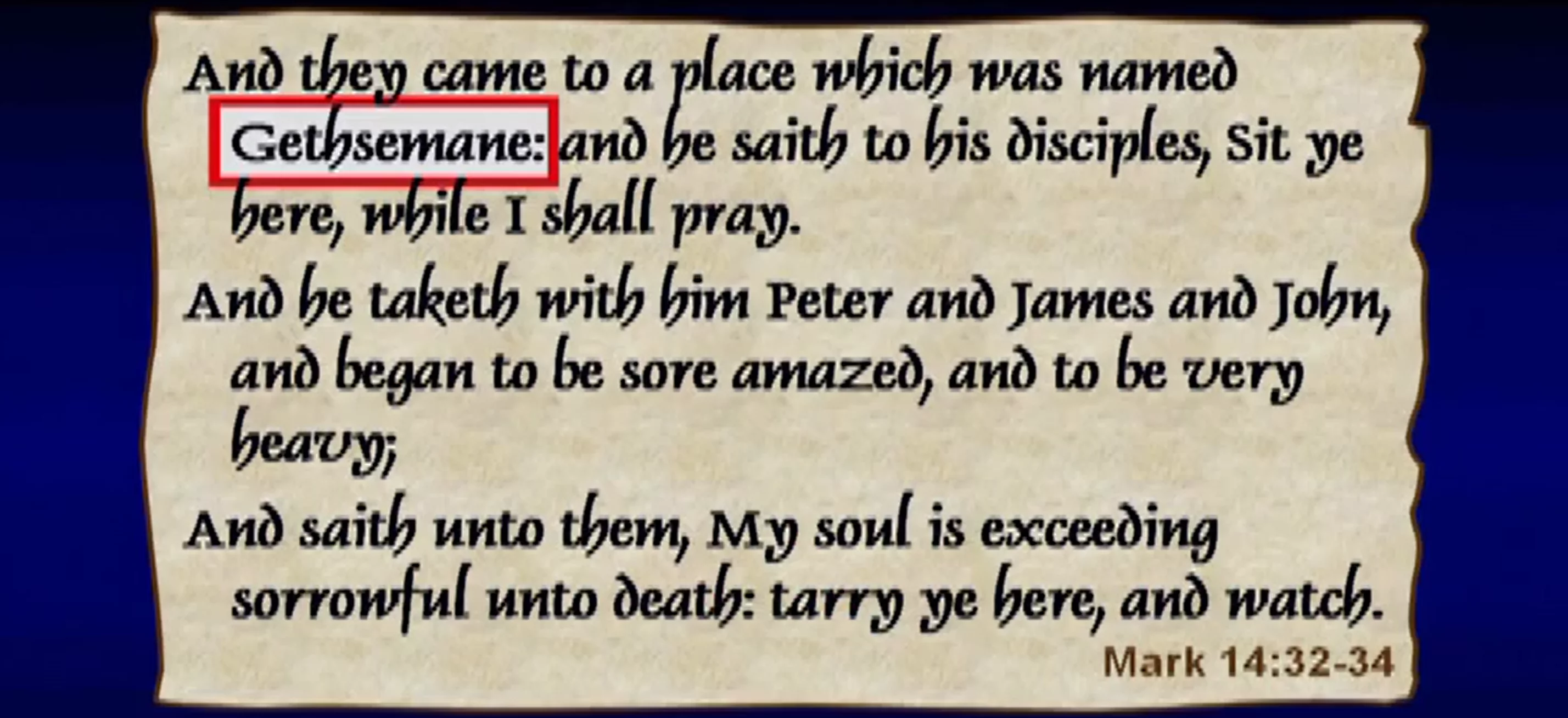
- Gethsemane = oil press. Indeed it was…
- The insiders (Peter, James and John) were present at:
— the home of Jairus (Mark 5:37)
— the Mount of Transfiguration (Mark 9:2)
— and here
- Why were they singled out? For their instruction (He wants them to fully comprehend what’s going on here)
— “That I may know him, and the power of his resurrection, and the fellowship of his sufferings, being made conformable unto his death;” (Phil 3:10)
- “…exceeding sorrowful unto death”: Overtaken with horror. Indeed: He knew what was coming
— “For he hath made him to be sin for us, who knew no sin; that we might be made the righteousness of God in him.” (2 Cor 5:21)
- He would bear the entire curse of the Law:
— “Christ hath redeemed us from the curse of the law, being made a curse for us: for it is written, Cursed is every one that hangeth on a tree:” (Gal 3:13)
Mark 14:35

- Matt 26:39: “…O my Father, if it be possible, let this cup pass from me: nevertheless not as I will, but as thou wilt.”
- “…if it were possible”: Was it possible?
- If there is any other way to get to Heaven but by Jesus Christ, then God didn’t answer His prayer
- And it wasn’t the physical aspects: it was the realization that this would involve being forsaken by His Father
— Cf. the only time He didn’t address Him as “Father” — “…My God, my God, why hast thou forsaken me?” (Mark 15:34)
Mark 14:36
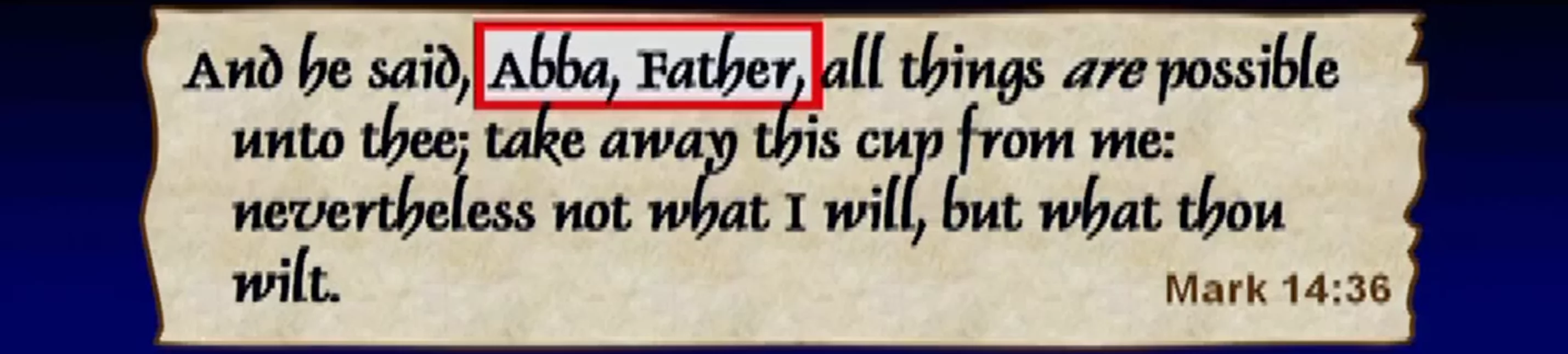
- Matt 26:39: “…O my Father, if it be possible, let this cup pass from me: nevertheless not as I will, but as thou wilt.”
Mark 14:37-38
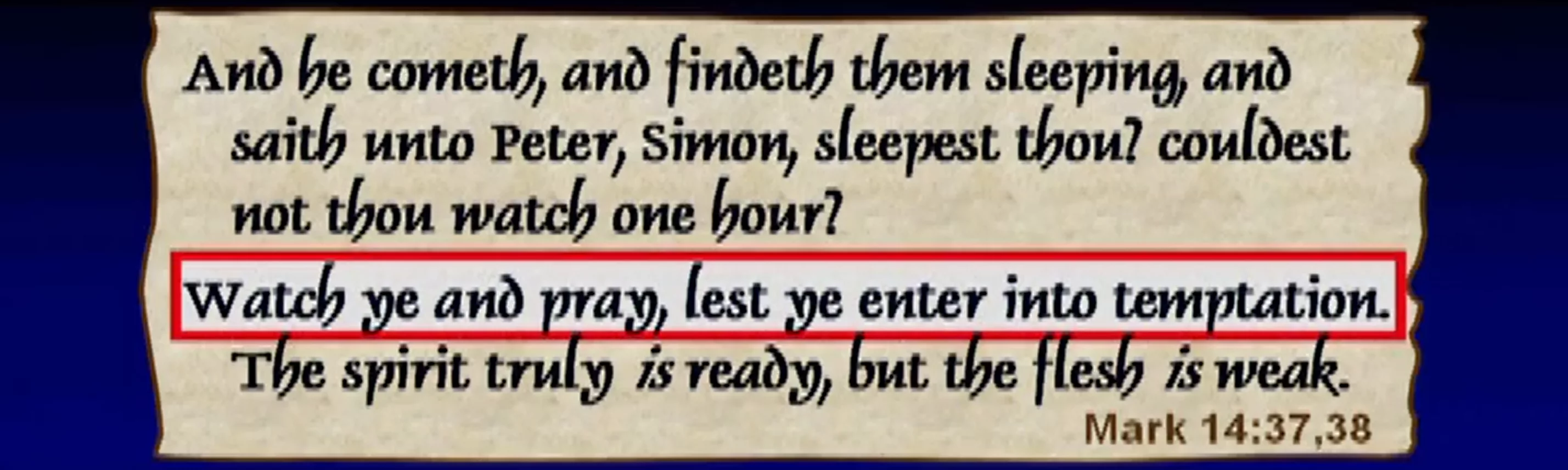
- “Watch ye and pray, lest ye enter into temptation…”: A lesson in spiritual warfare — the resulting setback that very evening will echo throughout eternity…
- An oft repeated admonition:
— “Nevertheless we made our prayer unto our God, and set a watch against them day and night, because of them.” (Neh 4:9)
— “Take ye heed, watch and pray: for ye know not when the time is.” (Mark 13:33)
— “With all prayer and petition pray at all times in the Spirit, and with this in view, be on the alert with all perseverance and petition for all the saints,” (Eph 6:18 NASB)
— “Devote yourselves to prayer, keeping alert in it with an attitude of thanksgiving;” (Col 4:2 NASB)
Mark 14:39-40
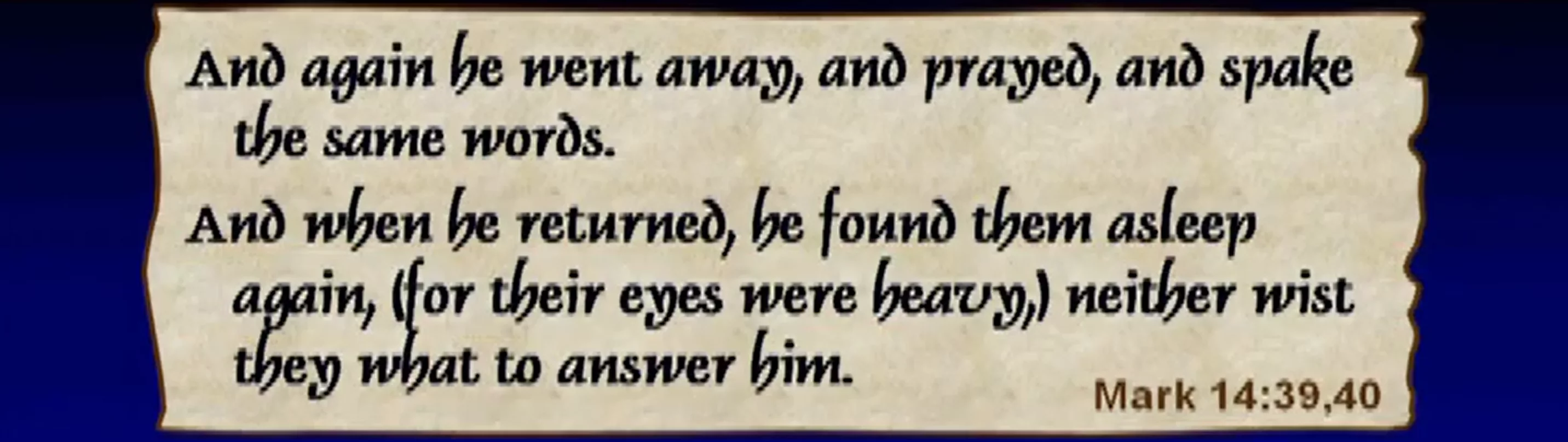
- [Notice: Even Jesus didn’t tell the Father what to do…] (be careful about that in your own prayers)
- “Returning the third time, he said to them, ‘Are you still sleeping and resting? Enough! The hour has come. Look, the Son of Man is betrayed into the hands of sinners.’” (NIV v.41)
- Lessons of Gethsemane: the need to be dependent on prayer (even by Jesus Himself). Daily prayer
- Don’t let the simplicity of prayer mislead you. It is fundamental. It is essential
- It is also a call to discipline
Mark 14:41-43 The Betrayal and Arrest of Jesus (starting with verse 43)
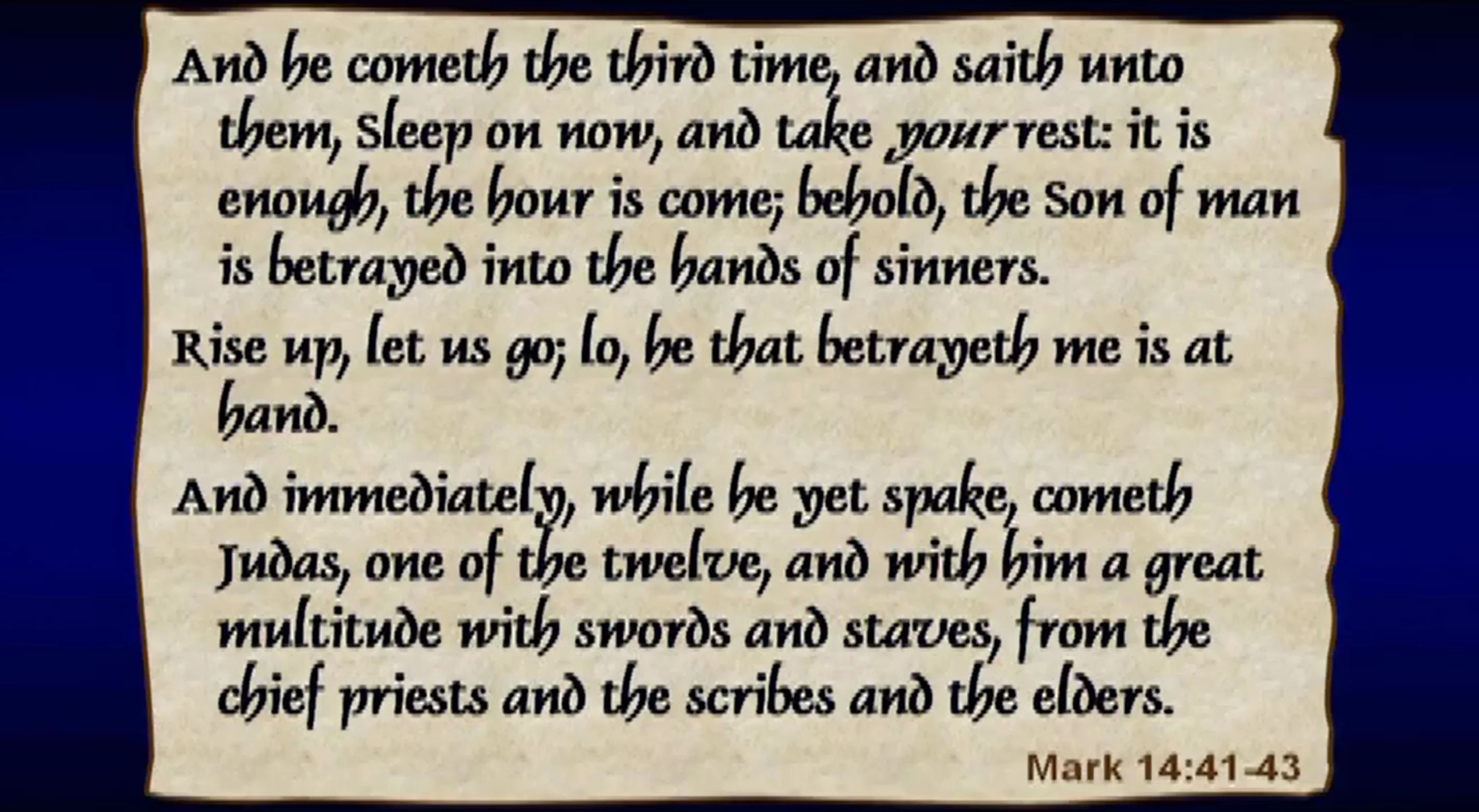
Mark 14:44-46
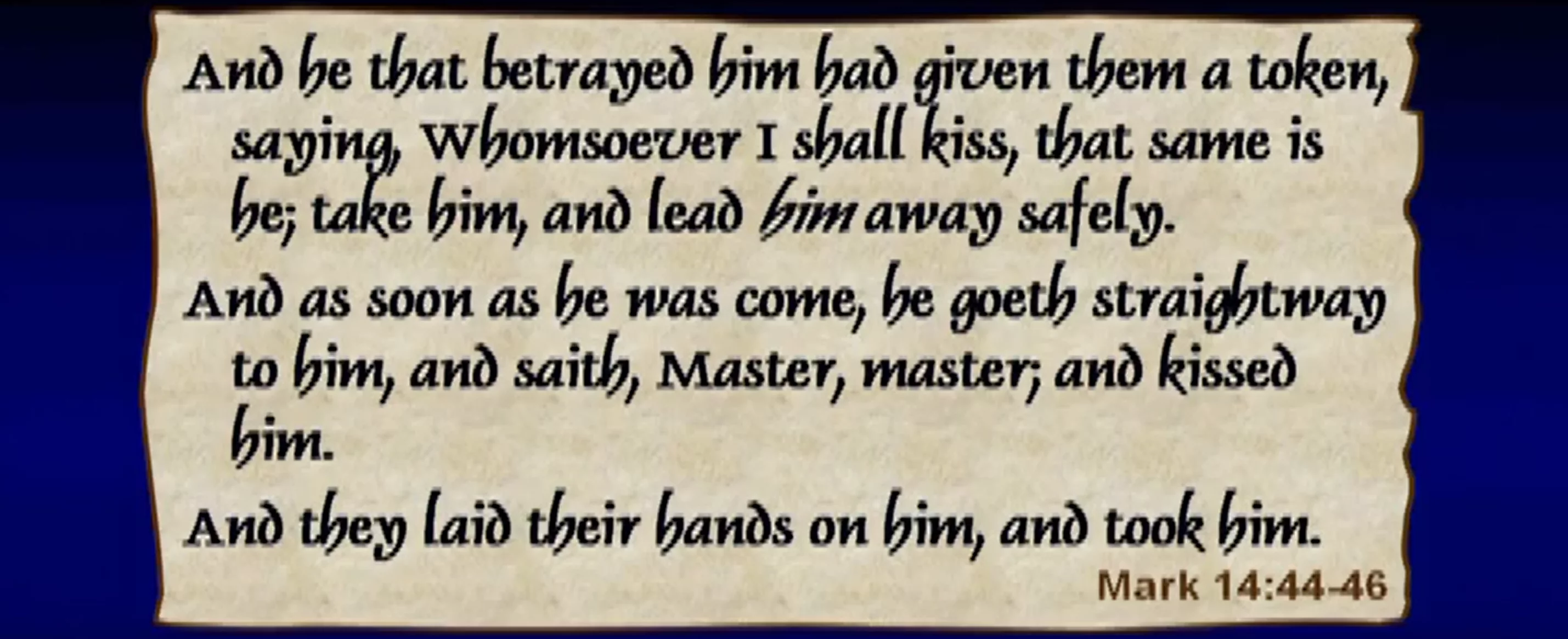
Mark 14:47

- Apparently, it was Peter with a sword (John 18:10)
- You don’t fight spiritual battles with physical weapons
— “For though we walk in the flesh, we do not war according to the flesh, 4 for the weapons of our warfare are not of the flesh, but divinely powerful for the destruction of fortresses. 5 We are destroying speculations and every lofty thing raised up against the knowledge of God, and we are taking every thought captive to the obedience of Christ,” (2 Cor 10:3-5 NASB)
- If Jesus had not healed Malchus’ ear (Luke 22:51) there might have been four crosses on Calvary…
Mark 14:48-49
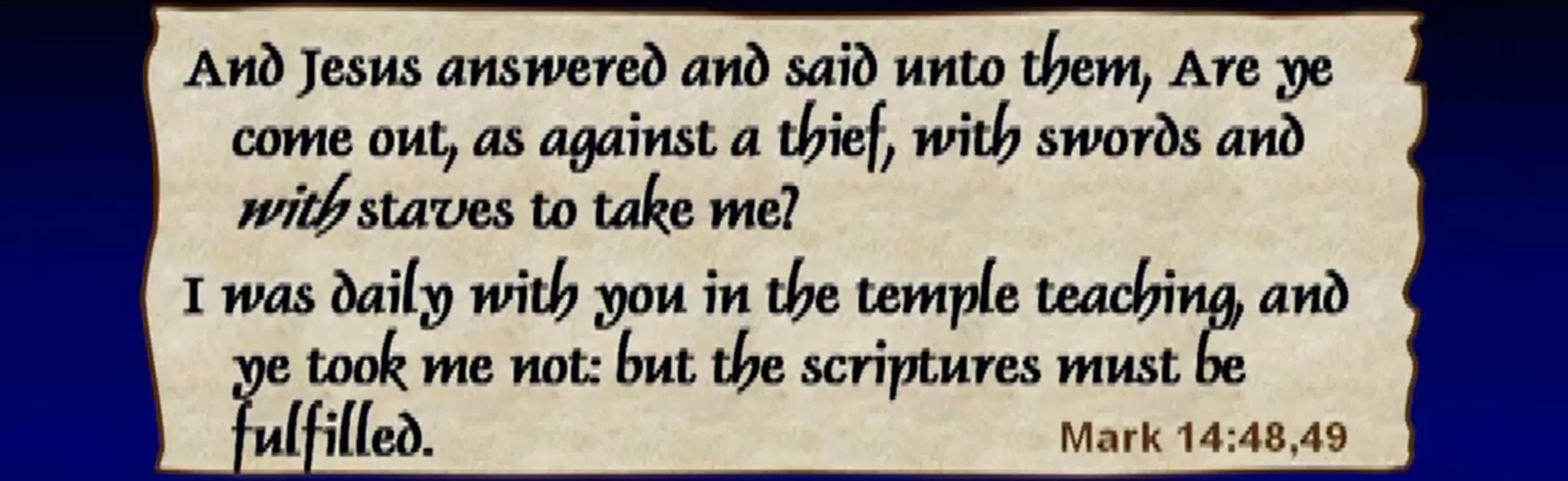
- Jesus gives them a command: “…if therefore ye seek me, let these go their way:” (John 18:8) And they do
- Who is giving the directions? Who is in charge here? Jesus is
Mark 14:50

- Peter, too, would have been better off had he followed instructions and stayed “fled”
Mark 14:51-52 The Young Man Who Fled, MEV
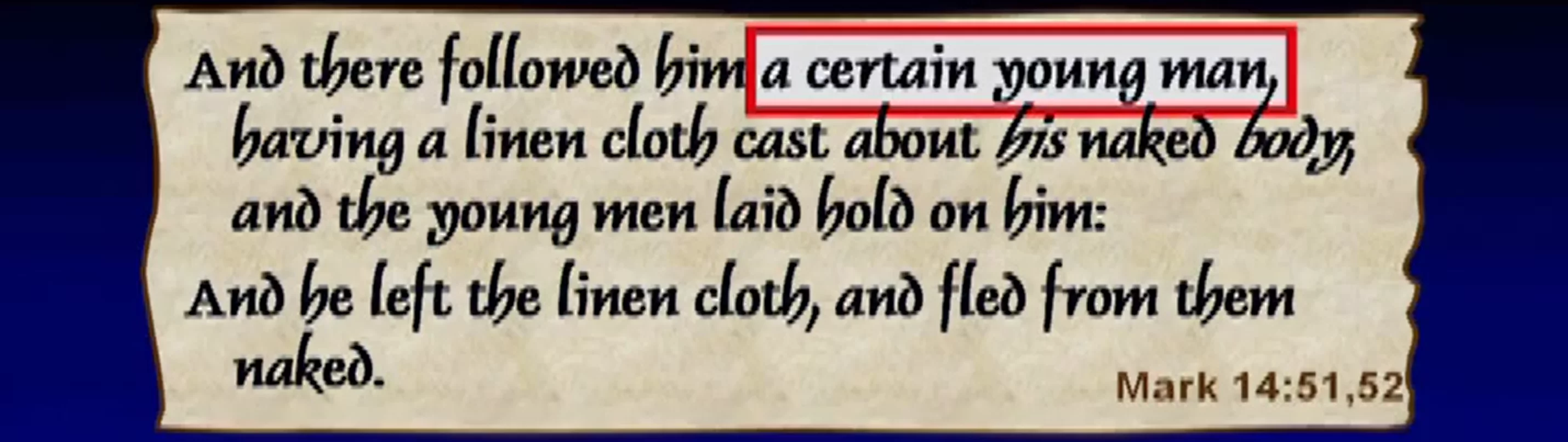
- A little incident tucked in here. What’s that got to do with anything? There’s maybe more than meets the eye…
- “…a certain young man”: Some suspect that this was Mark himself; he is the only one recording this detail
- If the Upper Room was in the home of John Mark, then Judas may have led the soldiers there first. John Mark may have hastily put on an outer garment and followed the mob to the garden…

Mark 14:53 Jesus Before His Accusers

- Six legal confrontations (that’s a misnomer because every detail of these confrontations is against the law; they shouldn’t be called “trials” either; they would more appropriately be classified as kangaroo courts)
— Three Jewish: Annas, Caiaphas and Sanhedrin
— Three Roman: Pilate, Herod and Pilate again
- (Cf. The Agony of Love for a detailed review — Topic #033, 2h, audio)
Mark 14:54
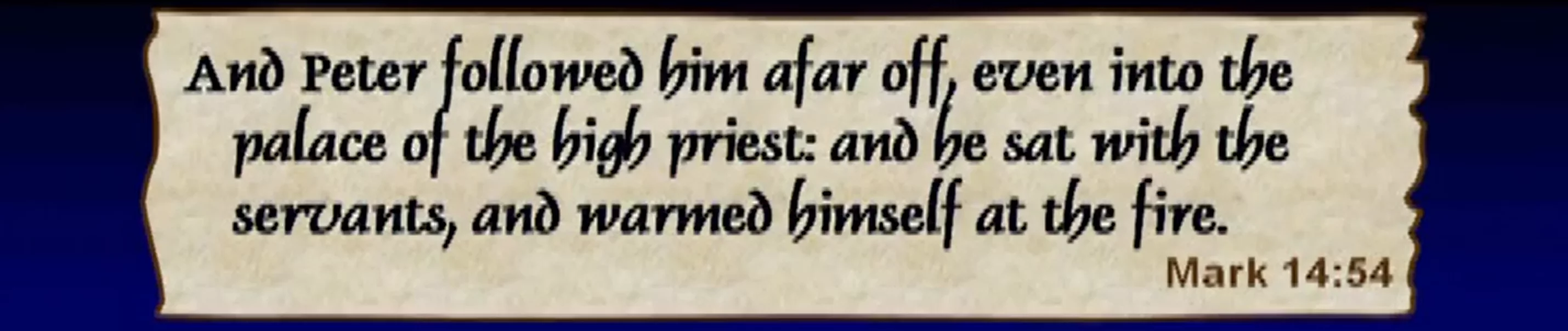
Mark 14:55-56
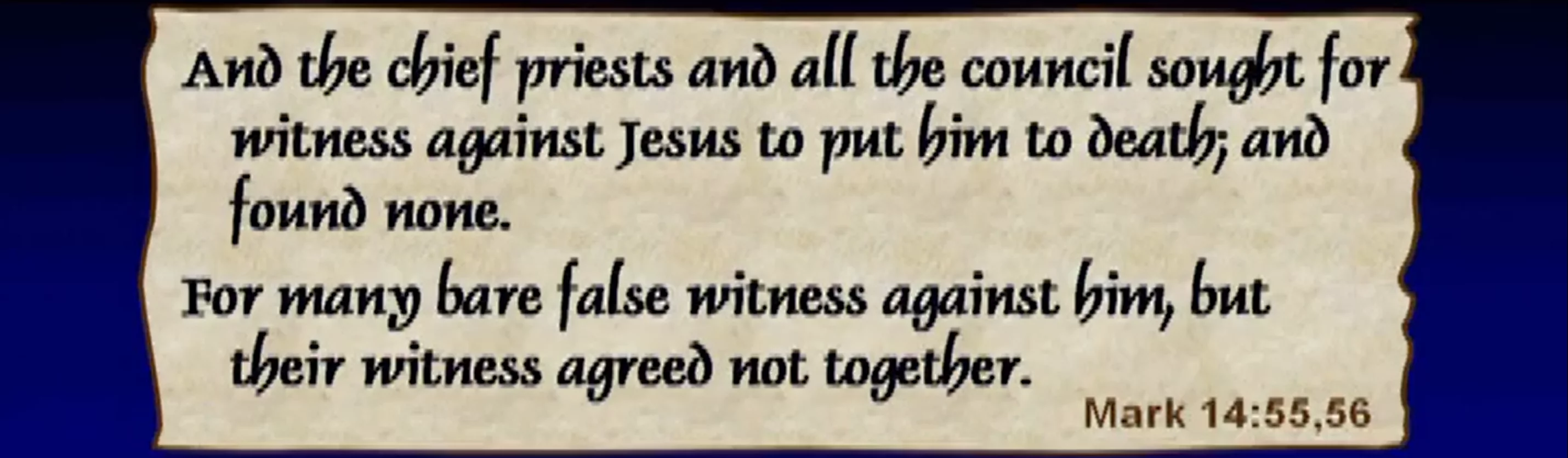
- It was required that at least 2 witnesses agree (Deut 17:6)
Mark 14:57-59
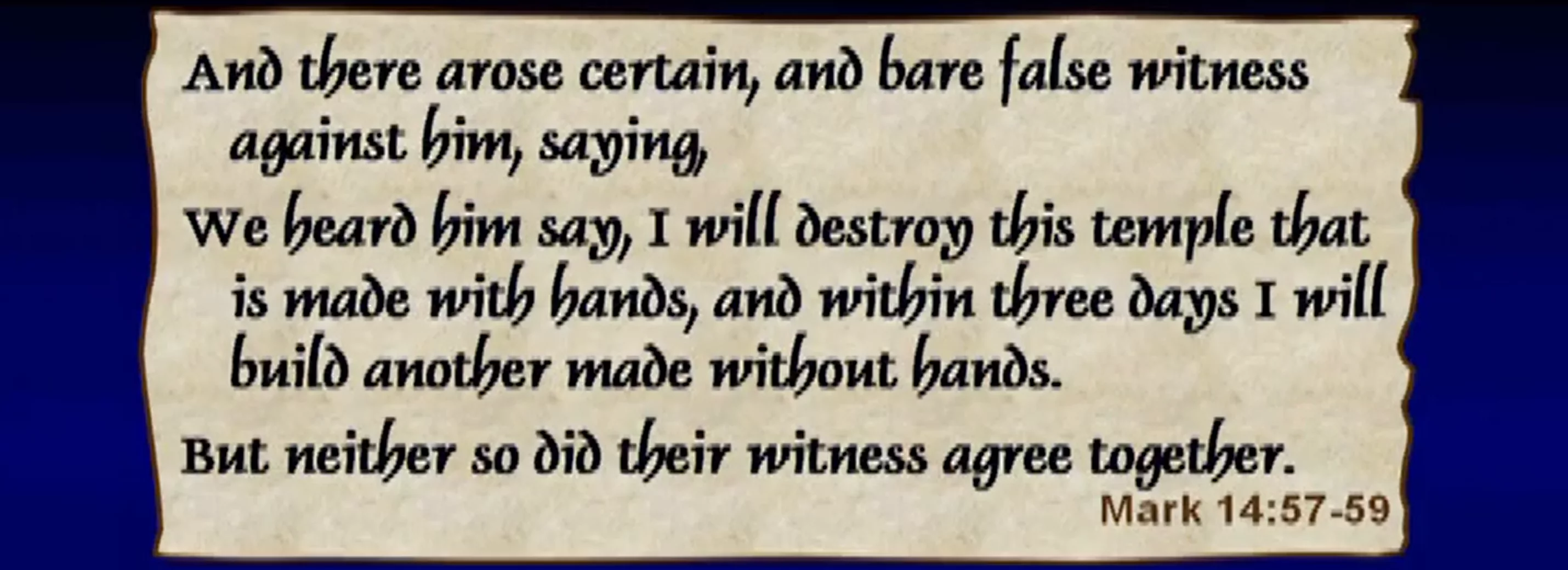
- Cf. Matt 12:6 — “…in this place is one greater than the temple.”
Mark 14:60-62
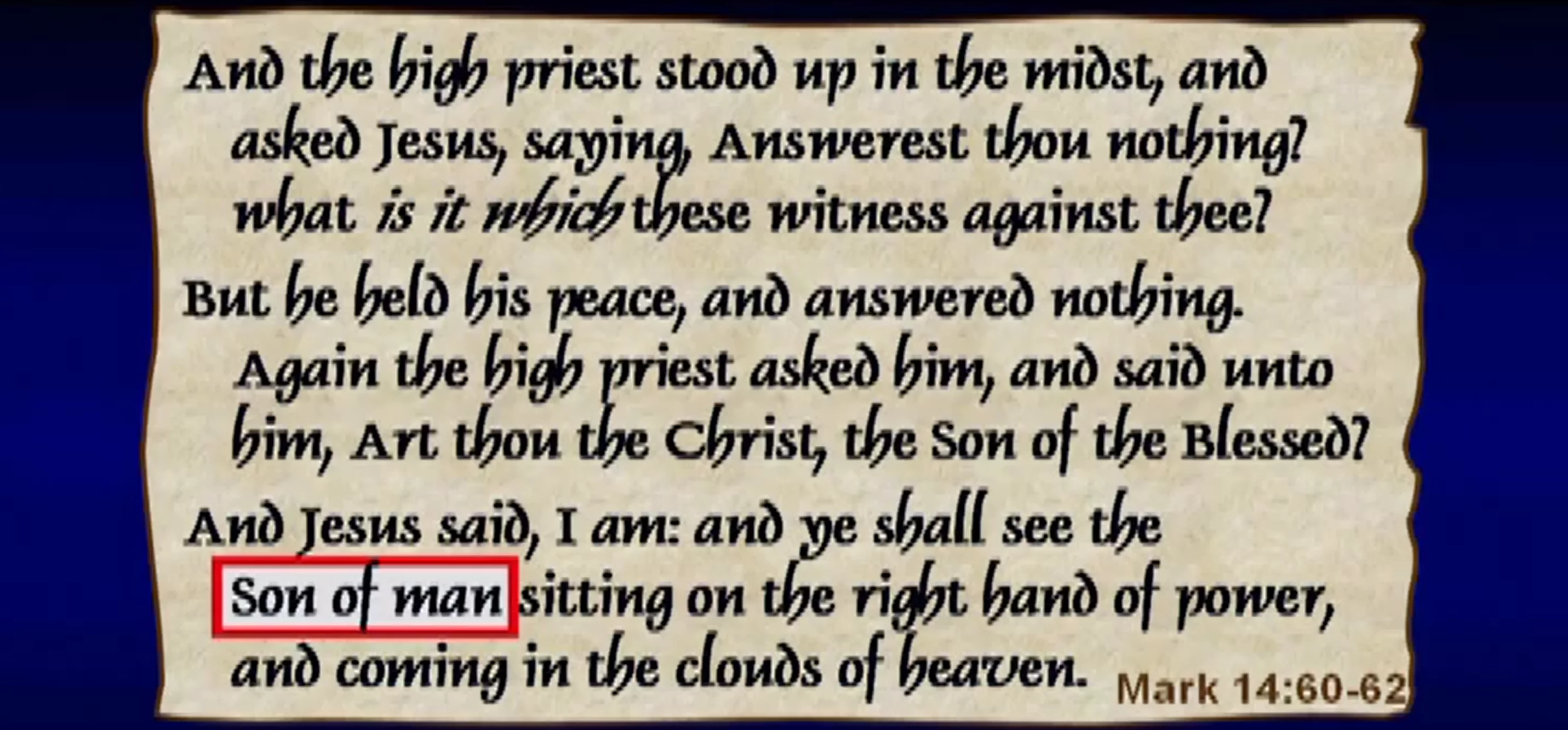
- In fact, according to Matt 26:63, He was put under oath, so He was required to answer
- Kept silent — that was predicted in Isa 53:7 (Peter mentions in 1 Pet 2:23)
- “Son of Man” is a Messianic title (Dan 7:13)
— He is claiming to be the Messiah
— We as Gentiles might miss that, they certainly did not miss that — that’s why they crucified Him
Mark 14:63-65
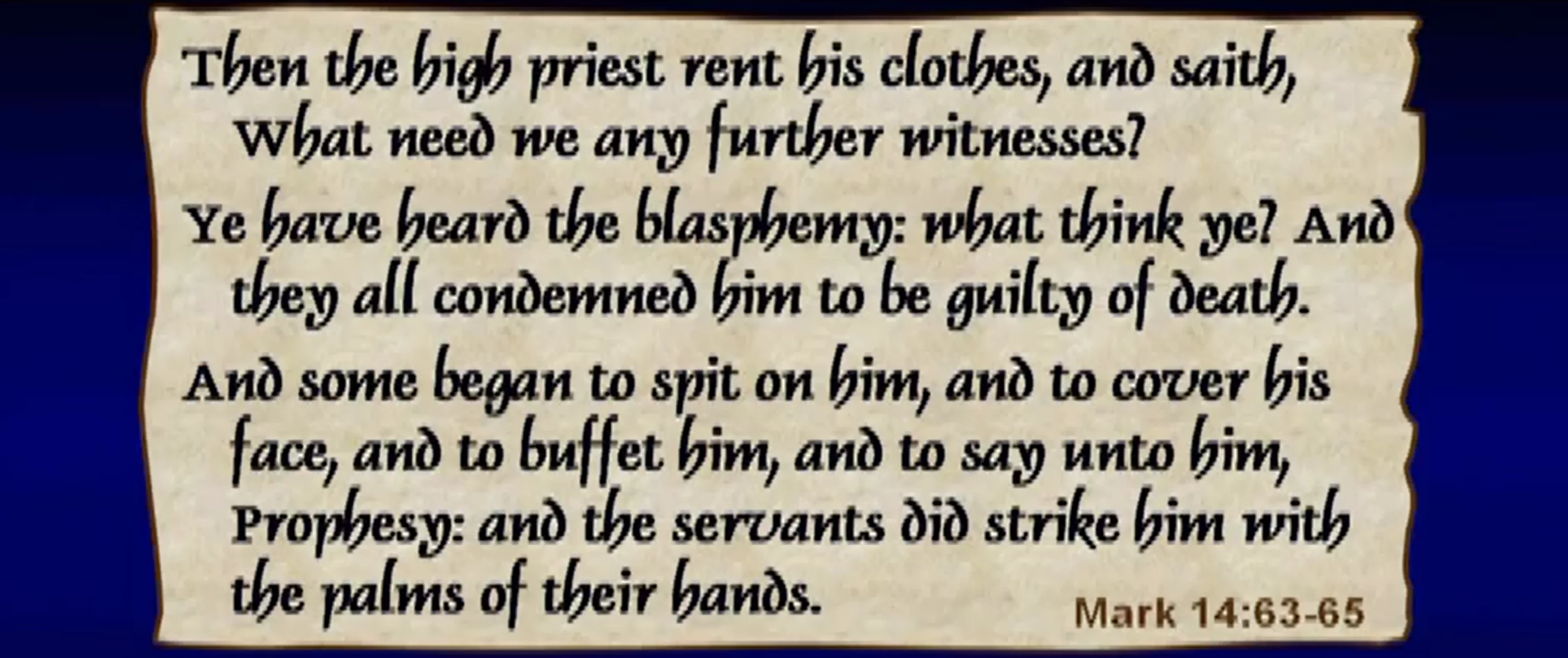
- “…the high priest rent his clothes” — which is illegal (Lev 21:10)
- You could not testify against yourself — self-incrimination is illegal
- That’s all illegal — the court is supposed to protect the accused
- (None needed if you allow self-incrimination as a procedure)
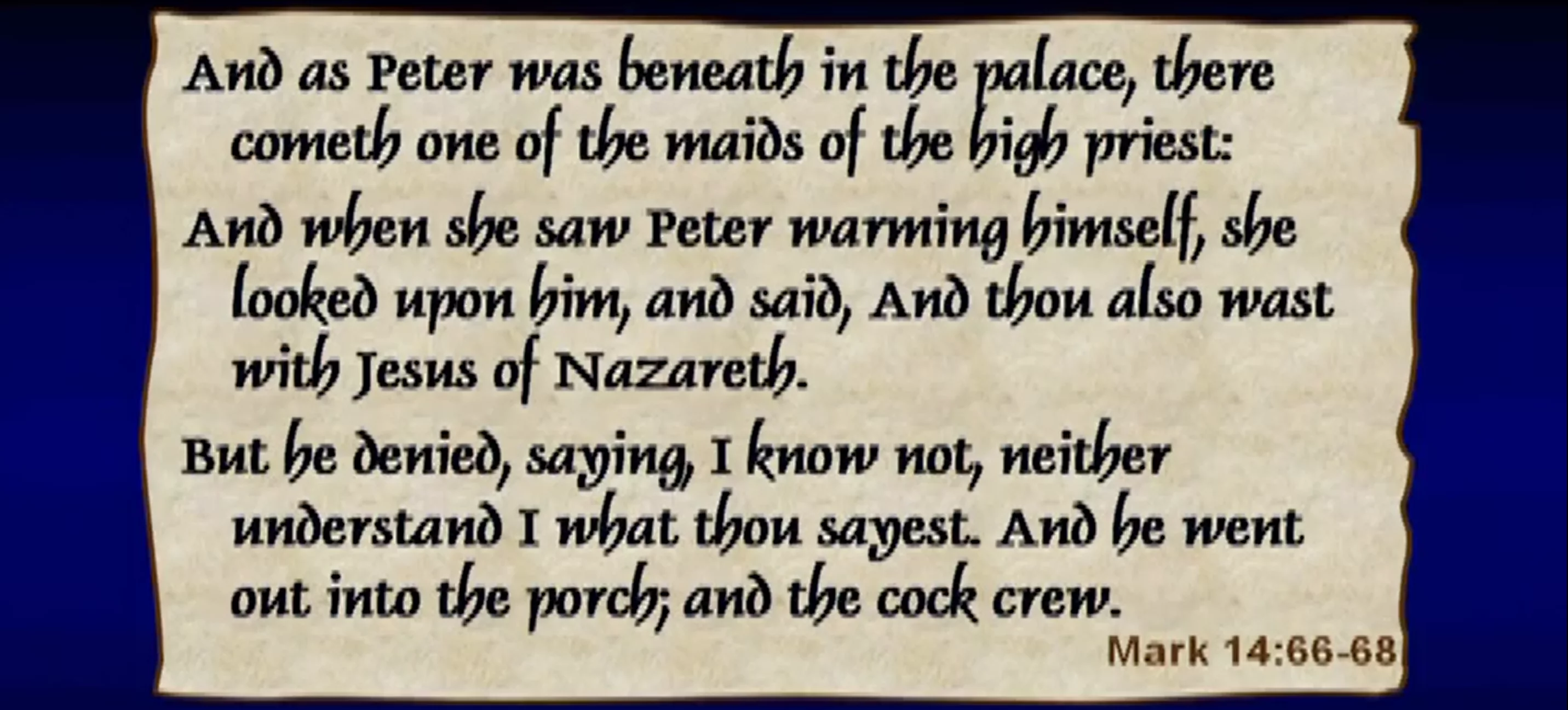
Mark 14:66-68 Peter’s Denials
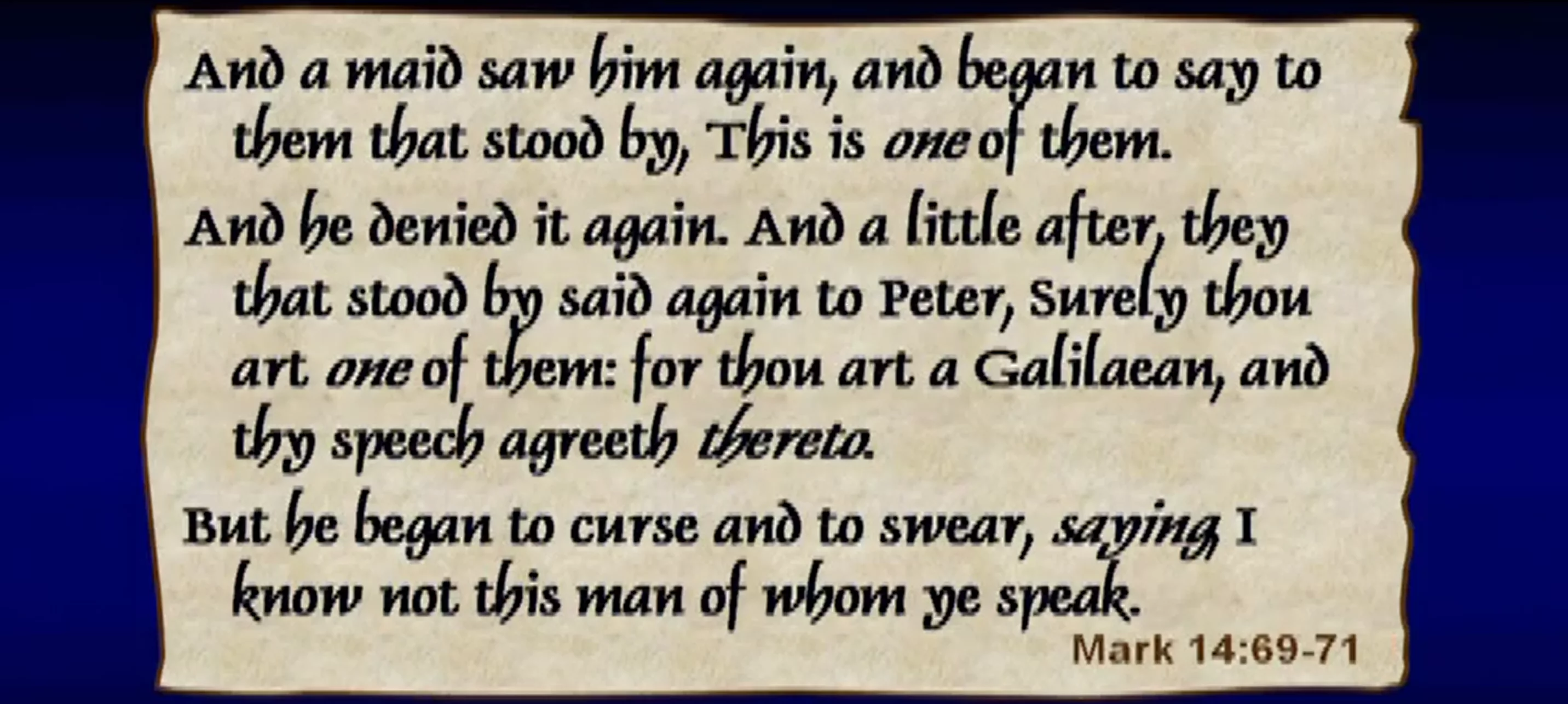
Mark 14:69-71
Mark 14:72
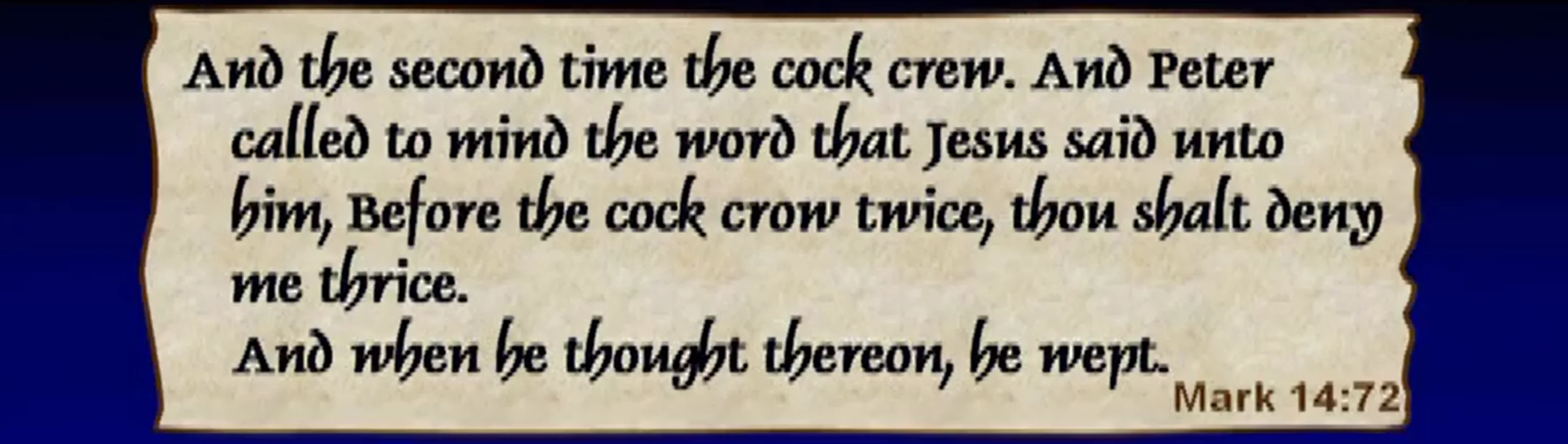
- He must really did weep as he realized how he had failed

- Before we judge Peter too severely, let’s examine ourselves
— How many times have we denied the Lord and lost opportunities to share the Gospel with others?
— Do we talk when we should listen?
— …Argue when we should obey?
— …Sleep when we should pray?
— …Fight when we should submit?
- Peter repented and the Lord, after a private meeting with him (Luke 24:34) forgave him publicly (John 21)

- Jesus’ death was no accident
- Jesus’ death was very skillfully choreographed event that was planned before the foundation of the world
- God knew before He created Adam that when Adam was put in a position to make choices, he would get himself in a predicament that nothing less than a death of God would avail to extricate him from that predicament
- Jesus’ words at the Last Supper make no sense at all if Jesus was not master of His own death
- Jesus maintained sovereign, premeditated, precise mastery
- A God who is in control when the foundations of His own earthly existence are crumbling is a God who can be trusted to sustain us when it appears our own life is tumbling in

