s15 (Ch 15) Crucifixion (studied 17-Nov-2025)
The Book of Mark with Dr. Chuck Missler
The subsections of Chapter 15 (per LSB) are:

That night, after Gethsemane, Jesus was exposed to 6 “trials” and was crucified the following day

- Having been arrested in Gethsemane, Jesus was subjected to three Jewish “trials”:
1) before Annas
2) before Caiaphas
3) and finally the Sanhedrin
- He will now be subjected to three Roman “trials”:
4) before Pilate (Pilate is anxious to get it off his hands; he discovers a basis by which he can pass the baton to Herod, because He is Galilean)
5) then to Herod (Herod is a shrewd administrator and he is too slippery so the case slips up from under there and bounces back to Pilate)
6) and back to Pilate (finally, he tries to wash his hands of the whole situation, but does what he is obligated to do as a Roman administrator)
Mark 15:1 Jesus Before Pilate
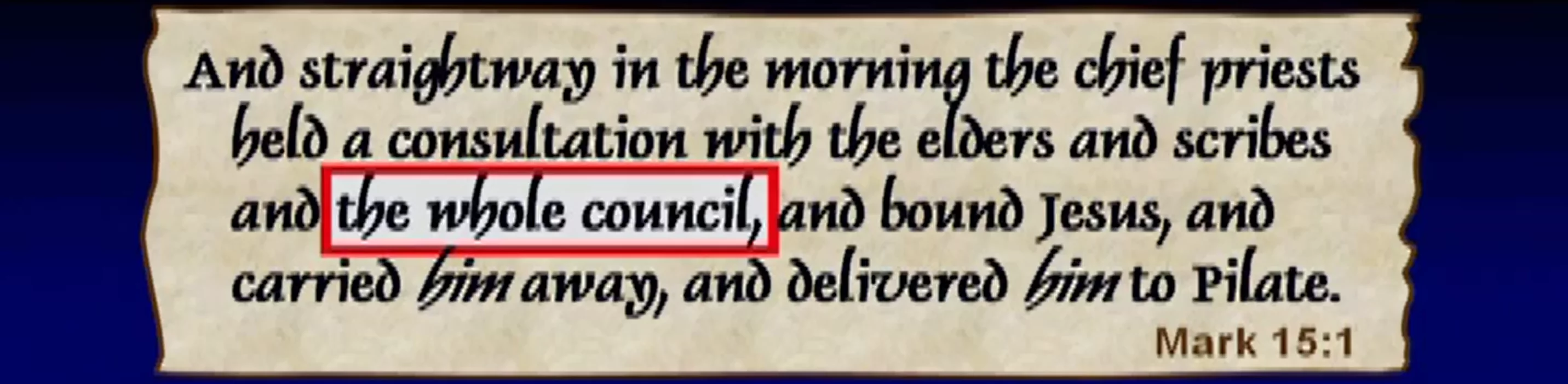
- “…and bound Jesus…” — that was also illegal
- “…the whole council”: The Jewish council—the Sanhedrin—had a basic problem: they did not have the authority to administer the death penalty


- The older son, Herod Antipater, was murdered by Herod the Great, along with other family members (Matt s10a)
- After the death of Herod (4 BC?), Archelaus was placed over Judea as “Ethnarch” by Caesar Augustus
— “But when he heard that Archelaus was reigning over Judea in place of his father Herod, he was afraid to go there. Then after being warned by God in a dream, he left for the regions of Galilee,” (Matt 2:22 NASB)
— Archelaus’ mother was a Samaritan (¼ or less of Jewish blood) and was never accepted
— Archelaus was broadly rejected and ultimately removed in 6-7 AD
— In 6-7 AD, King Herod’s son and successor, Herod Archelaus was dethroned and banished to Vienna, a city in Gaul. Archelaus was the second son of Herod the Great [Josephus, Antiquities, 17:13]
- Archelaus was replaced by a Roman Procurator named Caponius
— The legal power of the Sanhedrin was immediately restricted and the adjudication of capital cases was lost
— This was normal Roman policy
- This transfer of power was recorded in
— The Jerusalem Talmud (Sanhedrin, folio 24) and
— by Josephus: Wars of the Jews, Bk 2 Chap. 8 and
— by Josephus: Antiquities of the Jews, 20:9:
- “After the death of the procurator Festus, when Albinus was about to succeed him, the high priest Ananias considered it a favorable opportunity to assemble the Sanhedrin. He therefore caused James, the brother of Jesus, who was called Christ, and several others, to appear before this hastily assembled council, and pronounced upon them the sentence of death by stoning. All the wise men and strict observers of the law who were at Jerusalem expressed their disapprobation of this act… Some even went to Albinus himself, who had departed to Alexandria, to bring this breach of the law under his observation, and to inform him that Ananias had acted illegally in assembling the Sanhedrin without the Roman authority.” — Antiquities of the Jews, 20:9
- (This remarkable passage not only mentions Jesus and His brother James as historical figures from the secular point of view, it also underscores that the authority of the Sanhedrin had passed to the Romans)
- This also explains the statement that Jews made, which we find in the Biblical text:
— “Then said Pilate unto them, Take ye him, and judge him according to your law. The Jews therefore said unto him, It is not lawful for us to put any man to death:” (John 18:31)


- When the members of the Sanhedrin found themselves deprived of their right over life and death, they covered their heads with ashes and their bodies with sackcloth, and bemoaned, “Woe unto us for the sceptre has departed from Judah and the Messiah has not come!” — [Babylonian Talmud, Chapter 4, folio 37; also, Augustin Lemann (quoting a statement by Rabbi Rachmon), Jesus before the Sanhedrin, 1886, translated by Julius Magath, NL#0239683, Library of Congress #15-24973; See also the monumental work by Pugio Fidei, Martini, Raymundus, published by De Vosin in 1651 — for a detailed discussion of this reference see The Fifty Third Chapter of Isaiah According to Jewish Interpreters, preface pg. iv S.R. Driver, A.D. Neubauer, KTAV Publishing House, Inc. New York, 1969.]
- Jacob, before he died, had prophesied:
— “The sceptre shall not depart from Judah, nor a lawgiver from between his feet, until Shiloh [the Messiah] come; and unto him shall the gathering of the people be.” (Gen 49:10)
- They actually thought that the Torah, the Word of God, had failed! They should have known better
- The sceptre had, indeed, been removed from Judah, but Shiloh had come!
— While the Jews wept in the streets of Jerusalem, a young son of a carpenter was growing up in Nazareth
— He would present Himself as the Messiah the King on the very day that had been predicted by the Angel Gabriel to Daniel five centuries earlier (Dan 9:24-27; Cf. Luke 19:39-44)
Mark 15:2

- Pilate had no love for the Jews and was not about to do them any favors
- He knew that the leadership had delivered Jesus to him for envy and vengeance (v.10, 8 verses ↓ from here)
- John gives us the most details of the Roman trial

- When you combine the Gospel accounts, you discover that Pilate—the personal representative of the ruler of the world—repeatedly stated that he found no fault in Jesus (John 18:38, John 19:4, Luke 23:14, Luke 23:22, Matt 27:24)
- But his assignment was to keep the peace and avoid a riot during this touchy holiday period. He attempted every bureaucratic trick he could think of. When he discovered Jesus was a Galilean, he attempted to pass the issue on to Herod, since he, too, was in town for the holiday (Luke 23:6-12)
- But the slippery old “fox” (title that Jesus uses of him in Luke 13:32) was too smart to take the bait
- Pilate finally caved in
Mark 15:3-5
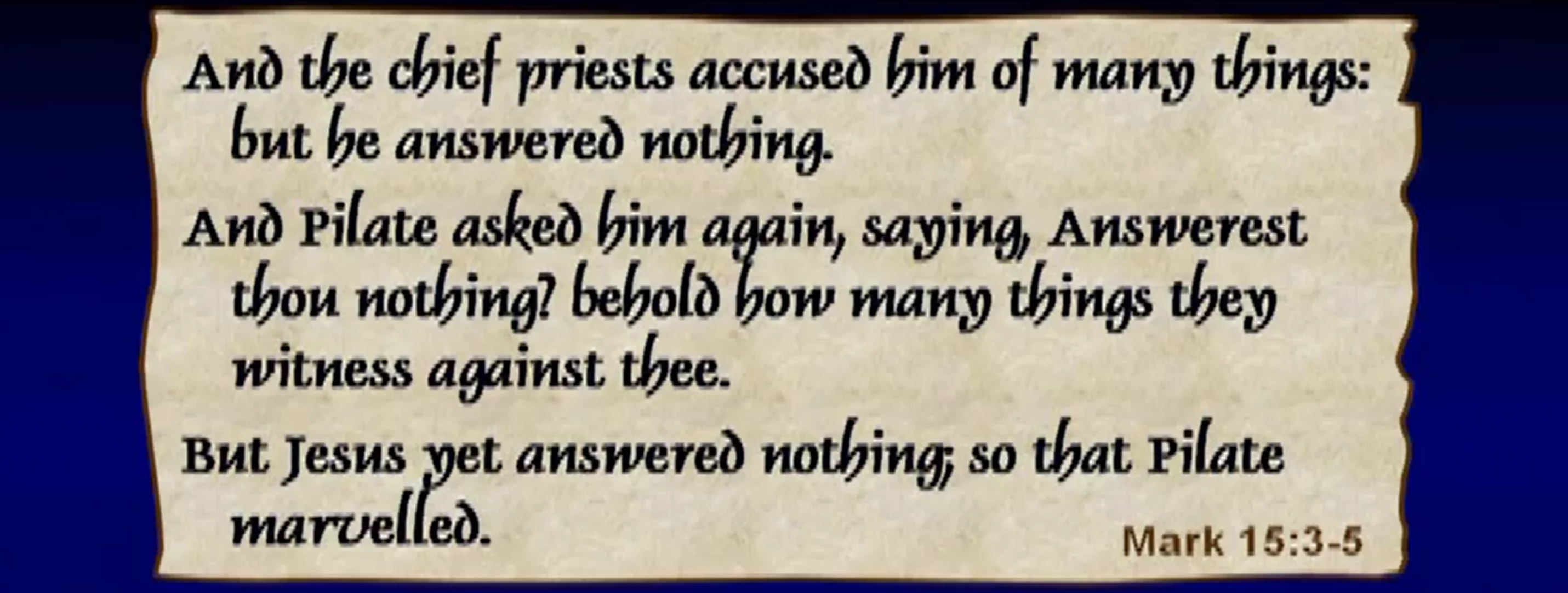
- He made no attempt to defend Himself. Didn’t say a word
- Fulfilling Isa 53:7
- Peter also, in his first epistle, emphasized this quiet suffering (1 Pet 2:21-24)
Mark 15:6-8
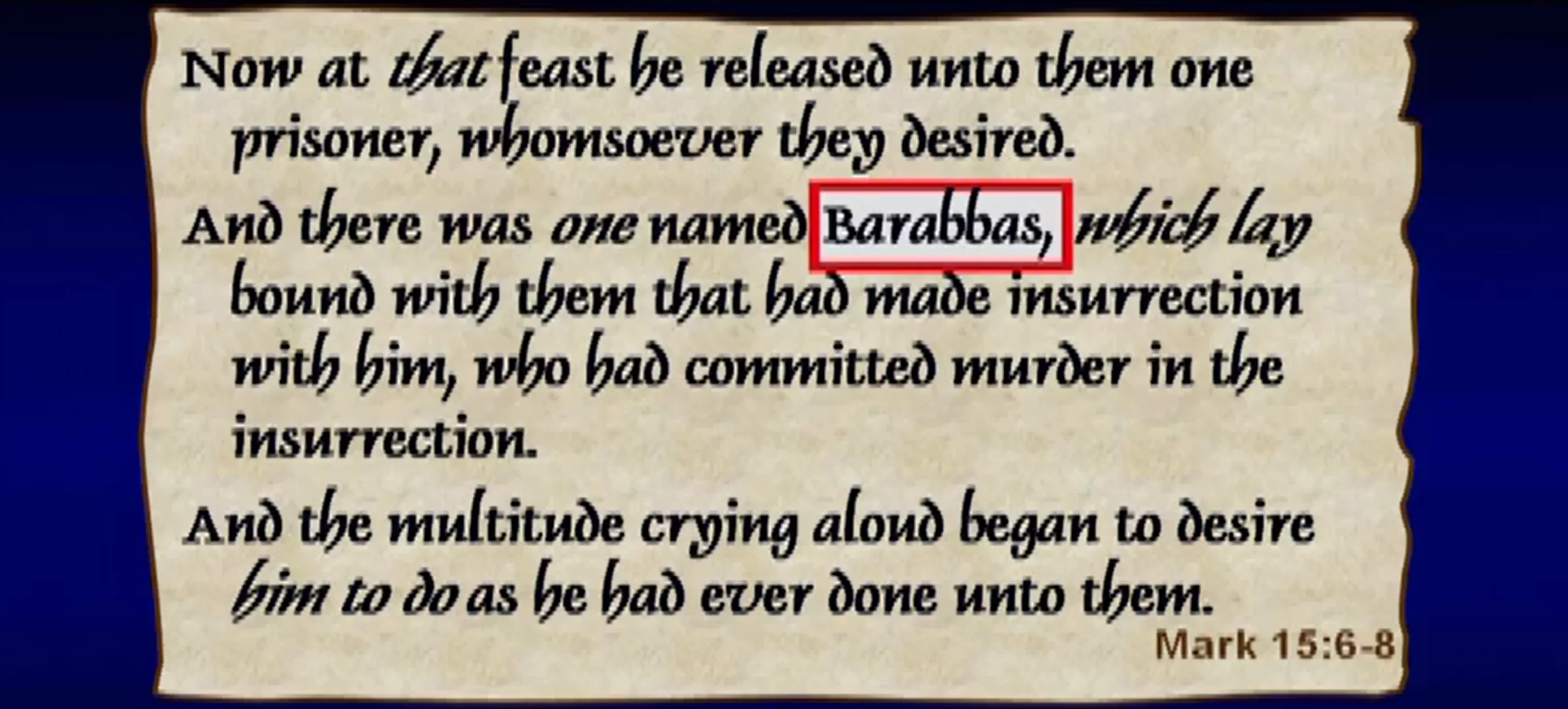
- Pilate has another gimmick he is going to try (unsuccessfully) — as a way of adding to the celebration, Romans would release one prisoner. So he thought that ought to work, certainly they would not pick Barabbas over Jesus
- Pilate hoped that would get him off the hook — he’s got this falsely accused guy that was going to get killed
- “…Barabbas”: Bar-Abbas “Son of the Father” (we are not sure which father)
— Barabbas was a leading political zealot, a terrorist as we would call him today (Acts 3:14, Matt 27:16, Luke 23:19, John 18:40; Cf. John 5:43)
Mark 15:9-11
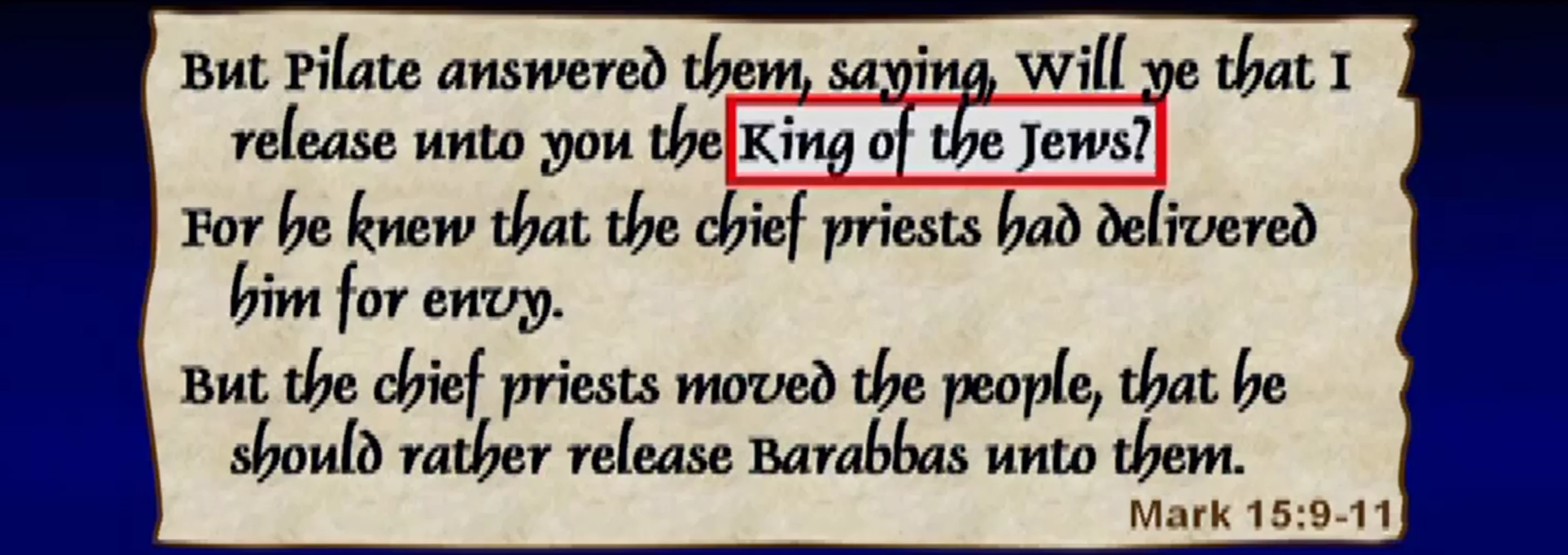
- Notice the label Pilate uses of Jesus
- The personal representative of the ruler of the Roman Empire identified Jesus as “King of the Jews!”
- It is so easy to manipulate the mob — Jews obviously went around and bribed them
Mark 15:12-14
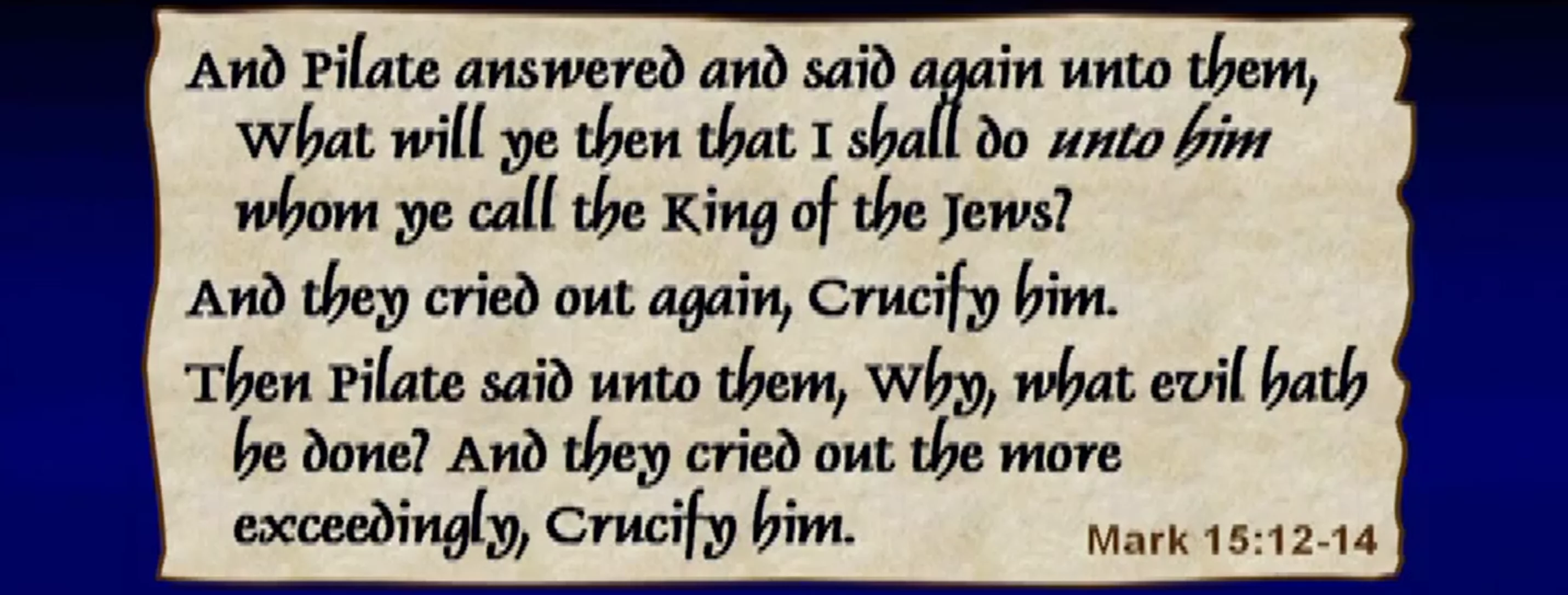
- “…King of the Jews”: Again, Pilate uses the royal title!
Mark 15:15
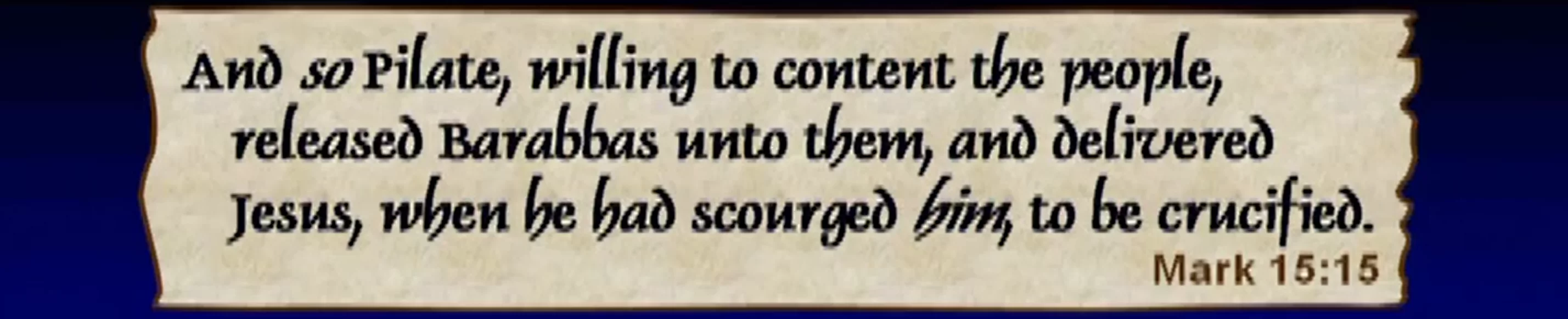
- You and I are in Barabbas’s shoes: We are guilty. We know we are guilty. There is no reason for us to have freedom
- Jesus was innocent, but the guilt, confinement and destiny of Barabbas was transferred to Jesus. Ours too
- We have been freed, by a ransom, paid by none other than the Son of God Himself
Mark 15:16-19 Jesus Is Mocked
- Obviously, they “worshipped” Him in jest — it was done mockingly as a joke, certainly not seriously, but to amuse themselves
- “…Praetorium”: The palace or the hall of audience

- The Praetorium where Jesus was brought to trial has been traditionally located in the neighborhood of the present Turkish barracks where once stood the Antonia and where was stationed a large garrison (Cf. Acts 21:32-35)
- But the statements of Josephus make it almost certain that the headquarters of the procurator were at Herod’s palace [Wars of the Jews, I, xxi, 1; V, iv, 4]
- (This refutes the traditional “Via Dolorosa”, which is really a Catholic set of traditions, the whole course of which depends on theory that the “Way of Sorrow” began at the Antonia, the Praetorium of a later ecclesiastical tradition)
Mark 15:20-21
- From this statement of Mark, it is apparent that at the time his Gospel was written, Alexander and Rufus were Christians, and that they were well known in the Christian community (cf. Rom 16:13)
Mark 15:22 The Crucifixion

- Refer to slides and topological diagrams in Matthew note → s23 p2
Mark 15:23-24
- “They part my garments among them, and cast lots upon my vesture.” (Psalm 22:18)

- Psalm 22 is so descriptive and it is written as if Jesus is quoting it while He is hanging on the cross
⬛️ Ps 22:1-3
- “My God, my God”: The only time in eternity that Jesus didn’t call Him “Father”
- He couldn’t: He was in our shoes…
⬛️ Ps 22:4-6
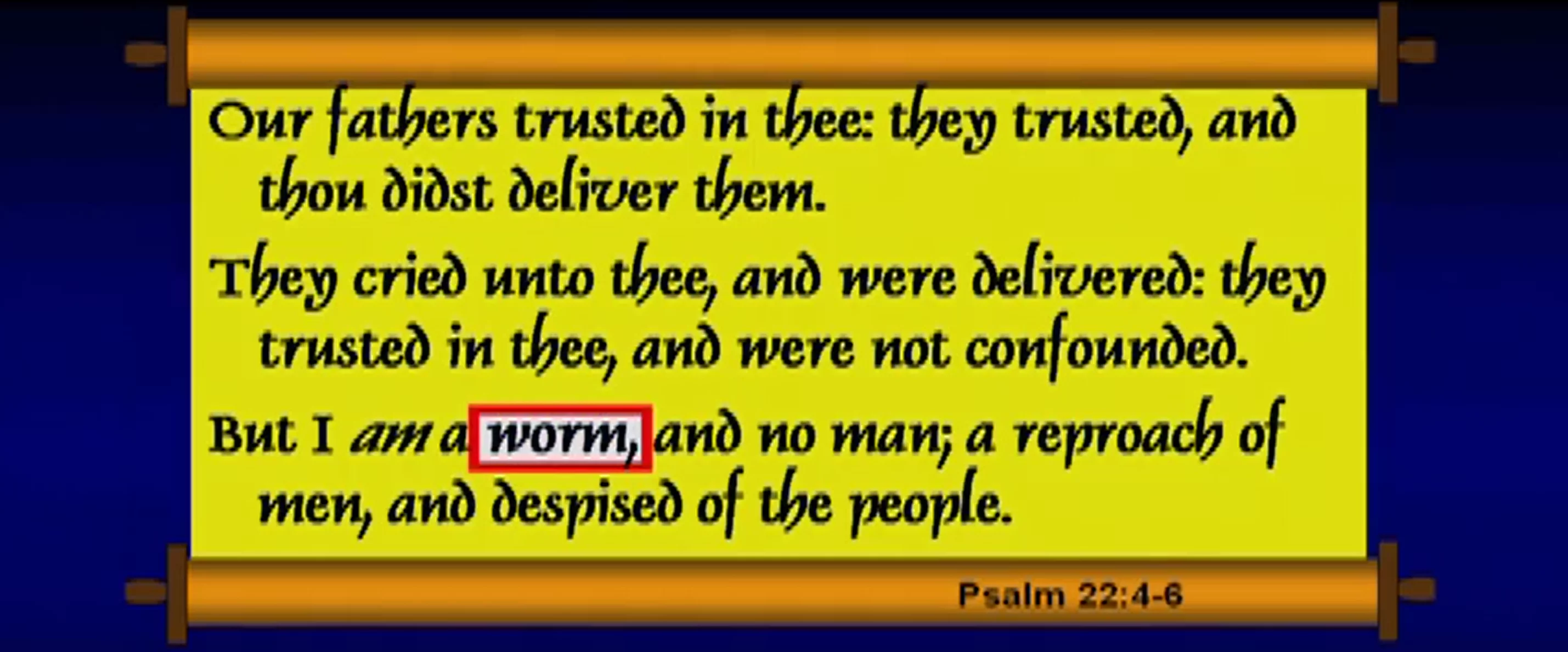
- “…worm”: in Hebrew, the word is תּוֹלָע Tolah — besides worm, it also means “scarlet” (“ Crimson ” 38x)
- Scarlet dye was made from a particular worm, Cermes vermilio 🐛
- The Cermes vermilio pierces the thin bark of twigs to suck the sap, from which it prepares a waxy scale to protect its soft body. The red dye is in this scale
— When reproducing, the female climbs a tree (usually the holm oak), where it bears its eggs; the larvae hatch and feed on the body of the worm. It gives its life…
- A crimson spot is left on the branch; when the scarlet spot dries out, in three days, it changes to white as it flakes off…
🟨 Isa 1:18
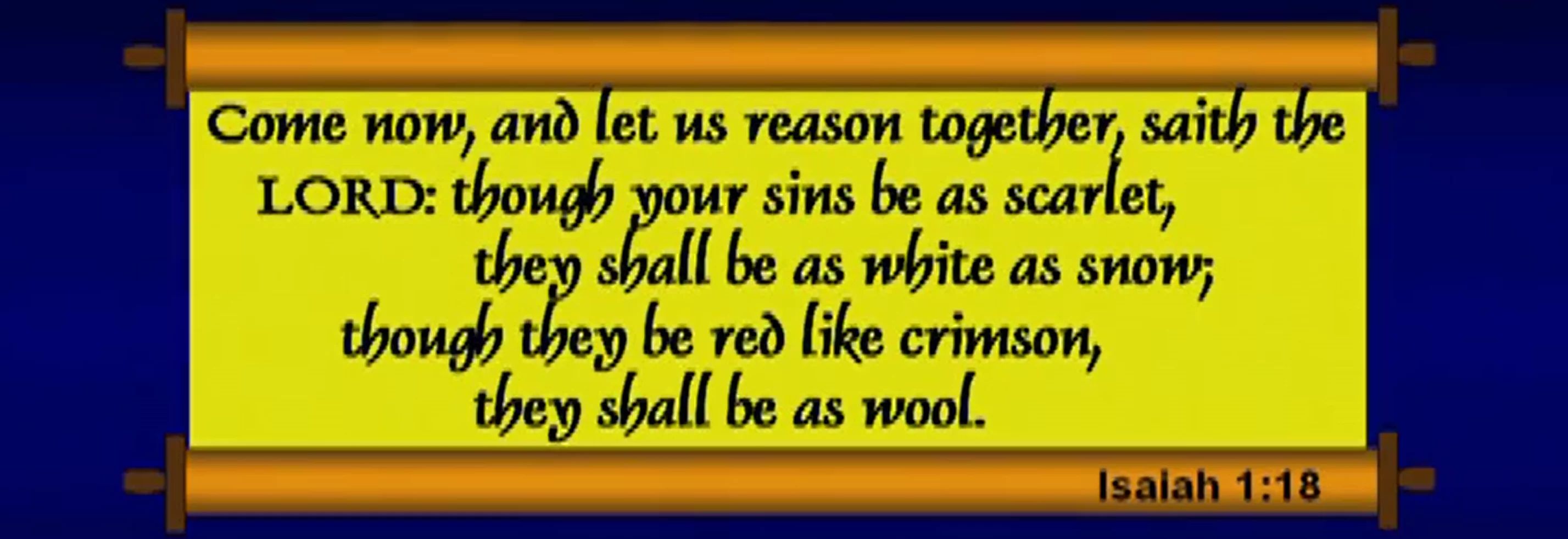
- It is amazing what is tucked into that one word “worm” (great example of a Remez)
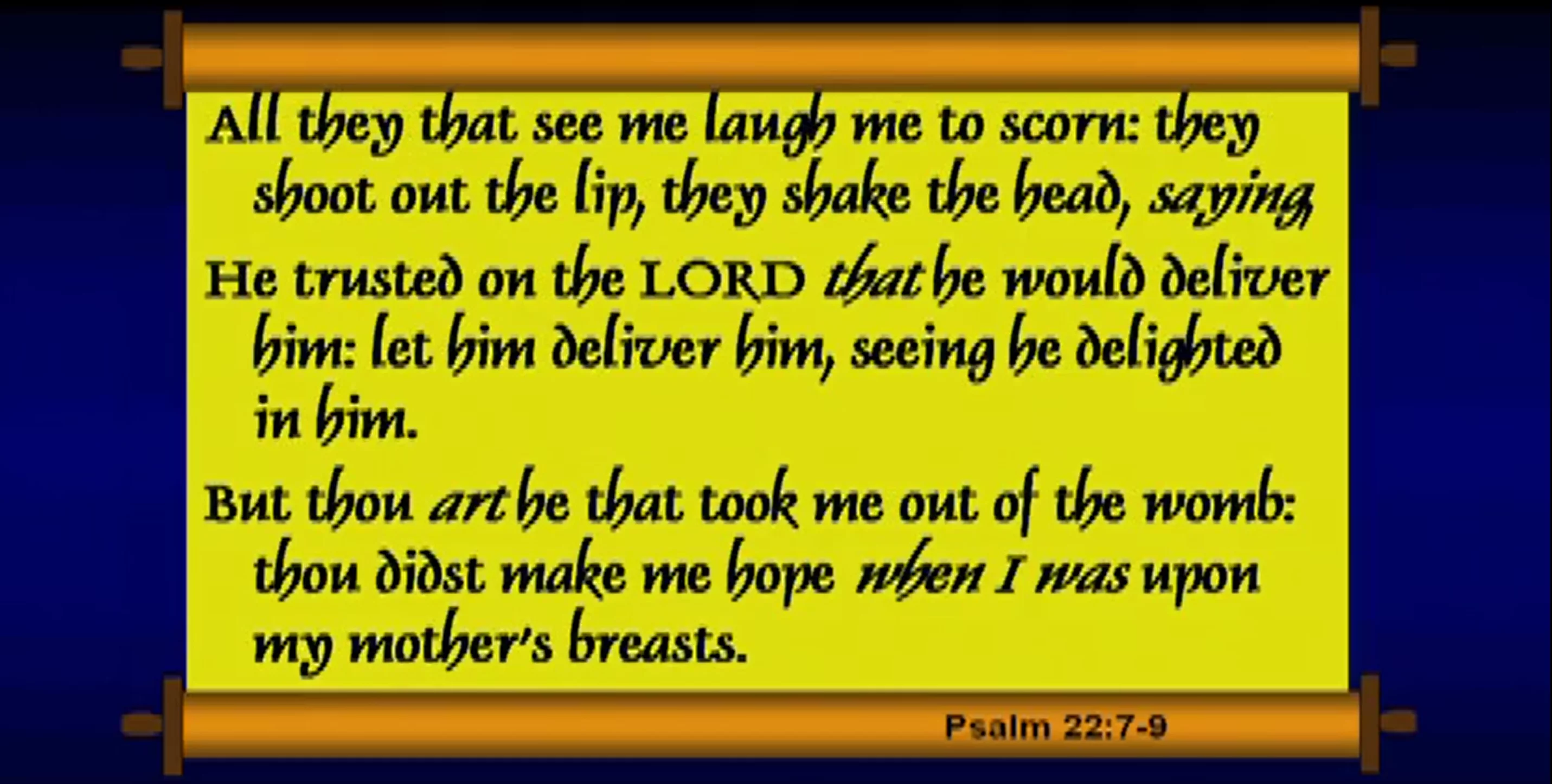
⬛️ Ps 22:7-9
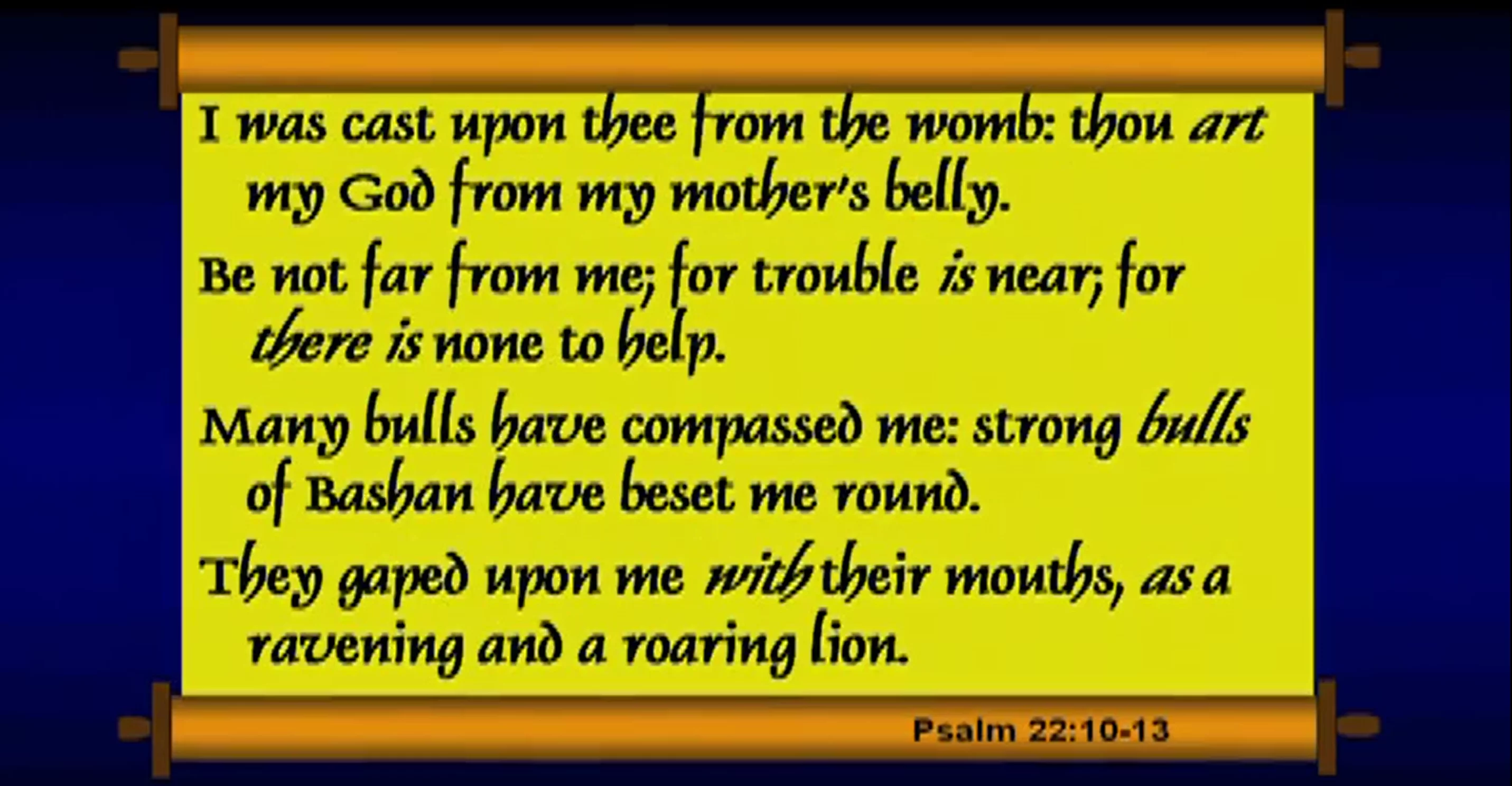
⬛️ Ps 22:10-13
⬛️ Ps 22:14-16
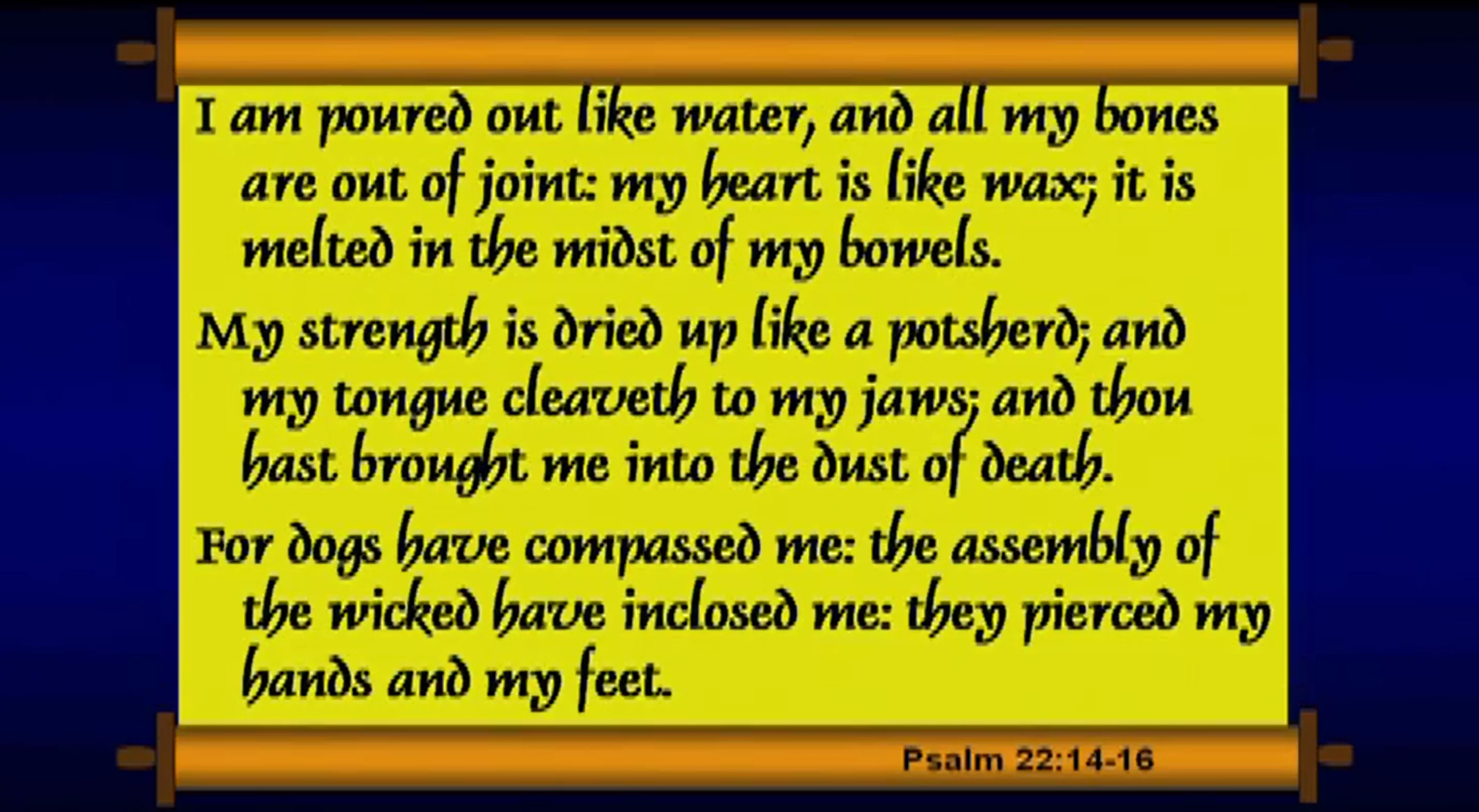
- That’s a remarkable allusion here in the Psalms, because that was written 700 years before crucifixion (even before crucifixion was invented)
- Crucifixion was invented by Persians and subsequently widely adopted by the Romans
- The official form of execution in Israel was stoning
⬛️ Ps 22:17-18
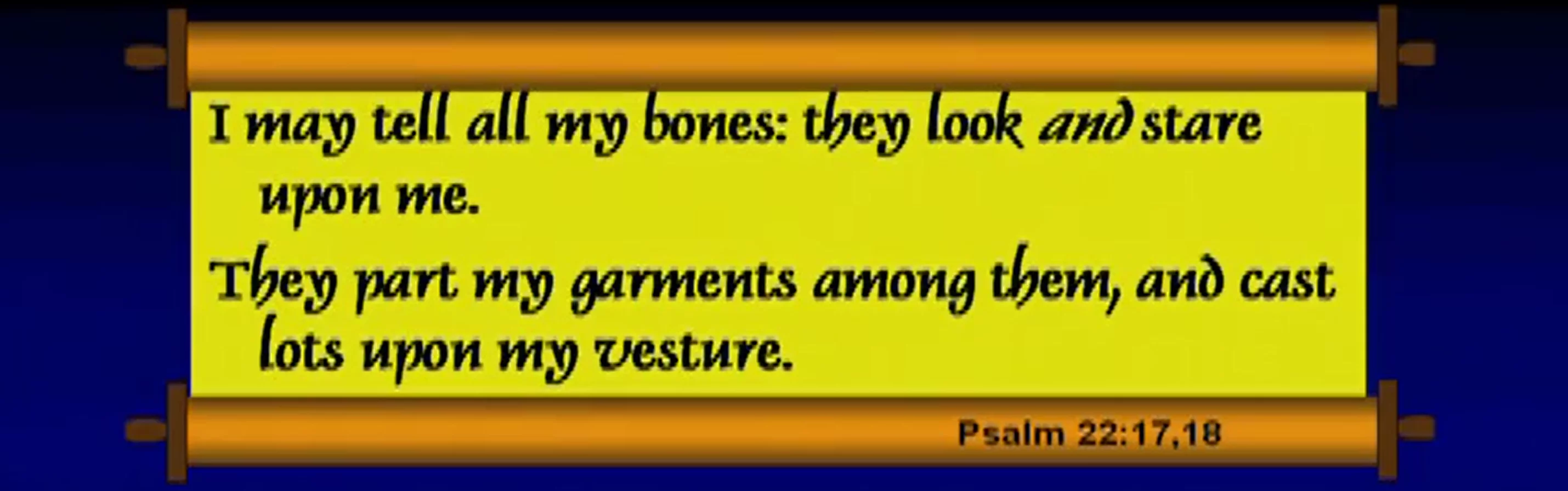
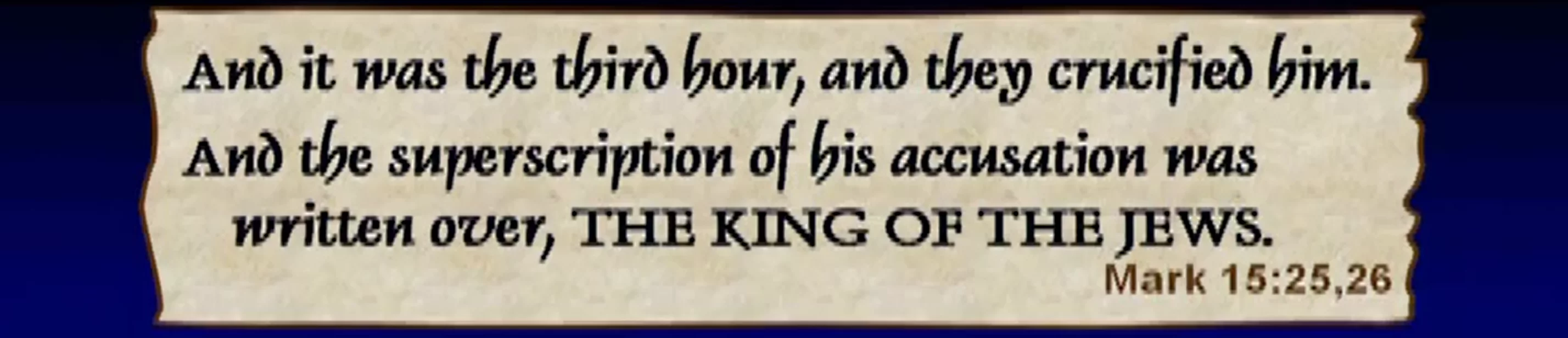
Mark 15:25-26
- John provides more detail… (also see Matthew note s23 p2 for few additional comments)
🟦 John 19:19-20
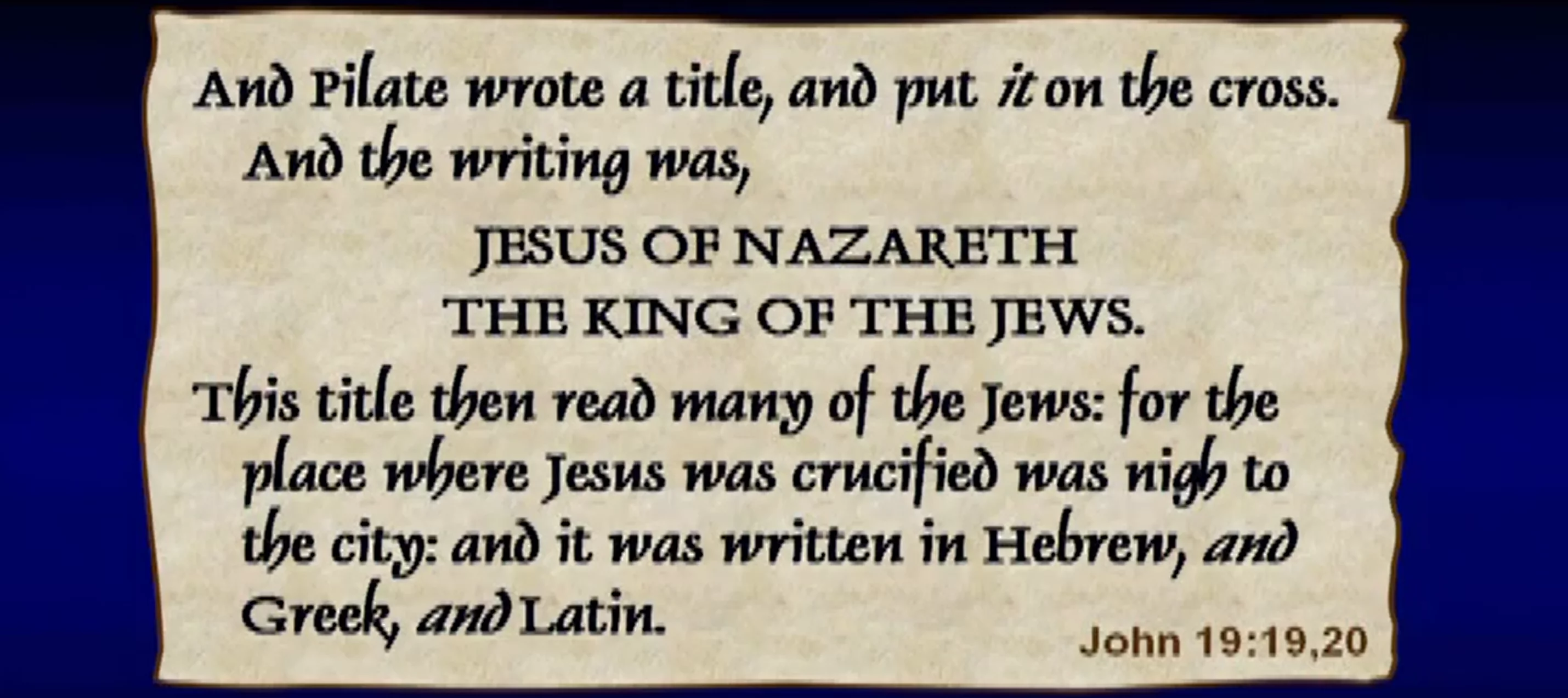
- Note that Pilate wrote it (Pilate did it himself!)
- Hebrew — because He was Jewish (location was also Judea)
- Greek — because that was the common language of commerce (on the street)
- Latin — beginning to be introduced as the official language of the Roman empire
- What did Pilate write?
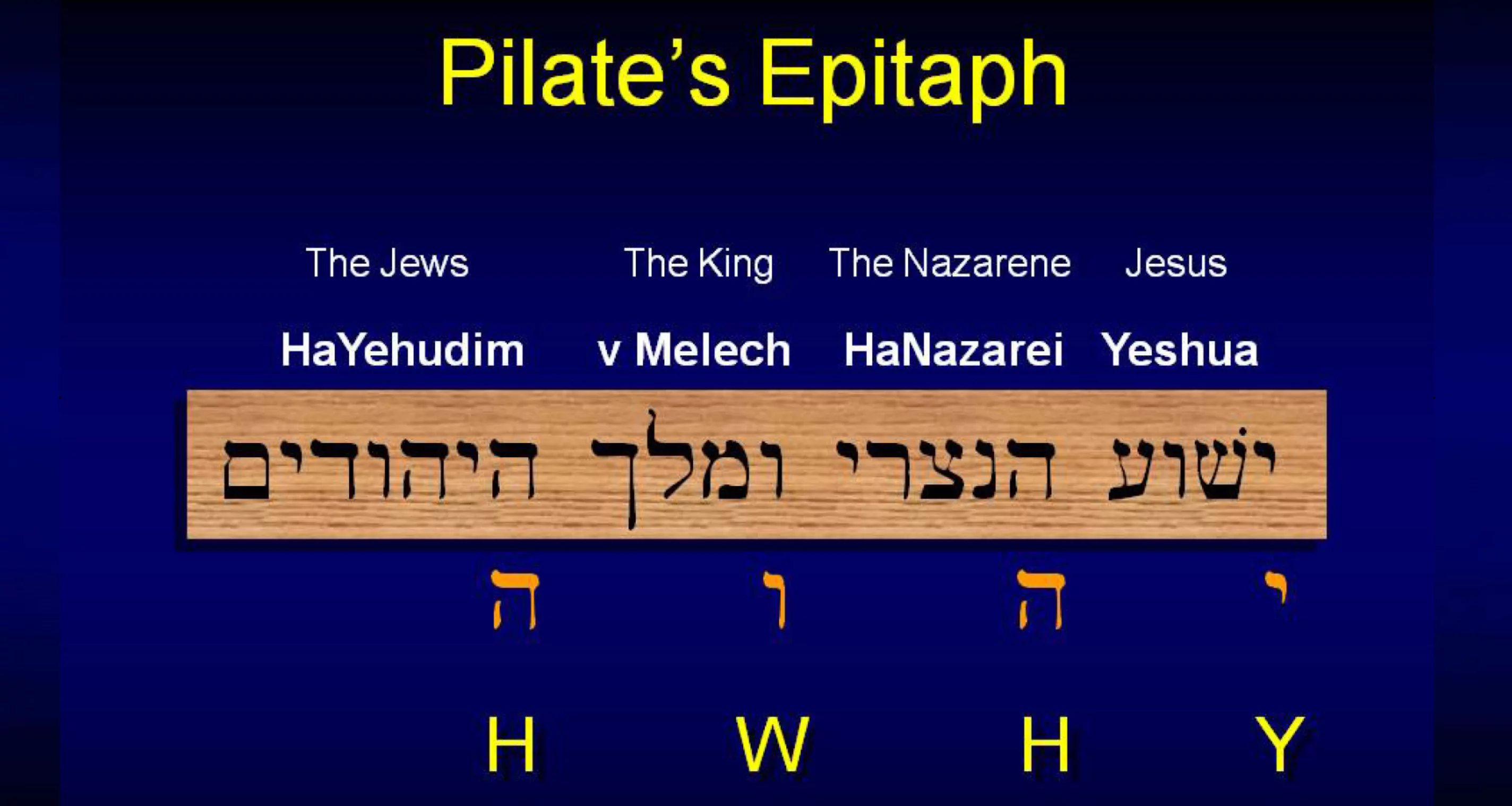
- Acronym on YHWH!
- Whenever you and I might miss something, the Pharisees come to our rescue. When they are upset, you want to find out what’s bothering them
🟦 John 19:21-22
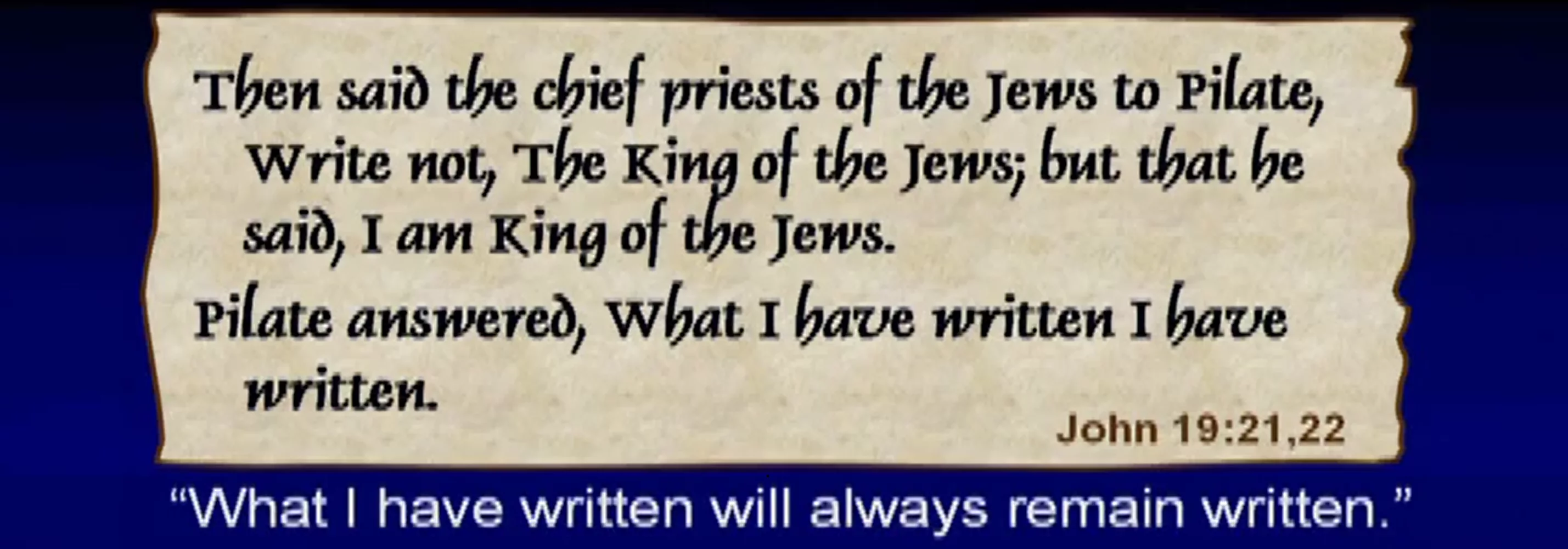
- “…What I have written I have written.” — actually translates: “What I have written will always remain written.”
- Pilate is rubbing their nose on this. He knows their culture — the Jews are always into acronyms (acrostics)
- If Pilate had rewritten it in the manner they had requested, it would not have spelled out the Name of God
- Did Pilate realize this? Was it deliberate? Did he do it to get even with them for putting him on the spot? Did he do it just to upset the Jewish leadership, realizing they had delivered Him up for envy? (Matt 27:18)
- When they requested a special guard for the tomb, he also responded with an enigmatic remark: “Make it as sure as you can.” (Matt 27: 65-66) — Was he really surprised when Jesus was resurrected after three days? One wonders
Mark 15:27-28
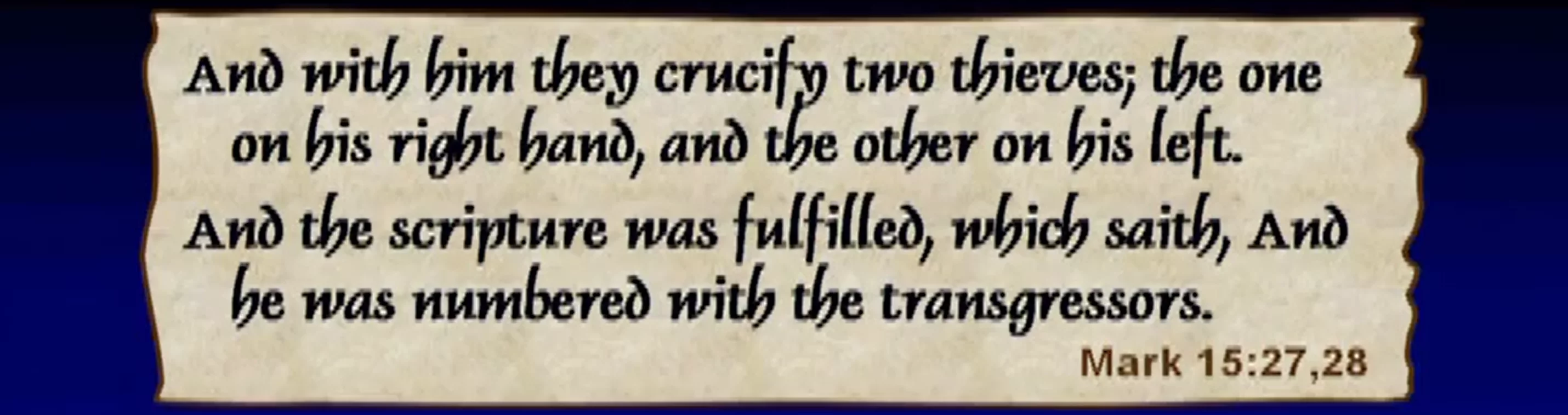
Mark 15:29-32
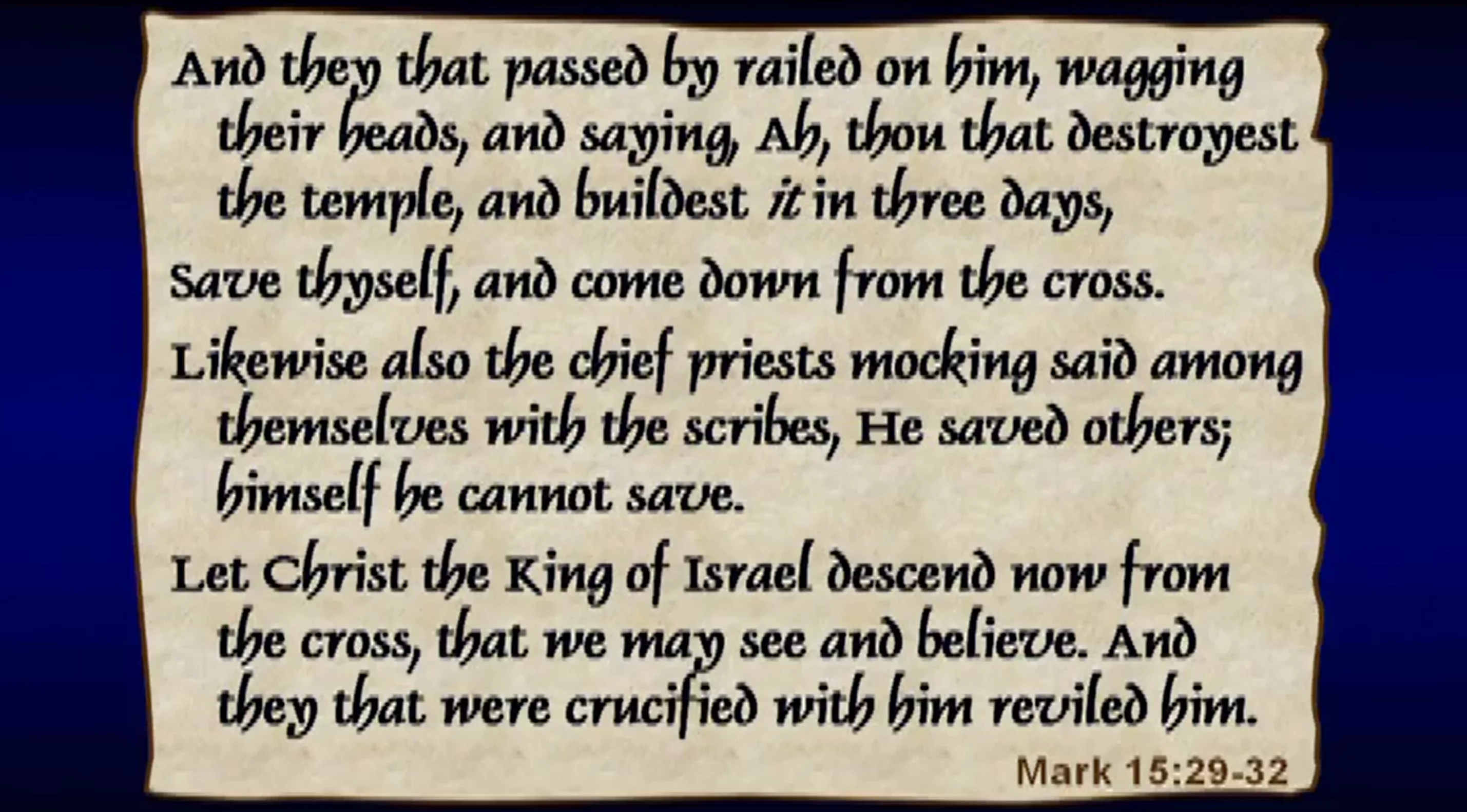
- You all know there was one that didn’t revile Him, but that’s a whole another story
Mark 15:33-35 The Death of Jesus, MEV
- They didn’t hear quite right and misunderstood — it was actually a quote from Ps 22:1 spoken in Aramaic
Mark 15:36-37
Mark 15:38-39
- These couple of verses cause a lot of confusion. A lot of people think that the centurion was able to see the veil torn from top to bottom. No, the veil is in the Holy of Holies. He couldn’t have seen that for sure. We know that it happened then because it was reported and that is why Mark is recording it
— NASB: “…centurion, who was standing right in front of Him…”
- Centurion “saw that He so cried out”, so centurion is responding to what Jesus cried out
— NASB: “…saw the way He breathed His last, he said, “Truly this man was God’s Son!”
- Some also try to argue that in order for the centurion to see the cross, that means the crucifixion took place on the Mount of Olives. That view is not supported by the text
Mark 15:40-41
Mark 15:42 Jesus Is Buried

- “…the sabbath”: Not necessarily Saturday — there are 7 Shabbats in a year in addition to Saturdays. This was the day before the Feast of Unleavened Bread (referred to as sabbath, it is one of those seven)
- The Feast of Unleavened Bread is on 15th of Nisan, the day after the formal day of Passover (14th of Nisan)
— It is a misunderstanding of this that has caused traditional Medieval church to assume that the crucifixion was on a Friday
- A Friday Crucifixion has (at least) three rebuttals (or refutations that it could NOT have been on Friday):
➖ 1) Three days & nights specification Matt 12:40
➖ 2) The plural of sabbaths by Sunday Matt 28:1 (both KJV and NASB are mistranslated with singular) The error is not in the International Standard Version (ISV) because Chuck pointed that out to them and they changed
➖ 3) The trip from Jericho John 12:1
Mark 15:43-45
- “…went in boldly unto Pilate,…” — that is interesting, because one doesn’t just walk unto the Roman ruler of all of Judea — he had huge access (apparently he was very powerful person) — he clearly was known Pilate(!) and was probably next of kin to Jesus so he exercised the Roman law to claim the body…

- He was not a disciple “secretly” (adv.) cf. John 19:38 — that’s a grammatical error in translation
- The word in Greek is adjective “secreted” (verb participle: adj) — means “he was hidden” — has nothing to do with his discipleship (which was in secret), but the fact that he was hidden from the Jews when he approached Pilate
- It is not how he believed (secretly), but how he was (secreted) because he believed
- That was one of the reasons Pilate was surprised to see him (he disappeared, he was undercover)
Mark 15:46-47
- We understand Nicodemus helped Joseph of Arimathaea to take down Jesus from the cross (John 19:39-40)
- The Garden Tomb — note that it was “hewn out of a rock”

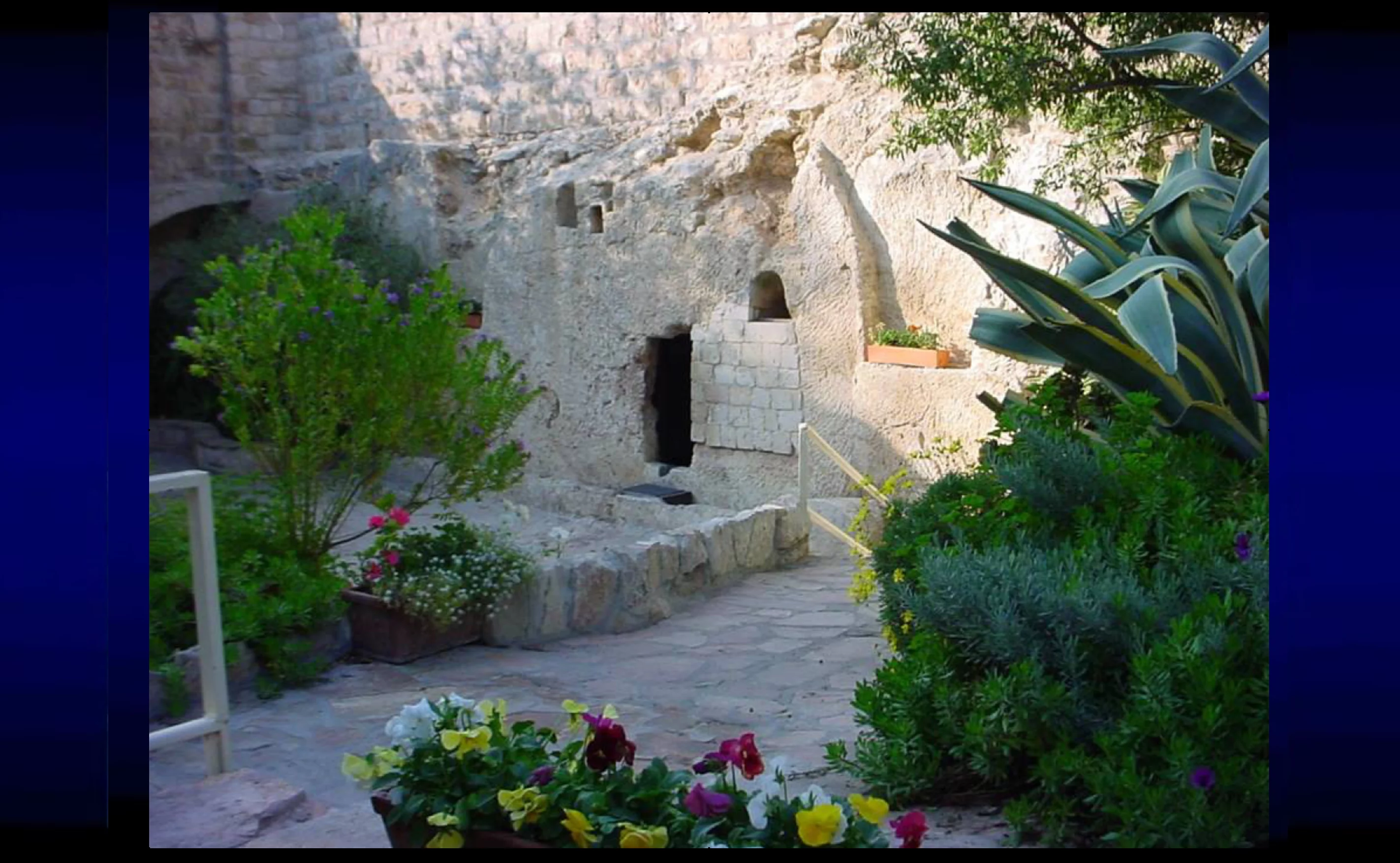
- Chuck is convinced that this is not a representation of the tomb, but an actual tomb of Jesus Christ — there are at least 18 details in the text that confirm that
- “…which was hewn out of a rock”: General Charles George Gordon, a distinguished British general, was commissioned a second lieutenant in 1852
- He discovered this area in 1883, while in Jerusalem, originally derisively called “Gordon’s Calvary” (they thought he was a nut; now known as “The Garden Tomb”)
- Andrew Bonar described this tomb, from only the Torah text, 43 years before its discovery by General Gordon!
- A few more comments in Matthew note s23 p2

The order of events:
- Jesus arrived at Golgotha (Matt 27:33, Mark 15:22, Luke 23:33, John 19:17)
- He refused the offer of wine, vinegar and myrrh (Matt 27:34, Mark 15:23)
- Nailed to the cross between two thieves (Matt 27:38, Mark 15:27, Luke 23:33, John 19:18)
- First cry from Cross: “Father, forgive them for they know not what they do” (Luke 23:34)
- Garments allocated (Matt 27:35, Mark 15:24, Luke 23:34, John 19:23-24)
- Jews mocked Jesus (Matt 27:39-43, Mark 15:29-32, Luke 23:35-37)
- Conversed with two thieves (Luke 23:39-43)
- Second cry: “You will be with Me in Paradise” (Luke 23:43)
- Third cry: “Woman, behold your son!” “Behold your mother!” (John 19:26-27)
- Darkness from noon to 3 pm (Matt 27:45, Mark 15:33, Luke 23:44)
- Fourth cry: “My God, My God, Why hast thou forsaken me?” (Matt 27:46-47, Mark 15:34-36)
- Fifth cry: “I am thirsty” (John 19:28)
- He drank wine vinegar (Matt 27:48, Mark 15:36, John 19:29)
- Sixth cry: “It is finished” (John 19:30)
- Seventh cry: “Father, into your hands I commend my spirit” (Luke 23:46)
- He dismissed His Spirit (Matt 27:50, Mark 15:37, Luke 23:46, John 19:30)
- Temple curtain torn in twain (Matt 27:51, Mark 15:38, Luke 23:45)
- Roman soldiers declare: ”Surely He was the Son of God” (Matt 27:54, Mark 15:39)

Seven Cries from the Cross:
- “Father, forgive them for they know not what they do” (Luke 23:34)
- “Today shalt thou be with Me in paradise” (Luke 23:43)
- “Woman, Behold thy Son! Behold thy mother!” (John 19:26-27)
- “My God, My God, Why hast Thou forsaken me?” (Ps 22:1)
- “I thirst” (John 19:28, Cf. Ps 69:21)
- “It is finished” — Tetelestai! Paid in full (John 19:30)
- “Father, into Thy hands I commit My spirit” (Luke 23:46)
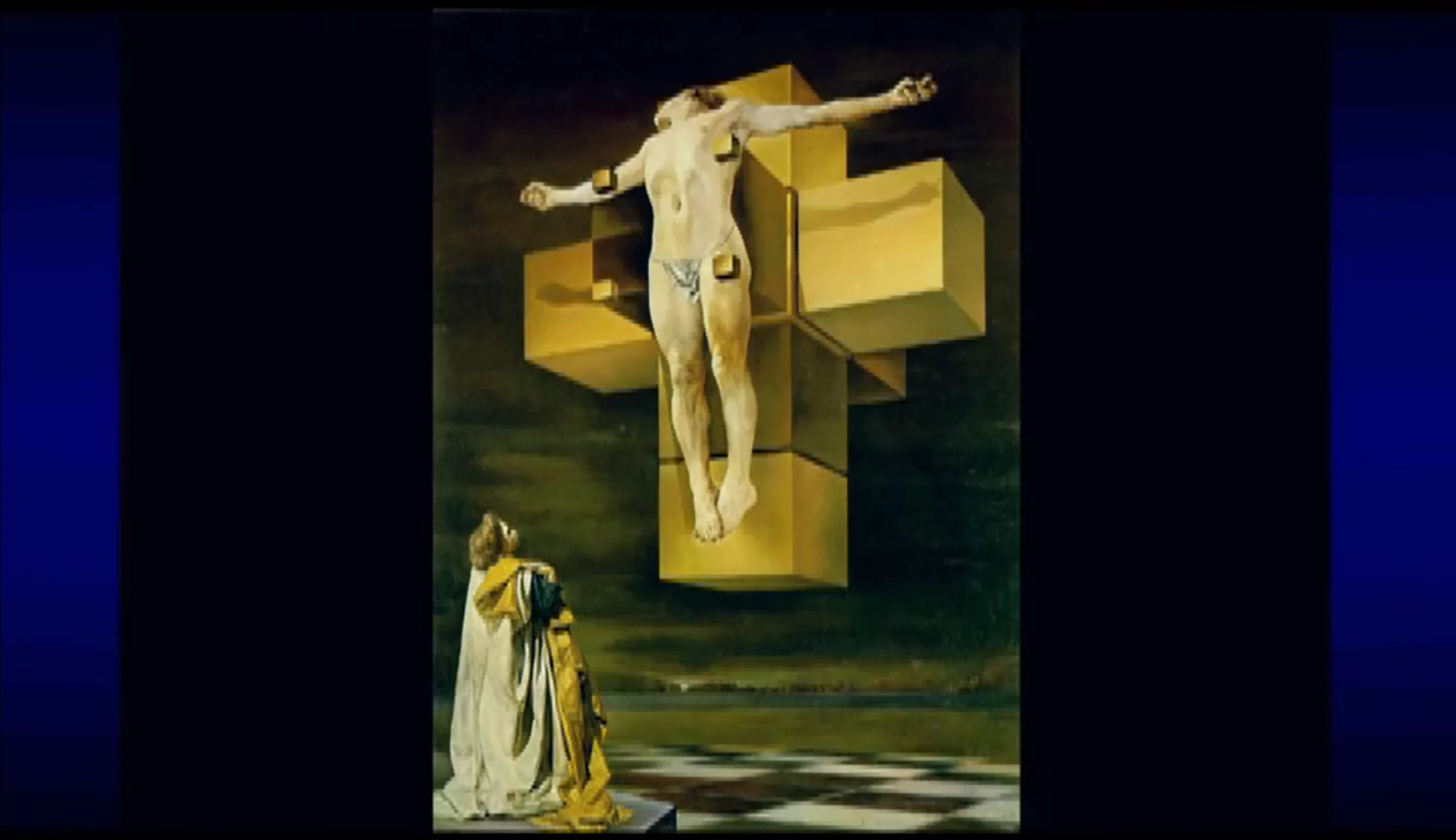
- Crucifixion (Corpus Hypercubus) — housed at The Metropolitan Museum of Art in New York
- Chuck is fascinated by the painting called Corpus Christi by Salvador Dali
- Salvador Dali was not only an artist, but also profoundly knowledgeable of mathematics
- 4-dimensional cube (tesseract or hypercube) unraveled in 3 dimensions