s16 (Ch 16) The Resurrection (studied 20-Nov-2025)
The Book of Mark with Dr. Chuck Missler
The subsections of Chapter 16 (per NASB) are:


- A dead Savior cannot save anyone
- Jesus Christ was: “…delivered for our offenses and was raised again for our justification.” (Rom 4:25)
- The fact that He rose from the dead is a validation that the offering He made was sufficient (specifically for every sin of every one of us — He paid for every sin of every one of us)
- This is the very essence of the “Gospel”, which is defined in 1 Cor 15:1-4
- What is fascinating about Paul’s definition of Gospel is what he doesn’t include:
— Being a great teacher, although He certainly was
— Doing many miracles, although He certainly did
— Being an example for all of us to follow, although He certainly was
— These and many similar, you will hear from many pulpits, but that’s not what the Gospel is
- He didn’t disappear — He has the most documented death in whole history
- And He didn’t just die — He died fulfilling 100s of precise specifications
- Crucifixion was not a tragedy, but an achievement that was planned before the foundation of the world
- He was the Creator incarnate stepping in our shoes to fulfil the destiny that we couldn’t earn for ourselves
- In the Book of Acts, this is the primary witness of the church (Acts 1:22, Acts 4:2, Acts 4:33 et al.)
Mark 16:1 The Resurrection
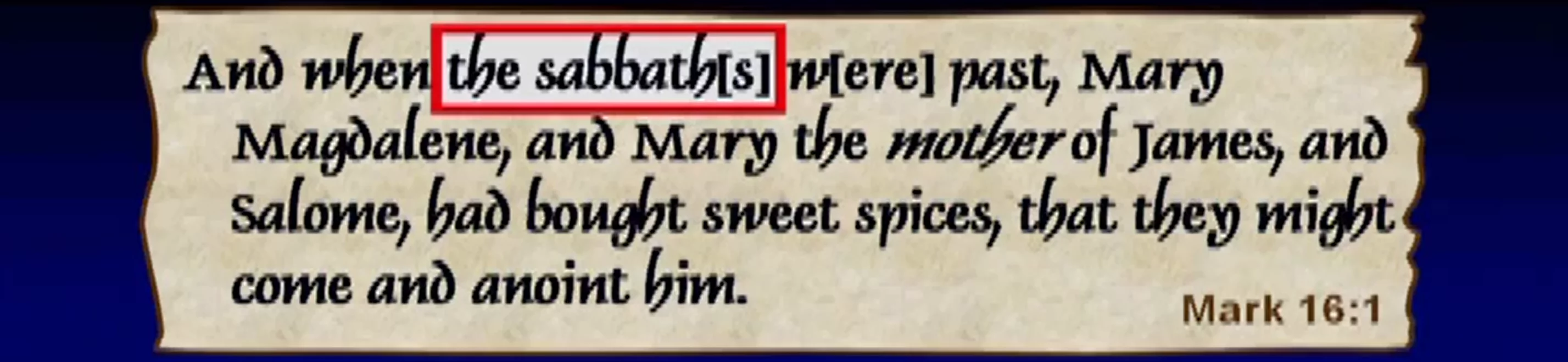
- “…when the Sabbaths were past”: Cf. Matt 28:1 — The Greek is plural
- Sabbaths are not only on Saturdays. Plural includes the first day of the Feast of Unleavened Bread, the 15th of Nisan, which is a high Sabbath (one of seven each year); cf. Lev 23:6-7, Num 28:17-18
- It was one of the three compulsory attendances for every able-bodied Jewish man (Deut 16:16)
- This is, thus, a refutation of a Friday crucifixion (had to be prior to Friday to have two Sabbaths)
- Salome was mother of James and John
- Probable order of resurrection appearances:
1) To Mary Magdalene (John 20:11-18, Mark 16:9-11)
2) To the other women (Matt 28:9-10)
3) To Peter (Luke 24:34, 1 Cor 15:5)
4) To the two men on Emmaus Road (Mark 16:12, Luke 24:13-32)
5) To the 11 in the Upper Room (Mark 16:14, John 20:19-25)
Mark 16:2-3
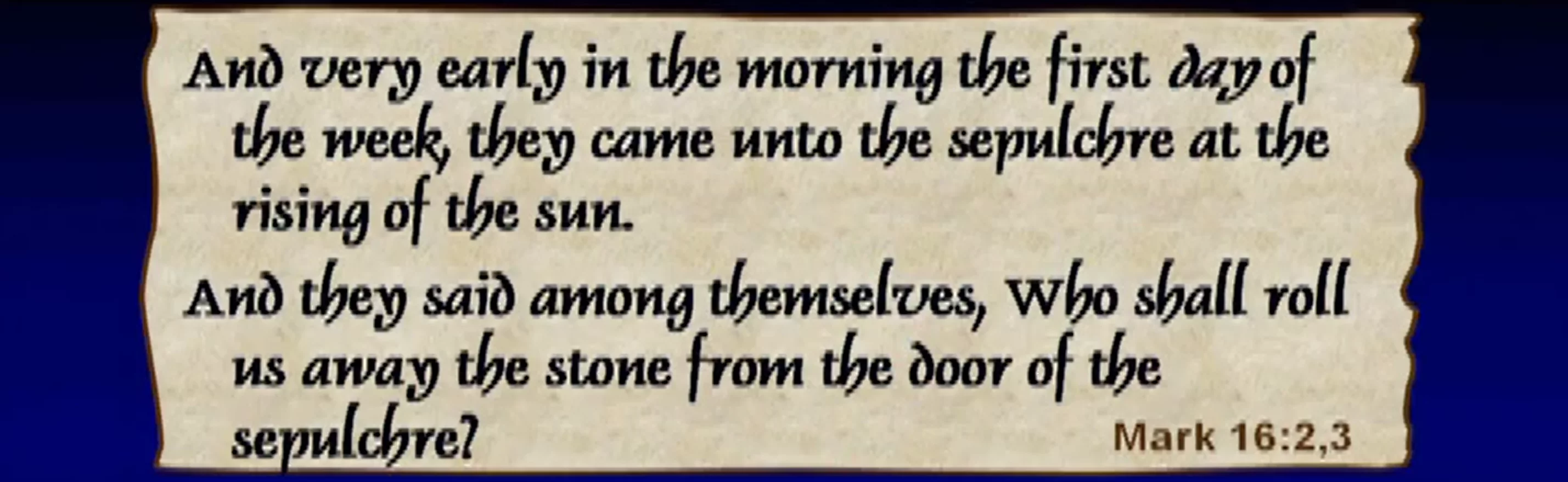
- Jesus rose on Saturday night
- “…very early in the morning the first day of the week…” — Sunday morning
Mark 16:4-5
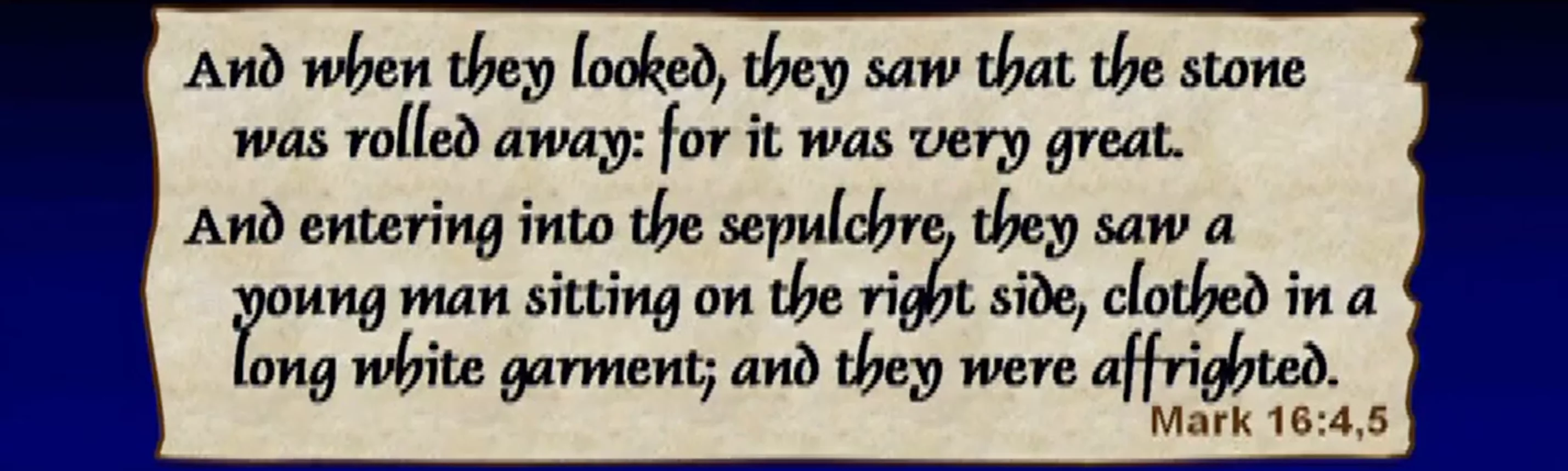
- Here the narrative focuses on the one angel (cf. Luke 24:4 — two angels)
- This may have been one who was present at the moment of creation (Job 38:7)
Mark 16:6-7
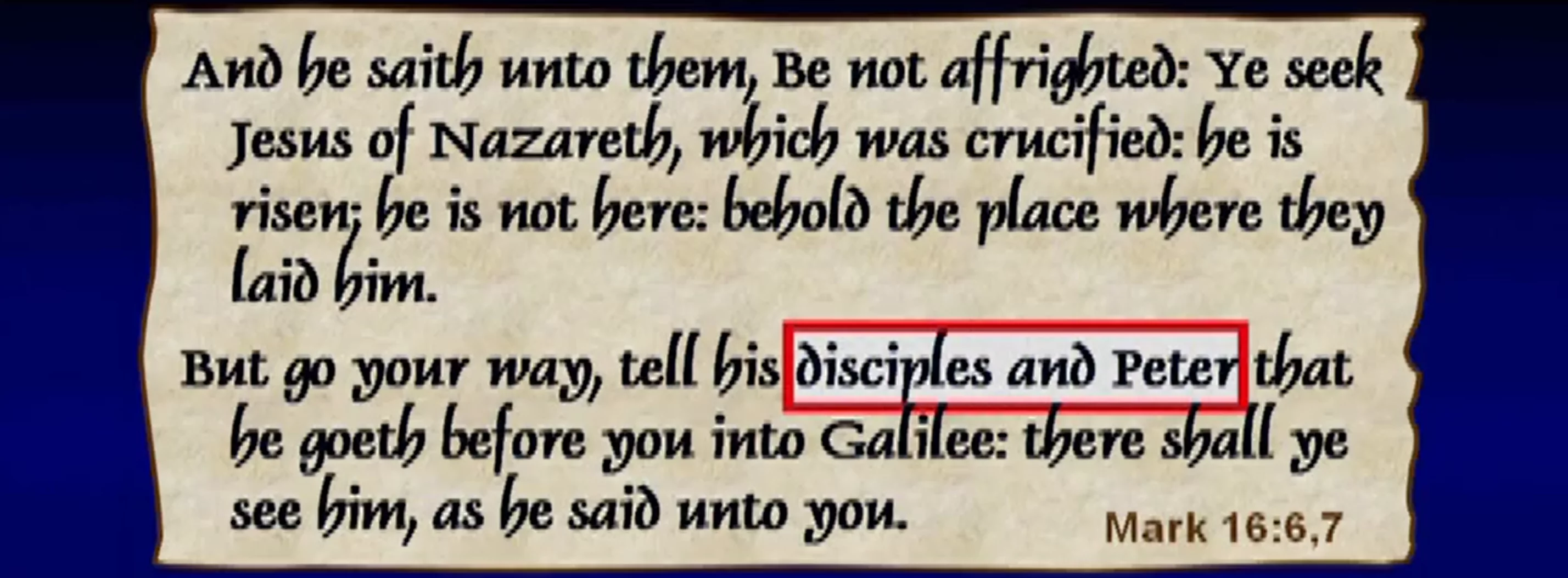
- “…disciples and Peter” — A special message coming for Peter — he will be reinstated in John 21:15-19
- Peter was apparently not a disciple at that moment (because he denied Him three times)
Mark 16:8
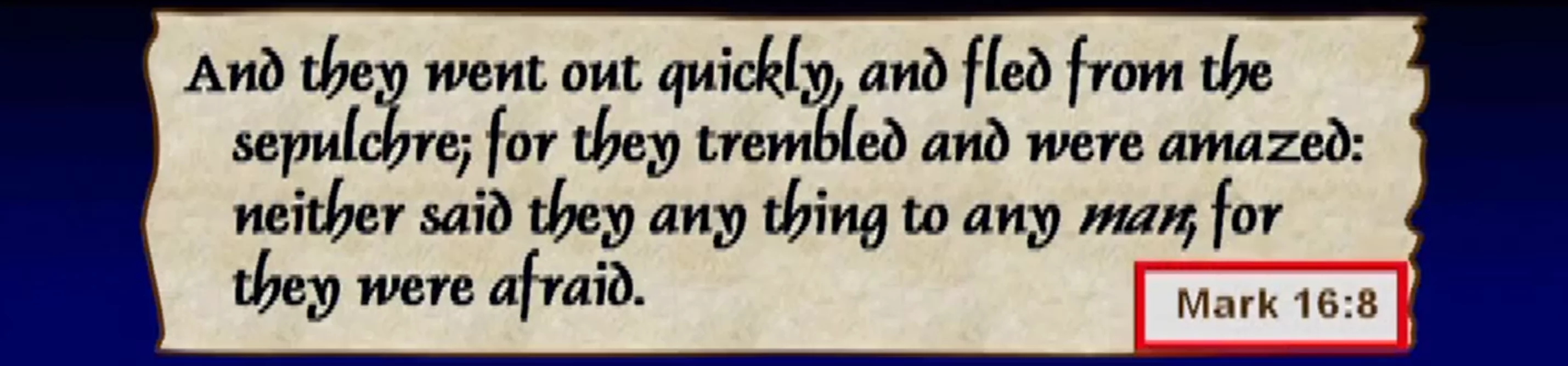
- Many study Bibles are annotated that the last 12 verses of Mark were “added” later because they do not appear on Alexandrian codices (Codex Alexandrinus)
- Alexandrian codices were the oldest complete manuscripts we have, at least at one time, so they were regarded with special veneration. While they were “complete”, they were not the oldest. That didn’t prevent Westcott and Hort to promote the idea that because the last 12 verses were not in Alexandrian codices, they must have been added later. And those who put exaggerated importance on Westcott and Hort, propagated that claim…
- Does your Bible suggest they were “added later”?
— Does this look like a logical ending to the Gospel of Mark?
— Is this where you think this Gospel ended?
— In fear and confusion?
— Some modern “scholars” think so… (only non-believers can think like that)

Mark 16:9-11 The Appearance to Mary Magdalene, MEV
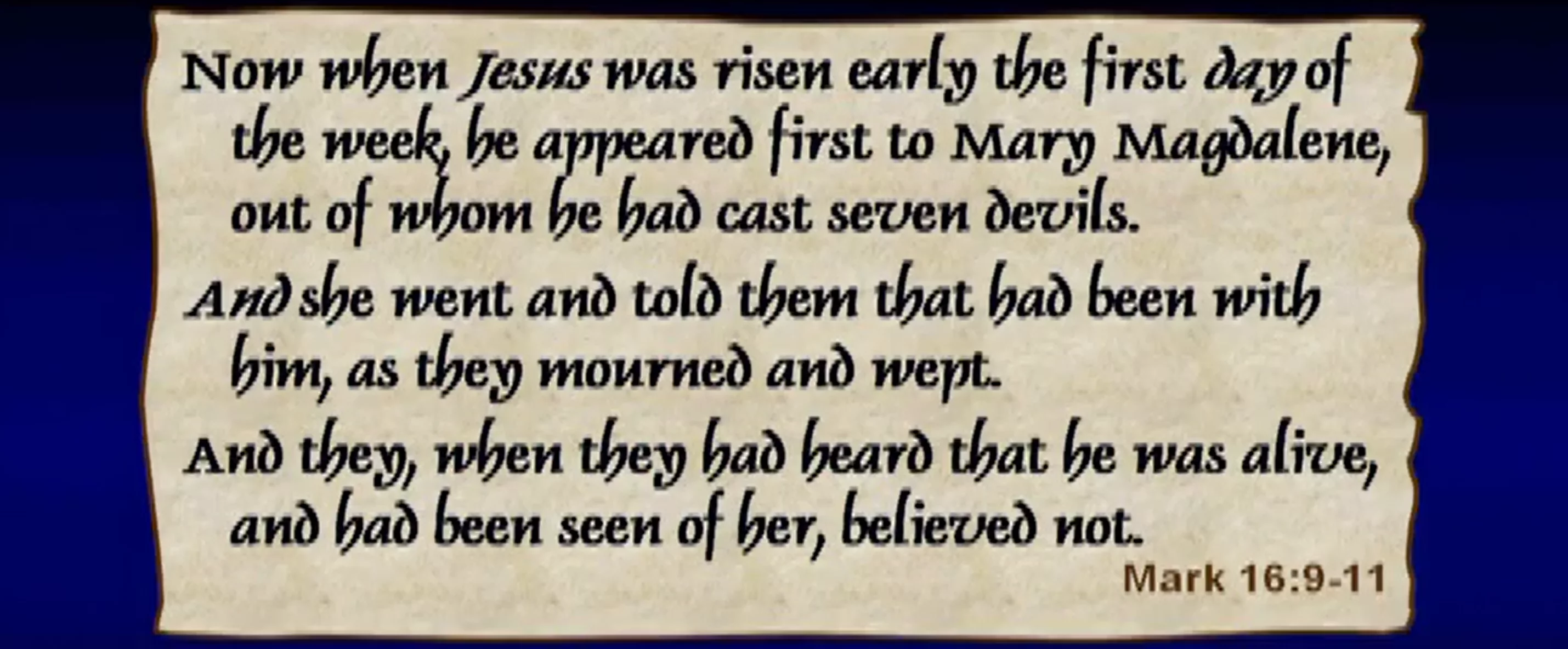
- Mary Magdalene ran to tell Peter and John (John 20:2-10) and then lingered at the tomb after they left
- It was then that Jesus appeared to her (John 20:11-18)
Mark 16:12-14 The Appearance to (Two) Disciples, MEV
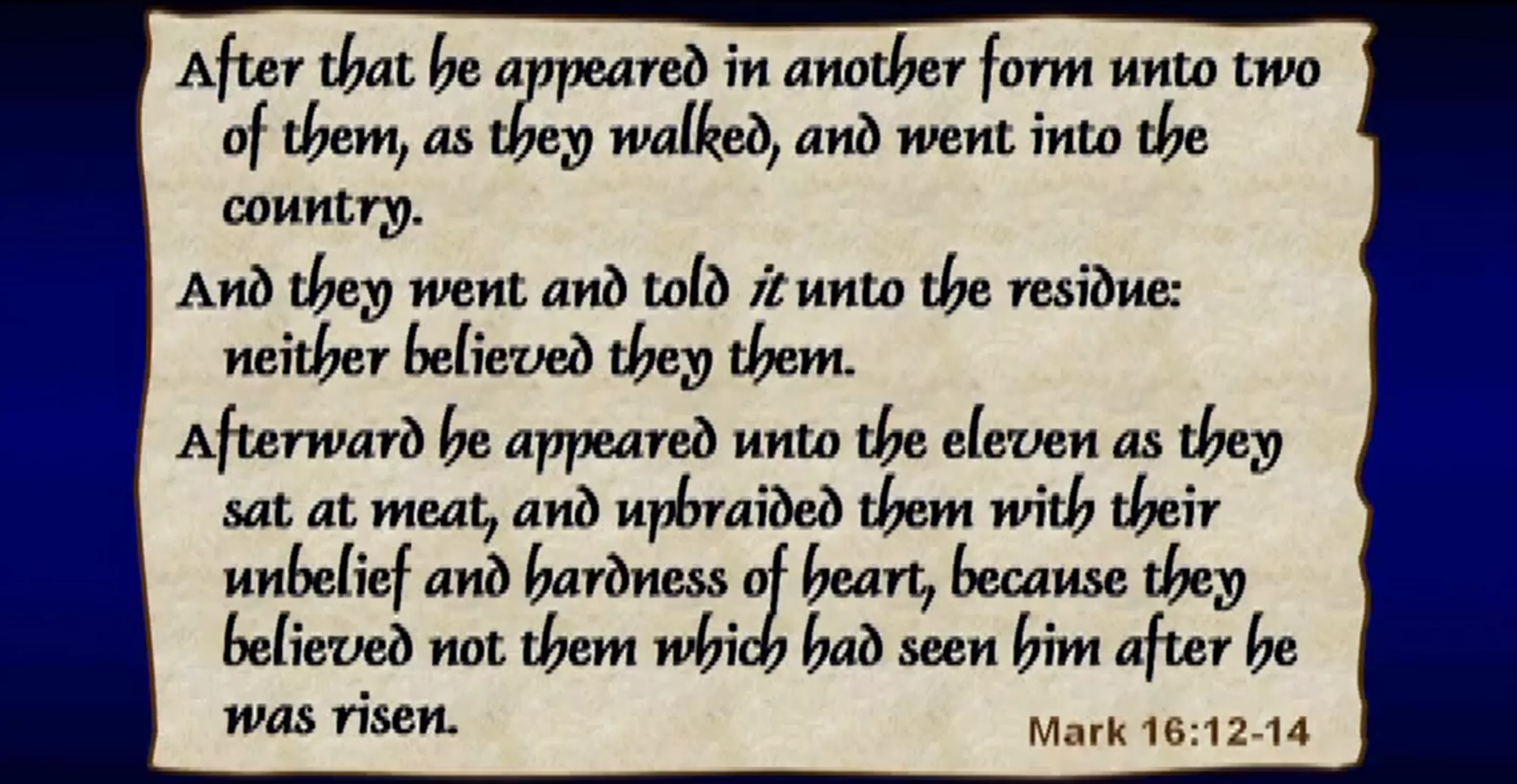
- Luke elaborates on The Road to Emmaus (cf. Luke 24:13-35)
- The emphasis is the unbelief of the disciples — men had to go and see for themselves (did not trust women)
(In the Jewish culture, the testimony of women was not acceptable in court)
- But even when the two Emmaus disciples gave their testimony they were greeted with doubt (cf. v.13 ↑)
- “The eleven” is a phrase for the remaining disciples, although only 10 were present — Thomas was absent that evening (John 20:19-25, Cf. Zech 13:6!)
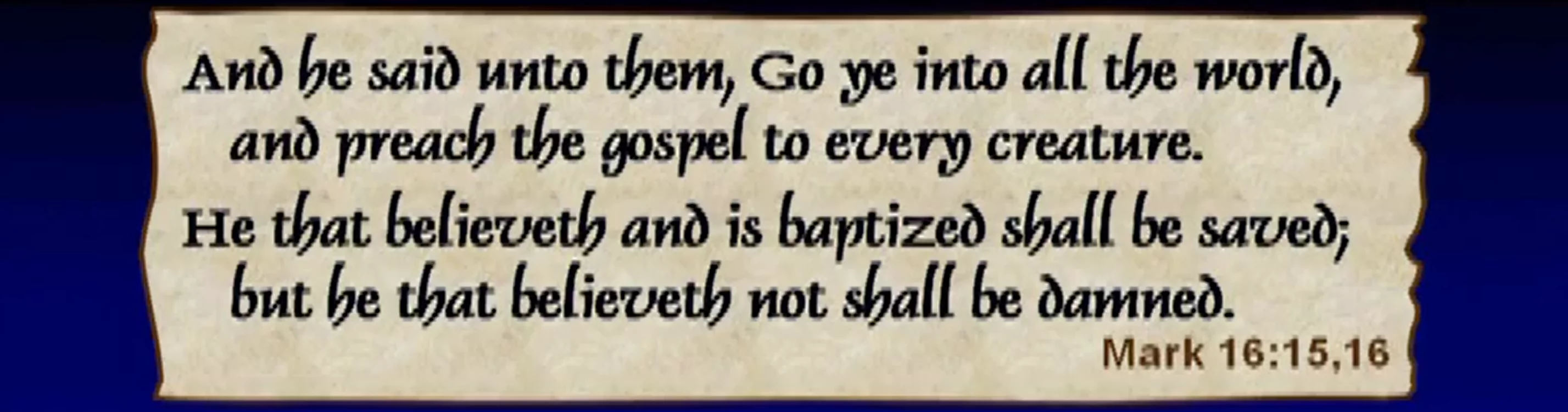
Mark 16:15-16 The Disciples Commissioned (started with verse 14)
Mark 16:17-18
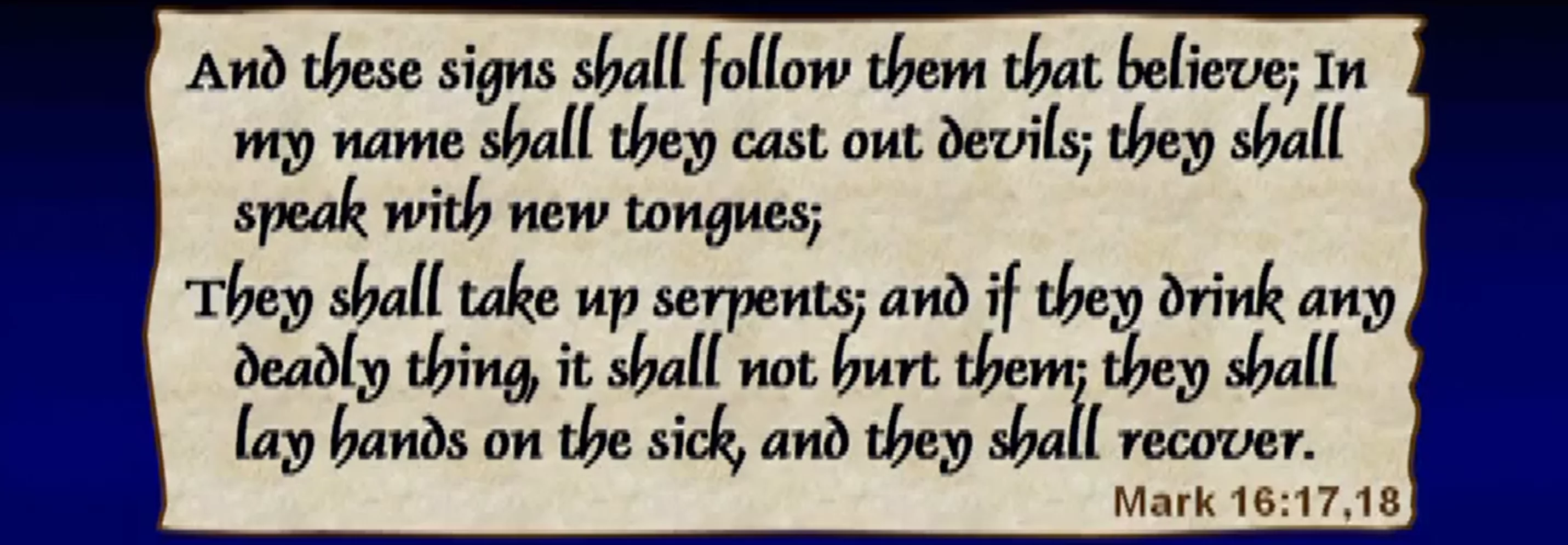
- These things are all recorded in the Book of Acts
- “And these signs…”: Signs always accompanied those that the Lord sent out (Cf. Moses, Exo 4:1-9, et al.)
- Today, the Holy Spirit is still at work…
- It is tragic that many well-meaning but untaught people tempt God (just as Satan attempted in Matt 4:5-7)
— We are to trust God, not tempt Him
Mark 16:19-20 The Ascension, MEV
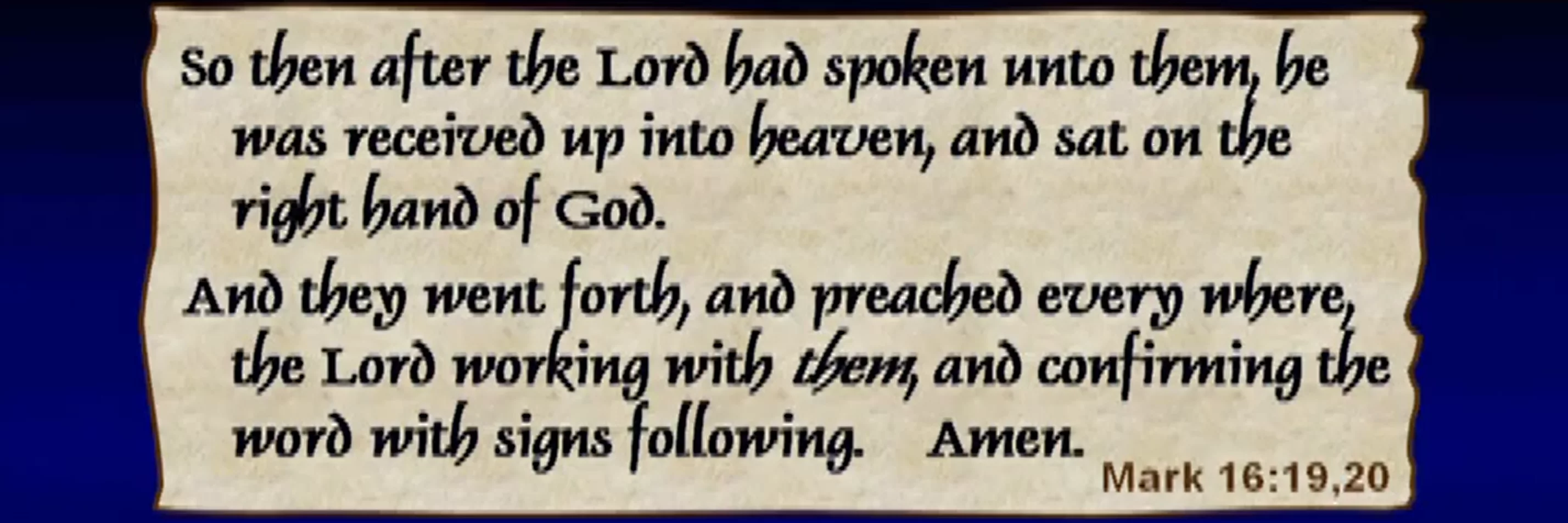

Before His ascension 40 days later, Jesus gave several commissions to His followers:
🔴 Matt 28:18-20
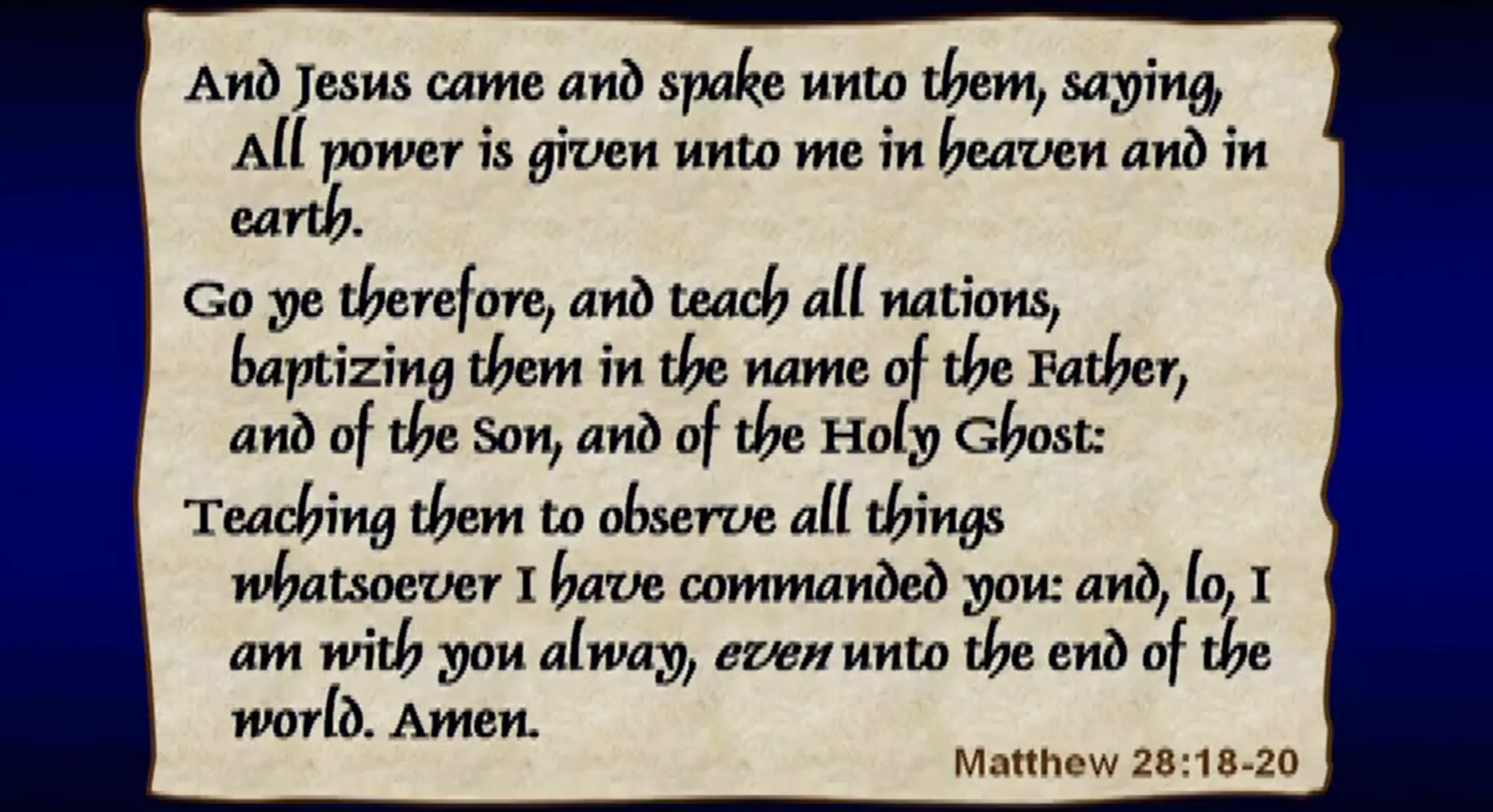
- “…the Father, and of the Son, and of the Holy Ghost” — Holy Trinity — not only NT thing, all over the OT too
- In Hebrew, besides singular and plural, there is dual too. So plural is actually 3 or more:
— “God” in Gen 1:1 in Hebrew is plural (not dual): אֱלֹהִים(elohim) — Holy Trinity
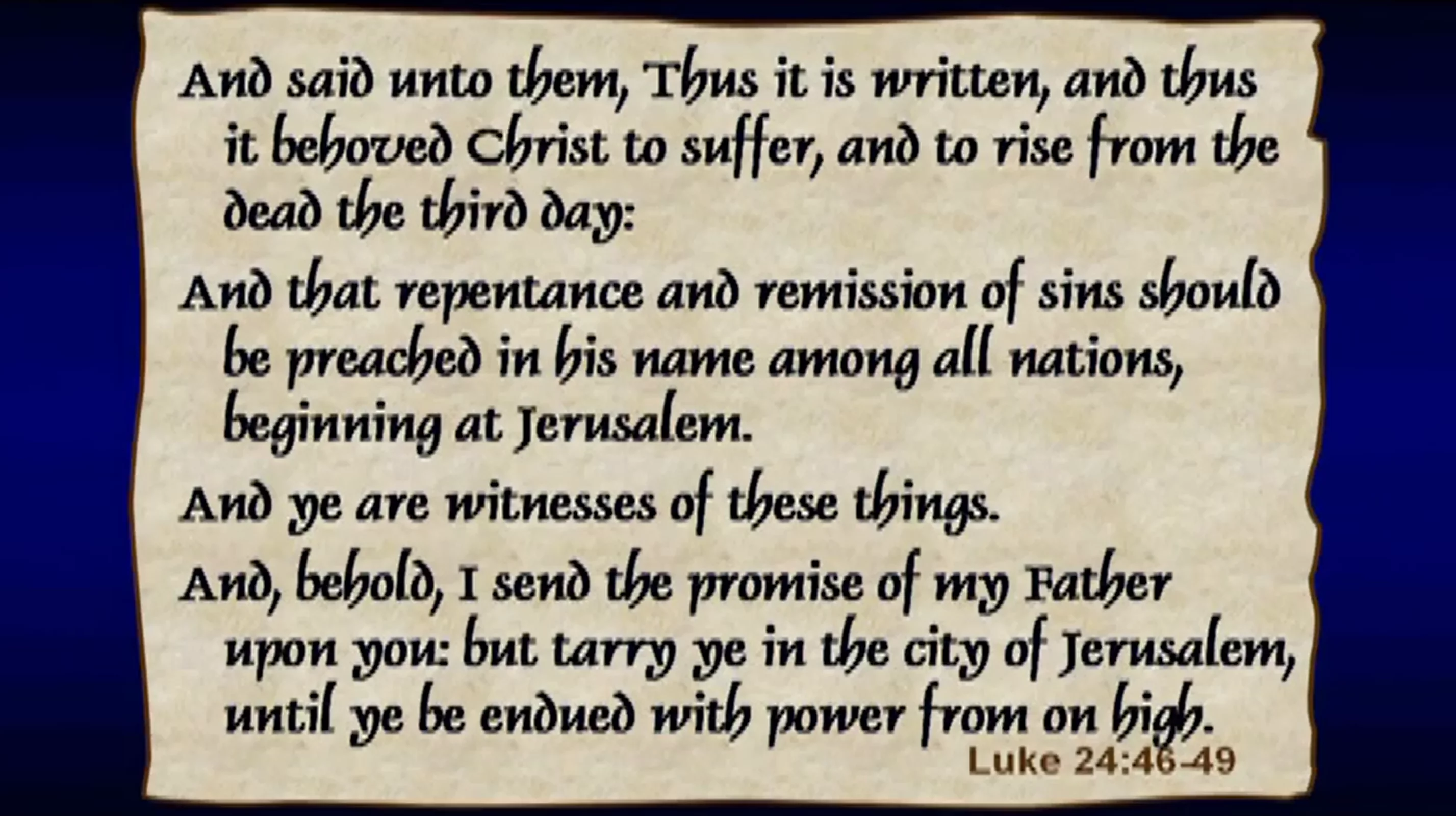
🟡 Luke 24:46-49
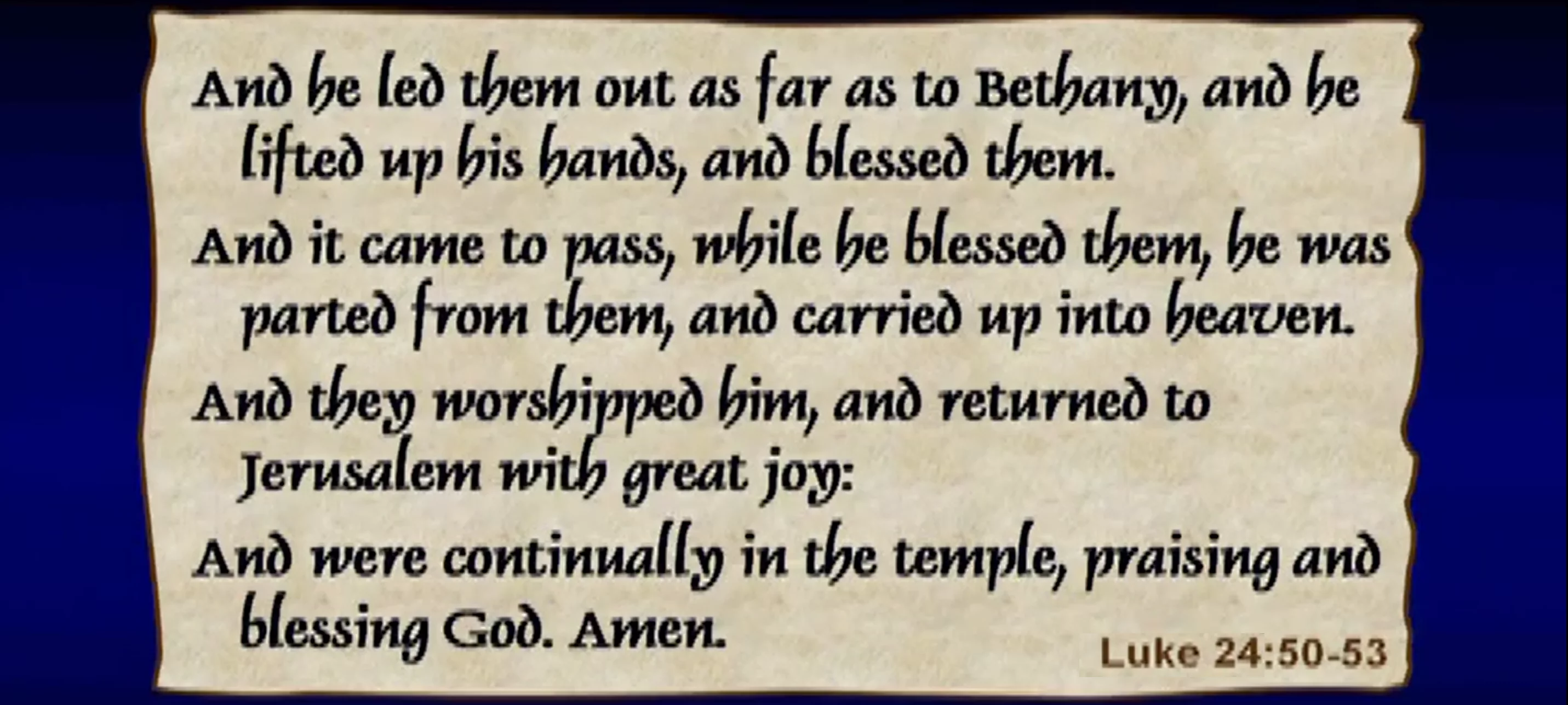
🟡 Luke 24:50-53 The Ascension (final verses of the Gospel of Luke)
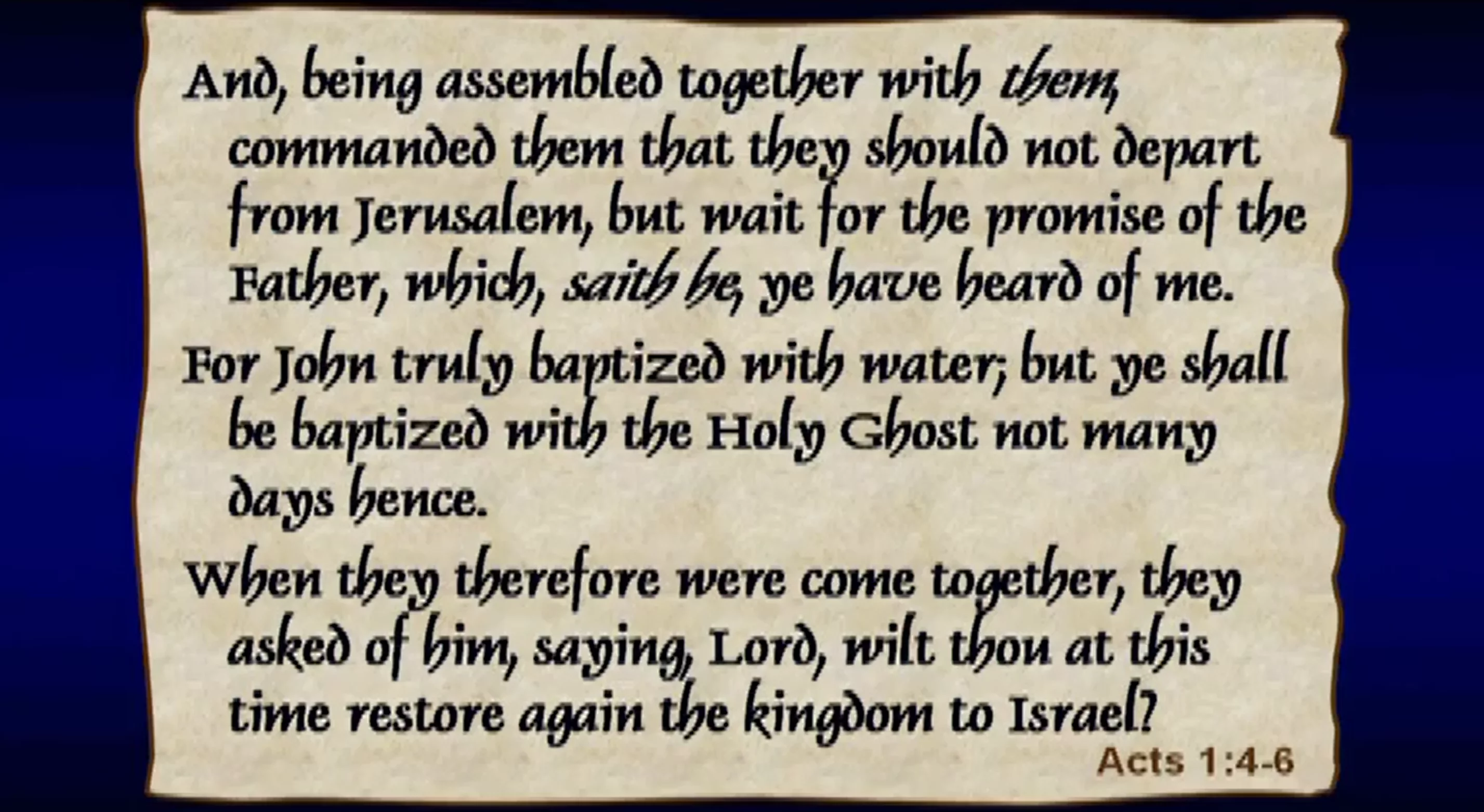
⚪️ Acts 1:4-6 (sequel to the Gospel of Luke)
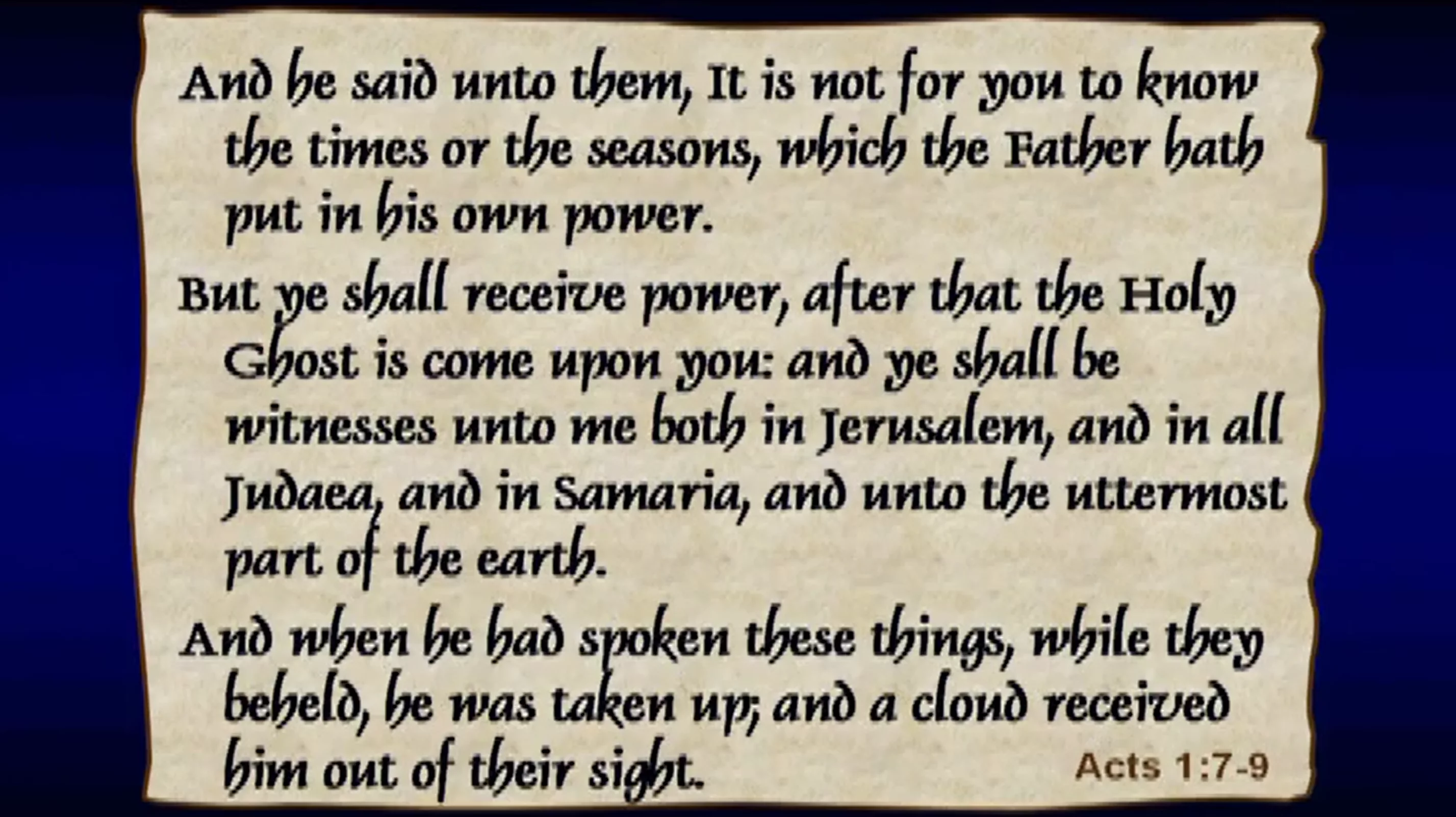
⚪️ Acts 1:7-9

- There are some scholars who believe the last 12 verses of Mark were not in the original and “were added later”. This has become a dispute among many
- Many Bibles have a footnote to that effect (excessively relying on the Alexandrian codices 4th century) and the writings of Westcott and Hort, et al.
- Westcott and Hort were Greek experts, but you wouldn’t trust them to teach your Sunday school class — they were not believers
- Yet it is now becoming increasingly understood that these 12 verses were expurgated from the Alexandrian codices and were in the original:
— Irenaeus, in 150 AD, quotes them in his commentary, as does Hypolatus in the 2nd century
— Syriac: the Peshitto (2nd century) and the Curetonian Syriac (3rd century) — older than any of the Greek manuscripts, both contain these 12 verses
— Latin versions: Jerome (382 AD), who had access to Greek versions no longer available, includes these 12 verses. The Vulgate was only a revision of the Vetus Itala (2nd century) and contains these 12 verses
— The Gothic Version (350 AD) contains them. The Egyptian Versions: the Memphitic (or Lower Egyptian) or “Coptic”, belongs to 4th or 5th century, contains them; as does the “Thebaic” (or Upper Egyptian), or “Sahidic” (3rd century)
— The Armenian (5th century), the Ethiopic (4th-7th century) and the Georgian (6th century) contain these

- Papias (~100 AD), v.18, Eusebius, Hist. Ecc. ííí, 39
- Justin Martyr (151 AD), v. 20, Apol. I.c.45
- Irenaeus (180 AD), v.19, Adv. Hoer. Lib.iii.c.x.
- Hippolytus (190-227 AD) vv.17-19, Lagarde’s ed., 1858, p.74
- Vincentius (256 AD), at Seventh Council of Carthage, held under Cyprian
- Acta Pilati (2nd cent), quotes vv.15-18, Tischendorf’s ed., 1853, pp.242, 351
- Apostolical Constitutions (3rd or 4th century) quotes vv.16-18
- Eusebius (325 AD) discusses these verses, quoted by Marinus from a lost part of his History
- Aphraates (337 AD) a Syrian bishop, quoted vv.16-18 in his first Homily, Dr. Wright’s ed., 1869, i., 21
- Ambrose (374-397 AD), Archbishop of Milan, freely quotes vv.15 four times, 16, 17, 18 three times and v.20 once
- Chrysostom (400 AD) refers to v.9; states that vv.19, 20 are “the end of the Gospel”
- Jerome (b.331, d.420) includes these 12 verses in his Latin translation, besides quoting vv.9 and 14 in his other writings
- Augustine (395-430 AD) attributes them to Mark, and indicates that they are freely read in the churches
- Nestorius (4th or 5th century) quotes v.20; and Cyril of Alexandria (430 AD) accepts the quotation
- Victor of Antioch (425 AD) confirms the opinion of Eusebius by referring personally to the very many MSS which he has seen with the 12 verses in them [Source: E. W. Bullinger, Companion Bible, Appendix 168]


- An automatic security monitor, watching over every single letter of the text, that doesn’t rust or wear out, running continually over several thousand years…
- Fingerprint signature of the Author
- Non-compromisable design
- [introductory presentation elements repeated (esp Dr. Ivan Panin) — see Matthew note s01]

Two ways to parse the last 12 verses (Mark 16:9-20):
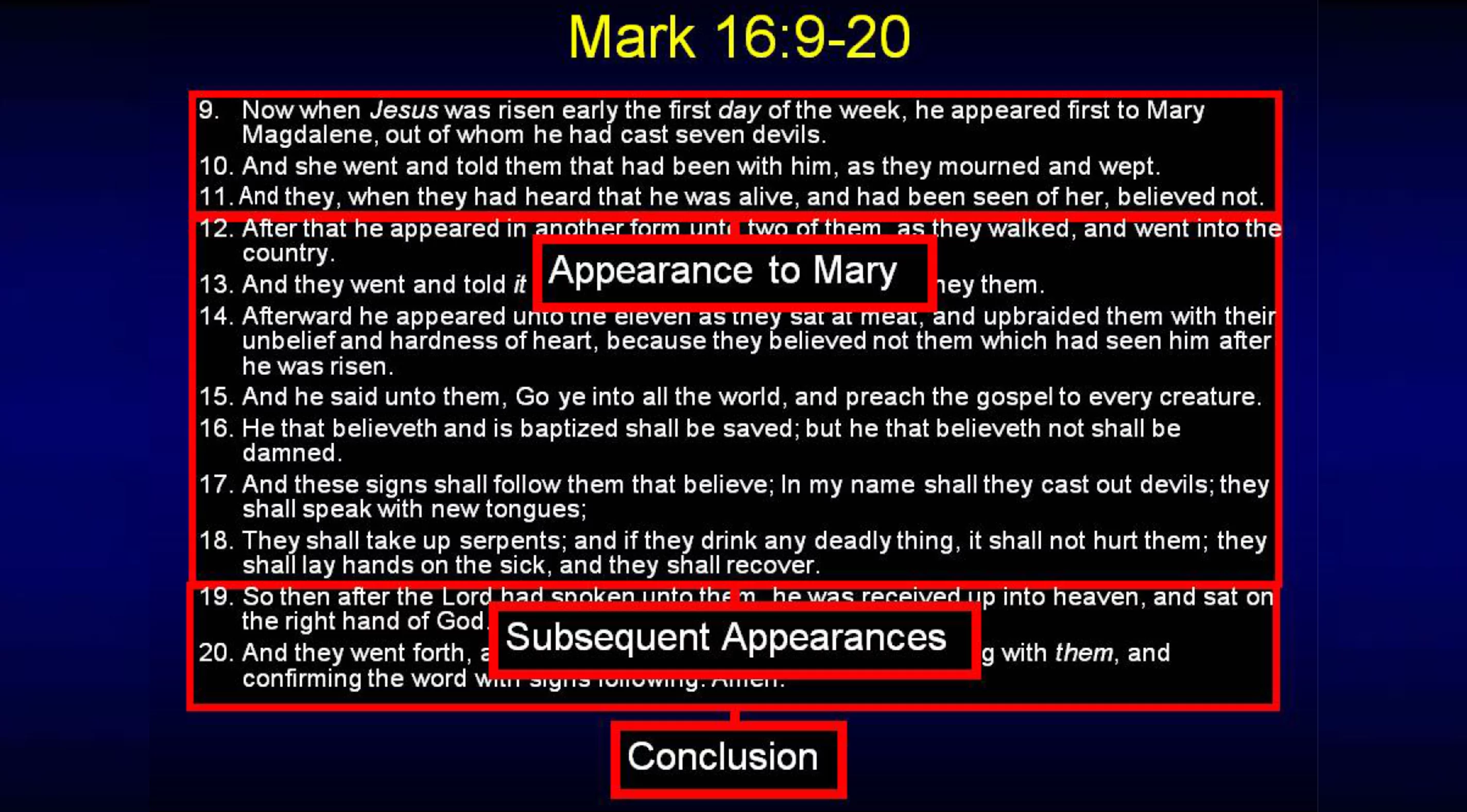
— Appearance to Mary (disciples disbelief) → vv. 9-11
— Subsequent appearances → vv. 12-18
— Conclusion → vv. 19-20
or:
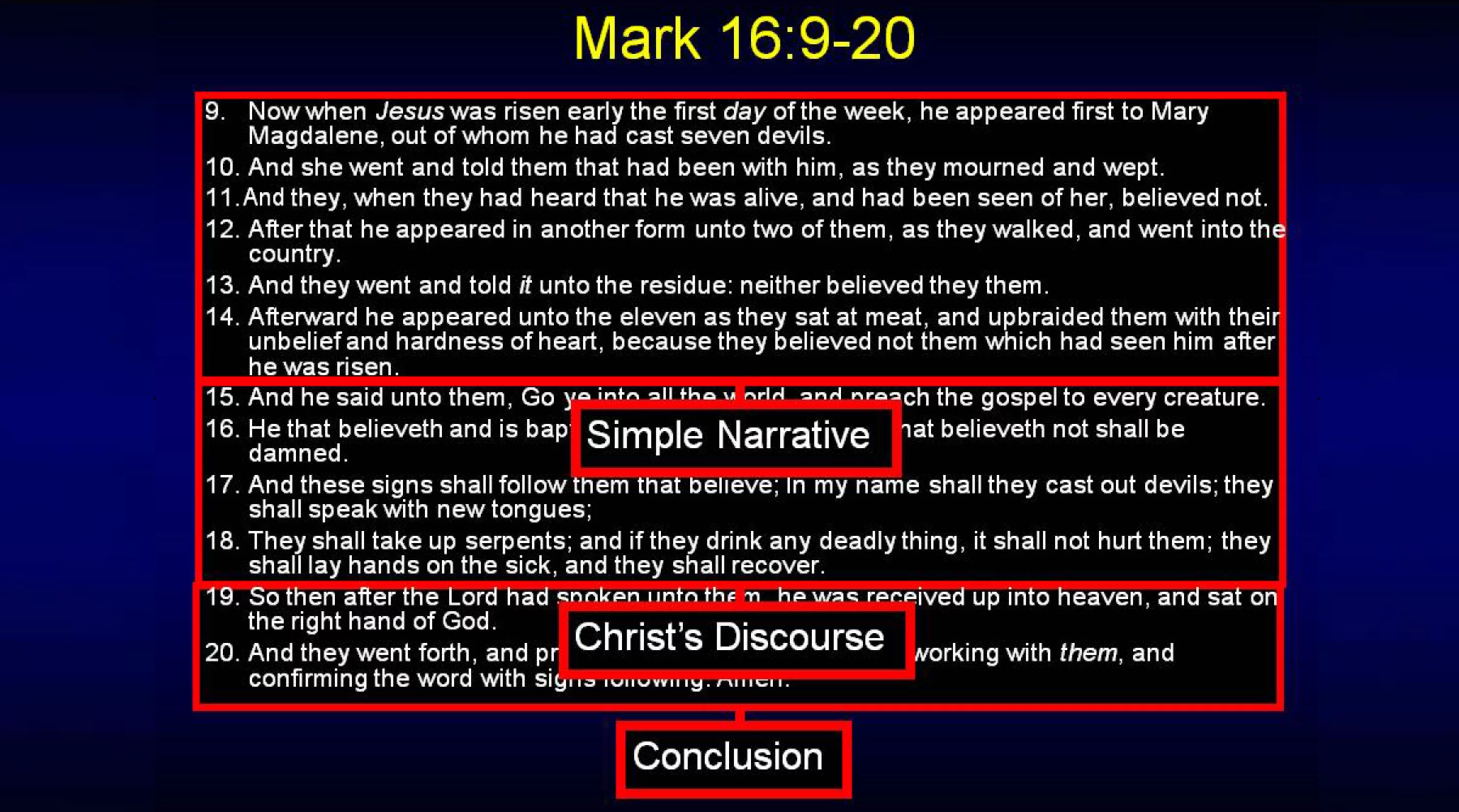
— Simple narrative → vv. 9-14
— Christ’s discourse → vv.15-18
— Conclusion → vv. 19-20
Heptadic analysis of the last 12 verses:
- Words → 175 (7 x 25)
- Vocabulary → 98 (7 x 7 x 2)
- Letters → 553 (7 x 79)
- Vowels → 294 (7 x 42)
- Consonants → 259 (7 x 37)
Vocabulary:
- Total Vocabulary → 98 (7 x 14)
- Found before in Mark → 84 (7 x 12)
- Only here → 14 (7 x 2)
- Used in Lord’s address → 42 (7 x 6)
- Not part of His vocabulary → 56 (7 x 8)
Words:
- Words, total → 175 (7 x 25)
- Address of the Lord → 56 (7 x 8)
- Rest of the passage → 119 (7 x 17)
- vv.9-11 → 35 (7 x 5)
- vv.12-18 → 105 (7 x 15)
- v.12 → 14 (7 x 2)
- vv.13-15 → 35 (7 x 5)
- vv.16-18 → 56 (7 x 8)
- vv.19-20 → 35 (7 x 5)
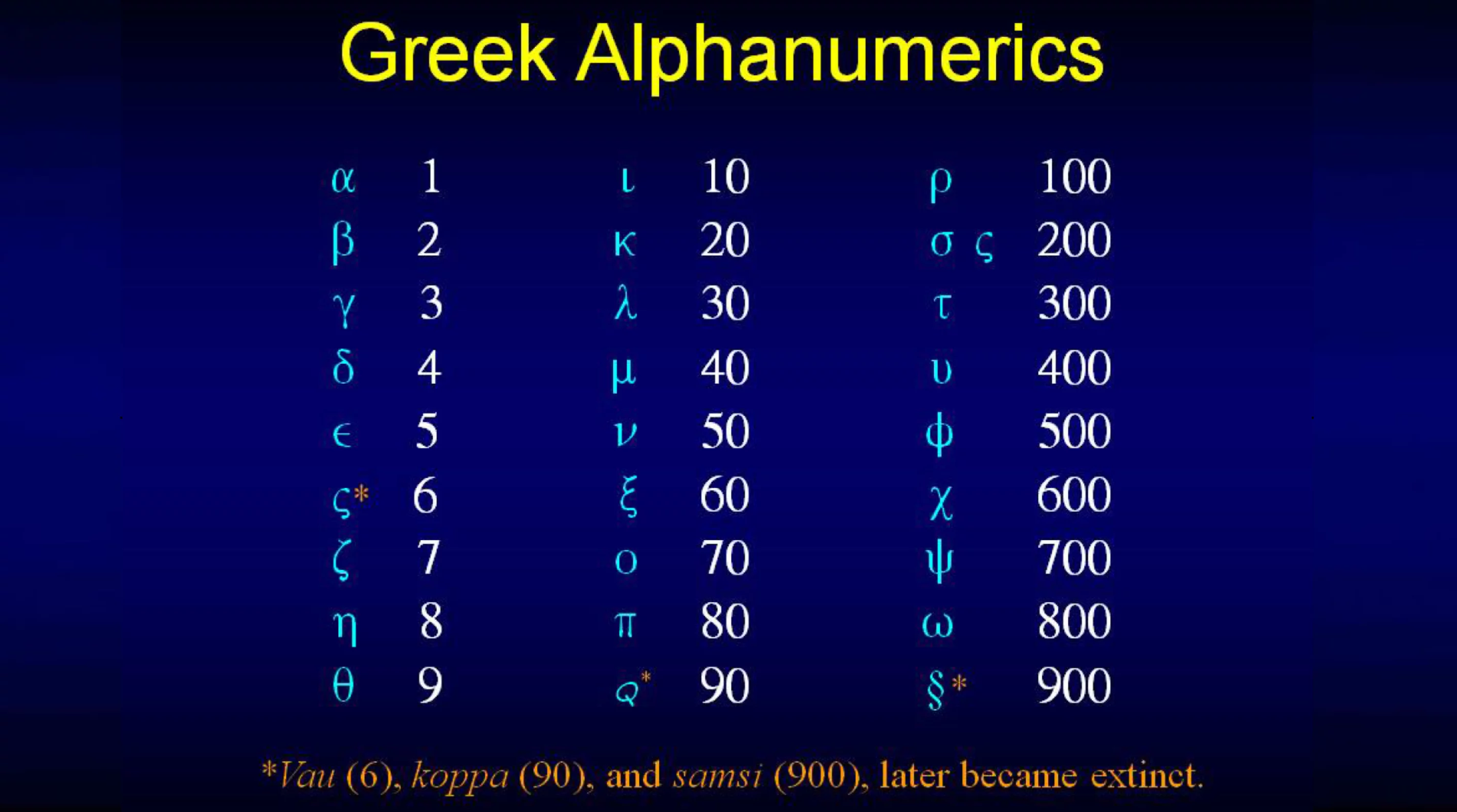
Numerical (Gematrical) Values:
- Total → 106,663 (7 x 14,809)
- vv.9-11 → 17,213 (7 x 2,459)
- v.9 → 11,795 (7 x 1,685)
- v.10 → 5,418 (7 x 774)
- 1st word → 98 (7 x 14)
- Middle → 4,529 (7 x 647)
- Last word → 791 (7 x 113)
- v.11 → 11,795 (7 x 1,685)
- vv.12-20 → 86,450 (7 x 12,350)
Vocabulary:
- Total → 98 (7 x 14)
- Not before in Mark → 14 (7 x 2)
- Found later in NT → 7 (7 x 1)
- Occurrences → 35 (7 x 5)
- Numeric value → 8,246 (7 x 1,178)
- v.20 vocabulary → 14 (7 x 2)
- found previously → 7 (7 x 1)
- found only here → 7 (7 x 1)
Word Forms:
- Total Forms → 133 (7 x 19)
- Value of total → 89,663 (7 x 12,809)
- Occur once → 112 (7 x 16)
- Occurring more than once → 21 (7 x 3)
- Occurring 63 times → 63 (7 x 9)
- Total Occurrences → 112 + 63 = 175 (7 x 25)
- Total Value → 103,663 (7 x 14,809)
One example of a word: θανάσιμος (thanasimos) Deadly, fatal
- Not found elsewhere in New Testament
— has a numeric value of 581 (7 x 83)
- Is preceded
— in the vocabulary by 42 (7 x 6) words
— in the passage itself by 126 (7 x 18) words

Chance of all 75 heptadic constraints being satisfied accidentally — impossible!

Some heptadic features found elsewhere in the Bible:
- The New Testament consists of 27 books
Terminations: each book begins and ends with a word: 2 x 27 = 54 words
— Total vocabulary → 28 (7 x 4)
— in the Gospels → 7 (7 x 1)
— Total gematrical value → 46,949 (7 x 6707)
— Value of the shortest word, ό , 70 (7 x 10)
— Value of longest word, ἀποκάλυψις (apokálypsis), 1512 (7 x 6 x 6 x 6) (even 666 is interesting)
- Unique Vocabularies
— Vocabulary unique to Matthew occurs 42 times (7 x 6) with 126 letters (7 x 18)
— This is not only true for the Gospel of Matthew, but also for the Gospel of Mark, the Gospel of Luke, the Gospel of John, epistle of James, epistles of Peter, epistle of Jude and epistles of Paul… all 8!
— That would be impossible to arrange even if authors colluded with each other with such an objective
Bible is absolutely breath taking. The more we study it, the more we discover that it was created by the divine design, not only in the content, but also in its structure.
So this ends our review of the Gospel of Mark. For a more detailed review of the final week, you may also want to review the equivalent passages in our exposition of the Gospel of Matthew, which also draws heavily from the other Gospel accounts
* * *
Legends of Glory - Larry Groupe | Network Music
https://www.youtube.com/watch?v=H83gvVMHpPw
Bibliography
Barnhouse, Donald Grey, Mark: The Servant Gospel, Scripture Press, Wheaton IL, 1988.
Bullinger, E.W., The Companion Bible, Zondervan Bible Publishers, Grand Rapids MI, 1964.
Deissmann, Adolf, Light from the Ancient East, trans. L. R. M. Strachan, Hendrickson Publishers, 1995.
Hughes, R. Kent, Mark (2 vols) Good News Publishers, Westchester IL, 1989.
Ironside, H. A., Mark, Loizeaux Brothers, Inc., Neptune NJ, 1948.
McGee, J. Vernon, Thru the Bible Commentary, electronic ed. Thomas Nelson, Nashville TN, 1997, c1981.
McKenna, David L., Mark, Word Books, Waco TX, 1982.
Moulton, J. H. and Milligan, George, The Vocabulary of the Greek Testament, Wm. B. Eerdmans Publishing Company, reprinted by Hendricksen,1997.
Panin, Ivan (Various works), Bible Numerics, 81 Bayview Ridge, Toronto ON Canada M2L 1E3.
Stedman, Ray C., Expository Studies in Mark, (2 vols), Word Books, Waco TX, 1976.
The Zondervan Pictorial Encyclopedia of the Bible, Zondervan Publishing House, Grand Rapids MI, 1975.
Unger, Merrill, Biblical Demonology, Kregel Publications, 1994.
Vine, Jerry, Exploring the Gospels: Mark, Loizeaux Brothers, Inc., Neptune NJ, 1990.
Wiersbe, Warren W., Be Diligent, and The Bible Exposition Commentary (2 Vols), Scripture Press, Wheaton IL, 1989.