s02 (Ch 2) Birth of Jesus & His Boyhood (studied 18-Jan-2026)
The Book of Luke with Dr. Chuck Missler
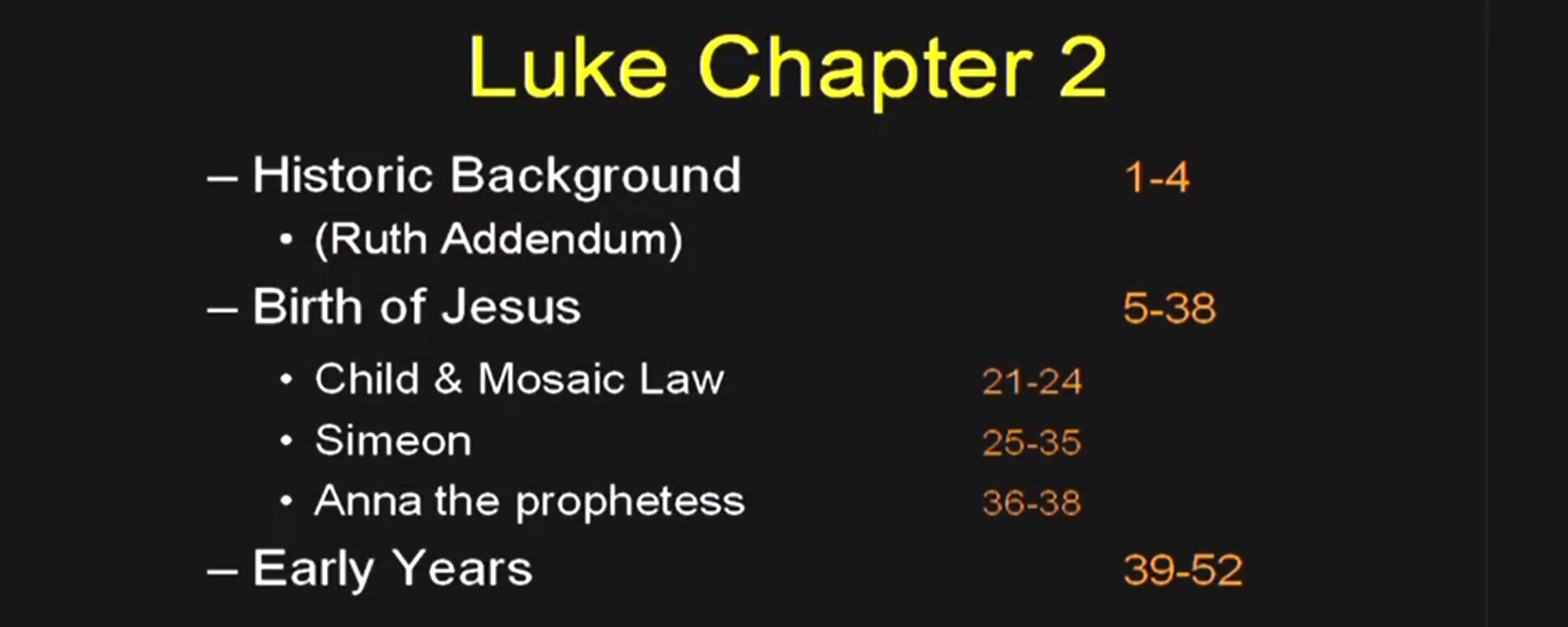
The subsections of Chapter 2 (per NASB/LSB/MEV) are:

Luke 2:1 Jesus Is Born in Bethlehem

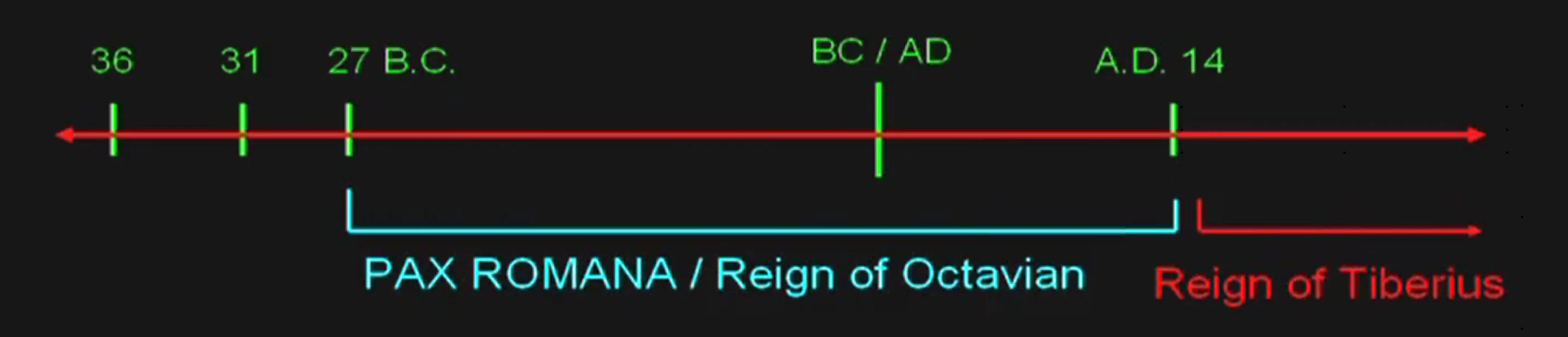
- Octavian, who is known to us as Caesar Augustus was:
— the great nephew of Julius Caesar
— named chief heir and ruled in a triumvirate with Mark Antony and Lepidus
► Lepidus fell from power in 36 BC
► Antony’s involvement with Cleopatra of Egypt brought him into conflict with Octavian
► In 31 BC, Octavian beat Antony at Actium
— Octavian was finally acknowledged as Augustus Caesar by the Senate in 27 BC
— They gave him the Greek name Sebastos (Latin, Augustus)
- Pax Romana for 40 years:
— Octavian’s reign was known for its peaceful character as his accession ended a long period of civil strife
— The gates of the Temple of Janus stayed closed (the Temple of Janus stood in the Roman Forum. It was a small temple with a statue of Janus, the two-faced god of boundaries and beginnings inside. Its doors were known as the "Gates of Janus", which were closed in times of peace and opened in times of war)
— Octavian died in 14 AD and was succeeded by Tiberius, the ruler of Rome during Jesus’ ministry
- Caesar was ruling but God was in charge:
— He used Caesar’s edict to get Mary and Joseph to move 80 miles to fulfill the prophetic plan of God
- Mary said earlier: “Be it unto me according to Thy word” (Luke 1:38)
— From then on Mary’s life would be a fulfillment of divine prophecy
- The Messiah would be:
— human, not an angel → Gen 3:15, Heb 2:16
— Jew, not a Gentile → Gen 12:1-2, Num 24:17
— of the tribe of Judah → Gen 49:10
— of the family of David → 2 Sam 7:1-17
— born of a virgin → Isa 7:14
— born in Bethlehem → Micah 5:2
- 🟥 Jer 1:12 (NASB)

- All of history is His Story
- God is very precise
— There are many specific prophecies in which: God says what He means and means what He says
Luke 2:2

- (This verse is in parentheses in KJV)
- “…Cyrenius” = the Greek form of Quirinus (Kyrenios)
— his full name was Publius Sulpicius Quirinus
— he had a noteworthy career as an able administrator and soldier
— he was appointed counsel in 12 BC and
— was victorious in south Galatia
- Recent historical investigation has proved that Quirinus was governor of Cilicia as early as 4 BC, which was annexed to Syria at the time of our Lord’s birth
— Cilicia, which he ruled, being a province of Syria, resulted in his being called the governor, which he was de jure (holding that position by legal right), of Syria
— A decade later he was appointed as legate (a representative, envoy or ambassador) over Syria for a second time in 6-9 AD after Herod’s son Archelaus was deposed
- During his initial tenure of office, at the time of our Lord’s birth, a “taxing” (a registration or census for taxing) of the people was “first made”; i.e., it was made for the first time under his administration
— Books who attack Luke over this issue haven’t dug deeply enough, but quibble anyway
— Of course, no historical (or otherwise) error here. Luke knew very well what he was talking about
Luke 2:3

- Rome took a census every 14 years for military and tax purposes
- No Roman administrator would require this in winter when much of the empire was impassable (Matt 24:20)

Luke 2:4
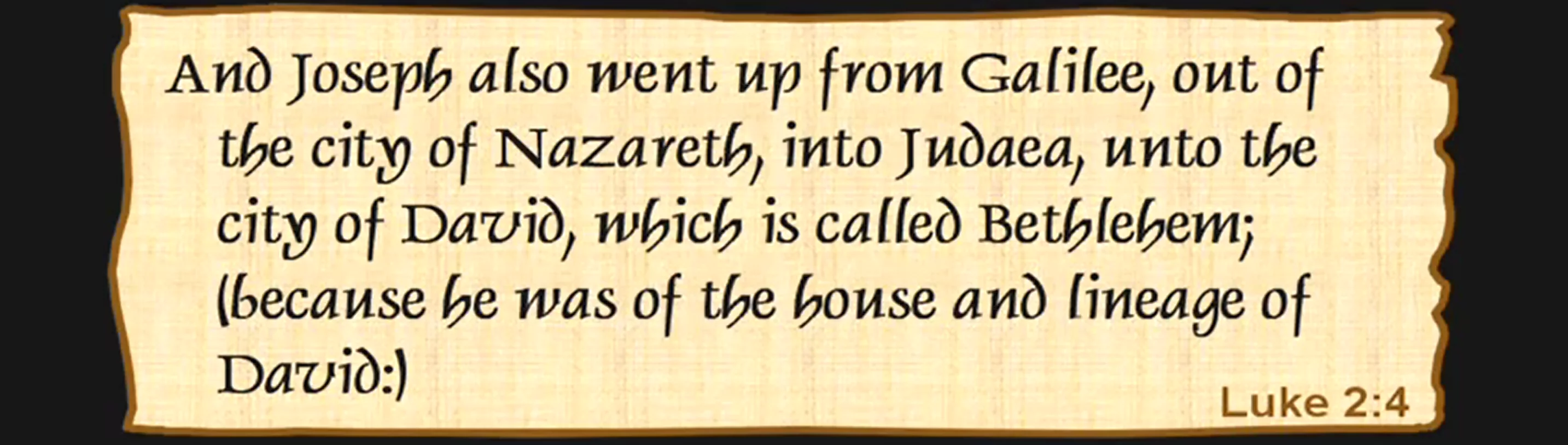
- “…unto the city of David, which is called Beth-lehem;” — This surprises many people because we think of the city of David as Ophel, the southern part of the Mt. Moriah, an appendage to Jerusalem. The answer is in the Book of Ruth
- Questions:
— How did Bethlehem become the city of David? (that is what the Book of Ruth is all about)
— Why not Ophel at the base of Mt. Moriah?
— Isn’t Jerusalem the City of David? (it is, but in a different sense)
- Some ostensible paradoxes:
— Judah was the Royal Tribe (Gen 49:10)
— How could Samuel anoint Saul from the tribe of Benjamin? (1 Sam 15:1)
— Because David wasn’t ready yet!
— David was prophesied in the Torah and also during the days of the Judges: Ruth 4:12

- Key points from the Book of Ruth
— How could Boaz marry a Moabitess? (that was against the Torah)
— The Law legally forbade intermarriage (Deut 7:2-3)—especially to a Moabite (Deut 23:3)
— Boaz’s mother was Rahab the harlot (Matt 1:5)! (cf. Josh 2)
— Law shut Ruth out, but grace took her in (Rom 8:3-4) (God overrides the Law in His sovereignty)
- Prophetic Points in the Book of Ruth:
— Boaz is a type of a kinsman redeemer
— Naomi is a type of Israel
— Ruth, the gentile, is taken as a wife (she is the Gentile bride of the kinsman redeemer and we start to realize that God is doing something much deeper than just this colorful, elegant, little love story)
— Naomi meets Boaz through Ruth
— Ruth learns the ways from Naomi
— Ruth is at the feet of Boaz in threshing floor scene
- Prophetic Blessing / Marriage Toast (Ruth 4:11):
— Famous in Bethlehem (Micah 5:2, Ruth 4:12)
— House like Perez? (Gen 38:6-29)
— Bastard ineligible for inheritance until 10th generation (Deut 23:2)
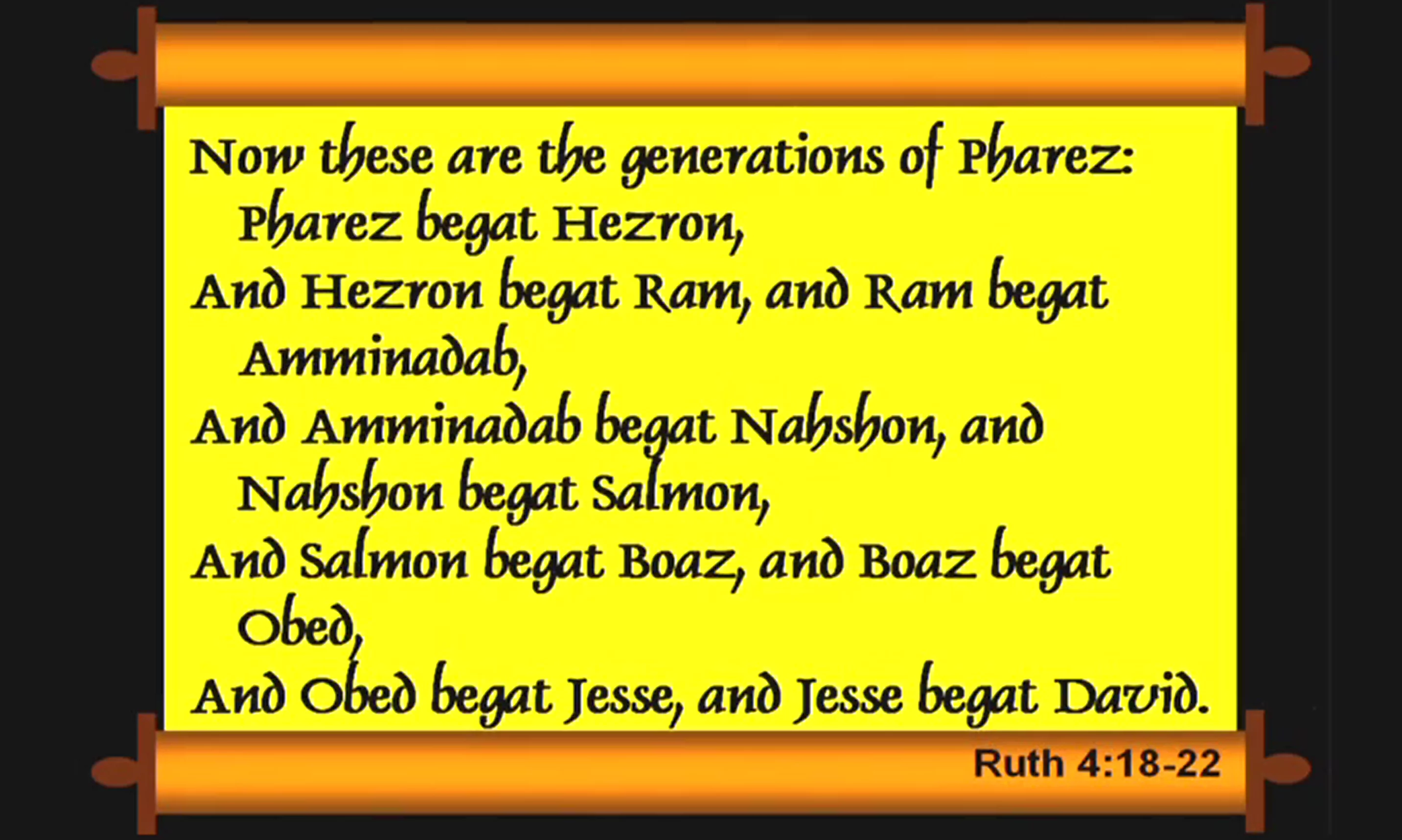
— The genealogy at the end of the book of Ruth shows David at the 10th generation
🔑 Ruth 4:18-22 — Some of the lineage was yet future!

- Much fanciful and contrived “codes” have been popularized in recent books:
— many are too bizarre to be accepted, yet
— too impressive to be ignored
- Professional competence in cryptology is essential in making an adequate evaluation
- Genesis begins the story of Joseph in Genesis 37, which continues to the end in Genesis 50
— But in Genesis 38 we encounter a sordid episode which is a digression to the story of Joseph
— Judah is tricked into having sex with his daughter-in-law Tamar which gives birth to two sons out of wedlock
— (Why is this even recorded here?)
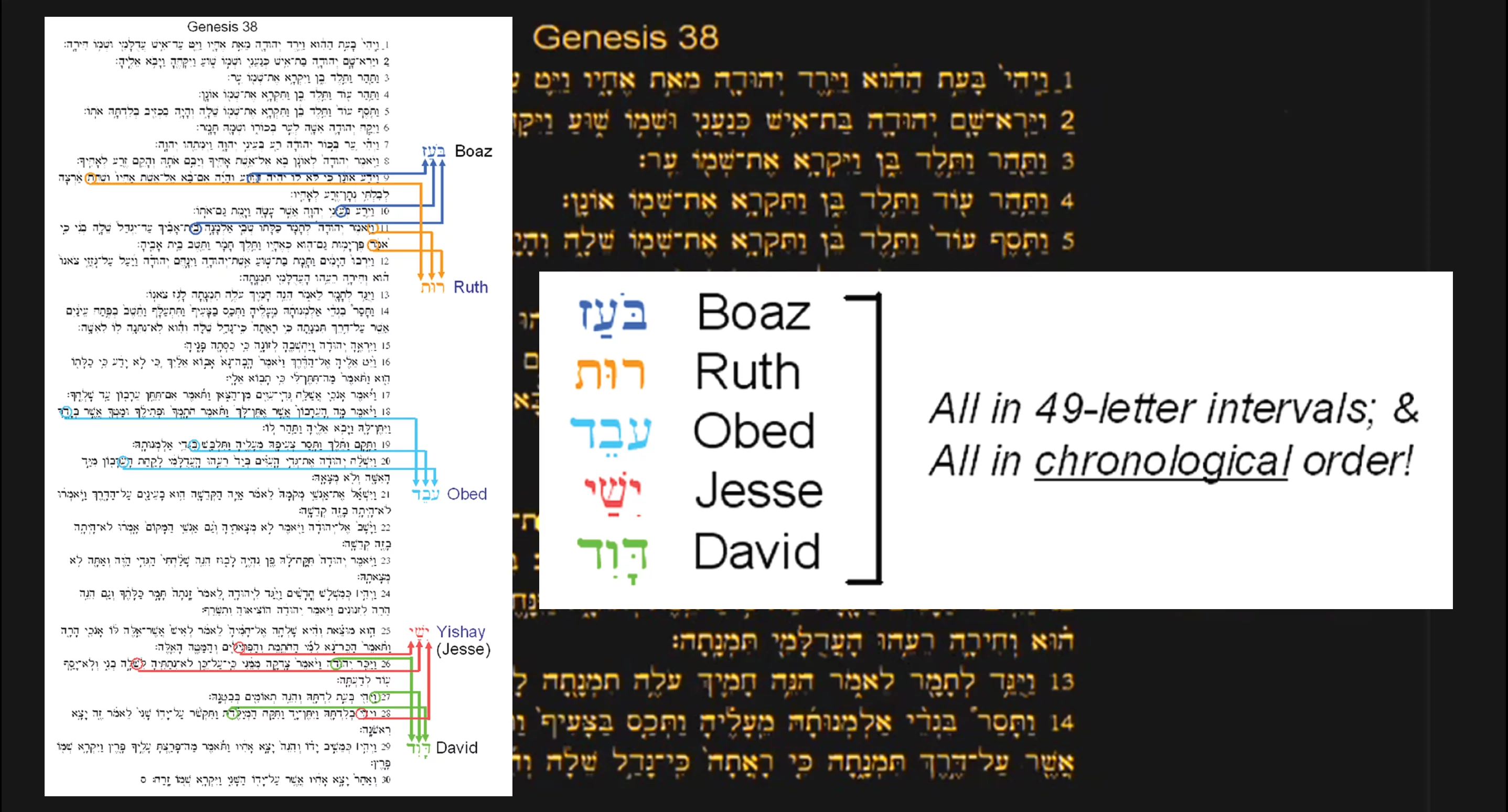
- [Source: Daniel Michelson, “Codes in the Torah”, B‘Or Ha’Torah, Number 6, SHAMIR, Association of Religious Professionals from the Soviet Union and Eastern Europe in Israel, Jerusalem Israel, 1987]
- ELS is not a good way to encrypt something, but it is an excellent way to authenticate something (the fingerprint of the Author) in terms of its Source — obviously, the supernatural Source
- Messianic Genealogy (also in Ch 1 note, Luke 1:35)
— The most distinguished Family Tree in history
— Encrypted in Torah (Gen 38)
— Prophesied in the time of the Judges (Ruth 4)
— Evades the blood curse on Jeconiah (Jer 22:30)
— Fulfills the Virgin Birth (Gen 3:15, Isa 7:14, Ps 69, Ps 110)

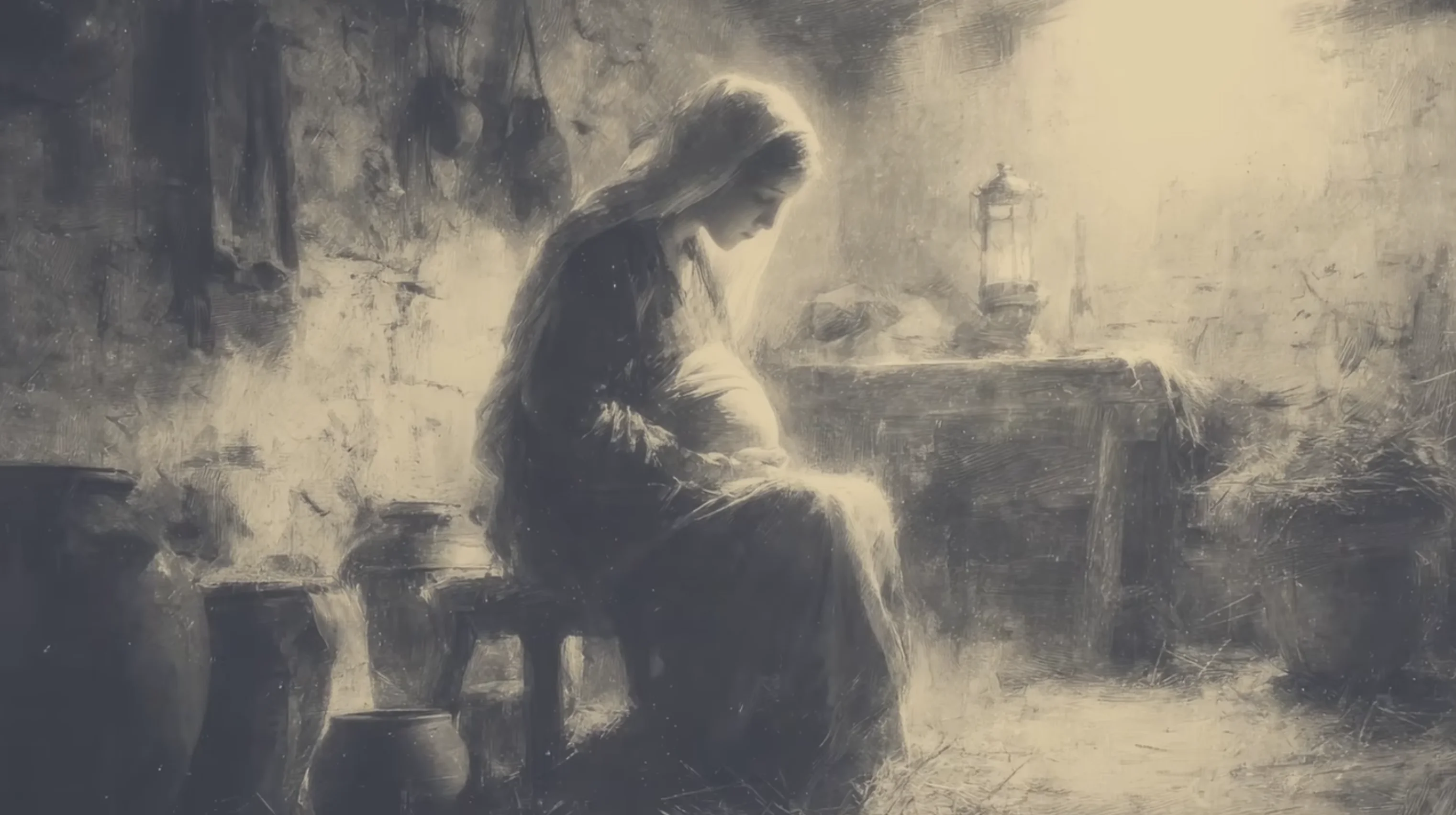
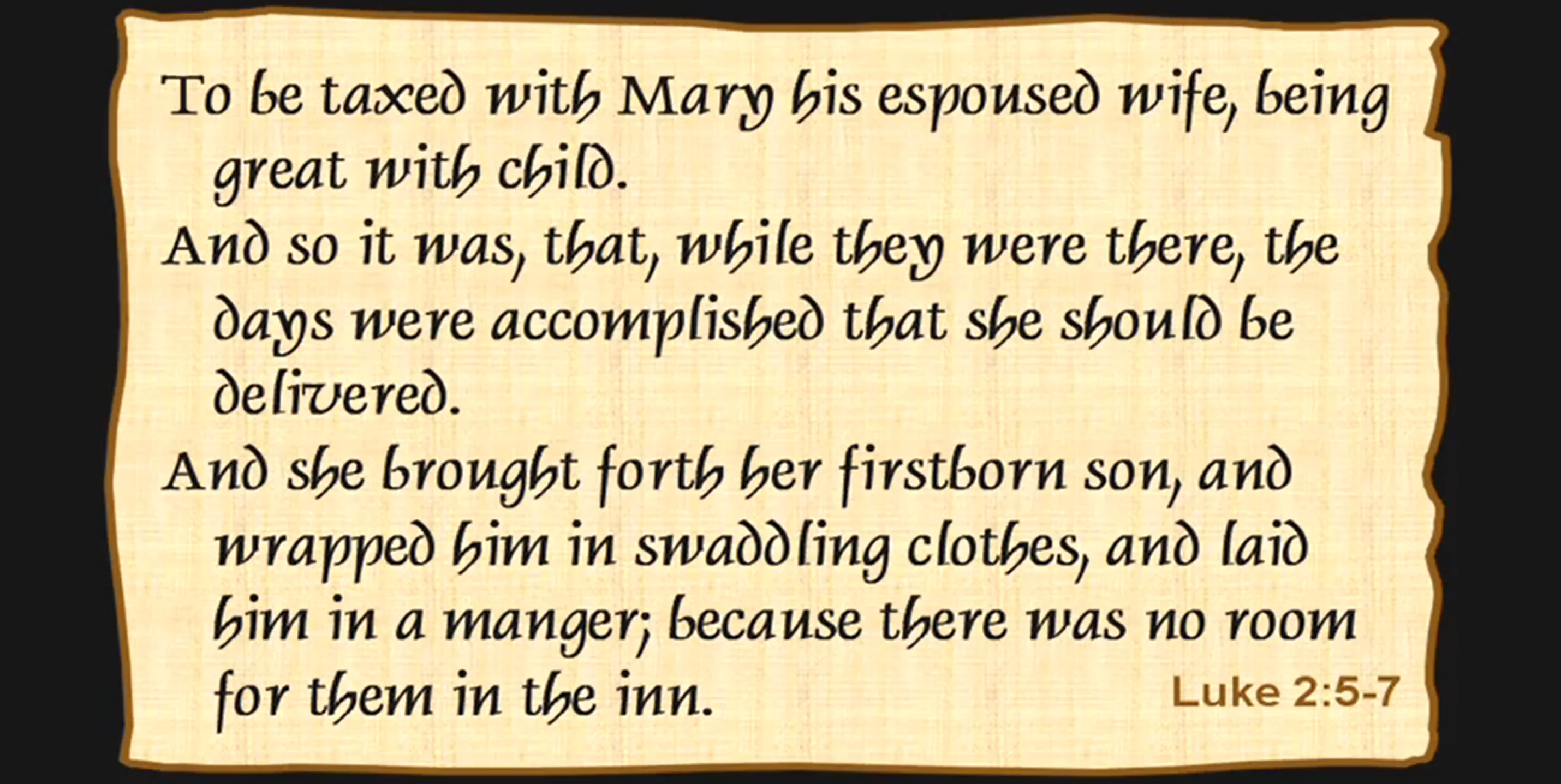
Luke 2:5-7
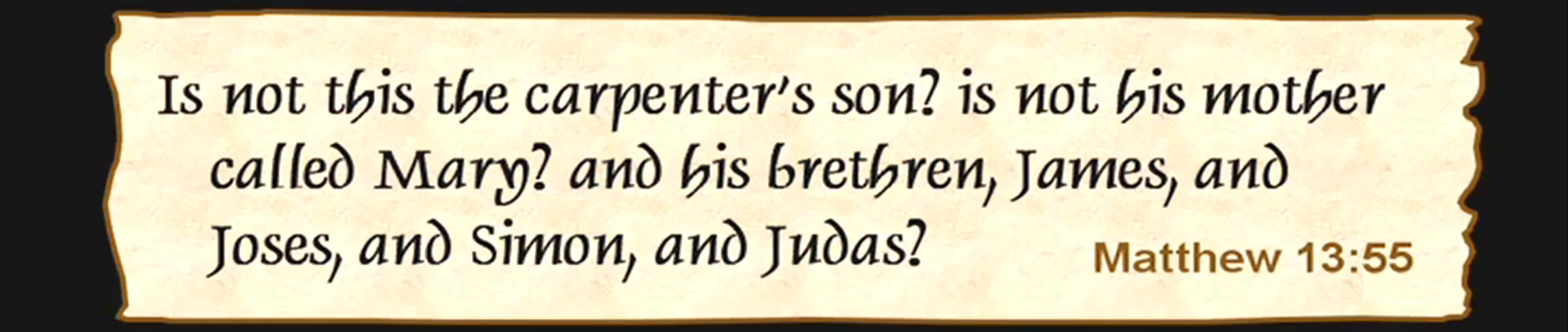
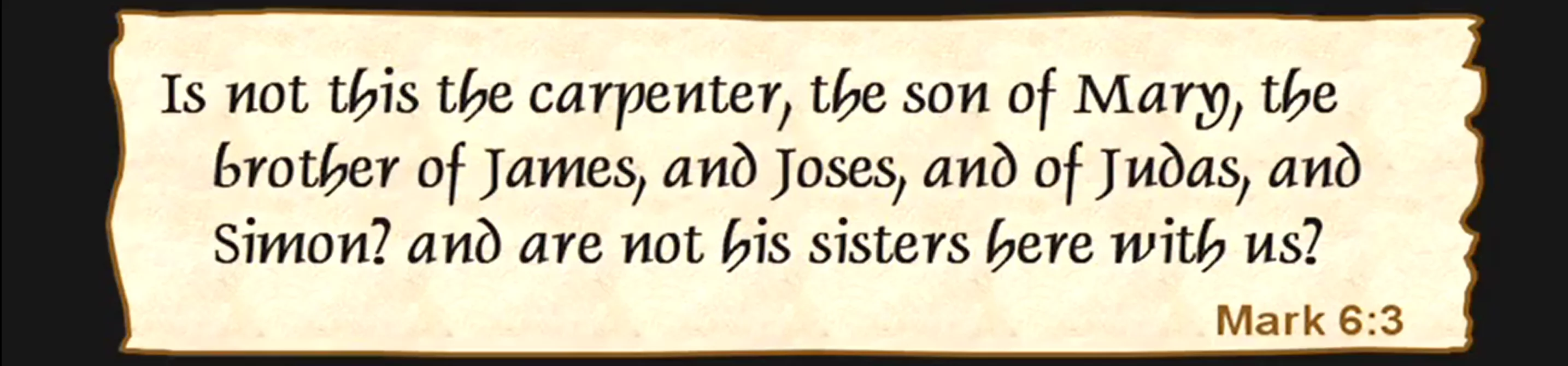
- Apparently a family of at least seven children: 4 brothers and at least 2, maybe more, sisters (that’s in the text)
- Jesus, also, was apparently viewed as having taken up Joseph’s trade as a “carpenter”
- “…swaddling clothes” — Infants were often wrapped in strips of cloth to keep their limbs straight and unharmed
— This was also the way the shepherds would recognize the infant
- “…laid him in a manger” — The King of the Universe, the Creator Himself, born in a stable
- “Manger” — φάτνη (phatné): This is translated “stall” in Luke 13:15, and can mean crib, stall or feeding trough
— The traditional stone feeding trough in a cave is supported by common practice in the region
- He was born of a woman so that we could be “born again”
— “He that is born once, dies twice; he that is born twice dies but once” —Martin Luther (cf. 2 Cor 8:9)

Luke 2:8 The Shepherds and the Angels, MEV

- “…shepherds abiding in the field” — The flocks were in open fields: thus, probably no later than October
- Why shepherds?
— They were the outcasts in Israel
— Their work made them ceremonially unclean
— They were kept away from the temple weeks at a time (1 Cor 1:26-29, Luke 1:51-53)
— Speculation: The shepherds were in the fields of Ruth and Boaz?
Luke 2:9

- The Greek φόβον μέγαν (phobon megan) → “they feared a great fear” stresses the intensity of this fear
Luke 2:10

- “All people” — Luke, a gentile, emphasizes that the Savior would be for all mankind
Luke 2:11

- Christ is a title, Χριστός (Christos), the Greek equivalent of the Hebrew word מָשִׁיחַ(Mâšîyach) - Meshiach (or Mashiach) — Messiah, which means “the anointed one” (Anointed as King)
Cf. 1 Sam 16:1-13, 1 Sam 24:6, 2 Sam 19:21, 1 Kgs 19:15 (In the ISV, “Christ” does not appear: “Messiah” instead)
Luke 2:12-14
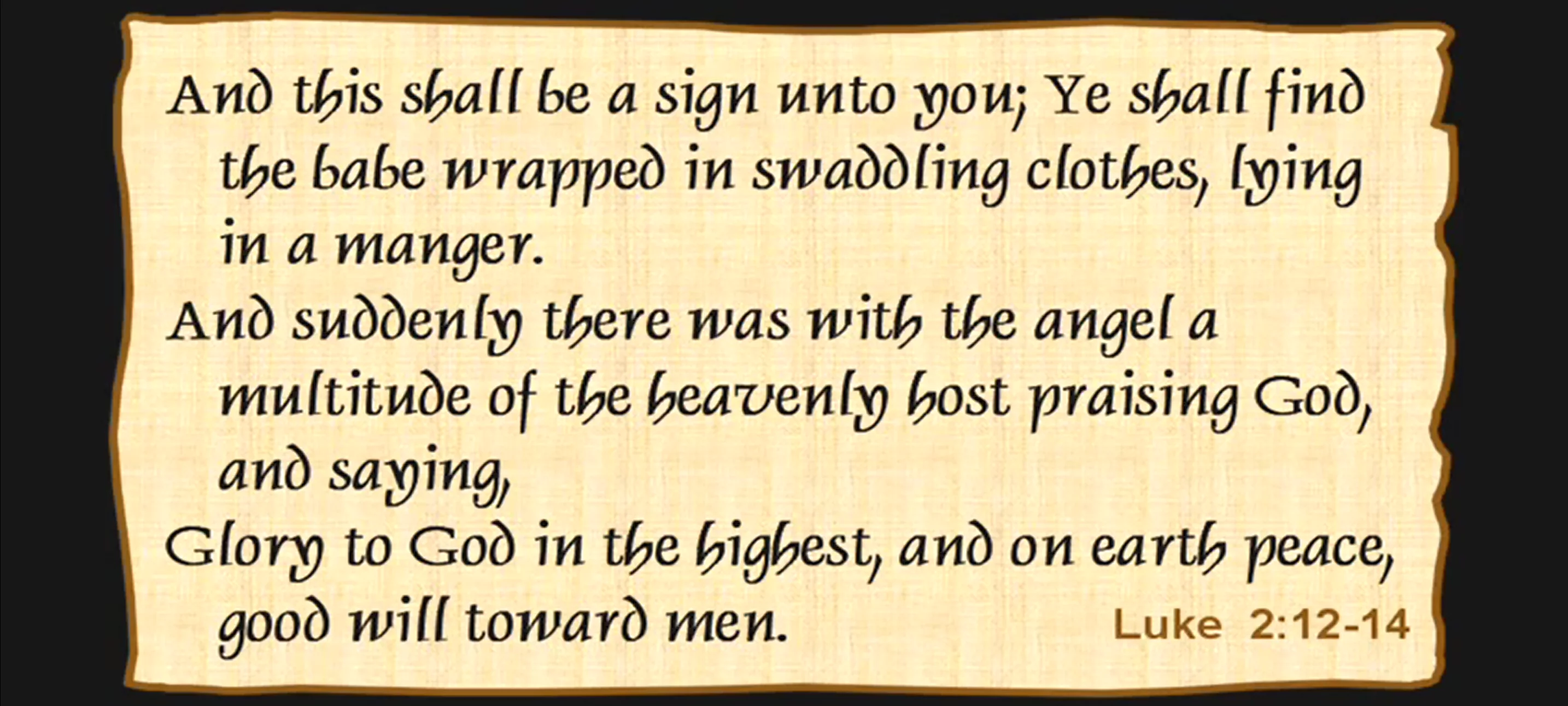
- Verse 14 is a clumsy translation in KJV and MEV: The whole purpose of the plan of salvation is “glory to God.”
(Eph 1:6, Eph 1:12, Eph 1:14)
— (The irony is that all that Satan is doing will ultimately glorify God)
- God’s glory had dwelt:
— in the Tabernacle (Ex 40:34) and
— in the Temple (2 Chr 7:1-3),
— but had departed because of the nation’s sin (1 Sam 4:21, Ezek 8:4, 9:3, 10:4, 18, 11:22-23)
- The traditional translation of Luke 2:14 is not accurate. Better:
— “…and on earth peace to men of good will.” or
— “…on earth peace to men on whom His favor rests.”
— “…And on earth peace among men with whom He is pleased.” (NASB)
- God’s peace is not given to those who have good will, but to those who are recipients of God’s good will or favor (not everybody chooses to receive God’s good will, is the point)
- Pax Romana had been in effect since 27 BC, but the absence of war doesn’t guarantee the presence of peace
- The Stoic philosopher Epictetus said:
— “While the emperor may give peace from war on land and sea, he is unable to give peace from passion, grief, and envy. He cannot give peace of heart for which man yearns more than even for outward peace.”
Luke 2:15
- The shepherds’ attitude contrasts sharply with that of the religious leaders (Matt 2:5):
— both knew where the Baby was to be born, but only the shepherds went to confirm it for themselves
Luke 2:16

- “…found” — ἀνευρίσκω (aneuriskó): “found after a search”
- The “Wise men” that Matthew talks about came sometime later within next year or two (Matt 2:1-12)
- The theme of amazement at the proclamation of the Messiah runs throughout the Book of Luke
— The verb θαυμάζω (thaumazó) — “to be amazed, to wonder, to be astonished” occurs in Luke 1:21, 63, 2:18, 33, 4:22, 8:25, 9:43, 11:14, 38, 20:26, 24:12, 41 (that’s the human side, the humanity of Luke’s Gospel that comes across)
Luke 2:17-19
Luke 2:20

- Jesus will be confronted by three different people:
1) Moses, through the Law (the Law is used five times in Luke 2:21-40, cf. Gal 4:1-7)
2) Simeon
3) Anna the prophetess
Luke 2:21 Jesus Presented at the Temple
- “…his name was called JESUS” — both Joseph and Mary had been told separately to name the child “Jesus”
(Matt 1:21, Luke 1:31)
- “Jesus” is the Greek form of the Hebrew name Yeshua (Joshua) — “Yahweh is salvation” (Matt 1:21)
- “…circumcising of the child” — Circumcision was required by the Law (Lev 12:3)

- “…eight days”:
— Vitamin K, the clotting element, is not formed until the 5th to the 7th day
— Prothrombin, also necessary,
••• on the 3rd day: 30% of normal
••••••••••• and by the 8th day: peaks at 110%,
•••••••••• then levels off at 100% of normal
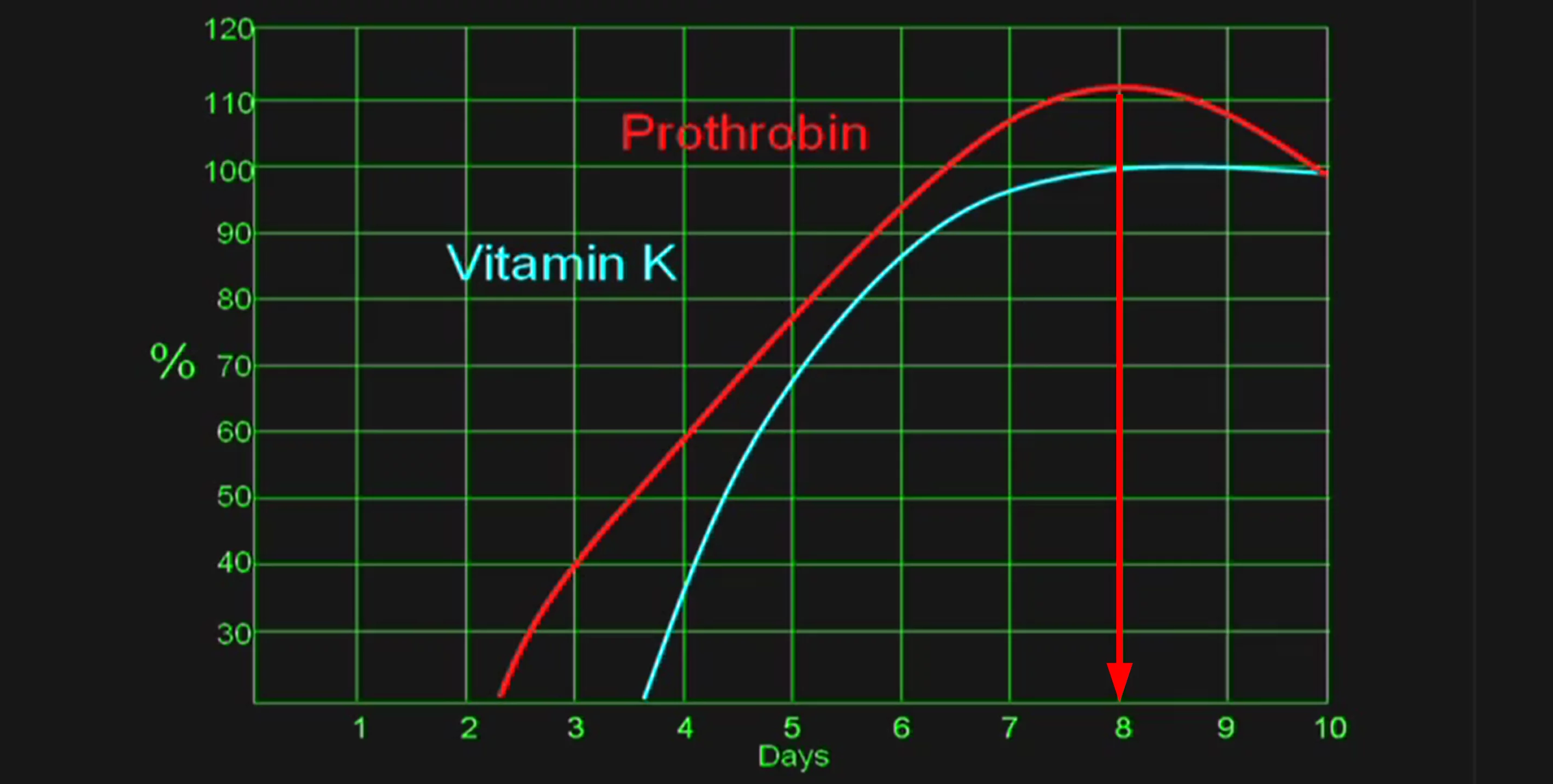
- How did Moses know? Trial and error? (Gen 17:12) — he was told that by the Designer Himself
— Circumcision removes excess of foreskin, facilitating proper cleansing: virulent bacteria, including the cancer-producing Smegma bacilus
— The bacteria, when deposited in the cervix or the uterus, if the mucous membrane is not intact (lacerations, as after childbirth) can cause irritations and susceptibility to cancer (Jewish women have very low cervical cancer rate)
— An example of a lesson that can be learned from Scripture that took medicine centuries to discover [S.I. McMIllen, MD, None of These Diseases, Fleming H. Revell Co., Old Tappan NJ, 1958, updated in 2000]
- It is unfortunate that circumcision became an empty ritual, for it proclaimed an important spiritual truth
(Deut 10:15-20, Rom 2:28-29)
Luke 2:22-23
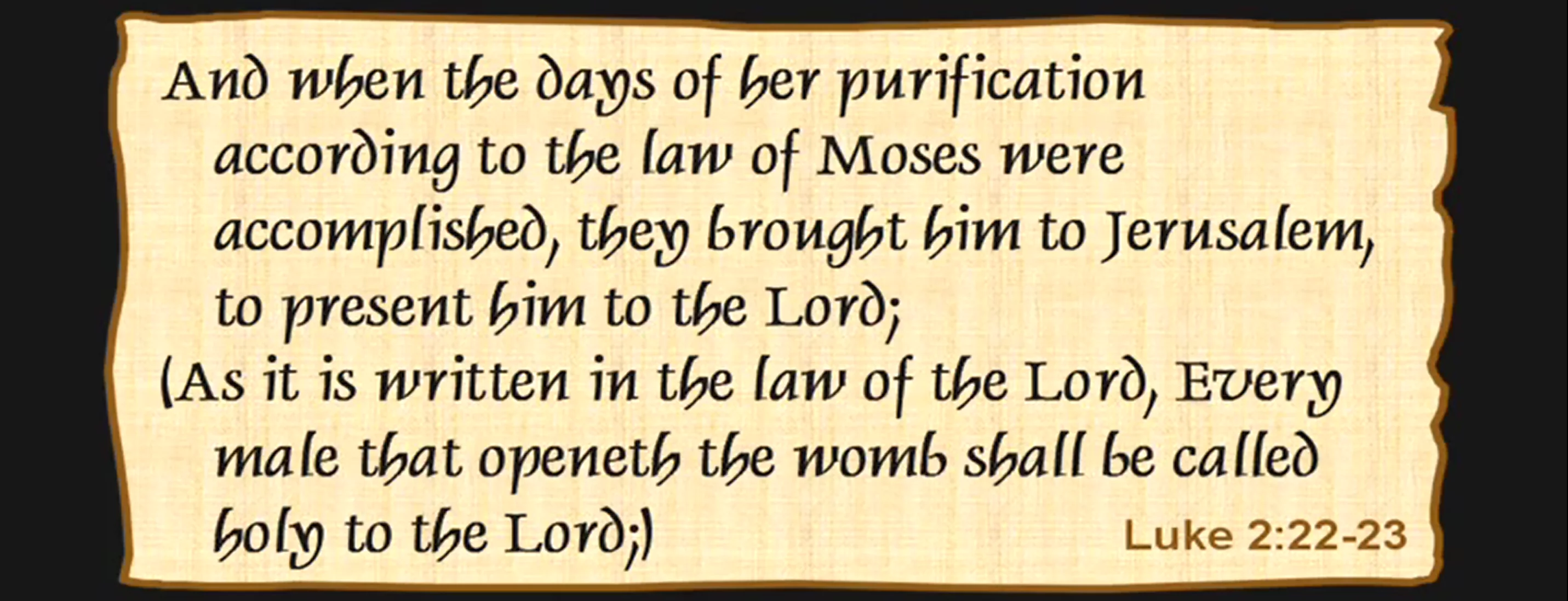
- They were required by the Law to present their firstborn to God 33 days later (Exo 13:2, Exo 13:12) (before the male child is 40 days old) and to bring an offering for Mary’s purification after childbirth (Lev 12:1-8)
Luke 2:24
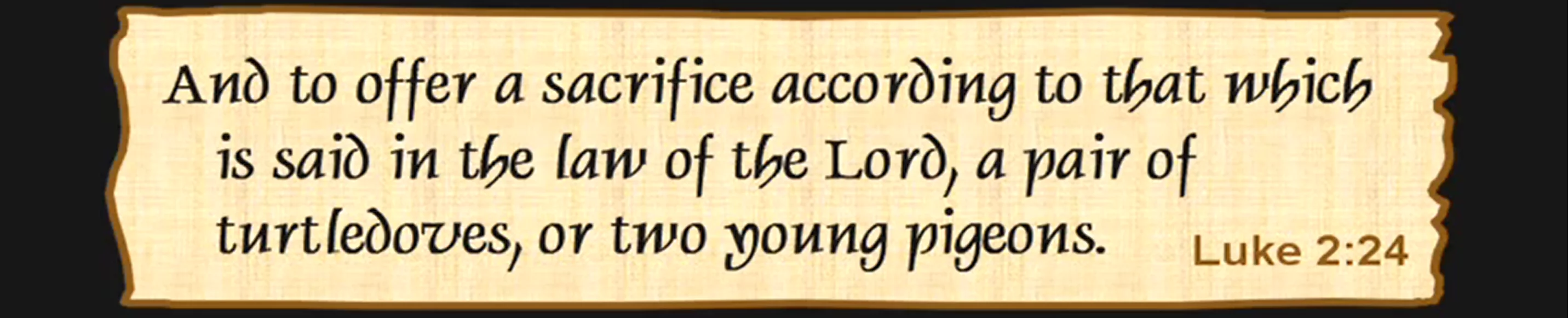
- The offering which they presented for her purification showed that they were a poor couple
- They could not afford a lamb, so they bought a pair of doves or pigeons, which were all they could afford (Lev 12:8)
- Yet, Jesus was the lamb!

Luke 2:25
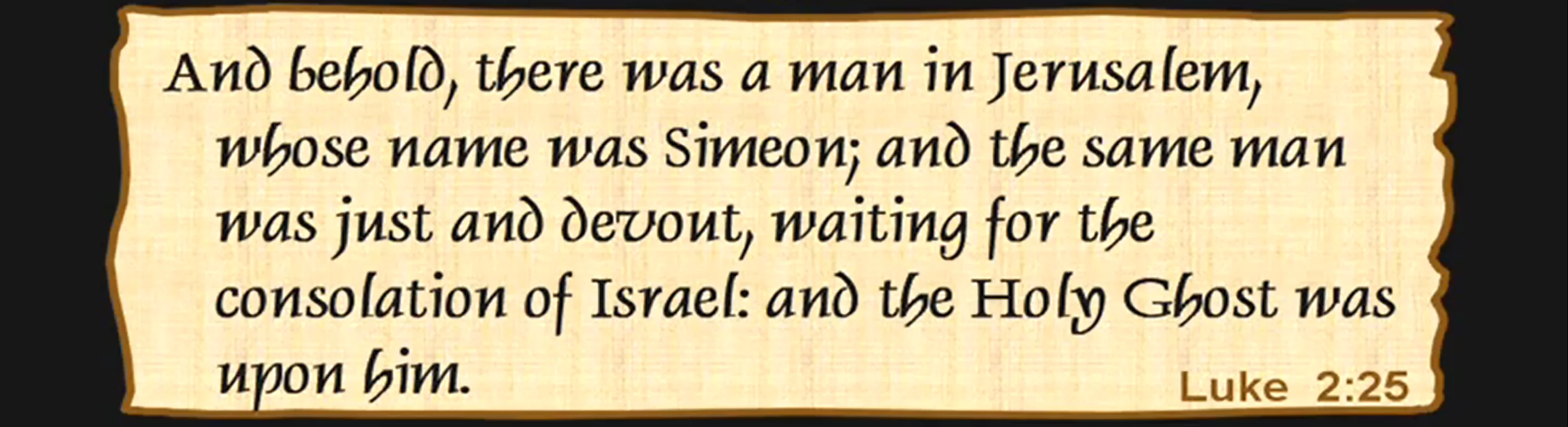
- Like Anna, Zecharias and Elisabeth, Simeon (שִׁמְעוֹן— Shimʿon) was part of the faithful Jewish remnant
- Unlike the religious leaders, he was waiting for the Messiah, the One who would bring consolation to the nation
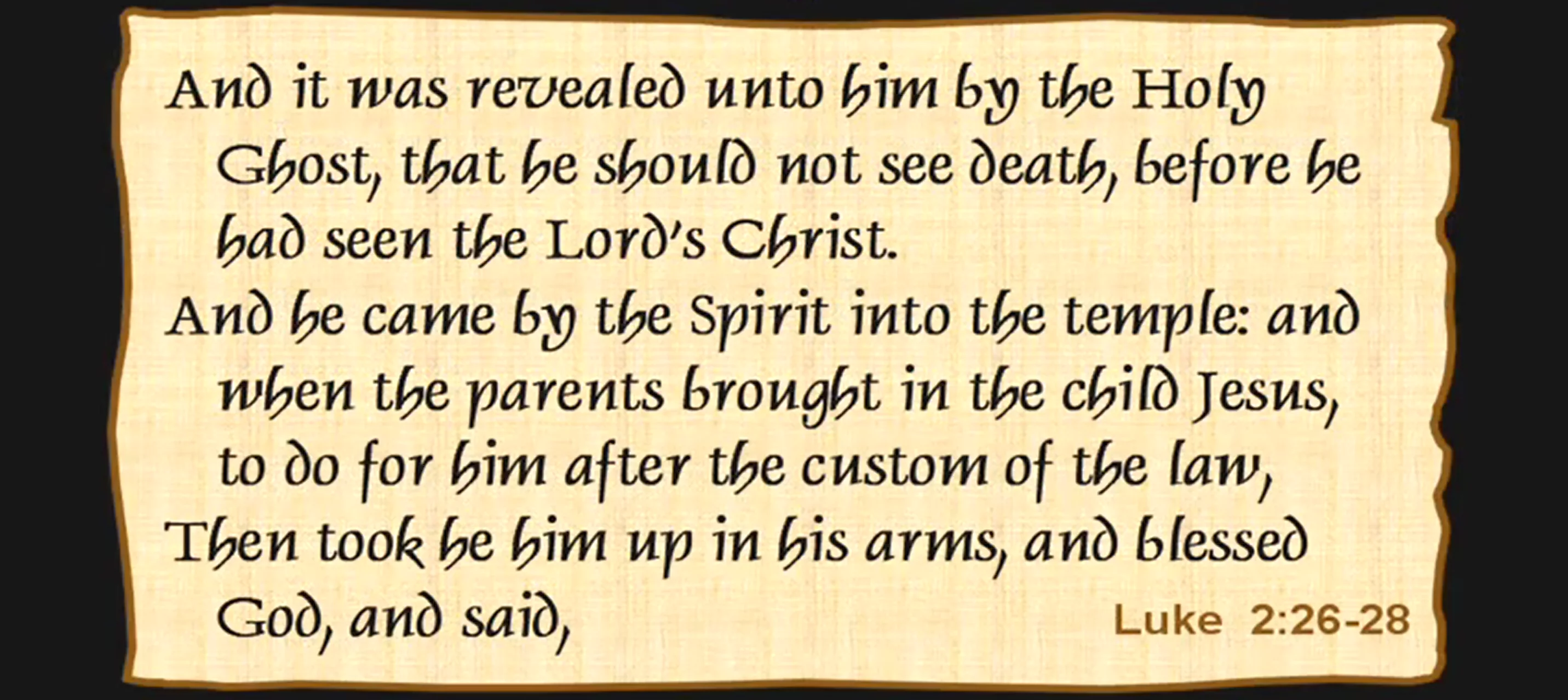
Luke 2:26-28

Luke 2:29

- “Now dismiss” [nunc dimittis, in the Latin…]
- “…depart” — ἀπολύω (apoluó):
— To release a prisoner
— To discharge a debtor
— To untie a ship and set sail
— To take down a tent (cf. 2 Cor 5:1-8)
— To unyoke a beast of burden (Matt 11:28-30)
Luke 2:30-31
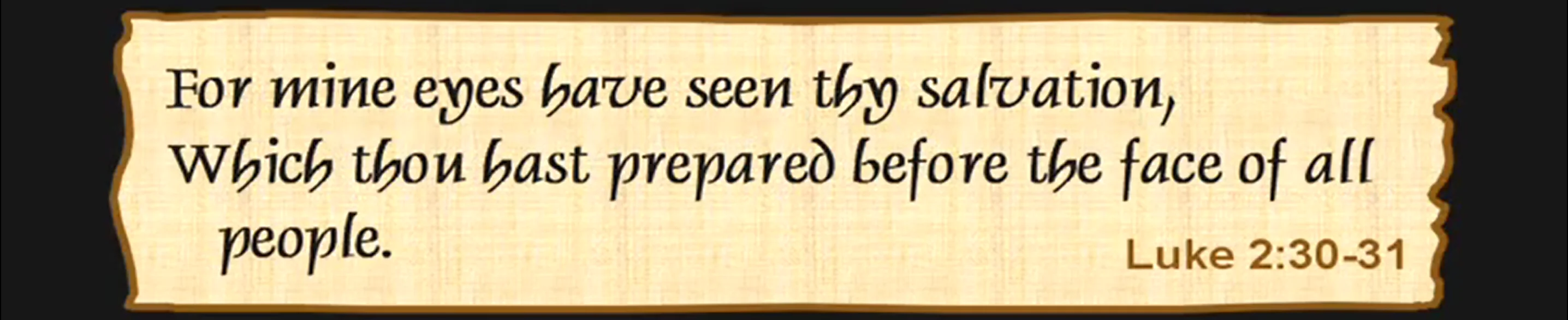
- In all three of the hymns of thanksgiving and praise recorded by Luke in these first two chapters (Luke 1:46-55, Luke 1:68-79, Luke 2:29-32) lie the deep significance of the births of John and Jesus for the salvation of Israel and the world
Luke 2:32
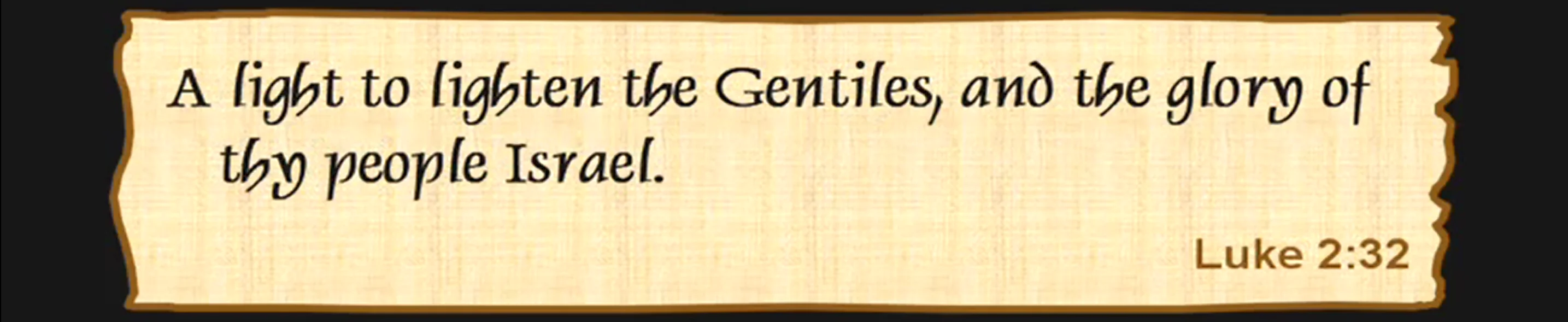
- Simeon noted that the Messiah was to be for the Gentiles as well as for Israel
- The idea of salvation for the Gentiles is set forth many times in the Gospel of Luke
Luke 2:33-34
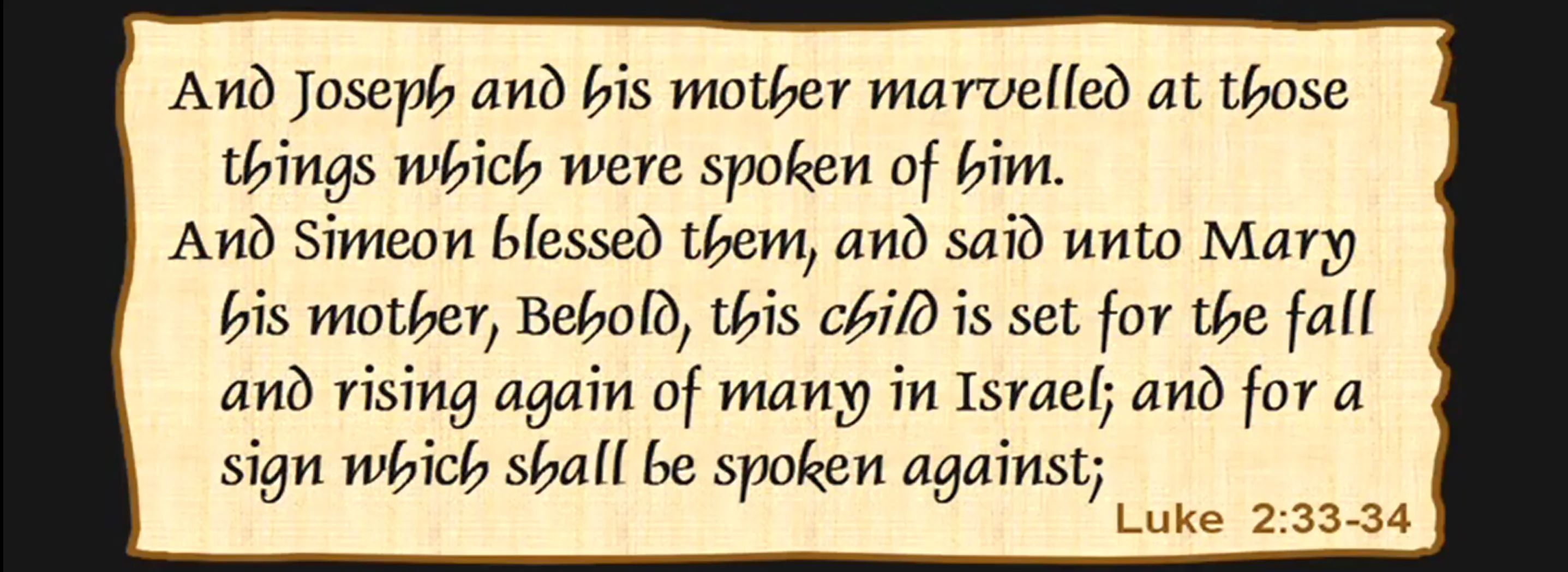
Luke 2:35
💛 John 8:18-19
💛 John 8:40-41
💛 John 8:42-43
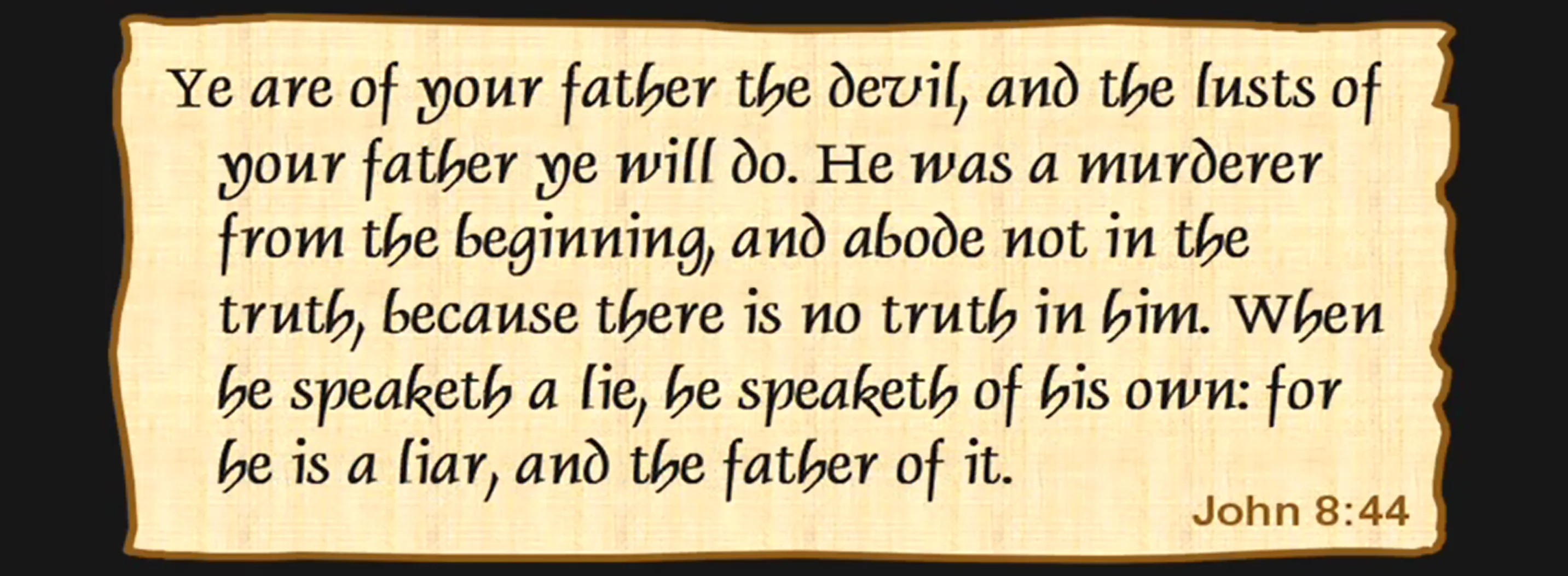
💛 John 8:44
💛 John 8:56-58
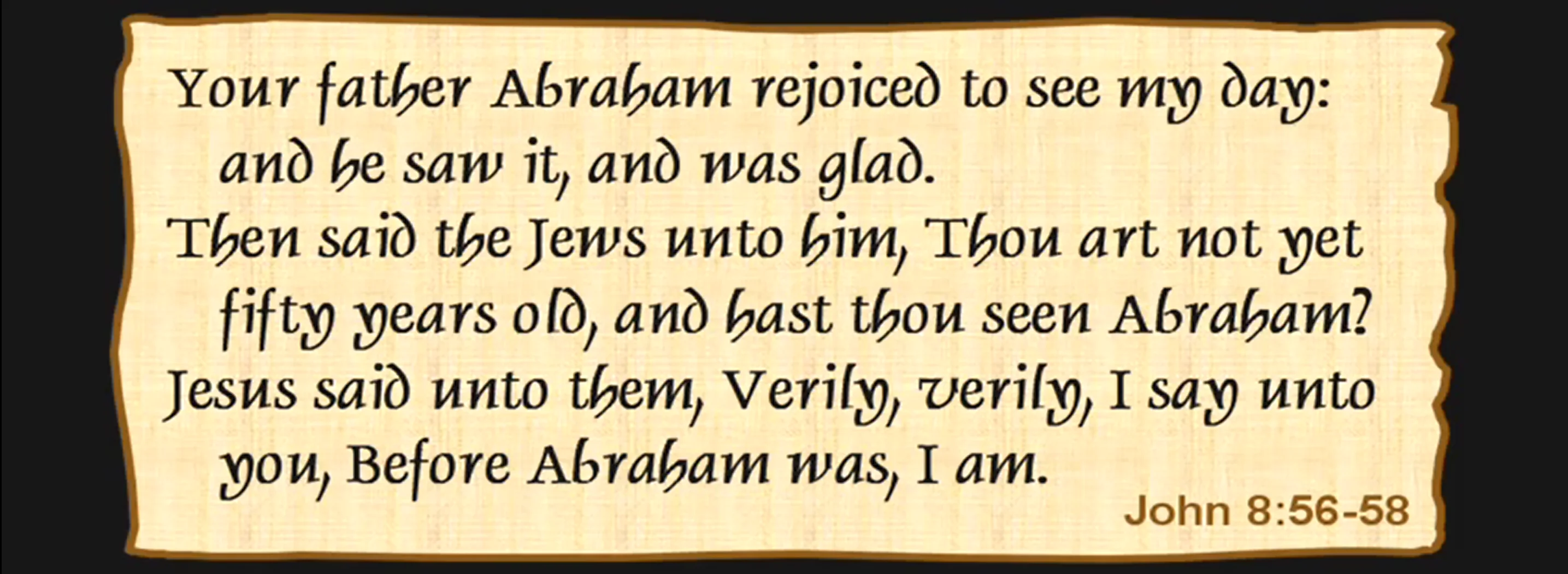
- He is declaring that He is the voice of the burning bush!
💛 John 8:59
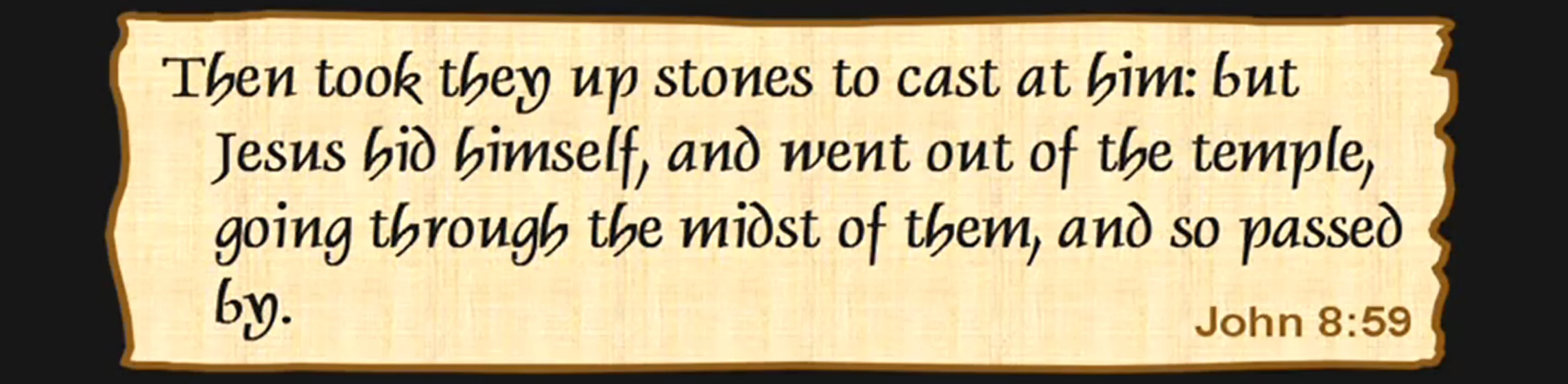

- A Stone — a principle of expositional constancy — idiom of a Stone is used throughout the Scripture
- A Sign: (Yet Slandered)
— The sign of His birth John 8:41ff
— Miracles attributed to Satan Matt 12:22-24
— His resurrection Matt 27:62-66
— His death slandered Ps 22:6-8, Matt 27:39-44
— And today, His return 2 Pet 3
- A Sword:
— Suffering for Mary alone John 19:25-27
— Joseph was probably dead when Jesus was crucified

Luke 2:36
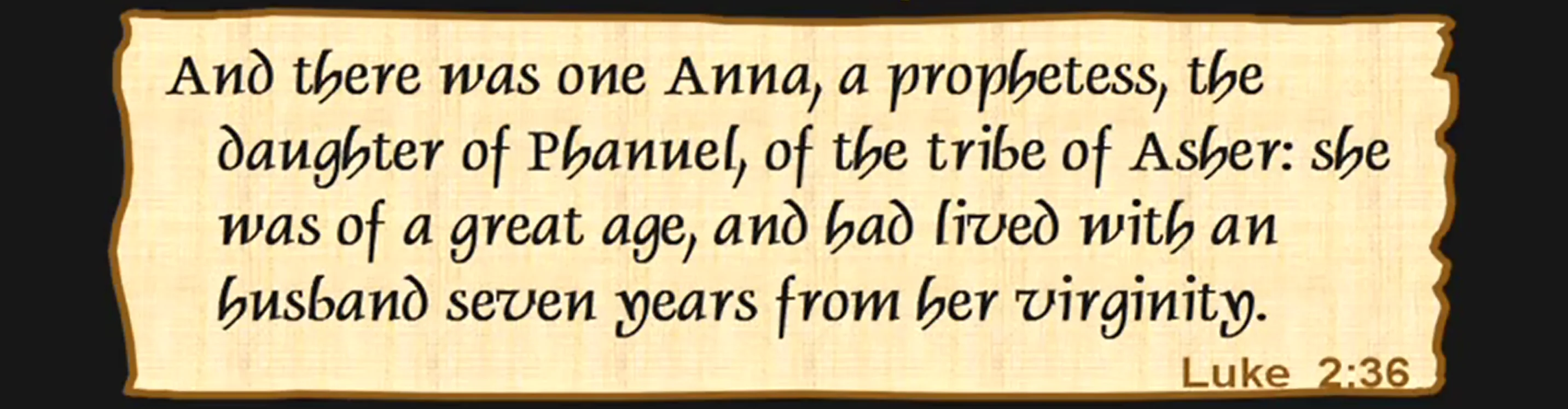
- Tribe of Asher is one of the northern tribes — 10 tribes were not lost
Luke 2:37
- Other prophetesses in Scripture:
— Miriam Exo 15:20
— Deborah Jdg 4:4
— The wife of Isaiah Isa 8:3
— Huldah 2 Kgs 22:14
— Noadiah Neh 6:14
— Four daughters of Philip Acts 21:8-9
- “…widow of about fourscore and four years” — Some scholars believe she was 103-105 years old, depending on what age she was when married
Luke 2:38
- There was a believing remnant in Israel looking for the Messiah
- Anna authenticates that this child is The One

Luke 2:39 The Return to Nazareth
- Nazareth — a place and also idiom for branch
- Jesus would be known as the Nazarene (Acts 2:22, Matt 21:11)
- It would even be on His cross
- Psalm 69:
— This psalm tells us about the silent years of Christ’s childhood and young manhood, of which the Gospels tell us practically nothing. Dr. Luke tells us about an incident in the life of our Lord when He was twelve years old, but we learn nothing else about Him until He is about thirty years of age. This psalm fills in some of the details of those early years
— We see some of Christ’s dark days in Nazareth and His dark hours on the cross
— This is a psalm of His early humiliation and rejection
— The psalm is classified as an imprecatory psalm because of an imprecatory prayer (vv. 22–28). It is from that section that the New Testament writers often quoted (His imprecatory prayer is actually a cry for justice)
— We begin way up north at Nazareth: We hear the heart sob of a small boy, a teenager, a young man…
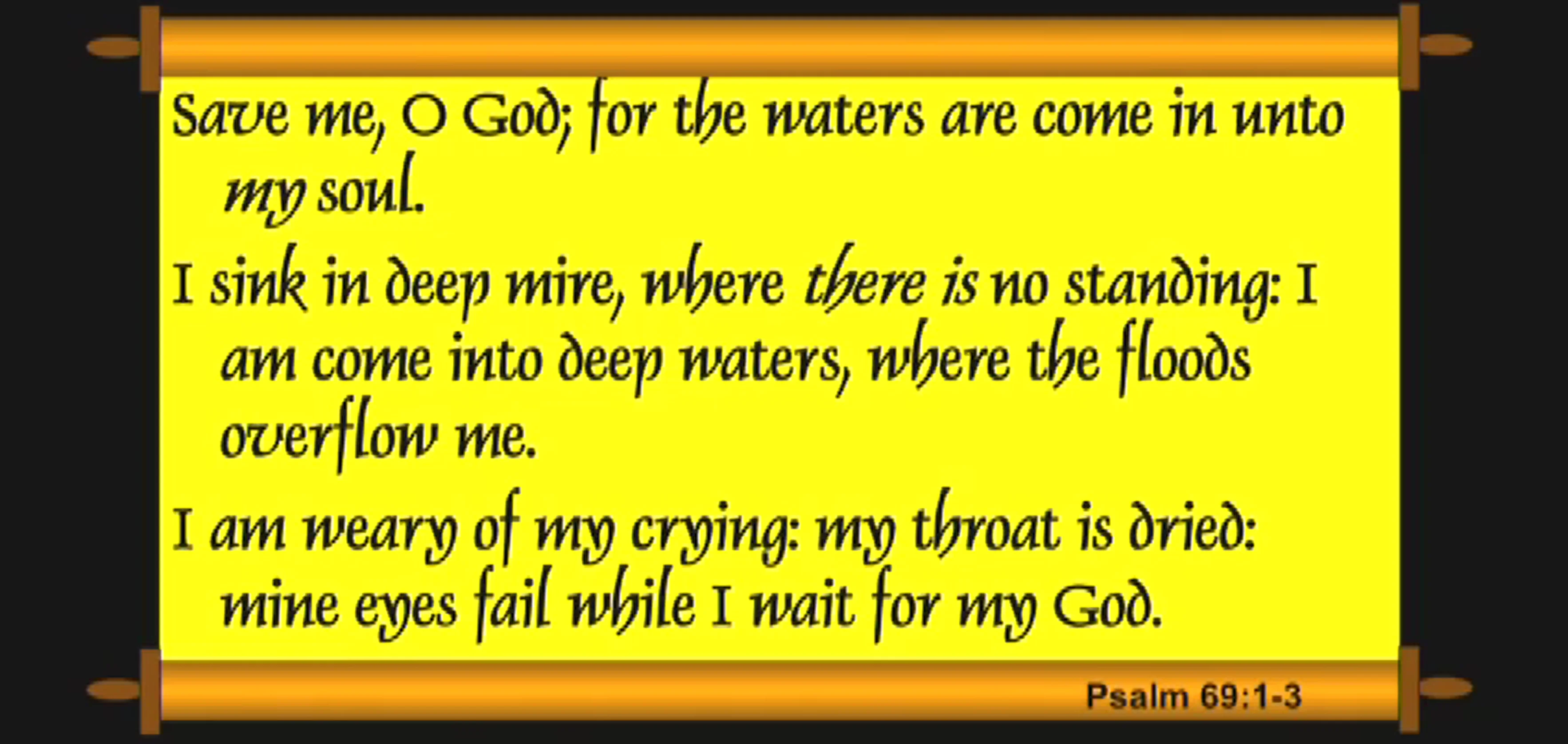
🟤 Psalm 69:1-3 (screenshots of lower quality (first 7 verses) were updated here during John 8 study)
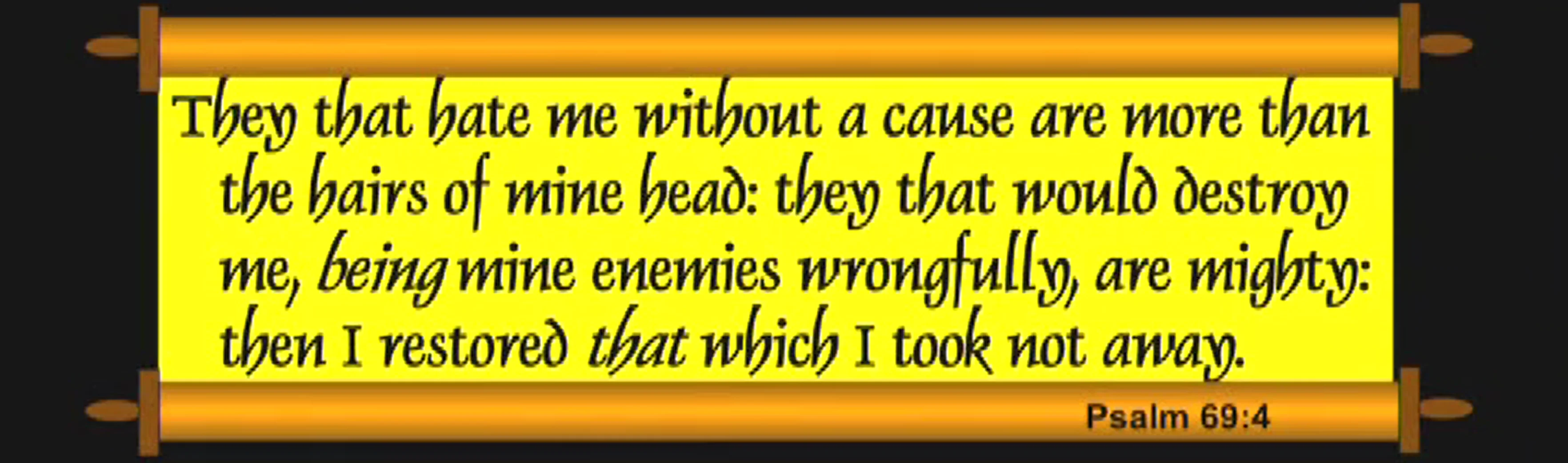
🟤 Psalm 69:4

🎁 Romans 3:24

- “Being justified freely…” is the same as being justified without a cause
— The Lord did not find any merit in me
— He justified me without a cause within me
- This psalm tells us that they hated Jesus without a cause
— They hated Him without a cause that we might be justified without a cause
🟤 Psalm 69:5

- How can this verse apply to the Lord?
— He was holy, harmless, undefiled and separate from sinners
— But the last few hours on the cross He became sin for us (2 Cor 5:21)
- He prayed: “Let this cup pass” (Mt 26:39,42)
— What cup?
— The cup of sin, which was my cup and your cup of iniquity
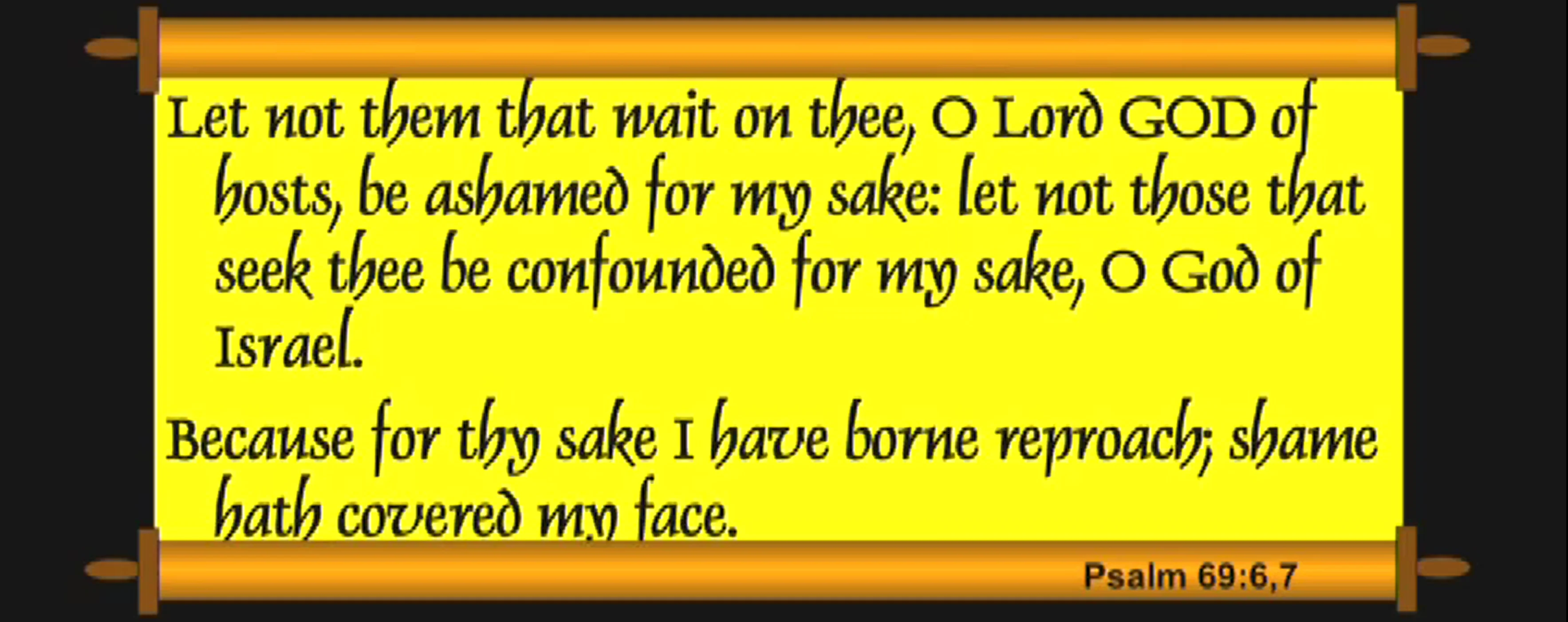
🟤 Psalm 69:6-7
🟤 Psalm 69:8 In the Spirit, David writes (in Jesus’ name):
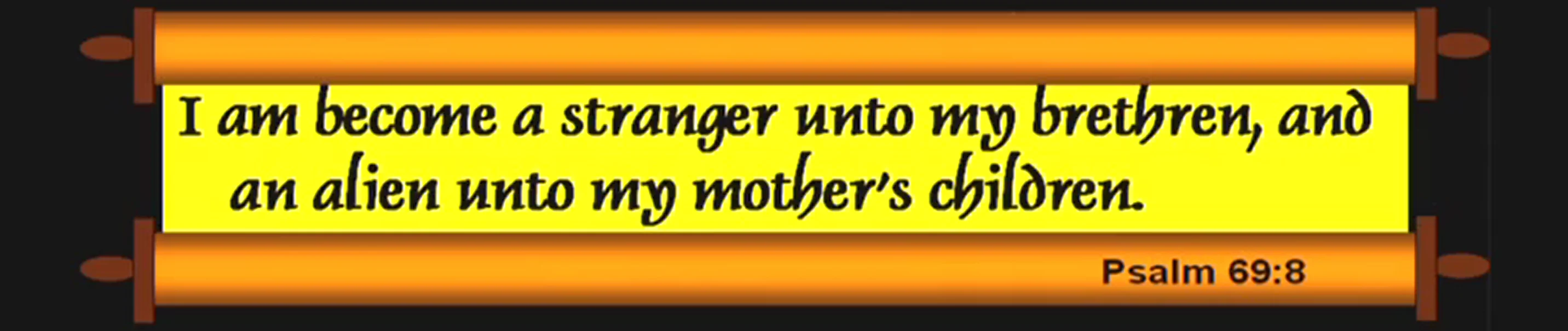
- “…my mother’s children” — children that My father had that aren’t really My brothers (half-brothers & half-sisters)
- Mary had other children, which is confirmed in the Gospels (Matt 13:55, Mark 6:3)
- He became an alien unto His mother’s children — not His father’s children — because Joseph was not His father
- In the early years, Jesus was growing up in a very unhappy home (painful both for Jesus and Mary)
- This verse also teaches the virgin birth of Christ
- (The half-brother of Jesus, often referred to as James the Just, is famously remembered in early church tradition by the nickname "Old Camel Knees" — James spent so much time kneeling in prayer on the hard, rough ground that the skin on his knees became leathery and calloused, much like those of a camel. Early Christians used this description to honor his deep humility, persistent intercession and lifelong commitment to prayer)
🟤 Psalm 69:9
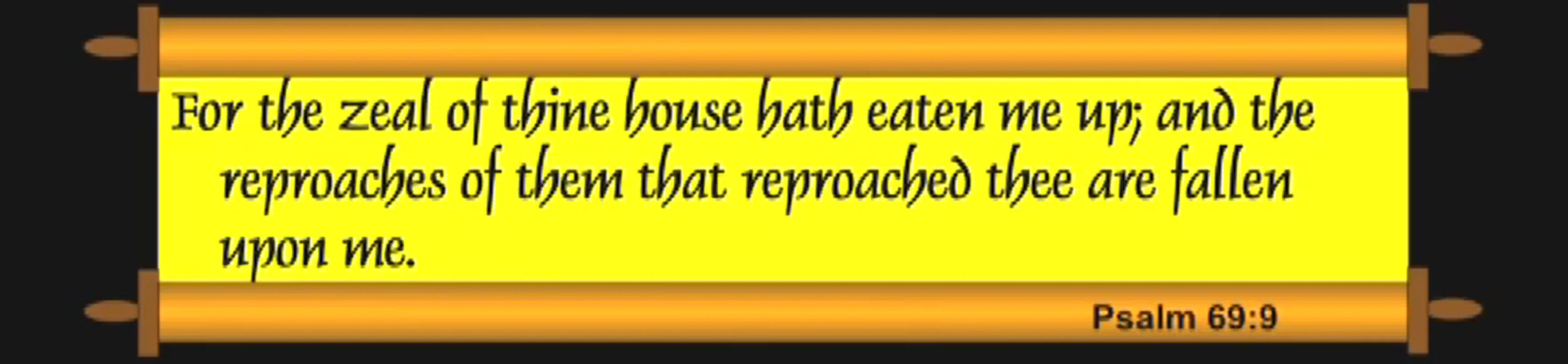
- This is a verse which our Lord also quoted—in reference to the temple (John 2:14-17)
- They were well aware of Psalm 69!
— The Greek word for zeal signifies “to stretch out the neck”, a metaphor from the racers who strain every limb to reach forward to lay hold upon the prize
🟤 Psalm 69:10-11
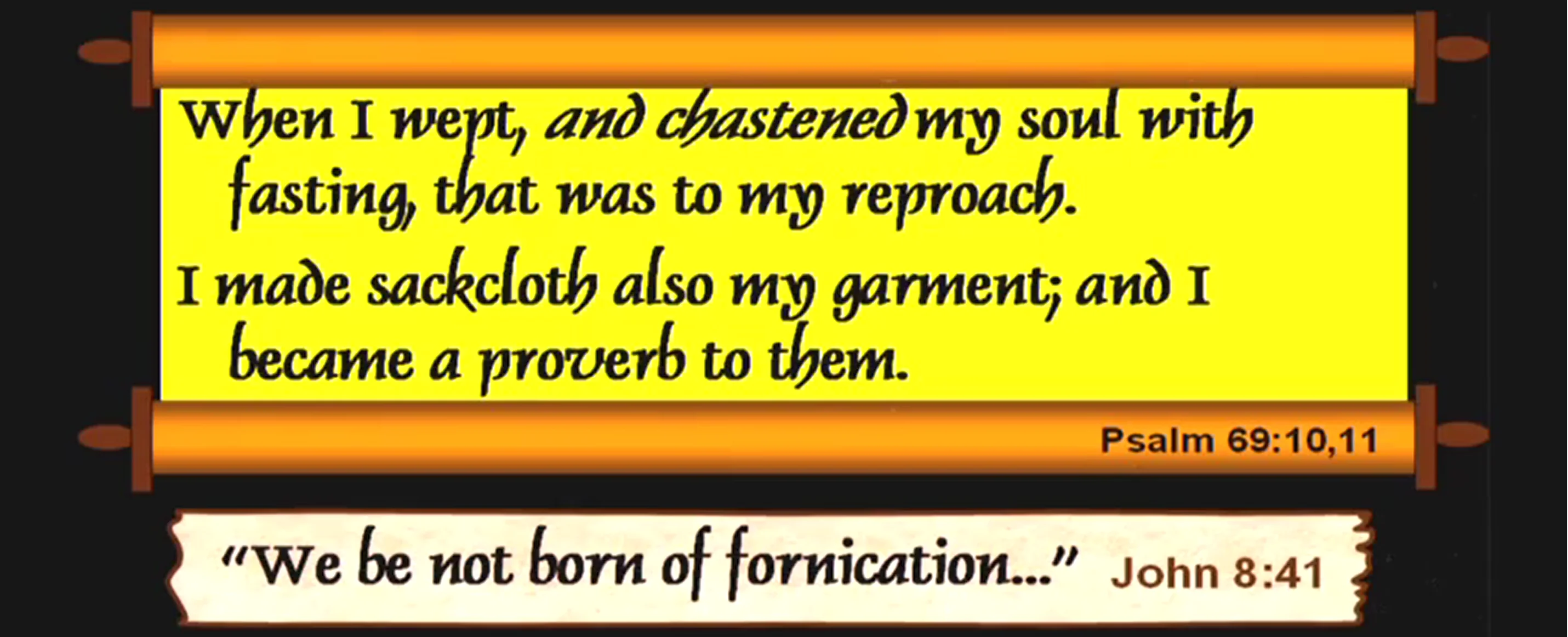
- Ostracized by His own family
- What was that proverb?
— The word that circulated around was that He was illegitimate (bastard in today’s lingo)
- And the stigma continued throughout His life:
— ““We were not born of sexual immorality; we have one Father: God.”” (John 8:41)
🟤 Psalm 69:12
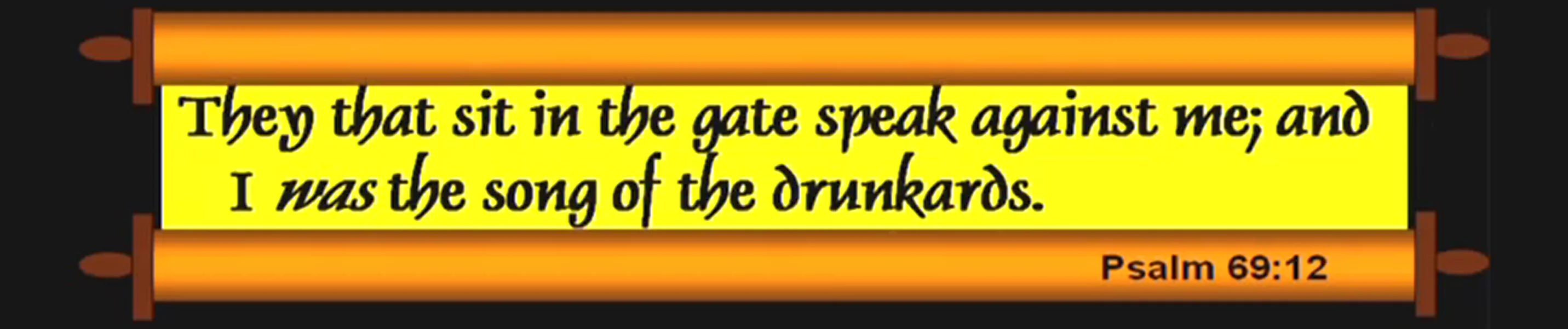
- The drunkards at the local bar made up dirty little ditties about Him and His mother
- For more than 30 years, He endured this slander
- Why did He endure all of this?
— He was raised in a town where He was called illegitimate in order that I might be a legitimate son of God
— The Son of God bore that for me on the cross; He paid the penalty for my sins
- We have no idea what He endured for 30 years in order that we might have a clear title as a legitimate son of God
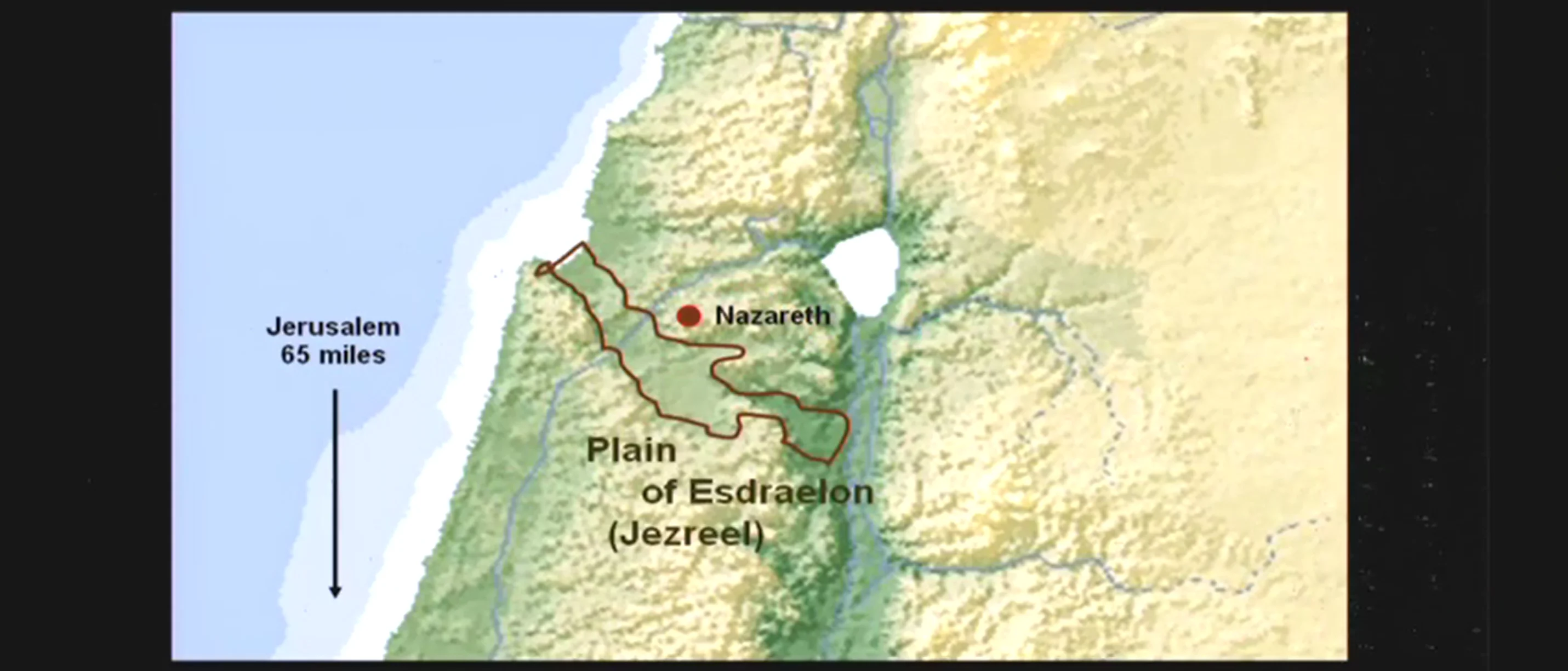
- Nazareth overlooks the Plain of Esdraelon (Jezreel valley)
- Sometimes called the “Battlefield of Palestine”:
— It has been a chosen place for every contest carried on in this country, from the days of Nebuchadnezzar, until the disastrous march of Napoleon Bonaparte from Egypt into Syria
— Jews, Gentiles, Saracens, Crusaders, Frenchmen, Egyptians, Persians, Druses, Turks and Arabs, warriors out of every nation which is under heaven, have pitched their tents on this plain
— Here Gideon gained his great victory over the Midianites (Judges 7:1-25)
— Barak defeated Sisera
— Saul’s army was defeated by the Philistines
— King Josiah was slain while fighting in disguise against Pharoah Necho, king of Egypt (2 Chr 35:20-27, 2 Kgs 23:29)
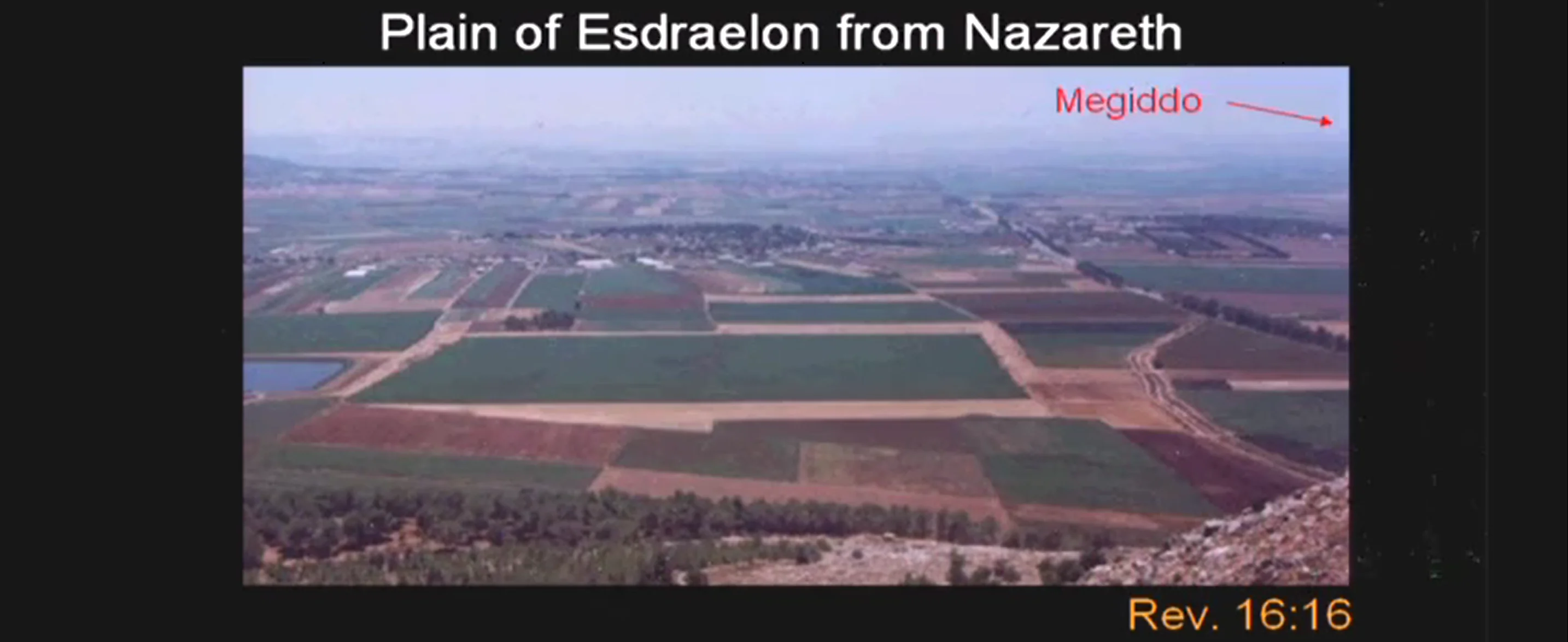
- On the other side is Megiddo (large 9x14mi plain) → in Hebrew: Har-Magedon (Armageddon) (Rev 16:16)
Continuing with Luke
Luke 2:40

- The wisdom and favor from God were evident before He reached the age of 12
- There were no “childhood miracles” — the Wedding at Cana was the first miracle (John 2:11)

Luke 2:41 The Boy Jesus in the Temple / Visit to Jerusalem

- There were three obligatory feasts for all males 13 years and older: (Exo 23:14-17, Exo 34:23, Deut 16:16)
— Feast of Unleavened Bread (thus, including Passover)
— Pentecost (Feast of Weeks, also Feast of Harvest) and
— Tabernacles (Ingathering, also Feast of Booths)
- The one-day Passover was followed by the seven-day Feast of Unleavened Bread (Exo 23:15, Lev 23:4-8, Deut 16:1-8) and the Feast of Firstfruits (Lev 23:5, 6, 10, 12)
- The entire eight-day festival was sometimes called the Passover (Luke 22:1,7, John 19:14, Acts 12:3-4)
Luke 2:42

- This would be precedent to, as a 13-year-old, officially becoming a “son of the commandment”, a full member of the synagogue (Mishna, Niddah 5:6), similar to the modern custom of the bar mitzvah
Luke 2:43-44
Luke 2:45-46
Luke 2:47

- “…astonished” — ἐξίστημι (existémi)
— to throw out of position, displace
— to amaze, to astonish, throw into wonderment
— to be amazed, astounded
— to be out of one’s mind, besides one’s self
Luke 2:48
- “…amazed” — ἐκπλήσσω (ekpléssó)
— to expel by a blow
— to drive out or away
— commonly, to strike with panic, shock, astonish
— to be struck with amazement, astonished, amazed
Luke 2:49

- Jesus’ very first recorded words in all of Scripture
- “…“Why is it that you were searching for Me? Did you not know that I had to be in My Father’s house?”” (LSB)
- “…my Father” — God as Father — a radical concept!
— In the 39 Old Testament books, God is referred to as “Father” only 14 times, and never as “my Father”
— Jesus never used any other term, except as He hung in our place on the cross: “My God, My God, why hast thou forsaken me?” (Ps 22:1, Matt 27:46, Mark 15:34)
- By the time Jesus was 12 years old, He understood His mission on earth
Luke 2:50-52
- How much did Jesus fully know?
— Some believe more knowledge was given him upon his baptism (Holy Spirit)
— Jesus did not have the same knowledge as the Father (Mark 13:32) (MacArthur: He restricted it)
— God the Father gave the “unveiling” to Jesus Christ in Revelation 1:1
▪️▫️◾️◽️◼️◻️ Rev 1:1

- Study Luke Chapter 3
- Explore the differences between Luke’s and Matthew’s genealogies
- Why the Virgin Birth?
