s03 (Ch 3) Baptism & Genealogy of Jesus (studied 21-Jan-2026)
The Book of Luke with Dr. Chuck Missler
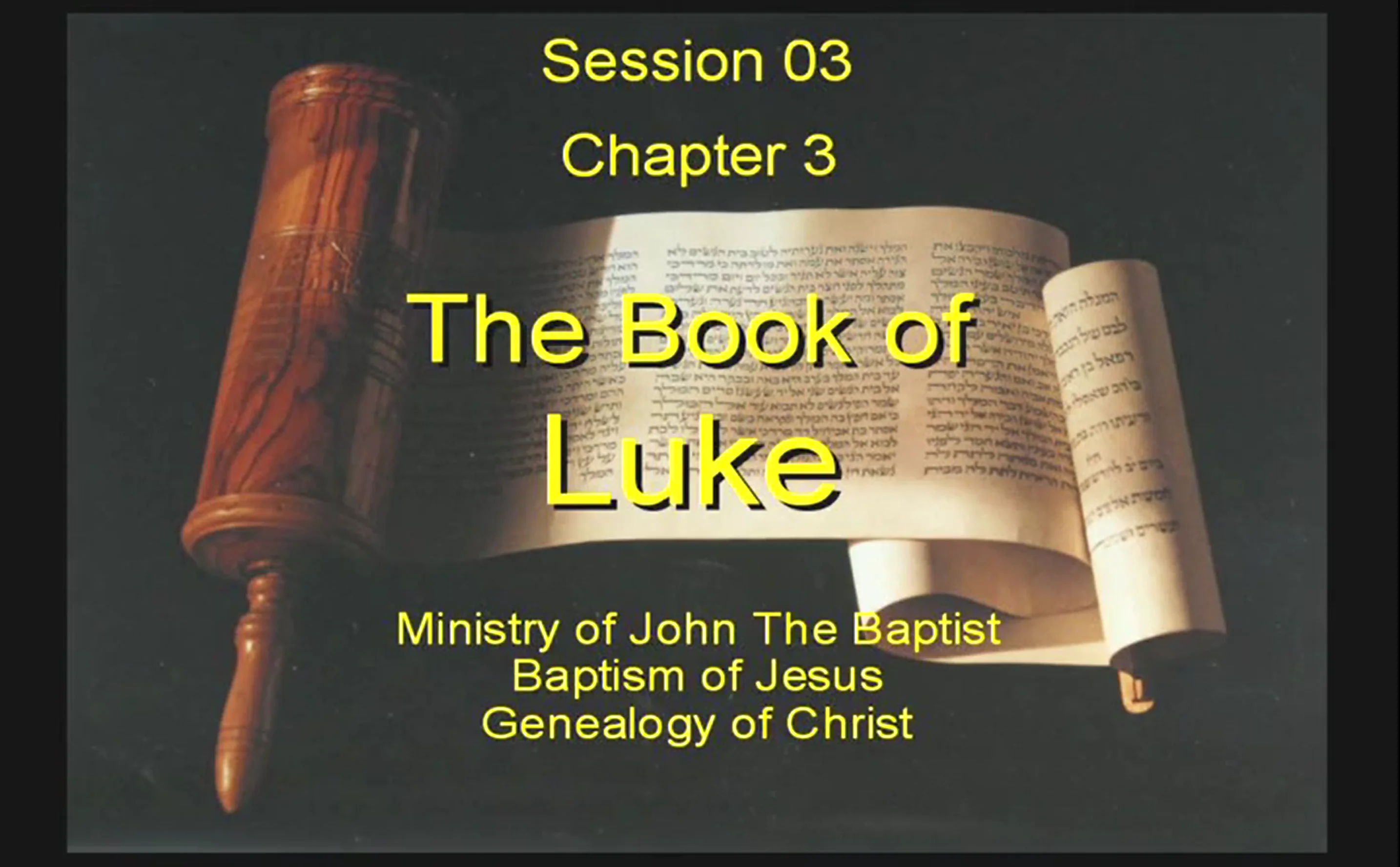
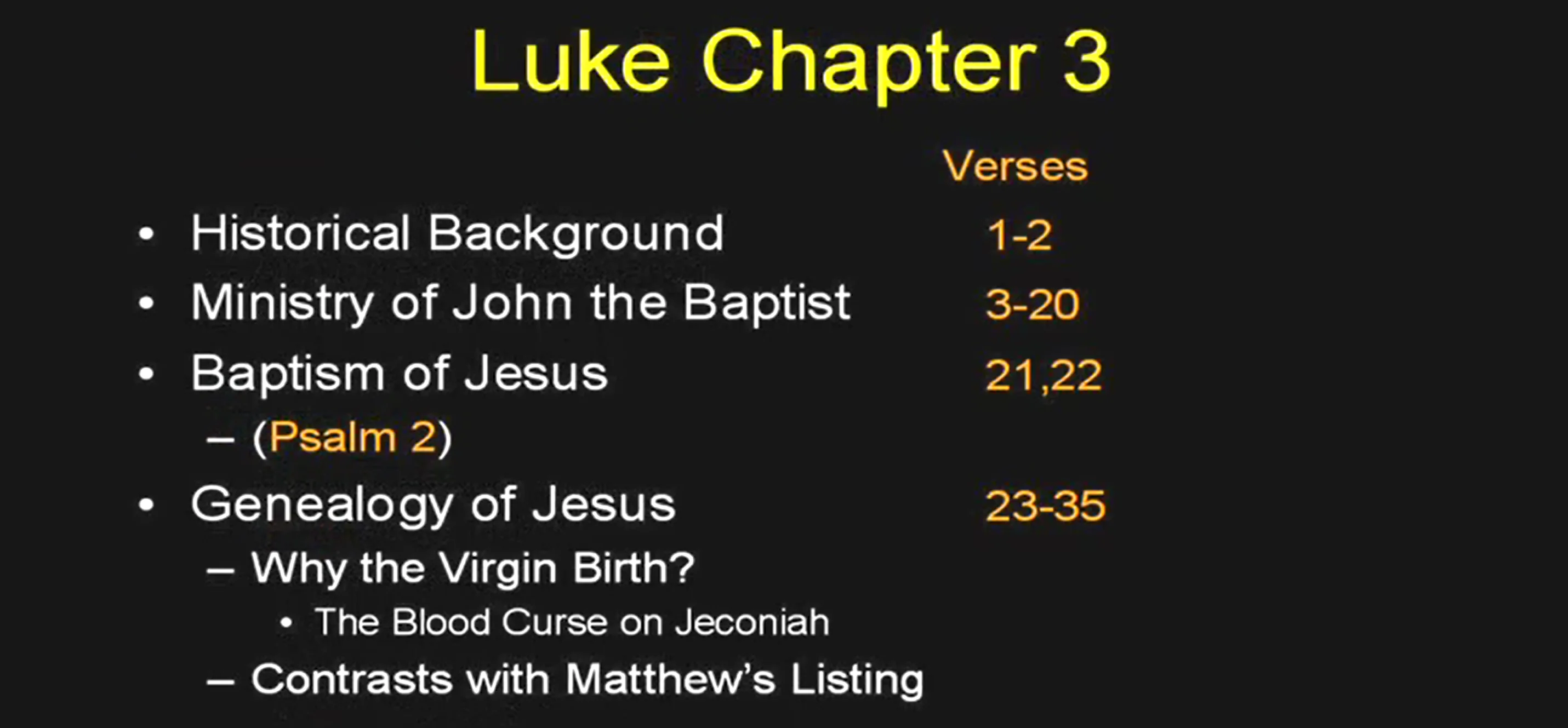
The subsections of Chapter 3 (per NASB/LSB/MEV) are:


- Chapter 3 focuses on the preparation for the main message of Luke’s Gospel:
— Jesus’ ministry in Galilee and
— His ministry on the way to Jerusalem
- With the exception of the brief glimpse of Jesus’ visit to the Temple at the age of 12, we know relatively little about the first 30 years of the lives of both Jesus and John the Baptist
- We do know that John the Baptist’s prophetic ministry began three months before his birth when he leaped at the sound of the virgin’s voice while still in the womb!
- We can assume that the Holy Spirit began to guide and grow John through the next 30 years

Luke 3:1 The Preaching of John the Baptist
Luke 3:2

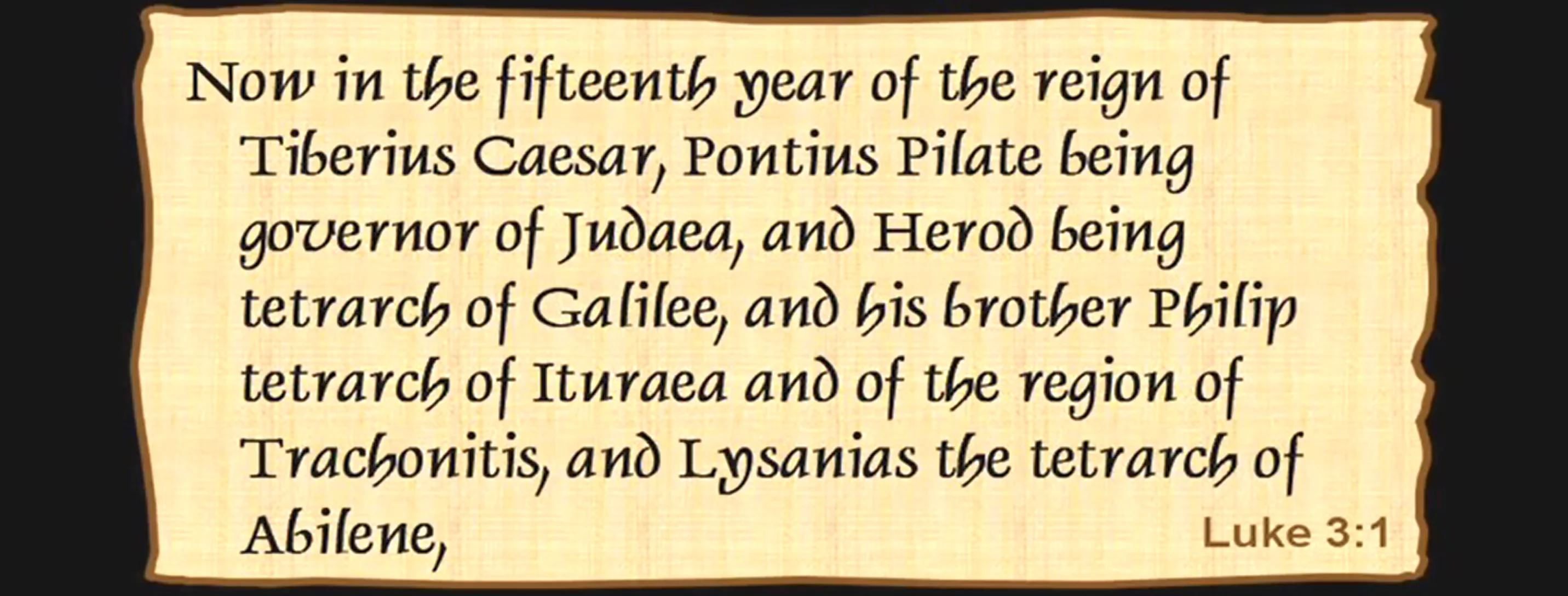
- Seven people are mentioned in the first 2 verses, which all help us to precisely date the beginning of Jesus’ ministry. While there are lots of other ambiguities, this one is nailed pretty tight

- Tiberius Caesar ruled over the Roman Empire from AD 14 – AD 37. He was a clever but cruel, licentious, evil man
— The first year of Jesus’ ministry was the 15th year of the reign of Tiberius – AD 29
- Pontius Pilate was appointed governor of Judea in AD 26 and ruled to AD 36
— His name has been found on a plaque in Caesarea
- Herod Antipas ruled over Galilee from the city of Tiberius from 4 BC – AD 39
— He was the one who would imprison John the Baptist
- Herod’s brother Philip ruled to the east of the Jordan from 4 BC – AD 34
— His capital was at Caesarea Philippi
- Little is known about Lysanias who ruled in Abilene, northwest of Damascus (not on diagram)
- [Two High Priests?] Annas was the high priest from AD 6 – AD 15, but was deposed by the Roman authorities
— The Jews still looked at him as a senior person (appropriate one) after Romans kicked him out of office
- Caiaphas served from AD 18 – AD 36 as a political appointee of Rome
— Jews looked at him as a Roman “stand in”
— Quite corrupt
— Lots of politics, but both Annas and Caiaphas were around


- John was born into a priestly family, but had no use for the Temple
— He spent about 12 years in the wilderness rather than in the Temple
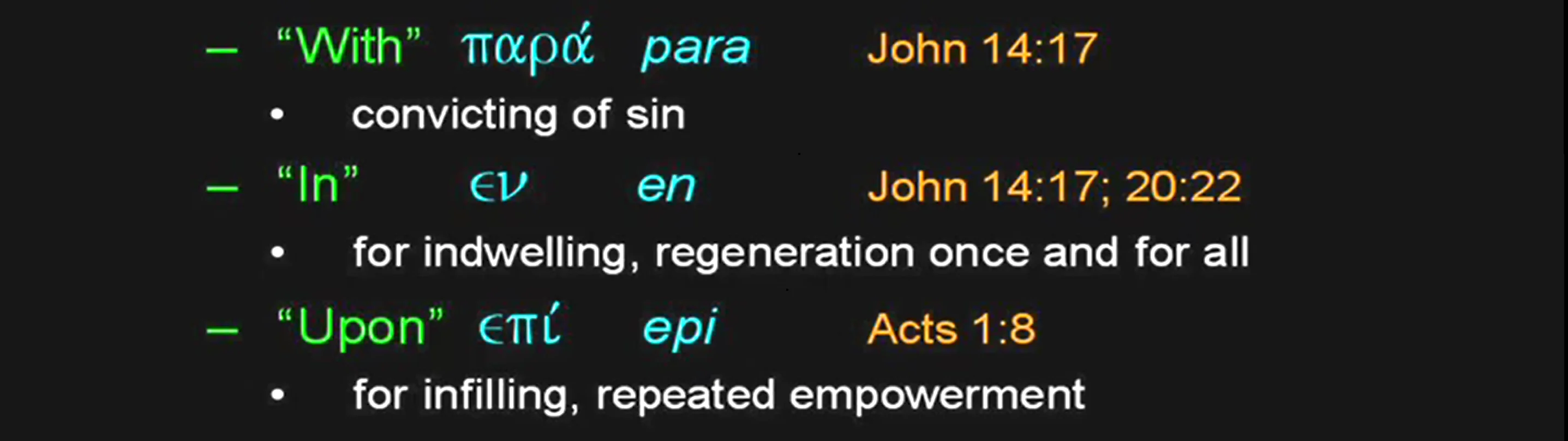
- “…the word of God came unto John” — “Unto” is the Greek word ἐπί (epi), “upon”
— There are three distinct prepositions regarding the Holy Spirit:
① “With” παρά (para) (John 14:17), convicting of sin
② “In” ἐν (en) (John 14:17, John 20:22), for indwelling, regeneration once and for all (when born again)
③ “Upon” ἐπί (epi) (Acts 1:8), for infilling, repeated empowerment (happens many times)
Luke 3:3

- Luke noted that John’s baptizing work was “in the country around the Jordan”
— This region of the lower Jordan has several implications:
• Elijah spent his last days here (2 Kgs 2:1-13)
• There are many allusions to Elijah in John’s ministry
• Bethabara, the “house of passage” — Joshua (and the Israelites) crossed the Jordan here into the land of Canaan

- Since John’s function was to be Christ’s forerunner, so also his baptism prefigured a different baptism (Luke 3:16)
- John’s baptism was associated with repentance:
— It outwardly pictured an inner change of heart
— The word “for” (εἰς (eis): unto, to, towards, for) refers back to the phrase “baptism of repentance”
— Repentance was “unto” (a better rendering of); a prelude to sins being forgiven
— The baptism itself did not save anyone, as is clear from what follows (vv.7-14)
— Neither can any amount of repentance alone ever merit forgiveness in the sight of God
— Forgiveness is only by His grace and mercy
Luke 3:4
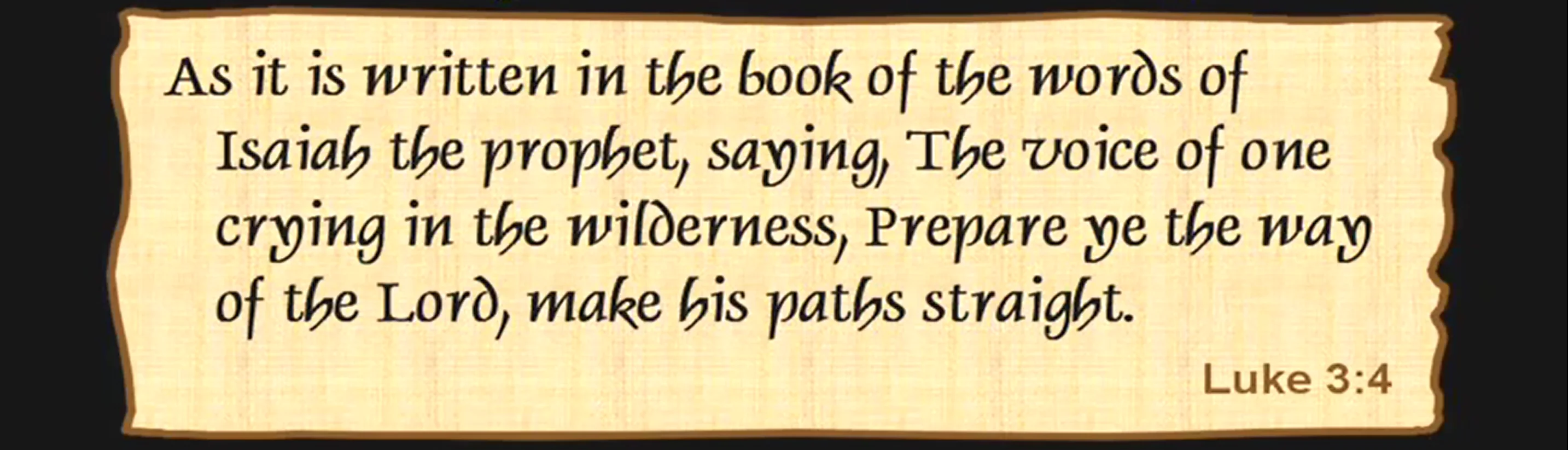
- All three Synoptic Gospels (Matthew, Mark and Luke) quote Isaiah 40:3-5
- This is an example of “meta context”:
— Isaiah was writing specifically of God’s smoothing the way for the return of the exiles from Babylon to Judah
— But all three Synoptic Gospel writers applied Isaiah 40:3-5 to John the Baptist
— The passage is thus applicable in a local, tactical sense and in a broader, strategic sense
- “…In the Desert…”:
— Isaiah wrote: “The voice of him that crieth in the wilderness, Prepare ye the way of the LORD” (Isa 40:3)
— But Matthew, Mark and Luke each wrote: “The voice of one crying in the wilderness…”
— Why did they put “in the desert” with the “voice” rather than with “prepare the way”?
— Because they quoted from the Septuagint (LXX)
— Both were true: the voice (of John the Baptist) was in the desert, and the desert was to be smoothed
Luke 3:5
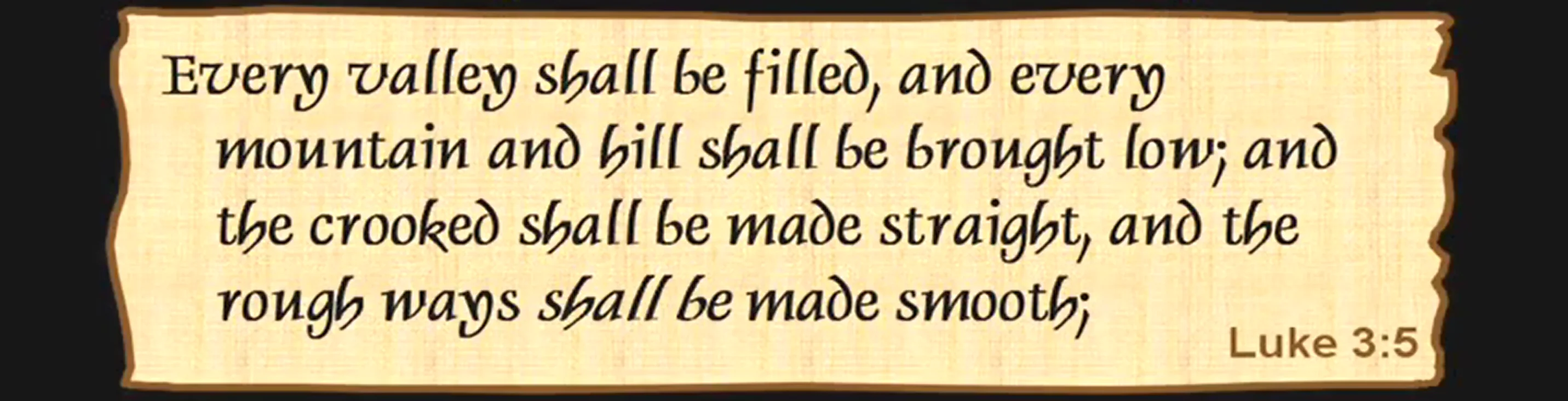
- When a king traveled in the desert, workmen preceded him to clear debris and smooth out the roads to make his trip easier
- Smoothing The Way:
— The leveling of the land was a figurative expression denoting that the way of the Messiah would be made smooth because through John a large number of people were ready to receive Jesus’ message
— ““And he will go before Him in the spirit and power of Elijah, TO TURN THE HEARTS OF THE FATHERS BACK TO THE CHILDREN, and the disobedient to the attitude of the righteous, to make ready a people prepared for the Lord.”” (Luke 1:17 NASB)
Luke 3:6

- “…all flesh” — Not just Israel… (all mankind in NASB) — Luke emphasizes again, it’s all mankind
Luke 3:7
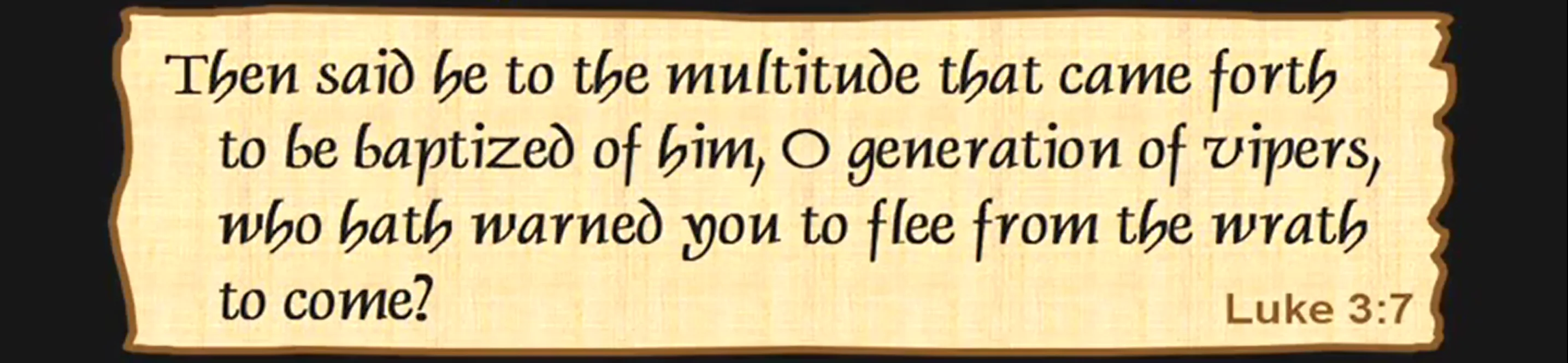
- Tact and diplomacy were not John the Baptist’s focus
- His message was strictly eschatological!
- So many people took the long trip from Jerusalem to Jericho that the Temple authorities sent an investigative team to find out what’s going on. And what does he do? — he upbraids them
Luke 3:8
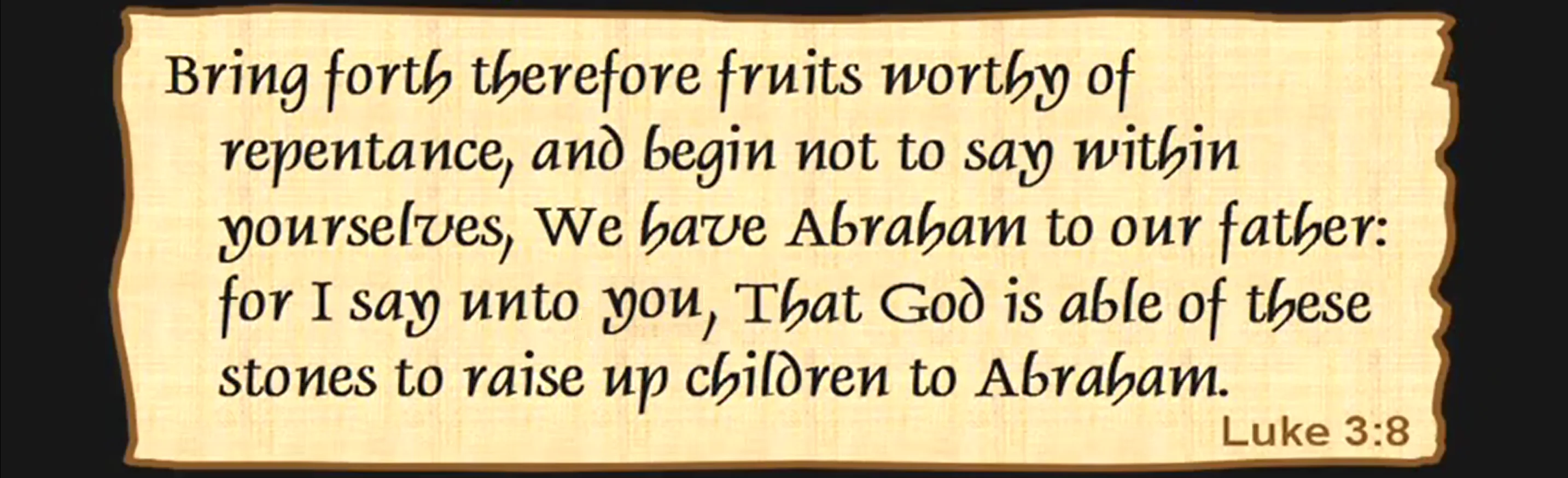
- The Jewish mind was that they were in good standing with God because of their ancestry (lineage) — to which John basically says: it is nonsense
- Which were these stones?
— He was at Bethabara (John 1:28), the “House of Passage”, where Joshua crossed the Jordan
— He may have been pointing to the very 12 stones that Joshua set up to commemorate the 12 tribes’ crossing (Josh 4)

🟡 John 8:31-33
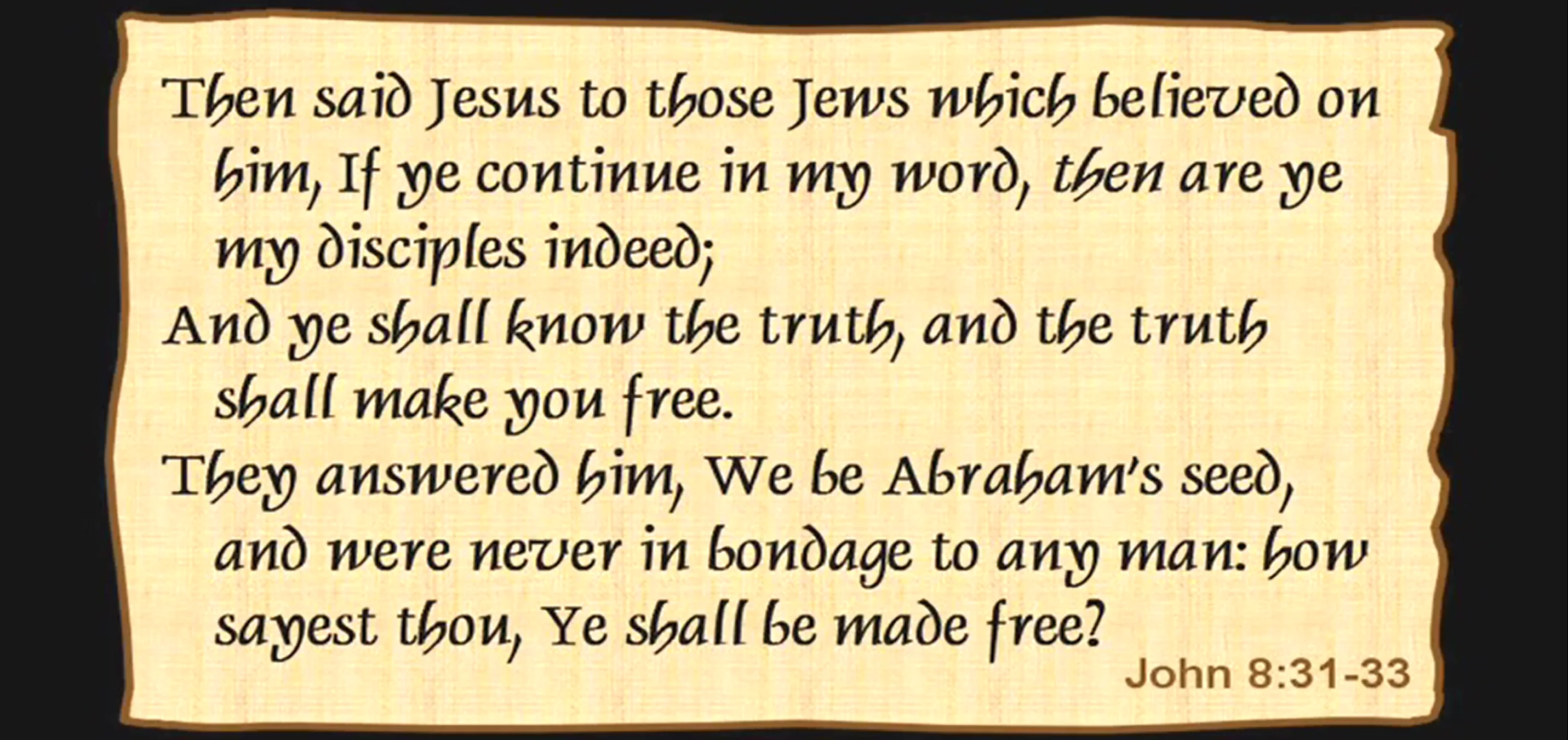
- They were in bondage many, many times in their history (and were under Romans even at that time)
- That was their pride speaking
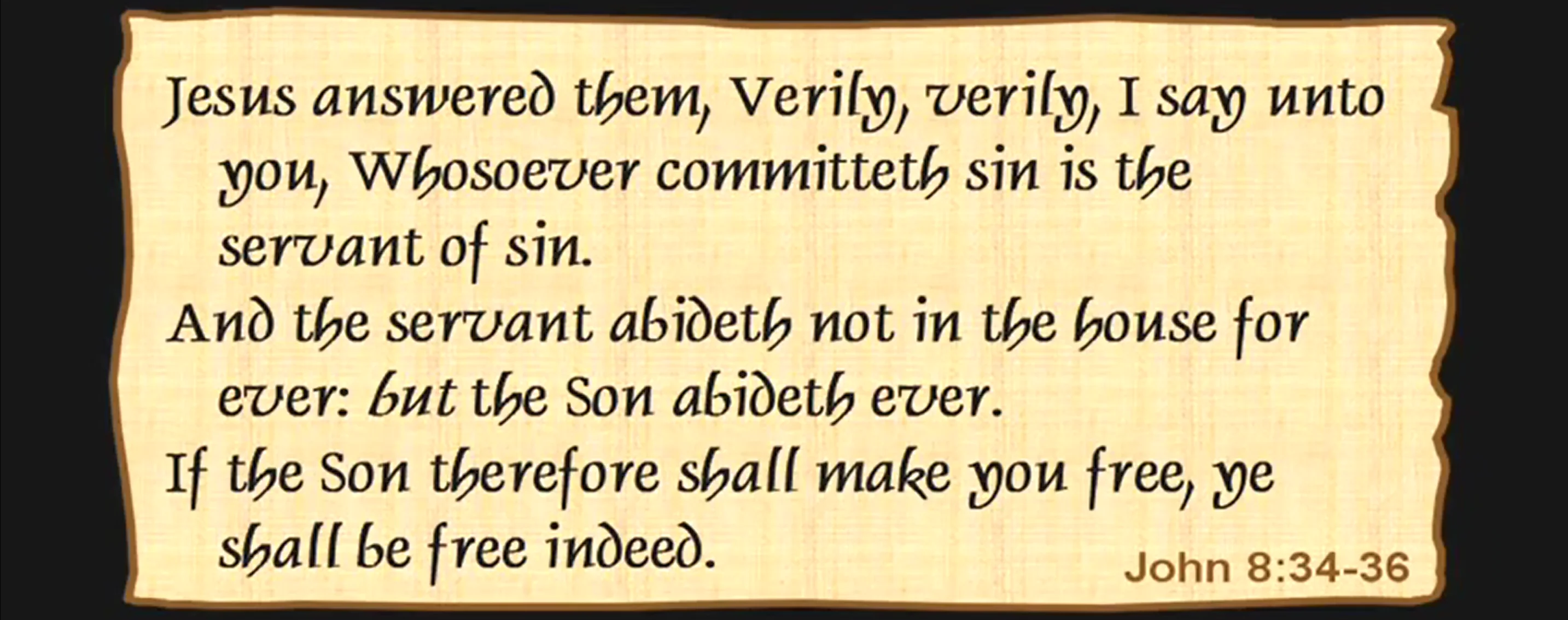
🟡 John 8:34-36
🟡 John 8:39-41
- They are calling Him a bastard — this is the Ultimate Slander
- “…we be not born of fornication” — the cloud of illegitimacy hung over Jesus (and Mary) since His birth (Ps 69:7-12)
- In spite of his possessing the most distinguished credentials of all history, He endured this slander and libel so that we could become “sons of God” (John 1:11-12)
- Lineage Does Not Save:
— John was clear that being a member of the nation of Israel would not save anyone (John 8:33-39, Rom 2:28-29)
— We cannot depend upon our lineage or national heritage or church membership to save us
— Anybody who relies on anything other than a relationship with Jesus Christ is destined for a very huge disappointment
Luke 3:9
- John is speaking eschatologically: One must face the fact that wrath is coming
Luke 3:10

- The crowds (Luke 3:10), tax collectors (Luke 3:12), and soldiers (Luke 3:14) all asked:
— “What should we do to give evidence of genuine repentance?” (cf. Luke 10:25, Luke 18:18)
- In response, John told the people to be:
— a) generous → Luke 3:11
— b) honest → Luke 3:13
— c) content → Luke 3:14
- Those won’t save us, but they will indicate a serious repentant heart (as a prelude to the rest)
- Luke recorded the message of John in ethical terms
— John’s teaching was that one’s life proves whether or not he has truly repented (cf. the Book of James 1-5)
- Are you bringing forth good fruit? (cf. Matt 7:16-21)
- Repentance brings forth character, and character produces the fruit of action, that reveals the character, which reveals the repentance
Luke 3:11
- “…coats” — a tunic, χιτών (chitón), was like a shirt like garment, many had several of them
Luke 3:12-13
- Tax collectors were notorious for their dishonesty in collecting more than required (tax harvesting)
— They were pocketing for themselves the difference
— They exemplified the need for honesty (Luke 5:27-32)
Luke 3:14
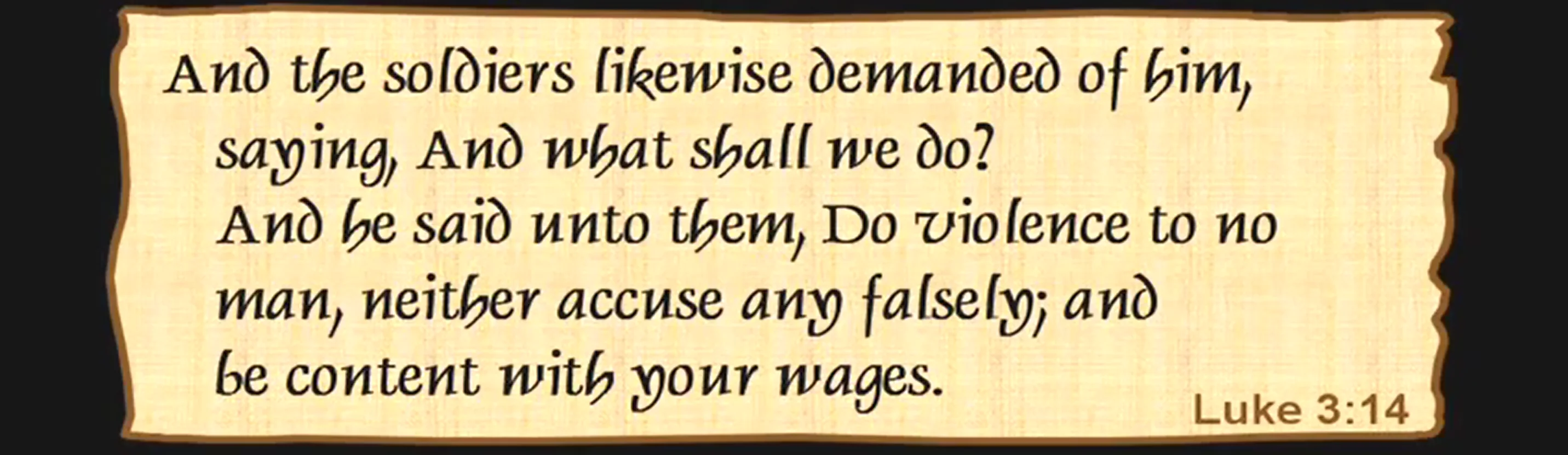
- Soldiers were known and hated for always trying to get more money (by extorting it and blaming others for it)
- They needed to be content and non-violent in their personal conduct
Luke 3:15
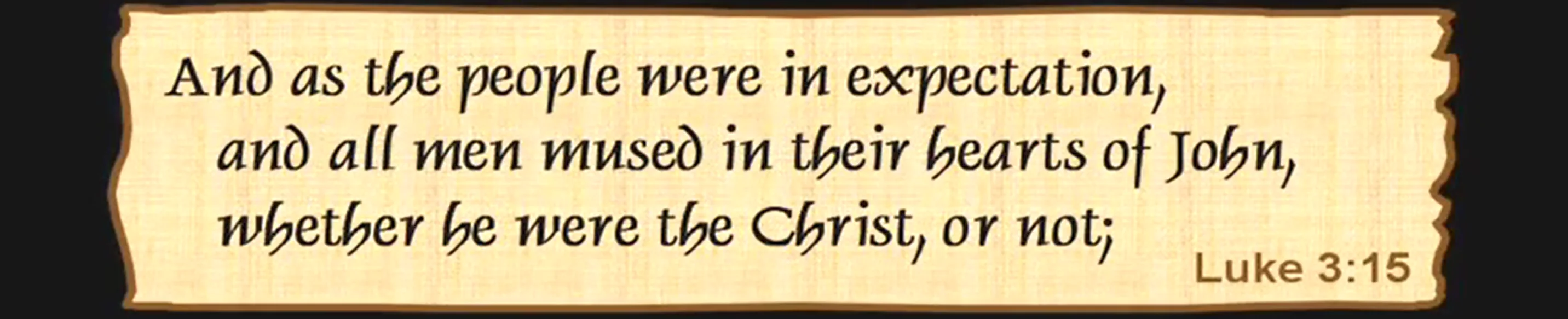
- The temple authorities sent an inquiry team (cf. John 1:19-28)
- Are you the Christ? Elijah? “That” Prophet?
— He came in the spirit of Elijah (it was possible he even wore Elijah’s mantle), but he was not Elijah
— The crowd sensed the special anointing on John (Luke 7:28, Matt 11:11)
Luke 3:16
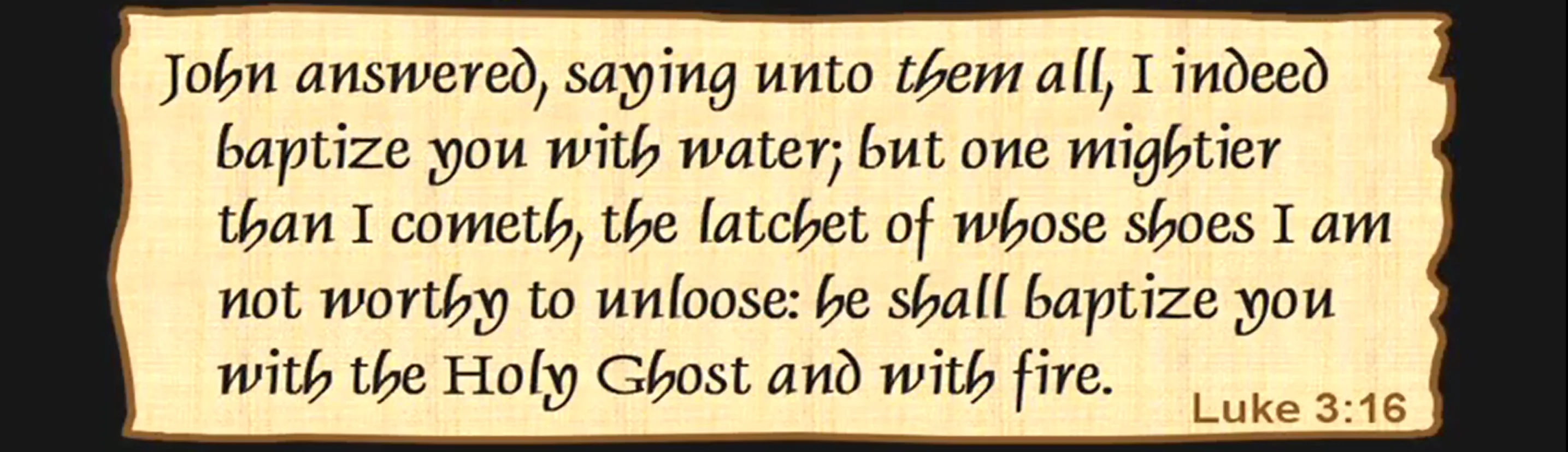
- John himself distinguished between his own baptism and the Messiah’s baptism:
— John’s baptism was with water — he used ritual immersion in water as a formal commitment of repentance
— The Messiah would baptize with the Holy Spirit and with fire
- Jesus’ baptizing “with fire” may refer to:
— the purifying aspect of the baptism of the Spirit (Acts 2:1-4)
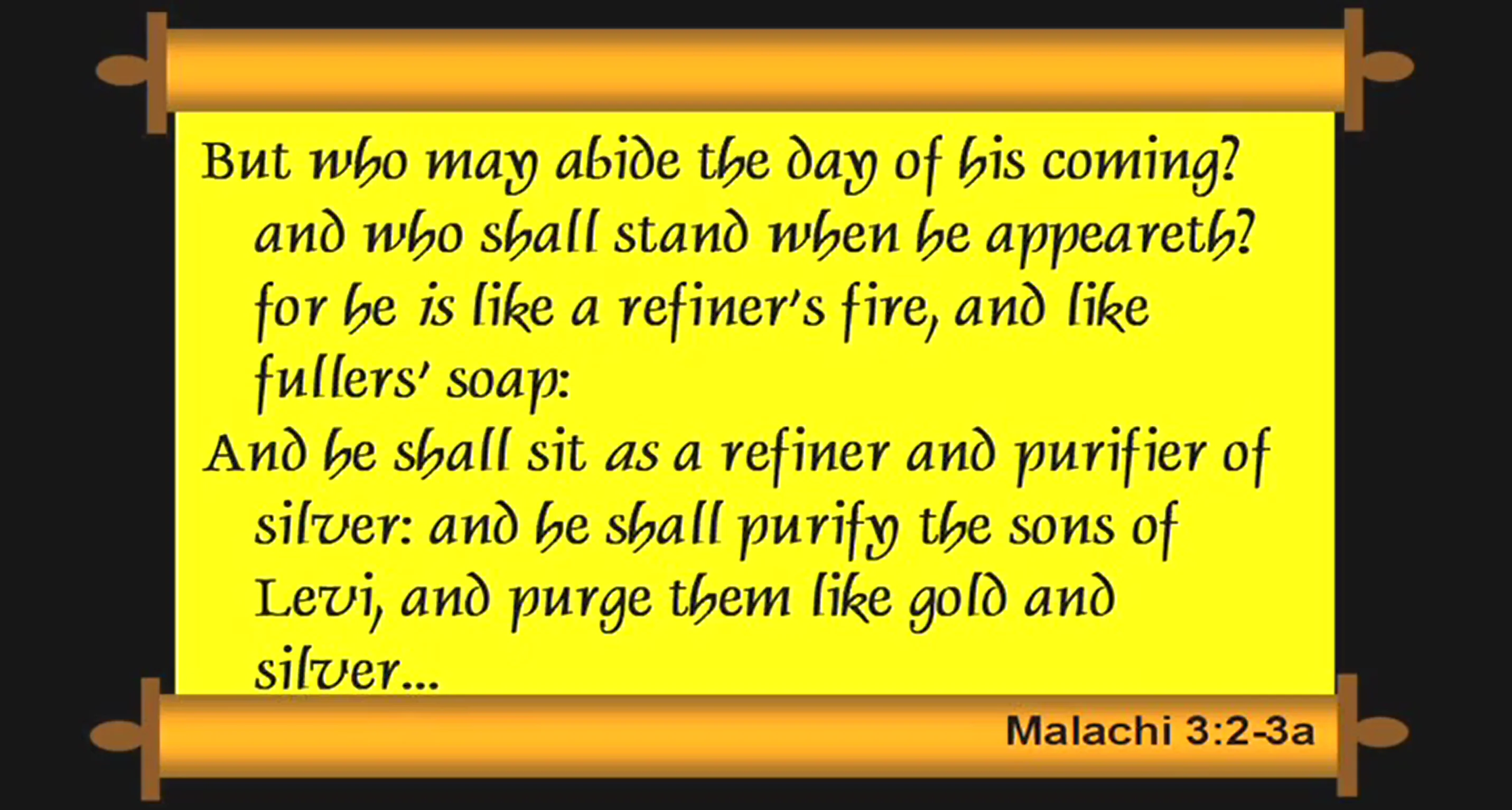
— the purifying work of judgment that the Messiah will accomplish (Mal 3:2-3) → seems more probable in view of the work of judgment described in Luke 3:9 and Luke 3:17
🔥 Mal 3:1
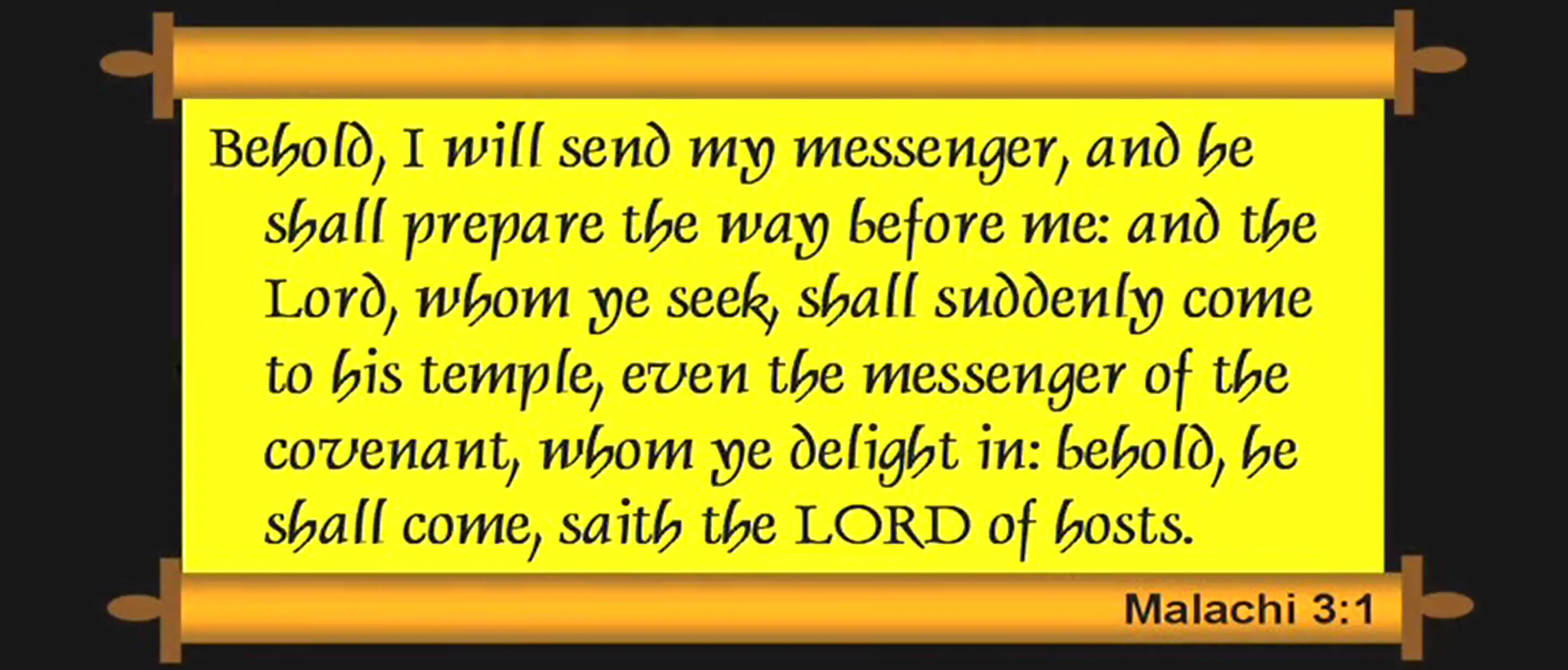
🔥 Mal 3:2-3
🔥 Mal 4:5-6

💨 7-Fold Ministry of the Holy Spirit: (Cf. Isa 11:2)
- Conviction (of sin) (John 16:8-11)
- Regeneration (must be born again, John 3:3-6)
- Indwelling (John 14:16-17)
- Sealing (Eph 1:13-14, Eph 4:30)
- Interceding (on our behalf, Rom 8:26-27)
- Enlightening (Rom 10:9-10, John 1:12, Phil 1:6)
- Putting to death the deeds of the flesh (Rom 8:13)

- Moses: Removing shoes was a prelude to Moses’ meeting God at the burning bush
- Joshua: The Captain of the LORD’s hosts told Joshua to remove his shoes
- The Exodus: The Israelites’ shoes remained durable in the wilderness wanderings (unsung miracle)
- Ruth: Boaz’s marriage license involved a shoe…
Luke 3:17
- The Threshing Process:
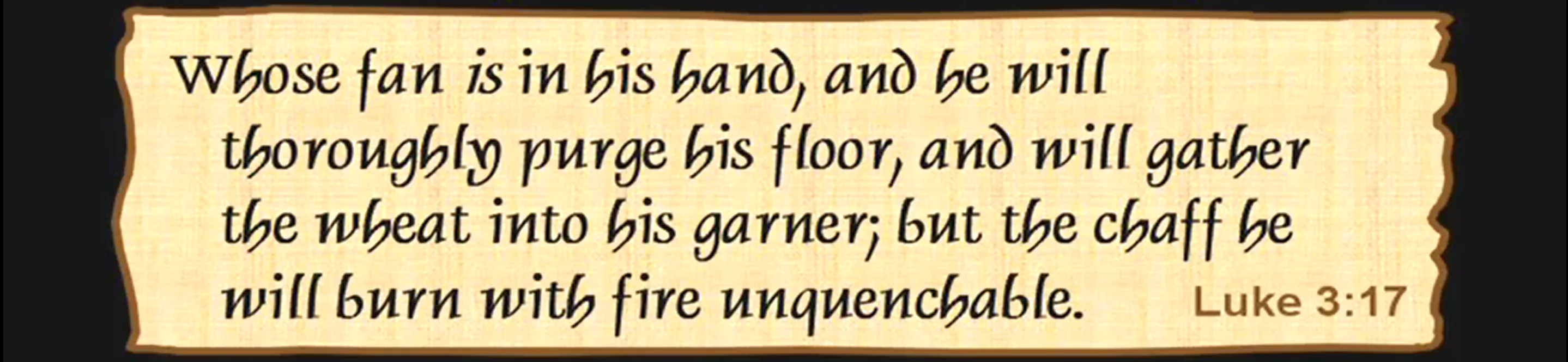
— The wheat husk was unpalatable. The wheat was first crushed to loosen the husk. Then, they would toss the grain into the air (using wind or fan to make separation). Ultimately, they would end up with two piles: clean grain and the husk. The husks — the chaff — would be burned 🔥
- “…unquenchable” — ἄσβεστος (asbestos). Hell is everlasting
- All of these idioms are in Psalm 1
☀️ Psalm 1:1-2
☀️ Psalm 1:3-4
☀️ Psalm 1:5-6
- The Book of Ruth is full of types:
— Naomi → Israel, dispossessed of her land
— Boaz → The Kinsman Redeemer
— Ruth → The gentile Bride
- Where was Ruth during the threshing floor scene (analogous to the Great Tribulation)?
— At the feet of Boaz
- Very interesting eschatological lesson tucked away here in Ruth
Luke 3:18

- What follows, Luke fills in with some details that are going to happen later: John’s imprisonment

Luke 3:19-20
- John spoke against Herod
- Jesus: “No man born of woman is greater than John”
— John wasn’t part of the Church
— He ends the Old Testament (Luke 16:16)
- John spoke against Herod publicly (btw, Herod wasn’t even Jewish)
- Scholars debate the dates of John the Baptist’s imprisonment and death
- It is likely that:
— John began his ministry about AD 29
— He was imprisoned the following year
— He was beheaded no later than AD 32
— His entire ministry lasted no more than three years—about one year out of prison and two years in prison
(Matt 14:1-12, Mark 6:14- 29, Luke 9:7-9, Luke 19:20)


- All four Gospels record this momentous occasion in the life of Jesus, which signaled the beginning of His public ministry (Matt 3:13-17, Mark 1:9-11, John 1:29-34)
- Luke condensed his account more than the other Gospel writers
- Yet, he includes one fact the others don’t mention (Jesus was praying)
Luke 3:21 The Baptism of Jesus
Luke 3:22
- This is very unique moment in history — all three members of the Trinity are evident here
- At the baptism, three things occur:
1) Heaven was opened (the “Third Heaven”)
— “First Heaven” → sky (where the birds fly)
— “Second Heaven” → stars (something different)
— “Third Heaven” → the dwelling of God (Greek concept of the word Heaven)
— The multitudes were likely aware and were stunned
— John the Baptist apparently saw everything (John 1:29-34, cf. Ezek 1:1, John 1:51, Acts 7:56, Acts 10:11)
— “The heavens opened” — it was visual, dramatic and unique
2) The Spirit descended
— This was a visible, palpable descent
— The dove was a symbol of peace or freedom from judgment (Gen 8:8-12)
— The Holy Spirit’s presence “like a dove” signified that Jesus would bring salvation to those who turn to him
— The Talmud says that in Genesis 1 the Spirit of God “moved”, “brooded” over the face of the water
3) God spoke audibly
— Three Times God “Spoke” – always of His pleasure:
— At Jesus’ baptism (here)
— At the transfiguration (Matt 17)
— and the Voice from heaven (John 12:27-33)
— His voice is often related to a thunderclap (Ps 18:13, Isa 30:30-31, Luke 9:35)
— Each time God speaks, He refers to Jesus’ death (Chuck did not elaborate)
— The voice of God authenticated Jesus by alluding to Psalm 2:7
- Who is visible in here in Luke?
- All three persons of the Trinity are evident:
— The SON is baptized
— The HOLY SPIRIT descends on Him
— The FATHER speaks from heaven approvingly of Jesus
- In his baptism Jesus identified Himself with sinners, even though He was not a sinner (important point)
♻️ Psalm 2:1-3
♻️ Psalm 2:4-6

♻️ Psalm 2:7-8
♻️ Psalm 2:9-11
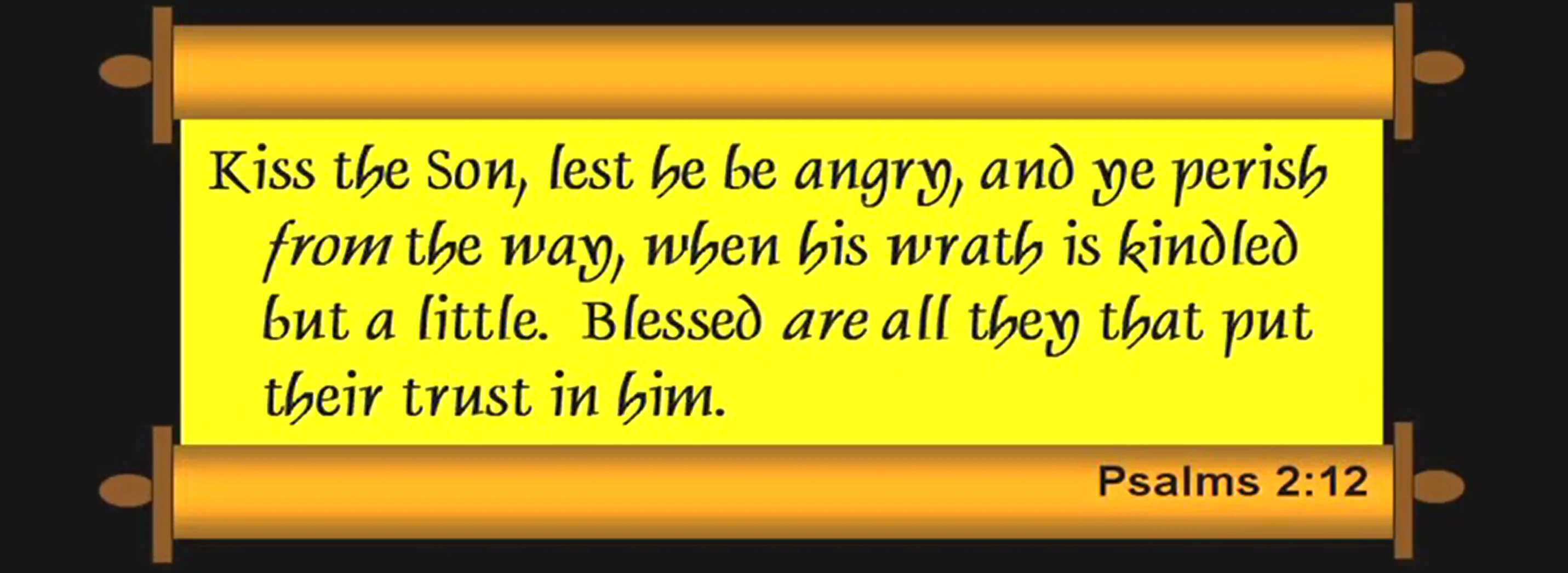
♻️ Psalm 2:12
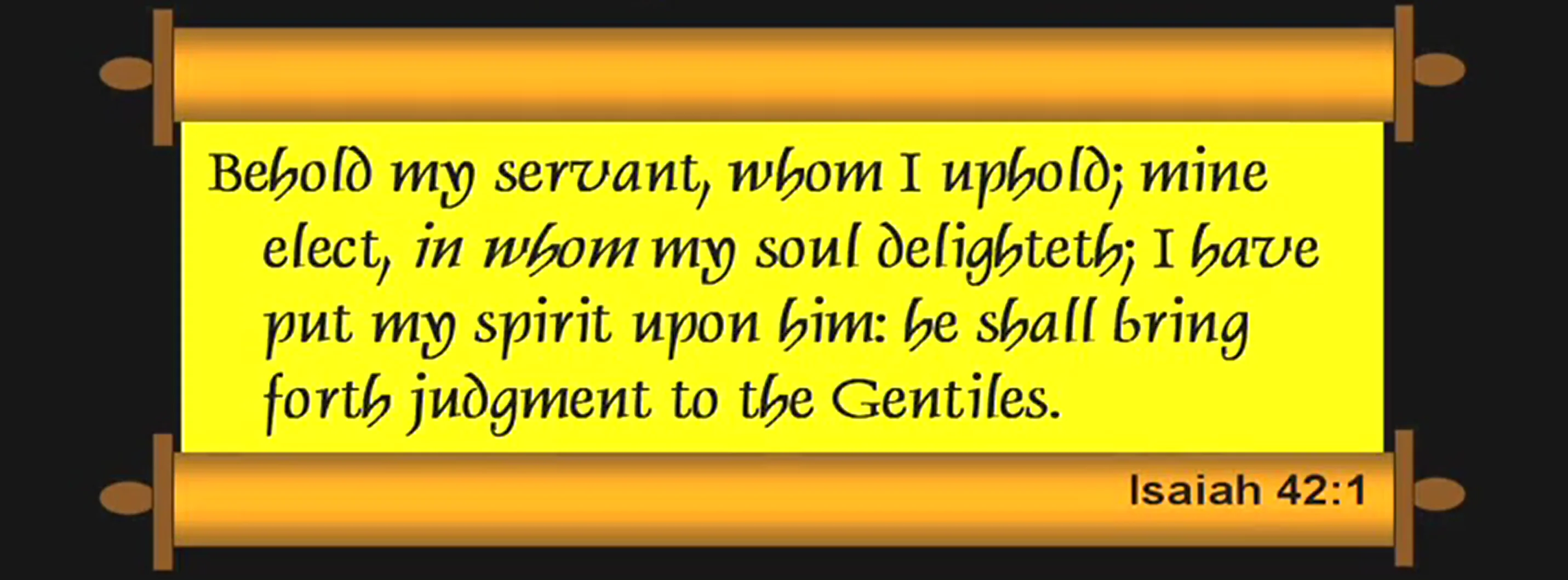
We find a similar thing in Isaiah (focus on the Gentiles)
📒 Isa 42:1

Luke 3:23 The Genealogy of Jesus
- Age of Ministry — in the Old Testament, 30 was the age of ministry:
— Priests began ministry at age 30 (Num 4:3)
— Joseph stood before Pharaoh at age 30 (Gen 41:46)
— David’s reign began at age 30 (2 Sam 5:4)
— Ezekiel first saw visions of God (Ezek 1:1)
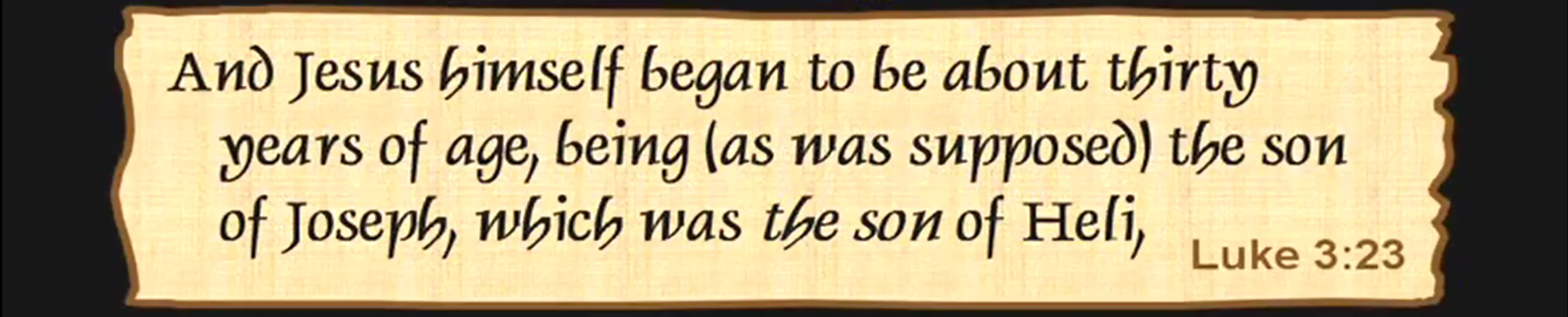
- “…the son of Heli” — νομίζω (nomizó): “reckoned as by law”, not “as was supposed”, nor ”as it was being thought”
— Joseph was the son-in-law of Heli, having married his only daughter Mary
[According to Lachmann, Tischendorf, Tregelles, Alford, Westcott and Hort: Jerusalem Talmud, Ch. 77,4.]
[Cf. E.W. Bullinger, Number in Scripture, Kregel, Grand Rapids, MI, from 1894 reproduction, p. 160 note.]
- Matthew’s Genealogy
— Matthew goes through the royal line down to Joseph, the legal father of Jesus Christ
— In the first 17 verses of Matthew, he makes the case that Jesus had legal title to the Throne of David
— Matthew goes thru Solomon, the 1st surviving son of Bathsheba (Solomon was the 2nd son born to King David and Bathsheba, making him her 1st surviving son. Their first child, an unnamed son conceived before they were married, died in infancy, as described in 2 Sam 12:15-24)
— The Problem:
• The Messiah, the royal line, would be from the tribe of Judah (Gen 49:10)
• The Messiah would be from the line of David (Ruth 4:22, 2 Sam 7:11-16)
• The succession of the kings of Judah proved to be, with only a few exceptions, a dismal chain (bad to worse)
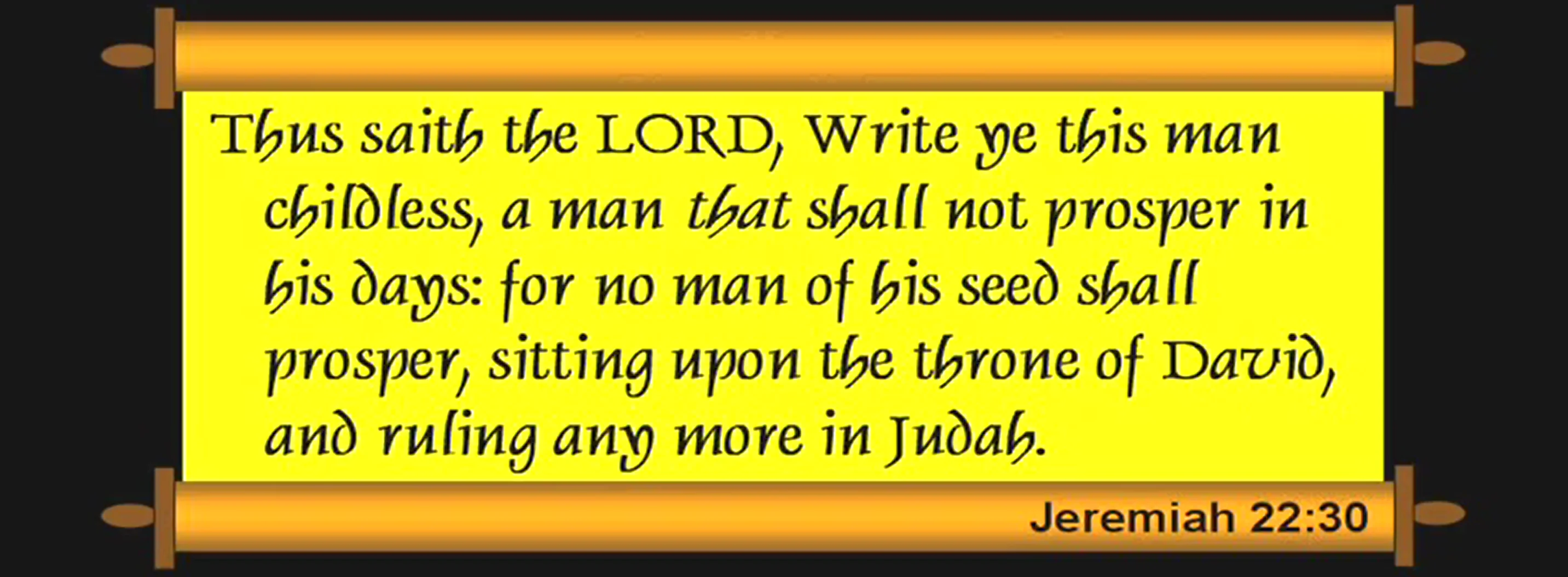
• We eventually encounter Jeconiah (aka Jehoiachin) who is so bad, God finally pronounced a “blood curse” on him (Jer 22:30): “Thus saith the LORD, Write ye this man childless, a man that shall not prosper in his days: for no man of his seed shall prosper, sitting upon the throne of David, and ruling any more in Judah.”
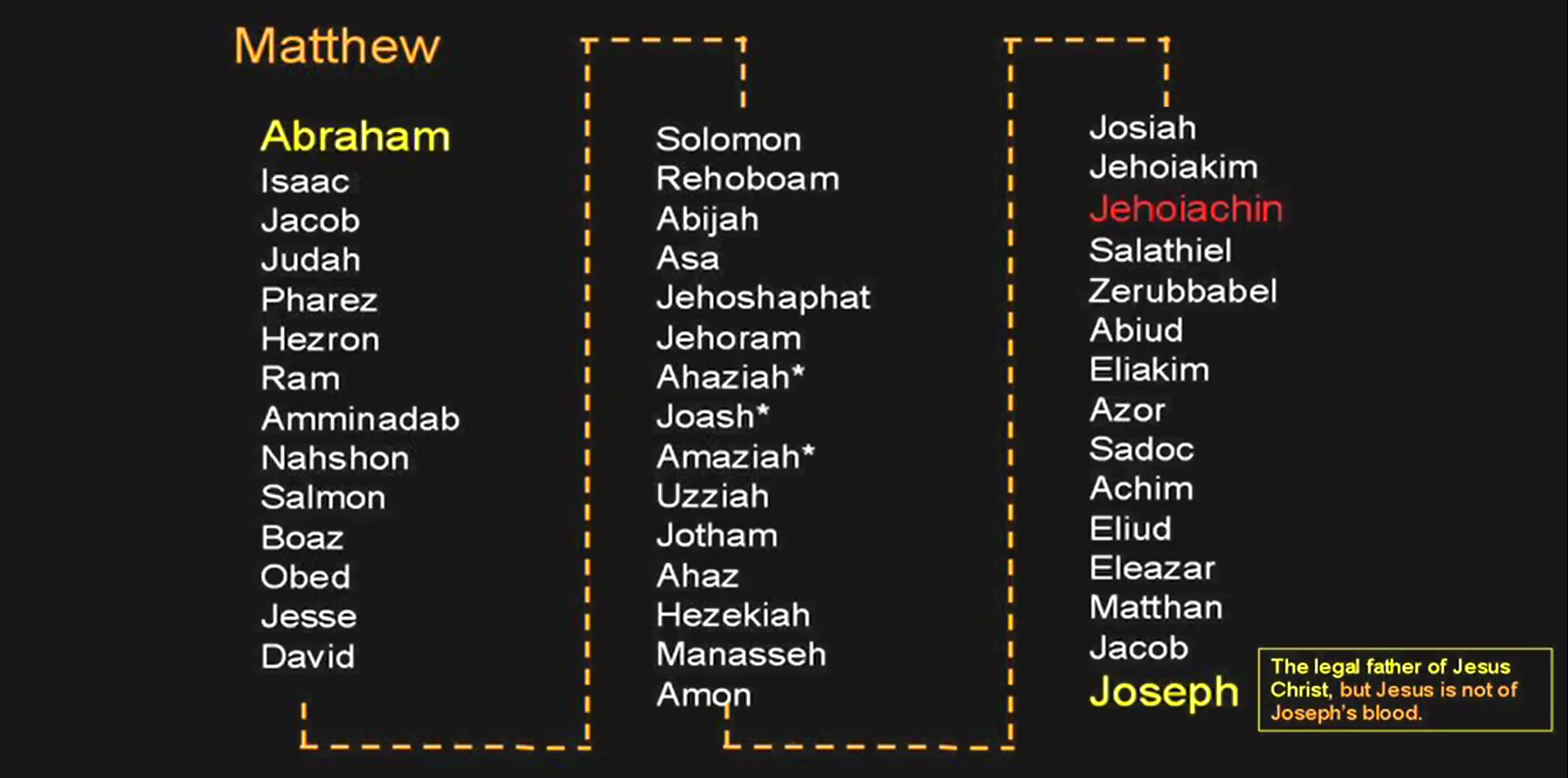
- How could the Messiah come from the royal line if there’s a blood curse on the royal line? Jer 22:30
- Egypt generations?
— Let’s suppose Pharez was born around the time of entering Egypt
— Nahshon was old enough to be the leader of the tribe of Judah upon exodus (Num 1:7)
— That leaves only 4 names to span ~400 years in Egypt: Pharez, Hezron, Ram and Amminadab
— Each next generation would be born when their father was 100 years of age!
- When God pronounced that blood curse, there probably was a celebration in the council of Satan — they must have concluded that God had, as we say, shot Himself in the foot, made a mistake
- Luke reveals God’s solution to this apparent paradox in his genealogy
— Legal line is thru Joseph, but not the blood line
— Blood line is thru Mary (Virgin Birth)
- Matthew’s genealogy goes from the top down (Abraham, then down)
- Luke’s (slightly different) genealogy goes in reverse order (from Jesus to Adam)
— Luke lays out his genealogy in climactic order (cf. 1 Cor 15:22, 1 Cor 15:45, Rom 5:17)
— Adam (as were the angels) was a direct creation of God
— We are the sons of a fallen Adam (but cf. John 1:11-12)
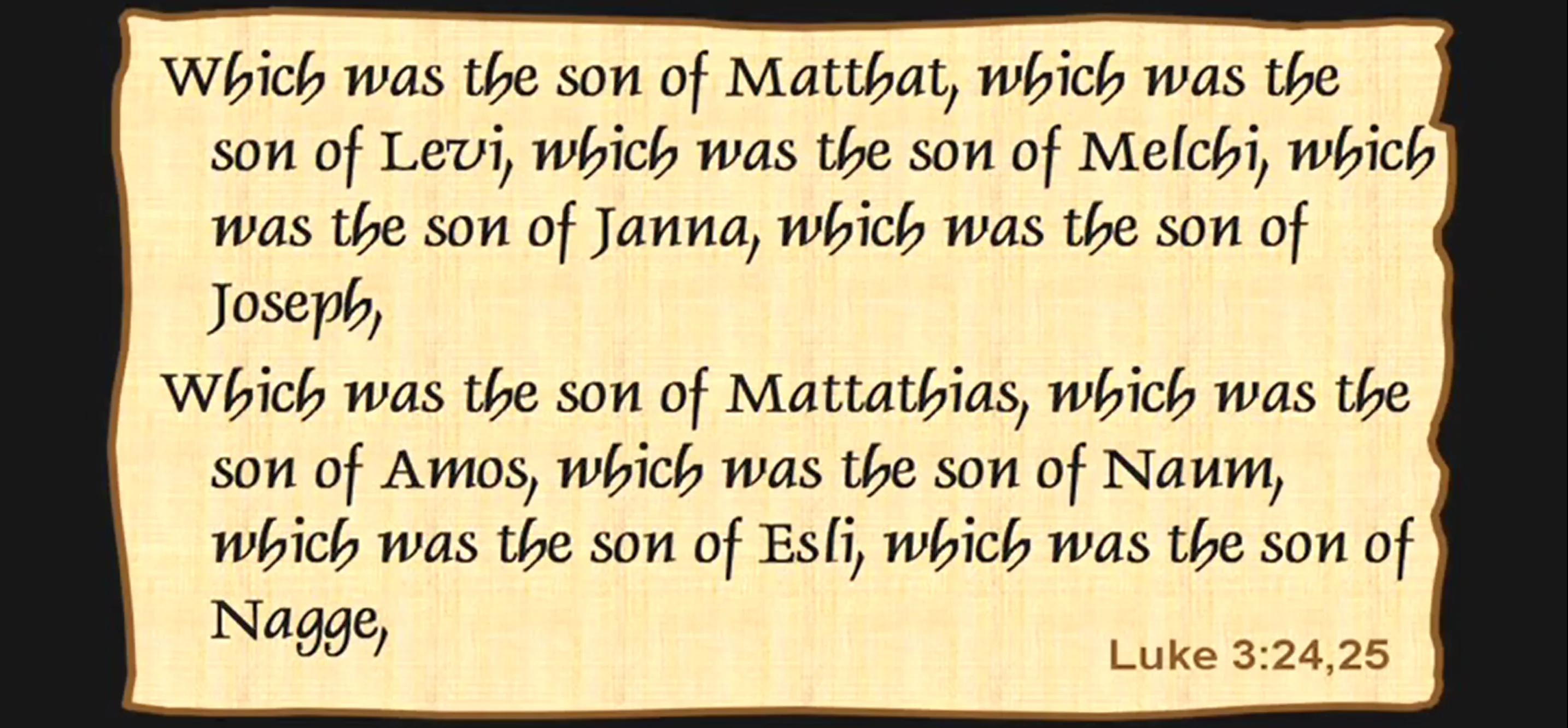
Luke 3:24-38
[Luke 3:26-37 omitted] ➖➖➖
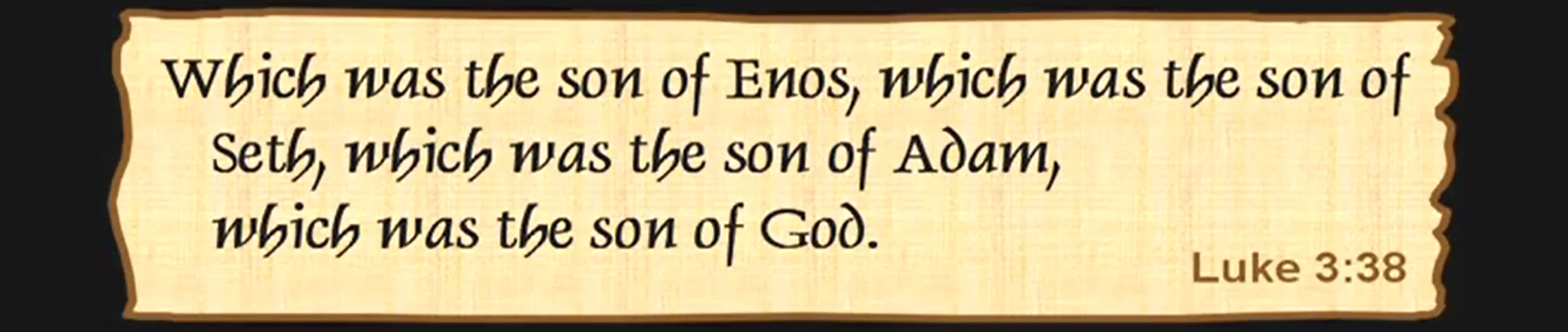
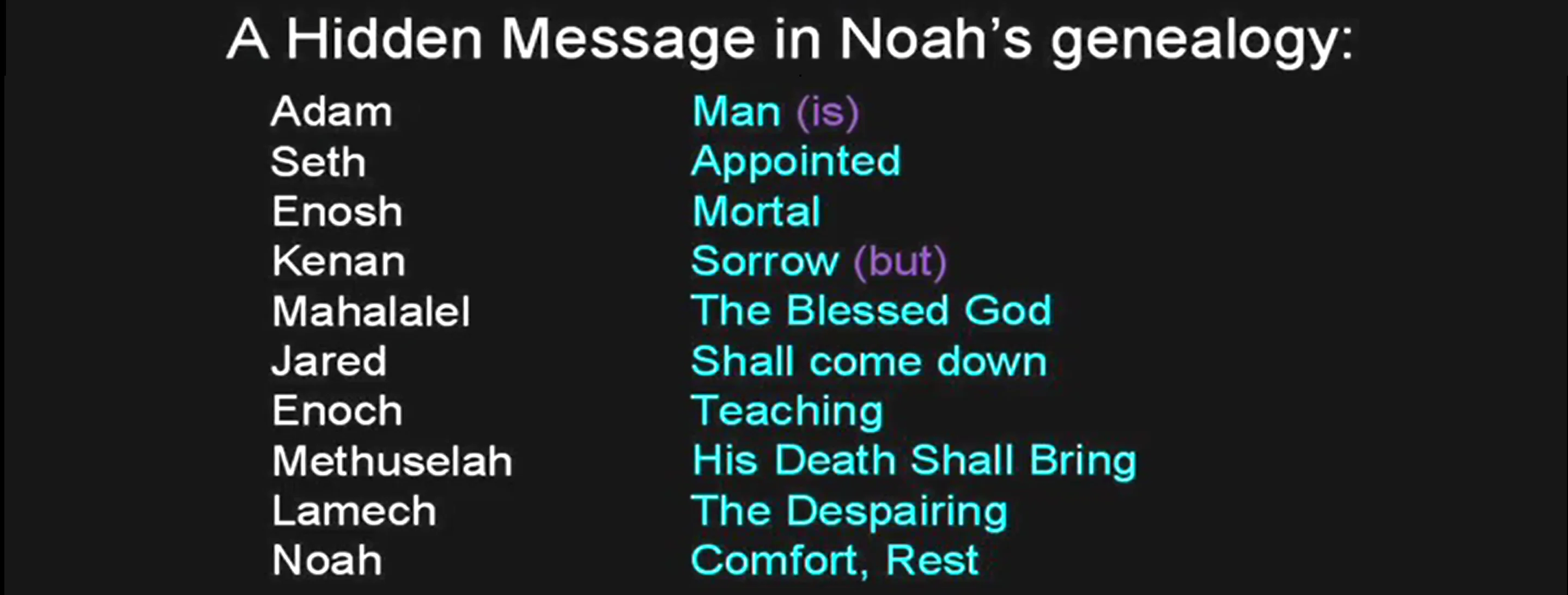
- The list of first 10 generations (Noah’s genealogy):
— Their names are not translated, but transliterated (approximations of how they were pronounced)
— In Hebrew, words are made of a 3-letter root. The letters don’t carry just phonetics, but also a meaning
— Ten names carry a hidden message: a summary of a Christian Gospel tucked away in a genealogy in the Torah
— Certainly impossible to imagine a group of Jewish rabbis contrived to hide a summary of Christian Gospel
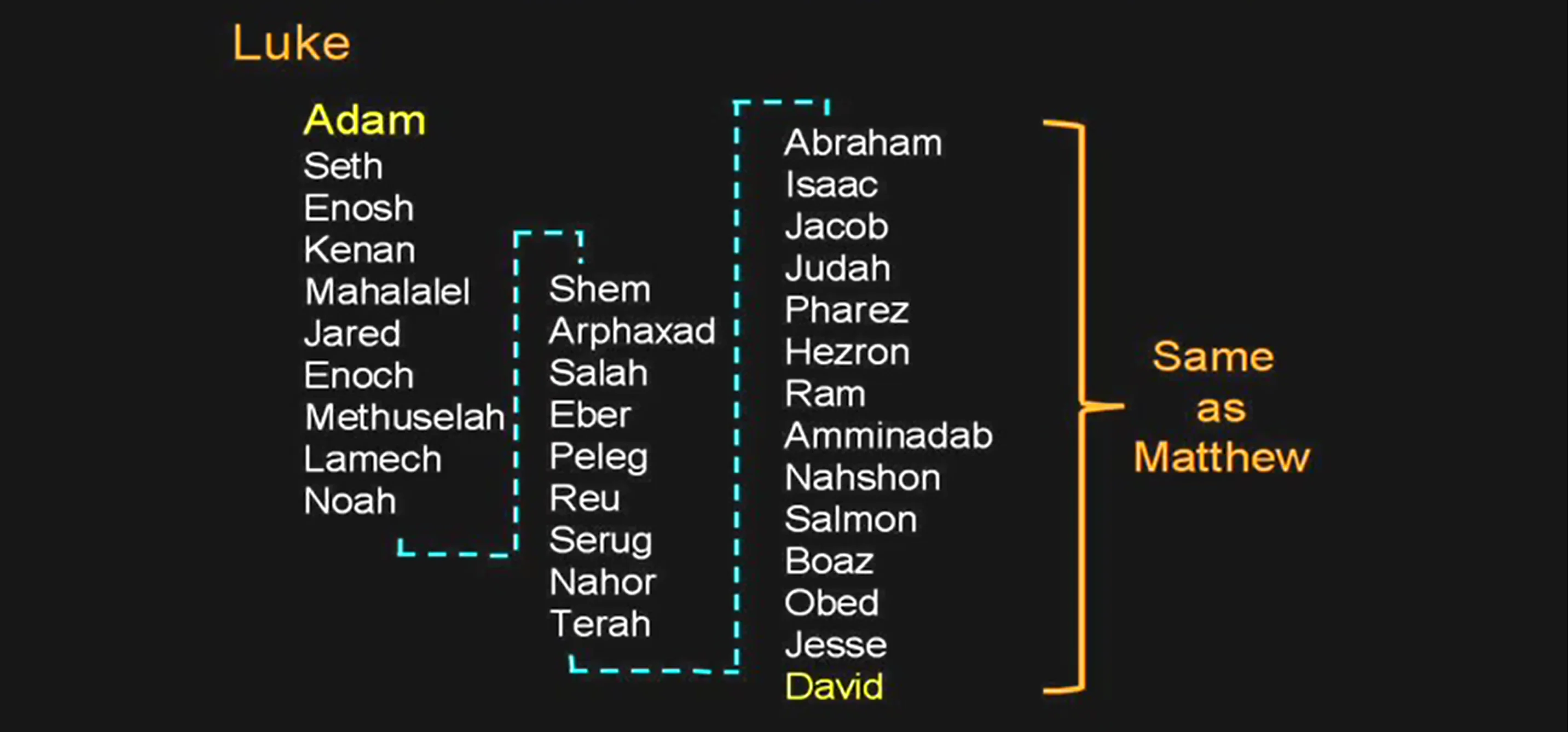
- From Abraham to David, naturally, the list is identical to Matthew
- However, after David, Luke doesn’t go through 1st surviving son of Bathsheba (Solomon)
- Luke goes through 2nd surviving son of Bathsheba — Nathan (not Nathan the prophet)
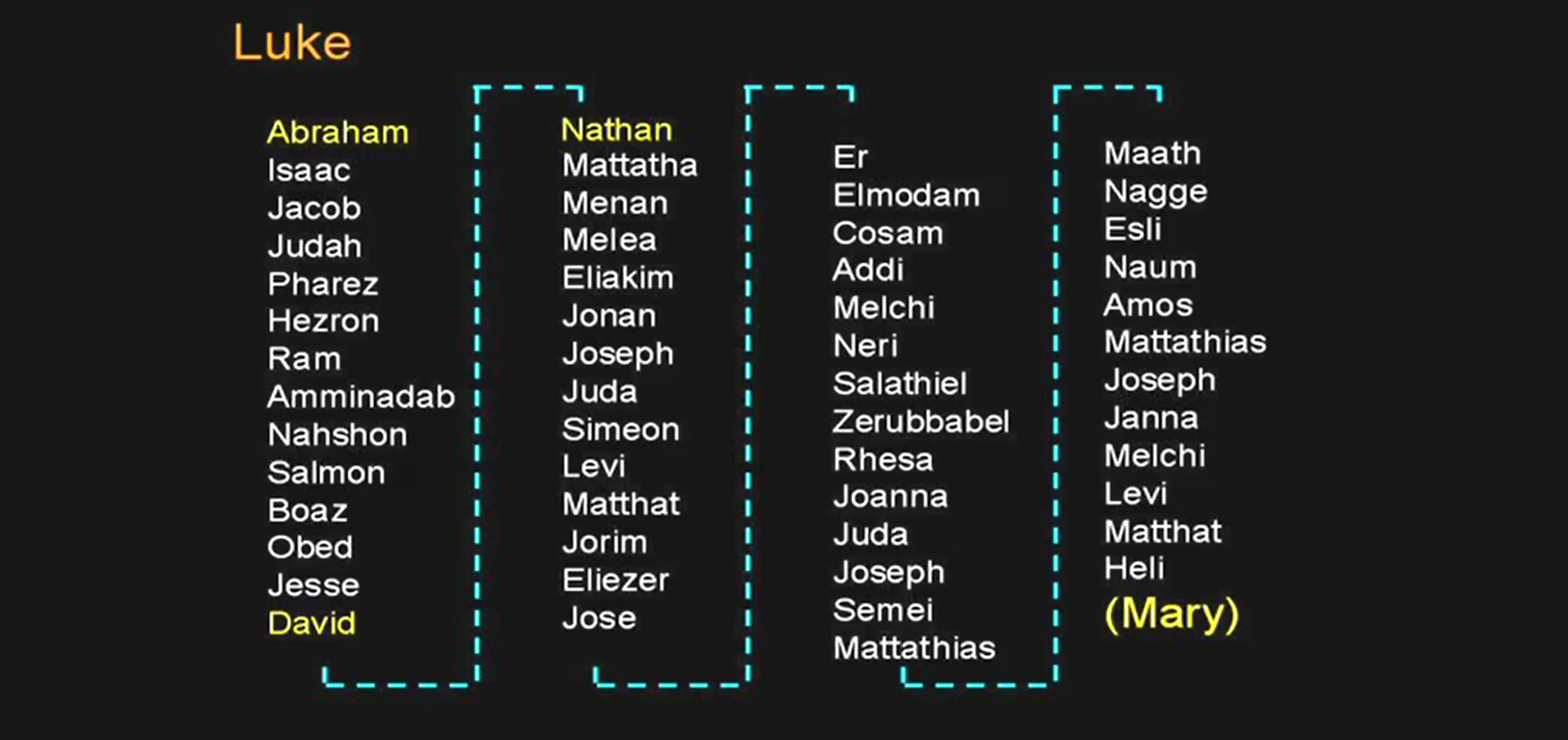
- All are men, except Mary is daughter of Heli
- Mary takes advantage of a strange exception in the Torah — the Daughters of Zelophehad (Num 27:1-11)
- Mary marries Joseph and since she is the only daughter of Heli, inheritance takes place thru the son-in-law of Heli, which is Joseph

- There are many theological reasons, but one simple reason is to provide a way around the blood curse on Jeconiah
- Mary, having married within tribe, carries the inheritance: Heli would have adopted Joseph as his son-in-law
— As per the Torah exception provided for the daughters of Zelophehad (Num 27:1-11)
— The Torah provides for inheritance through the daughter, if no sons were available and she married within her tribe (Num 26:33, Num 27:1-11, Num 36:2-12, Josh 17:3-6, 1 Chr 7:15)
— By tradition, the father would legally adopt his son-in-law in such cases (Ezra 2:61, Neh 7:63, ?? 32:41; cf. 1 Chr 2:21-23, 1 Chr 2:34-35, Num 27:3-8)
— Cyrus Ingerson Scofield (1843-1921, aged 77) pointed out that the claims of Christ hang on this exception in the Torah — he noted that the claims of Christ to the throne of David depend upon specific legal, genealogical exceptions in the Torah. Through the legal adoption of Jesus by Joseph (descended from Solomon) and the lineage of Mary (descended from Nathan), Jesus carried the legal title to the throne of David while avoiding the "blood curse of Jeconiah" [C. I. Scofield supported dispensational premillennialism and literal eschatological interpretations. Check out The Scofield Reference Bible, $20 on Logos]

- We discover that every detail in Scripture:
— Proves to be deliberate and relevant and
— Ultimately points to Jesus Christ!
- Pharez:
— Pharez was the illegitimate son of Judah and Tamar (Gen 38:6-29)
— An illegitimate son cannot inherit for 10 generations (Deut 23:2)
— The 10th generation from Pharez was David! (Ruth 4:12)
- Matthew’s “Fourteen Generations”?
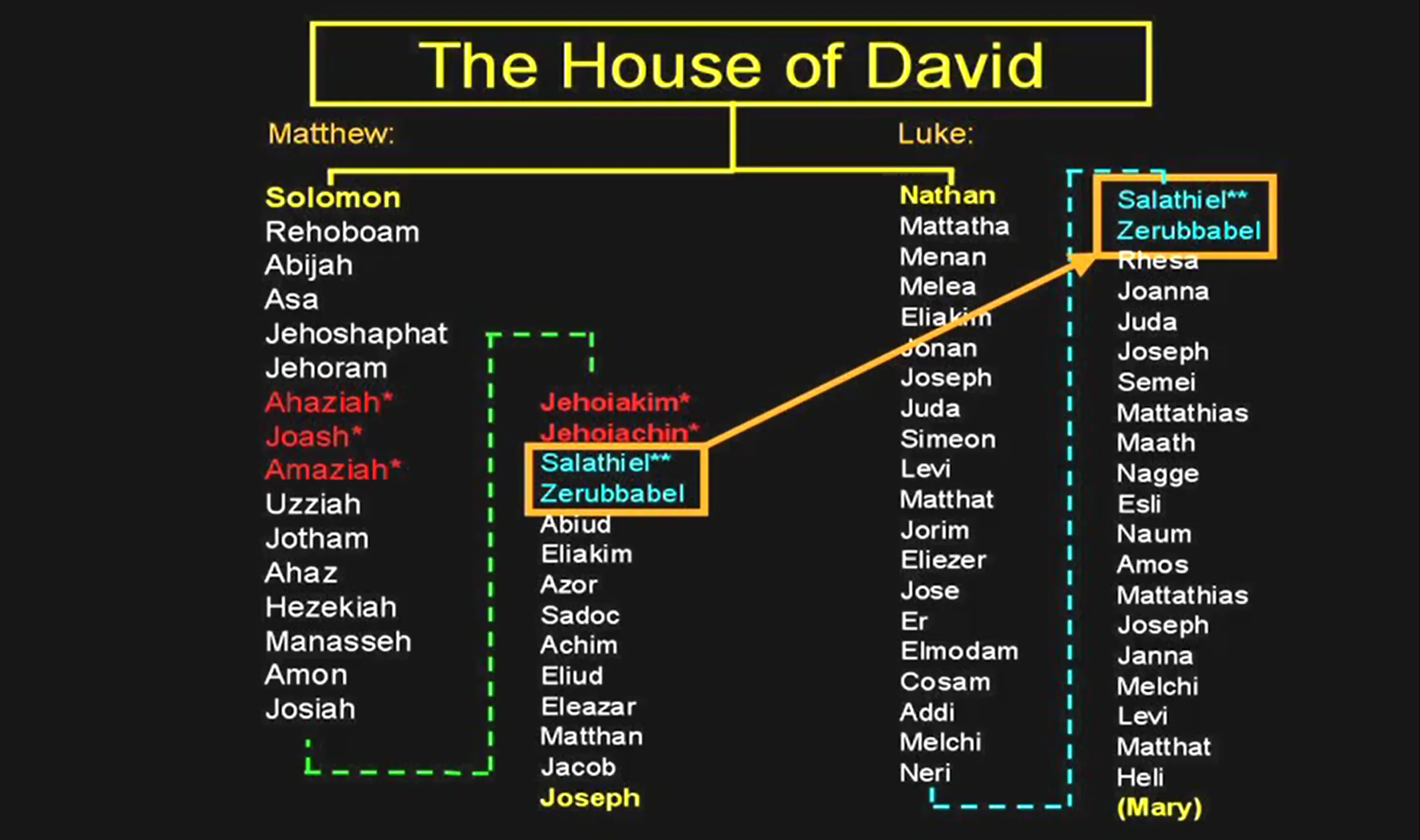
— Ahaziah, Joash and Amaziah all died violent deaths
— God thus dealing with idolatry literally “to the third and fourth generations” (Ex 20:4-5)
— Their names are therefore “blotted out” according to the Law (Deut 29:20)
— Jehoiakim and Jechoniah likewise, since the kingdom ended as an independent kingdom with Josiah’s death at Megiddo. Thus these were “blotted out” of the groups of “14 generations” in Matthew’s account
- Why are Salathiel and Zerubbabel mentioned in both genealogies? (couple of guys that have the same names)
— Option 1: Two different sets of men with the same names due to tradition
— Option 2: If the same two, Neri, the Son of Nathan, might have been deeded the throne of David because of the death of Jeconiah, and his blood curse. (Salathiel would have been Neri’s blood son and Jeconiah’s legal son for inheritance purposes)
🟡 John 1:11-12

- Those that are born once die twice
- Those that are born twice die once