s05 (Ch 5) Disciples, Leper & Paralytic, Fasting (studied 27-Jan-2026)
The Book of Luke with Dr. Chuck Missler

The subsections of Chapter 5 (per NASB/LSB/MEV) are:
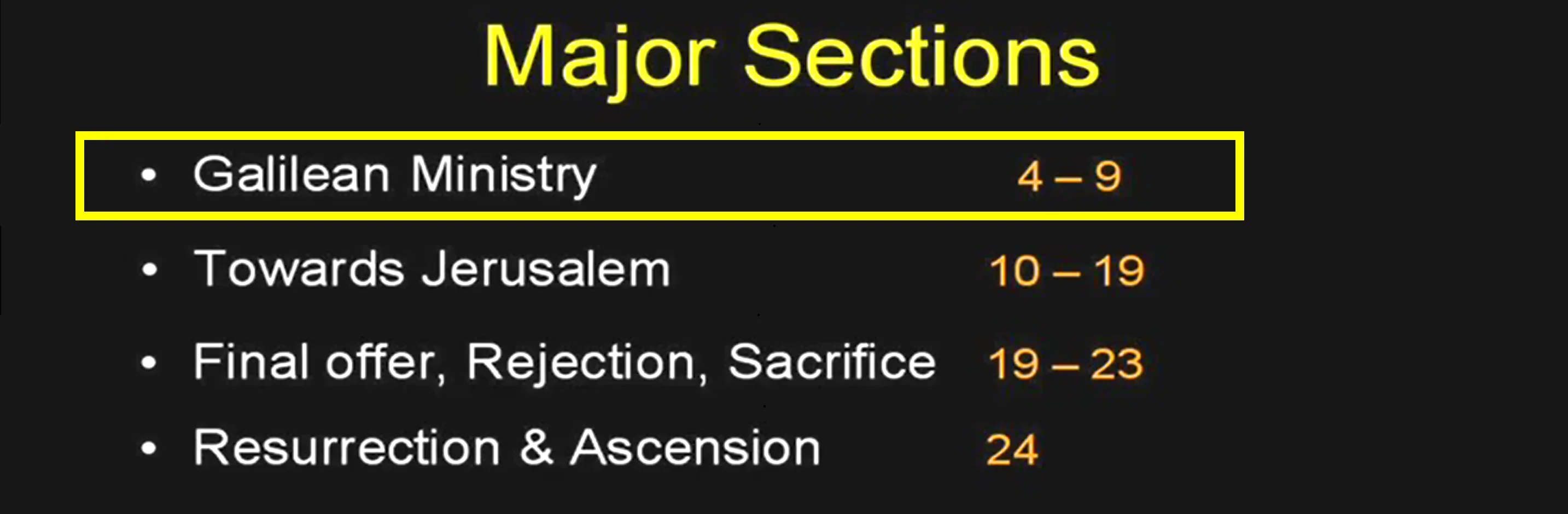

- In this chapter, Jesus will demonstrate the authority He declared in reading His mandate from Isaiah to the synagogue in Nazareth in Luke 4:16-21
- Jesus has gone through Galilee ministering for some time and His fame has begun to spread
- Meeting the Disciples
— The account recorded here in the opening is not the first time Jesus had been in contact with the men whom He called to be His disciples
— Luke already had indicated that Jesus had healed Simon’s mother-in-law, which denotes previous contact with Simon and Andrew
— This seems to be at least the third time Jesus had contact with these men
• In John 1:41, Andrew told Peter that he had found the Messiah (and John apparently told James)
• In Mark 1:16-20 (also Matt 4:18-22) Jesus called Simon, Andrew, James and John → Mark recorded that that call was before Jesus entered the synagogue in Capernaum and healed a man who was demon-possessed
— Now, some time later, Peter and the others were still apparently partners in a fishing business with at least two ships
— Jesus, having established His authority (Luke 4:31-44), called these men into full-time discipleship

Luke 5:1 The Calling of the First Disciples

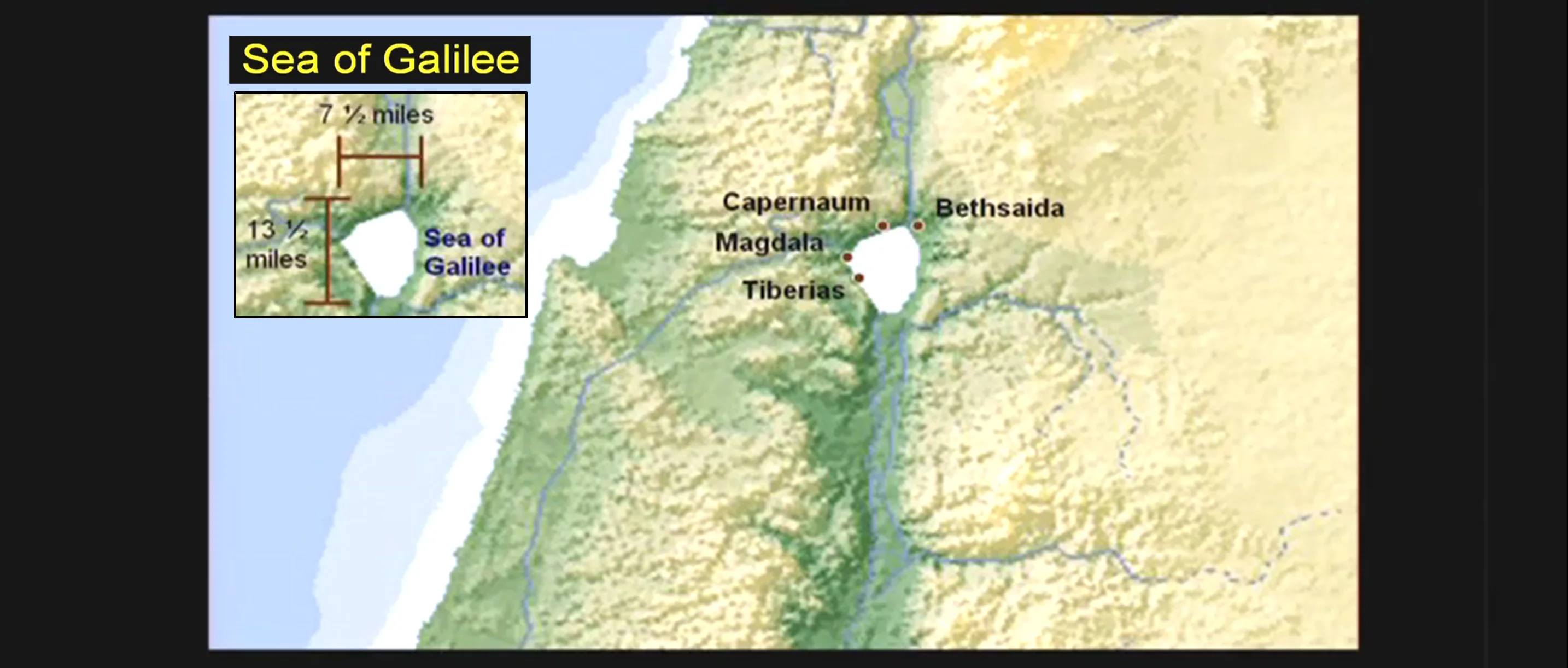
- “…lake of Gennesaret” — from כִּנּוֹר(kinnowr): a word for “harp” (it is a harp-shaped lake)
- We call it the “Sea” of Galilee. It’s also known as the “Sea” of Tiberias
Luke 5:2
- This should not be confused with another later incident when they were mending their nets
- They had finished an all-night vigil with little to show for it — “toiled all the night, and have taken nothing” (v.5)
— fishing includes carp, sardine, mullet, catfish and combfish
- Piscare ergo sum — “I fish, therefore I am.” — a facetious claim, but that was probably their primary dictum
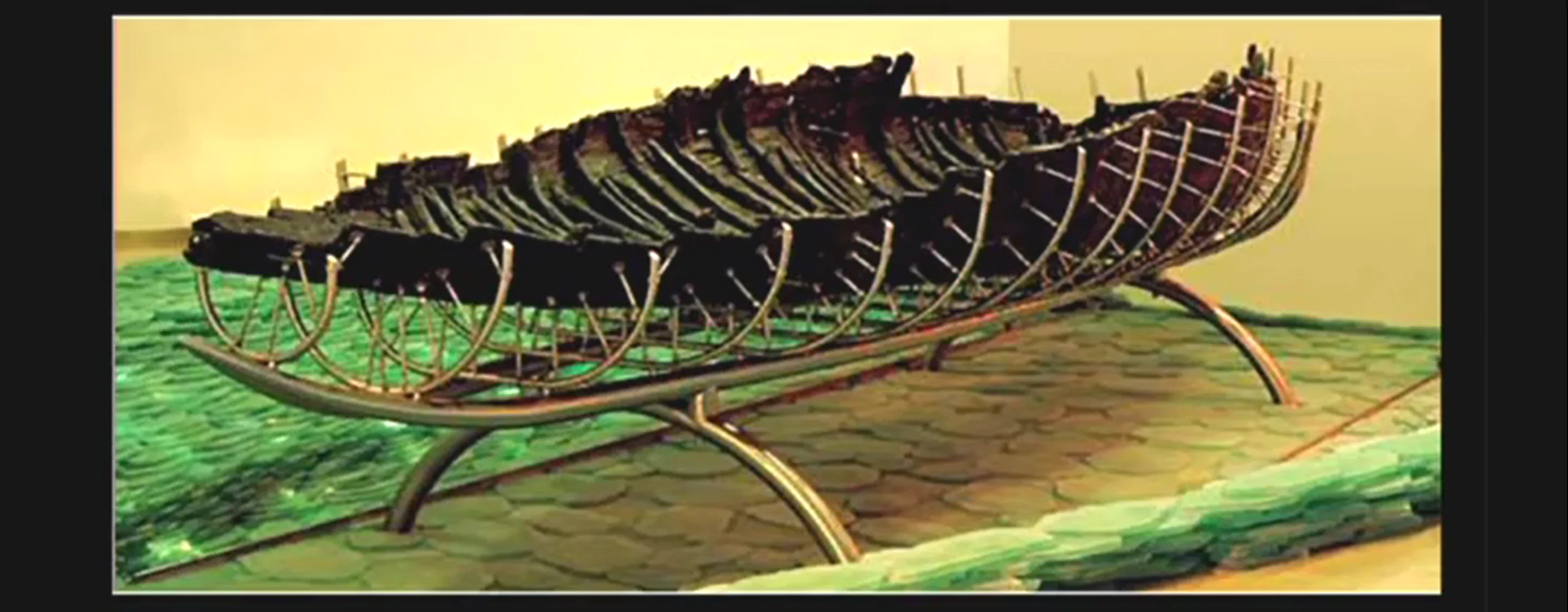
- The Ancient Boat Discovery
— In 1986, a 2000-year-old boat was discovered preserved in mud during a record low
— It was radiocarbon dated: 85 BC – AD 15 and thus appears typical of the Gospel period
— It appears to be the kind of fishing boat they would have used in Jesus’ day
— It is approximately 27 ft long, 7½ ft wide
— After careful chemical treatments, it has been placed on display in a specially built facility, Yigal Allon Museum, next to Kibbutz Nof Ginosar, since 1995
Luke 5:3
- He used the boat as an improvised pulpit to address the pressing crowd
Luke 5:4

- Jesus assumed command. He’s always in command
Luke 5:5

- As a professional fisherman, he knew that during the day the fish would be too deep
— “…Master” = ἐπιστάτης (epistates): overseer; Captain
— “…nevertheless” — in respect… reluctant obedience
- Miracles are always preceded by obedience
— If Peter had not obeyed, he would not have witnessed the miracle…
Luke 5:6

- At another early morning, later (in John 21:1-13), after the resurrection, this would again be a means of recognition:
— Peter then went fishing—a reprise of the incident here
Luke 5:7
Luke 5:8
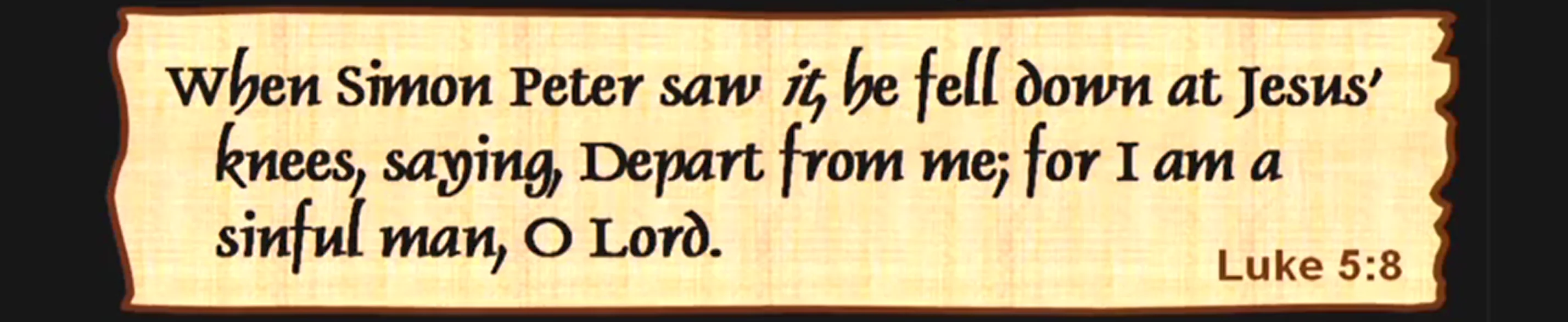
- “…I am a sinful man, O Lord” — this is always the response in the Bible when people are confronted with deity
— Peter recognizes that Jesus is not mere mortal man (he realized he was confronted with supernatural presence)
— Peter saw himself in perspective (he is overwhelmed with the Deity and the realization of the gulf between them)
- Much like the reactions of:
— Job (Job 42:5-6) “…I reject myself, And I repent in dust and ashes” (NASB)
— Isaiah (Isa 6:1-5) “…Woe is me, for I am ruined! For I am a man of unclean lips,…” (NASB)
— John (Rev 1:17) “And when I saw Him, I fell at His feet like a dead man…” (NASB)
- When confronted with God, the experience is overwhelming. We’re presented with both:
— The majesty of the Deity, and
— An awareness of our own unworthiness
Luke 5:9
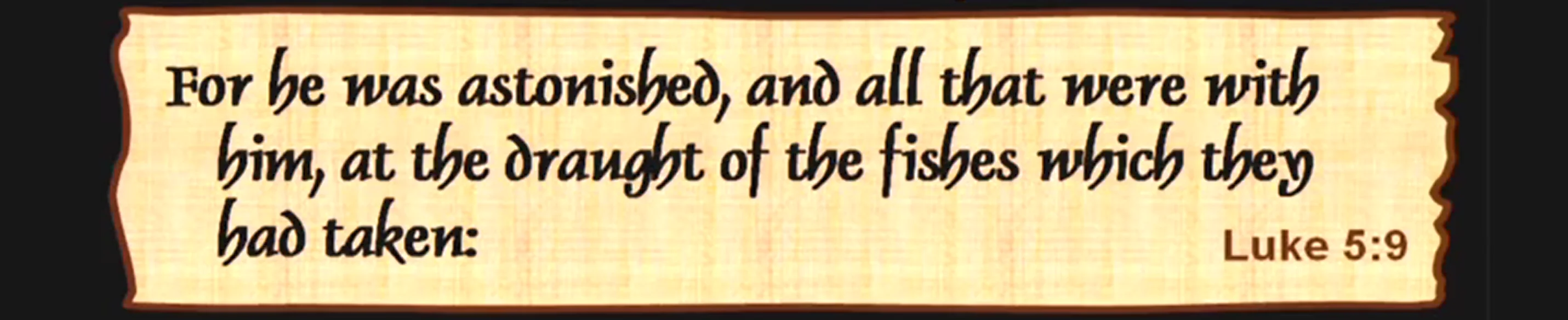
- “…astonished” — θάμβος (thambos): “amazement seized him and all those with him”
— This was the reaction of the experienced professionals…
Luke 5:10
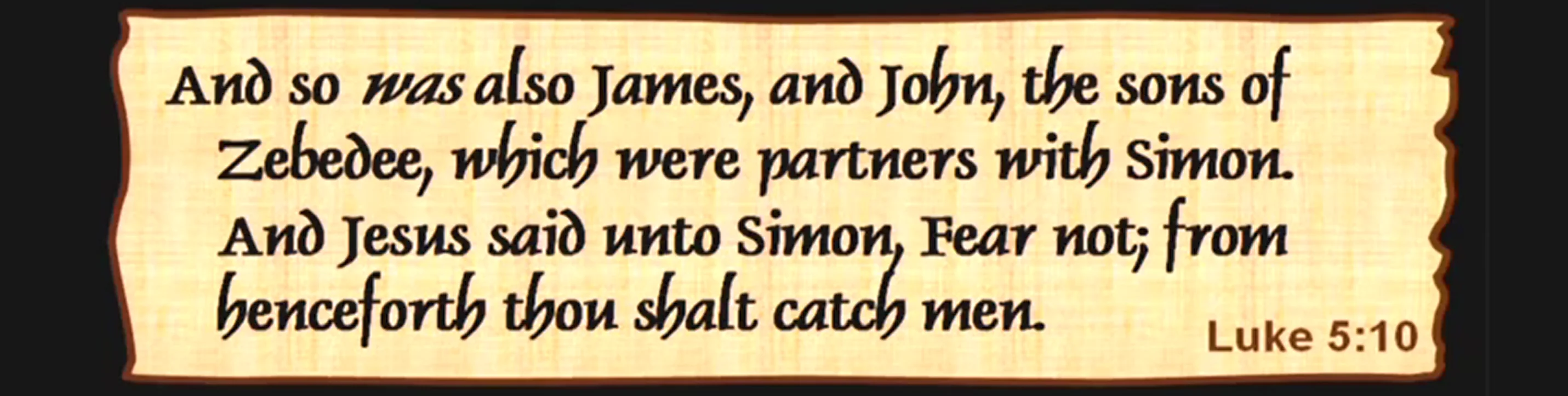
- James is the English form of Jacob (Serbian: Jakov)
- We know very little of Andrew, and James was martyred very early (Acts 12:2), but Peter and John were granted many years of devoted service and their written ministry has edified untold millions
- “…thou shalt catch men” — Greek verb ζωγρέω (zógreó): “catch men alive”, take captive
— A call to full-time discipleship
— A second call
— There was also a third (John 21)
— [Are you in a full-time ministry?]

- The Christian fish symbol, or ichthys (from Greek ἰχθύς), is an ancient symbol consisting of two intersecting arcs resembling a fish profile, widely used to represent faith in Jesus Christ. Originating in the early Church as a secret symbol during persecution, it represents the confession "Jesus Christ, Son of God, Savior"
- The Acronym ΙΧΘΥΣ (ICHTHYS): In Greek, Ichthys means "fish"
— It acts as an acrostic for: Ἰησοῦς Χριστός, Θεοῦ Υἱός, Σωτήρ (Iesous Christos Theou Yios, Soter)
— Jesus Christ, God’s Son, the Savior
Luke 5:11

- Forsook all: they left everything
— They turned their backs on their investment, livelihood, families, etc. (that was a commitment)
The next two healings brought about a confrontation with the religious establishment — the first such conflict recorded in Luke. Both healings authenticated Jesus’ claim to be the Messiah (Luke 4:18-21)

Luke 5:12 The Cleansing of a Leper
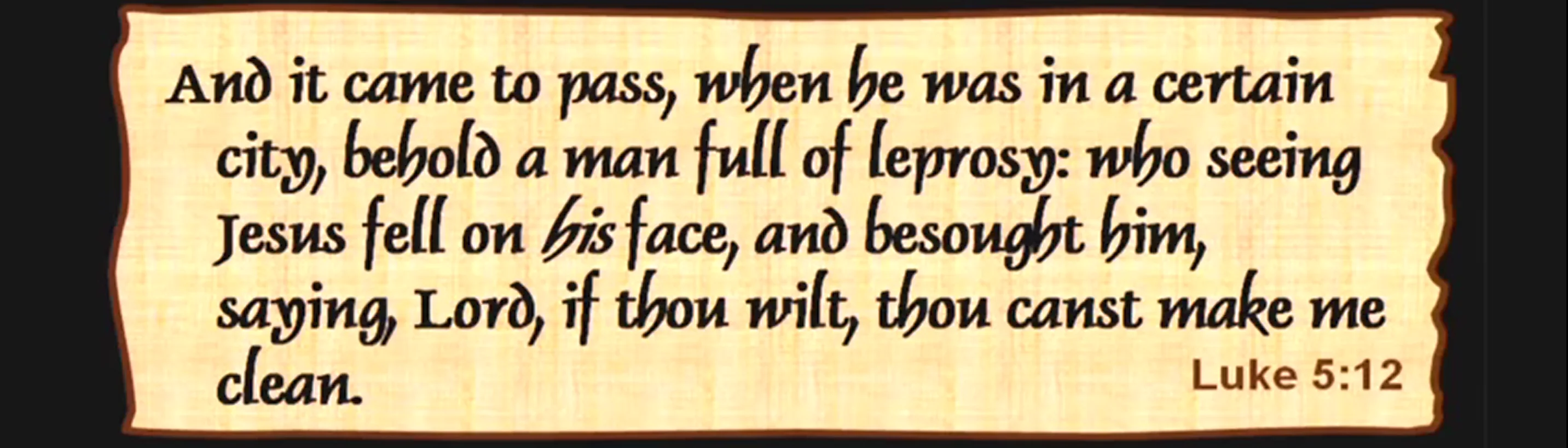
- That is a startling conviction on the part of this leper
- “…full of leprosy” — an advanced state; serious stuff

- Leprosy: a “type” or a “model” of sin (Isa 1:4-6)
— It is constitutional (relating to someone's nature or physical condition)
— It is loathsome
— It is infectious
— It (was) incurable
- And so is sin: constitutional, loathsome, infectious and incurable, cured only by the Son of God
- Lepers and the Law
— It was the task of the Jewish priest to examine people to determine whether they were lepers (Lev 13)
— The Law commanded strict segregation of a person who had leprosy, for it was a graphic picture of uncleanness
— A leprous person could not worship at the central sanctuary; he was ceremonially unclean and therefore cut off completely from the community
- Sin controls by two lies:
1) Nothing is wrong with us, or the other extreme
2) Nothing can be done for us; we are beyond help
- Our misconceptions about Satan are the same way:
— Lie #1: He doesn’t exist (or it’s just a euphemism, a concept)
— Lie #2: He is too powerful to conquer (no, “…greater is He who is in you than he who is in the world.” (1 John 4:4)
Luke 5:13

- The leper had broken the law to get to Jesus. He was supposed to avoid people, ringing bells and yelling, “Unclean!”
- Did Jesus break the Law? A leper was not to be touched
— One way to interpret is that He touched a cleansed man (Jesus did not break any law)
— He became sin for us (2 Cor 5:21)
— He never “healed” a leper, He cleansed them
— He is willing to save (1 Tim 2:4, 2 Pet 3:9) ← Wall poster
— He is able to save (Heb 7:25)
— He can do it now (2 Cor 6:2)
- When someone clean touched something unclean, the clean became unclean
— Luke showed that Jesus was the Source of ceremonial cleansing
— If He was the Source of cleansing for that leper, He would also be the Source of cleansing for the entire nation
Luke 5:14
- Healing from leprosy was rare:
— The OT records only Miriam and Naaman as having been cleansed of leprosy (Num 12, 2 Kgs 5)
— Thus it may have been extremely unusual for a person to present himself before the priest and offer the sacrifices for cleansing
- Instructions for an offering for cleansing from leprosy are given in Lev 14:1-32. The leprous man, cleansed by Jesus, needed to show himself to the priest to fulfill the Law
- Luke emphasized the phrase “for a testimony to them”:
— The fact that a man would go to the priest claiming healing from leprosy would alert the leadership in Israel that the Messianic Age had come
- Why did Jesus command him not to tell anyone? Two possible reasons:
1) The man was to go immediately to the priest to be a testimony because it was required by the law
2) As the news of Jesus’ healing power spread, He was constantly besieged by people, which caused Him to have to withdraw

Luke 5:15

- Jesus told him to be quiet and he told everyone
- Jesus told us to tell everyone and yet we keep quiet
Luke 5:16

- If He thought it was necessary to pray, what about us!
- Prayer is the best antidote for stress and pressure

Luke 5:17 The Healing of a Paralytic
- Luke noted that a number of religious officials were present at the occasion, including some from Jerusalem who were probably the most influential
- Luke did not portray this healing as happening immediately after the preceding event he had recorded. It seems evident that he placed the two accounts side by side as a development in his argument

- This is the first mention of Pharisees in Luke
- “Pharisee” comes from a Hebrew root word פָּרַשׁ(parash) meaning “to divide, to separate”
— They probably developed out of the ministry of Ezra, the priest, who emphasized the people were to obey the law and be separate from the heathen nations around them (Ezra 9-10, Neh 8-9)
— They became very legalistic (the “separatism” became a cult) and ultimately hypocritical, not practicing what they preached (cf. Matt 15:1-20, Matt 23:1-36)
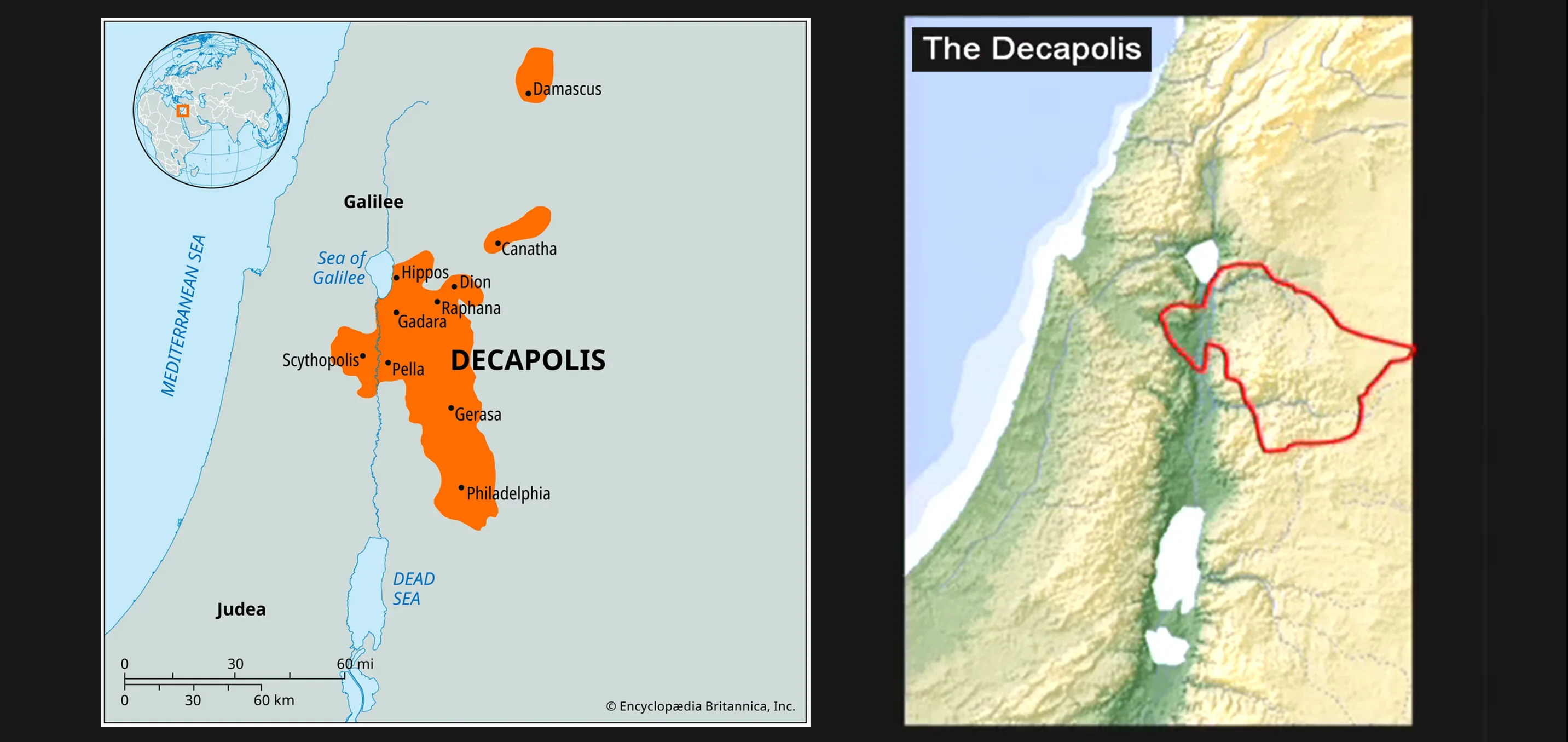
- “…come out of every town” — The Decapolis region (“10 cities”) was over 15,000 in population (primarily Gentile)
- “…the power of the Lord” — δύναμις (dunamis): “spiritual ability” — it is unique to Luke, he used this word on several occasions to describe Jesus’ healing (Luke 4:36, Luke 6:19, Luke 8:46) [also root for word dynamite]
Luke 5:18

Luke 5:19

Luke 5:20

- Jesus was setting them up. He knows that’s going to offend the leadership there because only God can forgive sins
- Surprisingly Jesus did not immediately heal the man’s body. Instead, He first forgave his sins
- That is the real issue here. Jesus is baiting them. The religious authorities know that only God can forgive sins, and so are upset at what they are hearing
- Vital argument: Luke’s point was that Jesus had the authority to call disciples, including people (such as Levi) who were not thought of as being righteous (v. 27-39), but outcasts
Luke 5:21

- Exactly!
- They stepped right in Jesus’ trap. The religious leaders correctly saw these terms as terms only to be used by God (Luke 7:49) as only God can forgive sin. Such an assault on the name of God was punishable by death (cf. son of an Egyptian who blasphemed God: Lev 24:10-11, 14-16, 23)
- Jesus pointed out that the religious leaders were absolutely right
— His subsequent healing of the man was incontrovertible proof that He did have the authority to forgive sins and therefore should be accepted as God
Luke 5:22-23

Luke 5:24

- “…Son of man” — this is the first use of “Son of Man” in Luke (23x in Luke and 82x in the Gospels)
- He didn’t finish His sentence to the leaders. He turned to the sick man and finished the idea
Luke 5:25-26

- “…strange things” — Greek παράδοξος (paradoxos): paradoxes (para — against; doxa — opinion, view)
- Jesus’ authority is the issue here. It is evident from:
— His sinless life John 8:29, John 8:46
— His atonement 2 Cor 5:21, Gal 3:10-13
— His eternal priesthood Heb 7:25, 26

Luke 5:27 Levi and Sinners Called

- The call of Levi was the culmination of the previous two miracles. Jesus had shown that He had the authority to make a person ceremonially clean and to forgive sins
— Now those two authorities were brought to bear on one who was to become His disciple

- Luke did not mention Levi’s duties as a tax collector. He was sitting at the place of toll, the customs house (Matt 9:9)
- The Romans collected taxes through a system called “tax farming”:
— They assessed a fixed tax figure and then sold the right to collect them to the highest bidder
— The buyer then had to hand over the assessed figure at the end of the year and could keep any excess
— This invited extortion (what an insidious form of oppression)
- There were additional taxes as well
— Duties and tolls were collected from using roads, docking in harbors, and
— Other import and export duties (There was even a cart tax, by the wheel!)
- Levi as a Tax Collector:
— He was probably collecting tolls from the boats on the seashore
— An employee of Herod, a vassal of Rome
— His position alienated him from the religious community of his day
— He would have been excommunicated from the synagogue and could not serve as a witness in court
— He was regarded as a “low life”
- Jesus gave him a new name: Matthew, which means “Gift of God” (Luke 6:15, Matt 9:9)
- Matthew knew shorthand — ταχυγράφος (tachygráphos): shorthand writer in Graeco-Roman World
— Matthew would have thus been able to transcribe the Sermon on the Mount verbatim!
— In Psalm 45:1, מָהִיר סֹפֵר - the “ready writer” (KJV), or “skillful writer” (NIV)
— It is translated in the Greek Septuagint, ὀξυγράφος (oxygràphos), a synonym for tachygràphos, or “shorthand writer”. Since the technical term was in the Septuagint translation, it was a common term among the people three centuries before the time of Jesus’ ministry
Luke 5:28

- “…left all” — (aorist participle) — he made a definitive break from his old life
- “…followed him” — (imperfect indicative) — a continuous pattern of life
— The break was a once and for all thing, the following was a continuing thing
Luke 5:29

- “…Levi made him a great feast” — his first act was to throw a party!
- “…publicans” — that was probably the only fellowship he had (“Birds of a feather flock together”)
Luke 5:30
- Eating and drinking with others denotes a fellowship or camaraderie with them
- Later Jesus would feast with Zacchaeus, the chief tax collector (Luke 19:1-10)
Luke 5:31-32
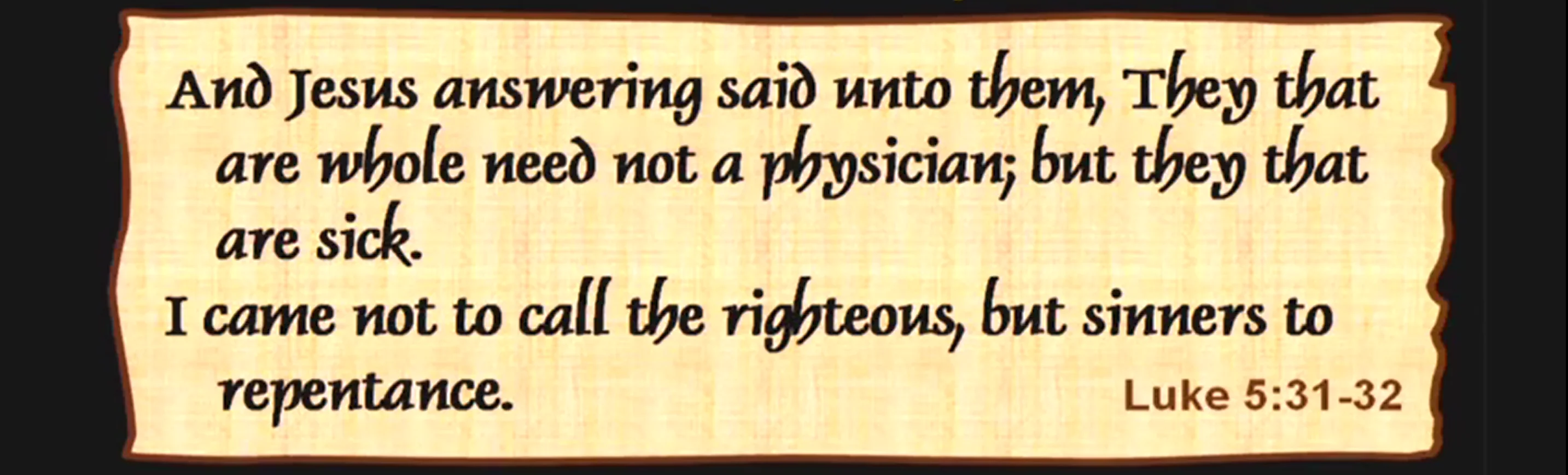
- Here Jesus was not concerned about discussing who were “the righteous”
— His point was simply that His mission was to those in need of “repentance” — a change of heart and a change of life (cf. Luke 3:7-14)
- The Pharisees did not sense their need to change (it was terminal)
— They had no concern for the sinners and actually distanced themselves from God
— They should have read their own Scriptures
💊 Micah 6:8

- God told us what is good and what He requires of us:
— do justice
— love lovingkindness
— walk humbly
- Don’t make a mistake assuming that if you do those things, you’ll be saved
— Those are the fruits of salvation
— Not doing those things shows that you have some problems that need to be dealt with
💊 Matt 9:13
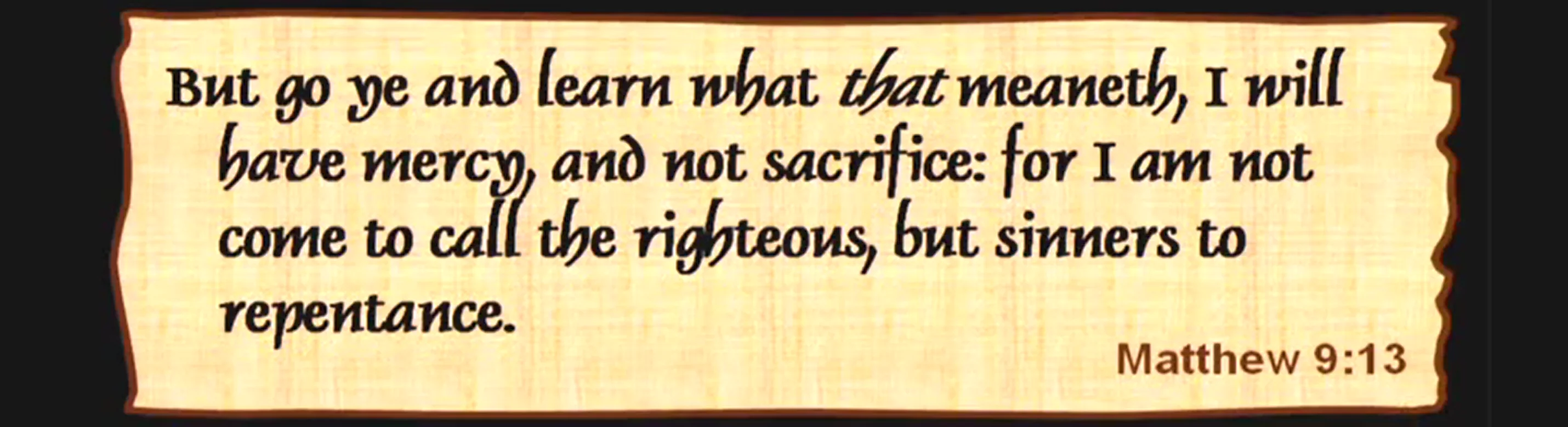
- In the parallel account of Matthew’s calling there is an additional line recorded…
- This is a quote from Hosea, where, like Micah, Hosea is condemning Israel for attention to ceremony rather than caring for others
💊 Hosea 6:6
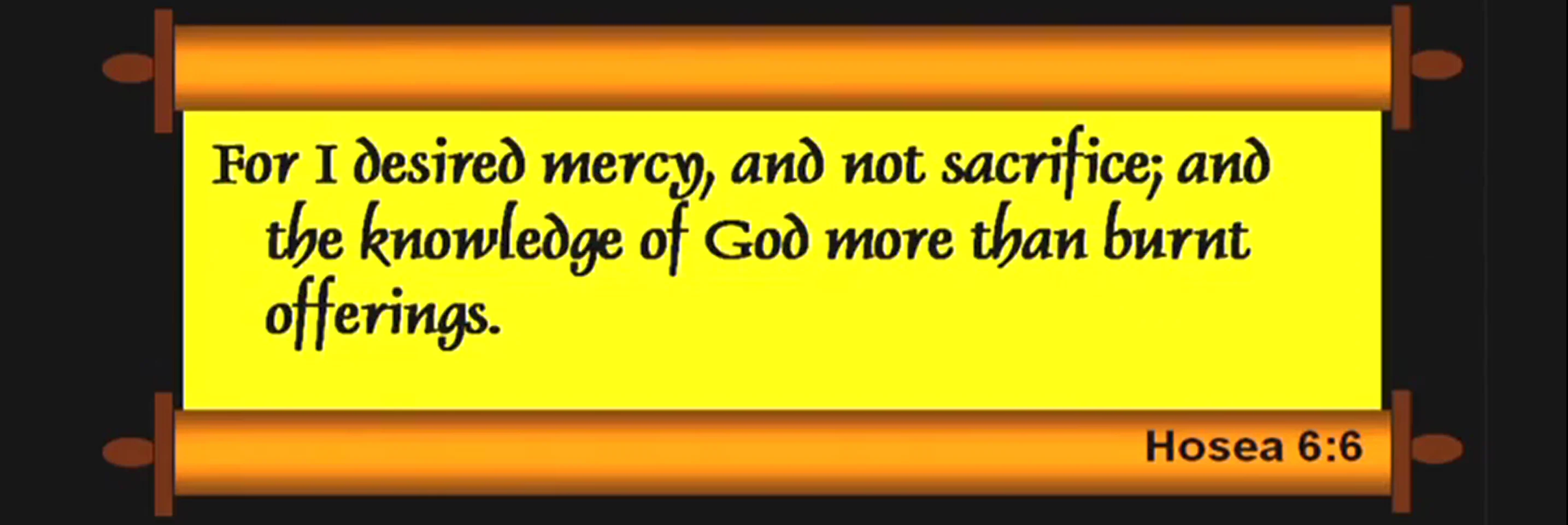
- The ceremonial laws had an instructional place
- The real issues, though, are far above ceremonial law
- These are verses that show the heart of God
— Jesus will reference this again in His Sermon on the Mount
— “Blessed are the merciful for they will receive mercy.” (Matt 5:7)

Luke 5:33 The Question About Fasting (MEV)

- External, ceremonial stuff
— John the Baptist was still Old Testament
— The Pharisees said godly people should fast 2x a week (Mondays and Thursdays)
Luke 5:34-35

- “…taken away” — ἀπαίρω (apairó): taken away by force, violently!
— Daniel (Dan 9), and David in Psalms (Ps 22), both told about the violent death of the Messiah
- Celebrate! The Messiah is among them for now

Luke 5:36
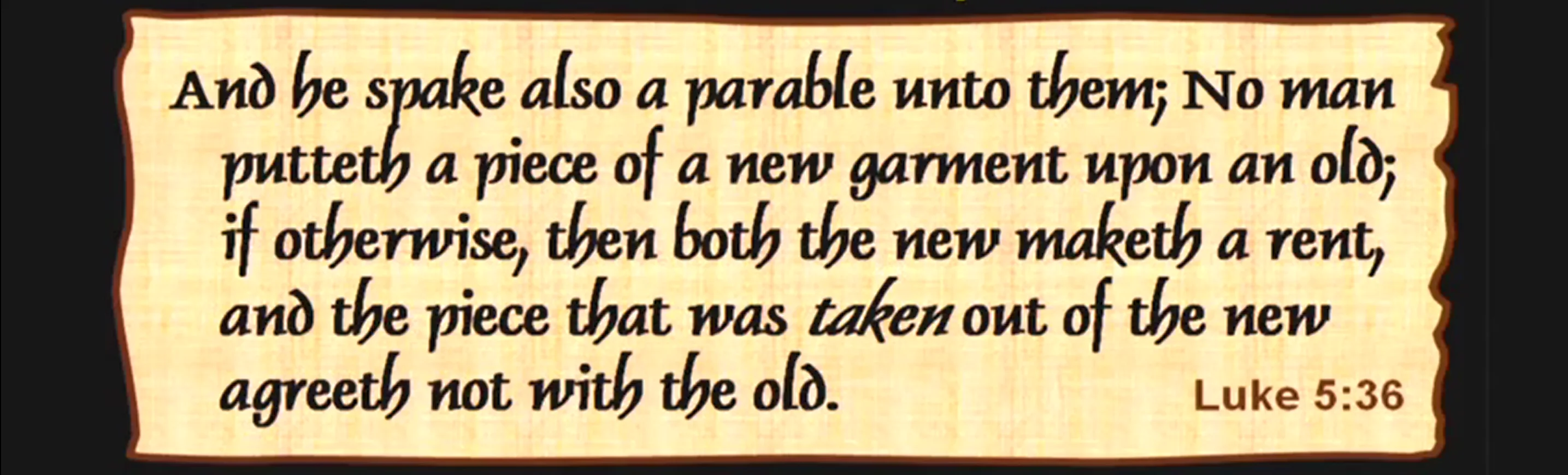
Luke 5:37

Luke 5:38

- Jesus’ response: the new way (His way) and the old way (the way of John and the Pharisees) simply do not mix
- He gave three examples:
1) A bridegroom’s guests do not fast while he is with them because it is a joyous occasion (John 3:29). They fast after He is gone
2) A new unshrunk patch of cloth is not put on an old garment because it will shrink and the tear will be worse
3) New wine is not put into old wineskins for as it ferments it will break the old skins, which have lost their elasticity, and both the wine and the skins will be ruined
- In each case two things do not mix:
— a time of feasting and a time of fasting (vv. 34-35)
— a new patch and an old garment (v. 36)
— new wine and old wineskins (vv. 37-38)

- New wine would not burst old skins without fermenting. It wasn’t grape juice!
- At the wedding in Cana, he made the “best wine” (so that one was not grape juice either)
— He was showing them that he was Lord even of the Temple. It was ceremonial water that was set aside for purification purposes
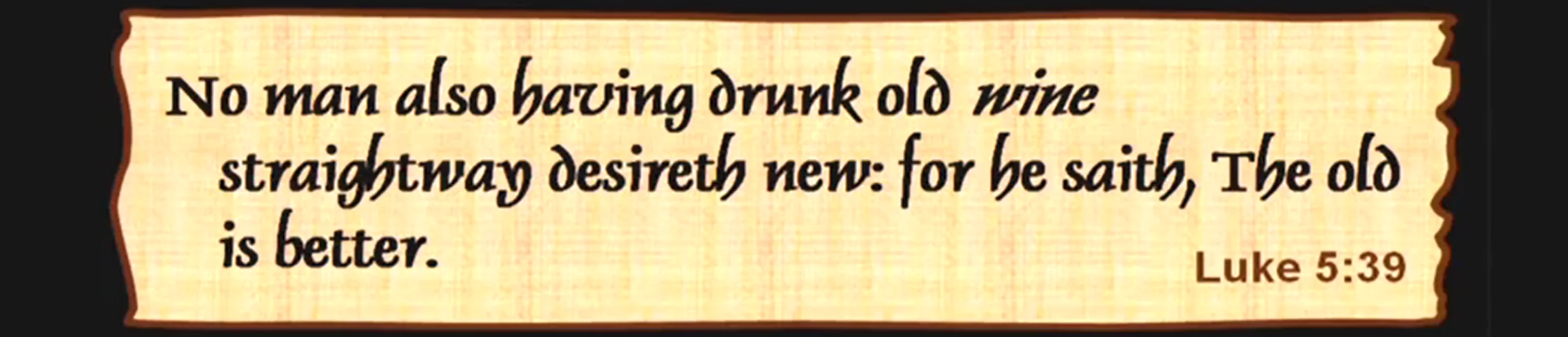
- If you take the plain meaning of the text, the new wine has to ferment to become old wine (“The old is better”)
- Grapes are harvested in the fall (there was no refrigeration in Israel). Cannot get grape juice to last till spring
Luke 5:39
- They did not have refrigeration. Grapes are harvested in the fall (Passover is in the Spring)
- There is a natural preservation process in fermentation
- Intemperate use of wine is folly. But, wine is used positively throughout Scripture (water sterilization)
- Grape juice for communion?
— So that others don’t stumble (cf. Rom 14:13)
- There’s a distinctive experience of having Jewish sacramental wine and unleavened bread
- New Wine Always Needs New Skins:
— Church revivals vs. old traditions
— Wesley in churchyards vs. ossified churches
— The Jesus revolution happened in the streets. The counterculture of the ’70s saw Jesus as anti-establishment and embraced Jesus with a passion that baffled the staid Christian community (staid — settled and serious, often exhibiting a quiet, traditional or conservative nature)
— It is easier to get into ruts than out. “The only difference between a rut and grave is the length and depth”

- Negatives:
— Dilution away from the Word of God (many churches have not maintained a focus and a commitment to the Word of God above all else, which is crucial)
— True Christianity becoming increasingly “politically incorrect” (J Vernon McGee, one of the beloved teachers, predicted that the true believers in America will ultimately have to go underground and he also said that attack against them will come from the denominational churches and now we can witness that across the country)
- Positives:
— The availability of advanced information appliances (MP3 CD-ROMs, DVDs, Blue Letter Bible, Computer Software, PDAs, “Podcasts” etc.) plus Global Internet
— The emergence of Small Study Groups

New Wine in New Skins: A Unique Resource — Koinonia Institute — Signed up/Account created on 28-Jan-2026
- The Lord appears to be putting “new wine into new skins”
— There is now a voluntary “think tank” to serve the interests of those Christians who are serious about their personal Ambassadorship for the Coming King… and you can be a part of it!
- Koinonia Institute “Turning Believers into Bereans”
— A worldwide fellowship for a lifetime, with members in over 64 countries
— A supplement—not a replacement—for your local church assembly
— “Distant learning” on the Internet, on your own clock, in your own place, preparing for your own unique calling (with academic credit available, all the way to the Ph.D.)
- How Can You Get Involved?
— Undertake a life-long learning program
— Volunteer to serve as an Area Representative (in over 64 countries), Teaching Assistant, Research Assistant or IDB Folio Specialist
— Sponsor special programs to support: Student prizes and incentives, Practicums and Internships, Endowments for course development