s06 (Ch 6) Lord of the Sabbath, The 12, Sermon on the Plain (studied 29-Jan-2026)
The Book of Luke with Dr. Chuck Missler
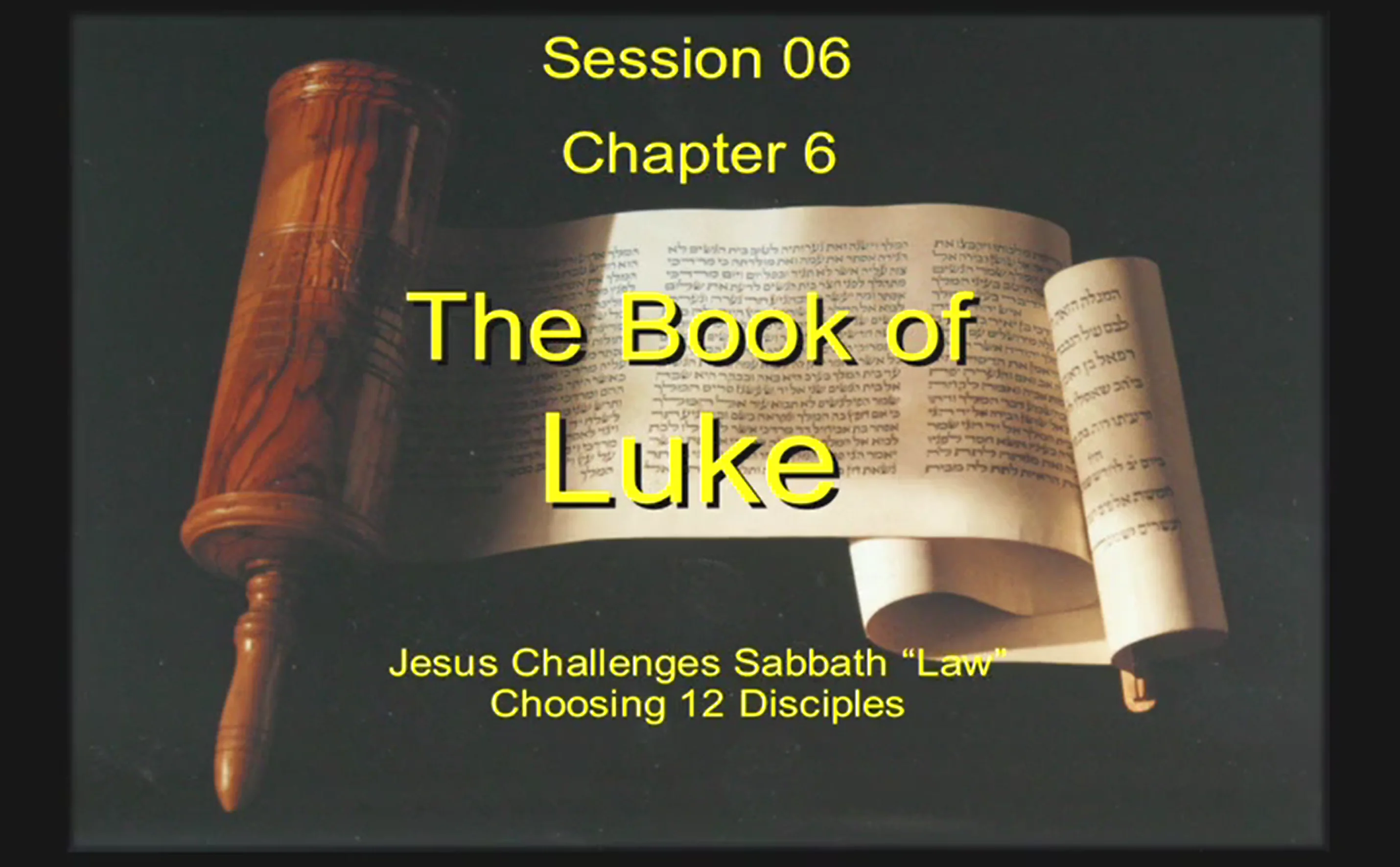
The subsections of Chapter 6 (per NASB/LSB/MEV) are:
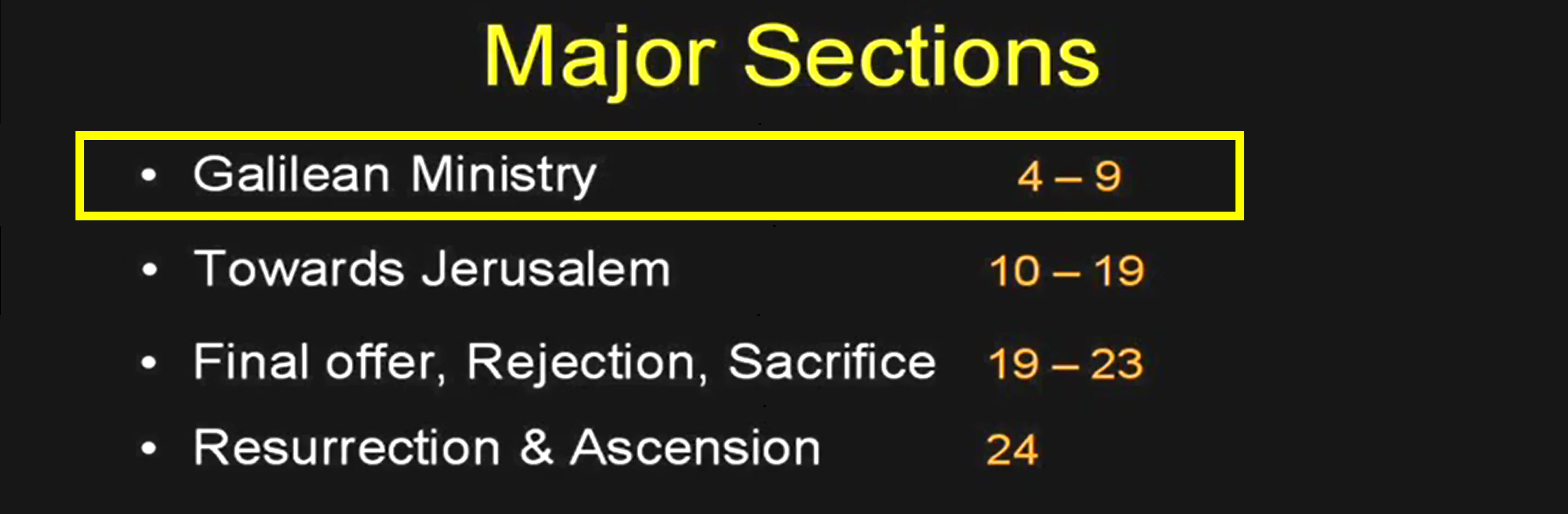

- Continuing to demonstrate His authority declared in Nazareth in Chapter 4 (Luke 4)
— He read from Isaiah 6:1-2, which was His mandate
— Luke continues to demonstrate Jesus’ authority proclaimed there
- The Pharisees’ attempts to guard the Sabbath, further demonstrated how morally impoverished they were
— dealing with ceremonial issues, form over substance
- Jesus has already alluded to OT Prophets:
— “What does the Lord require of thee?” → To love mercy and walk humbly with God (Micah 6:8)
— “I desired mercy, and not sacrifice…” (Hosea 6:6)
— “…Behold, to obey is better than sacrifice…” (1 Sam 15:22; cf. Isa 1:11)
— Heart of God is the issue

Luke 6:1 Lord of the Sabbath (Plucking Grain on the Sabbath)
- Grain fields: not corn — most likely wheat
- Permissible: God allowed people to pick grain from a neighbor’s field as they passed through (Deut 23:24-25)
— They were not stealing
— The problem was doing it on Sabbath
Luke 6:2
- The Pharisaical sect started in the days of Ezra to promote holiness. But it had become very legalistic and excessively burdensome
- The Mishnah (the commentary on Talmud) defined 39 categories of work (M. Shabbath, 7.2)
- Three of the 39 categories of work were being done here: “reaping, threshing and winnowing”
— Picking the corn: “reaping”
— Rubbing the corn: “threshing”
— Cleaning the corn off: “winnowing”
Luke 6:3
- Jesus responded to the Pharisees’ objection by referring to 1 Sam 21:1-9 (David Takes Consecrated Bread)
- David had approached the priests at Nob and asked for bread. He was in flight and he and his men were starving
Luke 6:4
- It was a survival situation (life over rituals)
- In the House of God was Shewbread (or showbread; lit loaves of presentation)
— Laid out in the Holy Place, where only priests could go
— Twelve loaves, one for each tribe
— Arranged in two rows of six each (Lev 24:5-6) (Josephus, Antiquities 3.6.6)
— The loaves were replaced each Sabbath. The priests would eat the retired bread
— It was illegal for anybody but the priests to eat the bread (Exo 25:23-30, Lev 24:5-9)
- Jesus is saying that nobody in Israel would criticize David — he was God’s anointed
— So is Jesus God’s anointed!
— He is claiming to be greater or equal to David
Luke 6:5

- The Sabbath was created at the end of the creation by the Creator. That Creator is standing in front of them. They don’t realize that
- This is a bombshell: Jesus is claiming to be God
- Christ and His companions were also above the man-made law, which the Pharisees proclaimed
- There is another parallel, implicit in the allusion Jesus is using:
— David, as God’s anointed, was being hounded by the forces of a dying dynasty—the dynasty of Saul
— Jesus, God’s new Anointed One, was being hounded by the forces of a dying dynasty (Luke 5:39)

- “…The Sabbath was made for man, and not man for the Sabbath” (Mark 2:27)

- The Sabbath was instituted by God as a blessing, forced vacation, to give people a break
- God rested on the 7th day, so He wanted man to rest too
- The observance of Shabbat is intended to be a celebration of the creation, a time of rejoicing, not an onerous time of laws and rules
- The Sabbath was ordained in Genesis at the Creation
— It was instituted in Genesis 2: Adam, Enoch, Noah kept the Sabbath (they weren’t Jewish)
— The Law codified the Sabbath but it was observed before the Law was given (observed Exo 16, codified Exo 20)
- Through the Ten Commandments, the Sabbath became a Jewish distinctive, but even the Babylonians had a seven-day week
- The Sabbath will be observed in the Millennium (Isa 66:22-23)
- The Temple will be closed except on New Moons and Sabbaths (Ezek 46:1ff)
- The Gospels record six instances in which Jesus confronts the Pharisees over the Sabbath
— Luke 6:1-4, Matt 12:5, John 7:22-23, Luke 6:5, Mark 3:1-5, Luke 13:10-17
— To make the case that:
• the Sabbath is for man and
• He is the Lord of the Sabbath
- Jesus relegates the Sabbath to the position of ceremonial and not moral law
- Jesus has fulfilled these on our behalf (in any case)
— We’re not under the Law (Rom 14:5, Col 2:16-17, Eph, Gal…)
- Yet the Seventh Day Sabbath remains a blessing for man to enjoy
- One can honor the day—celebrating the Creation—without taking on the Jewish legal burdens that have come to characterize this tradition
— (Anyone who thinks this is an easy area to research hasn’t studied it and its dire history)
— Early Church became so antisemitic that the Church fathers went thru cartwheels trying to celebrate Christian things on days other than the days of Jewish calendar. That’s why there’s such confusion about Easter — they made up a formula so it wouldn’t fall, even accidentally, on Passover. Christians who tried to be Biblical and honour the 14th of Nisan (Passover), were called Quartodecimans (14) and were excommunicated from the Church
- Nan and I have adopted three Sabbath rules:
1) Whatever we do, we do deliberately
2) Whatever we do, we do together
3) There are no other rules
— Thus Saturdays are days mostly for study, meditation and rest

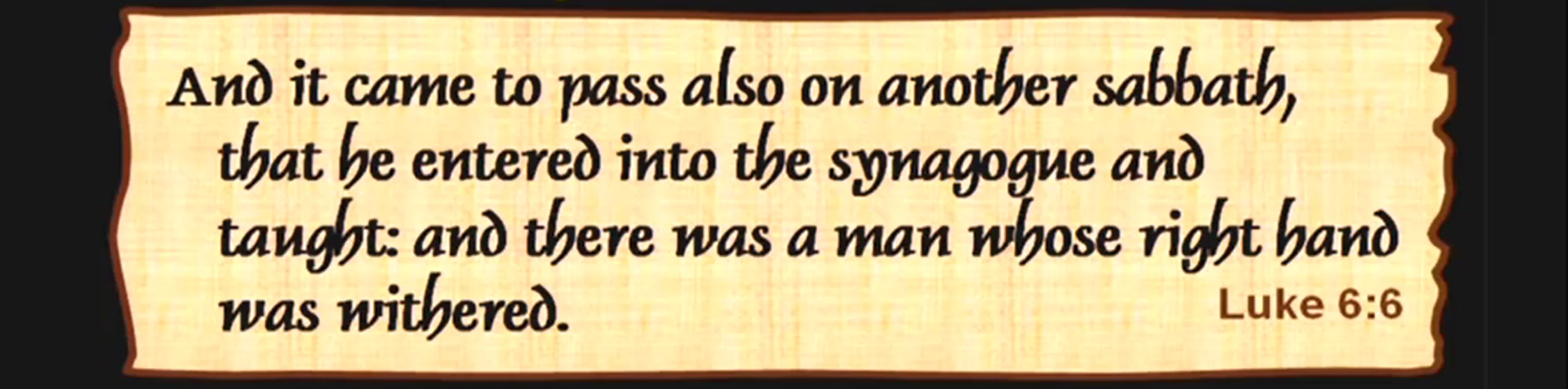
Luke 6:6 Jesus Heals a Man on the Sabbath / The Man With a Withered Hand
Luke 6:7
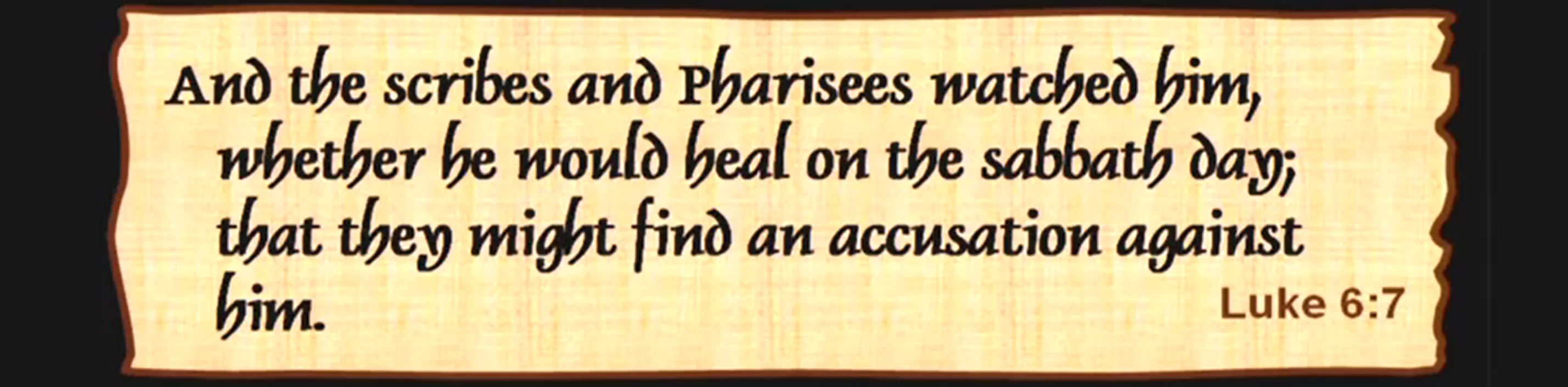
- “…withered” — his hand was shriveled
- This second contention about the Sabbath seems to have been brought about purposely by the Pharisees and the teachers of the Law
— The religious leaders were observing Jesus because they were looking for a reason to accuse Him
— The Gospels make it clear, they were seeking cause to kill him (Matt 12:4, Mark 3:6, John 5:16, John 5:18, cf. Ps 22, Dan 9:26)
Luke 6:8
Luke 6:9
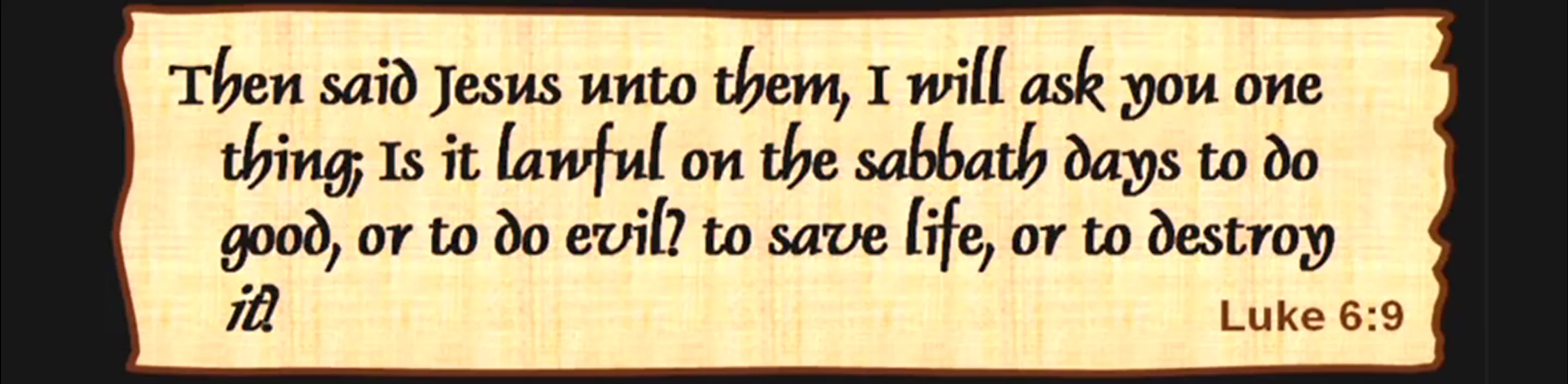
- By this question, he showed that refusing to do good on the Sabbath was tantamount to doing evil
Luke 6:10
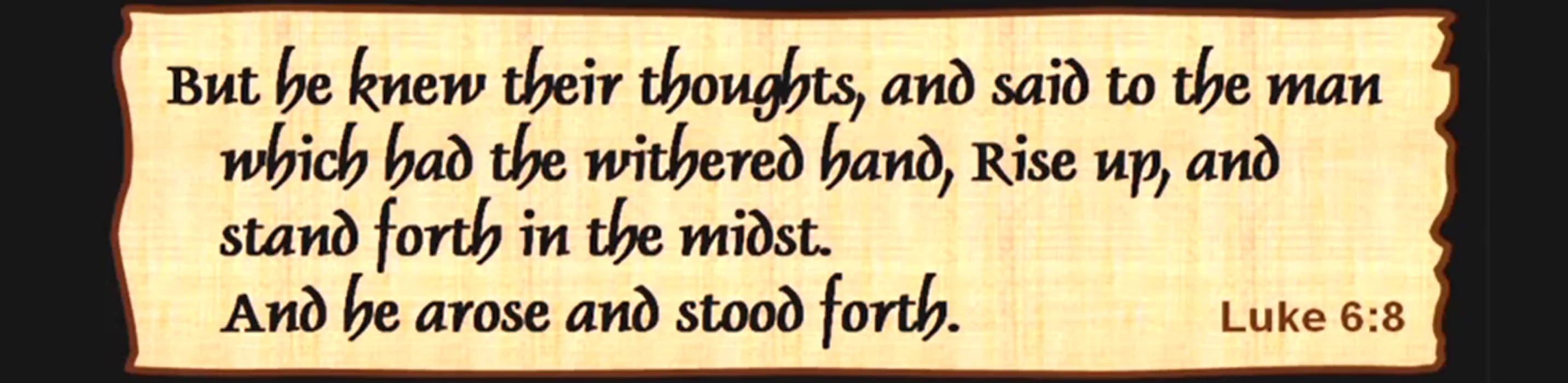
- This is not a subjective ailment — it is visible: a shriveled hand
- Jesus performed no “work” on the Sabbath — He simply spoke a few words and the hand was restored
— This is the One who breathed the entire universe into being!
Luke 6:11

- He humiliated the religious leaders and healed the man all at the same time without even breaking the Pharisees’ law

Luke 6:12 Jesus Appoints the Twelve
- “…continued all night in prayer ” — do we spend all night in prayer?
— Jesus did, and He was the Son of God
— Jesus was not omniscient (Mark 13:32) — not true, He simply restricted His abilities
Luke 6:13
- They would minister to the 12 Tribes for eternity and would have their names imprinted on the very architecture of heaven (Rev 21:13-14)
- “…apostles” — these were specifically called “apostles” — ἀπόστολος (apostolos)
— as opposed to the term “disciples” — μαθητής (mathētḗs)
— Disciples were just followers, but apostles were followers with delegated authority (Luke 9:10, 17:5, 22:14, 24:10)
Luke 6:14

- In Luke’s list of the Twelve (as well as Matthew’s and Mark’s lists):
— Peter is listed first and
— Judas Iscariot is last
- Some had two names: Bartholomew must be Nathanael (John 1:45)
Luke 6:15

- Levi and Matthew are the same man
- Thomas, apparently, later on goes and does his work in India
Luke 6:16

- Thaddaeus is Judas, son of James (Mark 3:18)
- They were now willing to be sent out as apostles, being with Jesus on a full-time basis

Luke 6:17 Ministering to a Great Crowd (MEV)
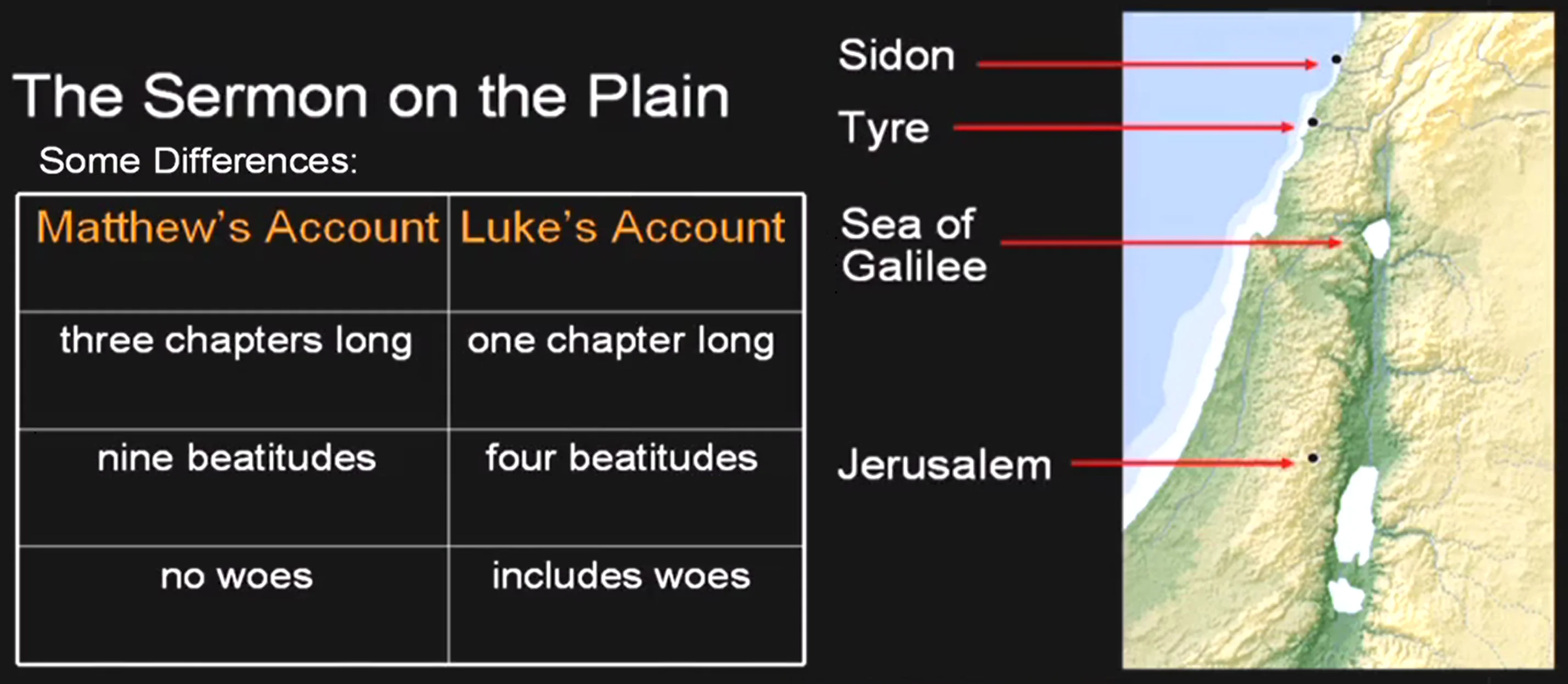
- The Sermon on the Plain:
— The sermon recorded in verses 17-49 is a shorter version of the Sermon on the Mount recorded in Matt 5-7
— Some Differences:
• Matthew’s is three chapters long, Luke’s is one
• Matthew records nine beatitudes, Luke, four
• Luke includes woes which follow them, but they have no parallel in Matthew
— Both sermons:
• are addressed to disciples (not the general public; many people fail to catch that)
• begin with beatitudes
• conclude with the same parables and
• have generally the same content
- “Plain” vs “Mount” — Two Different Views:
1) Same basic talk, preached on two different occasions (?)
2) Same occasion, recorded from two different perspectives (?)
— In Luke, the “Jewish parts” of the sermon (the interpretation of the Law) are omitted. This fits well with Luke’s purpose, who addresses Gentiles
— Matthew knew shorthand, and took it down verbatim
— Luke put it together from his (subsequent) investigations (looks more like a “summary”)
- The sequence of events could solve the problem easily:
① Jesus went up in “the hills” near Capernaum to pray all night (v. 12)
② He called 12 disciples to be His apostles
③ He then went down on a level place to talk and to heal diseases
④ Following that, He went up higher to get away from the crowds and to teach His disciples (Matt 5:1)
⑤ The multitudes (Matt 7:28, Luke 7:1) climbed the mountain and heard His sermon, which explains Jesus’ words at the very end (Matt 7:24, Luke 6:46-47)
Luke 6:18-19
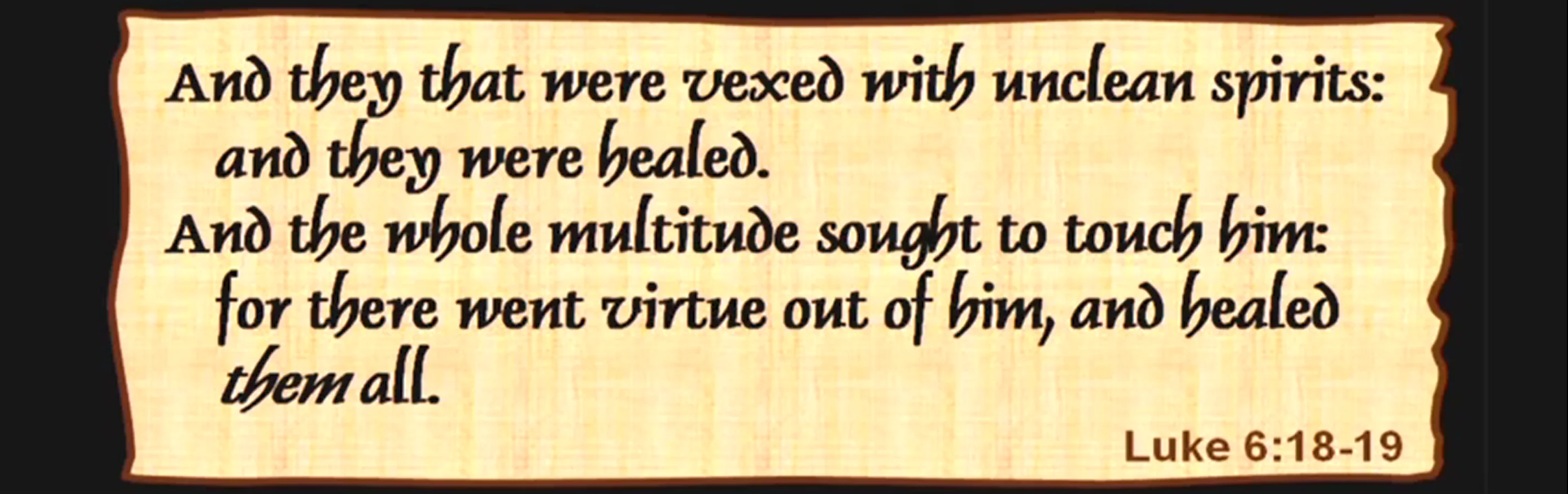
- It is interesting: Nobody ever dies in Christ’s presence
- After his resurrection, he was only seen by loving eyes and touched by loving hands
- Jesus began His sermon with a series of blessings and woes on His listeners
— The items are placed in two sets of four: 4 blessings and 4 woes which parallel each other
- Jesus focused on attitudes:
— toward circumstances vv. 20-26 (blessings and woes)
— toward people vv. 27-38 (love your enemies, do not judge)
— toward ourselves vv. 39-45 (blind guide blind, mote (speck) / beam (log) in eye, abundance of heart)
— toward God vv. 46-49 (build house on the rock)
- He emphasized four essentials for happiness:
— Faith in God
— Honesty with ourselves
— Love toward others
— Obedience toward God

Luke 6:20 The Beatitudes

- Note: He spoke to “His disciples” (His personal followers)
- The general public may have been free to listen, but he was teaching his disciples
- “…Blessed” — The term “blessed” — μακάριοι (makarioi), was common in the Gospels (occurs more than 30x)
— All of the occurrences are in Matthew and Luke, except for two that are not
— Originally in Greek usage, the word makarioi described the happy estate of the gods above earthly sufferings and labors. Later it came to mean any positive condition a person experienced
- A formal beatitude was an acknowledgment of a fortunate state before God and man (Ps 1:1, Prov 14:21, Prov 16:20, Prov 29:18)

💎🦴 Prov 30:8-9
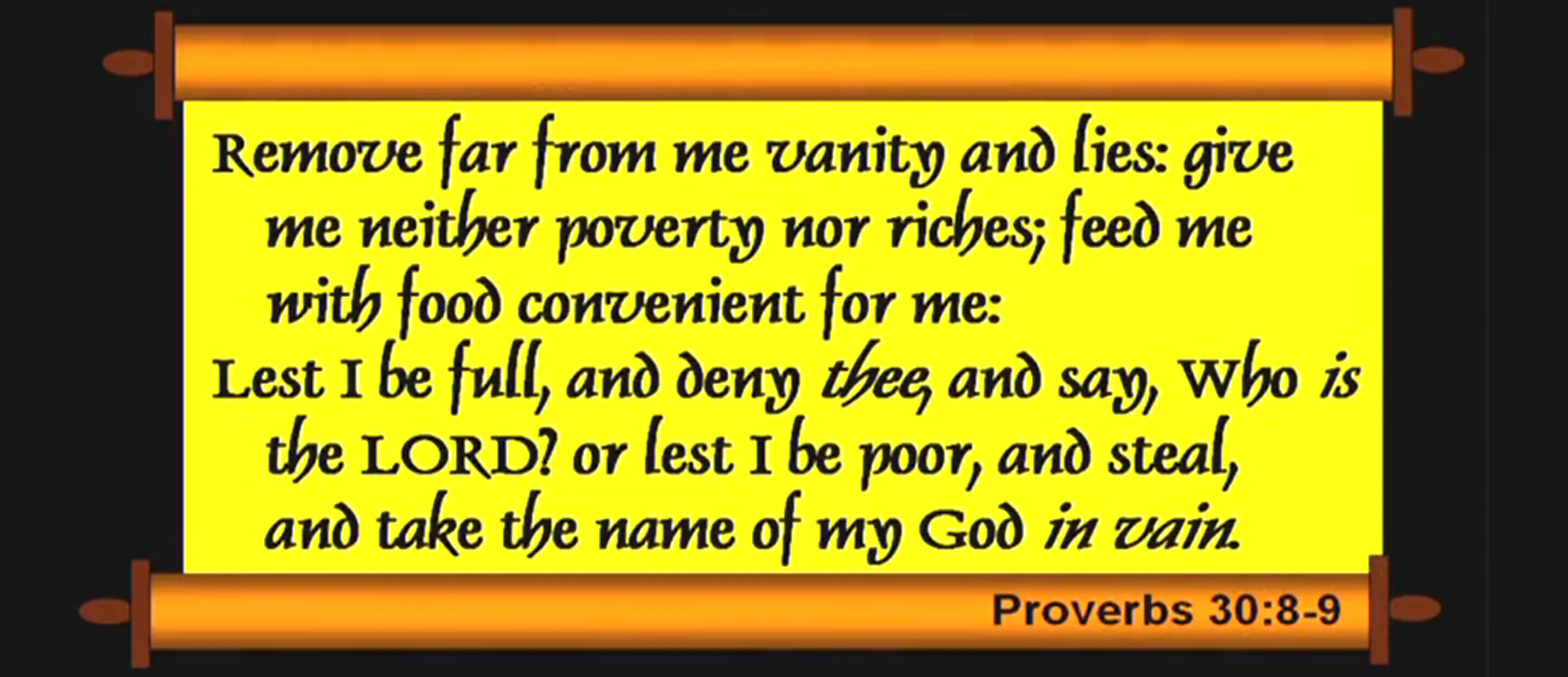
- 💎 The danger of being rich and full (сит) is to fail to acknowledge the dependence on God
— “I am rich, I don’t need you”
- 🦴 The other extreme, “I be poor, and steal, And take the name of my God in vain.”
— This is an example that 3rd Commandment has to do with witness, not vocabulary
— By stealing, one impugns (dispute, call into question, challenge) the Name of God
- Also, “Preach the good news to the poor” (Isa 61:1-2, Luke 4:18a)
- They were following the One who was proclaiming His ability to bring in the kingdom
— They (the Apostles) were staking everything they had on the fact that Jesus was telling the truth
— They had burned their bridges

- We rich are constantly assaulted with the temptation to rely on riches
— Can we have riches and yet not rely upon them?
- We rich are dulled to our need by our plenty
— Can we have plenty and still feel our need?
- We rich tend to be proud of what we have done, to take credit for our comforts
— Can we who achieve a lot still lead a humble life?
Luke 6:21

Luke 6:22
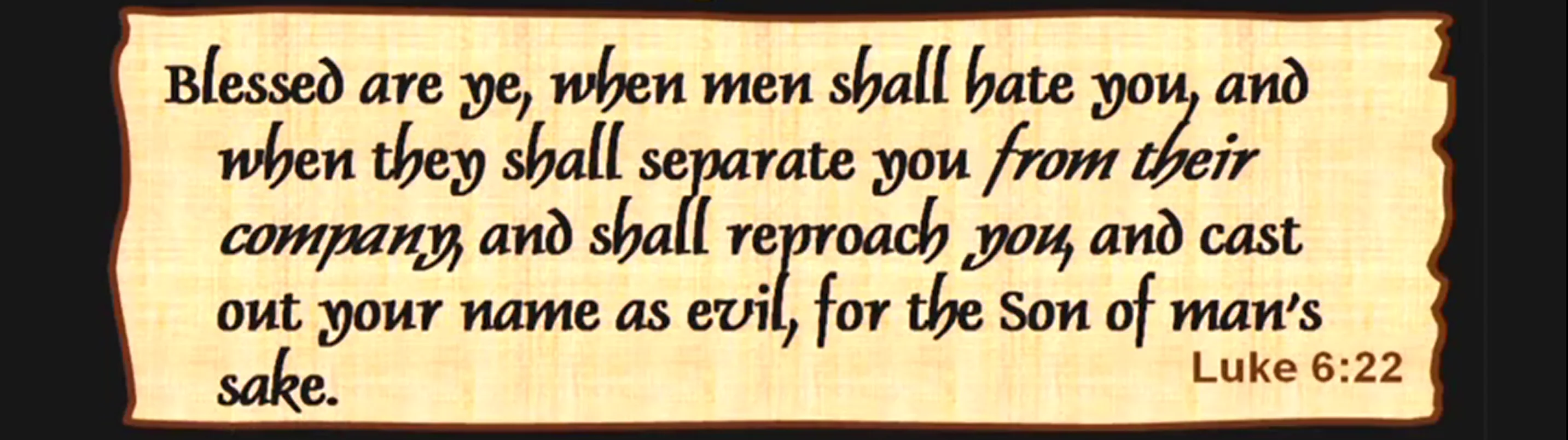
- Not because you are obnoxious, “for the Son of man’s sake”
- Luke already mentioned twice that those who followed Jesus left everything (Luke 5:11, Luke 5:28)
Luke 6:23

Luke 6:24 Jesus Pronounces Woes

Luke 6:25-26
- In contrast with the disciples who had given up everything to follow Jesus (Luke 18:18-30 The Rich Young Ruler)
- These were the rich, the well fed, the ones who laugh, who were popular
— They did not understand the gravity of the situation which confronted them
— They refused to follow the One who could bring them into the kingdom
— Therefore Jesus pronounced woes on them
- These woes were the exact reversal of their temporal benefits and they are the exact opposites of the blessings and rewards of Jesus’ followers cited in the Beatitudes (Luke 6:20-23)
- We need to take God seriously
- Consider Moses:
— He struck the rock at Meribah instead of speaking to it as God had told him
— Moses (in God’s eyes) misrepresented God to the Israelites. God wasn’t angry at Israelites, but Moses gave them the impression God was
— God did not let Moses enter the land because of his error at Meribah. He did not inherit (after 120 years, he messed up once and for that he did not inherit His reward)
— (It was to be a type of Christ: struck the first time, but not the second; cf. 1 Cor 10:4)

Luke 6:27-28 Love Your Enemies
- These ideas are still radical even today
- Don’t tune these ideas out because of their familiarity
- Jesus demonstrated this:
— After washing the disciples’ feet, He lovingly reached out to Judas, who was set on murderous betrayal (John 13:18-30) by quoting Psalm 41:9:
- Most recognize this Ps 41:9 as a prophecy of Judas
- He was actually quoting a reference to Ahithophel, who betrayed David and then committed suicide
— cf. Ps 55:12, 2 Sam 15:31-37, 2 Sam 17:1-23
— Ahithophel was Bathsheba’s grandfather (cf. 2 Sam 11:3, 2 Sam 23:34, 1 Chr 27:34)
— Ahithophel apparently never forgave David what he did to his daughter Bathsheba
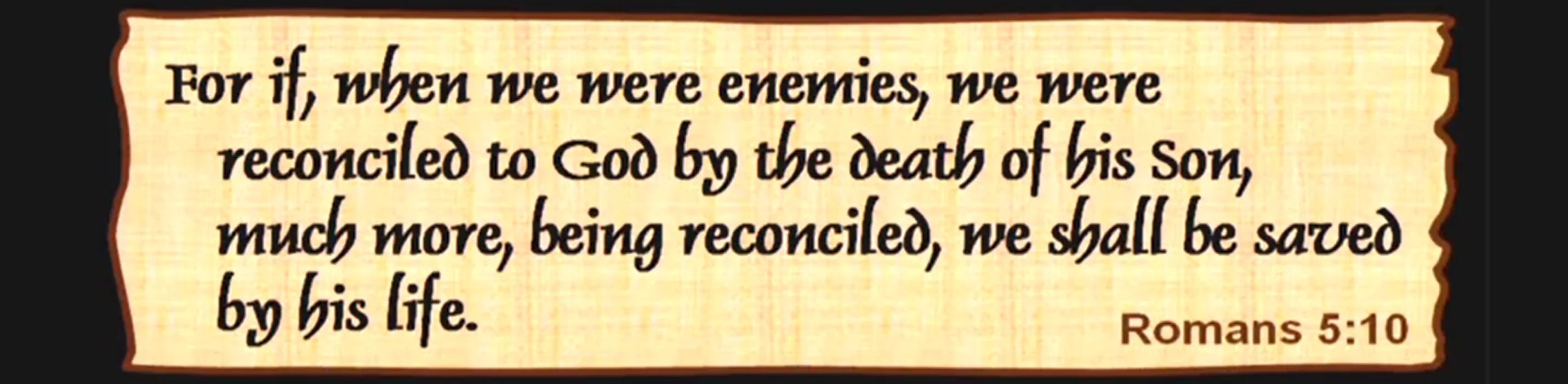
- Who are God’s enemies? — We are — before we are saved, the flesh is at enmity with God (cf. Rom 8:7, Rom 5:10)
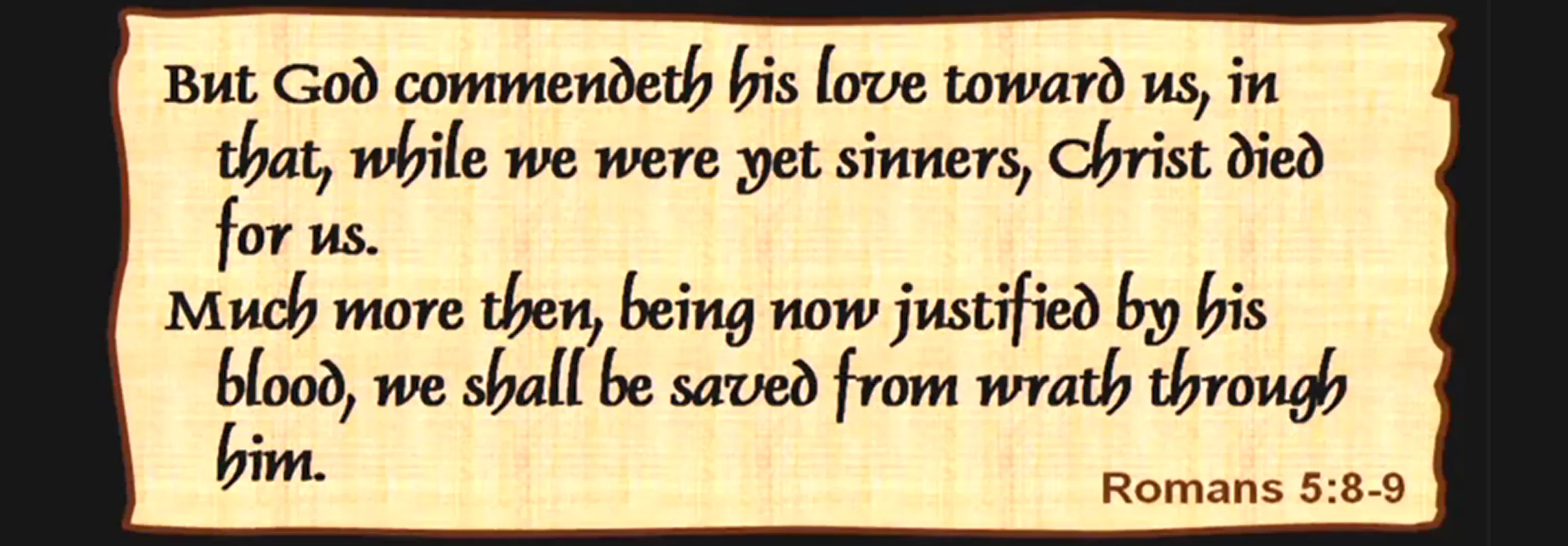
- How does God treat us? That’s the point Paul makes in Rom 5:6, 8, 10:
✞ Rom 5:8-9
✞ Rom 5:10
- God asks us to do what He has already done — Love our enemies
- God Himself is the ultimate example. This is His heart. He wants us to reflect His heart
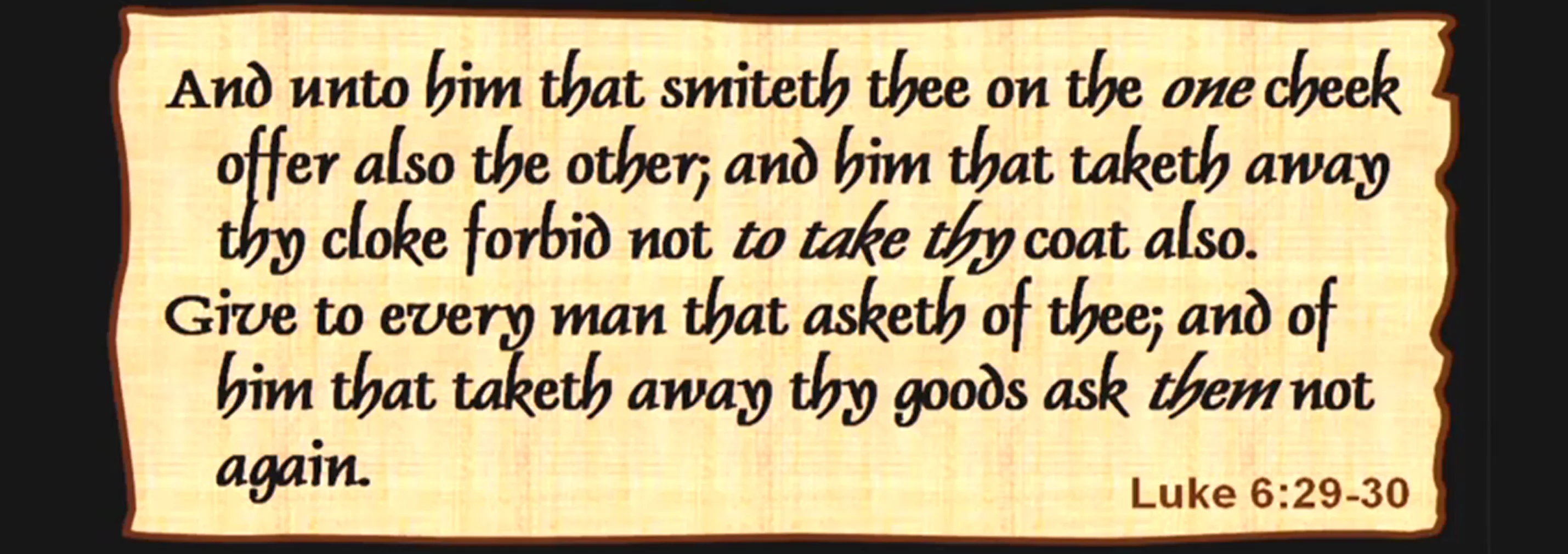
Luke 6:29-30
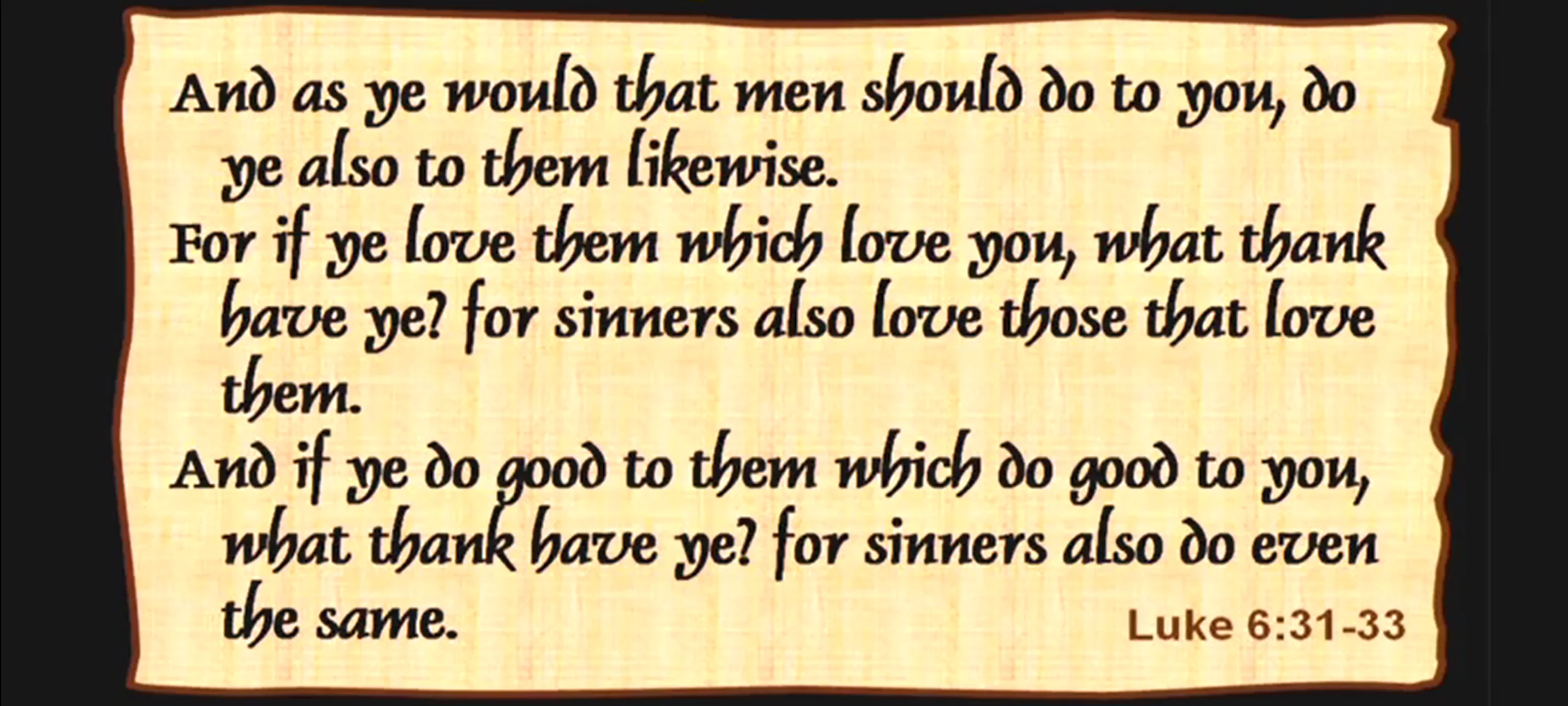
Luke 6:31-33
- Love as ἀγάπη (agapé) (noun) is always a choice, not a reflex emotion
- The Greek is more precise than the English:
— ἀγαπάω (agapaó) (verb) — to be totally given over to something. Unconditional love
- Love is a faith choice often contrary to our emotions, and God aligns our emotions with our choices
— [Cf. The Way of Agape materials]
Luke 6:34-35
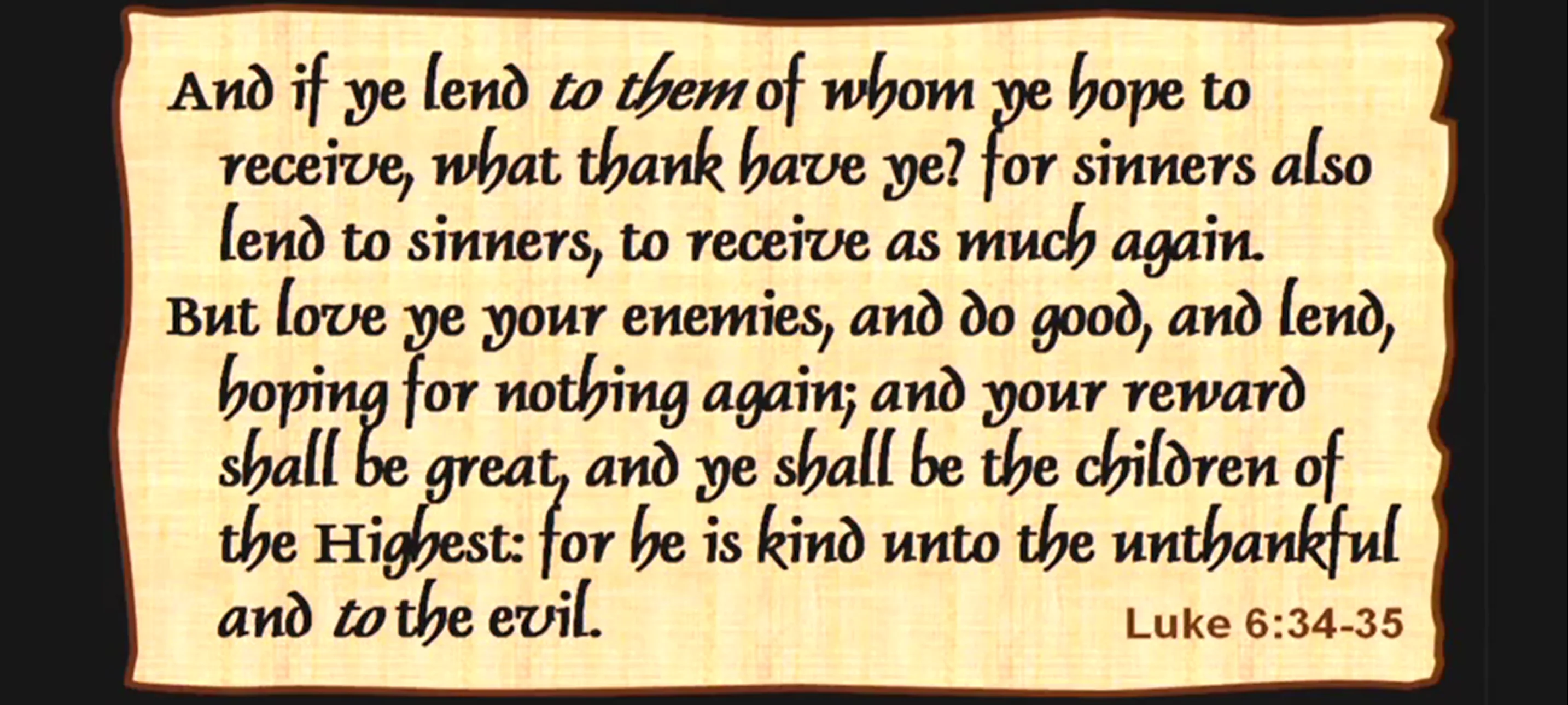
- This kind of love marks one off as distinctive (vv. 32-34), unique and descriptive of the heavenly Father (v. 35)
Luke 6:36

- Jesus then taught His followers a fundamental principle of the universe
— What one sows, he will reap (vv. 36-38, cf. Gal 6:7)
- “…merciful” — magnanimous
— Latin: magnus (“great”) and animus (“spirit”): great-spirited (a lofty spirit that is generous, giving and forgiving)

Luke 6:37 Do Not Judge

- Probably the most misapplied verse in the Scripture (in the entire Bible)
— We are called to condemn sin (cf. 1 Cor 6:2, 1 Cor 5:9-13)
— We are called to inspect fruit (vv. 43-45 — Luke 6:43-45)
- Jesus is disallowing a judgmental, condemning disposition
— what Frederick Godet calls “…the tendency to place our faculty of moral appreciation at the service of natural malignity…” or more simply still “…judging for the pleasure of judging”
- It’s about the attitude — “Judgmentalism” is merciless
— it attaches motives to actions that have never been there
— it always sees in the worst light
— it is a sign of spiritual cancer and will itself be judged
- A merciful Father has merciful children
- You bear testimony to a merciful Father by being a merciful child
Luke 6:38
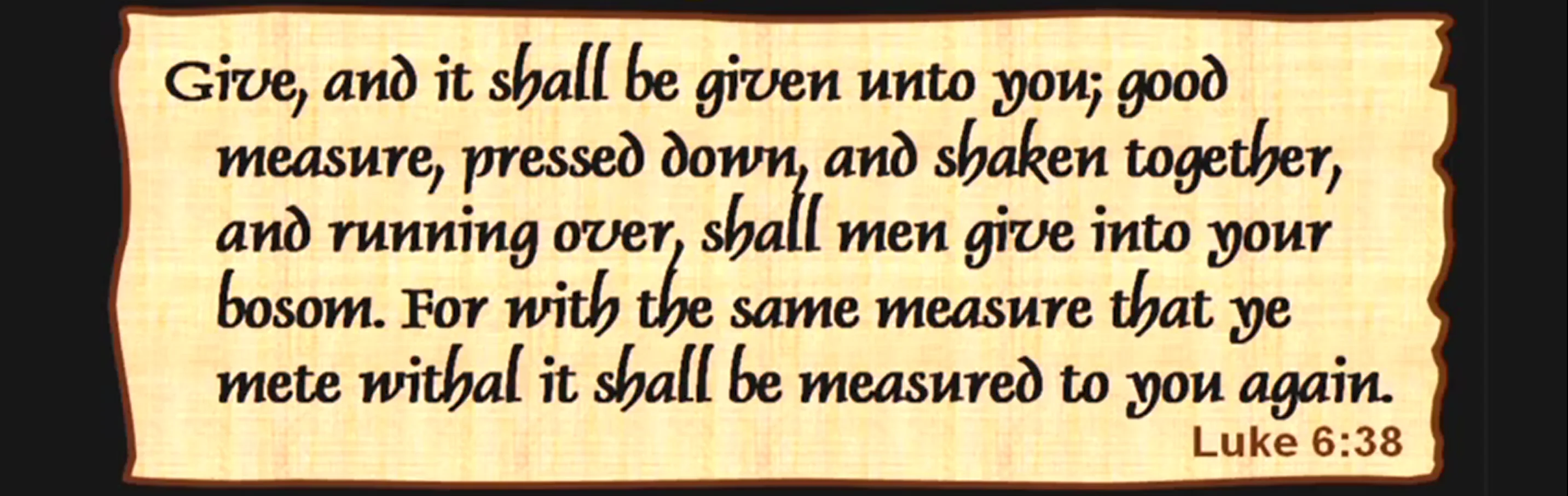
- God will not be our debtor
— You cannot out-give God
— As you give of yourself in God’s name, God will never allow to be indebted to you
— God will always out-give whatever is that you are giving (tithing)
- Remember the “dare” of God:
— One and only exception to what is written: Do not test God (Deut 6:16, cf. Luke 4:12)
— It is astonishing to realize that God of the universe has put Himself in a box and dares you to call His bluff
🟨 Malachi 3:8-9
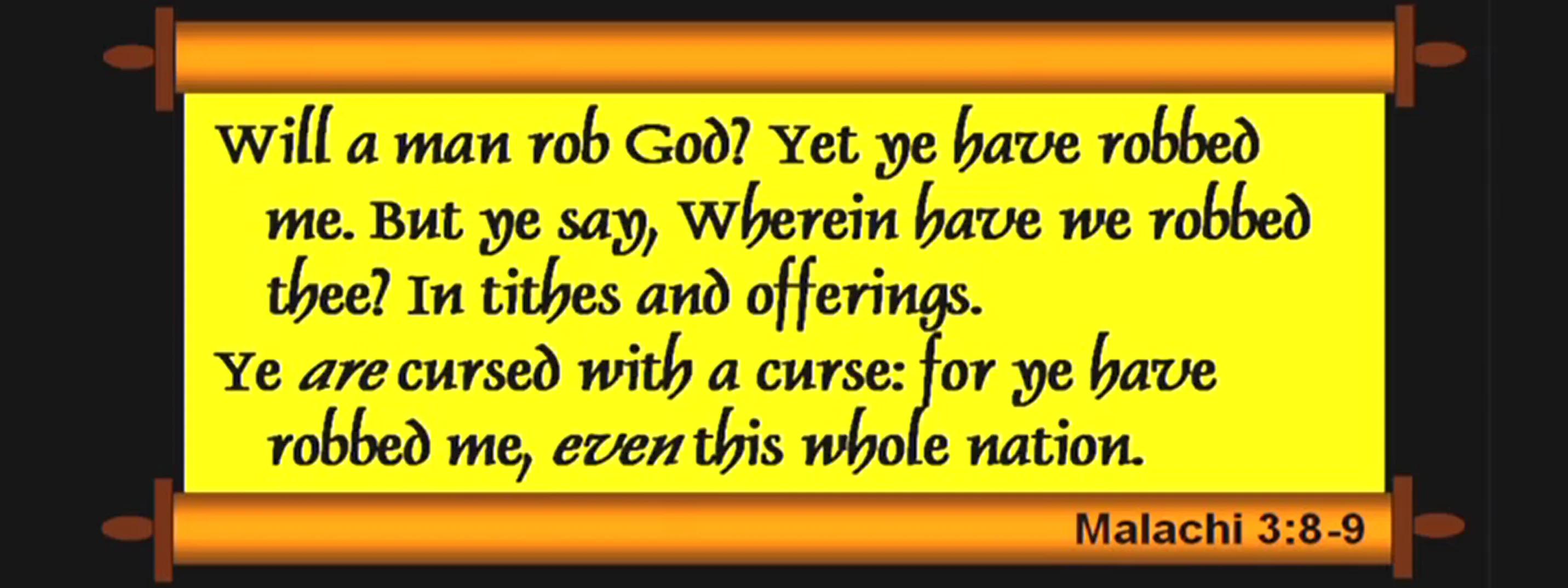
🟨 Malachi 3:10
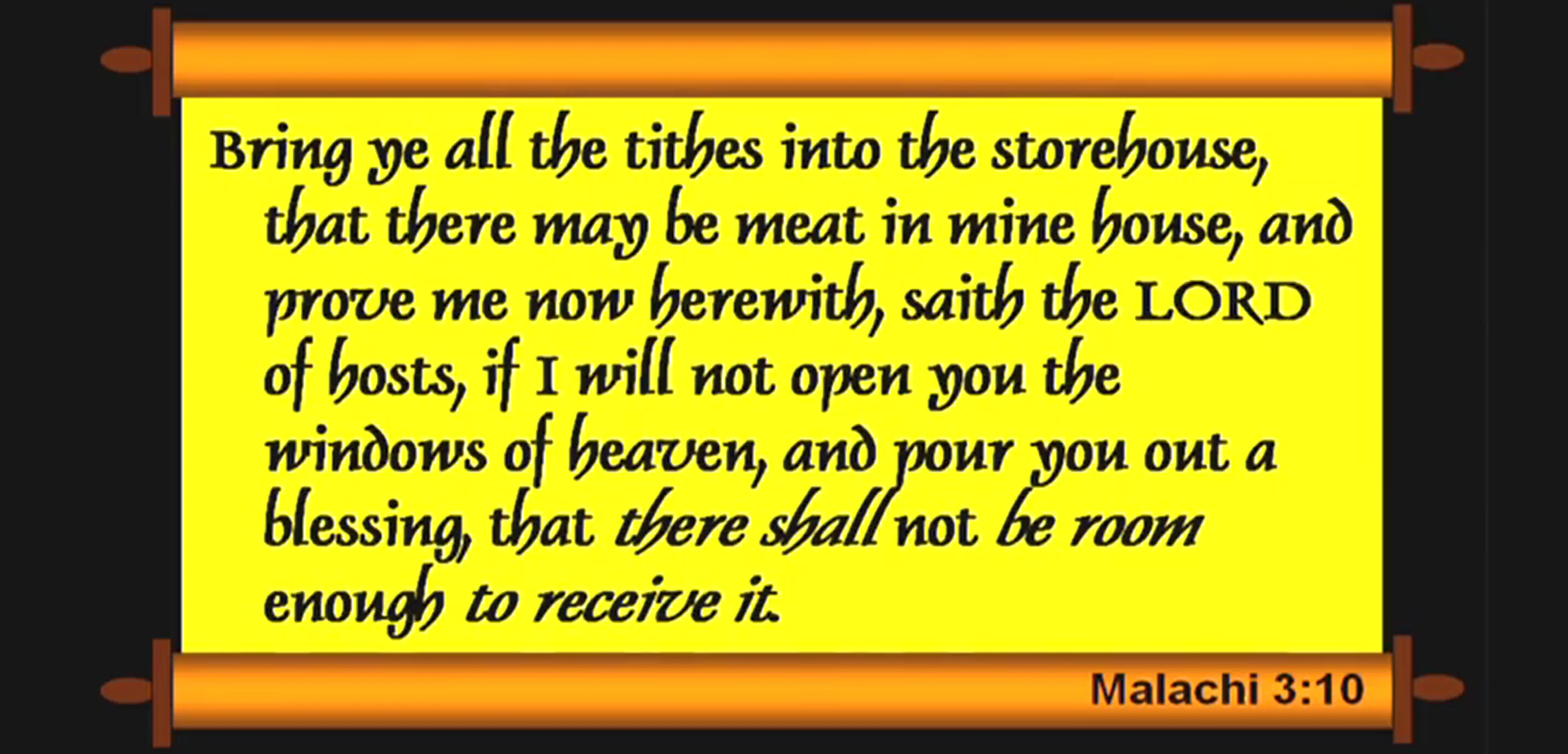
- “…prove me now herewith” — that’s a dare

- Jesus outlined five areas which were proof of the sowing and reaping theme:
① Mercy will lead to mercy (Luke 6:36). The disciples were exhorted to have the same merciful attitude God displayed toward them
② Judgment will lead to judgment (v. 37a)
③ Condemnation will lead to condemnation (v. 37b)
④ Pardon will lead to pardon (v. 37c)
⑤ Giving will lead to giving (v. 38)

Luke 6:39

Luke 6:40


- Ancient Egypt: Egyptians worshiped the scarab — the dung beetle
— This country that once ruled the world is now living on a garbage pile
- The World: Is the world hard, materialistic and unforgiving? You bet
— If you worship the World, you’ll become hard, materialistic and unforgiving
- Jesus: If you worship Christ, you will become like Him
Luke 6:41

- Judgmentalism is intrinsically hypocritical (cf. Rom 2:21-24)
— It assumes the judger isn’t guilty, but behind the presumption is often a shield to his own guilt
Luke 6:42
Luke 6:43-44
- We are not called to judge the motives of people
- We are here to judge the fruit of their actions (fruit inspectors)
Luke 6:45
- A prank pulled on Chuck by his dear friend Doug Wetmore (passed 2002), the founder of Firefighters for Christ tape ministry — as he did cleanup of Chick’s audio recordings, he kept stutters and stumbles that he edited out. He published a tape of those and named it: “For of the abundance of the heart his mouth speaketh”
- It is vital that we take “every thought captive” (2 Cor 10:5; cf. Be Ye Transformed)
— Because that is where the sin begins (in the mind of the heart)
— Take it captive before it grows into something stronger, let alone manifests into action
— It’s a moment-by-moment commitment during the walk with Christ to succeed in that walk (sanctification)
- In this case, fruit stands for what is said, not what is done: out of the overflow of his heart his mouth speaks
- How Should One “Judge”? (when one does judge)
1️⃣ Humbly (to the audience: If you are the most humble person here, please rise your hand)
2️⃣ Prayerfully
3️⃣ Biblically
4️⃣ Lovingly
5️⃣ Mercifully
- How should one offer judgment?
— Exemplarily
— Privately
— Gently and constructively

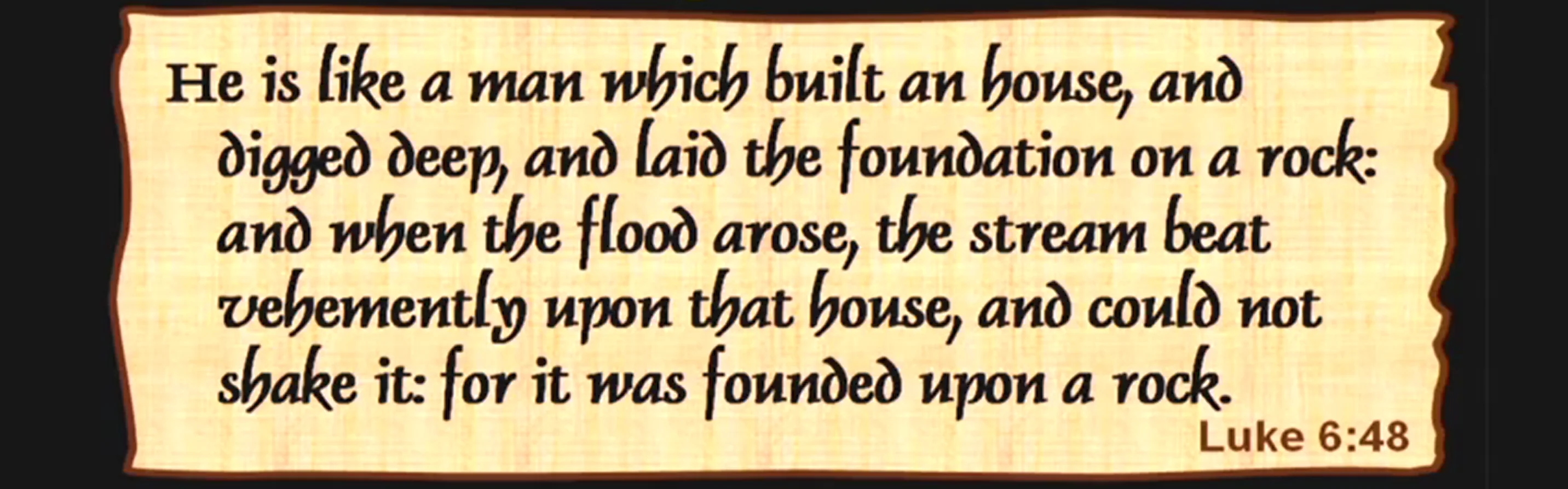
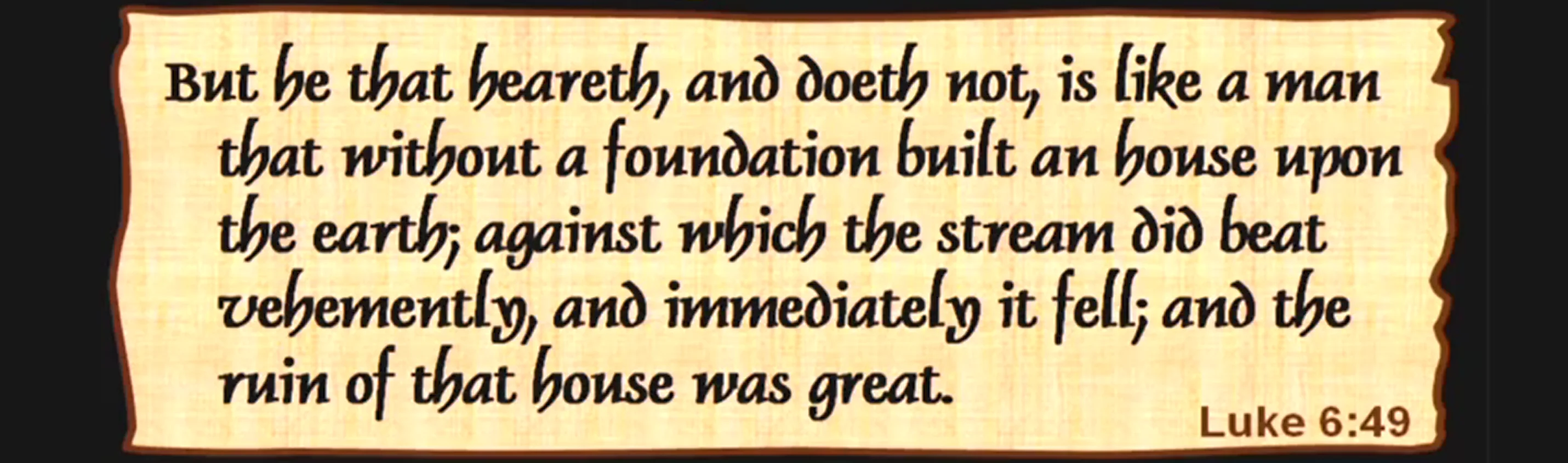
Luke 6:46 Build Your House on the Rock / The Two Housebuilders / Builders and Foundations

- Outward expression is not nearly so important as obedience (simply, obey Him)
- It is not enough to call Jesus Lord, Lord. A believer must do what He says

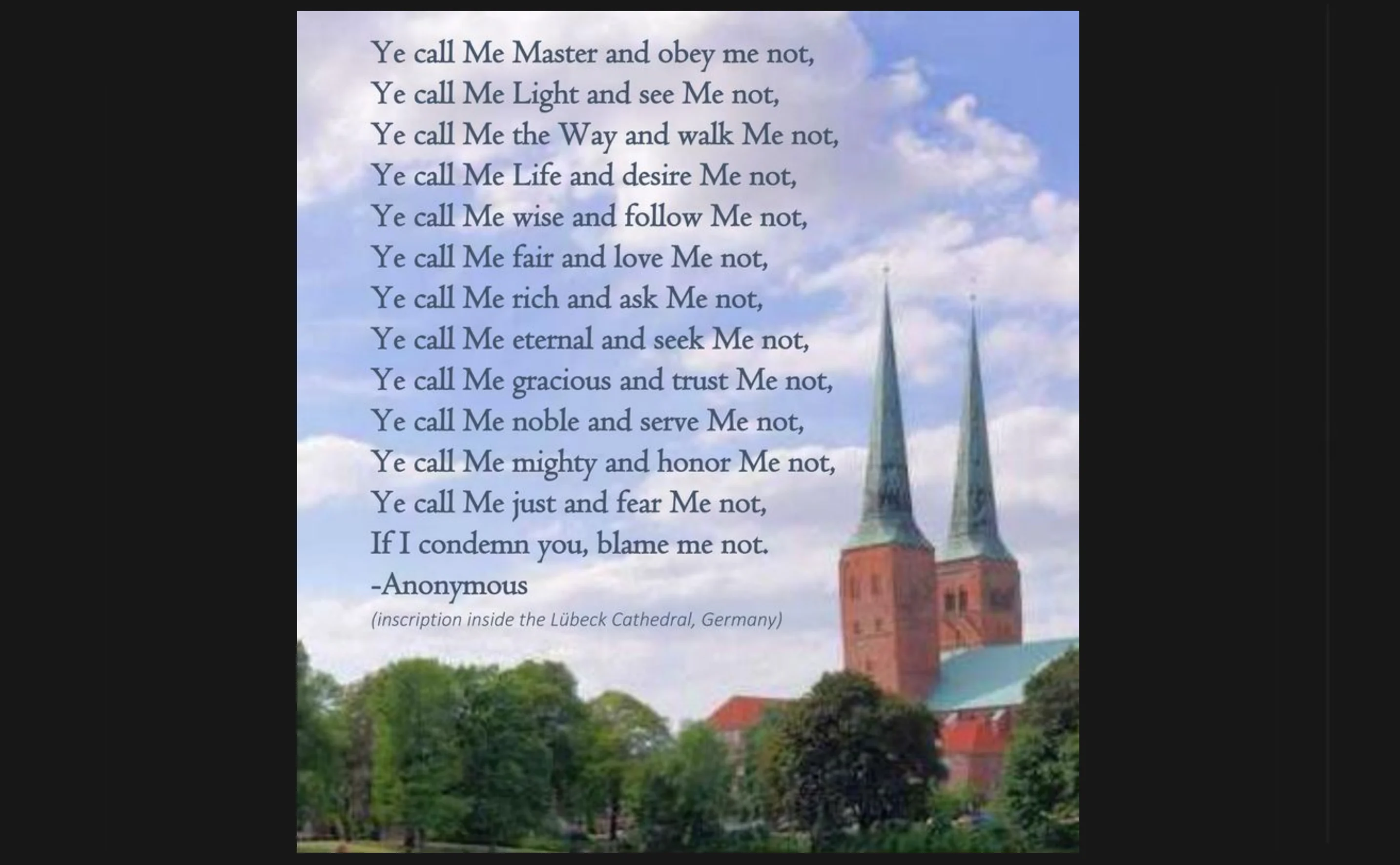
- Blame Me not: Poignant little piece, an inscription on a cathedral in Lubeck, Germany (by Jeff O’Hara)
- Indicts us all, doesn’t it?
Luke 6:47

- …coming…hearing…doing
— Don’t just read or memorize: learn by doing
— Whether biking, flying or using your Bible
Luke 6:48
Luke 6:49

Pastor Joe Focht (alive as of Jan 2026) shared this piece of research:
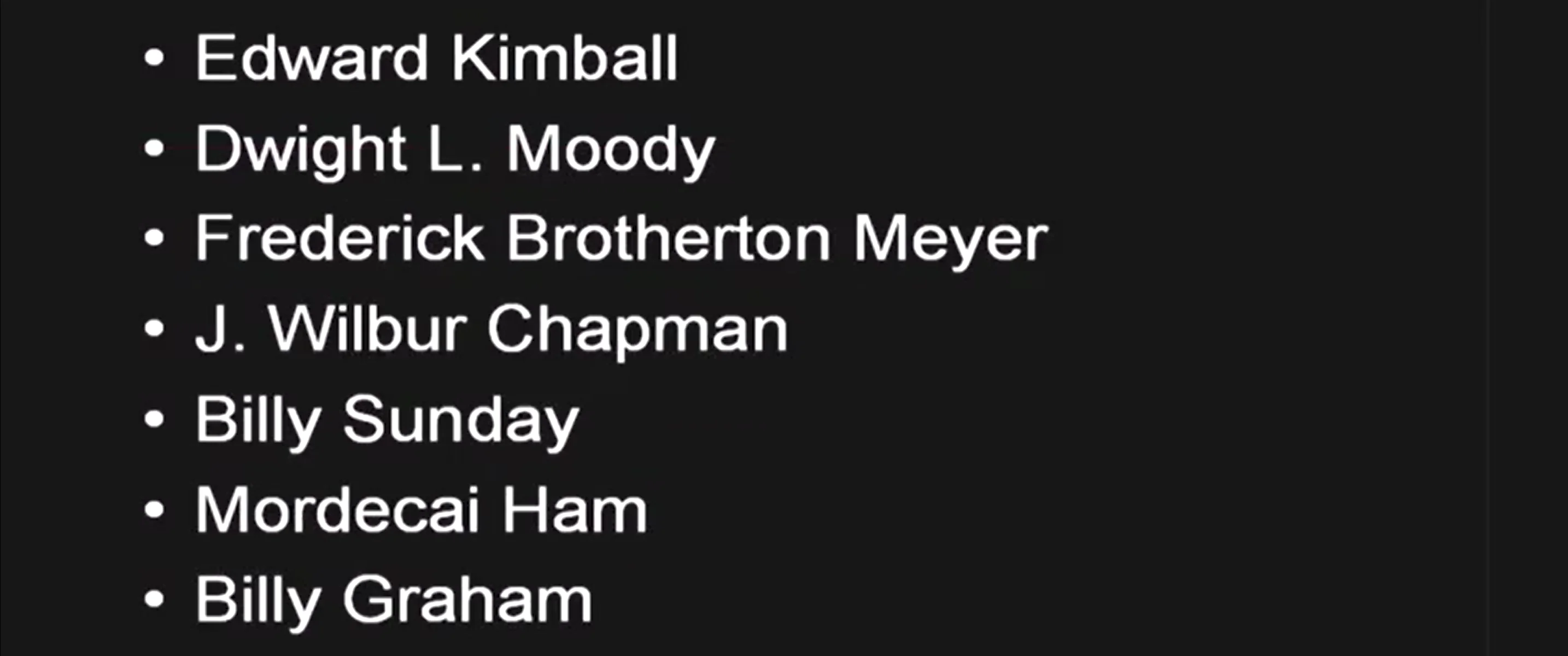
- Edward Kimball (a guy that nobody knows) run a Sunday school class and had a burden for one of his Sunday school students to know Jesus as Lord and Savior. On April 21, 1855, Edward Kimball went to see him and had a conversation about the love of God at the Holton’s shoe store in Mt. Vernon, Massachusetts, where the student worked. He led him to Christ in the shoe store. His name? Dwight L. Moody (he was just a kid)
- That young man, Dwight L. Moody, went on to become an evangelist whose ministry rocked two continents. While preaching in the British Isles, Moody spoke in a small chapel pastored by Frederick Brotherton Meyer. In his sermon Moody told an emotionally charged story of a Sunday School teacher he knew who personally went to every student in his class and won them to Christ. The message changed Pastor Meyer’s entire ministry, inspiring him to become an evangelist
- Over the years, Meyer came to America several times to preach. Once in Northfield, Massachusetts a confused young preacher sitting in the back row heard Meyer say: “If you are not willing to give everything to God, are you willing to be made willing?” That remark led J. Wilbur Chapman to accept the call of God on his life
- Chapman went on to become one of the most effective evangelists of his time. He had a volunteer who helped set up Chapman’s crusades and learned to preach by watching him. His name: Billy Sunday
- Sunday eventually took over Chapman’s ministry, becoming one of the most effective evangelists of the 20th century. In the great arenas of the nation, Billy Sunday’s preaching turned thousands to Christ. Inspired by a 1924 Billy Sunday crusade in Charlotte, NC, a committee of Christians committed themselves to reaching that city for Christ. They invite Mordecai Ham to do that
- Mordecai held a series of evangelistic meetings in 1932. A lanky 16 year old sat in the huge crowd one evening. Spellbound by the message of the white haired preacher who seemed to be shouting and waving his long finger directly at him. Night after night the youth attended and finally went forward and gave his life to Christ. That teenager’s name: Billy Graham
- Billy Graham has doubtlessly communicated the gospel of Jesus Christ to more people than anyone else in the history of the world
- Remember how this sequence of events started: a nobody named Kimball, concerned for one of his students, visited him at his shoe store. In doing that, Kimball changed the world!
- Millions upon millions have been affected by his decision to go to that shoe store and millions more will continue to feel the impact. Can anything like that happen today?


- The move is on us even though we are all a “work in progress”
- “Raise the Bar” on your personal walk
- Start a Small Group
— Invite some friends over to review and discuss a DVD (with coffee & cookies)
— The Holy Spirit will take over
— You don’t have to be a “teacher” to lead a group, only a facilitator (make sure one person does not dominate and everyone gets an opportunity to participate)
— Workbooks are available and in some cases, university course credit is available
☀️ Matt 24:44