s08 (Ch 8) 4 Soils, Gadara, Jairus’ Daughter (studied 3-Feb-2026)
The Book of Luke with Dr. Chuck Missler
The subsections of Chapter 8 (per NASB/LSB/MEV) are:

- Luke was a great historian
- Luke writes the best Greek of all New Testament writers
- He was a Gentile physician
- His Gospel is well organized
- The only one who gives an obstetrical account of the nativity and the birth of John the Baptist
- He also records the reading of Jesus’ Mandate from Isaiah 61
- Chapter 8 continues with Jesus’ establishing His authority

Luke 8:1 Many Women Contribute to Jesus’ Ministry
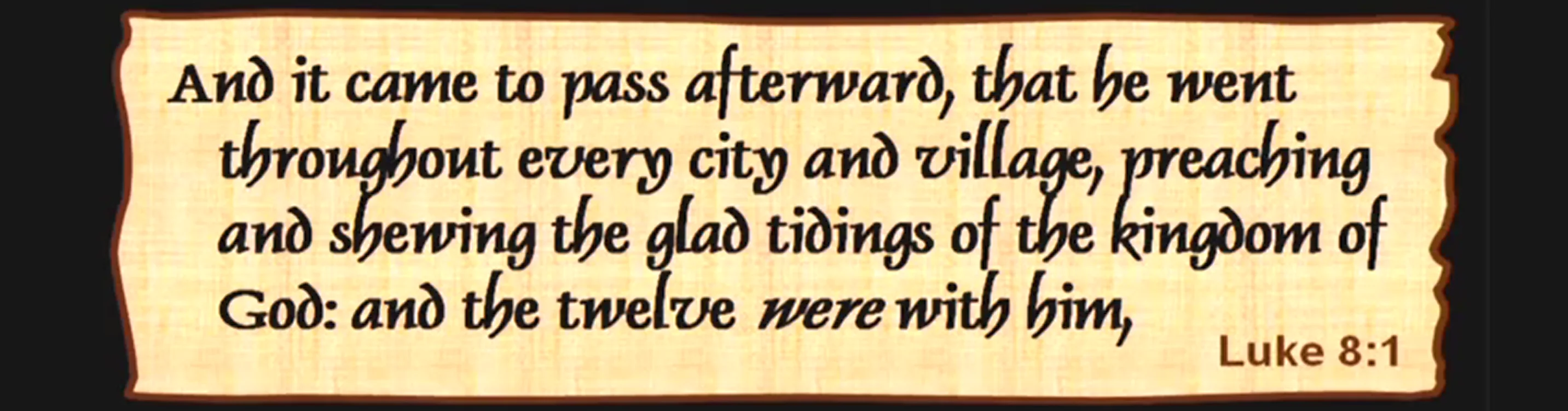
Luke 8:2-3
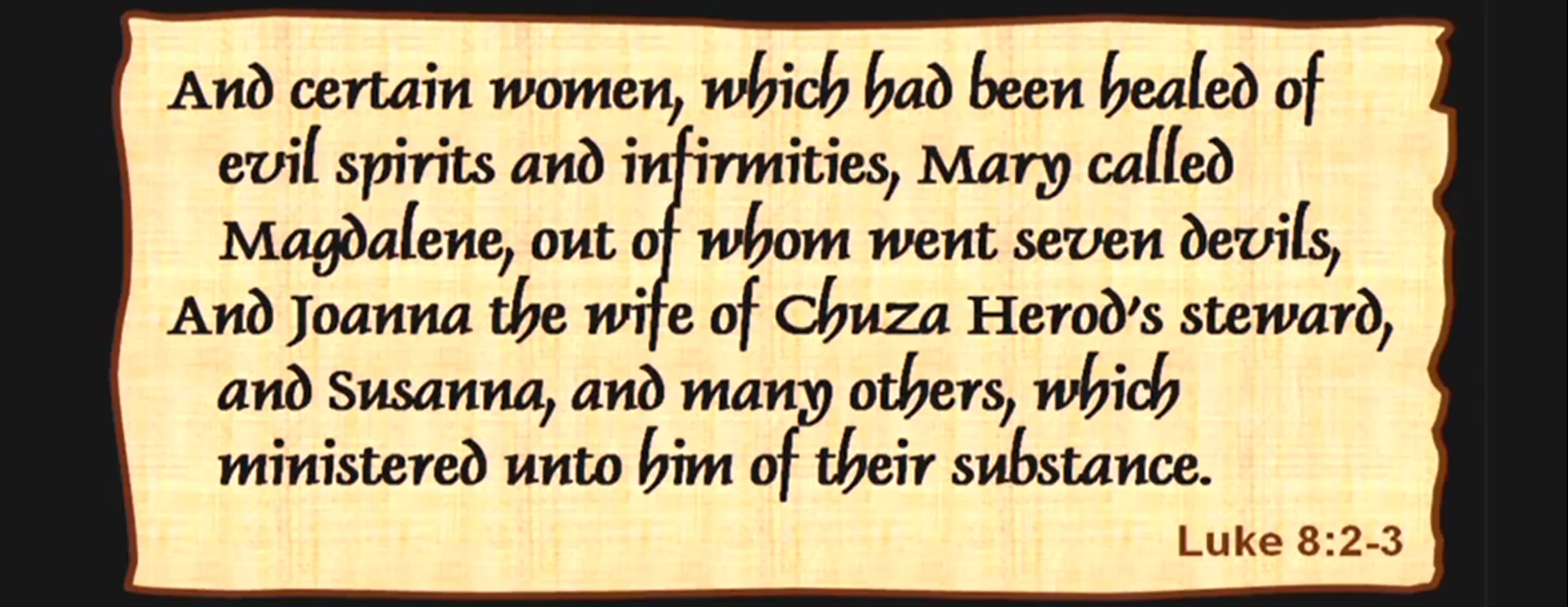
- Some of these women (like Mary Magdalene) apparently had some substantial assets
— They used their wealth to help the financing

Luke 8:4 The Parable of the Sower
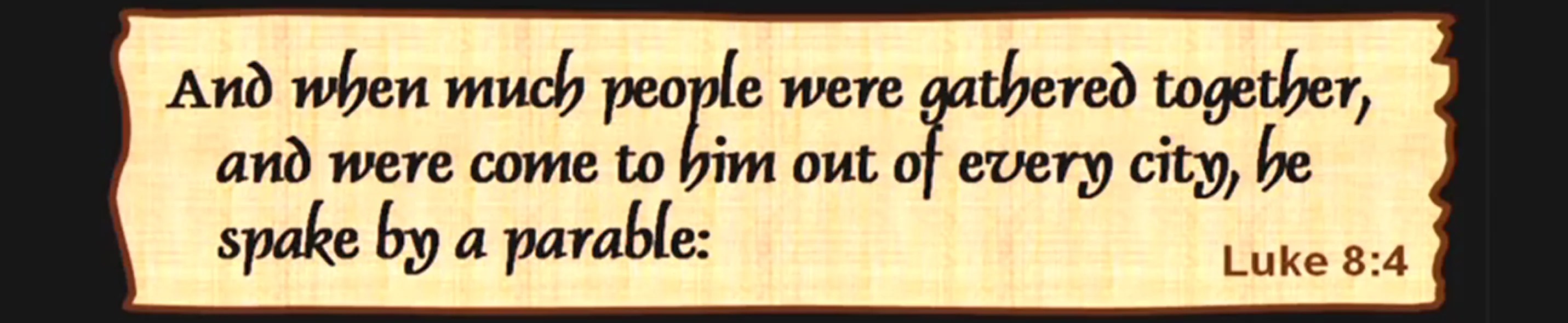
- He’s already drawing significant crowds
- Why did he teach in parables?
— Matt 13 and Mark 4 amplify this passage
— In Matt 12, they accuse Him of doing His miracles by the power of Satan and that changes His ministry
— In Matt 13, Jesus gives a group of seven parables to the disciples. The first one is the Parable of the Sower, the same one as here in Luke 8
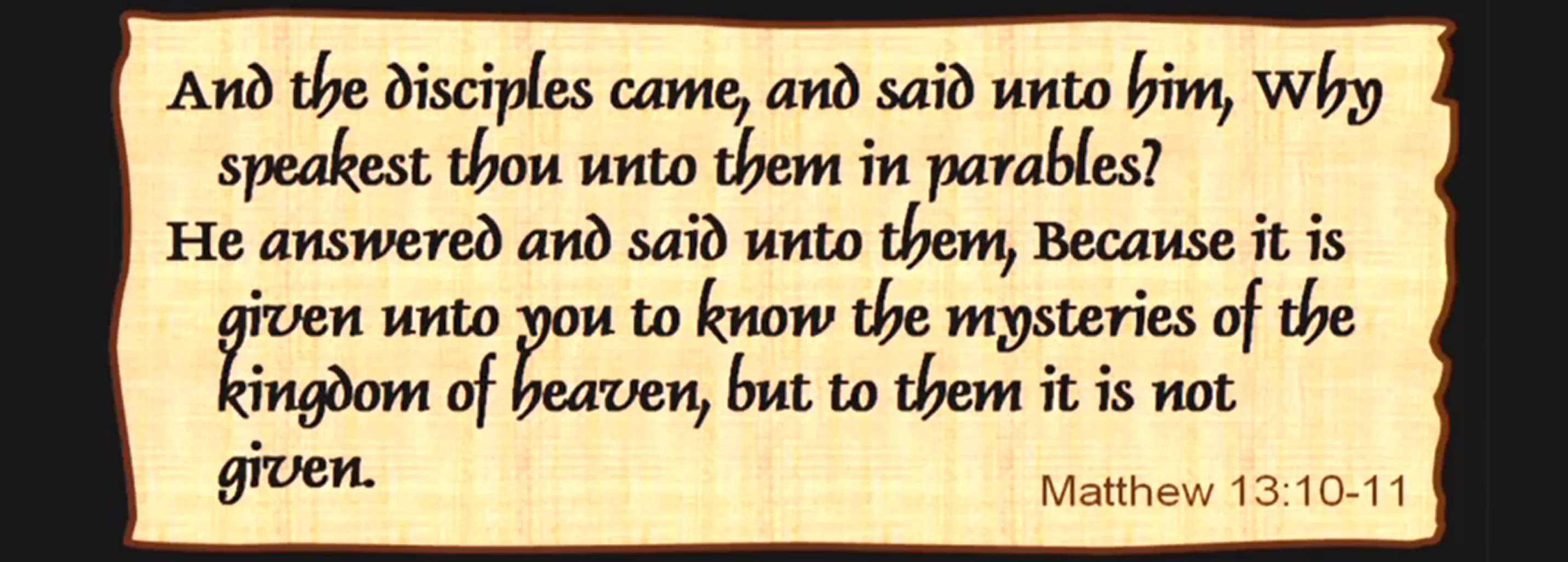
— In Matthew, however, Jesus elaborates an answer to the question “Why do you speak in parables?”
🍁 Matt 13:10-11
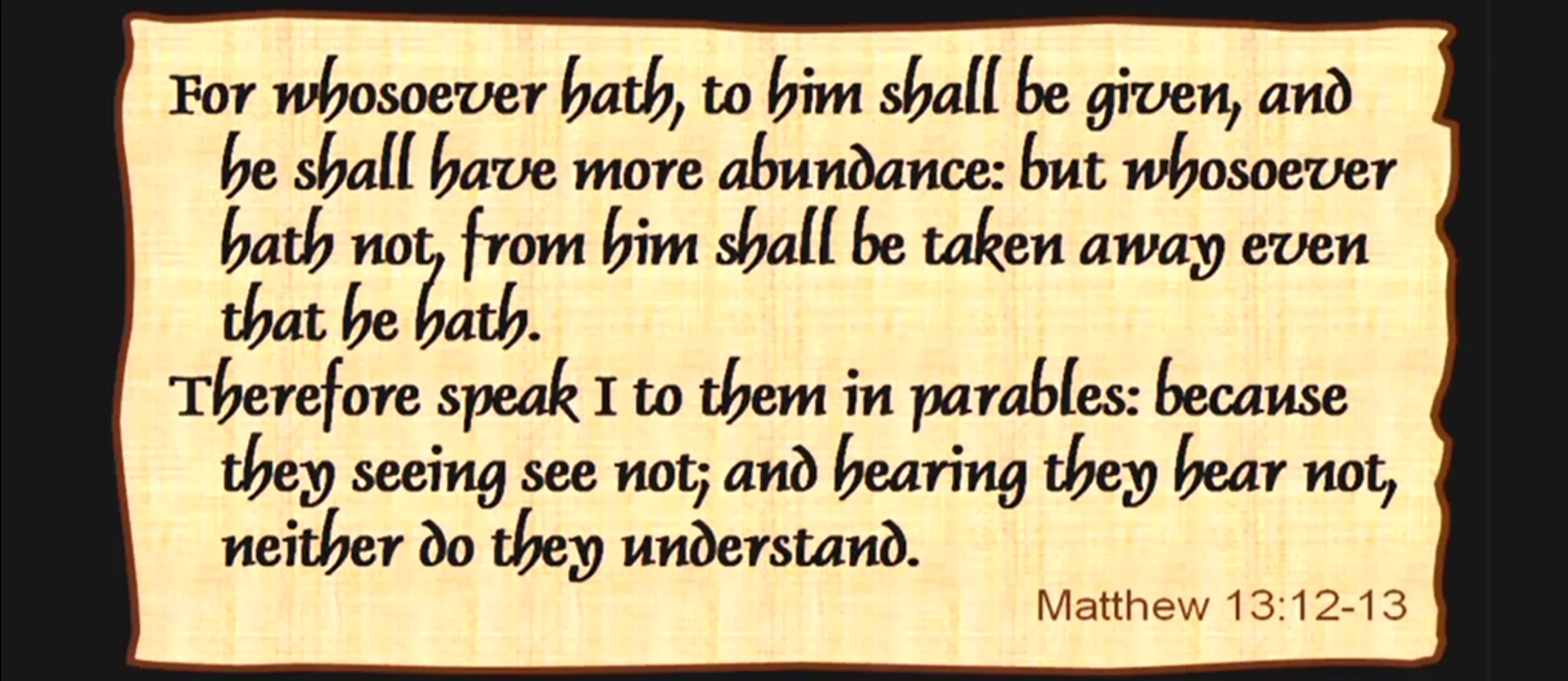
🍁 Matt 13:12-13
🍁 Matt 13:14
🍁 Matt 13:15
🍁 Matt 13:16-17
- That’s surprising: He’s giving them parables so that only those by the Holy Spirit will understand
- If you need help understanding an obscure parable, it’s a spiritual—not an intellectual issue
— Pray it through
— The Holy Spirit will be your guide, not your intellect
- In Luke 8:5 Jesus gives the first parable from Matthew’s list of 7
— Matthew gives seven parables and the first two are explained in private
— From Matt 13 onward, Jesus speaks publicly only in parables
— In public he gives the parable and in private he explains it to the disciples
Luke 8:5
- Who are “the fowls of the air”? (cf. verse 12!)
Luke 8:6-7
Luke 8:8
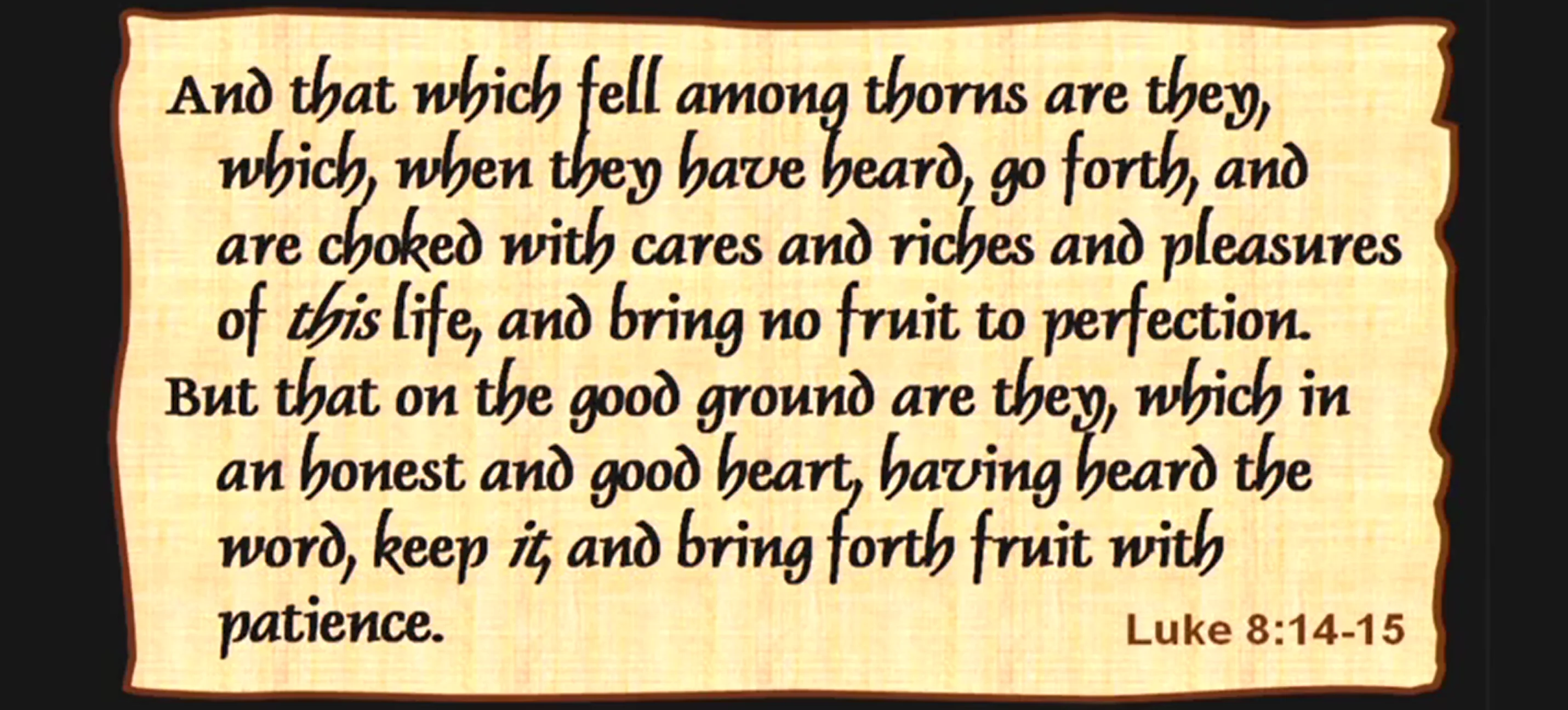
- This is the famous parable of the sower and the four soils
- The seed is the Word of God
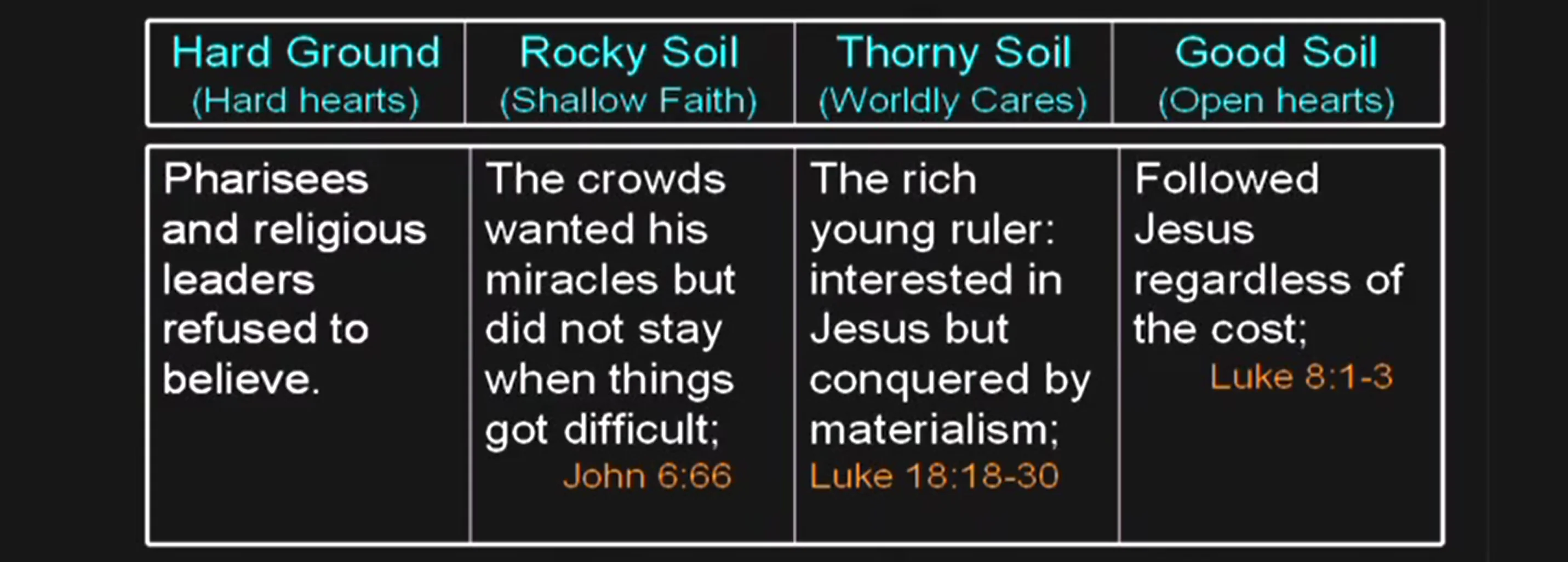
- The four soils equal four heart conditions of the hearers:
1) Hard soil → Satan can steal the seed away
2) Rocky soil → shallow, no root
3) Thorny soil → the cares of the world choke it out
4) Good soil → takes root, bears fruit, endures
- For Jesus’ elaboration, see Matt 13
- “He that hath ears to hear, let him hear”:
— This phrase appears seven times in the Gospels (Matt 11:15, 13:9, 43, Mark 4:9, 23, Luke 8:8, 14:35)
— It is possibly a code phrase to alert us to relate the subsequent saying to the Church
— It is a key structural phrase in Jesus’ Letters to Seven Churches (Rev 2 & Rev 3)
— It ties the 7 Kingdom Parables and Jesus’ Letters to the Seven Churches together
— Incidentally, Paul’s letters to 7 different churches match that paradigm

Luke 8:9-10 The Parable of the Sower Explained
- He’s quoting Isaiah 6:9:
— “And he said, Go, and tell this people, Hear ye indeed, but understand not; And see ye indeed, but perceive not.”
- This is analogous to the remark that Paul makes in 1 Cor 2:14:
— “But a natural man does not accept the depths of the Spirit of God, for they are foolishness to him, and he cannot understand them, because they are spiritually examined.” LSB
— “But a natural man does not accept the things of the Spirit of God, for they are foolishness to him; and he cannot understand them, because they are spiritually appraised.” NASB
— “But the natural man does not receive the things of the Spirit of God, for they are foolishness to him; nor can he know them, because they are spiritually discerned.” NKJV
— “The man without the Spirit does not accept the things that come from the Spirit of God, for they are foolishness to him, and he cannot understand them, because they are spiritually discerned.” NIV (1984, not 1978 nor 2011)
🍌 1 Cor 2:14
- This is not an intellectual exercise (a head trip)
— It is the Holy Spirit that makes it clear to you
- Jesus’ speaking in parables was not a denial to others, but actually an act of grace to those listening to Him:
— If they refused to acknowledge Him as Messiah, their judgment would be less severe (not having understood the parables) than if they had understood more (had He not spoke in parables) (cf. Luke 10:13-15)
— Even in this respect, Jesus was pure perfection!
Luke 8:11

- This is consistent throughout the 7 Kingdom Parables of Matthew 13
- The “Principle of Expositional Constancy”:
— The Holy Spirit tends to use the same idioms through the Scriptures
• e.g. Jesus as a Rock
• Seed = the Word of God
• Soils = conditions of the heart…
Luke 8:12
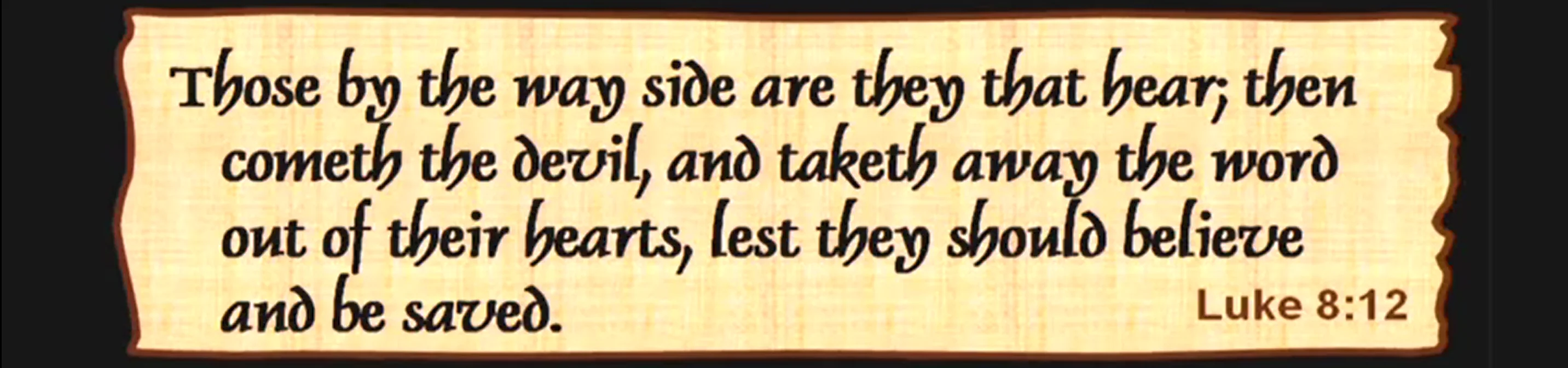
- Here the “fowls of the air” of verse 5 are identified: they are ministers of Satan
- Misunderstood Idioms
— Mustard Tree: So large that the birds of the air lodge in its branches → “Birds” are ministers of Satan, making their home in the church
— Leaven: Leaven in three measures of meal (Luke 13:21) refers to the fellowship offering (Gen 18:6), which was to be unleavened bread. Leaven is always a type of sin. Sin puffs up
Luke 8:13
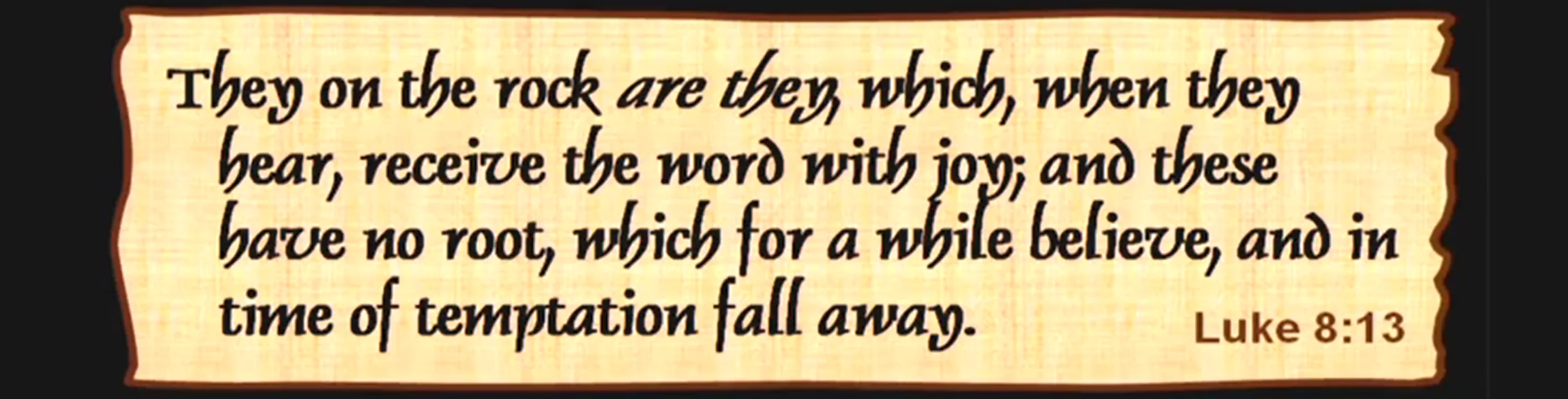
- Typical of the area—thin soil on top of limestone. No depth to the soil
Luke 8:14-15


Luke 8:16-17 A Lampstand and the Light / A Light Under a Vessel
Luke 8:18

Luke 8:19-20 Jesus’ Mother and Brothers
- They thought they had a special access. They wanted some kind of a priority here
- If Mary was anything special, Jesus would have treated her differently. She may not even have been saved here
- Jesus did have physical brothers:
— He was eldest in a family of at least seven: (four brothers, at least two sisters; cf. Matt 13:55, Mark 6:3)
— At least two are saved after the resurrection — the epistles of James and Jude were written by them
Luke 8:21

- It is very interesting to see Jesus’ priorities
- Even at the cross, He commits the custodianship of His mother to John the Apostle, not any of His brothers

- Luke had previously recorded events that authenticated Jesus’ authority (Luke 4:31-6:16 )
— Here again an authentication was necessary
— Jesus had been teaching that one must listen carefully to His words and carry them out
— Now Jesus authenticated His words in ways that only the Messiah could do
— He showed His power over three aspects of the created world:
• the natural realm vv.22-25
• the demonic realm vv.26-39
• sickness and death vv.40-56
Luke 8:22 Jesus Calms a Storm
- Storms measure the skill of the sailor
— At least seven of the disciples were fishermen
— They were experienced seamen familiar with these waters
— “Let us go…” — the whole group
Luke 8:23
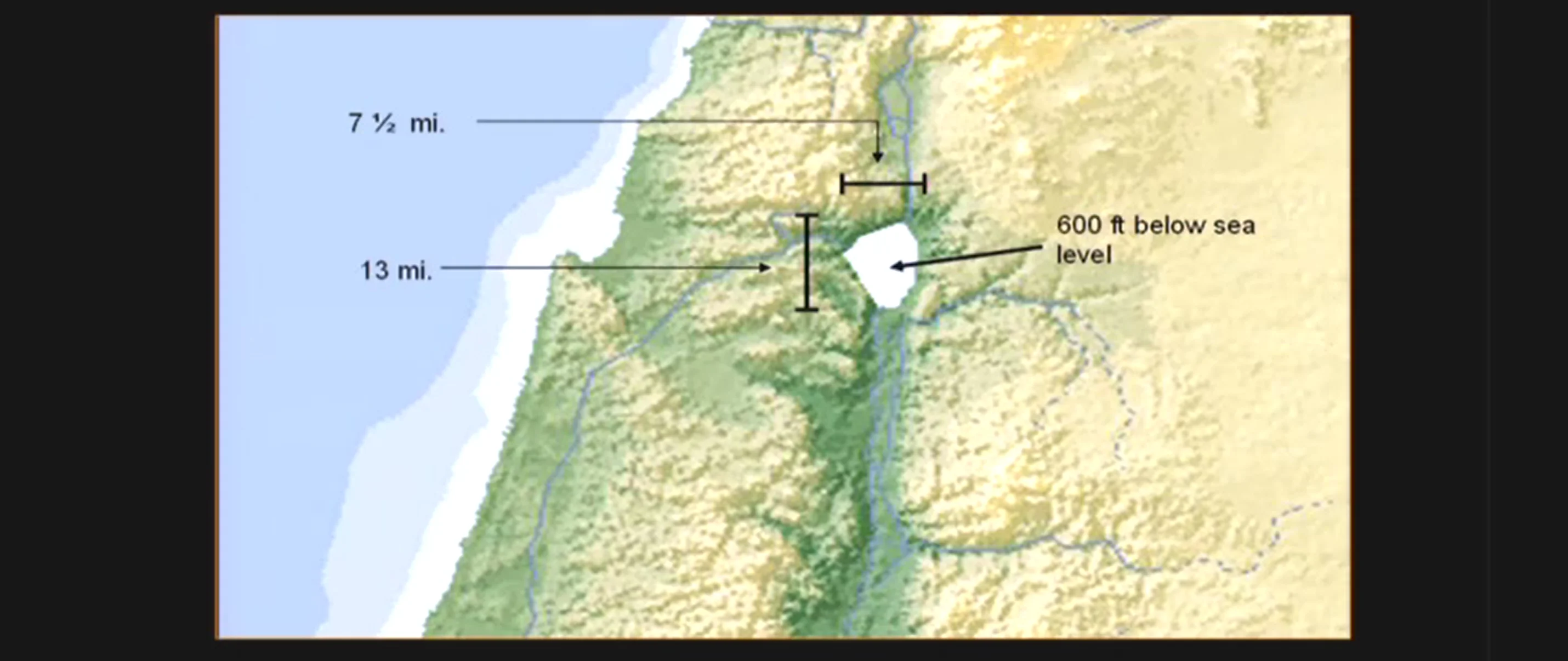
- “…came down” — the writer had been there, because storms do “come down”—The Sea of Galilee is 600 feet below sea level and winds come between two mountain peaks (Horns of Hattin) creating a Venturi effect
- This storm surprised these experienced professionals familiar with these waters
- This may have been more than a natural storm
— Satan was at work (conjecture)
— A strange encounter with the demonic world immediately followed…
Luke 8:24
- This should have shaken them up as much as the storm
— Storms do not just cease instantly, especially not serious ones like this
— He “rebuked” the wind, and there was immediate calm (the storm responded to His command)
Luke 8:25
- Cf. Psalm 107:24-30, 65:7, 89:9, 104:7, 106:9
- This demonstrates to his disciples Jesus’ power over nature
— He claimed to be the Creator of the Universe, and this proved that He was (Colossians elaborates on this)

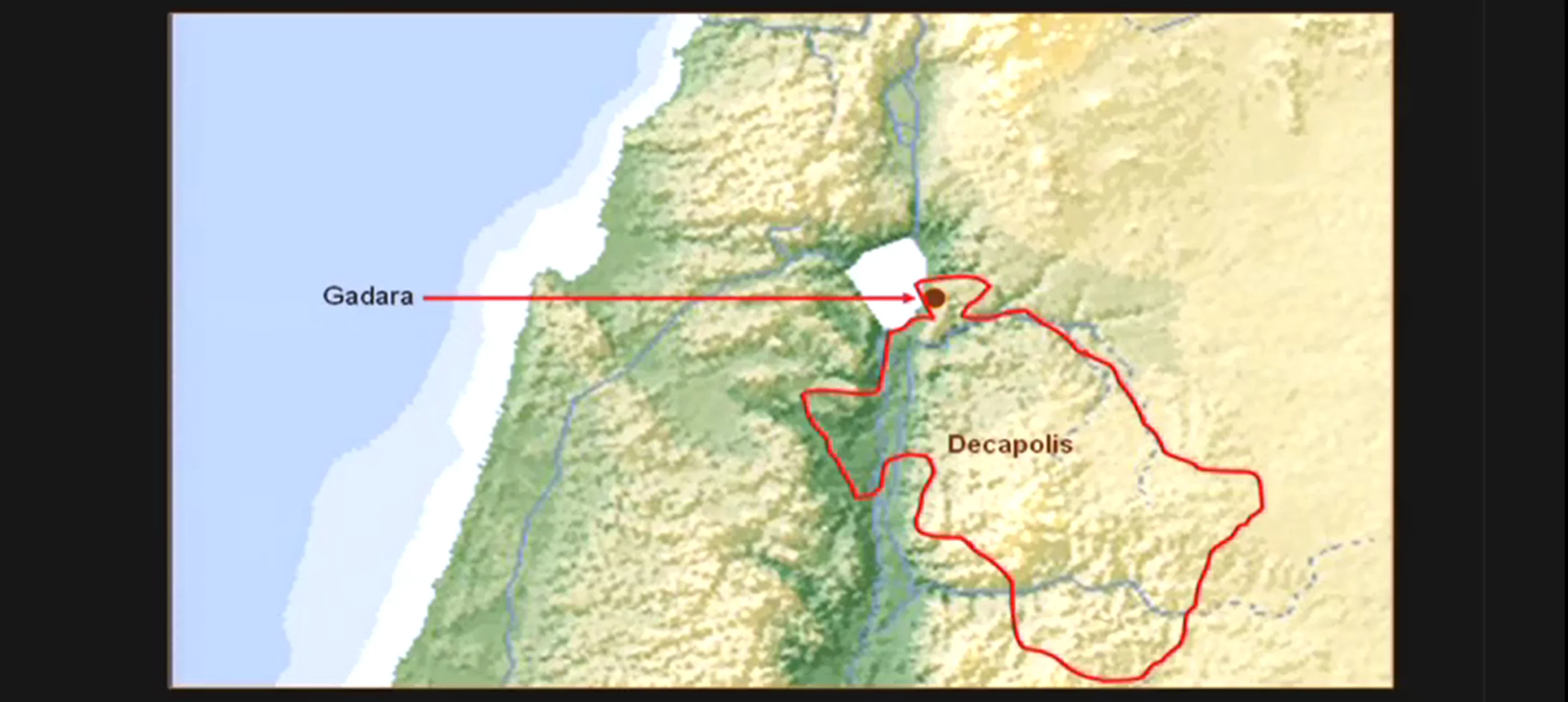
Luke 8:26 The Healing of the Gadarene Demoniac / Jesus Saves a Man from Many Demons

Luke 8:27
- Matthew wrote that Jesus met two demon-possessed men (Matt 8:28-34)
— Luke wrote about only the more dominant of the two
Luke 8:28
- Some pastors believe demon possession is simply a psychiatric illness
— That is not Biblical
- Demons are real
— They recognized things about Jesus that had not been acknowledged yet in the Gospel account that:
• Jesus is the Son of God Most High and
• Jesus has authority over them
- Demons “believe and tremble” (James 2:19):
— They recognized, and acknowledged his deity
— They believed in a future judgment (Matt 8:29) and in a place of future torment (v. 31) in the abousso
— They also believed in prayer: they beg Jesus to not send them into the abousso, but rather into the pigs
— (Demons can’t enter animals without permission?)
Luke 8:29
- That’s his history here, inserted
Luke 8:30
- Hebrew exorcism (and rabbis did indulge in exorcism):
— First step—have the demon identify himself
— (Exorcising a “dumb” demon was especially difficult, and, thus, evidence of Messianic authority; Luke 11:14)
- “Legion”: A Roman legion was almost 6000 men (if they are fully staffed)
Luke 8:31

- It seems the demons have knowledge of their ultimate destiny for punishment in the abousso
- They also readily acknowledged his authority over them
Luke 8:32
- Questions:
— Why did they want to go into pigs? To avoid being sent to the abousso
— Why did He yield to their request? So that we would know that they were real?
— How many pigs were there? Mark 5:13 tells us that there were 2,000 pigs
— What is a herd of swine doing in Jewish country? They were near the Decapolis, a Gentile region
- This also highlights an apparent distinction between fallen angels and demons
— Angels can:
• materialize in human form and dine with people (Abraham and Sarah; cf. Gen 18)
• take people by the hand (Lot; cf. Gen 19)
• even be “entertained unawares” by us (Heb 13:2)
• indulge in combat (the angel of the LORD killed 185,000 Assyrians in one night; 2 Kgs 19:35)
— Demons, however:
• appear to be powerless except as they seek embodiment
• once the demons are cast out, the possessed people are freed
— Angels have ranks and there are apparently also hosts of these demons (Eph 6:12)
— Demons may be (just a speculation) the disembodied spirits of Nephilim (hybrids deriving from fallen angels with human women). That appears to be the reason for the Flood (Gen 6). They are later called Rephaim and are not eligible for resurrection (because Jesus did not die for them; cf. Isa 26:14, in the Hebrew). The Nephilim were destroyed in the Flood, but their disembodied spirits apparently are still around
— Two Mistakes Made about Satan & Demons:
• to not believe they exist
• to be afraid of them (“greater is He that is in you, than he that is in the world” — 1 John 4:4)
— There exist, apparently, “Rules of Engagement”:
• From Job we know Satan can do nothing without God’s permission
Luke 8:33
- It is interesting that after the pigs drowned, they ended up in the abousso after all
- [See The Return of the Nephilim, or Alien Encounters, by Chuck Missler and Dr. Mark Eastman]
Luke 8:34
Luke 8:35
Luke 8:36-37
- In that region subsequently dwelled a people called Troglodytes, “dwellers among tombs”
- Demons apparently are territorial
— (When you occupy a new piece of property, claim it for God—all four corners. You don’t know the spiritual history of a piece of real estate)
- It is interesting that the Rephaim were not conquered in the areas of:
— Gaza, Hebron and Golan Heights (cf. Joshua & Judges)
— and those regions remain strongholds of the PLO to this day!
Luke 8:38-39
- He was a Gentile in a Gentile region
— (Jesus didn’t instruct him to reveal all this to the priest, which was required of Jews by the Law)

Luke 8:40 Jesus Heals a Woman and Jairus’ Daughter (Talitha cumi)
Luke 8:41
- If they are in Capernaum (which is not sure), then this was likely the synagogue the centurion had built
- The fact that a ruler of a synagogue would come to Jesus showed that people were beginning to acknowledge that Jesus is indeed the Messiah
— A synagogue ruler was in charge of the synagogue services and was responsible for maintaining and cleaning the building
- Other synagogue rulers in the New Testament were Crispus (Acts 18:8) and Sosthenes (Acts 18:17)
Luke 8:42

- “Throng” is συμπνίγω (sumpnigó) —“to strangle” or “to choke” — it was a tight pressing crowd

Luke 8:43-44
- staunch /stɔːn(t)ʃ/ stanched/stanched — stop or restrict (a flow of blood) from a wound
- If she is Jewish, she shouldn’t have been in the crowd, so she is obviously a Gentile woman

- In ancient Mesopotamia, “to cut off the hem” was to strip one of his personality (identity) or authority
— A husband could divorce his wife by cutting off the hem of her robe
— A nobleman would authenticate his name on a clay tablet by pressing the hem on the clay
— Fringes on Levitical garments were a symbol of authority or rank in ancient Israel (Num 15:38-39, Deut 22:12, Exo 28:33-34)
- In the wilderness of En Gedi, David cut off the skirt shuwl (hem) of Saul’s robe
— The genealogy was woven into the threads of the hem
— David later repents because he had personally interrupted the lineage to the throne and symbolically taken away the authority from the Lord’s anointed
— Saul understood (1 Sam 24:20)
- God’s Covenant with Israel:
— “I spread my shuwl over thee…” (Ezek 16:8, Exo 39:25-26) Representing authority and protection
— Ruth’s Petition to Boaz (Ruth 3:9): Asking him to undertake a levirate marriage
— Joseph’s Coat: “Variegated”? Many colors? …or seamless? (Gen 37:3-4)
— Jesus’ Seamless Coat = “continuance”?
— Temple was veil torn, signifying end of man as high priest
— Jesus’ hem is not torn, because He is high priest forever…
Luke 8:45
Luke 8:46-47
- The description is by Dr. Luke
— Luke’s writings use more medical terms than Hypocrites in his writings
Luke 8:48

- She apparently was a Gentile
— A woman of Israel with an issue of blood would have had to remain “outside the camp”, ceremonially unclean (Lev 15:25-30)
- “…hath made thee whole” — “…has made you well” NASB, “…has saved you” LSB
Luke 8:49 (back to Jairus’ Daughter)
Luke 8:50

- “…made whole” (same word as in v. 48: σώζω (sózó)) — “…made well” NASB, “…saved” LSB
Luke 8:51
- In spite of the fact that Jairus was informed that his daughter had died, he had faith that she would be resurrected (v. 50). That faith was partly expressed in the fact that he allowed Jesus to come into his house after He had touched an unclean woman
Luke 8:52-53
Luke 8:54

- In Mark 5:41 you get Peter’s eyewitness account (Mark is writing a shooting script):
— Mark writes: “Talitha cumi” — “which is, being interpreted, Damsel, I say unto thee, arise”
Luke 8:55
Luke 8:56
- Jesus didn’t want to be formally declared the Messiah until the time was right (Luke 19)
- Gabriel had revealed the exact time to Daniel over four centuries earlier
— The very day He would ride that donkey, presenting Himself as the Messiah

- How old was Jairus’ daughter? 12 years old
- How long had the woman had an issue of blood? 12 years
- The connection?
— Not necessarily in natural realm
— Jairus’ daughter was Jewish (daughter of Jerusalem is often idiom for Israel)
— The woman was likely a Gentile (a Jewish woman would have been outside the camp according to the Law)
— Jesus on His way to restore Jairus’ daughter, heals Gentile daughter

- Through The Storm:
— If you are where Jesus has called you to be, there’s no safer place to be
— If you’re not where Jesus has called you to be, you are in jeopardy