s11 (Ch 11) The Lord’s Prayer, Beelzebub, Woes to Pharisees (studied 13-Feb-2026)
The Book of Luke with Dr. Chuck Missler
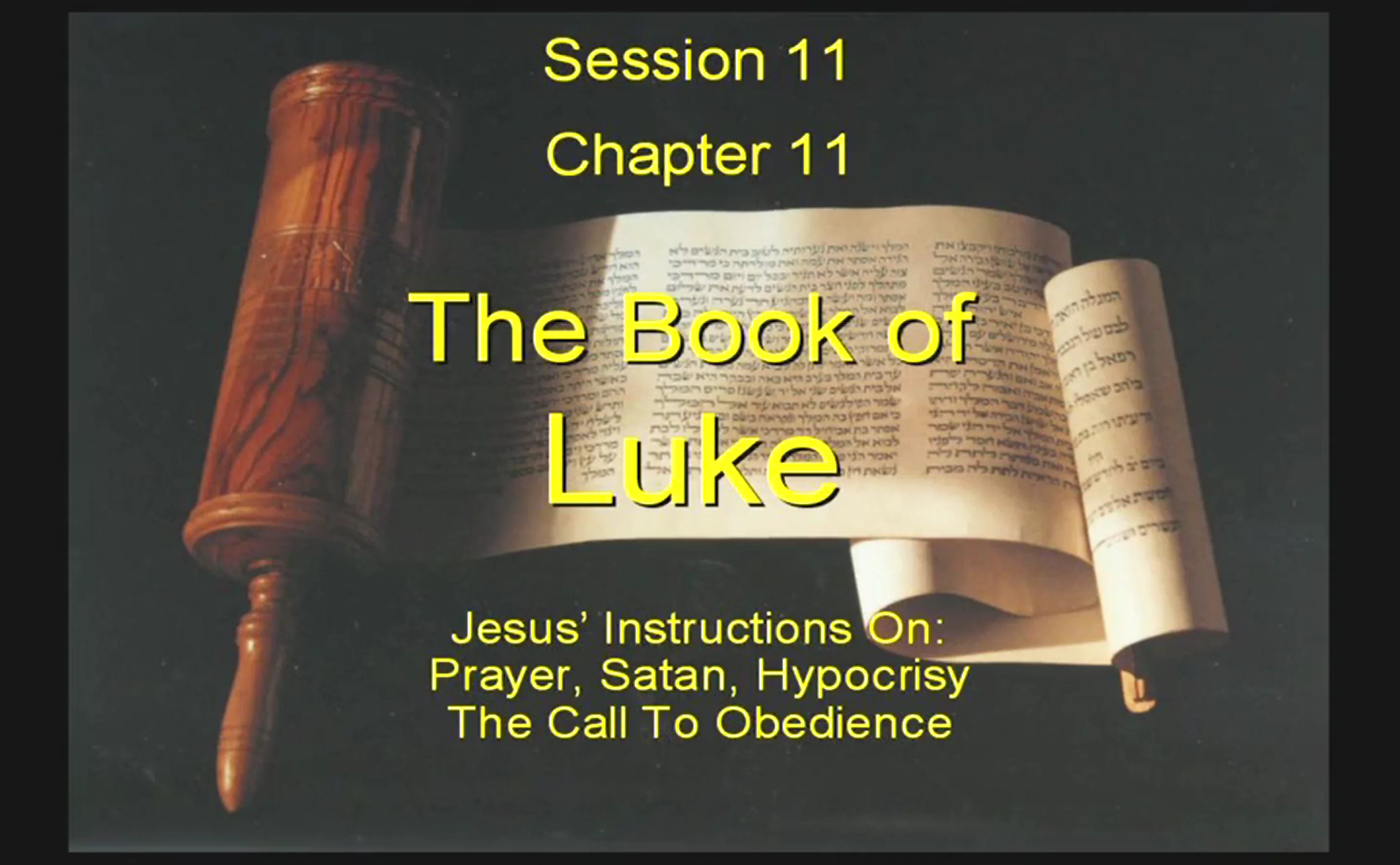
The subsections of Chapter 11 (per NASB/LSB/MEV) are:
- The Lord’s Prayer / Teaching About Prayer → Luke 11:1-13
- A Kingdom Divided / Pharisees’ Blasphemy / Jesus and Beelzebub → Luke 11:14-23
- The Return of the Unclean Spirit (MEV) → Luke 11:24-26
- True Blessedness (MEV) aka “Yea rather” → Luke 11:27-28
- The Sign of Jonah / The Demand for a Sign → Luke 11:29-32
- The Light of the Body (MEV) → Luke 11:33-36
- Woes to the Pharisees and Lawyers / The Denouncing of the Pharisees and Lawyers (MEV) → Luke 11:37-54

- The Gospel of Luke is:
— orderly (very well organized)
— straightforward and
— complete
— very much researched by sceptics and found to be historically accurate (classic case: William Ramsey)
- It speaks to us Gentiles from a great, well-authenticated author

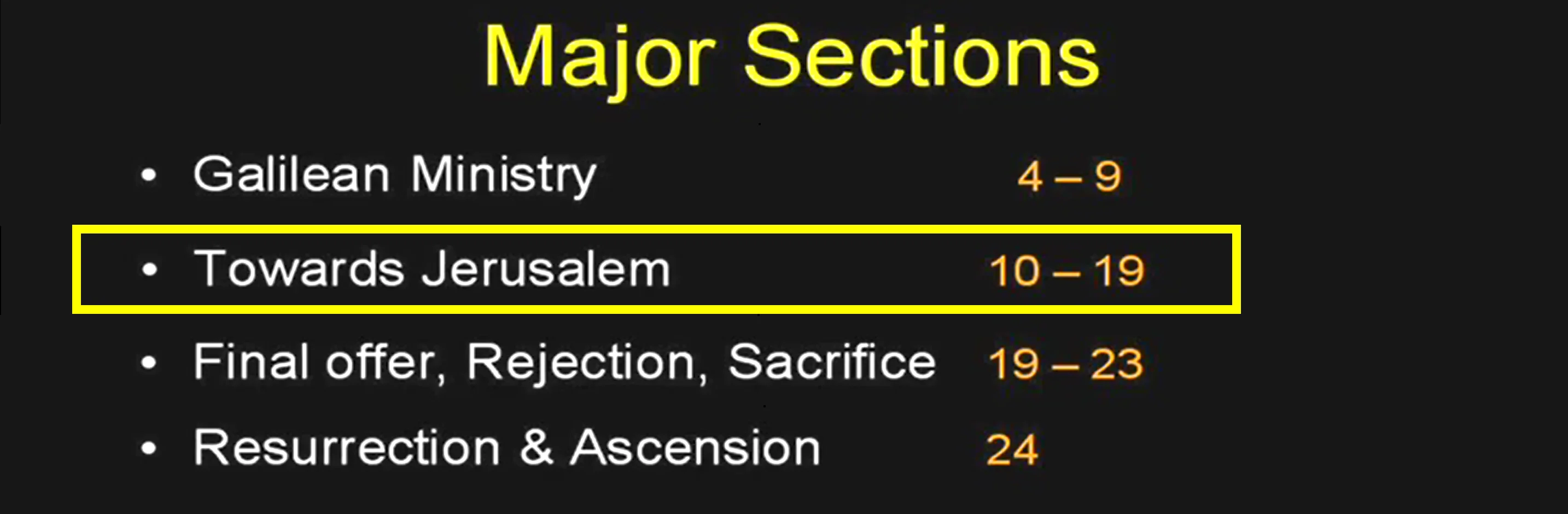
- (previous) → Chapter 10: Sending out Disciples; The Good Samaritan; Visit to Bethany
- (current) → Chapter 11: Model Prayer; Major Rejection; Woes
- (next) → Chapter 12: Various Teachings

- In this Chapter
— Model Prayer (vv. 1–4)
— Persistence in Prayer (vv. 5–13)
— Major Rejection (vv. 14–26)
— Call to Obedience (vv. 27–41)
— Woe to the Pharisees (vv. 42-54)
- Includes a prayer meeting, a miracle and an invitation to dinner, which result in instruction on four topics:
1) Prayer
2) Satan
3) Spiritual opportunity and
4) Hypocrisy

Luke 11:1 The Lord’s Prayer / Teaching About Prayer (MEV)
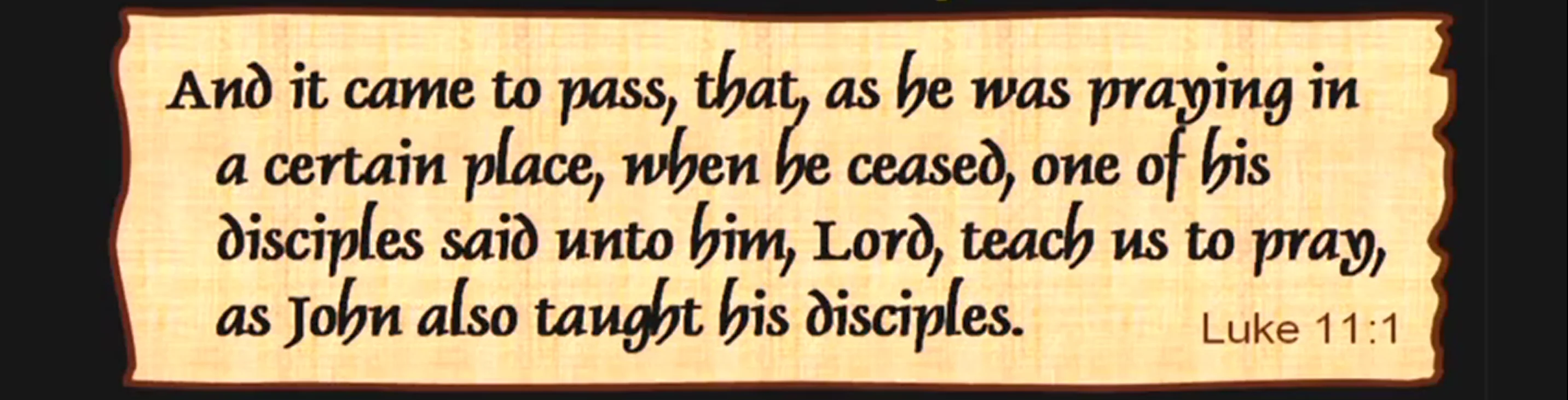
- Interesting request:
— Referring to the context as they had been taught by John the Baptist
— This is an unexpected glimpse into the life of John the Baptist
— This is a farewell look at John the Baptist because this is the last we’ll see him
- John the Baptist:
— Filled with the Spirit before his birth
— When he was 9’’ long and 1.5lb, he jumped with joy — that should end the debate when life begins
— Called to introduce the Messiah to Israel (his specific mission)
— Jesus testified that he was “greatest” of the prophets (quite an appellation and Jesus would not exaggerate)
— Yet, John had to depend upon prayer…
- Our most compelling example of prayer: Jesus
— Not John the Baptist but Jesus Himself
— God incarnate, entered His creation, dependent heavily on prayer
- Jesus prayed at every major crisis point in His life:
— often alone praying Luke 5:16, Luke 9:18
— with others around Luke 9:28-29
— at the time of His baptism Luke 3:21
— when choosing His disciples Luke 6:12
— when the crowds increased Luke 5:16
— before He asked for their confession Luke 9:18
— at His transfiguration Luke 9:29
— for Simon Luke 22:32
— in the garden before His betrayal Luke 22:40-44
— He even prayed on the Cross Luke 23:46
- The Son of God prayed all the time
— We learn about God in His Word
— We gain the fear of God in our devotional lives
- The Model Prayer that Jesus gives his disciples
— Not really the “Lord’s” Prayer (Disciples’ Prayer)
— He is teaching us how to pray (He never had to ask the Father for forgiveness!)
— The true Lord’s Prayer is in John 17 (a glimpse into the intimacy between the Son and the Father)
Luke 11:2
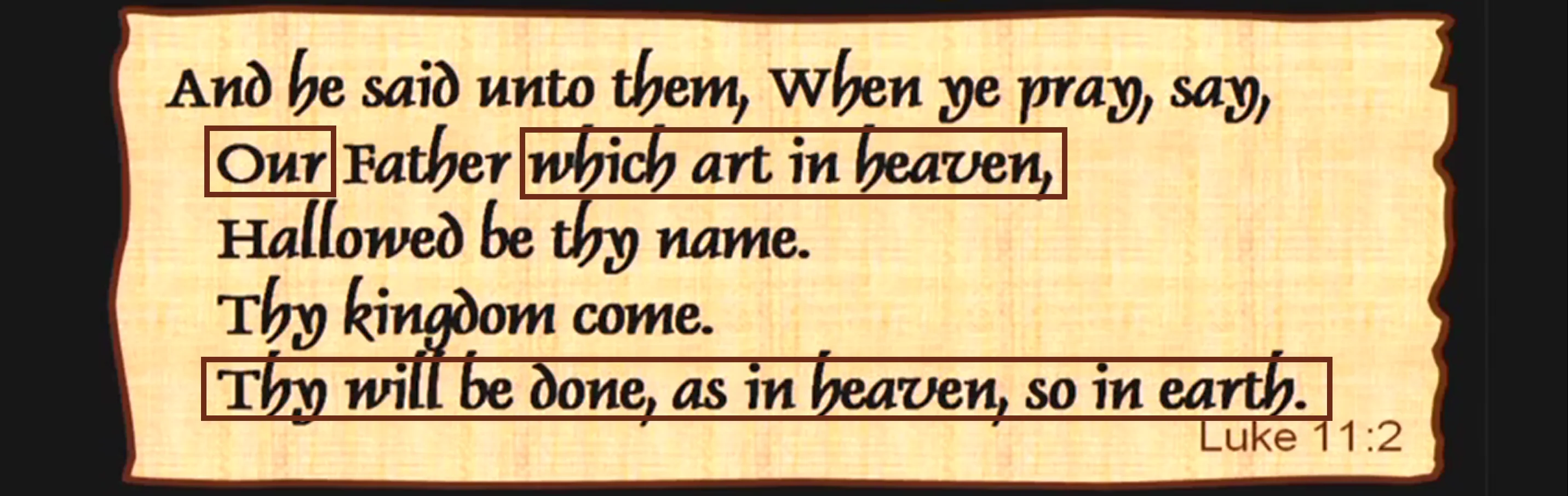
- KJV has more (see framed) than NASB/LSB:
“And He said to them, “When you pray, say: ‘Father, hallowed be Your name. Your kingdom come.”
- KJV in Luke 11:2 is pretty much the same as Matt 6:9 NASB/LSB (entire passage cf. Matt 6:9-15)
- “…Our Father” — the only time He didn’t call Him Father was when He couldn’t:
— “My God, My God, why hast thou forsaken me?” (Ps 22:1)
— That was the only time in eternity that He didn’t call Him Father
— There is nothing trivial in the Scripture — every detail is there deliberately
— He couldn’t because He was in our shoes, dying in our place (and we are sons of Adam)
— Now we are in His place (being saved), so we can now call Him “Father”
- Before you go to God in prayer, make sure He is really your Father
— This is a prayer for people who are entitled to call Him Father
— The unsaved are not (entitled to call Him Father)
📢 ✞ John 1:11

📢 ✞ John 1:12
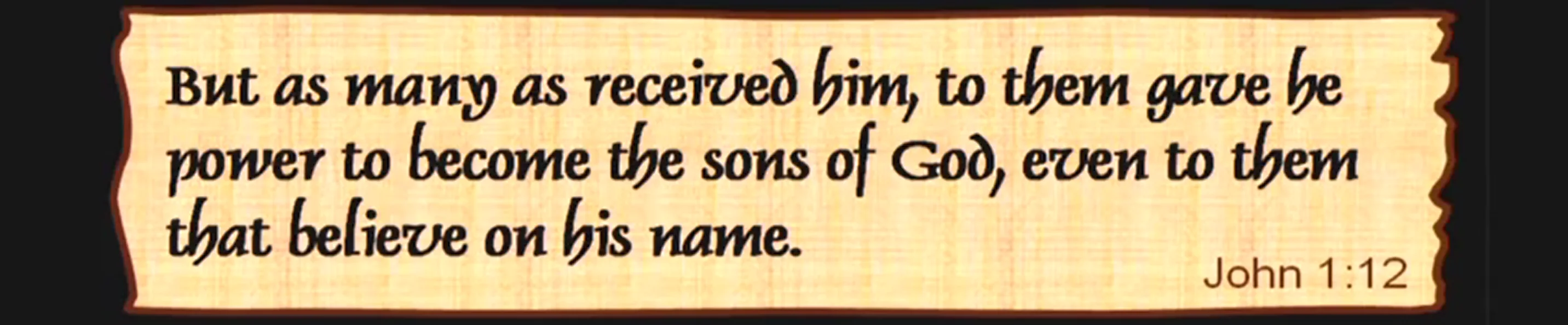
- If you have received Christ, you are entitled to use that phrase: “Our Father”
— Staggering when you really embrace who the Father is! God!
— There is no way to summarize God — poets have tried, but nothing fully captures the majesty of God

1️⃣ Hallowed Be Thy Name
- “Hallowed” = “to set apart or sanctify” or, as here, “to treat as holy”
— Thus the request was for God’s reputation to be revered by men
- 3rd Commandment: [see note on Luke 9:23]
— “Thou shalt not take the name of the LORD thy God in vain; for the LORD will not hold him guiltless that taketh his name in vain.” (Exo 20:7 and Deut 5:11)
— 3rd Commandment does not deal with the vocabulary, but ambassadorship
— If you are going to take the Name of the King, you better be prepared to represent Him competently and faithfully
2️⃣ Thy Kingdom Come
- John the Baptist, Jesus, the Twelve and the 72 had been preaching about the coming of God’s kingdom
— Now Jesus says to pray “Thy kingdom come.”
— When Daniel read from Jeremiah that the 70 Years of Captivity were about over, he didn’t lay back and wait: he prayed for it! (Dan 9:1-20)
3️⃣ Thy Will Be Done
- Prayer is God’s way of enlisting us in what He wants to do
— He wants to get us in a place where He can trust us with His answer
— Your praying to God is your way of preparing for what He has for you
— Prayer is not overcoming God’s reluctance — it is laying hold of His highest willingness
Luke 11:3

4️⃣ Give Us Our Daily Bread
- Provisions for the day
— Bread is just an idiom for everything else we need
— One day at a time (if you’ll need it tomorrow, I’ll give it to you tomorrow)
— Every good thing comes from His hand day-by-day
Luke 11:4
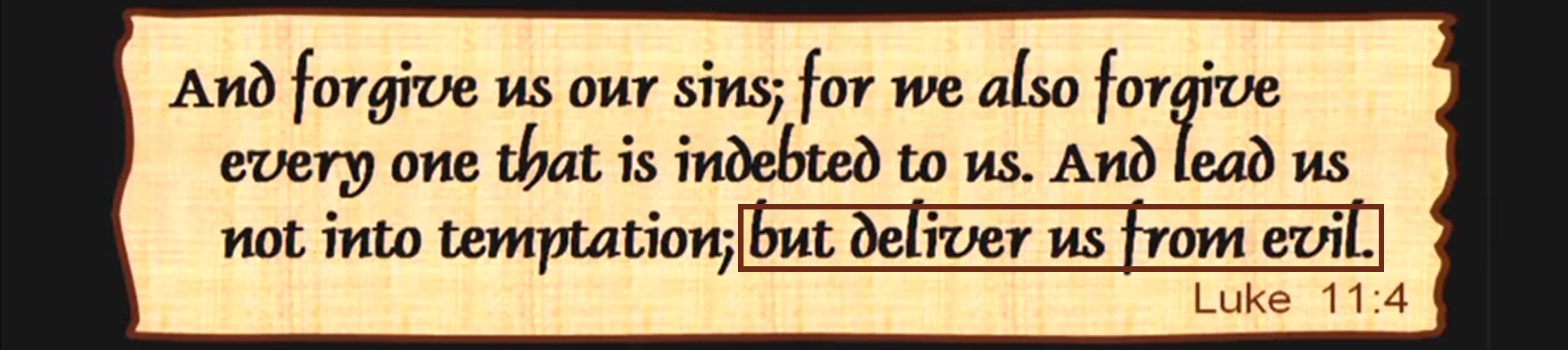
5️⃣ Forgive Us Our Sins
- This concerns man’s relationship with God
— Luke had already linked forgiveness with faith (Luke 7:36-50) — “…a woman…, which was a sinner…”
- In asking for forgiveness of sins, a person expresses his faith that God will forgive
- The Christian’s bar of soap 🧼:
🛁 1 John 1:9
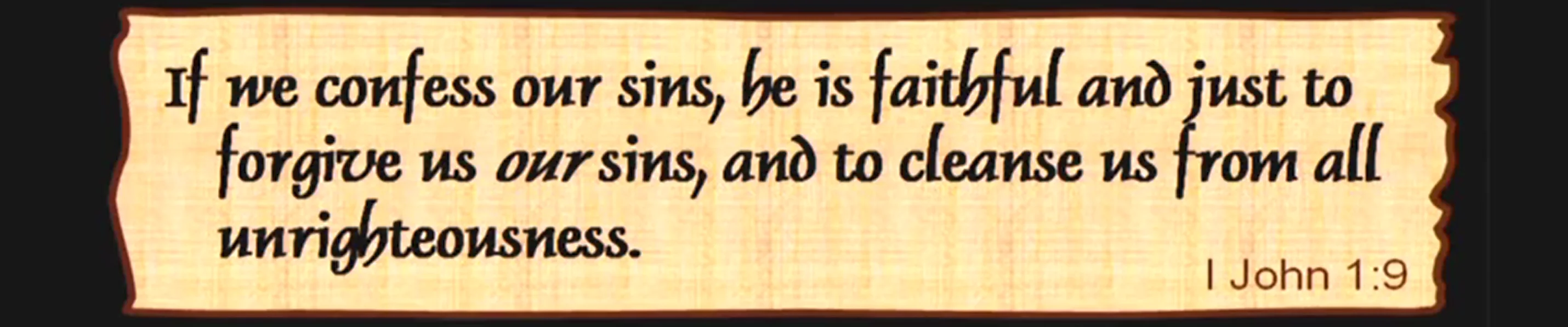
- When we confess our sins, we own them
— It’s our fault, we are guilty
— We lay it out there, unabashedly (without embarrassment or shame)
— We don’t make excuses for them
— We don’t run thru mitigating circumstances
— Forgiveness depends on His faithfulness, not mine
— He is just to forgive my sins because Jesus paid the price (I am on His credit card)
— He not just forgives, but cleanses us from all unrighteousness (that includes habits, proclivities…)
6️⃣ Lead Us Not Into Temptation
- Jesus’ followers are to pray that they be delivered from situations that would cause them to sin
— Sin usually has a preamble that could have been avoided
— That’s why Paul advises us to take every thought captive (2 Cor 10:5) 🔒
— When the thought first occurs for you, you nail it right there
- In other words, deliver us from those contexts (in which sin occurs)
— Joseph in Egypt fled the house (Gen 39:12)
- His disciples, contrary to the Law experts, realized that they were easily drawn into sin (Luke 10:25-29)
- Sin need not reign in your life: “It ain’t gonna reign no more” —Hal Lindsey (1929-2024 aged 95) (Romans 6)
▶ You may stumble, but it should not reign
▶ The sin shouldn’t have control over you
▶ If it does, you are not availing yourself of the Holy Spirit (not making use of, not taking advantage of)
▶ Those in Christ have the resource for victory, the Holy Spirit (Rom 5-6)
▶ Unsaved have no choice, they are enslaved by sin and in bondage to sin
7️⃣ Deliver Us From The Evil One
- Don’t give Satan credit he does not need
- We do have an adversary who is malevolent, knowledgeable, resourceful, powerful
— Satan is the god of this world
— Satan is real, but he is not all-powerful
— “…greater is He who is in you than he who is in the world.” (1 John 4:4)

- It is common in Luke for good lessons to be taught from bad examples (Luke 16:1-9 The unrighteous steward, Luke 18:1-8 Judge who feared not God, neither regarded man)
— Luke does that several times — that throws many Christians, that he is using bad example to make a point
- God is not through with the subject of prayer in this chapter
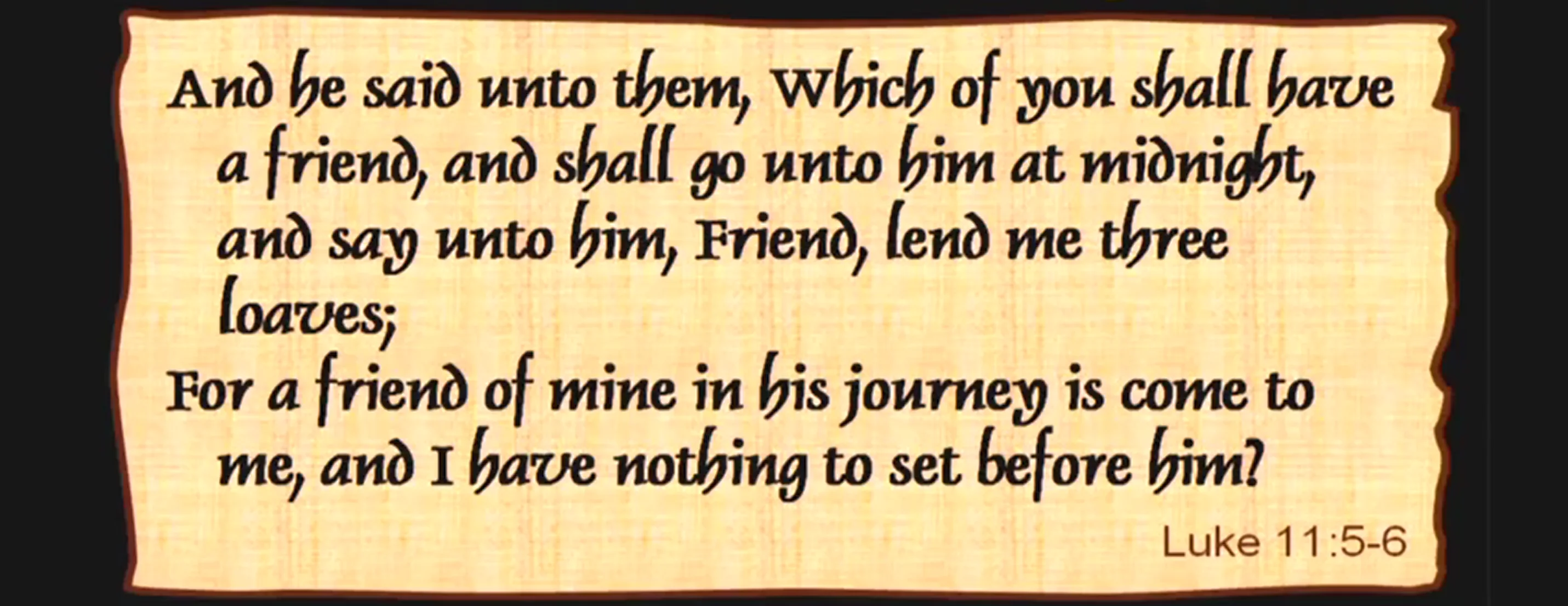
— Only Luke records this next parable (“…Friend, lend me three loaves”)
— It sheds a different light upon the subject of prayer — it is a parable of contrast
Luke 11:5-6 (importunity, persistence, Lit shamelessness)
Luke 11:7-8
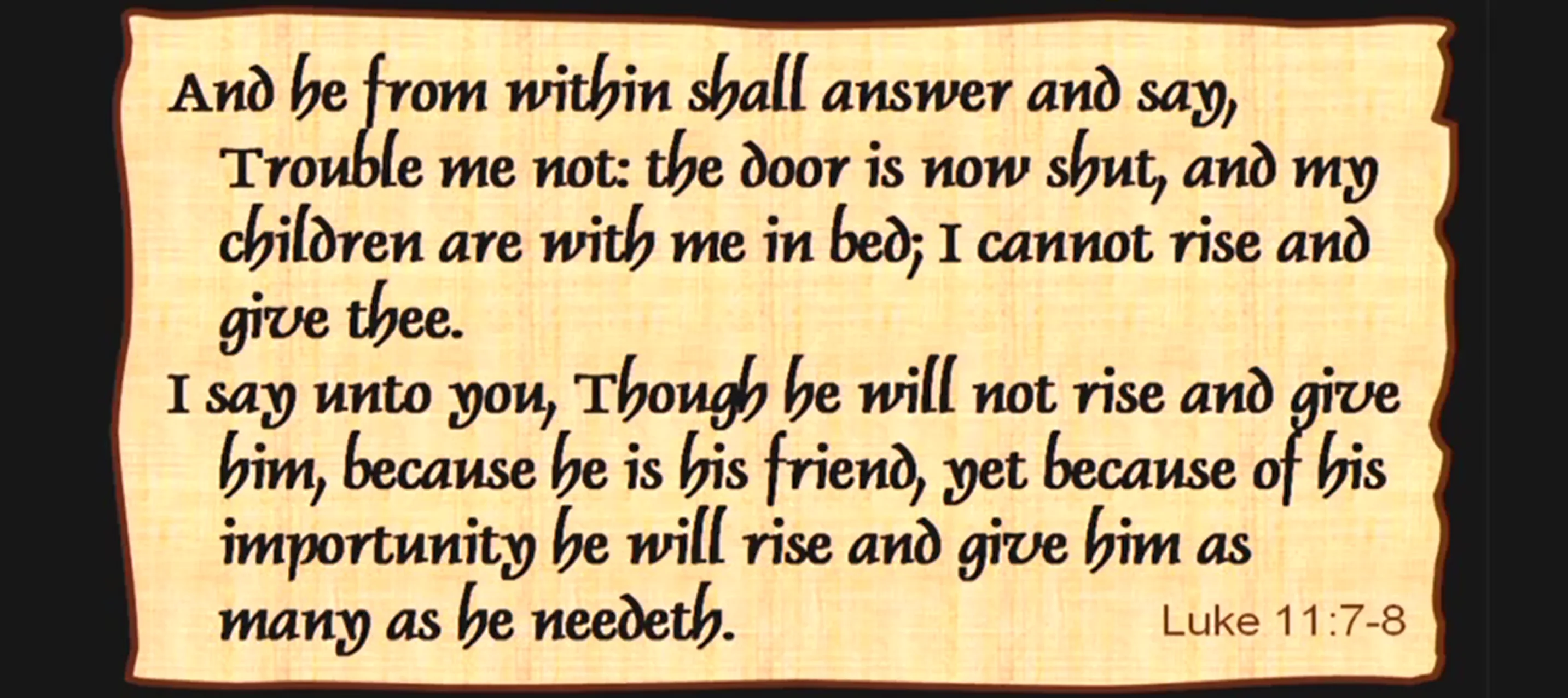
- “…importunity” — persistence (Lit shamelessness)
- In contrast with the man who did not want to be bothered, God wants His people to pray to Him (Luke 11:9-10)
— When you pray, you are not imposing on God — He is pleased to encounter you through prayer
— Now, there may be a lot of reasons why He may not answer the prayer the way you think He might, but He is anxious to hear from you
— God is always looking to answer prayer
🙏 Isa 65:24
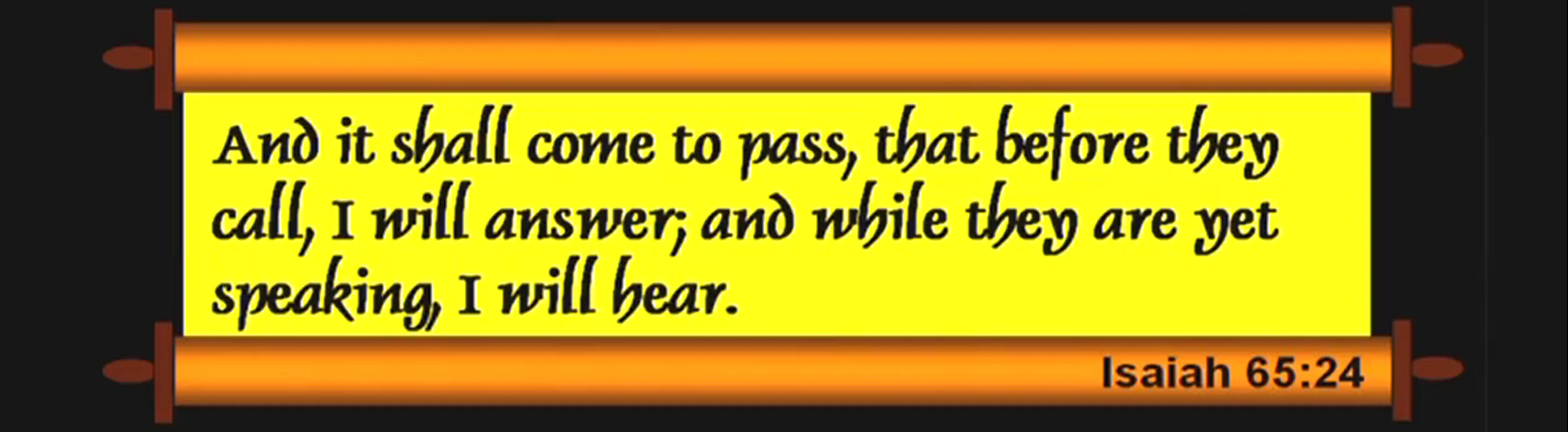
- He knows your request before you express it
- James goes the other way around:
— “…ye have not, because ye ask not” (James 4:2)
Luke 11:9-10
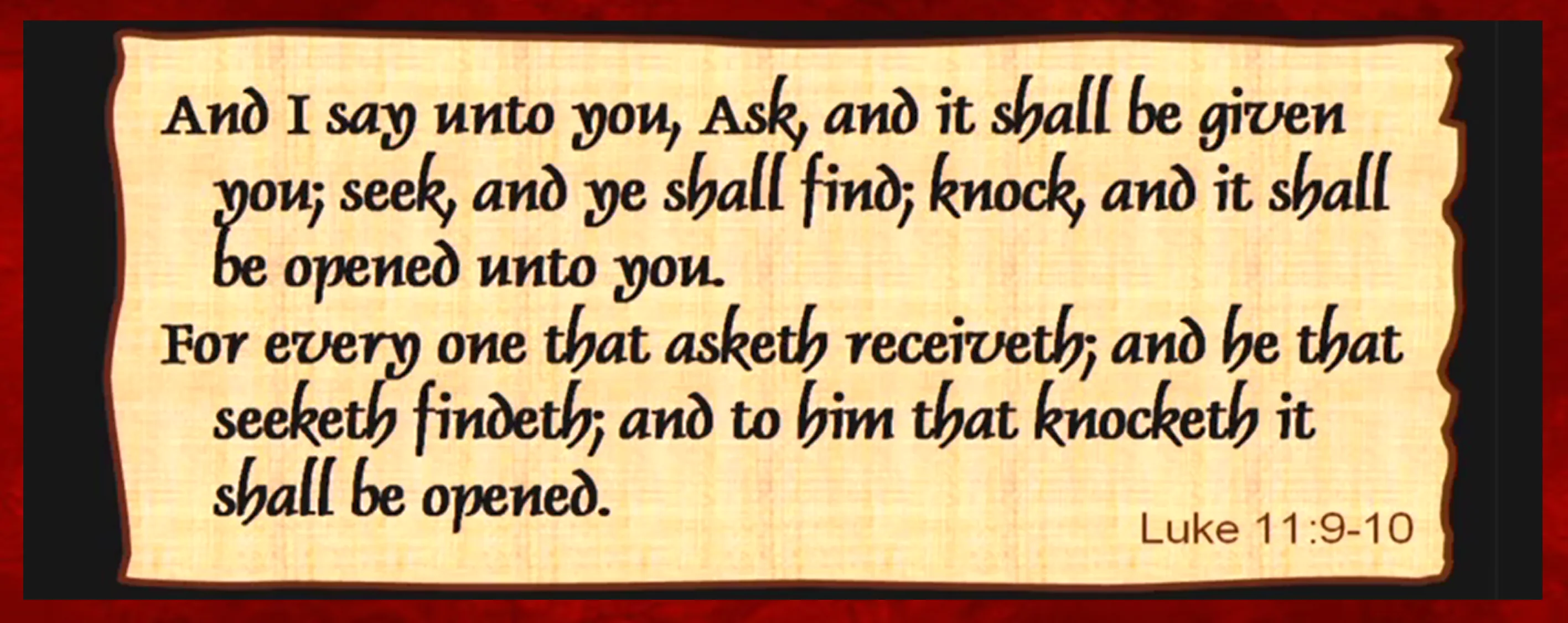
- Jesus is speaking here:
— “…shall be given you…ye shall find…shall be opened unto you” — what a commitment from the Lord Himself!
— “…receiveth…findeth…opened” — it may not be in the way or time you think, but that’s His commitment
Luke 11:11-12
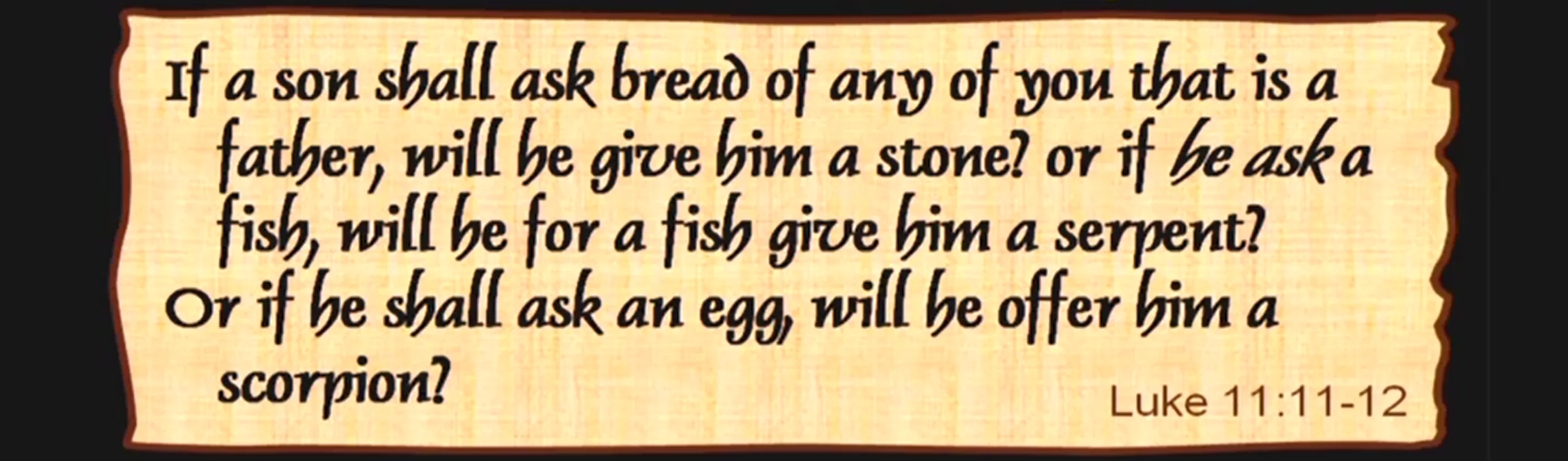
- NASB only has fish — two early mss insert loaf, he will not give him a stone — KJV obviously includes bread-stone
Luke 11:13
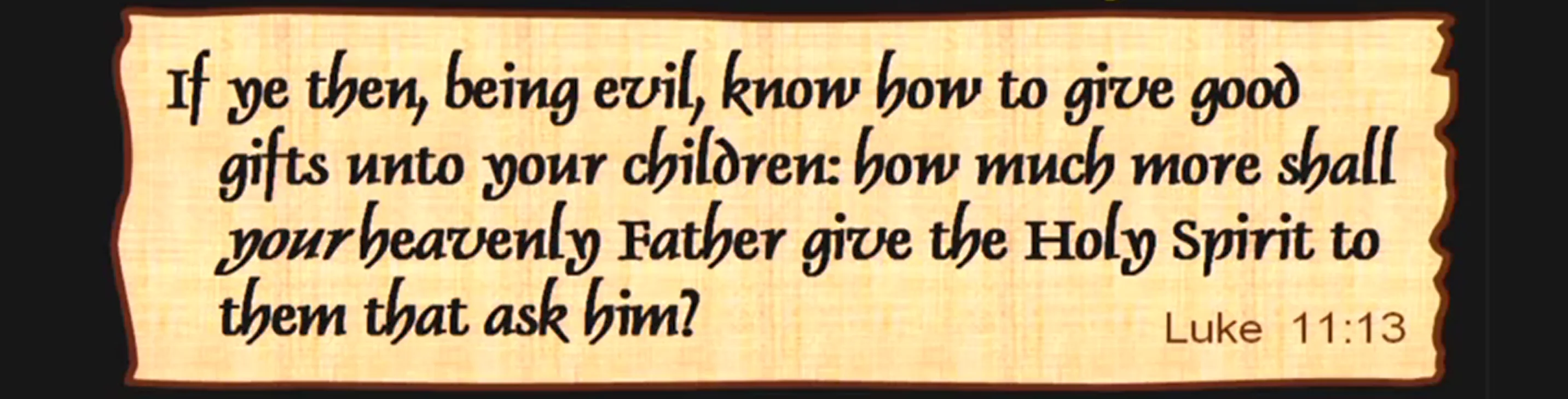
- Some argue that believers do not need to ask for the Holy Spirit because this prayer was answered for the disciples in Acts 2, and indeed it was
— But we should always ask heavenly Father to give us the Holy Spirit (and this verse is one of the proofs for it)
- The Holy Spirit is given today when you trust Christ:
— “However, you are not in the flesh but in the Spirit, if indeed the Spirit of God dwells in you. But if anyone does not have the Spirit of Christ, he does not belong to Him.” (Rom 8:9, LSB)
💨 1 Cor 12:13
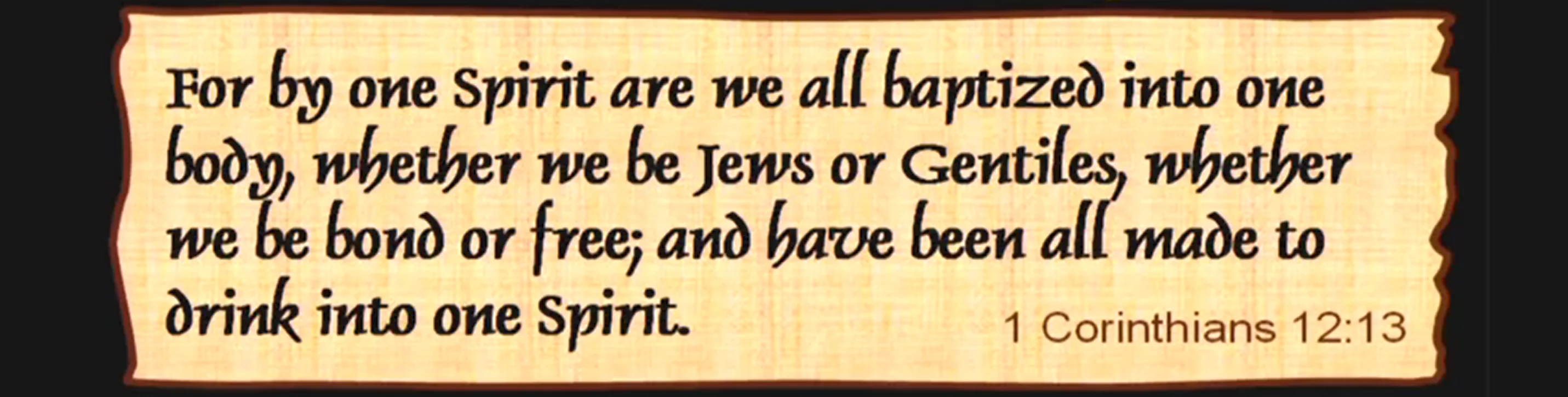
- All believers have been baptized into the body of Christ

- The major Turning Point in Jesus’ ministry
— An incident occurs here that alters the pattern of His ministry (cf. Matt 12:22-30, Mark 3:20-27)
— From this point Jesus no longer speaks to the public, except in parables
Luke 11:14 A Kingdom Divided / Jesus and Beelzebub (MEV)
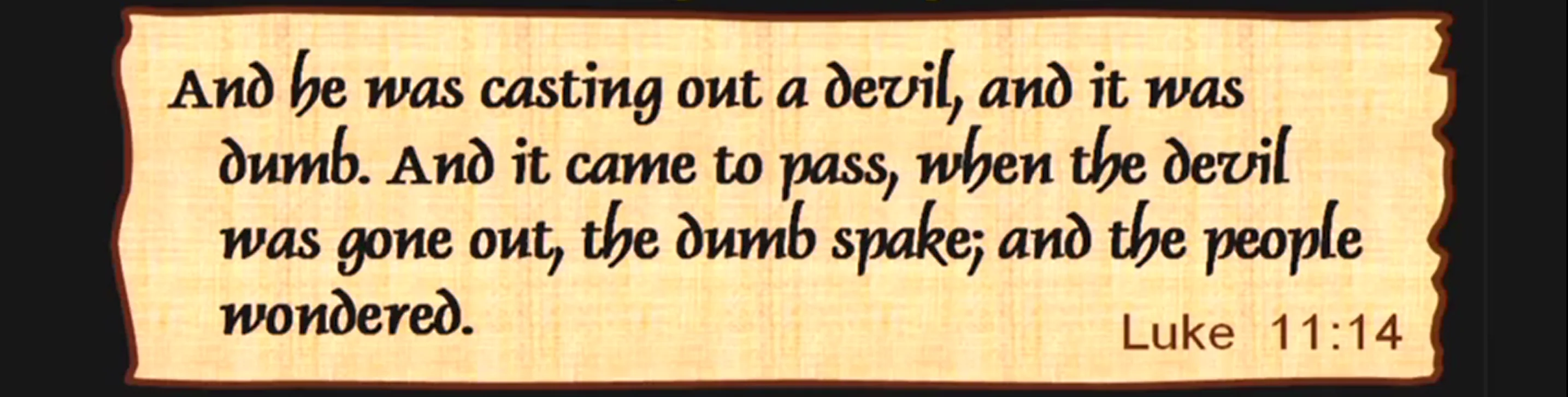
- People are amazed when demons are cast out — that is normal to be expected
- However, the simple English does not capture the impact or the amazement occuring here
— A unique, particular kind of demon is cast out here — a mute one
- In Luke the terms “demon” and “demons” occur 16x and “evil spirit(s)” occurs 8x
— Jesus always had authority over the demons — it was a sign of His Messianic power (Luke 7:21, Luke 13:32)
— The demons themselves recognized that authority (Luke 4:31-41, Luke 8:28-31)
— Jesus’ enemies recognized His authority (Luke 11:14-26)
— Jesus gave others power over demons (Luke 9:1)
— His authority over demons always amazed the crowds (Luke 4:36, Luke 9:42-43)
- This “dumb demon” incident is unique and had a major impact
— According to the Jewish procedure, the priests would command the demon to identify himself
— If the demon had struck the person dumb, he could not identify himself, which eluded the priest’s ability to cast him out (they had no means to deal with it)
— Therefore, casting out a demon that was dumb was, apparently, a Messianic sign
Luke 11:15

- Jesus will point out that they are as illogical as can be
- “…Beelzebub” — this was the name given to the prince of demons — that was Satan
— It originally meant “Lord of the Princes”
— It had been corrupted by a pun into “Lord of the Flies” (2 Kgs 1:1-3)
— It was one of the names for the Philistine god Baal
— (“Beelzebul” means “Lord of the Dwelling” and ties in with Christ’s subsequent illustrations, lord of the house)
- Absurdity: the charge was that Jesus was possessed by Satan himself
Luke 11:16

- Sign → Or an attesting miracle
- “Give me the proof” kind of crowd
— Those who demand God to prove Himself, only to dismiss the proof and continue with their ridicule
— As if proof (or in this case — sign) is all they need in order to believe
— A fool is a fool and one cannot prove anything to a fool. They remain blasphemous and disrespectful to God
— Non-believers need willingness to come to God, which they certainly lack
- Ironically, they have just witnessed a sign that by its nature is an extreme one that no one has ever seen before
Luke 11:17
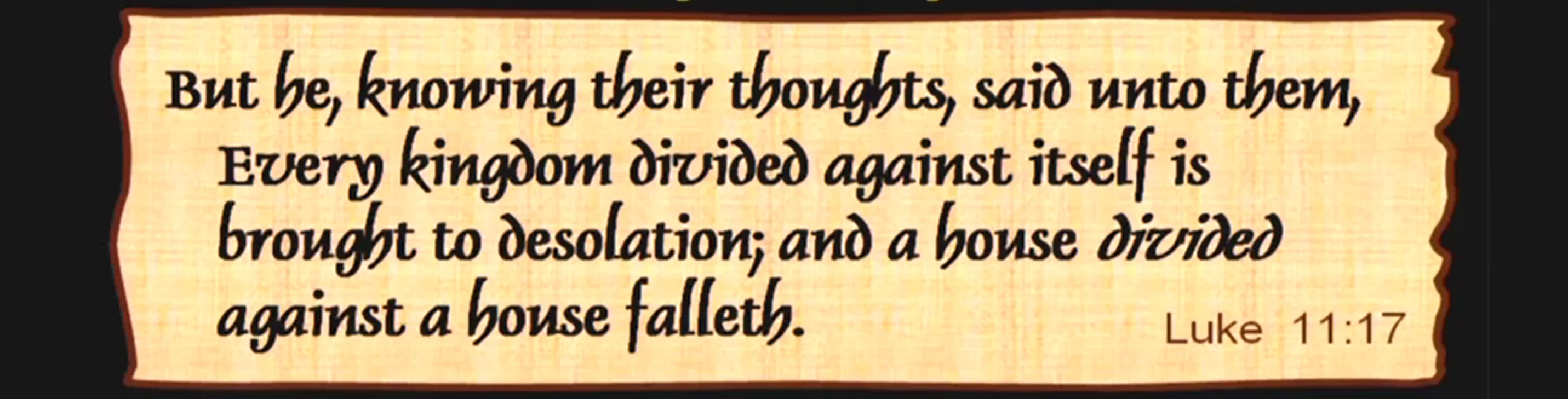
- Jesus gave two rebuttals:
➼① It was illogical — He said it would be ridiculous for Satan to drive out his own demons, for then he would be weakening his position and kingdom
Luke 11:18
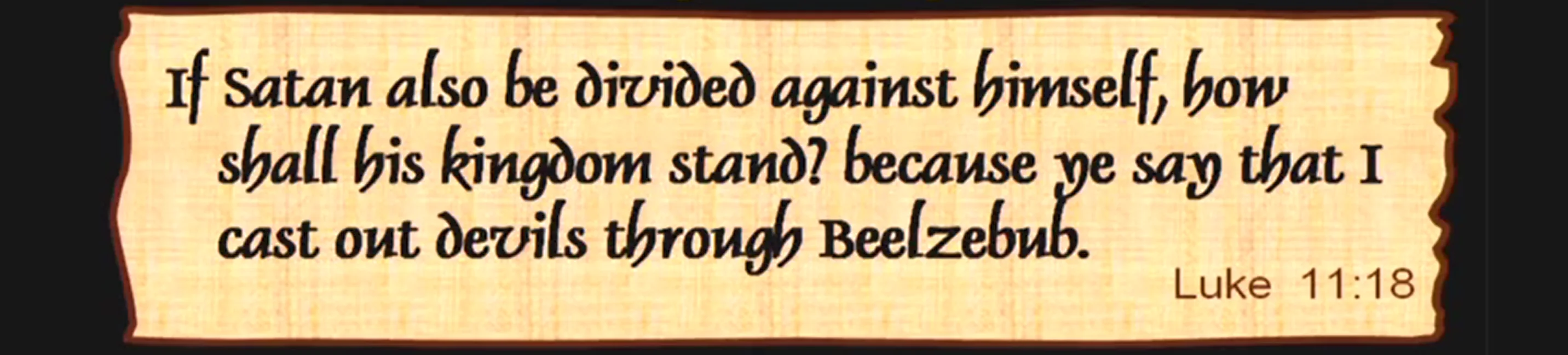
- An authentication by Jesus himself that Satan is a real personage
— his kingdom is strong and united (cf. Eph 2:1-3, Eph 6:10)
Luke 11:19
Luke 11:20

Luke 11:21-22
- The other rebuttal:
➼② They used a double standard: Jesus pointed out the self-incriminating double standard of those who were accusing Him — if their followers drove out demons, they claimed it was done by the power of God
- Jesus is speaking parabolically, but definitively:
— Jesus had invaded Satan’s domain: “Having disarmed the rulers and authorities, He made a public display of them, having triumphed over them in Him.” (Col 2:15, LSB)
— destroyed his armor and weapons: “The one who does sin is of the devil, because the devil sins from the beginning. The Son of God was manifested for this purpose, to destroy the works of the devil.” (1 John 3:8, LSB)
— and claimed his spoils: “Now judgment is upon this world; now the ruler of this world will be cast out. 32 And I, if I am lifted up from the earth, will draw all men to Myself.” (John 12:31-32, NASB)
- The point of the parable is that Jesus is the stronger One
— Christ and Satan are not equals

- Jesus has the right to divide up the spoils — in this case, spoils include formerly demon-possessed people who no longer belong to Satan
— He led “captivity captive” (Eph 4:8)
— He set the prisoners free (Luke 4:18, Isa 61:1-2a)
Luke 11:23

- It is impossible to find neutral ground in this cosmic war (cf. Luke 9:50)
- The Invisible War: The Panorama of the Continuing Conflict Between Good and Evil —Donald Barnhouse [Scribd]

Luke 11:24 The Return of the Unclean Spirit (MEV)
Luke 11:25-26
- One of the most important steps in exorcism is to make sure that afterwards the Holy Spirit gets in

Luke 11:27-28 True Blessedness (MEV)
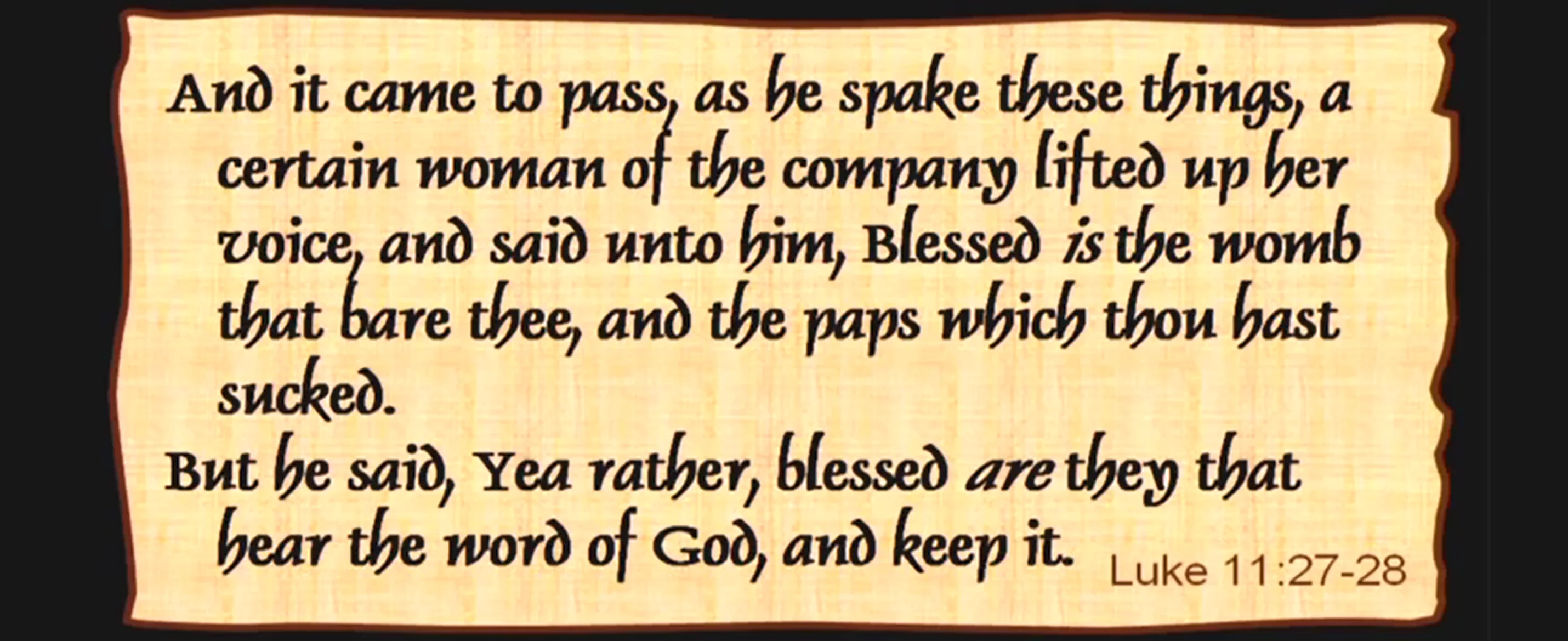
- This teaching is similar to that in Luke 8:19-21 (Jesus’ Mother and Brothers):
— Family relationships are not the most important things in life
— The most important stewardship is the guardianship of your heart ♥️ (not career for men or family for women)
— A woman cried out that it must have been wonderful to have been Jesus’ mother
— The nation took pride in the fact that they descended from Abraham (John 8:33-39)
— Jesus pointed out that a physical relationship was not important compared with:
Hearing and obeying the Word of God
— The most important decision you make in life is not who you marry, but who you worship
- As Luke continues to emphasize:
— The Gospel is not limited to Israel
— It is for all who trust in Christ

Luke 11:29 The Sign of Jonah / The Demand for a Sign (MEV)
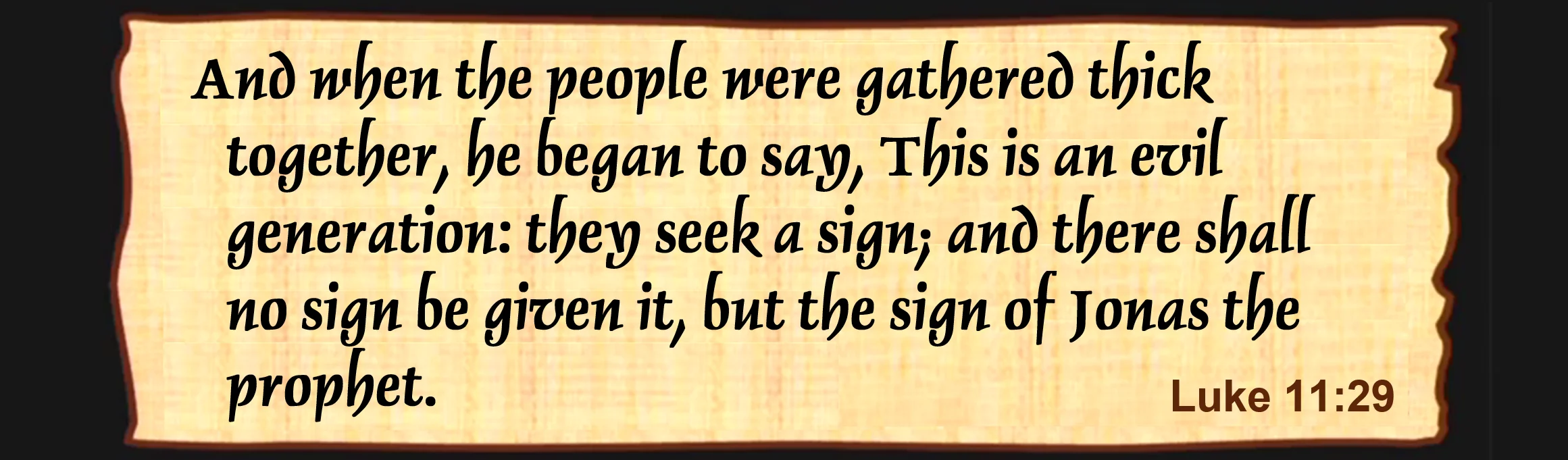
- A sign was a confirming miracle, which showed that the spoken message was true
Luke 11:30

- Jonas (Jonah) was a sign
- This sign has been interpreted in at least two ways:
🐳 1) Many say it was the physical appearance of Jonah
— perhaps his skin was bleached white by the sea monster’s inner juices
— there is some surprising support for that perspective
🐳 2) The real “sign of Jonah” was his death, burial and resurrection
— some people believe that Jonah actually died and was brought back to life
— he went into sheol, which is not a grave but a domain of departed spirits
— the people of Nineveh believed what Jonah preached, even if they had no physical evidence
- This “sign of Jonah” is what Peter preached at Pentecost Acts 2:22ff
— The early church centered on Christ’s resurrection (Acts 1:22, 3:15, 5:30-32, 13:32-33)
— Resurrection was a key sign and Jonah was an anticipation of that
Luke 11:31
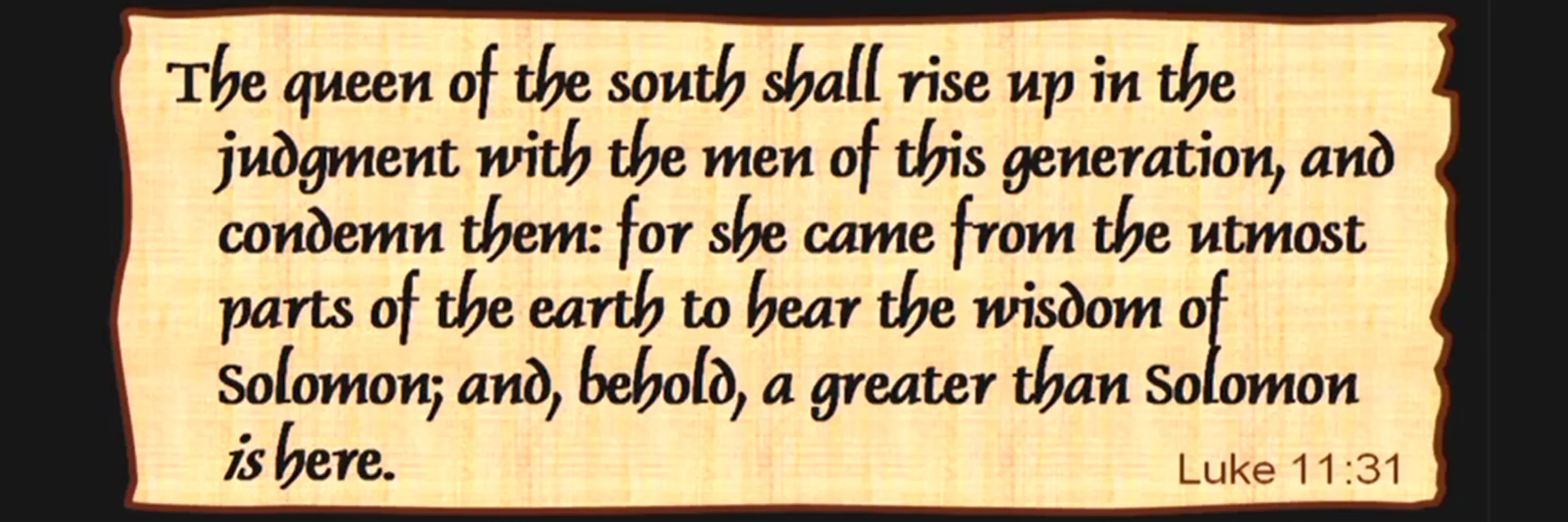
- The Queen of Sheba visited Solomon (1 Kgs 10)
— She acted on what she heard, without any external confirmation
— Shiba heard about Solomon and it was so preposterous, she had to go and see for herself
— When she got there, she said “behold, the half was not told me…” (1 Kgs 10:7)
Luke 11:32
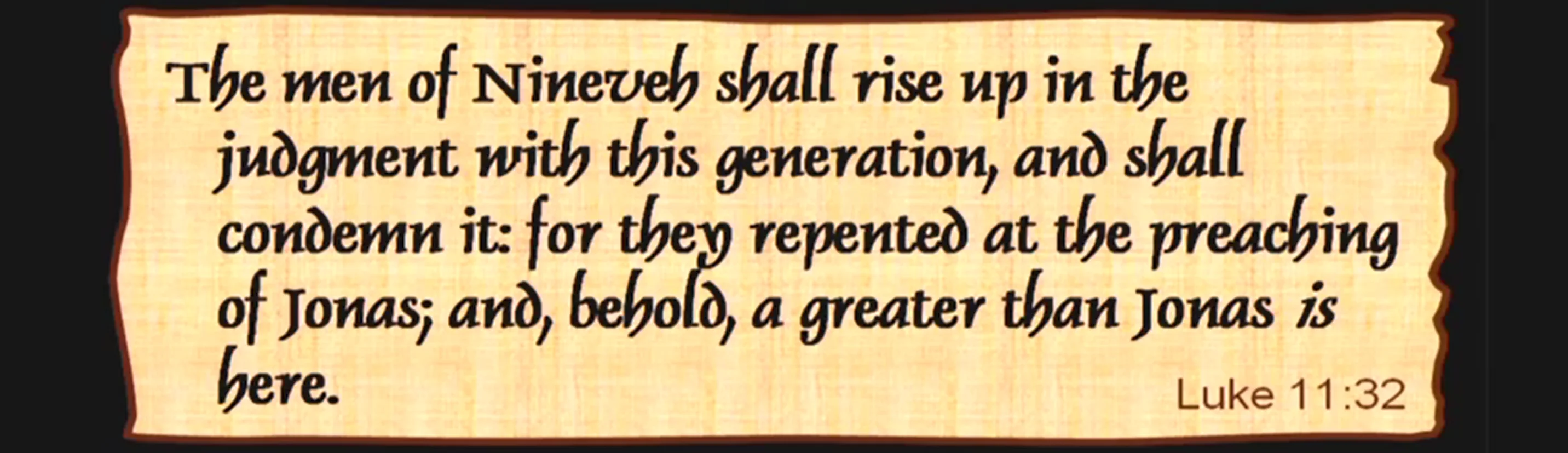
- These were both Gentile examples — the men of Nineveh and the Queen of Sheba were from Gentile countries

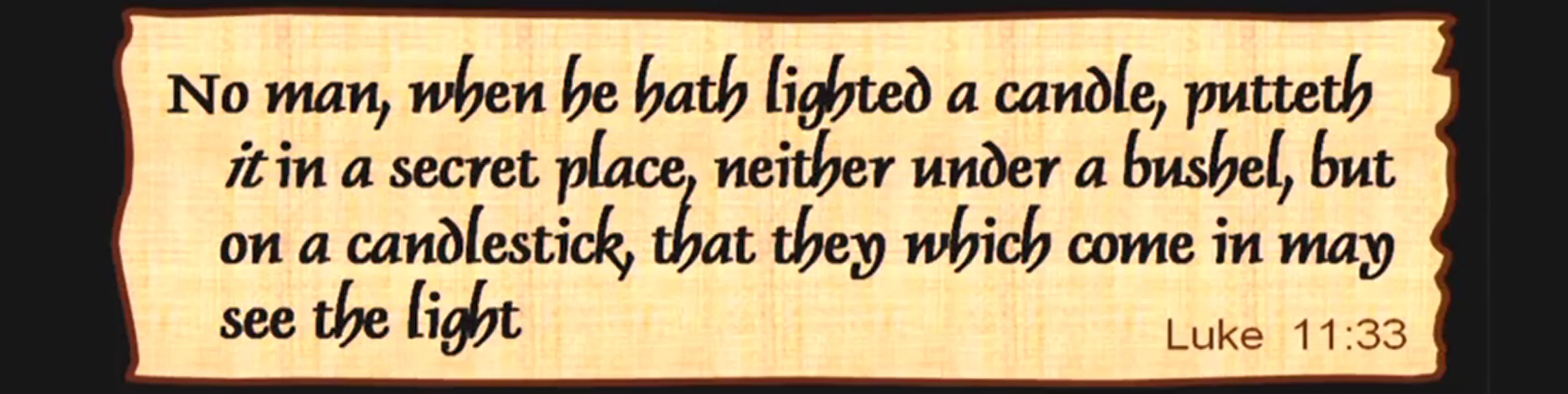
Luke 11:33 The Light of the Body (MEV)
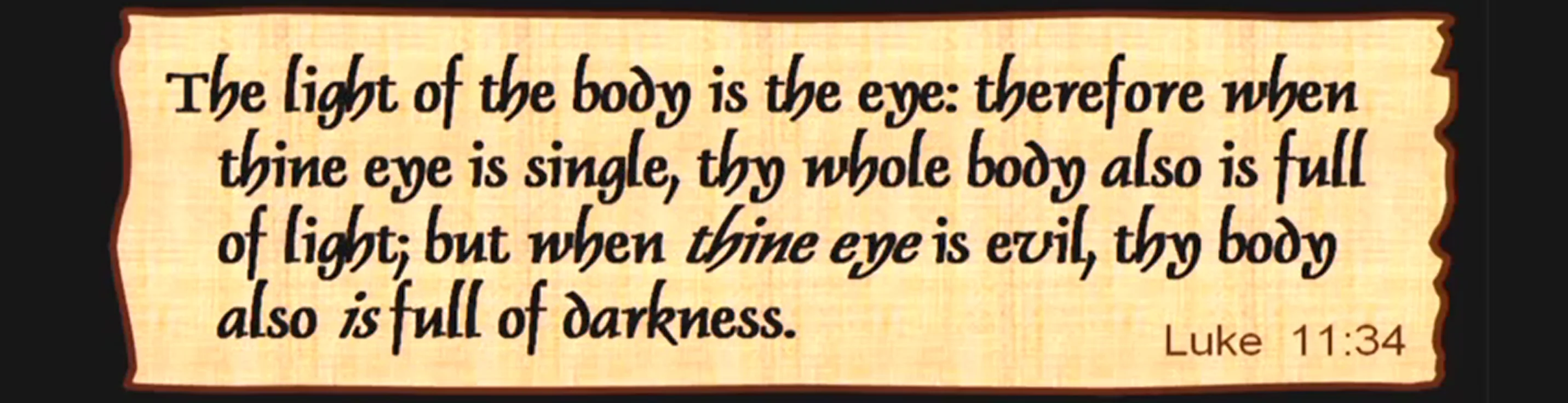
Luke 11:34
Luke 11:35-36
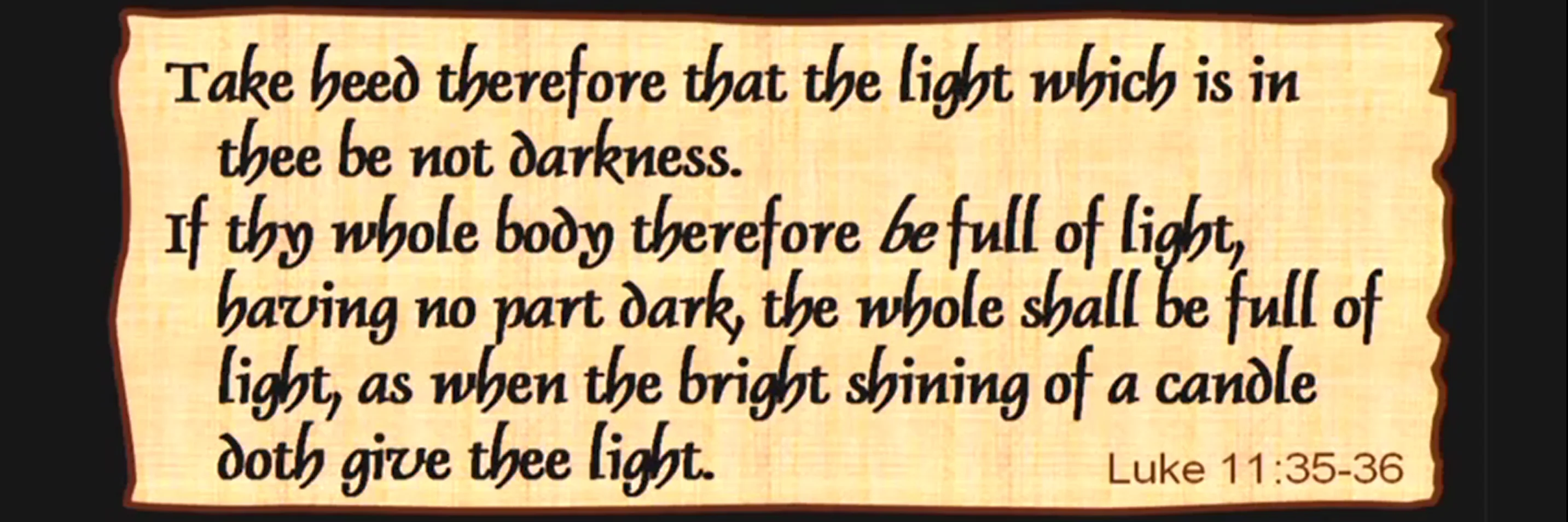
- Three men in the Bible (and probably more) illustrate this truth:
(they began in the light 💡 and ended up in darkness ⚫️ → they were double-minded)
⚫️ 1) Samson ended up as a blind slave in a dark dungeon because he yielded to the “lust of the flesh” (Jdg 16)
⚫️ 2) Lot began as a pilgrim with his uncle Abraham, but ended as a drunk in a cave committing incest (Gen 19:30-38) Moab and Ammon came from that episode
⚫️ 3) King Saul began as a humble leader but pride led him into a witch’s cave (En-dor 1 Sam 28) and suicide on the field of battle (1 Sam 31)
- “…No man, having put his hand to the plough, and looking back, is fit for the kingdom of God” (Luke 9:62)
- We live in a culture that denies any distinctive between light and dark, right from wrong…
— The quest that made the Western Civilization great was its unflinching quest for Truth
— Yet today’s culture denies the existence of Truth (everyone has their personal “truth”)
- Jesus often taught His disciples through parables. Because they had been listening to Him they had light shining on them. Thus, they should share that light (v. 33)
- The shortcut to Truth is to go to the fountain of Truth, Jesus Christ
— Jesus could declare by His life as well as by words:
⛲️ John 14:6


Luke 11:37 Woes to the Pharisees and Lawyers / The Denouncing of the Pharisees and Lawyers (MEV)

Luke 11:38

Luke 11:39
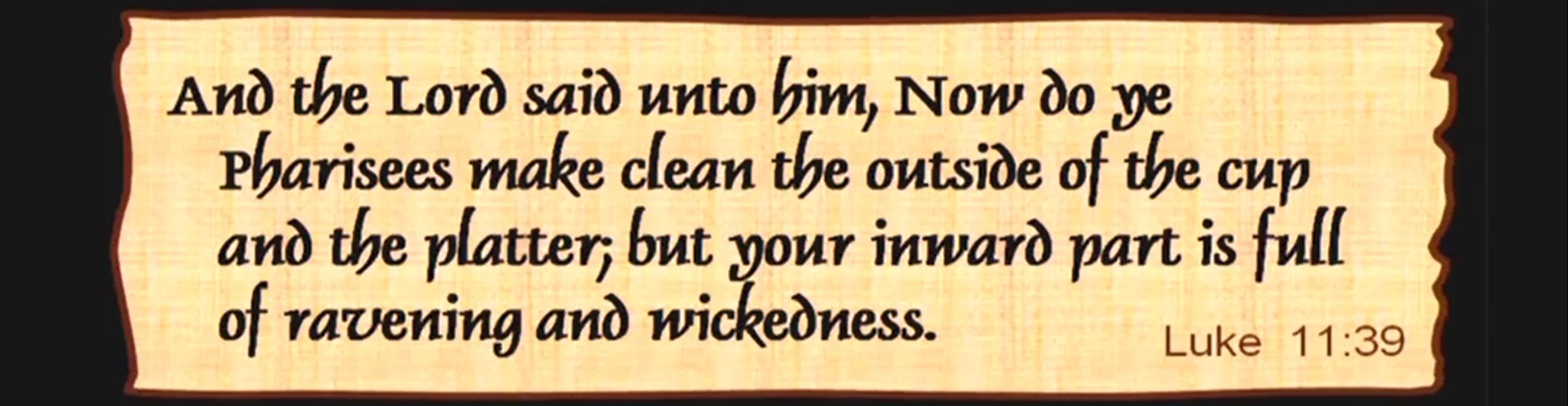
- Notice how tactful Jesus is
— (Tactful describes the ability to communicate, act or handle delicate situations without causing offense, hurt feelings or embarrassment. It involves being diplomatic, considerate and sensitive to others' emotions while delivering difficult feedback or navigating complex social interactions)
- Jews and Dead Things
— As a Jew, if you touched a dead thing that would make you ceremonially defiled, and so you couldn’t observe Passover, etc.
— They whitewashed tombs near holy days so that people would not accidentally stumble on the tomb and then be defiled and unable to celebrate the festivities
— To call a Jew a “whitewashed tomb” was the strongest language to use against a formal Jew
- Jesus’ response to the Pharisee is piercing
Luke 11:40-41
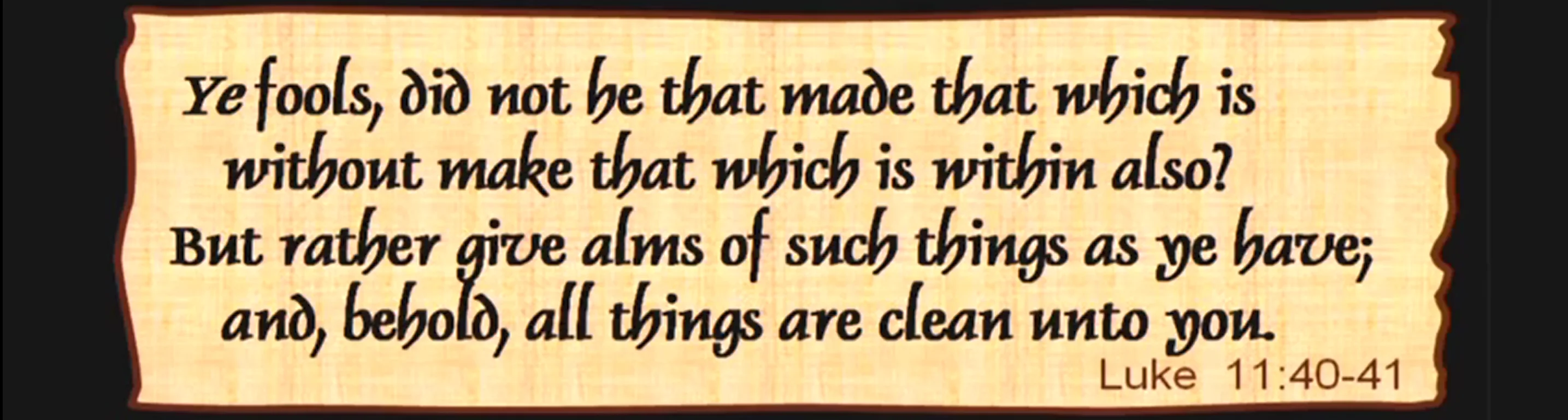
- One way to demonstrate that they were clean on the inside would be their willingness to give material things to the poor. Not that the alms would accomplish it, but the alms gives evidence to their faith (cf. James)
- It is astonishing to realize how much God loves the poor (it’s a whole study to use Bible concordance on “poor”)
— God uses your conduct towards the poor as His yardstick
Luke 11:42
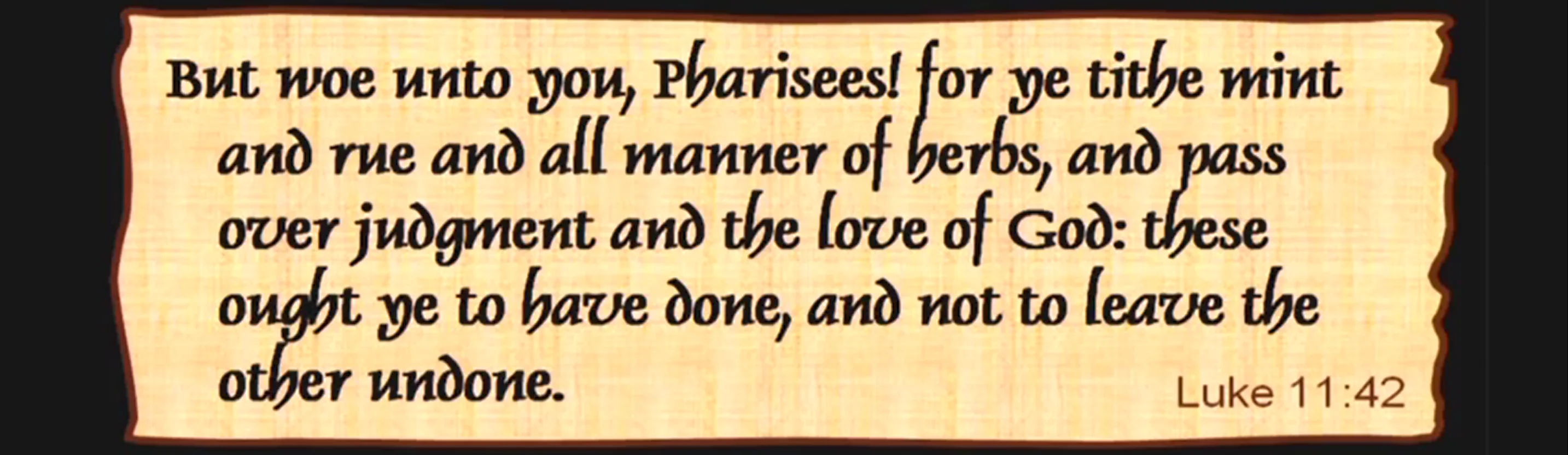
- It’s an accusation of hypocrisy—focusing on externals and avoiding internals (Luke 12:1)
- Mint and rue are plants of little value. It is easy and painless to tithe them as an offering to the divine, and their pleasant aroma may create the illusion of significance
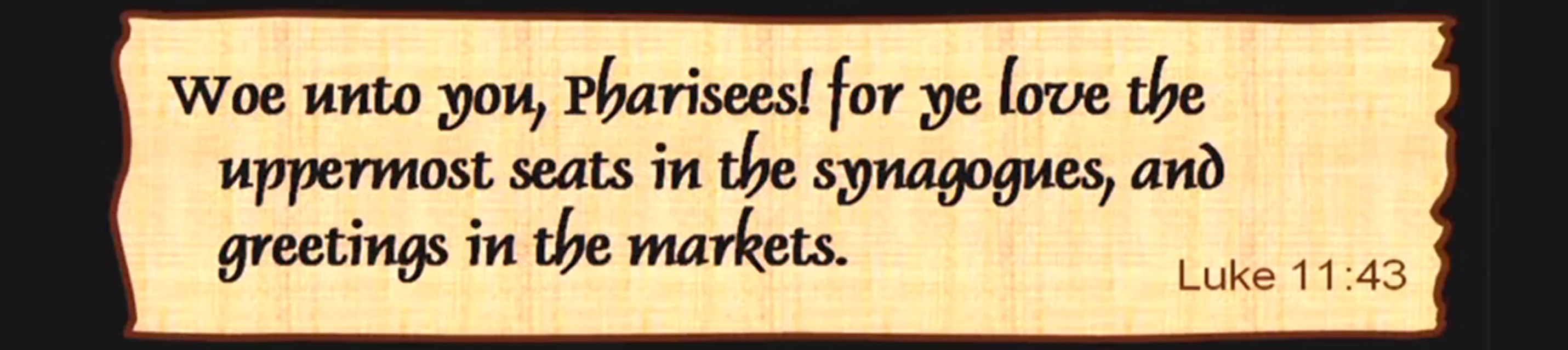
Luke 11:43
Luke 11:44
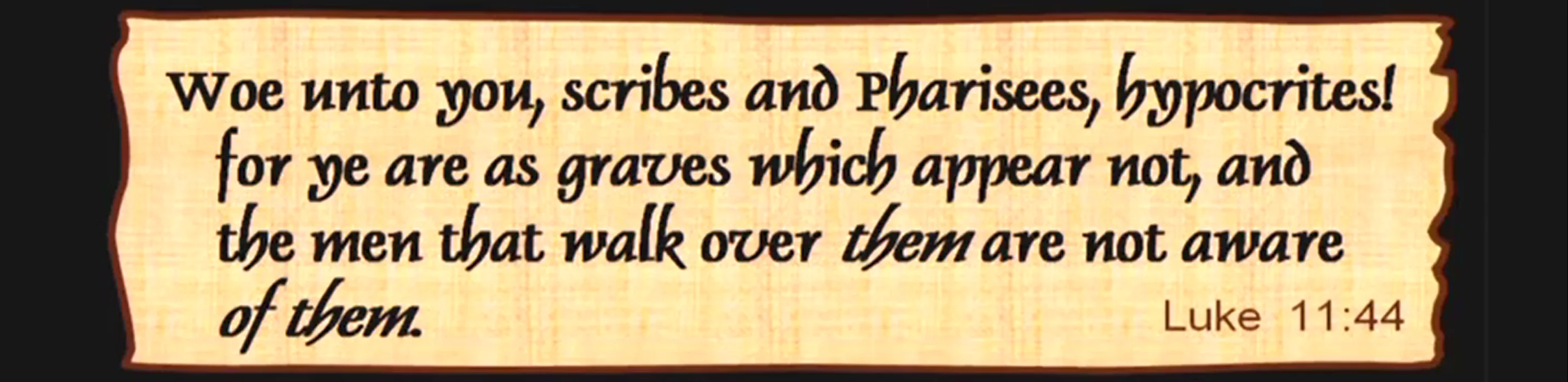
- Tragedy: Not just that they are defiled, but they’re causing others to stumble
— Just as unmarked graves, which, when walked on, would defile a Jew without his knowing (Num 19:16)
- Being “defiled” is one degree, but deceiving others and intentionally hiding wickedness is a whole another level

Luke 11:45

Luke 11:46
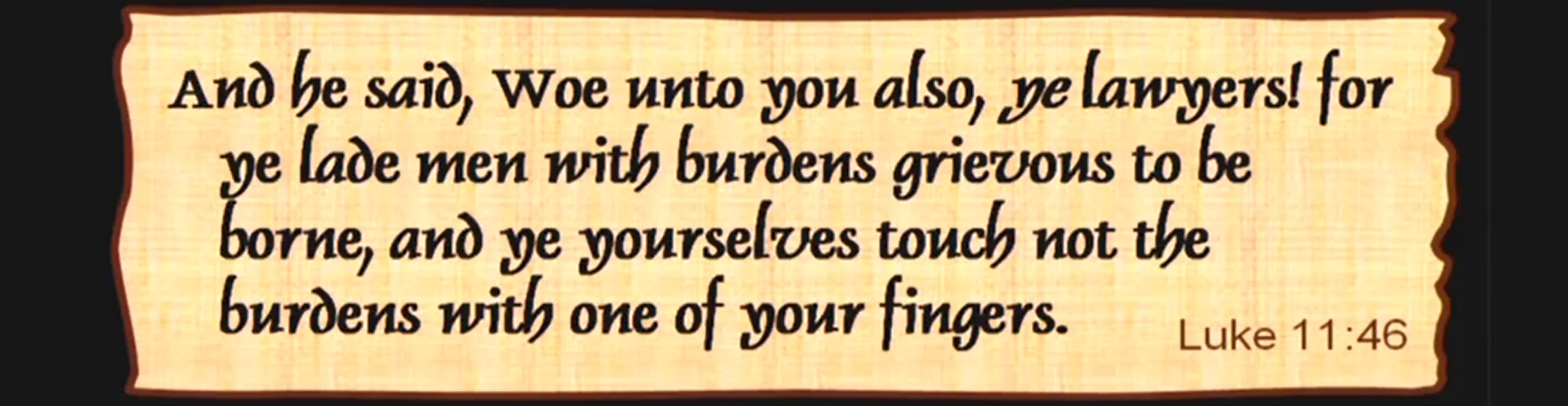
- Lawyers = extreme legalists
Luke 11:47-48
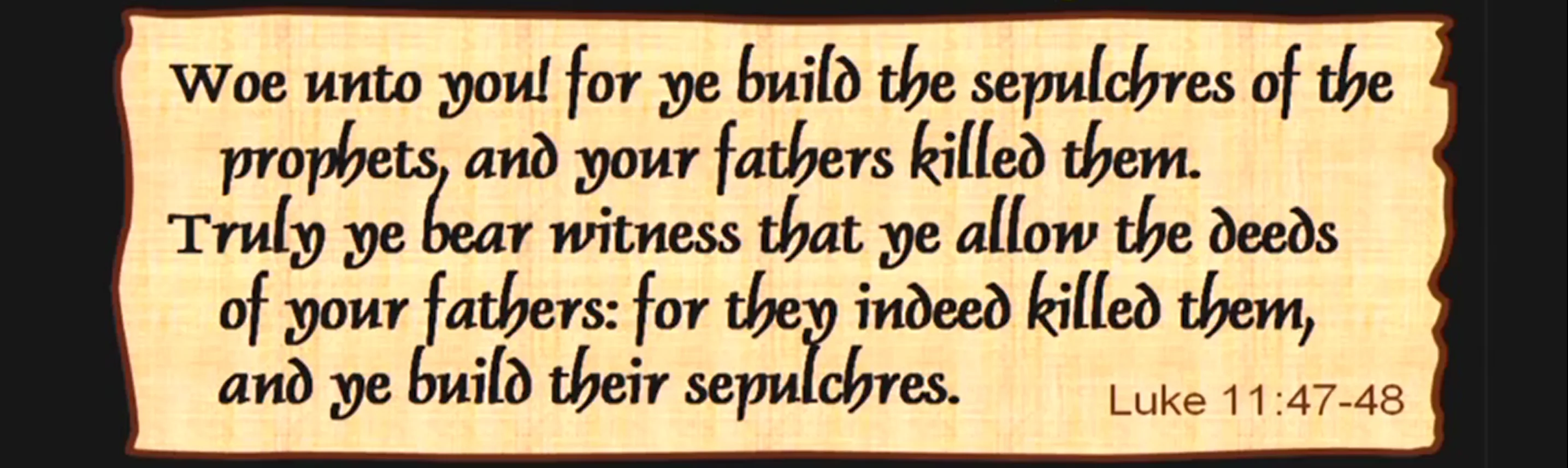
- They built tombs for the prophets, thus identifying with their forefathers who killed the prophets
— Outwardly they seemed to honor the prophets, but God knew that inwardly they were rejecting the prophets
- Judaism in general disregarded prophets as was pointed out by Peter Flint (see below Dead Sea Scrolls)
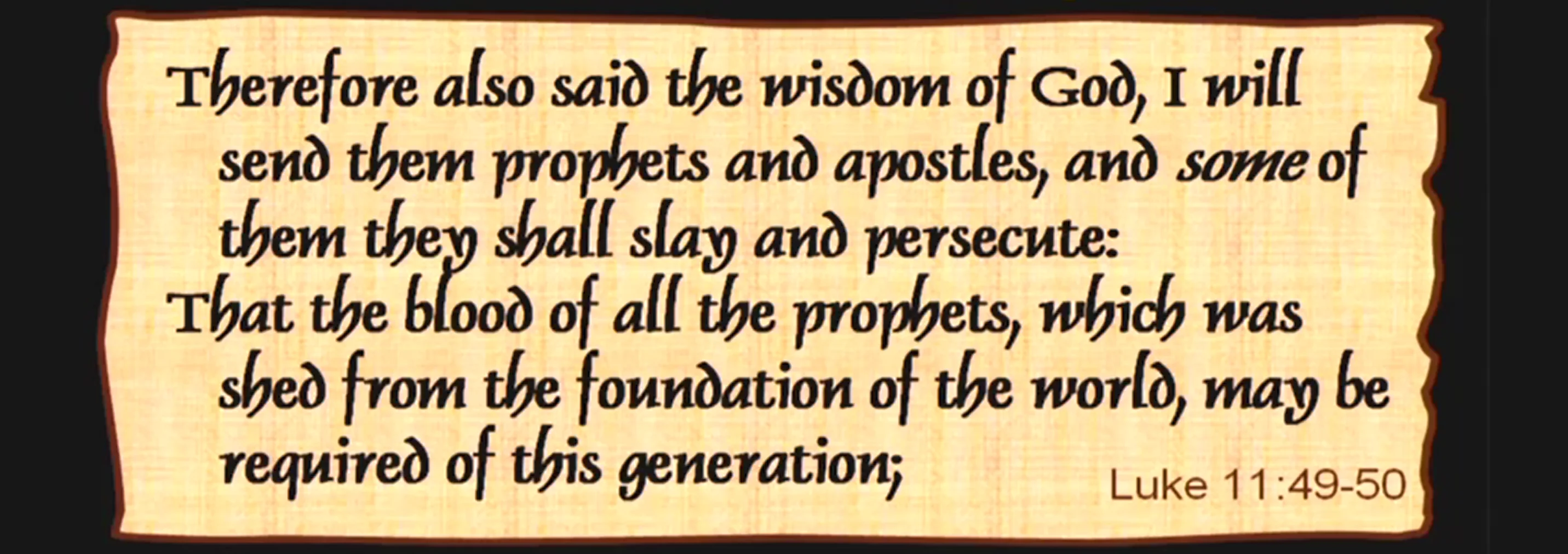
Luke 11:49-50
Luke 11:51
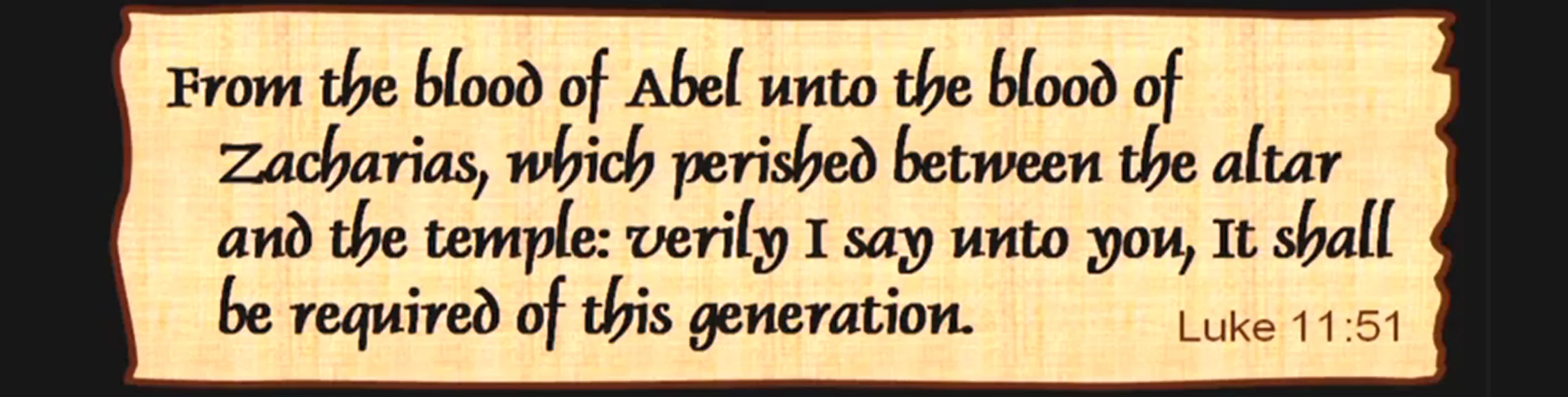
- Abel was the first innocent victim (Gen 4:8)
— He was killed because he was giving an offering of faith: a lamb, a sacrificial lamb pointing to the Cross
— Not that he had to be a herdsman, but was only giving what he was instructed to be given
- Zechariah the priest (not the writing prophet Zechariah), was the son of Berechiah (cf. Matt 23:35)
— He was the last martyr in the Old Testament (2 Chr 24:20-21)
— Remember, Chronicles was the last book in the Hebrew Bible (Tanakh, the OT)
Luke 11:52
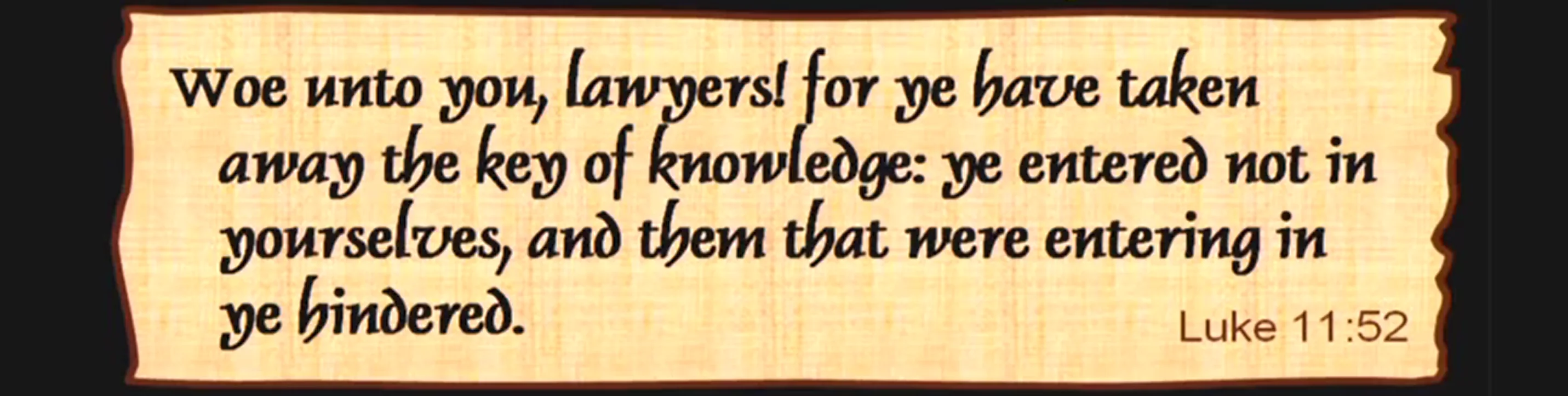
- 🗝️ cf. “…and I have the keys of hell and of death” (Rev 1:18 )
- 🗝️ cf. “…he that hath the key of David, he that openeth, and no man shutteth; and shutteth, and no man openeth” (Rev3:7)
- Jesus is calling them double losers: not only they missed it, but they caused other people to miss it
Luke 11:53-54
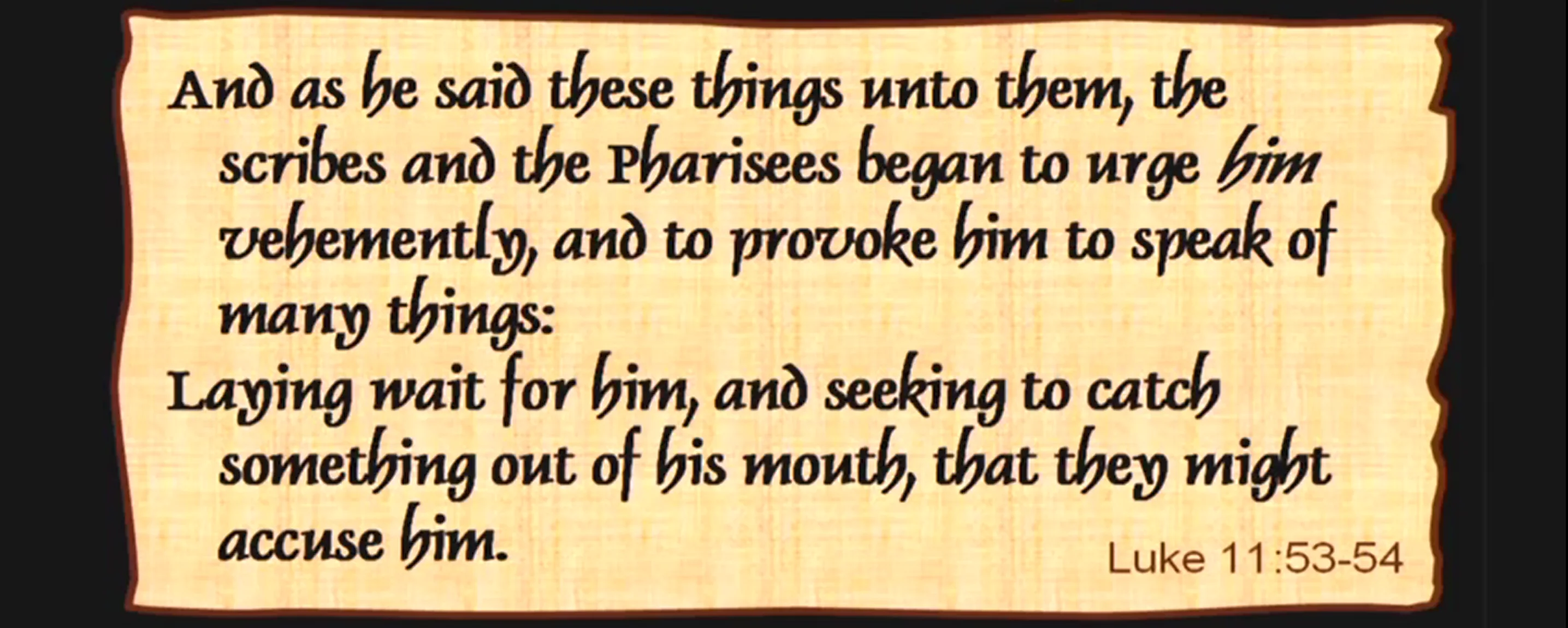
- From this point on
— Jesus only speaks in parables in public. Thus, only the ones with the Holy Spirit can discern the meaning
— He points toward Jerusalem
— He teaches his disciples how to prepare for rejection: the world rejected Christ… and they continue to do so
- The rest of the New Testament deals with a world that is a Christ rejecting world
— We are going to face rejection too
— It is going to be increasingly politically incorrect to be a Bible Christian (Biblical Christian)

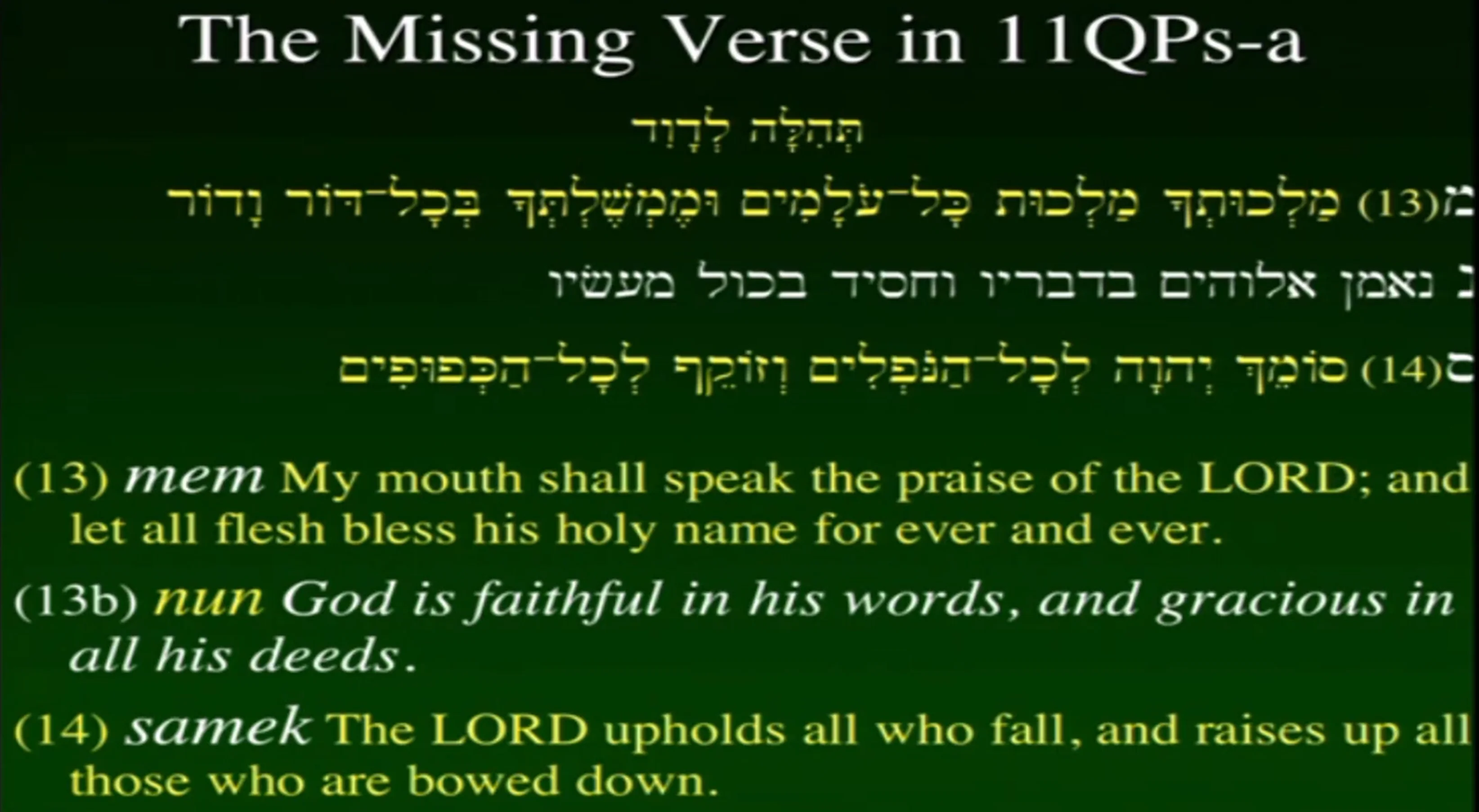
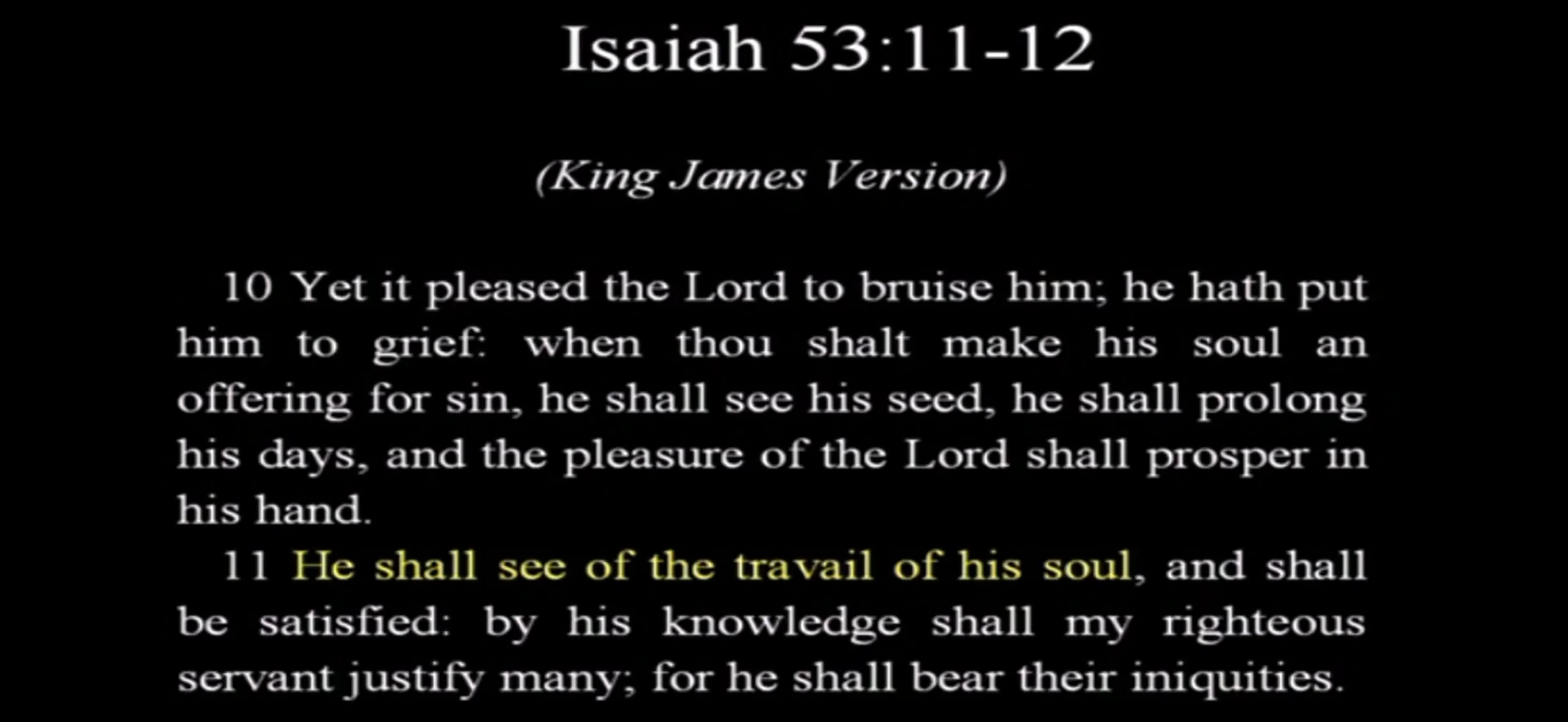
- Dr. Peter Flint’s book on the Dead Sea Scrolls brought up a point that one of the great tragedies in Judaism is over focusing on the Torah and totally ignoring the Prophets, rather than giving them a balanced approach
- Peter William Flint (1951–2016 aged 65) was an American biblical scholar (actually South African) who researched the Dead Sea Scrolls for over 20 years
- “The Meaning Of The Dead Sea Scrolls: Their Significance for Understanding the Bible, Judaism, Jesus, and Christianity” —by James C Vanderkam & Peter Flint, 2005 [on Amazon]
— YouTube video: The Meaning of the Dead Sea Scrolls | Peter Flint → Part 1 → Part 2 (see some snips below ↓)
- The Dead Sea Scrolls and the Qumran Scrolls are essentially the same thing
— While "Dead Sea Scrolls" is the general term for all manuscripts found in the area, the vast majority (and the most famous ones) originated from the caves at Qumran
— The scrolls were discovered in 11 caves near the ruins of Qumran on the northwestern shore of the Dead Sea between 1947 and 1956
— They represent a collection of ancient Jewish manuscripts, including the oldest surviving Hebrew Bible texts, hidden by a sectarian Jewish community, Essenes
— They include biblical texts, community rules, and apocalyptic writings dating from the 3rd century BC to the 1st century AD
— More documents were found at other nearby sites, such as Masada or Wadi Murabba'at, but these are distinct from the Qumran collection
— YouTube video: Dead Sea Scrolls and Qumran: What We Know? —Bible & Archaeology channel, by Dr. Sidnie White Crawford → https://www.youtube.com/watch?v=Yyjn-h3gxs4
The Meaning of the Dead Sea Scrolls | Part 2 | Peter Flint
https://www.youtube.com/watch?v=TZyZhUtUzM0
📜 Ps 145:13-14 — The Missing “nun” Verse in Psalm 145
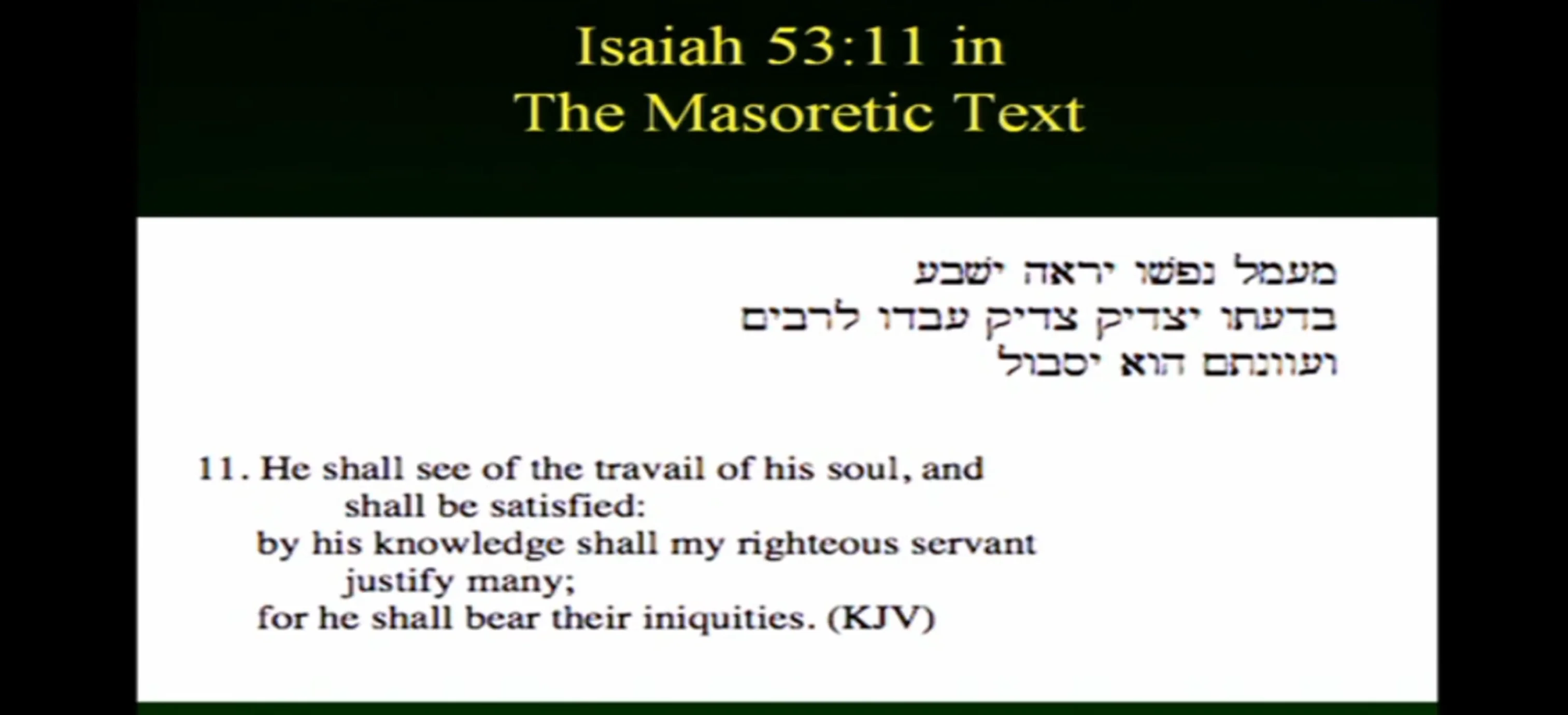
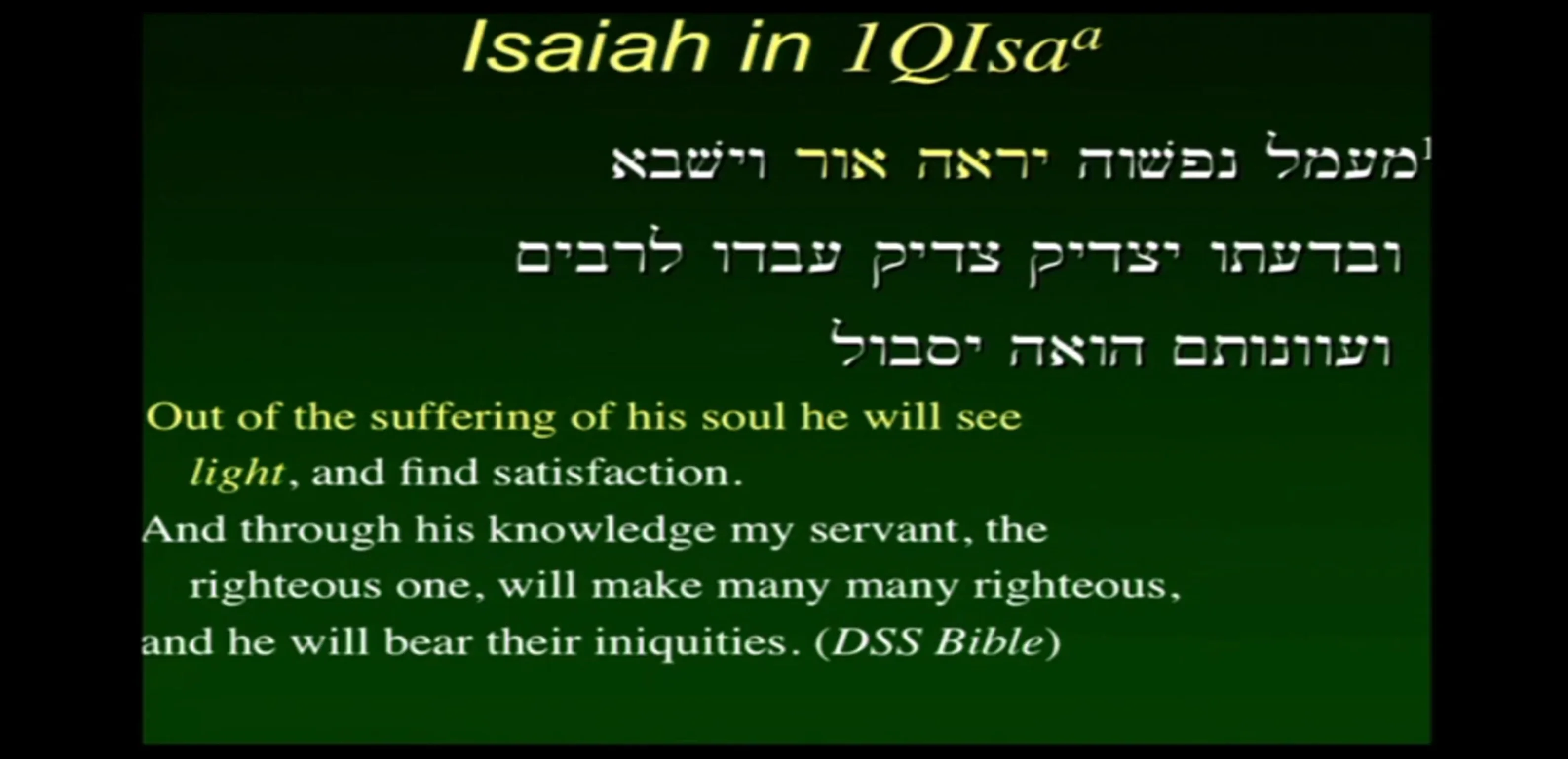
📜 Isa 53:11 — The Missing Word “Light” Discovered
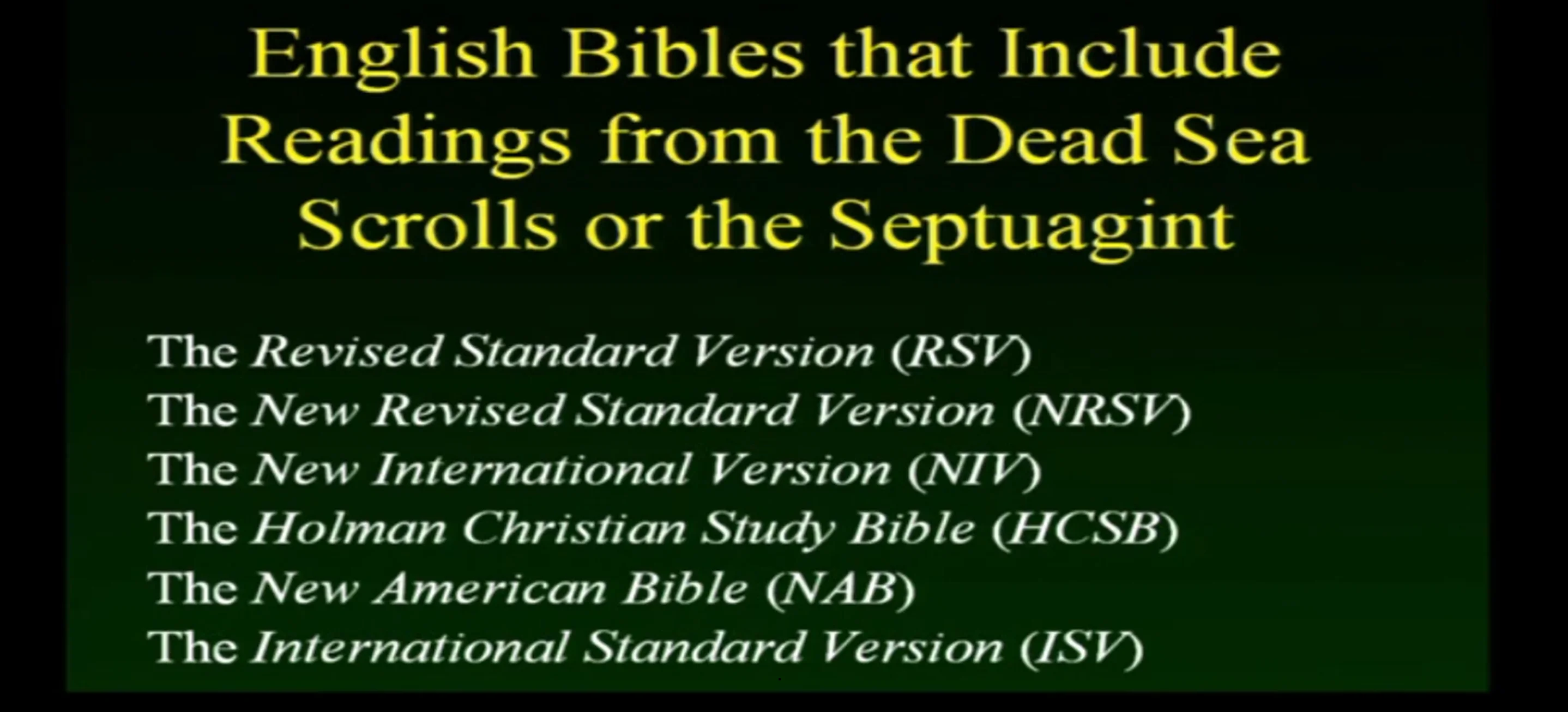
📜 Dead Sea Scrolls Inclusive Bible Translations — RSV, NRSV, NIV, HCSB, NAB & ISV (about 200 adopted readings)