s12 (Ch 12) Hypocrisy, Fear Only God, Blasphemy, Rich Fool, Worry (studied 15-Feb-2026)
The Book of Luke with Dr. Chuck Missler
The subsections of Chapter 12 (per NASB/LSB/MEV) are:

- Outline of Various Teachings:
— Beware Hypocrisy (vv. 1–12)
— Beware Covetousness (vv. 13–21)
— Beware Worry (vv. 22–34)
— Stay Diligent (vv. 35–59)

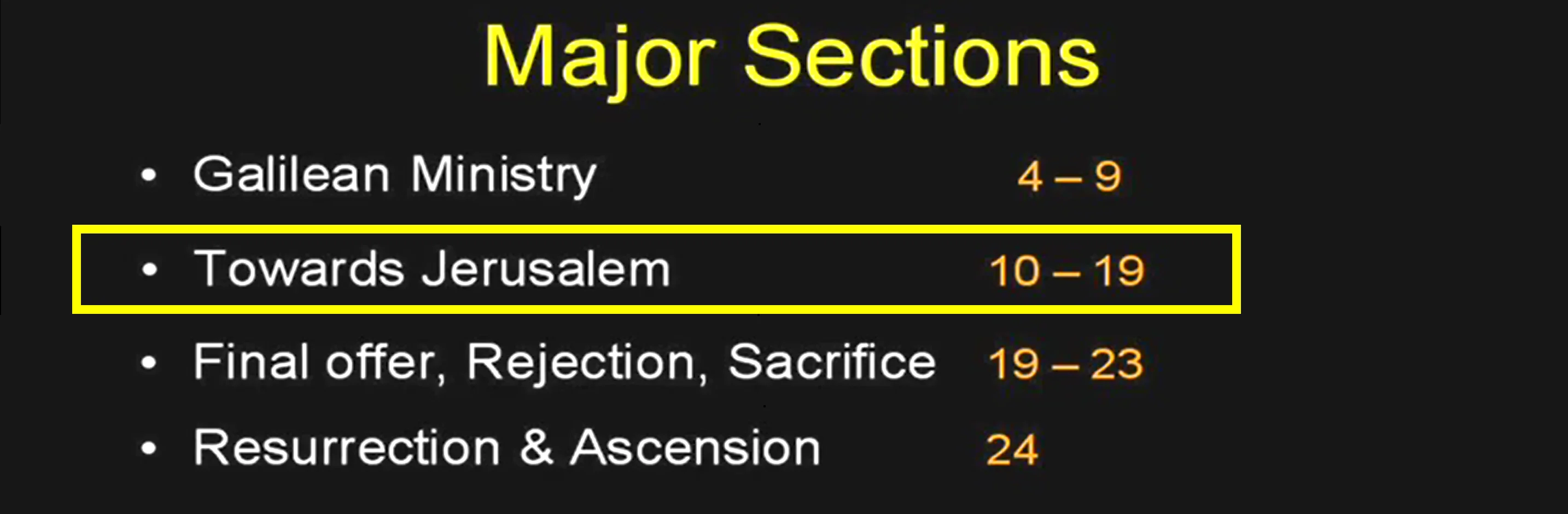
- In this section (Luke 12:1–19:27), Jesus is teaching His disciples how to operate under conditions of rejection
- The disciples are in great danger
— They’ve left everything to follow this leader, only to find their national leadership rejecting Him
- This chapter is unusually relevant to each of us today
- In Luke 12, Luke recorded at least five warnings:
— four warnings for believers like us today
— and a fifth warning, for the lost world…
- The state of this world is a concept that is not very popular even among Christians
— We need to realize that world at large is lost
— It is not just bewildered, but it’s hostile to everything we have to say
— It has a king (don’t lose sight of who is the god of this world)

Luke 12:1 Fear Only God / A Warning Against Hypocrisy (MEV)
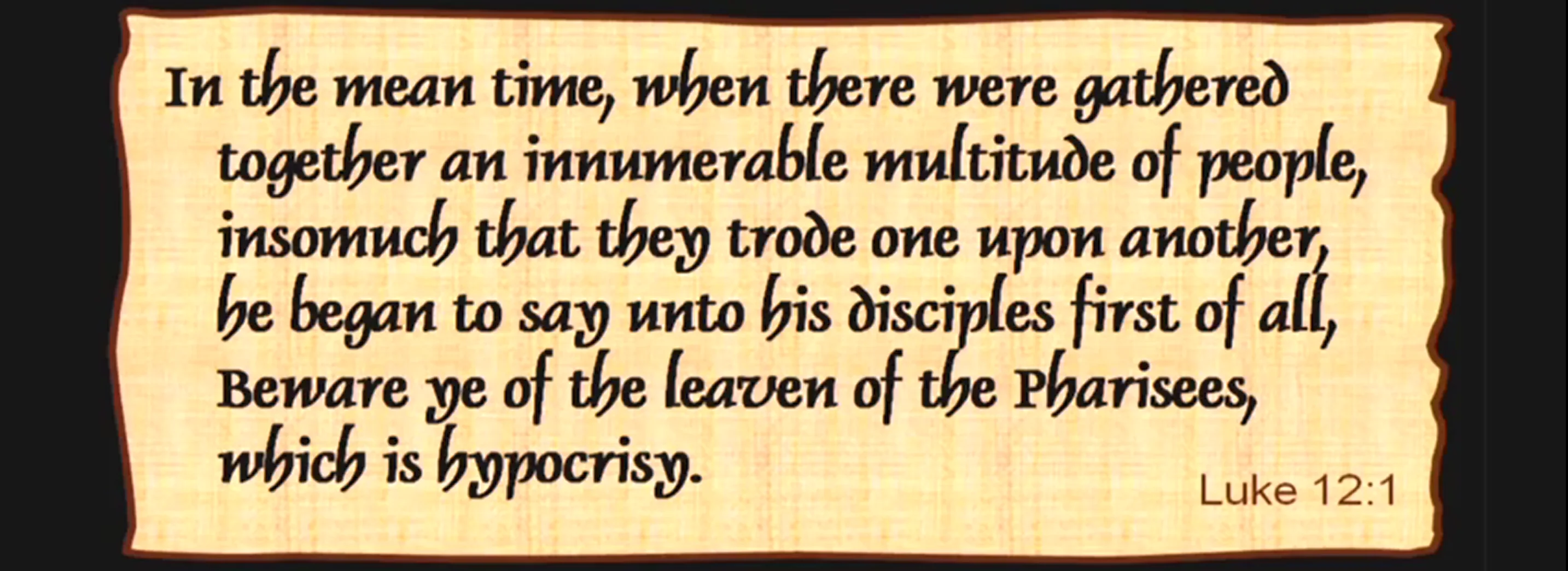
- “…beware ye of the leaven” — Leaven is a common idiom in the Bible and is used consistently
— It is always used negatively (both in OT and NT)
— It is a Jewish idiom for sin (sin in general, or specific sin like hypocrisy here)
— The origin of sin is pride, and leaven corrupts by puffing up (cf. 1 Cor 4:6, 1 Cor 4:18-19, 1 Cor 5:2)
— In the Old Testament: at Passover the children search for the leaven (sin) in the house to get it out
— In the New Testament: Jesus and Paul both use the term “leaven” several times, always negatively
- “…hypocrisy” — “Hypocrite” comes from a Greek word that means “an actor; one who plays a part”

- ⏩ 1. Understand what hypocrisy really is
— Jesus compared it with leaven, something that every Jew associated with evil (Exo 12:15-20)
— Paul likewise (1 Cor 5:6-8, Gal 5:9)
— Hypocrisy is a lack of commitment to reality and truth
— It is not subject to opinion → it is a sin that soon infects the whole person
— “O what a tangled web we weave, when first we practice to deceive.” —Sir Walter Scott
- ⏩ 2. Recognize that hypocrisy is foolish/futile (vv. 2, 3)
— It’s not only sinful, it’s ineffective
— Nothing can really be hidden → it’s going to come out
— God’s truth is a light which cannot be diffracted
- ⏩ 3. Understand what causes hypocrisy (vv. 4-7)
— Hypocrisy = the fear of man (as opposed to fear of God)
— More concern for reputation than character
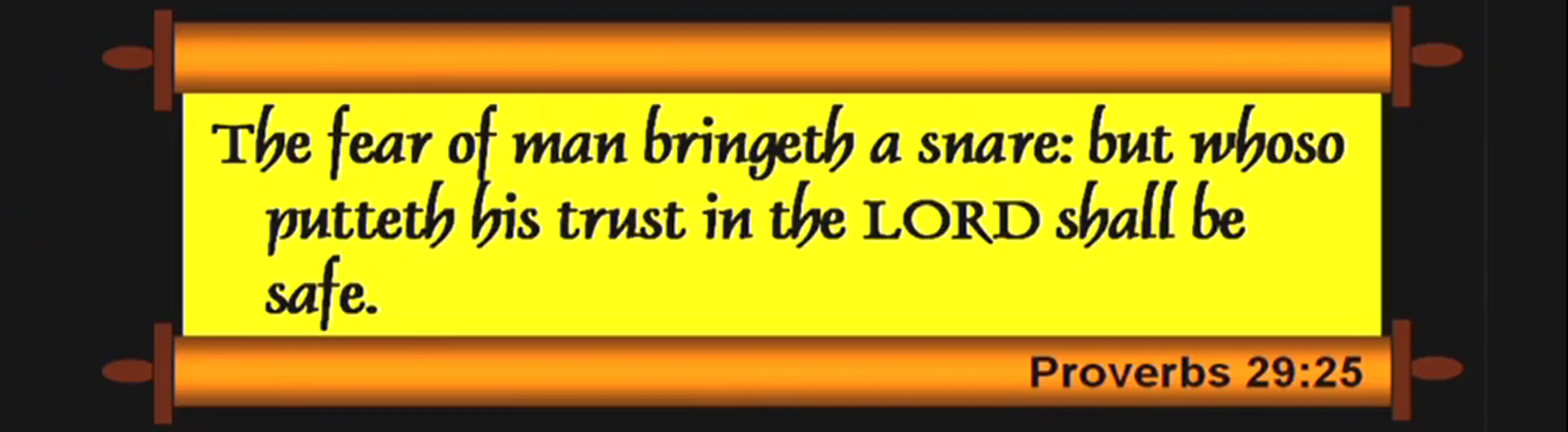
⚠️ Proverbs 29:25
- Knowledge of God ➽➤➝ comes from our being in the Word of God
- Fear of God ➽➤➝ comes from our devotional life
— We should not minimize the term “fear”
— There are many well-meaning pastors that soften that: well it just means respect, reverential respect
— No, the concept of trembling is embodied in the Hebrew term that is being used
— That’s another word we don’t see in our vocabulary anymore
— “God fearing” attribute used to be a compliment to a person, not today
Luke 12:2

- That’s in the Scripture, that’s there, that’s Jesus speaking — it’s that simple
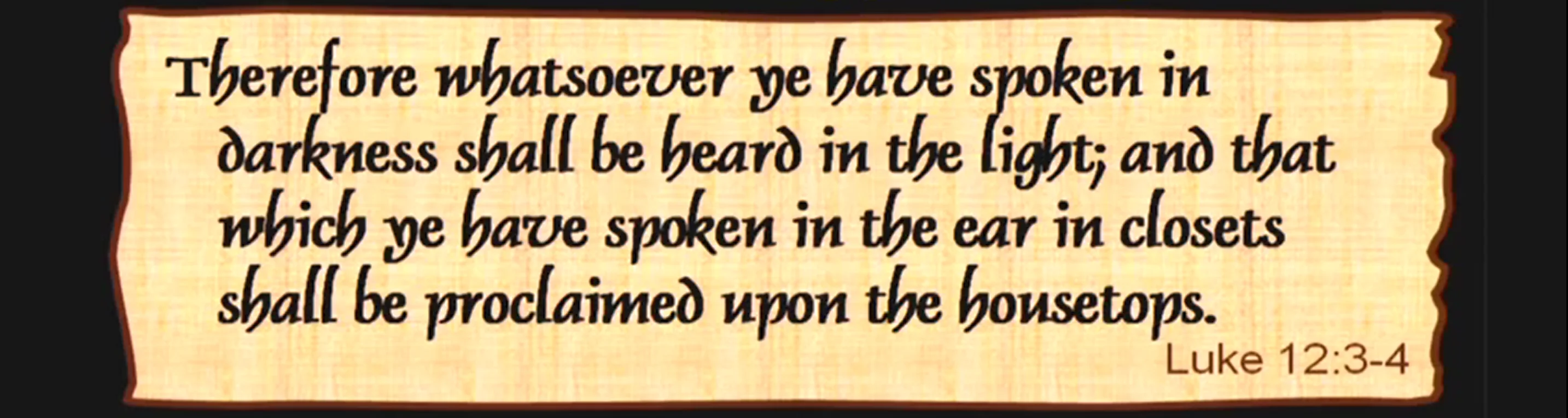
Luke 12:3
Luke 12:4-5
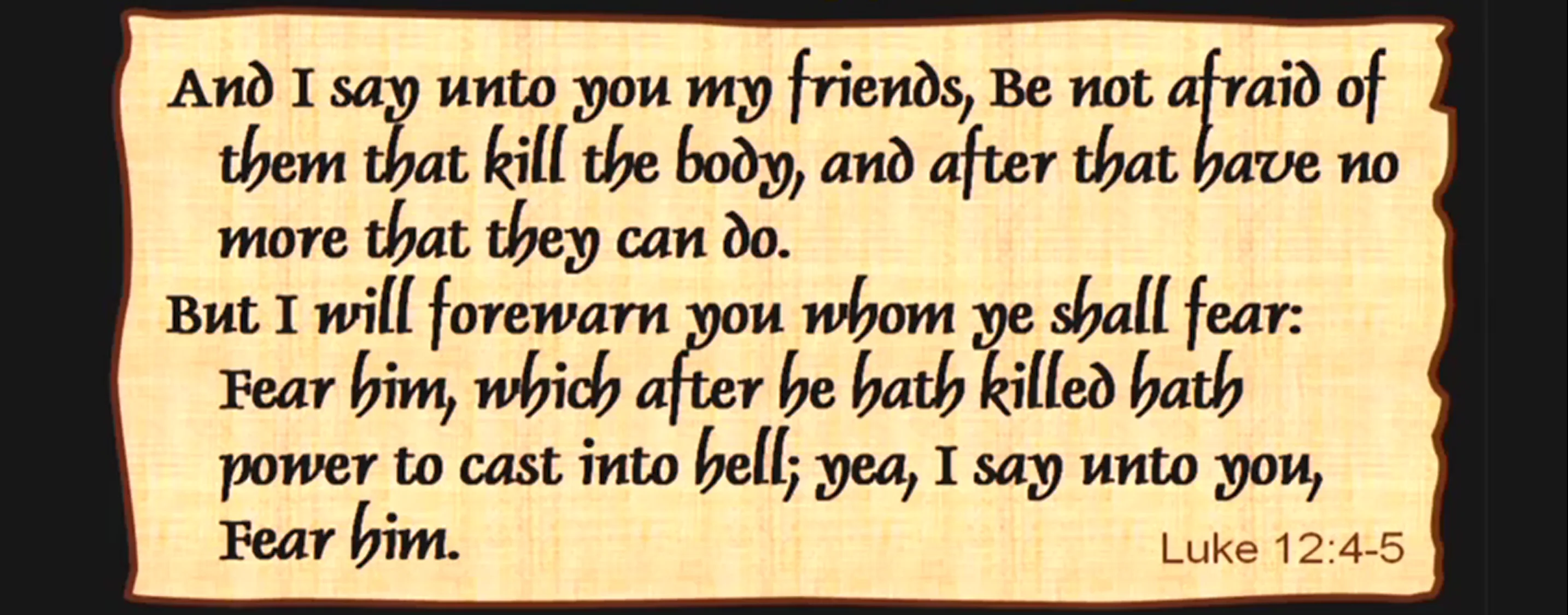
- What’s the most that they can do to you, kill you? That’s no problem, not to someone who is a believer
- We are going to see the Gospel move in this direction when we get to Luke 16
— We are going to talk a great deal about the afterlife
— Death is not the end — it is the raising of the curtain on a whole another reality
Luke 12:6

- That’s a sobering thing to realize — the littlest bird that dies, God knows about, He pays attention, He is aware
- “…farthing” — the word for “farthing” is assarion, a Roman copper coin worth about 1/16 of a denarius
— a denarius is about a day’s wage, so 1/16 wasn’t much, that’s the point
— used only here and in Matt 10:29
Luke 12:7
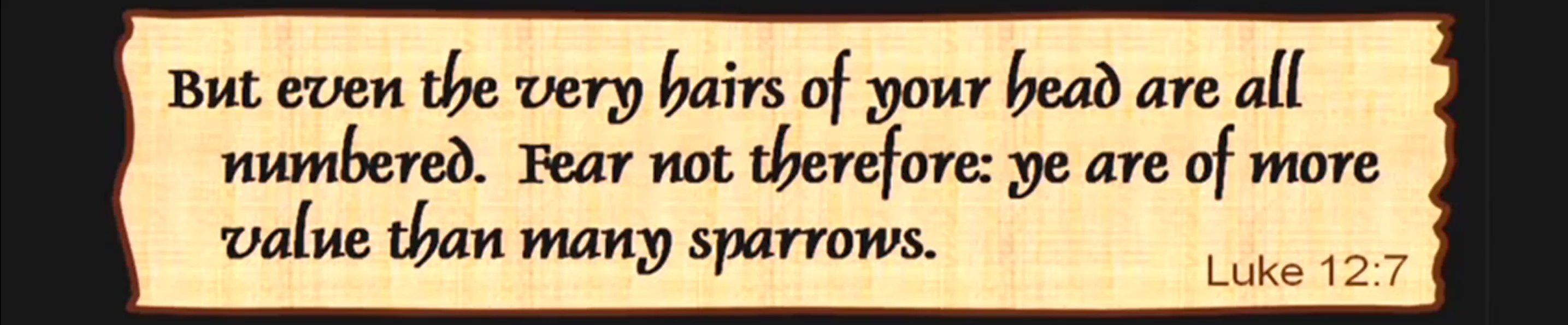
- Every time I take a shower, God needs to revise His inventory 😄
- There is nothing about you that God doesn’t know (even the most trivial thing you can think of, like individual hair)

Luke 12:8 Blasphemy Against the Holy Spirit / Confessing Christ Before Men (MEV)
Luke 12:9-10
- Finally, we must depend upon the Holy Spirit (vv. 10-12)
— In contrast to that, at least two Jesus’ own brothers who initially rejected Him (John 7:5) later came to faith (Acts 1:14) and were forgiven even though they had spoken against the Son of Man
Luke 12:11-12
- We still need to prepare ourselves (2 Tim 2:15)
— “an extemporaneous speech” – spoken or done without preparation (which, btw, takes a lifetime of preparation)
- God did not judge the nation of Israel immediately
— In fact, Jesus prayed for them as He hung on the cross (Luke 23:34, cf. Acts 3:17)
— The ministry of the apostles and other believers was the last opportunity for the nation
— They failed by rejecting the witness of the Spirit:
“Ye stiffnecked and uncircumcised in heart and ears, ye do always resist the Holy Ghost: as your fathers did, so do ye.” (Acts 7:51) Stephen’s Defense
— This was fulfilled during the first chapters of Acts when the message went out “to the Jew first…” (Rom 1:16, Acts 3:26, Acts 13:46), and then the Greek and Gentile

Luke 12:13 Parable of the Rich Fool / Covetousness Denounced
Luke 12:14

Luke 12:15
- Bumper sticker: “He who dies with the most toys wins” (facetious, of course)
- Civilization: “A limitless multiplication of unnecessary necessities.” —Mark Twain
Luke 12:16-17
Luke 12:18
- The solution is to get a bigger closet
Luke 12:19
- We are all guilty of this same mentality
- There are perils to prosperity:
— “Two things have I required of thee; Deny me them not before I die: 8 Remove far from me vanity and lies: Give me neither poverty nor riches; Feed me with food convenient for me: 9 Lest I be full, and deny thee, And say, Who is the LORD? Or lest I be poor, and steal, And take the name of my God in vain.” (Prov 30:7-9)
- Wealth can:
— choke the Word of God (Matt 13:22) (great abundance crowds out devotional time and the Word of God itself)
— create snares and temptations not available to you otherwise (1 Tim 6:6-10, 1 Tim 6:17-19)
— and, perhaps worst of all, give you a false sense of security: God wants us dependent on Him — and your being dependent on Him is harder when you have a balance sheet of million Dollars or whatever
- People who are satisfied only with the things that money can buy are in great danger of losing the things that money cannot buy (that sounds so glib, but it’s real, it’s true, it’s essential)
- God’s remedy for covetousness is tithing — a continual reminder that God is first
— Tithes are not offerings
— Tithes are what is His
— You cannot give offering until tithing is complete
— In the vernacular: Tithes are what is required, volunteer offerings are on top of that (discretionary part)
— Many Christians believe that all giving is volunteer — that misses the point — there is a portion that belong to Him, that we are giving back to Him
Luke 12:20
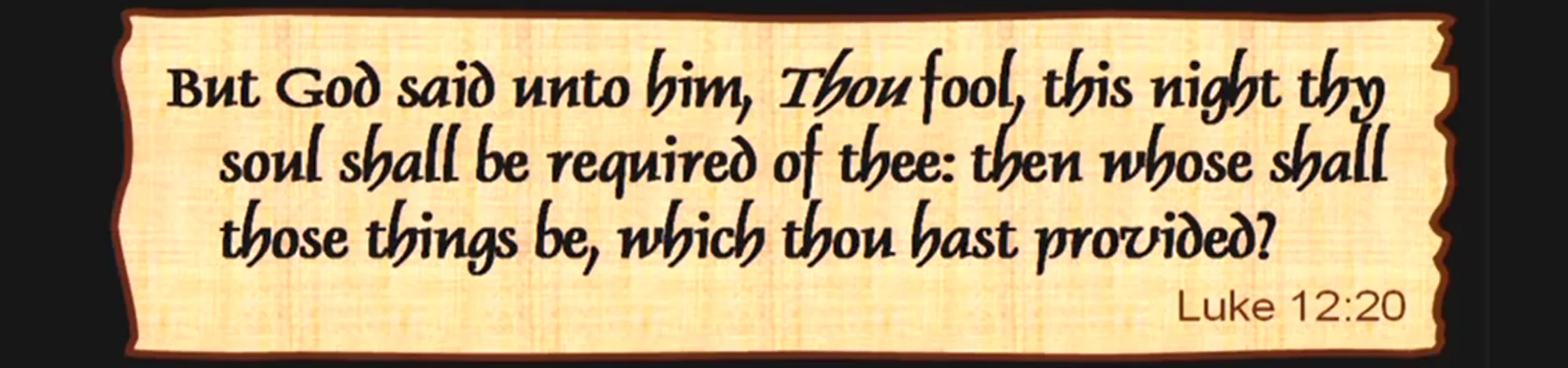
- God is emphasizing here that all the wealth is only temporary
- Every one of us is going to die on time, right on time, not late, not early
- The problem with the farmer is that he had a false view of both life and death
— Death is not the end; that’s when the curtain goes up on the real reality…
— Life is a boot camp, a trial period
- “That man is richest whose pleasures are cheapest.” —Henry David Thoreau, March 11, 1856
- “A man is rich in proportion to the number of things which he can afford to let alone.” —Henry David Thoreau
🔢 Psalm 90:12
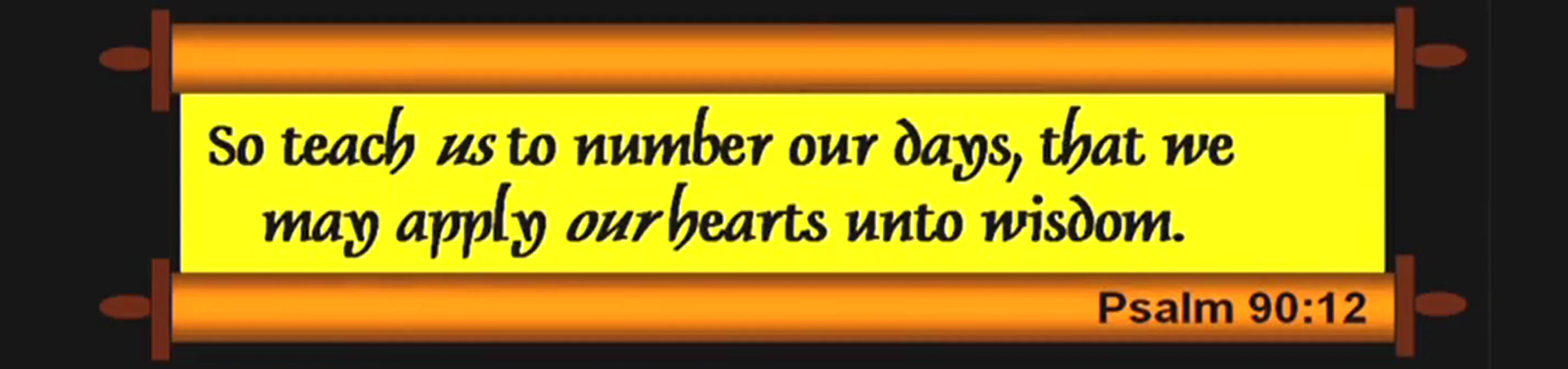
- How many years do you have left? That is an academic concept, say 20 years doesn’t sound bad
- How many weekends do you have left? a 1,000 — that will shake you up because that is something you can count
Luke 12:21

- The tragedy of the farmer is not what he left behind, but what he now faces in eternity… (cf. Matt 6:19-34)
- What does it mean to be “rich toward God”?

Luke 12:22 Do Not Worry / Care and Anxiety
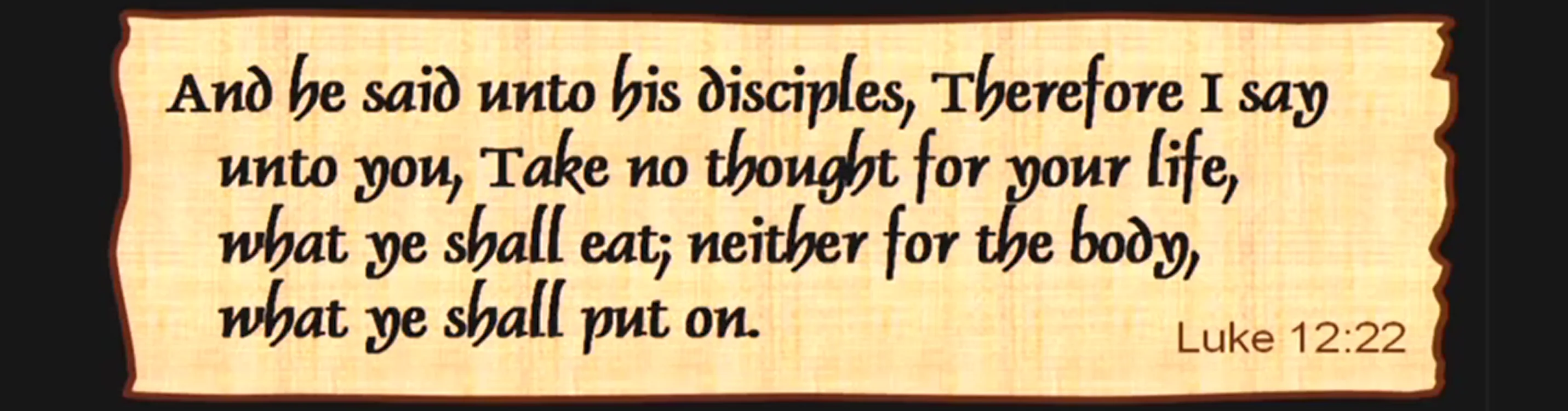
- This is easily misapplied verse
- “Take no thought…” = “be not anxious”, literally “be not torn apart”
— It doesn’t mean “don’t think about it”
— This isn’t a prohibition to doing some planning:
Planning is not forecasting future, planning is analyzing futurity of today’s decisions
- The Tyranny of Worry:
— The rich farmer worried because he had too much
— The disciples were probably tempted to worry because they had too little
— They were living by faith—and faith is always tested → Every day God finds a new way to ask: “Do you trust Me?”
- The English word “worry” comes from an old Anglo-Saxon word that means “to strangle”
— Worry strangles (it isn’t rational thought, it isn’t trying to plan)
— “Worry is a trickle of fear running through the mind, which eventually cuts a crevice so deep it will drain all other thoughts away.” —Arthur Roche (a British bishop and cardinal of the Catholic Church)
— “Worry does not empty tomorrow of its sorrow; but it empties today of its strength.” —Corrie Ten Boom
— Worry is assuming a responsibility God did not intend for you to have
— Worry is like paying interest on a debt that never comes due
Luke 12:23-24
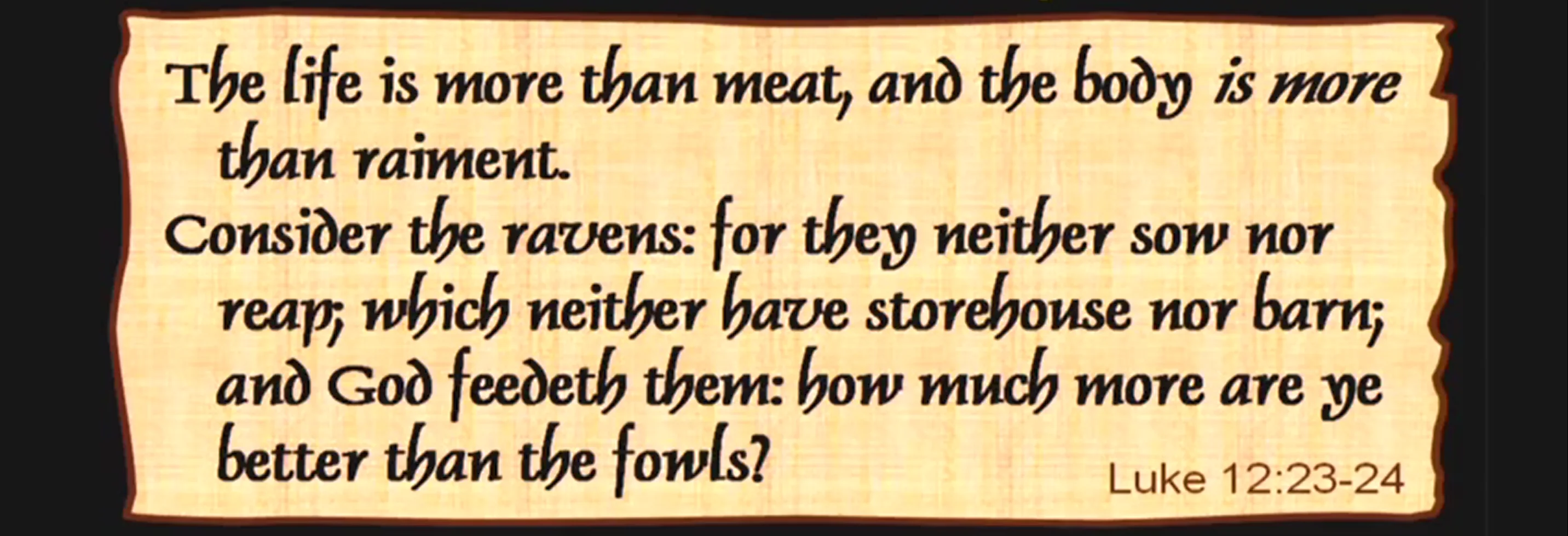
Luke 12:25

- “…cubit” — a standard of measure from fingertips to elbow, between 16-22 inches; 18’’ is a common standard (45cm)
Luke 12:26

- “…because thou canst not make one hair white or black.” (Matt 5:36)
📒 Psalm 39:5
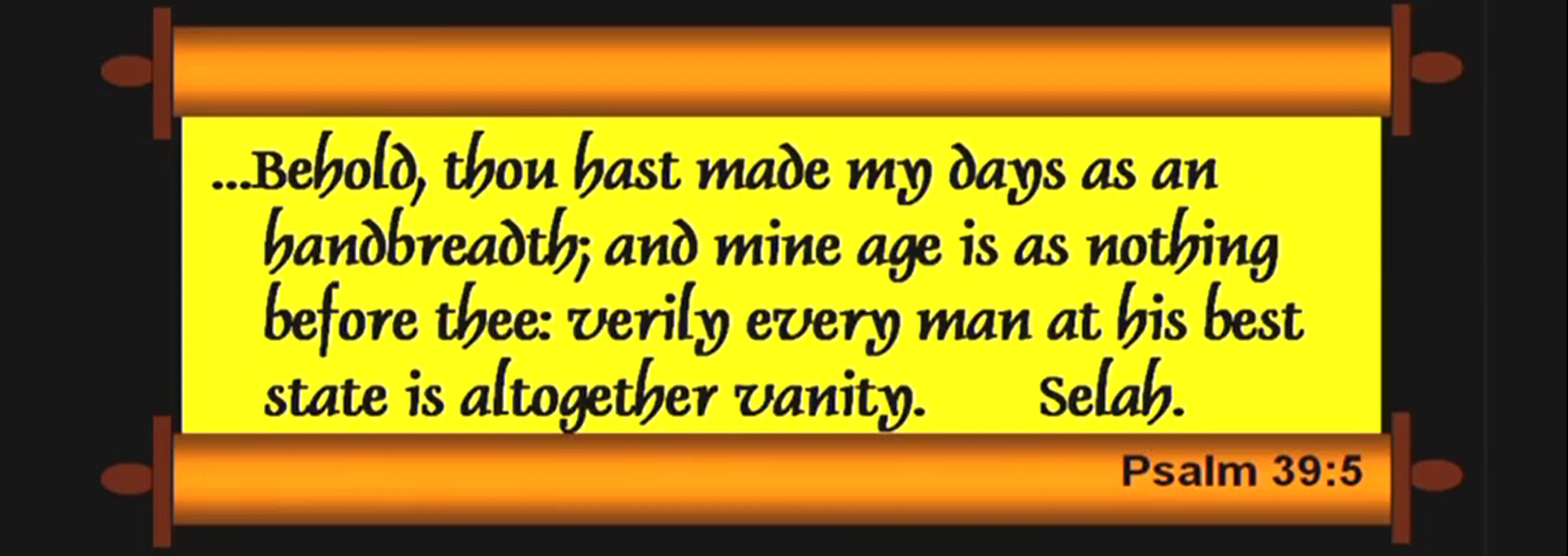
- Worry is not only unconstructive, it is also deceptive: it gives us a false view of life, of itself and of God
- Worry convinces us that life is made up of what we’re worried about — typically food and clothes…
— We get so concerned about the means that we forget about the end, which is to glorify God
Luke 12:27-28
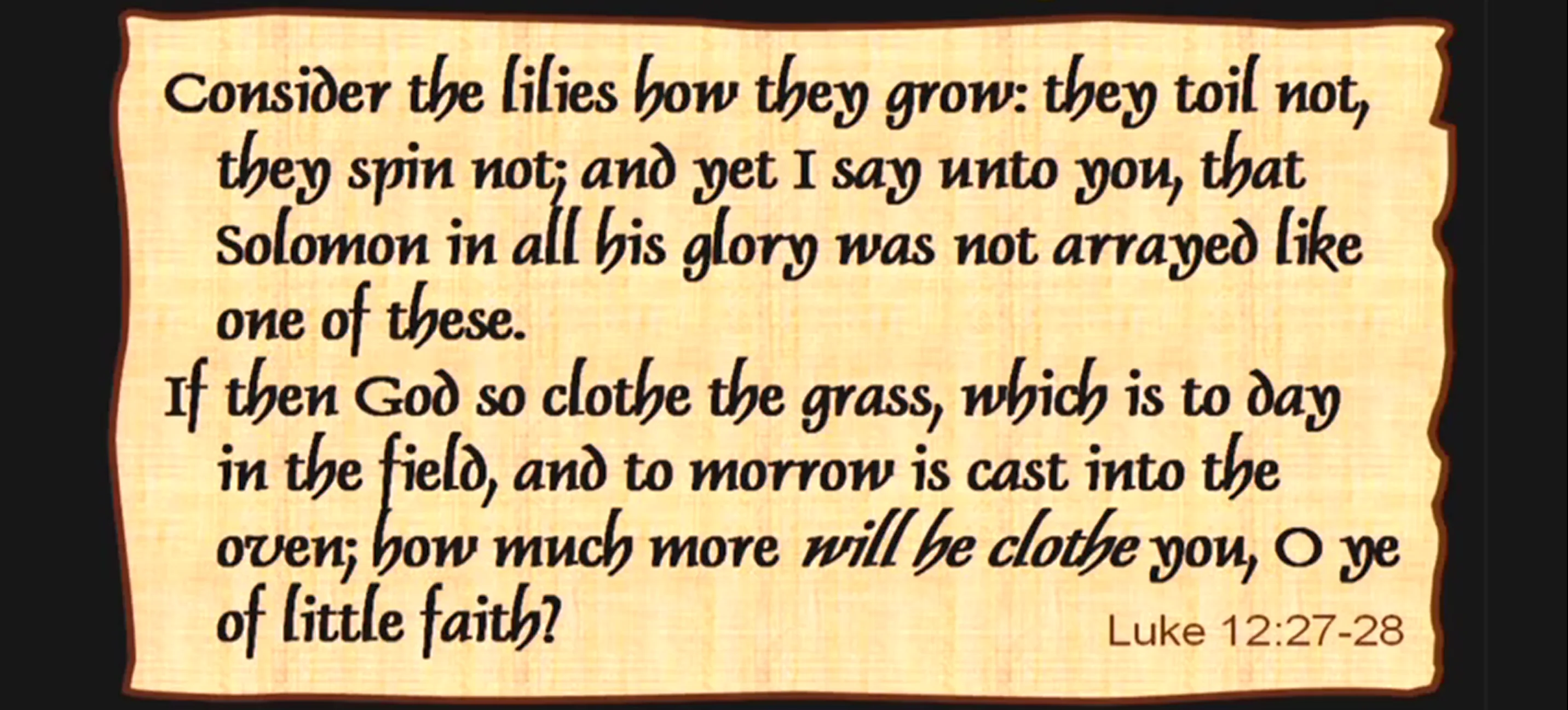
- Worry blinds us to the world around us and the way God cares for His creation
— God makes the flowers beautiful and feeds the (unclean) ravens who neither sow nor reap
- Why are flowers beautiful?
— We now know that bees are color blind, so they don’t have to be beautiful
— Also deep sea life, which is in complete darkness, once lit is gorgeous even though no one sees them
—➤ The answer is: For God and His Glory! To glorify Him!
Luke 12:29

- “…doubtful mind” = “to be held in suspense”; as of a ship being tossed in a storm; “do not keep worrying” NASB
Luke 12:30
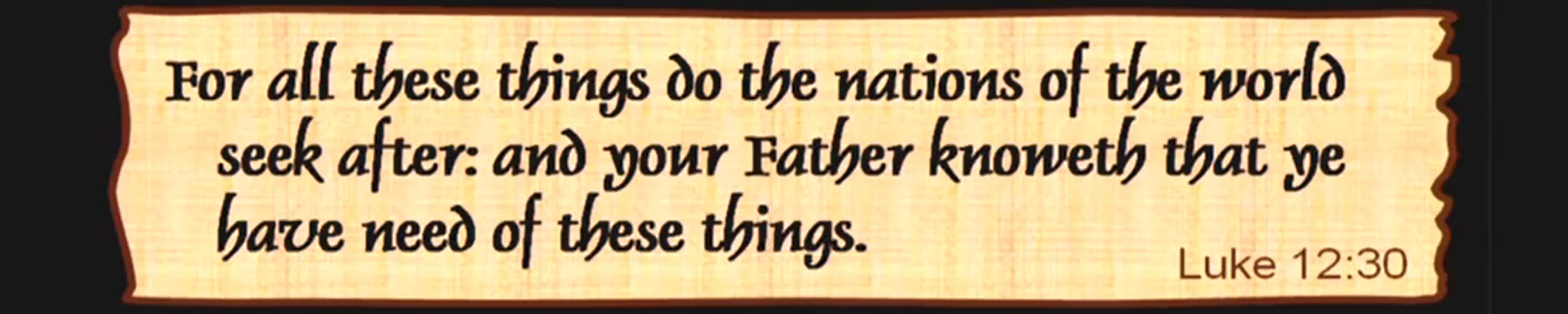
- Worry is not only deceitful, but also deformative:
— It can keep us from growing and makes us like the unsaved world
— It is unchristian, a poor witness, and a sin (like hypocrisy):
😟 Rom 14:23

- Worry is a lack of faith
- Jesus is not suggesting that we sit around and let God feed us
— The birds themselves work hard to stay alive
- He encourages us to:
— trust Him
— cooperate with Him and
— use the abilities and opportunities that He gives us (2 Thess 3:6-15)
- Pray as if ALL depends on Him
- Work as if all depends on YOU
Luke 12:31-32
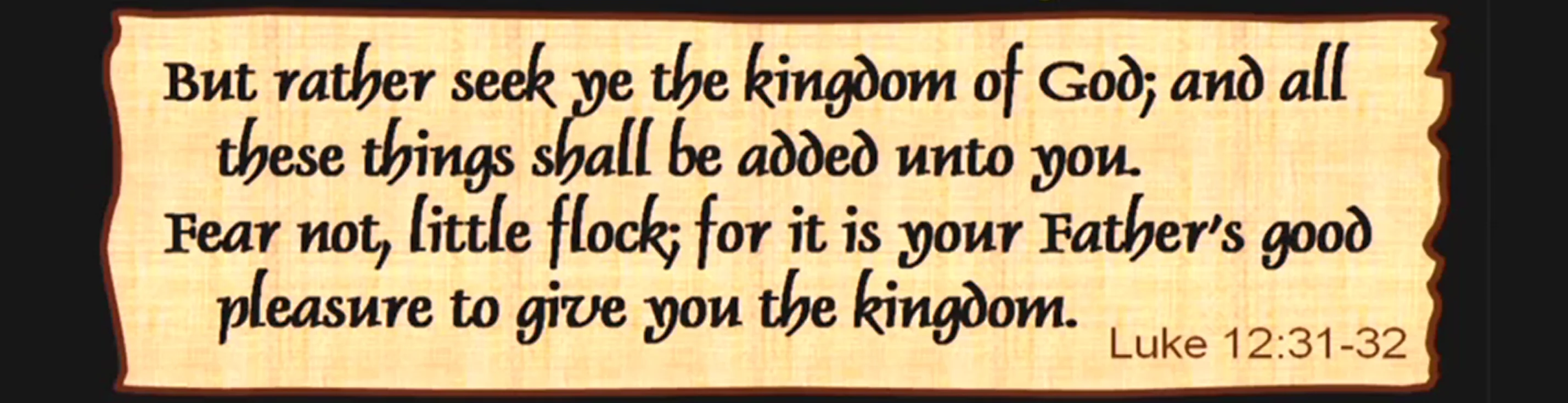
Luke 12:33
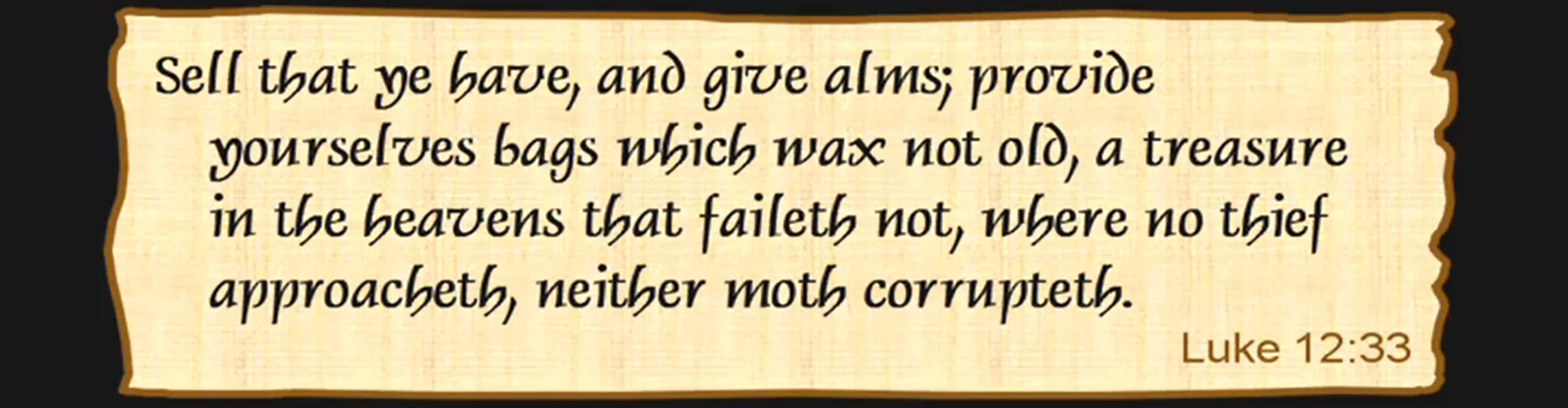
- “Sell your possessions and give it as charity;” NASB
- (Luke later comes back to this subject in Chapters 16 and 19)
- This is also what the early church did (Acts 2:44-45, Acts 4:32-37)
Luke 12:34

- You cannot take your treasure with you…
— Yes you can!
— We’ll find out how to do it when we get to Chapter 16 (Luke 16)
— The way you do it is the same way as with visiting a foreign country:
➤ exchange into a local currency before you get there
➤ send up your resources ahead to Heaven before you get there

1️⃣ Realize that God knows our needs
— He knows better than we do. We can trust Him to meet our needs (cf. Rom 8:32)
2️⃣ Strive for the Divine viewpoint
— His pleasures and our treasures must go together
— If our hearts are fixed on the things of earth, we will always worry
3️⃣ “Hang loose” of the world’s goods
— It is not wrong to own things so long as the things don’t own us (Phil 4:6-9, Acts 2:44-45, Acts 4:34-35)
— It’s not a sin to be wealthy, but how the resources are used is the issue
— An example of Chuck owning a Ferrari (it owned him first, then he just enjoyed it without fussing over it)


- While we are not to be worried about the present, we need to be watchful about the future
— Not to plan ahead is foolishness
- The best way to conquer hypocrisy, covetousness and worry:
— Focus on the Lord’s return ↩
— Lord’s return should be the overwhelming priority!

Luke 12:35-36 Be Ready for His Coming / Be in Readiness / Watchful Servants (MEV)
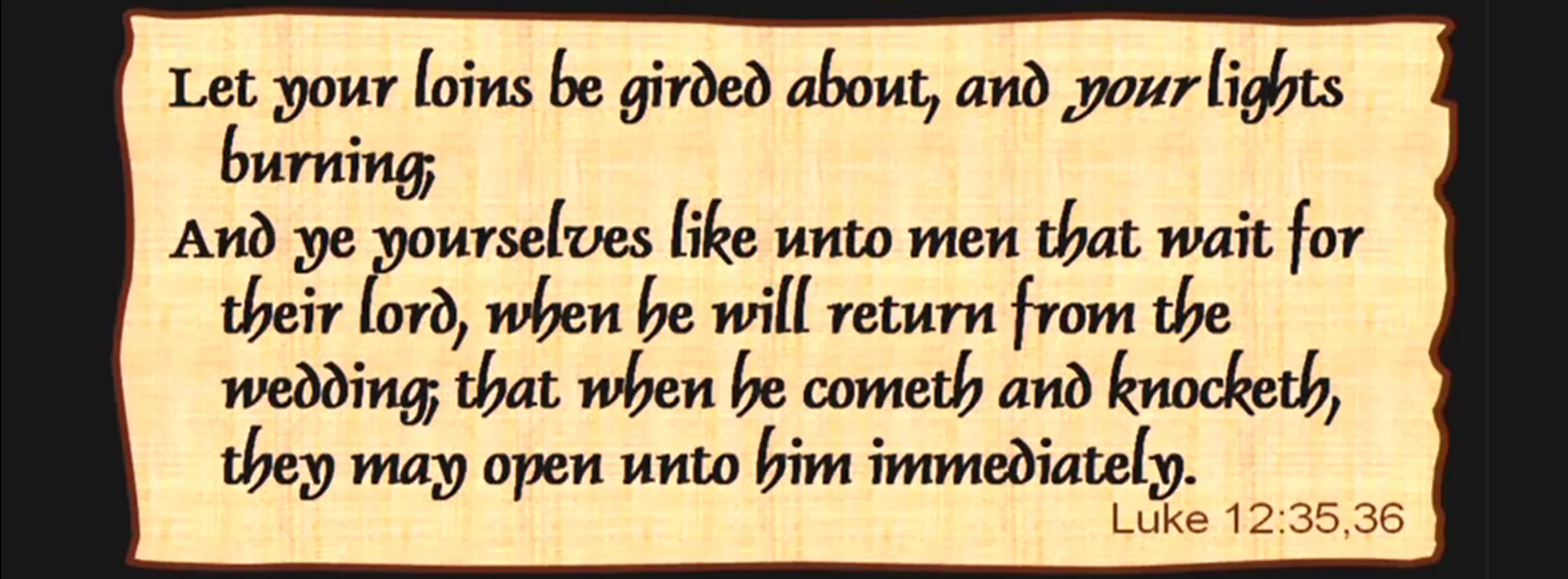
- The wedding is not on the Earth, but is always in the Father’s house
— The wedding supper will be on the Earth, celebrating the wedding when He returns
- Jewish wedding analogy:
— The bridegroom’s servants need to be in readiness
— The bridegroom would make a contract with the bride’s father
— Then, he would go away to his father’s house to build additions for his new bride (Jesus is there now)
— He would come back at a surprise time, to take the bride to the new house (Rapture)
Luke 12:37
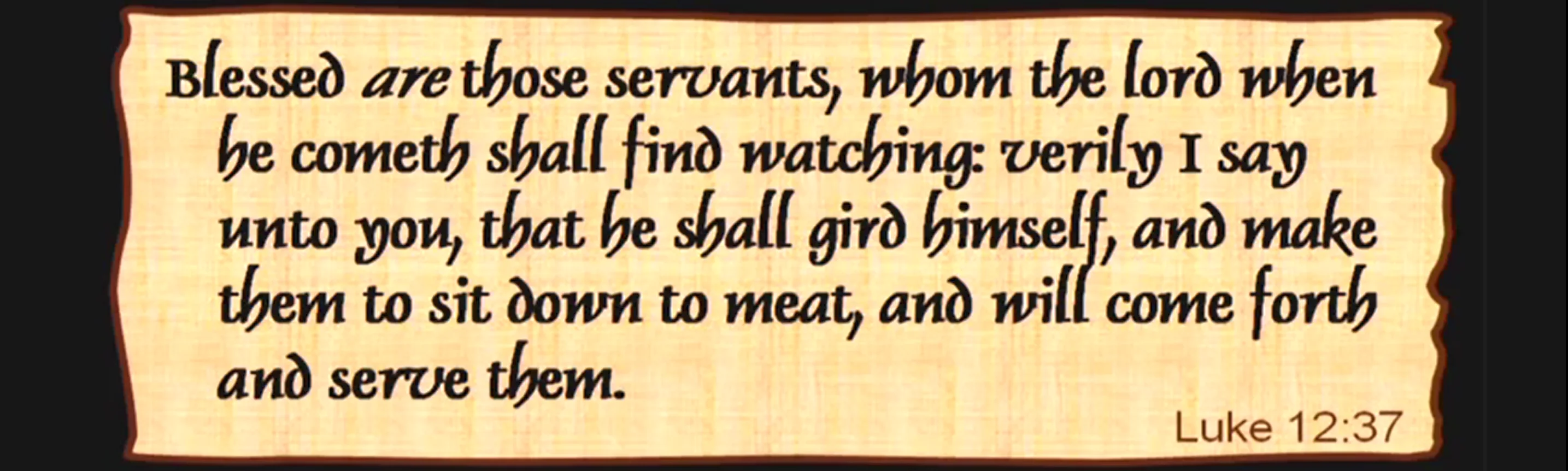
- 5 crowns are promised in Heaven — one of them is specifically for those who keep watch of Rapture
Luke 12:38
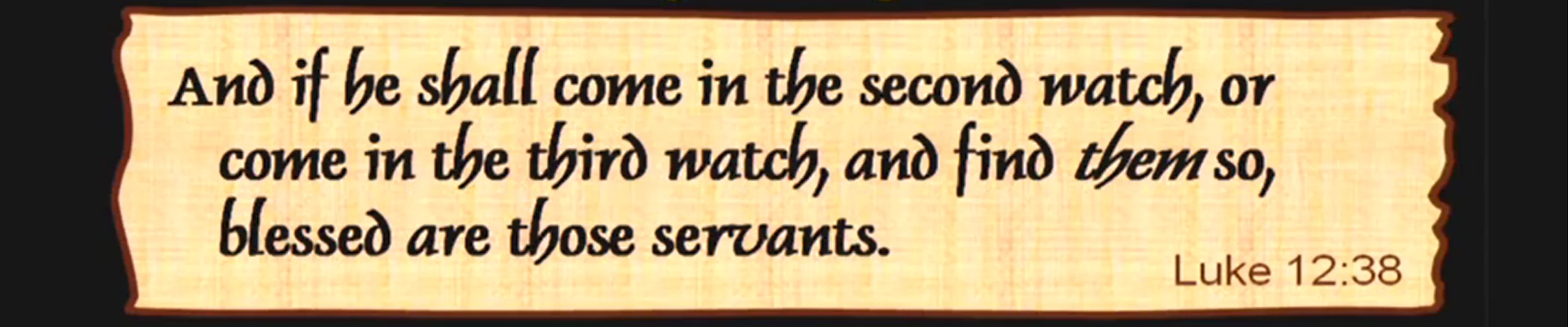
- “…second watch” — the 2nd watch was from 9pm to midnight, and the 3rd watch was from midnight to 3am
- Night Watches — Before the Captivity, the Jews divided the night into three watches:
1) “the beginning of the watches” (from sunset to midnight) Lam 2:19
2) “the middle watch” (from midnight till the cock-crowing) Judg 7:19
3) “the morning watch” (from the cock-crowing till sunrise) Exo 14:24, 1 Sam 11:11
- In the New Testament we read of — Four Watches
— a division probably introduced by the (Greco-) Romans (Matt 14:25, Mark 6:48, Mark 13:35, Luke 12:38)
- This verse is a rebuttal to both the Post-Tribulation and Mid-Tribulation viewpoints
— The Doctrine of Imminence: We are to expect him at any moment (denied by non-pre-tribbers)
— Since we don’t know when He is coming, it cannot be at any time during the tribulation
Luke 12:39
- “…the goodman” KJV; “…the head of the house” NASB → Satan (he is not a good man)
- The Rapture will catch Satan by surprise
- The attitude we must have toward His Return is to be alert
— not to be caught by surprise (1 Thess 5:2, Matt 24:43, Rev 16:15)
Luke 12:40

- These passages imply imminency:
— The (Great) Tribulation is a well-documented 3½-year period in the Bible (Matt 24:15)
— There’s no imminency if we know exactly when he’s returning, whether in the middle or after the Tribulation
- While Church will not go thru Tribulation (because of Pre-Tribulation Rapture), it does not escape persecution
— Most of the body of Christ, in most of the World, for most of the last 2,000 years endured persecution
Luke 12:41

- In this section Jesus told two parables (vv. 35-40 and 42-48), which are connected by this question by Peter (v. 41)
— The second parable expands and explains the first
Luke 12:42
- This is not about the salvation, but the rewards ⭐⭐⭐⭐⭐
Luke 12:43-45
Luke 12:46
- “…the unbelievers” — [“the unfaithful”]
Luke 12:47
Luke 12:48
- In today’s world, Word of God is more available than it has ever been in the history of men
— Blue Letter Bible — an astonishing resource, for free
— We are given more than to any generation in the history — much is required from us
- God will be fair
— However, we are called to know His will (Rom 12:1-2, Col 1:9) and
— To grow in our knowledge of Him (2 Pet 3:18) → That’s a command, not a suggestion

Luke 12:49 Not Peace, but Division / Christ Divides Men

- Strange verse 🔥
- Just as Joshua in the conquest of Canaan, we also are facing opposition and conflict
— We are in the world that hates what we do
- To the Jews, fire was a symbol of judgment
— Our Lord’s coming into this world will bring judgment (John 9:39-41)
Luke 12:50

Luke 12:51

🔃 Matt 10:34

- Does this contradict what the angel sang over the shepherd fields in Luke 2:14?
🐐🐑 Luke 2:13-14
- The traditional translation of Luke 2:14 is not accurate (unfortunate mistranslation). Better translation:
— “and on earth peace to men of good will” or even better
— “on earth peace to men on whom His favor rests” (that’s what Greek really says)
— “And on earth peace among men with whom He is pleased” NASB
- God’s peace is not given to those who have good will, but to those who are recipients of God’s good will or favor
Luke 12:52
Luke 12:53

Luke 12:54-55 Discerning the Appointed Time (MEV)
Luke 12:56

- In Matt 16:2-3, Jesus quotes the famous sailor’s proverb:
— “Red sky at morning, sailor take warning;
Red sky at night, sailor’s delight.”
Luke 12:57 Settling With Your Accuser (MEV)


Luke 12:58
Luke 12:59

- The word for “mite” (or penny) is leptos
— Used only here and in Mark 12:42 and Luke 21:2
— It was a Jewish copper coin worth about 1/8 of a cent
- The point He is making:
— All will be held accountable
— We all have a day of reckoning
🕙 2 Cor 6:2


- Prepare for your final exam if you’re taking this as a course for credit

