s13 (Ch 13) Siloam, Narrow Way, Lament over Jerusalem (studied 19-Feb-2026)
The Book of Luke with Dr. Chuck Missler

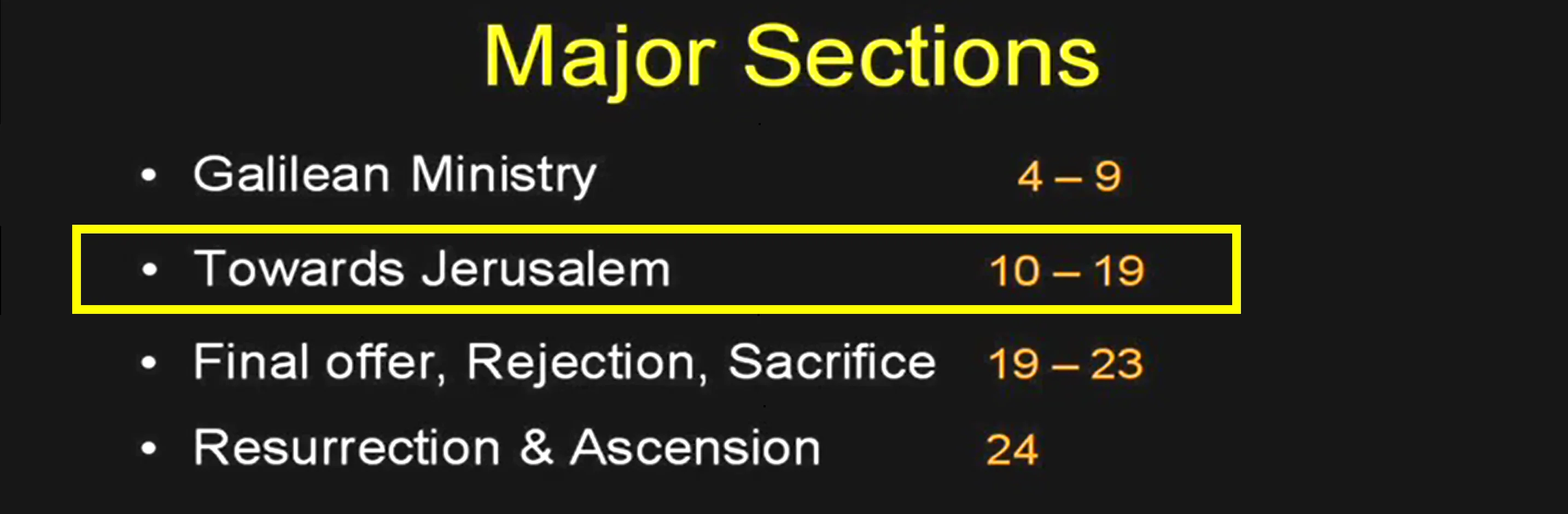
The subsections of Chapter 13 (per NASB/LSB/MEV) are:



- There was a young yeshiva student that asked his Rabbi:
“Why is it Rabbi that every time I ask a question, you always answer with another question?”
— Rabbi answered: “Why shouldn’t I?”
(A yeshiva is a traditional Jewish educational institution focused on the in-depth study of Rabbinic literature, primarily the Talmud and Halacha — Jewish law)
- We are going to explore some questions that were offered to Jesus in attempt to entrap Him
- As Jesus continues on His journey toward Jerusalem, He encountered four questions…
— “To question a wise man is the beginning of wisdom.” —German proverb
— In Luke 13, we find four occasions when Jesus is asked questions meant to entrap Him

Luke 13:1 Repent or Perish
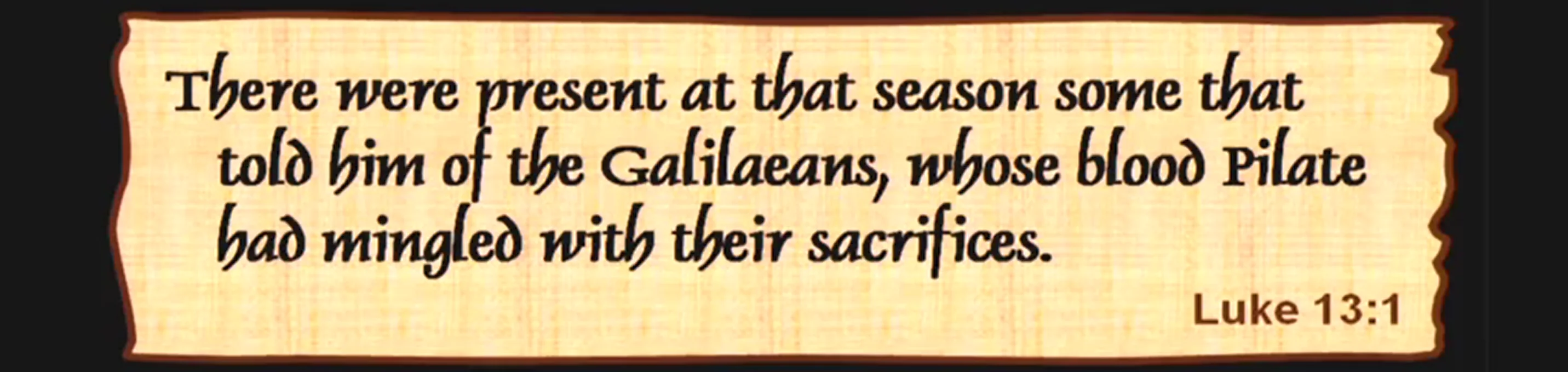
- This is an allusion to an abuse that they wanted Him to comment on
- The raising of this issue was a form of entrapment:
— If He spoke against Pilate, He’d give the Jewish leaders an excuse to accuse Him to the Romans
— If He ignored the issue, the people would accuse Him of being pro-Roman and disloyal to the people
- What we know about Pontius Pilate from a similar historic incident:
— Pilate was very insensitive to religious needs (and he made a number of mistakes in that regard)
— In one case, he appropriated Temple funds to finance an aqueduct (which can still be seen today)
— A large crowd of Jews protested
— Using concealed weapons and in civilian clothes, his men killed a number of innocent and unarmed Jews
Luke 13:2
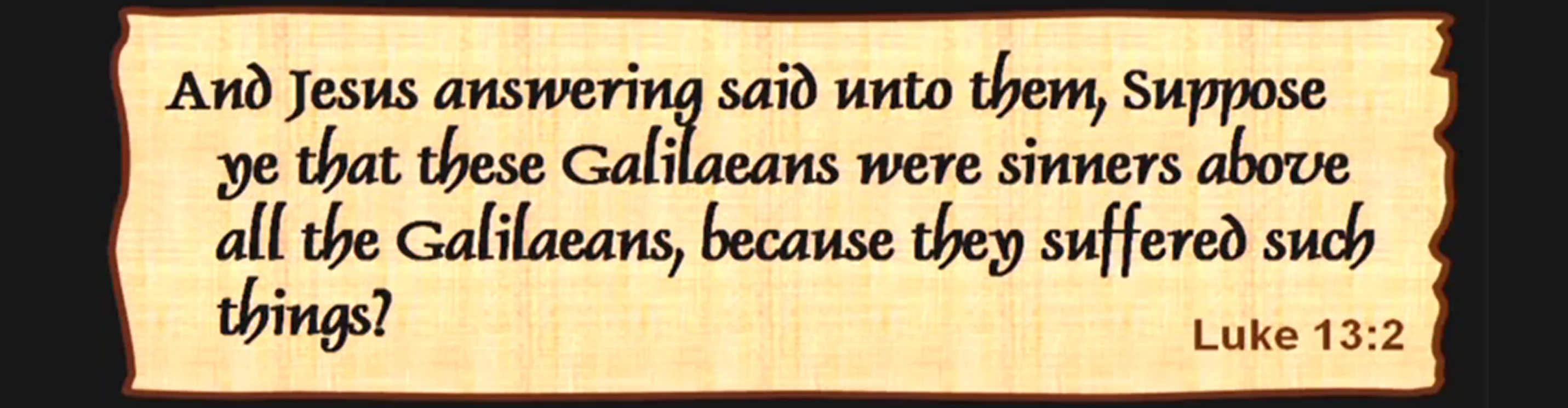
- The classic paradox:
— Theology of predestination vs free will
— Prophecy foretells the future so we are predestinated
— Does that mean there is no free will?
— Christians are divided upon this seeming paradox
- Euler’s Seven Bridges of Königsberg (modern-day Kaliningrad, Russia):
— Dilemma: How could a pilgrim cross each bridge once and only once?
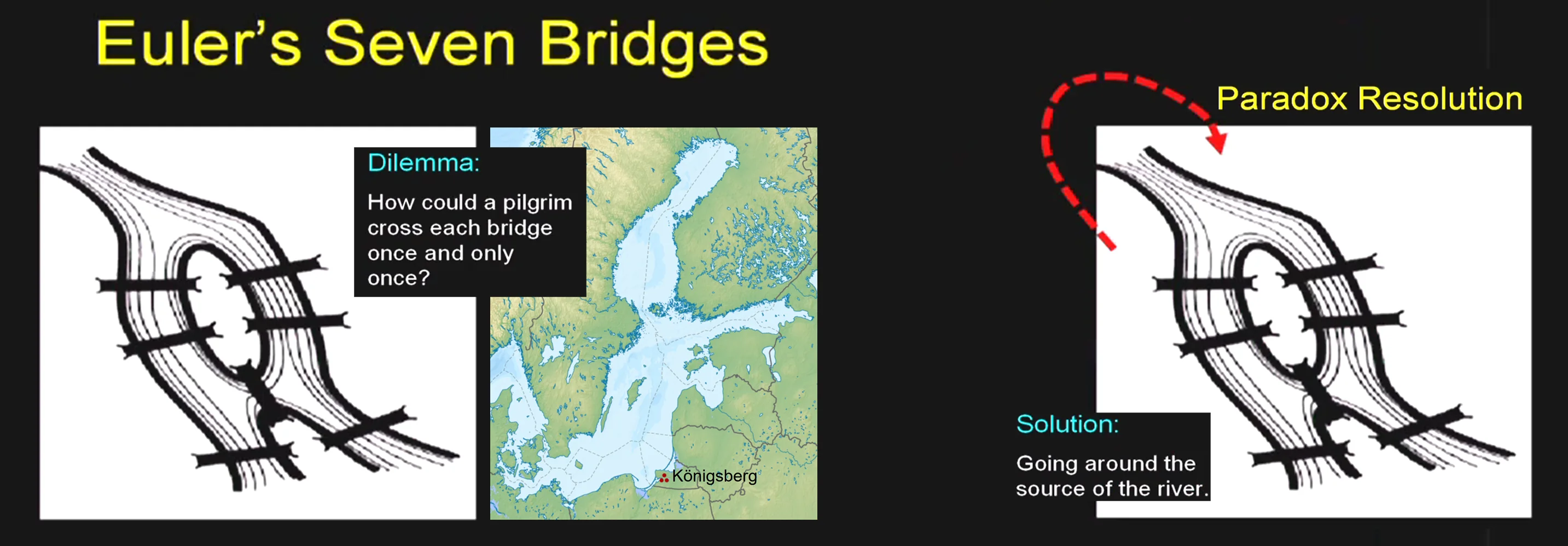
- Solution:
— Step up a level: Assume a broader horizon
— Do not yield to implied boundaries (think “Outside the Box”)
— Solution: Go around the source of the river
- Einstein used a similar approach in his Theory of Relativity
— He recognized space has more than 3 dimensions
— He added 4th dimension and everything yielded
— However, he went to his death frustrated because he couldn’t render light in a unified field theory, which was to connect gravity and electromagnetism. Kaluza-Klein successfully solved this by adding 5th dimension!
- Paradox Resolution: Jesus’ approach is to step up one level morally
— Instead of discussing Pilate’s sins, He dealt with the sins of the people questioning Him
— He got right to the real heart of the matter and that’s the sins of the questioners
Luke 13:3

- That’s the really relevant issue here: the future of the questioners
— Not some academic issue about these Galileans that are now dead and past
- Incorrect Premise: When evil falls on somebody, it is in payment for sin
— Example is Job: his friends assumed it was his fault (when you have friends like that, you don’t need enemies)
— Galileans: the same implication
— “…Master, who did sin, this man, or his parents, that he was born blind?” (cf. John 9:2-3)
- The Point (vv. 3 and 5):
— Unless you and I repent, we too will perish
— The question is not why someone died, but where are you going to go if you died right now?
— Death is the common denominator for everyone (every one of us is going to die right on time)
— Only repentance can bring life as people prepare to enter the Kingdom
— It’s a mistake to assume that troubles are necessarily a response to sin

- To glorify God (Dan 3:16-18, 24-25 — Shadrach, Meshach, and Abed-nego and fiery furnace)
- Discipline for a known sin (Heb 12:5-11, Jas 4:17, Rom 14:23, 1 John 1:9)
- To prevent us from falling into sin (1 Pet 4:1-2)
- To keep us from Pride (those trials can be a blessing; Paul had a thorn in the flesh)
- To build faith (1 Pet 1:6-7)
- To cause growth (Rom 5:3-5 — afflictions → perseverance → proven character → hope NASB) (no pain, no gain)
- To teach obedience and discipline (Acts 9:15-16, Phil 4:11-13)
- To equip us to comfort others (2 Cor 1:3-4) (ordeal to be able to minister to people going thru the same ordeal)
- To prove the reality of Christ in us (2 Cor 4:7-11) (testimony; a form of witness)
- For testimony to the angels (Job 1:8, Eph 3:8-11, 1 Pet 1:12)
—Hal Lindsey, Combat Faith
—Chuck & Nancy Missler, Faith in the Night Seasons (#3, 4 & 6)
Luke 13:4-5
- The MacArthur’s famous tower of Siloam: You don’t know when you are going to die (September 11th)
- This is a different kind of “perish” Jesus is talking about here, but it is the same message

Luke 13:6 The Parable of the Barren Fig Tree
Luke 13:7
- Fruit from a newly planted tree was not to be eaten for the first three years, and the fruit of the fourth year belonged to the Lord (Lev 19:23-25)
— In total, this farmer had waited seven years (3+1+3)
— It’s no wonder he wanted to cut it down!
Luke 13:8-9
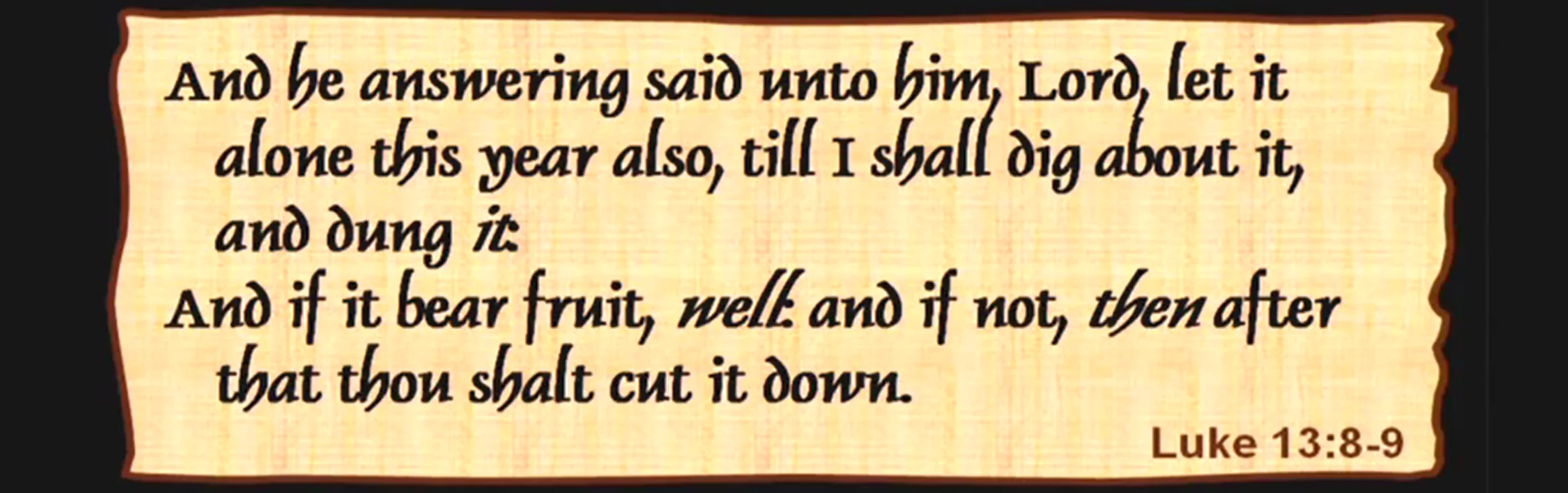
- Personal Level ➼ God is gracious and long-suffering toward people (2 Pet 3:9)
— He does more than enough to encourage us to repent and bear fruit (Matt 3:7-10, Matt 7:15-21, Luke 8:15)
— God has every right to cut us down, but in His mercy He has spared us (that’s the analogy here)
— Yet we must not presume upon the kindness and longsuffering of the Lord, for the day of reckoning will finally come (presume: believe something is true based on reasonable evidence or probability rather than absolute proof; also in overstepping sense: daring to do something without having the right, permission or authority)
— If there is no visible change in the life of one who claims to trust the Messiah, like the figless fig tree, it is judged
- National Level ➼ However, the tree also suggests God’s special goodness to Israel (Isa 5:1-7, Rom 9:1-5)
- It is interesting that this fig tree didn’t bear fruit for the 3 years they were expecting fruit
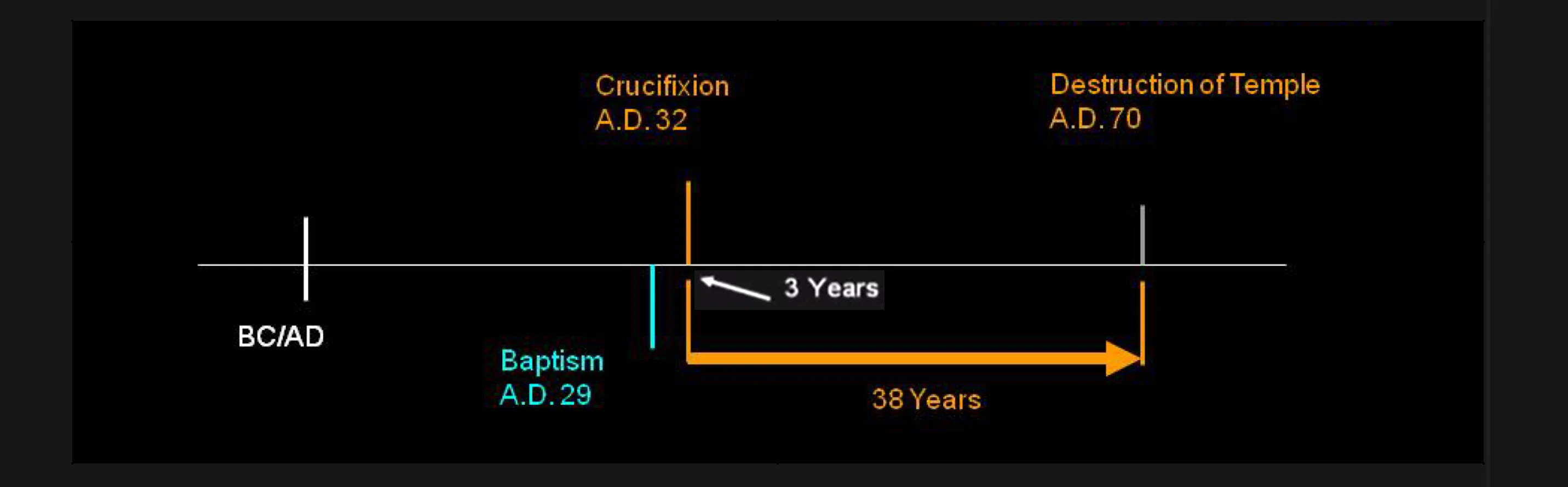
— The baptism of Jesus was about AD 29 and the crucifixion was in AD 32
— God waited 3 years during the Lord’s earthly ministry, but the nation did not bear fruit
— God patiently waited 38 years while Israel wandered in the wilderness after their failure at Kadesh-Barnea
- A second chance: “…let it alone this year also, till I shall dig about it, and dung it”
— Nation of Israel was given a 2nd chance with the Apostles for 38 years after the Crucifixion
— In Luke 21, Jesus predicted 38 years (one generation) and the judgement would come and indeed it did

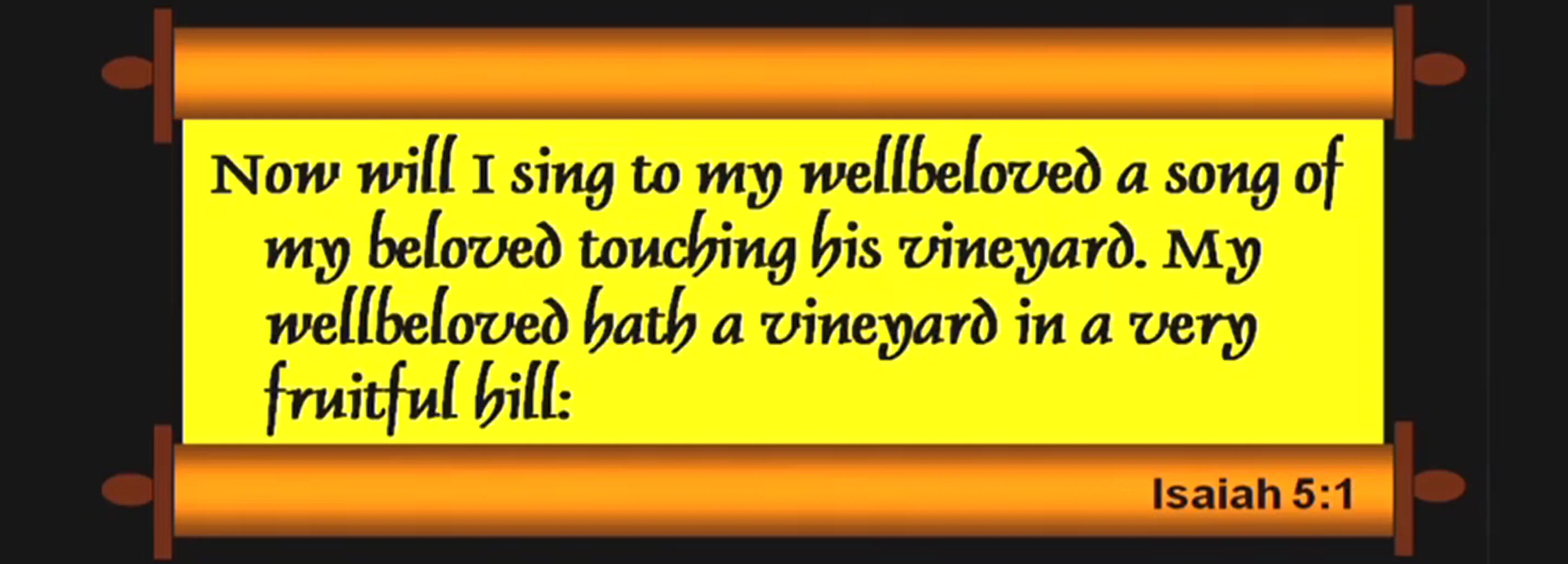
🍇 Isa 5:1 (see Mark Chapter 12 note)
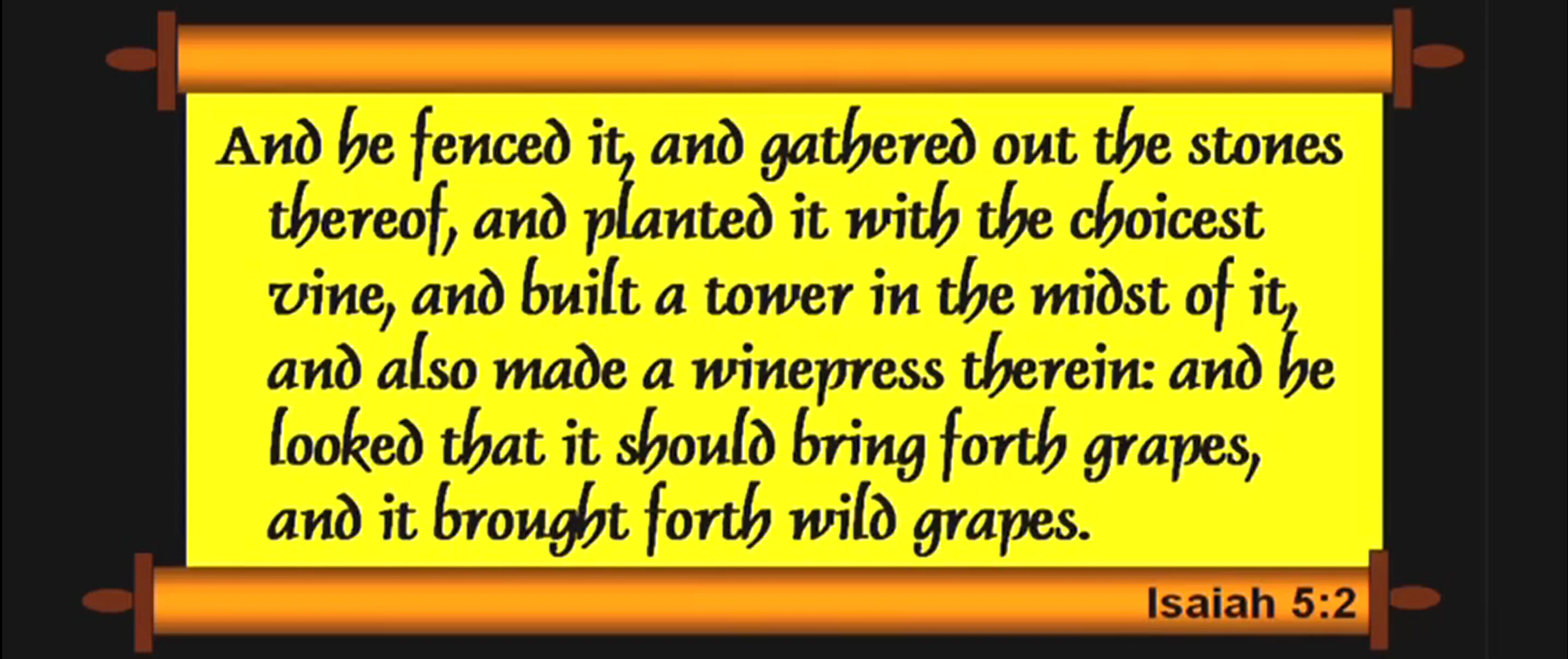
🍇 Isa 5:2
🍇 Isa 5:3-4
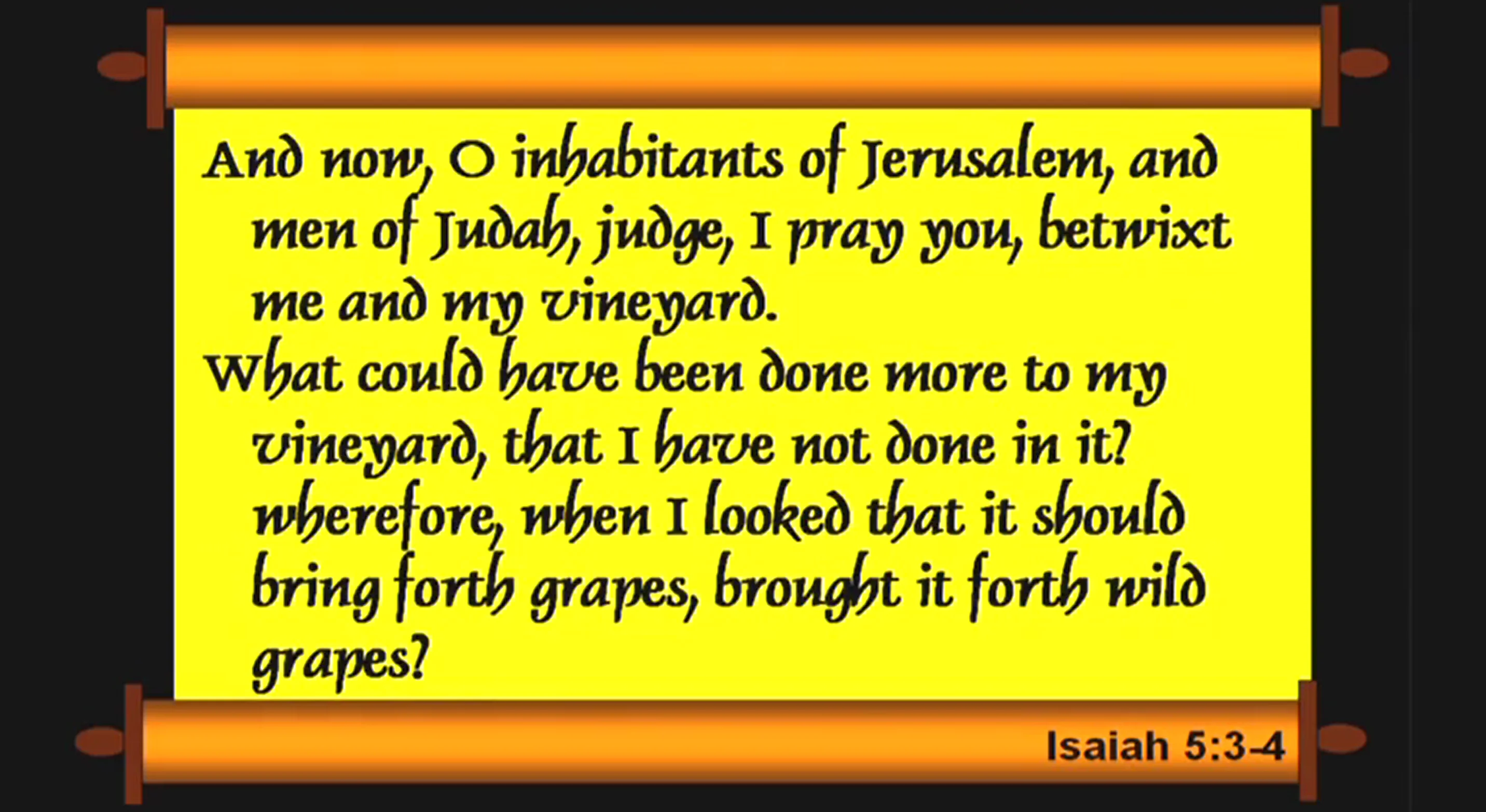
🍇 Isa 5:5
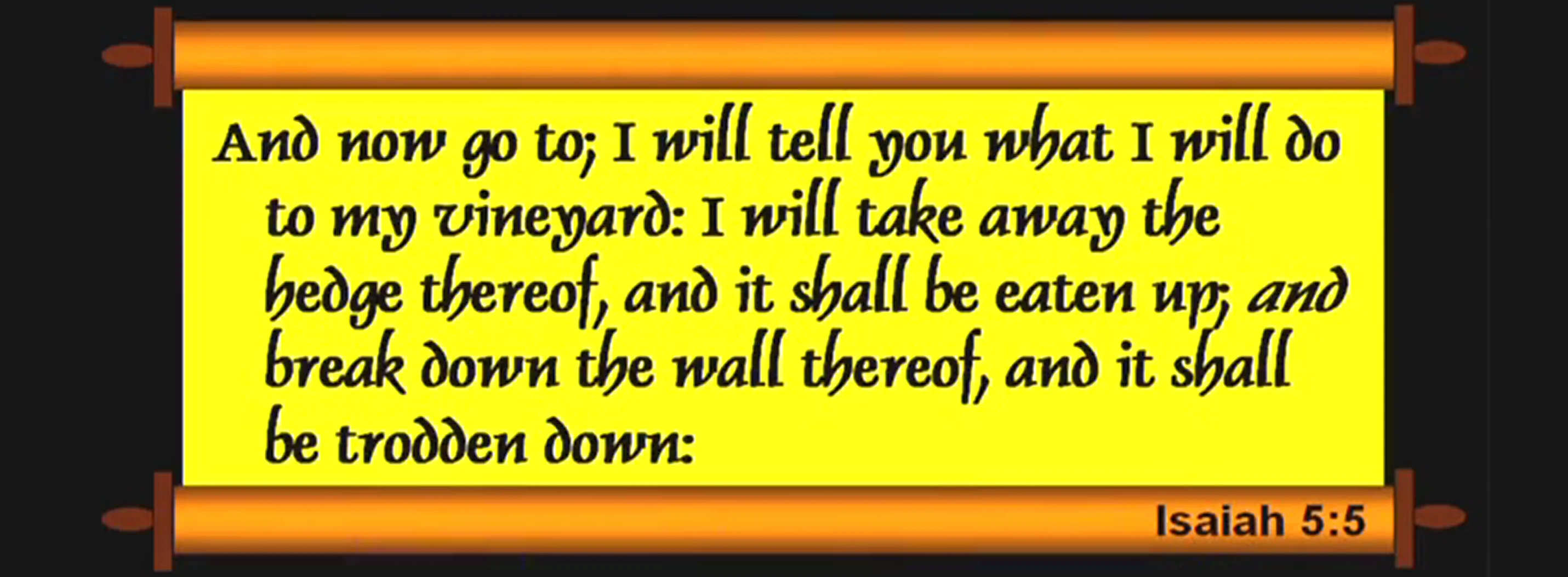
🍇 Isa 5:6-7
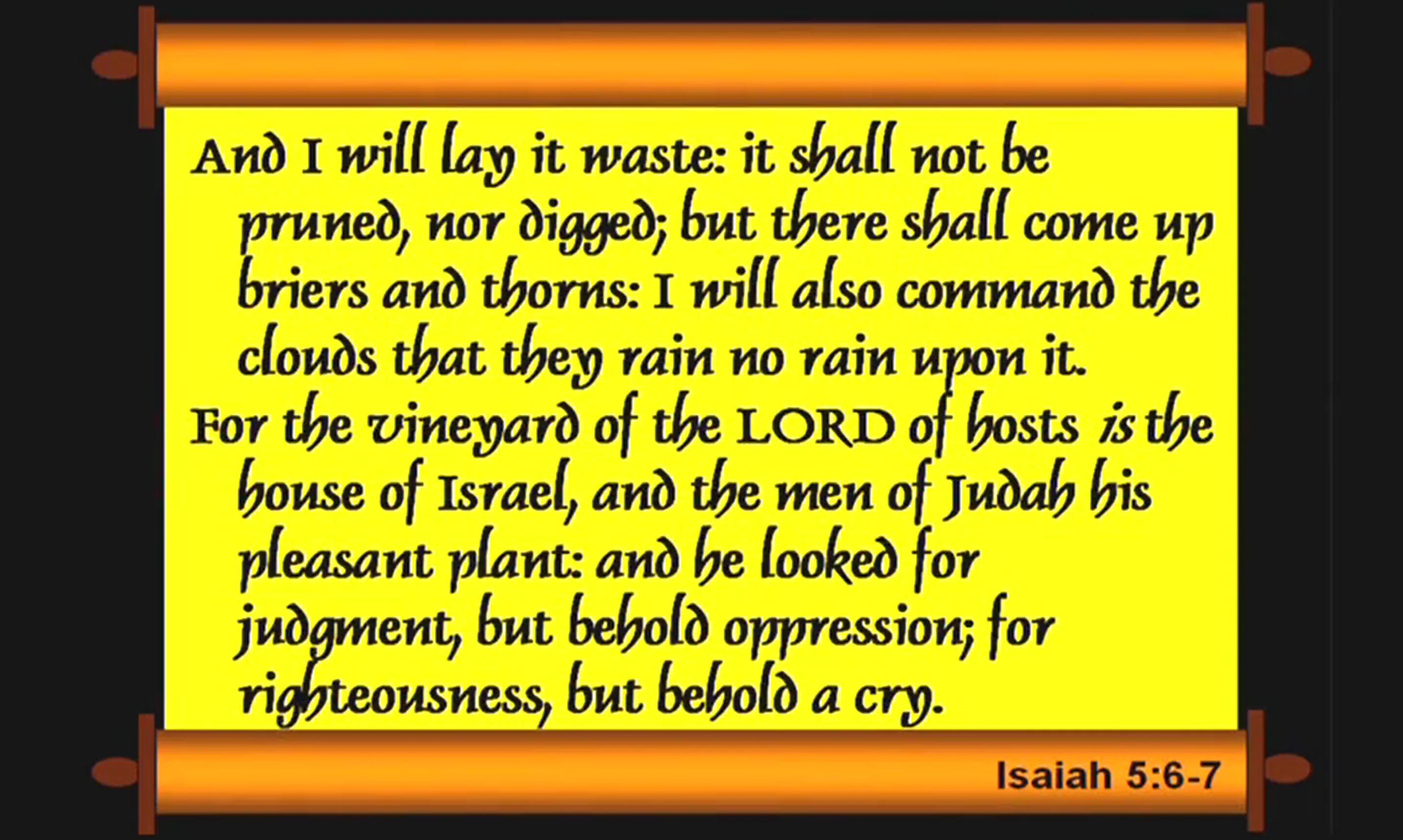
- This is a classic example in Isaiah and we see an echo of that here in the NT: Lord is applying it to Israel again

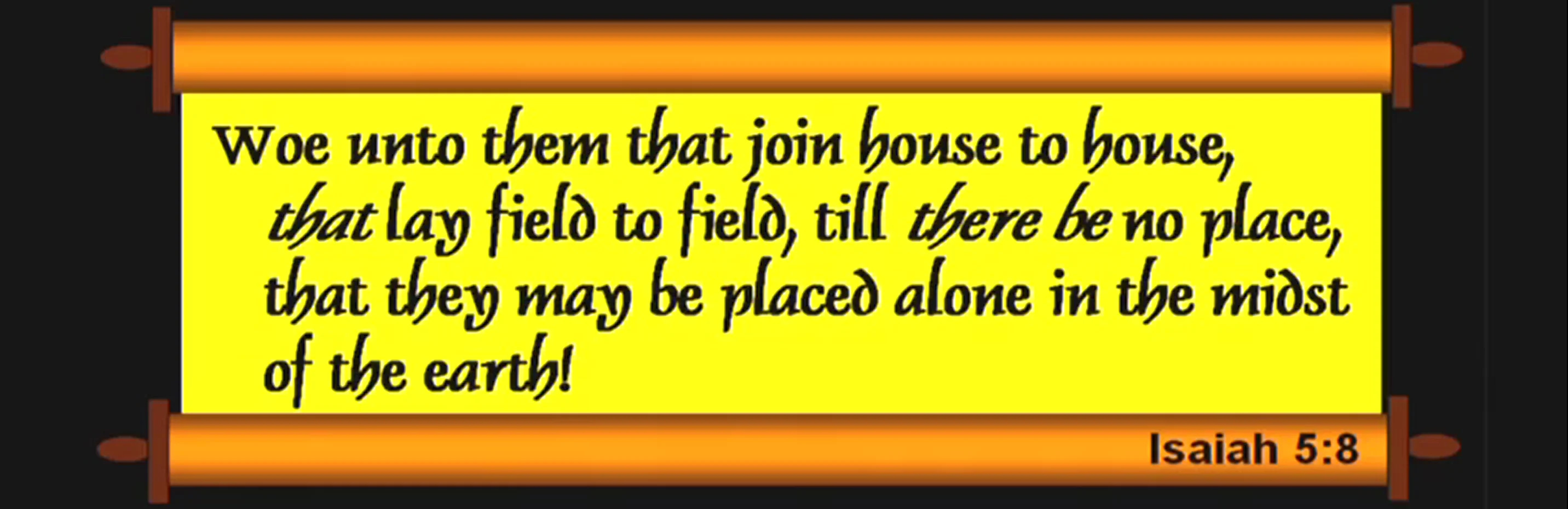
⚠️ Isa 5:8 Materialism (see also Mark Chapter 12 note)
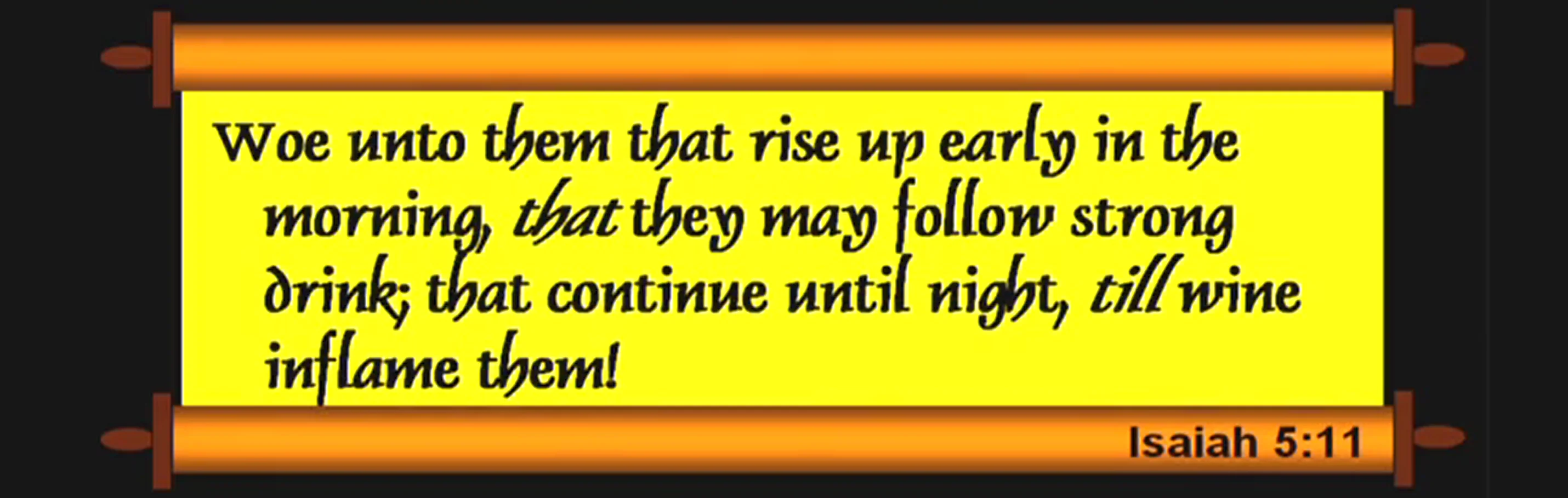
⚠️ Isa 5:11 Drunkenness
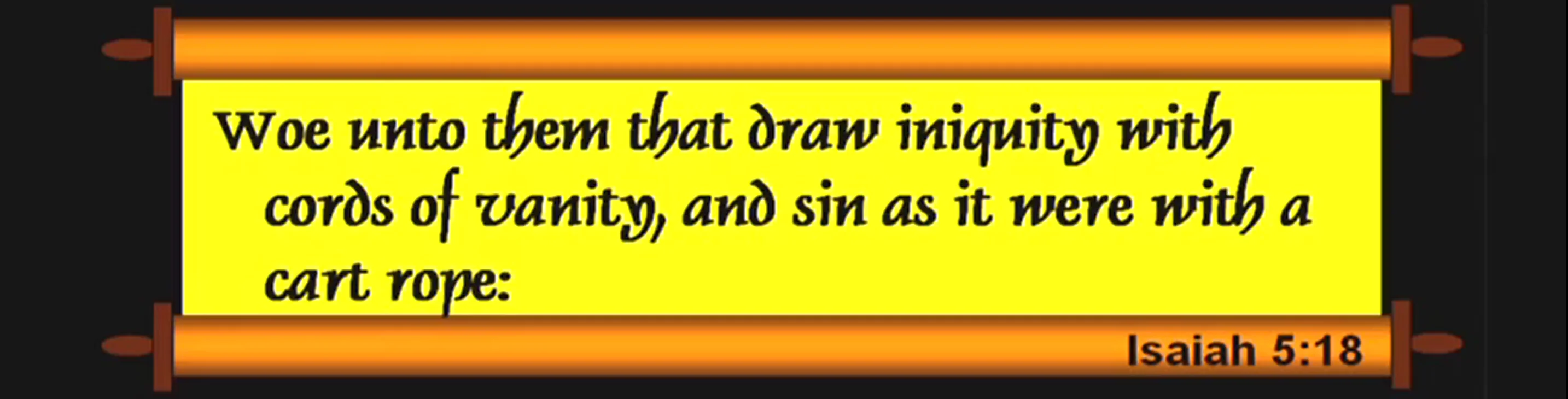
⚠️ Isa 5:18 Deprived and wicked parade and celebrate their sin
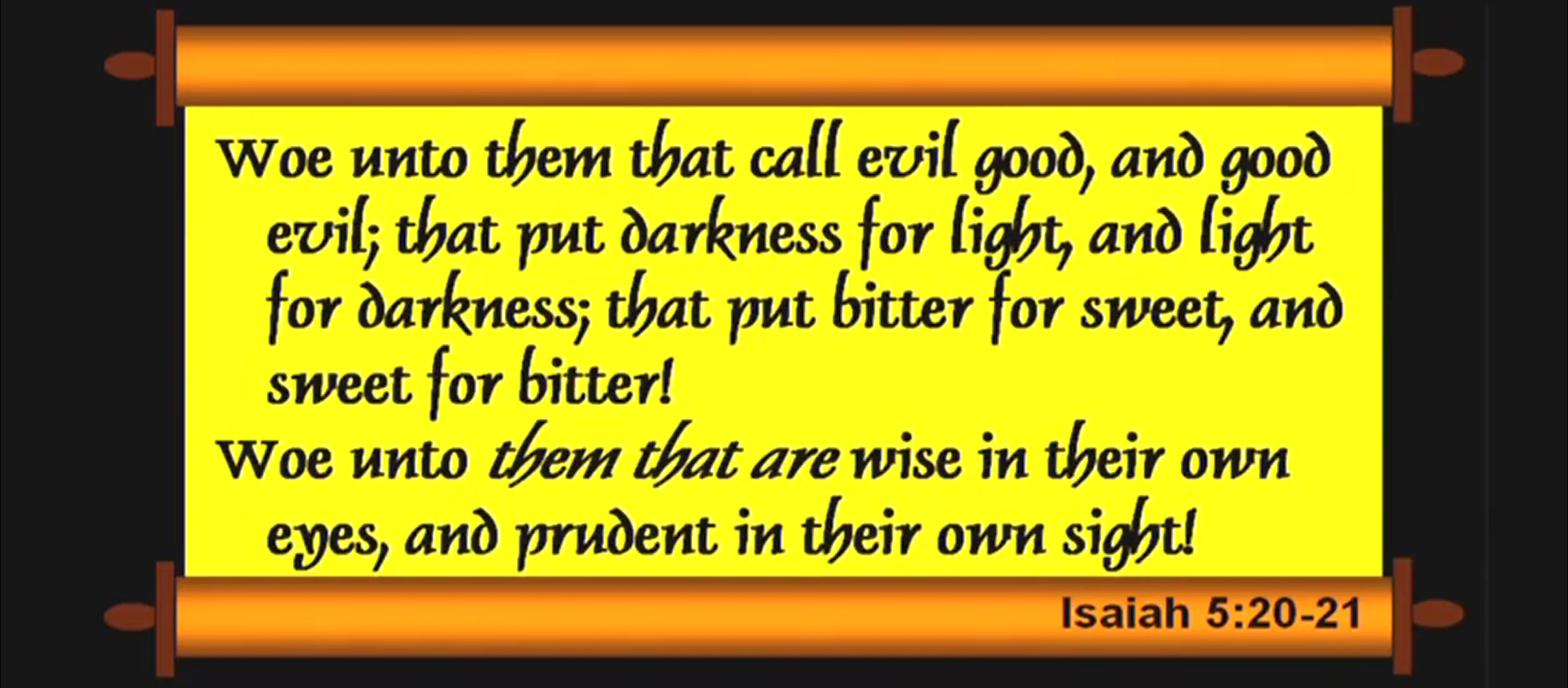
⚠️ Isa 5:20-21 Satanic inversion, then Pride
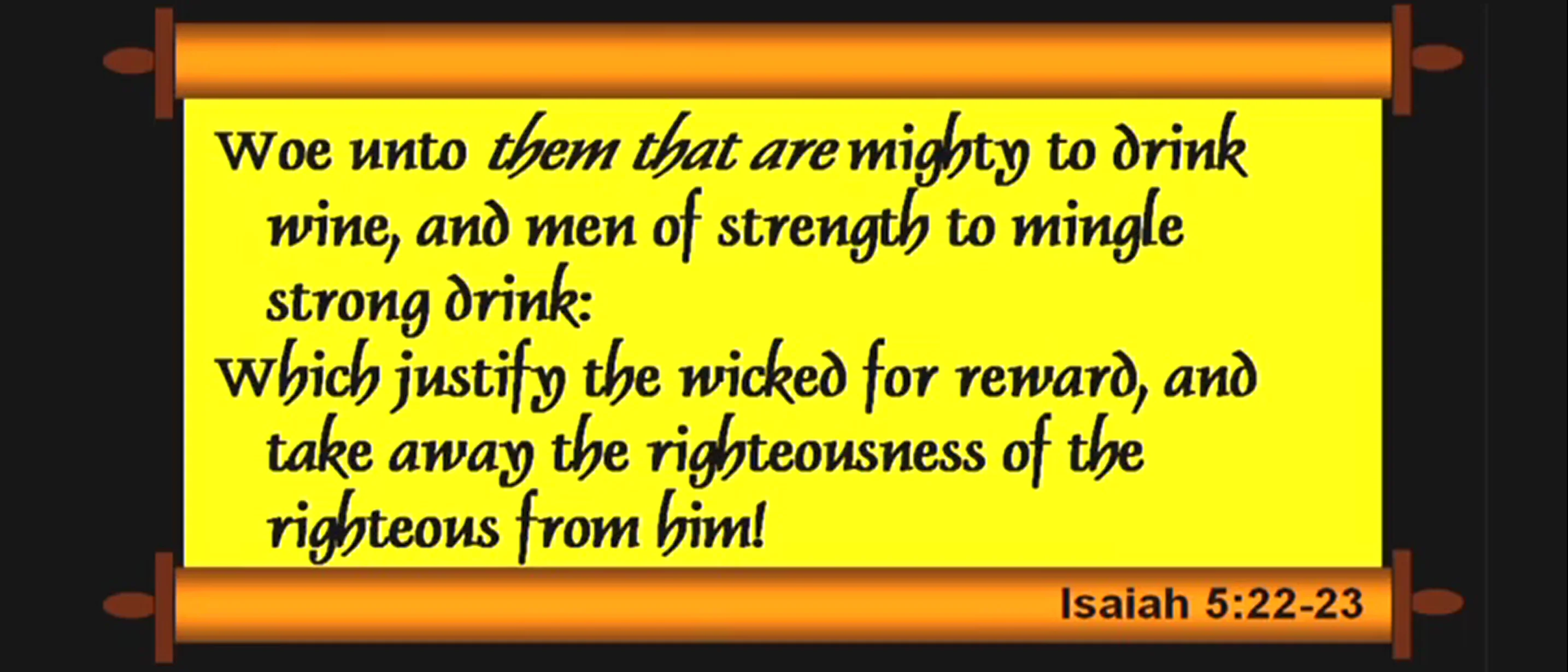
⚠️ Isa 5:22-23 Judges taking bribery and corruption in our courts

Luke 13:10 A Woman Healed on the Sabbath

- This episode is the last time in the Gospel of Luke Jesus taught in a synagogue
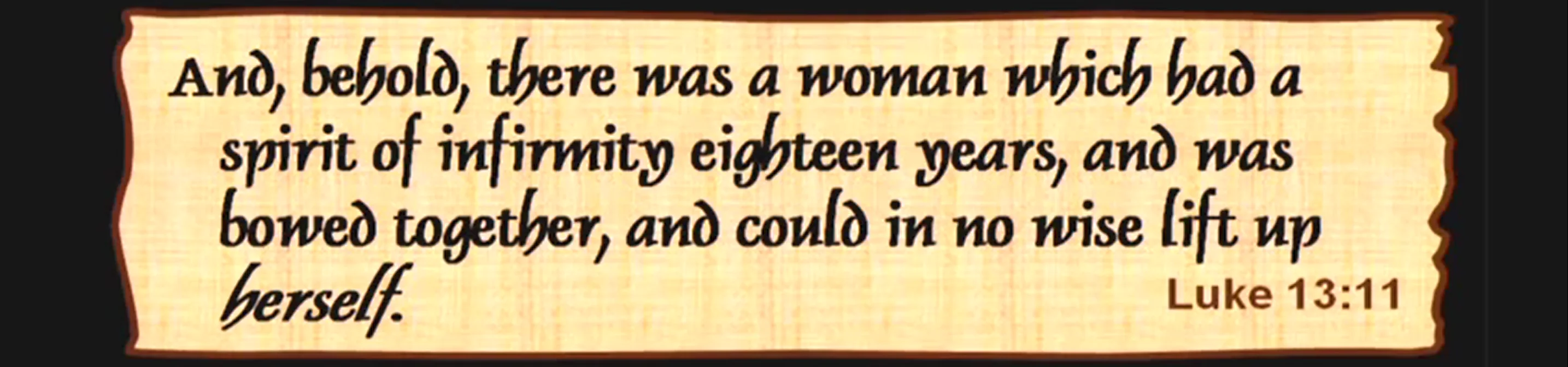
Luke 13:11
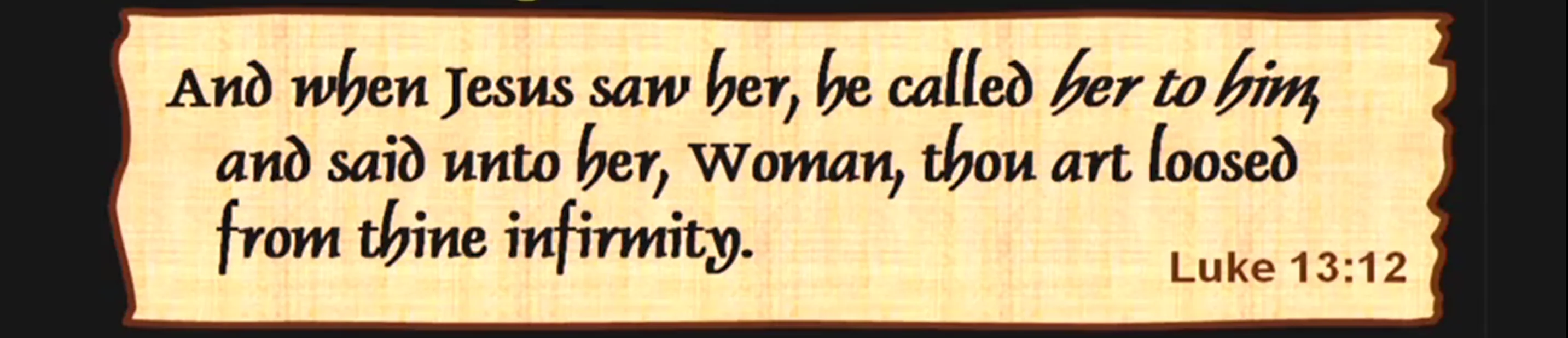
Luke 13:12
Luke 13:13

- “…glorified God” — this act of praising God was the proper response to the work of Jesus
— Cf. Luke 2:20, Luke 5:26, Luke 7:16, Luke 17:15, Luke 18:43, Luke 23:47
— It showed that people were understanding His mission
- Bowing down
— Satan bows people down (this was a demonic problem, v.16)
— Sin can bow you down (Ps 38:6)
— Sorrow can bow you down (Ps 42:5) (or sink down; be in despair)
— Suffering can bow you down (Ps 44:25) (or sink down into the dust)
- Jesus is the only one who can set the prisoner free
- There is symbolic view of this miracle:
— Jesus’ mission was to loose the nation from crippling influences and bring them to uprightness
— A Pun? Scripture is full of puns (e.g. the laver and the Word of God; cf. Eph 5:26, Rev 4:6)
Luke 13:14
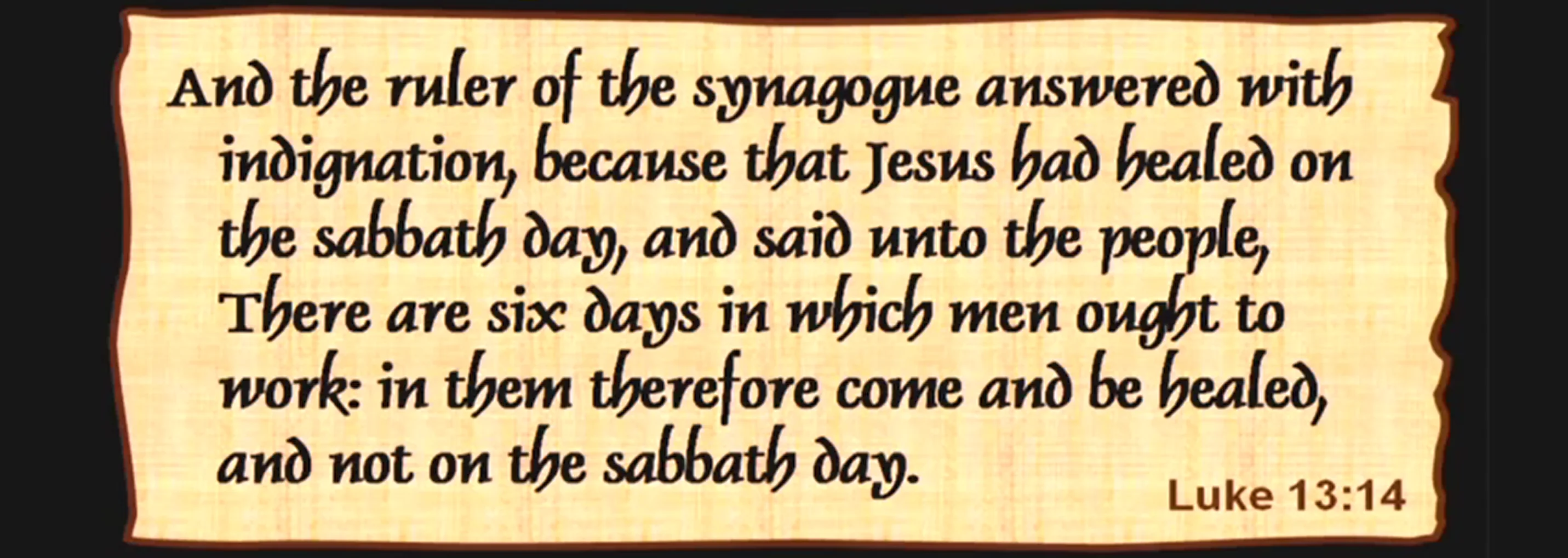
- The bondage of the ruler of the synagogue was worse than that of the woman:
— her bondage was limited to her body (physical bondage)
— his bondage had shackled his mind and heart by his commitment to traditions
- The synagogue official was upset because Jesus had not followed his interpretation of the Law
— This attitude supports what Jesus had already said about religious leaders keeping others from entering the kingdom (Luke 11:52)
Luke 13:15
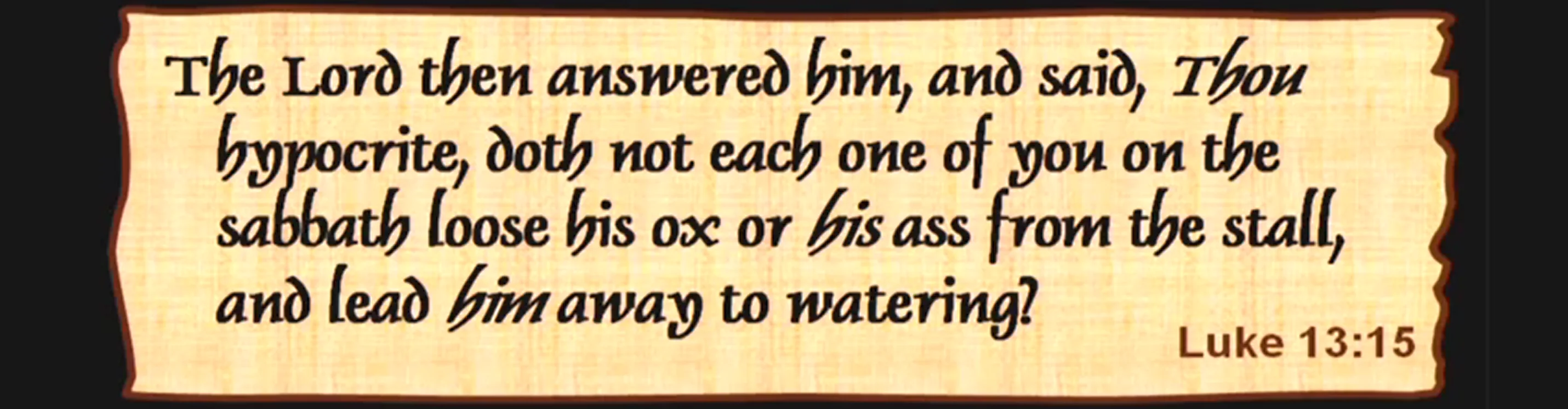
- It’s amazing how many people are kinder to their pets than to other people
- “…thou hypocrite” — Jesus had called the crowds and the leaders of the people “hypocrites” (Luke 12:56)
— At the end of this section (Luke 12:54-13:21), he again calls them “hypocrites” (Luke 13:15)
- Jesus’ point: Despite their public posture, these people are not focused on God Himself
— And that is one of the dangers of traditions, that they focus on tradition rather than the Source
Luke 13:16
- A person is far more important than an animal
— His enemies saw nothing wrong in helping their animals on the Sabbath (Luke 14:5)
- Luke described the woman as one who had been crippled by a spirit for 18 years and “bound” by “Satan”
— Note the repetition of the word “loose” (vv.12, 16)
- Jesus addresses the woman as “a daughter of Abraham”, referring to her spiritual condition and not her physical birth (Luke 16:22, Luke 19:9, Gal 3:7)
— Can a Christian be demon possessed? No
— Can a Christian be hassled by Satan? Yes!
Luke 13:17

Luke 13:18 The Parables of the Mustard Seed and the Leaven

- Parallel passage is in Matt 13 → 7 Kingdom Parables — God’s kingdom vs Satan’s kingdom
- Only a couple of them are here in Luke’s account
Luke 13:19
Luke 13:20-21
- Leaven = Sin (leaven is yeast, квасац)
- Three measures of meal = fellowship offering (no leaven in it; Gen 18:6)
- Leaven had already been identified as evil (Luke 12:1, cf. Exo 12:14-20)

Luke 13:22 The Narrow Door / The Narrow Gate (MEV)

Luke 13:23-24
- “Strive” — ἀγωνίζομαι (agónizomai): the word from which we get “agony” — agonize to enter in… 😫
— Take it seriously
— The way is narrow and it is not obvious
Luke 13:25
Luke 13:26-27
Luke 13:28
- Many who were invited waited too long to respond (Cf. Luke 14:15-24, Matt 22:1-14)
- “…weeping and gnashing of teeth” — a Hebrew expression of extreme disappointment
— it is not necessarily eschatological or soteriological

- 1️⃣ Salvation is not easy
— “…Work out your own salvation with fear and trembling.” (Phil 2:12)
— Jesus: narrow gate; narrow way vs broad gate and broad way (v. 24; cf. Luke 9:23ff → Take Up Your Cross)
— The world’s crowd is on the easy way that leads to destruction (Matt 7:13-14 — Which Way to Heaven)
🚪 Matt 7:13-14
- 2️⃣ False sense of security
— They enjoyed His fellowship, but they never had placed their trust in Him
— God had given the nation many opportunities and privileges, but they wasted them (Luke 10:13-16)
— Many who think they are saved, aren’t (Matt 7:21-23)
🚪 Matt 7:21-22
🚪 Matt 7:23
- 3️⃣ Pride
— They would not humble themselves before God (v.30 ↓)
Luke 13:29
Luke 13:30

- Dependence on a reverence for tradition cannot save
— Jesus saw them as “workers of iniquity”, not doers of righteousness (Isa 64:4, Titus 1:16)
— Gentiles would come and take their place (Matt 21:43)
— Door is going to be opening here to the Gentile world, which was a shock to the Jewish mentality and Jewish presumption
➤ Presumption:
1) an idea that is taken to be true on the basis of probability (assumption, guess, expectation, conjecture)
2) behaviour perceived as arrogant, disrespectful and transgressing the limits of what is permitted or appropriate

Luke 13:31 Lament over Jerusalem
- Things are getting tense here
- Throughout Luke, the Pharisees are always painted in a negative light
— Thus, we can fail to appreciate the positives about the Pharisees:
➯ they were very committed
➯ they fasted twice a week
➯ they gave alms to the poor
Luke 13:32

- Pharisees probably had no idea what He was talking about
- In response to the warning from some Pharisees, Jesus said that He had to reach Jerusalem because He was appointed to die there (1 Pet 1:20, Rev 13:8)
— He was on a mission and that was part of the mission
— He was on a divine timetable (allusions to that all throughout the Gospel of John 2:4, 7:30, 8:20, 13:1, 17:1)
— Even His enemies would help fulfill the will of God (Acts 2:23, Acts 3:13-18)
— He’ll be in charge, even to His very death
(they didn’t want to take him on a feast day, but Jesus forced the issue; cf. Matt 26:5, John 13:27)
- “…tell that fox” — foxes were not held in high regard by Jews (Neh 4:3)
— Foxes hunt at night
— Jesus walked in the light (John 11:9-10, John 9:4)
Luke 13:33
- This parallels what He said to them in Luke 11:47-51
- They not only rejected God’s loving invitation, they even killed the servants who brought it! (cf. Luke 11:49-51)

Luke 13:34
- A sob of anguish, not anger (cf. Matt 23:37-39)
- We have here summarized: The Purpose and Tragedy of All History
— God’s Purpose—to gather His children together
— The Tragedy—they wouldn’t come, they wouldn’t agree (“…and ye would not!”)
— The Triumph—(see next verse)
- “…hen…wings” — the hen gathers her chicks when she sees danger is coming
— Some believe that the “wings” also suggest the wings of the cherubim in the Holy of Holies of the Tabernacle (Exo 25:20, Ruth 2:12, Ps 36:7-8, Ps 61:4)
Luke 13:35
- This is where He pronounces judicial blindness on the nation, but not forever (cf. Rom 11:25, Hos 5:15)
- His ministry up to this point had been to offer the kingdom to the nation
— But since the nation, which had even killed the prophets, had rejected His words, He would now reject them
— Jesus stated: “Your house is left to you desolate”
- “…left” — ἀφίεται (aphietai): “abandoned”
- “…house” refers both to:
— the family of Jacob (nation of Israel) and
— the Temple (“the house of God”)
➠ Both would be destroyed and scattered (cf. Dan 9:26, Luke 19)
- Jesus noted that the people of the city would not see Him again until they said that He was the Messiah (quoting Psalm 118:26)
— “This is the day which the LORD hath made; We will rejoice and be glad in it.” (Ps 118:24) We quote this verse to be any day, and that is fine, but it is actually alluding to a specific day, the day that He was presenting Himself as King by riding that donkey (it will all be detailed in Luke 19)
— The crowd did quote Ps 118:26 when Jesus entered the city in His Triumphal Entry, but their religious leaders disapproved (Luke 19:38)
- The nation has, indeed, been left desolate
— The nation (even today) has ① no king ② nor priest, ③ no temple ④ nor sacrifice (Hos 3:4-5)
— Out of this dilemma, the Fall of Jerusalem in AD 70, Judaism gets redefined
— They rejected their Messiah:
• there’s no shedding of blood
• and therefore no remission of sins
➙ it becomes a works-based religion (rather than God’s program for redemption)
- But the nation has not been forsaken (Rom 11:1ff )
— Its blindness will be lifted when “the fulness of the Gentiles” has come in (Rom 11:25) (come in—where?)
— Ultimately this truth will be proclaimed when Jesus comes again and enters the city as the millennial Ruler
- He came the first time humbly as a servant
— He’s coming back to fulfill the second part of the Isa 61:1-2 passage: “the day of vengeance of our God”

